Dog-Focused vs. Cat-Focused Custom Plush Pet Toys: A Head-to-Head Specification Decision
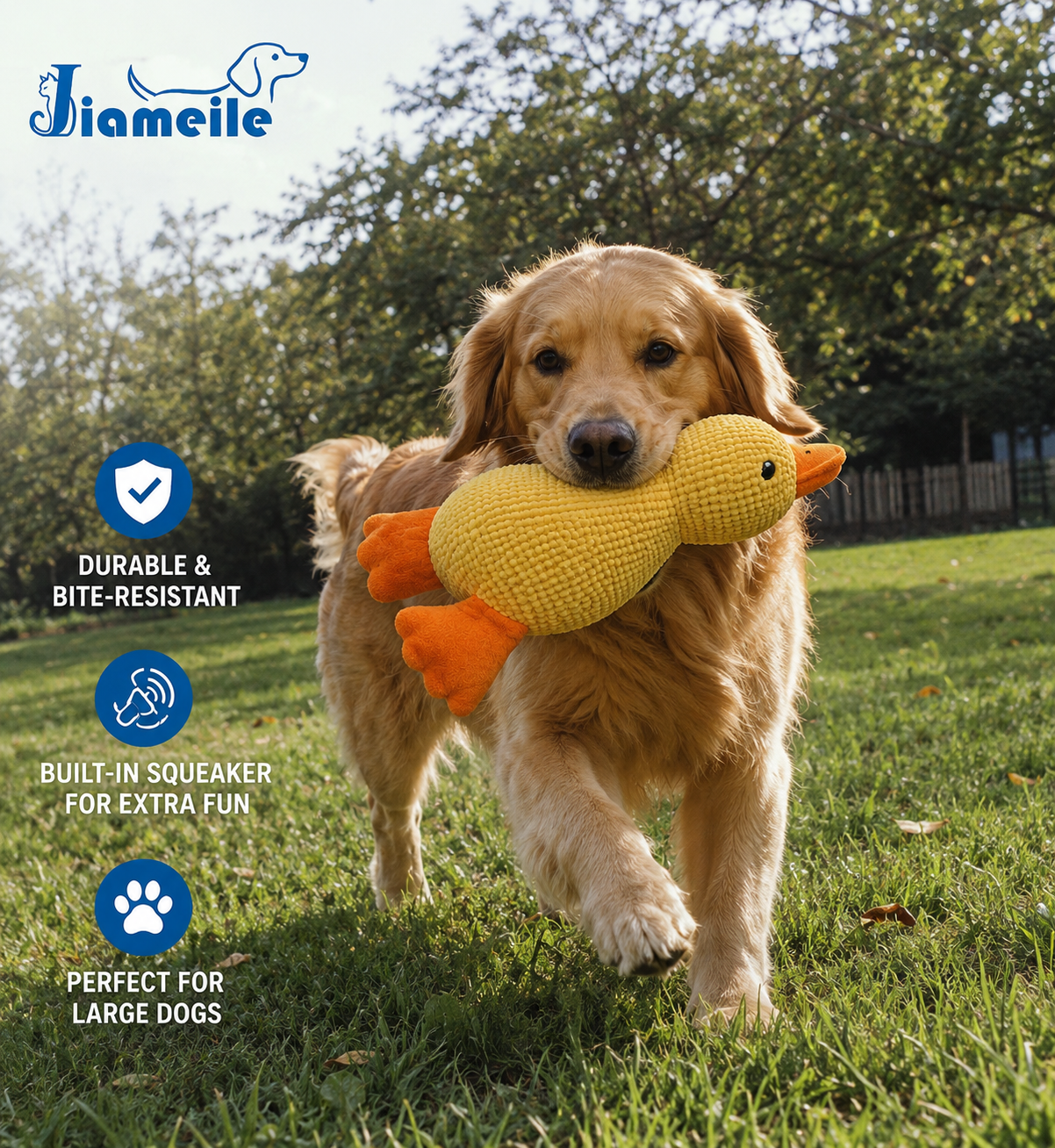
Cover: short plush construction in the 10–15 cm and 15–20 cm size range - the format most brands use to open a combined dog and cat plush program.
Roughly two-thirds of the way through a custom plush project, brand teams hit the same fork in the road. Option one: keep a single universal plush specification that ships under both the dog toy and the cat toy listing. Option two: build separate dog-focused and cat-focused lines from a shared base format. On paper, the universal option looks cheaper. In practice, the cost of that choice is decided long before packaging - at the level of size ladder, weight band, chew resistance and material.
This head-to-head compares the two paths using the actual specification data behind Jiameile's plush pet toy range, so the comparison stays at the level where sourcing decisions are really made: dimensions, materials, chew levels, use cases and compliance file.
Direct answer. In this program, the same plush line is formally classified as a dog toy and as a cat toy, and sits inside the Small Dog Toys, Medium Dog Toys, Large Dog Toys and Interactive Pet Toy categories. The classification is shared. The engineering levers are not. Dog weight bands (under 5 kg, 5–15 kg, 15–30 kg, plus the 5–40 kg scope stated for the small-size range) and chew resistance levels (Light, Moderate, Aggressive) exist on the dog side of the data set, while size, material and use case run across the whole line. That asymmetry - not the animal label - is what makes the split decision a real one.
Problem Definition: A Shared SKU Is a Classification Decision, Not a Specification Decision
The phrase "one plush toy for dogs and cats" describes a product classification, not a manufacturing specification. Those are two different documents, and buyers frequently merge them by accident.
In the data behind this range, the classification layer is unambiguous: the product is a pet toy classified as both a dog toy and a cat toy, belonging to the Small Dog Toys, Medium Dog Toys, Large Dog Toys and Interactive Pet Toy categories. Nothing in the specification file forces a brand to choose one species over the other at the classification level.
The specification layer is where the two paths separate, because three of the fields that determine durability and sizing are written for dog programs and have no cat counterpart in the same data:
- Suitable dog weight - under 5 kg, 5–15 kg and 15–30 kg bands, with a 5–40 kg scope stated for the small-size range.
- Chew resistance level - Light Chewer, Moderate Chewer, Aggressive Chewer.
- Size ladder - 10–15 cm, 15–20 cm, 20–30 cm and 30–50 cm, with the smaller two brackets carrying short plush, the middle bracket Oxford fabric, and the largest bracket food-grade TPR.
So the real question is not "can one SKU be listed for dogs and cats?" It can. The question is whether the specification behind that SKU is specific enough for the dog program it is carrying, and whether that specificity is best delivered by one averaged format or by two separated ones.
Industry Background: Why the Plush Format Justifies Getting the Split Right
Three data points frame how much weight this decision carries. The global pet toys market reached a valuation of USD 9.60 billion in 2025 (Fortune Business Insights, September 2026). Within the dog toys market, plush and soft toys are estimated at approximately 30% share (Custom Market Insights, August 2026) - the largest single product family in the category rather than a niche line. On the demand side, the US "Pet Supplies, OTC Meds & Live" segment reached USD 34.4 billion in 2024 (American Pet Products Association, December 2025).
The regulatory environment is lighter than most first-time pet toy buyers expect, and that changes the nature of the risk. In the United States, pet toys fall outside mandatory CPSC jurisdiction and ASTM F963 is applied voluntarily (Newtoppets, August 2026). Lighter mandatory oversight means the brand's own specification file becomes the primary control - which is exactly why the decision between one averaged format and two defined formats matters more here than it would in a heavily regulated product class.
Care and hygiene expectations are already part of the buying environment. Consumer-facing editorial and retail guidance consistently describe plush dog toys as washable on a gentle or delicate cold cycle and air-dried, with electronic components removed before washing (iHeartDogs, April 2026; Jeffers Pet). Whether a plush item is labeled for dogs, for cats, or for both, it inherits that expectation.
A second background factor is where these products actually sell. The application scenarios behind this range are described as common in Japan, the UK, France, Germany, China, Australia, the US, South Korea and Middle Eastern countries, across the pet supplies, pet e-commerce, pet retail chain, pet training, veterinary and pet care, pet boarding and pet hotel, pet gift and cross-border e-commerce industries. A brand selling into that spread of markets is usually not choosing between dog and cat on principle - it is choosing which specification file each channel listing should point to.
Detailed Solution: Two Sourcing Paths, Four Specification Levers
Both paths are viable. The difference is which of the four levers you switch on, and where.
Path A - One universal Custom Plush Pet Toy specification
Path A keeps a single base format across the whole plush line and ships it under the shared dog toy and cat toy classification. It works best when the assortment is being opened rather than expanded: a limited number of sizes, one or two materials, and no channel commitment to a specific dog weight band or a specific chew profile yet. The advantage is style economy - one dimension ladder, one material sourcing plan, one compliance file - and the trade-off is that none of the dog-specific levers is switched on, so the line cannot claim weight-band fit or chew-level fit.
Path B - Separate dog-focused and cat-focused lines from one base
Path B keeps the shared base format but assigns specification values where they exist. The dog-focused line carries the weight bands (under 5 kg, 5–15 kg, 15–30 kg, with the 5–40 kg scope stated for the small-size range) and the chew resistance levels (Light, Moderate, Aggressive). The cat-focused line uses the same size ladder, the same material set and the same interactive components, without weight-band or chew-level mapping, because those fields are not part of the cat side of this data set. The trade-off is style count: more configurations means more separate styles to sample, test and order.
The four levers that decide which path fits
- Size ladder. Four brackets exist - 10–15 cm, 15–20 cm, 20–30 cm and 30–50 cm. Choosing how many of them the program carries is the single largest driver of style count.
- Material. Short plush serves the 10–15 cm and 15–20 cm brackets, Oxford fabric serves 20–30 cm, and food-grade TPR serves 30–50 cm. All TPR items are described as lead-free and phthalate-free.
- Dog weight band. Under 5 kg, 5–15 kg, 15–30 kg, with a 5–40 kg scope stated for the small-size range. This lever is dog-facing and does not map to a cat specification in the same data.
- Chew resistance level. Light Chewer, Moderate Chewer, Aggressive Chewer. Reinforced chew-resistant constructions are described with an average service life of 12–24 months.
Matched components sit across both paths rather than inside one: a squeaker device, a heartbeat module, a rope structure, TPR teething components, a removable washable cover and an anti-slip bottom design are all available as supporting equipment. Special requirements include non-toxic eco-friendly materials, EN71 compliance, CPSIA compliance, chew-resistant and tear-resistant construction, a reinforced stitching structure, a washable design and no stuffing for safety.
What this means for a buying decision is straightforward. If the program is early and the assortment is thin, Path A with a limited size ladder is proportionate. If the program is being sold into channels that ask weight-band or durability questions - pet retail chains, training, boarding or veterinary channels - Path B delivers answers that Path A structurally cannot, because Path A never assigns those fields.
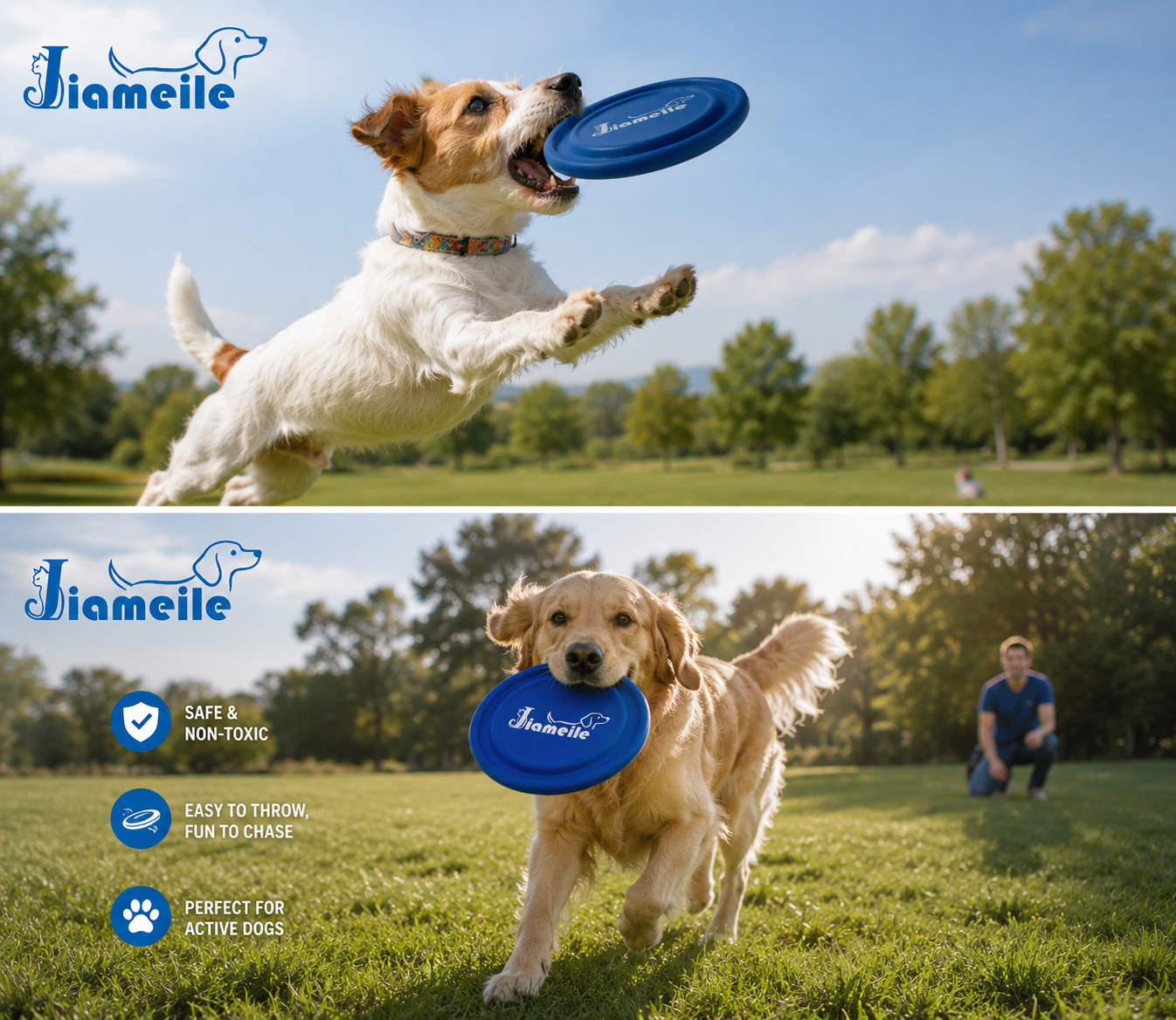
The 20–30 cm bracket is built in Oxford fabric - the transition point between small short-plush formats and large TPR formats.
Head-to-Head: Dimensions, Materials and Use Cases by Path
Dimensions
Dimension and weight band are linked, and that link is what makes the split visible. The 10–15 cm and 15–20 cm brackets sit in the small-size class, where the stated scope covers dogs from 5–40 kg and durability is handled through reinforced stitching rather than through hard material. The 20–30 cm bracket moves into the medium class in Oxford fabric. The 30–50 cm bracket is the large class in food-grade TPR. A universal format that carries only one or two of those brackets is, in effect, already a partial split - it has simply made the choice by omitting sizes rather than by separating lines.
Materials
Material choice follows the bracket rather than the species. Short plush is the soft, tear-resistant option used for the smallest two brackets; Oxford fabric is the mid-range option; food-grade TPR is the hard, chew-oriented option in the largest bracket. Because none of the three materials is species-exclusive in this data set, material is not the constraint that forces a dog/cat split. The constraint comes from the levers that sit on top of the material - chew level and weight band.
Chew levels and weight bands
This is the heart of the comparison. Chew resistance (Light, Moderate, Aggressive) and suitable dog weight (under 5 kg, 5–15 kg, 15–30 kg, 5–40 kg scope) are dog-program fields. A single universal SKU cannot carry a meaningful chew level, because a chew level is a statement about the animal, not about the toy. The moment a brand wants to say "this item is rated for aggressive chewers" or "this item suits dogs of 15–30 kg," the universal path has ended and the dog-focused path has started - whether or not the catalog is formally split.
Use cases
The functional layer is shared. The range is designed for companionship, teething training and emotional calming, with operation modes covering self-play by pets, owner-pet interaction, a squeaky interactive mode, a tug training mode and a comfort companion mode. Working conditions include daily pet companionship, separation anxiety relief, puppy teething training, indoor interactive play, outdoor fetch training, behavioral training support and sleep comfort and calming. Because these use cases describe the format rather than the species, they carry across dog-focused and cat-focused listings without modification - which is the strongest argument for keeping one base format underneath both.
Where the split concentrates: durability and fit claims for dogs, interactive and companionship claims for both. If your channel asks neither durability nor weight-fit questions, a universal format is sufficient. If it asks either, the dog side of the line needs its own specification values.
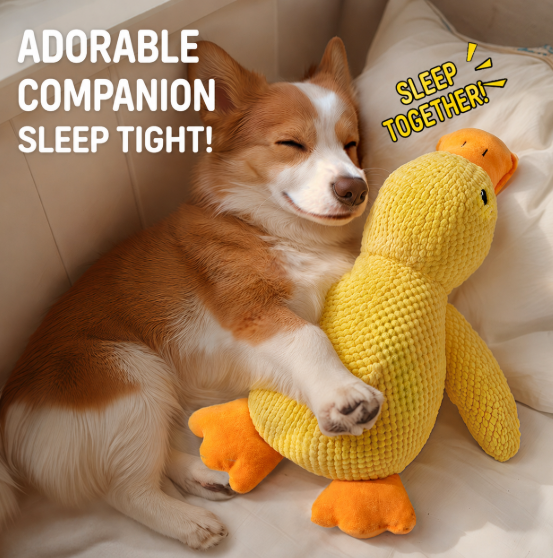
The 30–50 cm large format uses food-grade TPR - the chew-oriented end of the same plush program.
Specification Comparison Table
The table below maps the three configurations against the same specification levers. It reflects the product and application data behind this range, not market averages.
| Specification lever | Single universal spec | Dog-focused line | Cat-focused extension |
|---|---|---|---|
| Classification | Pet toy classified as both a dog toy and a cat toy; Small / Medium / Large Dog Toys and Interactive Pet Toy categories | Same shared classification, listed for the dog program | Same shared classification; no separate cat-only category in this program data |
| Size ladder | 10–15 cm, 15–20 cm, 20–30 cm, 30–50 cm - typically one or two brackets only | Brackets selected against the weight bands served | Sized from the same ladder, without weight-band mapping |
| Dog weight band | Not assigned | Under 5 kg, 5–15 kg, 15–30 kg; 5–40 kg scope stated for the small-size range | Not applicable in this program data |
| Chew resistance level | Not assigned | Light Chewer, Moderate Chewer, Aggressive Chewer | Not applicable in this program data |
| Material | Short plush and / or Oxford fabric and / or food-grade TPR, lead-free and phthalate-free | Short plush at 10–15 cm and 15–20 cm; Oxford fabric at 20–30 cm; TPR at 30–50 cm | Same material options, chosen by format rather than chew level |
| Interactive components | Squeaker device, heartbeat module, rope structure, TPR teething components, removable washable cover, anti-slip bottom design | Same component set | Same component set |
| Primary use cases | Companionship, teething training, emotional calming | Companionship, teething training, emotional calming, separation anxiety relief, tug training | Companionship, self-play, owner-pet interaction, squeaky interactive mode, comfort companion mode |
| Compliance references | GB/T 43839-2024; EN71 and CPSIA cited for reinforced chew-resistant construction | Same file applies to the shared format | Same file applies to the shared format |
| Style / commercial impact | Lowest style count; reported MOQ 500–3,000 pieces per style | One style per weight band and chew level activated | Additional styles only where the format or dimensions change |
Step-by-Step Breakdown: Building the Decision from the Compliance File Up
The sequence below reflects how this range is specified. It runs from the least flexible decision to the most flexible one, so that earlier choices do not have to be revisited later.
- Lock the classification and the compliance file first. Confirm that the item is filed as a pet toy classified as a dog toy and a cat toy, and agree which standards the file references - GB/T 43839-2024 "Safety Technical Requirements for Companion Animal (Pet) Products" is the standard cited in this specification, with EN71 and CPSIA cited for reinforced chew-resistant constructions. Company documentation also states compliance with EN71, ASTM F963 and GB6675. Any later change of material or dimension creates a new configuration that must be re-checked against the same file.
- Decide the size ladder before the artwork. Choose how many of the four brackets - 10–15 cm, 15–20 cm, 20–30 cm, 30–50 cm - the program will carry. This decision fixes tooling, packaging dimensions and, indirectly, style count.
- Assign chew levels only where the dog program supports them. Light, Moderate or Aggressive Chewer should be attached to specific styles, not to the whole line. Reinforced chew-resistant constructions in this range are described with an average service life of 12–24 months.
- Map weight bands to the brackets you kept. Under 5 kg, 5–15 kg and 15–30 kg are the stated bands, with a 5–40 kg scope for the small-size range. If the assortment excludes a bracket, exclude the corresponding band rather than averaging it.
- Select material by bracket, then confirm components. Short plush for the two smallest brackets, Oxford fabric for 20–30 cm, food-grade TPR for 30–50 cm. Then decide which supporting elements the style carries - squeaker device, heartbeat module, rope structure, TPR teething components, removable washable cover, anti-slip bottom design.
- Settle the structural requirements. Non-toxic eco-friendly materials, chew-resistant and tear-resistant construction, reinforced stitching, washable design and no stuffing for safety are the stated special requirements; a configuration that drops any of them changes the compliance position, not just the price.
- Validate washability and care labeling in the same round. Standard consumer guidance for plush pet toys is a gentle or delicate cold cycle followed by air drying, with electronic components removed first. Verify that the specified construction survives that cycle before finalizing the label.
- Then, and only then, count styles and confirm commercial terms. Reported terms for this supplier are an MOQ of 500–3,000 pieces per style and sample lead times of 7–15 days.

Jiameile operates a 6,800 m² facility in Tianchang City, Anhui Province, China, with approximately 230 staff and a 30-person R&D team.
Use Cases: Where Each Path Pays Off
Companionship and separation anxiety programs. This is the clearest case for a shared base format. The use case is defined by the pet's routine rather than by the animal's size, and the function carried by the product - relieving pet anxiety and enhancing interaction - applies across dog and cat listings. A single universal specification, or one base format with two listings, covers it.
Puppy teething and dental training. This is the clearest case for a dog-focused specification. Teething programs are tied to age and size, which means the weight band and chew level levers have to be switched on. TPR teething components and the reinforced stitching structure belong in this configuration, and the small-size brackets (10–15 cm, 15–20 cm) with short plush are the natural carriers.
Emotional calming and comfort companion use. Calming products are usually bought on softness and format, not on chew rating. A heartbeat module or a comfort companion mode works on the shared format, which means this use case does not force a separate dog line - although it does sit well alongside one.
Interactive and training settings. Squeaky interactive mode, tug training mode and owner-pet interaction are format-level functions. For training channels, the divider is chew level: a tug-style item specified for an aggressive chewer is a different product from one specified for a light chewer, even at the same size.
Retail and channel distribution. Pet retail chains, pet e-commerce, pet gift and pet subscription box channels tend to buy on assortment logic - how many sizes and materials fill a shelf or a category page. That is Path A territory, unless the channel's buyers ask weight-fit or durability questions, which moves the same program toward Path B. Export distribution for this range is weighted to the EU and USA, which account for the majority of a 70% export share.
FAQ
What safety standards apply when one Custom Plush Pet Toy is classified as both a dog toy and a cat toy?
In this range, the specification cites GB/T 43839-2024, "Safety Technical Requirements for Companion Animal (Pet) Products," while reinforced chew-resistant constructions are stated to comply with EN71 and CPSIA. Company-level documentation states product compliance with EN71, ASTM F963 and GB6675. Buyers should also note that in the United States, pet toys fall outside mandatory CPSC jurisdiction and ASTM F963 is applied voluntarily. Because a single SKU is classified for both dogs and cats, one compliance file can cover the shared format - but any change of material or dimension creates a new configuration that must be re-checked against that same file.
Can the same manufacturing setup produce both dog-focused and cat-focused plush pet toys?
Yes, because both are built on one base format. Short plush covers the 10–15 cm and 15–20 cm brackets, Oxford fabric covers 20–30 cm, and food-grade TPR covers 30–50 cm, and all three share the same matched components: squeaker device, heartbeat module, rope structure, TPR teething components, removable washable cover and anti-slip bottom design. Jiameile operates from a 6,800 m² facility in Tianchang City, Anhui Province, China, with approximately 230 staff and a 30-person R&D team, and supports OEM manufacturing, ODM customization and private label projects. What changes between a dog-focused and a cat-focused program is not the tooling - it is which specification levers are switched on.
What drives cost when a universal SKU is split into separate dog and cat lines?
The cost driver is style count, not the animal label. Reported commercial terms for this supplier put the typical MOQ at 500–3,000 pieces per style, so every additional dimension, material or component set becomes a separate style with its own minimum order. Keeping dog and cat items on a shared base format - and limiting the dog line to the weight bands and chew levels the assortment actually needs - keeps the number of styles, and therefore the minimum order commitment, under control. Unit pricing depends on the specific configuration and is quoted per project.
How long does sampling take, and what should be validated in the sample round?
Reported sample lead time is 7–15 days per style. In a head-to-head evaluation, validate three things: dimension against the intended bracket (10–15 cm, 15–20 cm, 20–30 cm or 30–50 cm); the material and stitching of the intended configuration (short plush, Oxford fabric or food-grade TPR with a reinforced stitching structure); and any interactive component being carried, such as a squeaker device, heartbeat module, rope structure or TPR teething component. Confirm washability in the same round - standard guidance for plush pet toys is a gentle cold cycle followed by air drying, with electronic components removed first.
What capacity and continuity signals should be checked before committing to a split?
Annual production capacity is stated at 6 million units from a 6,800 m² facility with approximately 230 staff, and export business accounts for 70% of total sales with the EU and USA as main markets - a distribution profile that matters when dog and cat SKUs are scheduled into the same season. Before committing, request a sample and a quote for the exact size and material combination you intend to order, including the chew level and weight band you plan to publish. You can reach Jiameile at winnie@jml-toys.com or on WhatsApp at +86 173-7538-5845.
Conclusion: Choose the Format First, Then the Line
The dog versus cat question is often framed as a species decision. In the specification data behind this range, it is not. The classification covers both, the size ladder covers both, the materials cover both, and the use cases - companionship, teething training, emotional calming, interactive play - cover both.
What separates the two paths is whether the program assigns the two dog-facing levers: chew resistance level (Light, Moderate, Aggressive) and suitable dog weight (under 5 kg, 5–15 kg, 15–30 kg, with the 5–40 kg scope stated for the small-size range). If those levers matter to your channels, the dog side of the line needs its own specification, and the cleanest way to get there is a shared base format with a defined dog variant rather than two independent development projects. If they do not matter yet, a single universal specification with a deliberately limited size ladder is the proportionate starting point.
The decision is reversible in one direction only: you can add weight bands and chew levels to an existing base format later, but you cannot retroactively make a published product claim about durability or fit that was never specified. That is the reason to settle the format before the artwork, not after.
Next Step: Compare the Two Paths on Your Own Specification
Jiameile - Tianchang Jiameile Gifts Co., Ltd. - manufactures plush and textile-based pet toys for OEM, ODM and private label programs, with export markets covering the EU and USA.
Send your target size brackets, dog weight bands and desired chew levels, and request a sample or a quote for the configuration you are considering.
Email: winnie@jml-toys.com | WhatsApp: +86 173-7538-5845 | Blog: blog.jiameiletoys.com
Have Questions or Need More Details?
Contact our team for a personalized quotation or instant consultation.
Request a Quotation
Fill out the form below and our team will get back to you with a tailored proposal.
WhatsApp Direct Chat
Prefer to chat in real-time? Message us on WhatsApp for instant assistance & quick answers.
- Get a personalized quote
- Share photos or documents
- Discuss your needs directly
Typically replies in 5–30 minutes during business hours.