Multi-Dog Households Tear Through Dog Plush Toys: A Problem-Solving Playbook for Retail Buyers
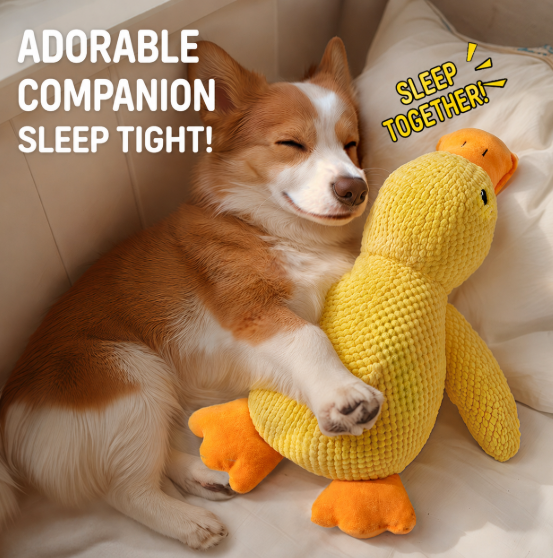
A multi-dog household can expose a weak plush assortment faster than almost any single-dog home. The pattern is consistent: one dog carries, cuddles and squeaks a toy gently, while another dog treats the same toy as a tug, shake and tear target. The shared plush fails, the retailer sees returns, and the buyer has to explain why a product that looked soft and appealing on shelf did not survive real household use.
The practical answer is not to remove plush from the range. It is to assort plush by three variables that must agree: chew level, size, and construction. In product data from Jiameile, dog plush and pet toy ranges are specified with Light, Moderate and Aggressive Chewer ratings; dimensions from 10–15 cm to 30–50 cm; suitability for dogs from 5–40 kg; and reinforced stitching options. Reinforced chew-resistant series average 12–24 months of service life, compared with 3–12 months for standard plush toys, while rubber/TPR toys are listed at 12–36 months depending on usage intensity.
Problem Definition: Why Shared Plush Toys Fail in Multi-Dog Homes
The return trigger is usually a mismatch, not a bad toy in isolation. A plush toy that is appropriate for a light-chewing dog may be sold into a household where a stronger dog shares the same toy. The stronger dog does not use the toy the way the lighter dog does. It may bite, shake, tug, or work on seams. The product then fails in a way that looks like a quality problem to the consumer, even when the toy was only specified for a different chew level.
Retail buyers see three common mismatch patterns:
- Chew-level mismatch: a standard plush toy is placed in the same basket as an aggressive chewer. The product data may list Light, Moderate and Aggressive Chewer ratings, but if the retail assortment does not separate them, the consumer cannot choose correctly.
- Size mismatch: a small plush toy is given to a larger dog, or a large toy is offered to a small dog that prefers a compact comfort item. Product dimensions are listed as 10–15 cm, 15–20 cm, 20–30 cm and 30–50 cm, with stated suitability for dogs from 5–40 kg and weight bands under 5 kg, 5–15 kg and 15–30 kg in product specifications.
- Construction mismatch: basic plush, reinforced plush and rubber/TPR products are treated as interchangeable. The data does not support that assumption. Reinforced chew-resistant series are listed at 12–24 months average service life; standard plush toys at 3–12 months; rubber/TPR toys at 12–36 months depending on usage intensity.
There is also a safety dimension. General pet toy safety guidance from the American Humane Society recommends toys made of durable, non-toxic materials and warns against items small enough to swallow or that can splinter. For plush toys, that means the retail buyer should think about size, seam integrity, filling, squeaker security and material compliance before treating a low-cost plush item as a broad household solution.
Industry Background: Demand Is Growing, but Assortment Discipline Matters
The dog toy category is not a niche add-on. Custom Market Insights (CMI) reports the global dog toys market at USD 4.16 billion in 2025, with a projected CAGR of 8.51% from 2025 to 2034. That figure covers dog toys including chew, interactive and plush products. For retail buyers, the implication is not simply that demand is rising. It is that the category is wide enough to support more precise segmentation by dog size, chew behaviour and household type.
Trade classification also reflects the product type. Stuffed toys representing animals are classified under HS code 9503.00.41. This matters for buyers who need to align product descriptions, customs documentation and retail assortment records with the actual product construction.
Compliance expectations are part of the background, not an afterthought. Product specifications for the pet toy range reference GB/T 43839-2024, the Safety Technical Requirements for Companion Animal (Pet) Products. The product scope also states compliance with international safety standards such as EN71 and CPSIA. In the broader pet toy safety discussion, ASTM F963, EN71 and CPSIA are commonly referenced for market access and retail qualification. A buyer should treat the standard reference and the supplier’s certificate package as two separate checks.
Buyer caution: marketplace listings often advertise certifications such as CE, EN71, ASTM, CPC, UKCA, REACH and ISO9001:2015. Those platform-listed claims are not the same as verified documents. Retail buyers should ask for the actual certificate scope, the product model it covers, and the test report that matches the shipment.
Tianchang Jiameile Gifts Co., Ltd. is a China-based manufacturer established in 2004 that specializes in developing and manufacturing plush and textile-based toys, including pet toys. The company operates a 6,800 m² facility with approximately 230 staff, a 30-engineer and technician R&D team, and an annual production capacity of 6 million units. Its major markets are the EU and USA, and export business accounts for 70% of total sales. Credentials listed in company data include ICTI, BSCI, Disney FAMA, ISO 9001 and ISO 14001. These facts are relevant to retail buyers because they describe a supplier that can support both standard plush programs and reinforced chew-resistant development, not just a trading intermediary.
Detailed Solution: Build the Assortment Around Chew Level, Size and Construction
The most reliable way to reduce multi-dog plush failures is to stop treating “dog plush toy” as one product type. The retail assortment should separate products by chew rating, size range and construction level. That structure helps the consumer choose for the dog in front of them, and it helps the buyer defend the range when a return is questioned.
1. Specify chew level at SKU level
Product data lists Light Chewer, Moderate Chewer and Aggressive Chewer resistance levels. These ratings should appear on the SKU, the packaging, the shelf label and the e-commerce filter. A light-chewer plush toy can be positioned for companionship, cuddling and gentle play. A moderate-chewer plush toy can be positioned for interactive play and supervised tugging. An aggressive-chewer product should be specified with reinforced construction and a clear lifespan expectation. If one shared toy is sold without a chew rating, the consumer has no way to know whether it is suitable for the stronger dog in the household.
2. Use the size grid to prevent household mismatch
Product dimensions are listed as 10–15 cm, 15–20 cm, 20–30 cm and 30–50 cm depending on the model. Suitable dog weight is stated as under 5 kg, 5–15 kg and 15–30 kg in product specifications, with an overall suitability range of 5–40 kg in the product scope. These ranges should be used as a starting point, not as a substitute for observing the dog. A small dog can be a determined chewer, and a larger dog may prefer a soft comfort item. The retail buyer should stock overlapping sizes so the consumer can match the toy to the dog’s weight and chewing style.
3. Require reinforced construction for stronger chewers
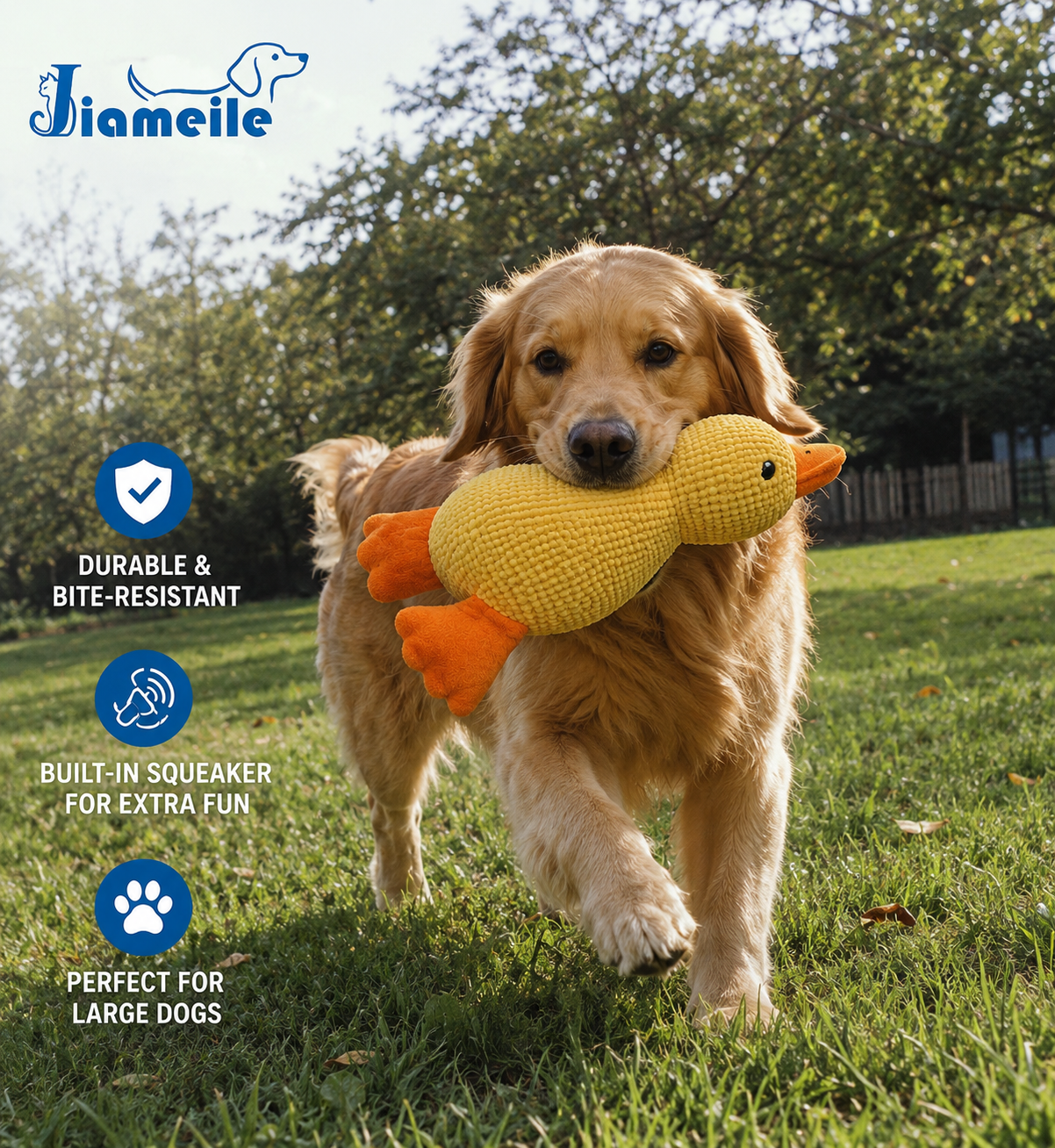
For moderate and aggressive chewers, the construction specification matters more than surface softness. Product data lists reinforced stitching technology for plush constructions, and reinforced chew-resistant series are described as using wear-resistant and tear-resistant materials. The stated average service life is 12–24 months for reinforced chew-resistant series, compared with 3–12 months for standard plush toys. Rubber/TPR toys are listed at 12–36 months depending on usage intensity. These are not guarantees for every dog, but they give the retail buyer a defensible product hierarchy.
4. Match materials to the intended use
The range includes short plush, Oxford fabric and food-grade TPR. Where TPR is specified, product data describes it as food-grade TPR that is lead-free and phthalate-free. Plush and fabric constructions are intended for companionship, teething training and emotional calming. The application data also lists possible matched equipment such as squeaker devices, heartbeat modules, rope structures, TPR teething components, removable washable covers and anti-slip bottom designs. Not every SKU needs every feature. The buyer should match the feature set to the use case: a comfort plush toy does not need the same construction as an aggressive-chewer tug toy.
5. Confirm compliance before the purchase order
The product specification references GB/T 43839-2024, and the product scope states EN71 and CPSIA compliance. For the EU market, EN71 compliance and non-toxic, eco-friendly materials are listed application requirements. For the US market, CPSIA and ASTM F963 are part of the standard conversation. The retail buyer should request the certificate and test report package for the exact model, material and destination market. Company credentials such as ICTI, BSCI, Disney FAMA, ISO 9001 and ISO 14001 support a supplier qualification review, but they do not replace product-level compliance documents.
6. Set lifespan and replacement expectations
No plush toy is indestructible. The product data gives a useful lifespan hierarchy: standard plush toys 3–12 months, reinforced chew-resistant series 12–24 months, and rubber/TPR toys 12–36 months depending on usage intensity. Retail buyers should communicate those expectations clearly, especially for aggressive-chewer products. A reinforced plush toy is not a lifetime chew product. It is a plush product with a stronger construction and a longer expected service life than standard plush.
Decision rule: if a household has one light chewer and one aggressive chewer, do not stock one shared plush toy as the only solution. Stock at least one comfort-focused plush item and one reinforced chew-resistant item, then label the difference clearly.
Step-by-Step Breakdown: A Retail Buyer’s Problem-Solving Sequence
Step 1: Audit the household or customer segment
Start with the actual buying situation. A multi-dog household may include a puppy, a senior small dog and a strong adult dog. The buyer should map the range to those combinations rather than to a single average dog. Ask how many dogs are in the household, what sizes they are, and whether the toy is intended for comfort, teething, interactive play or supervised chewing.
Step 2: Separate comfort plush from chew-target plush
Comfort plush is used for cuddling, sleeping and anxiety relief. Chew-target plush is used for mouthing, tugging and stronger play. Product data lists companionship, teething training and emotional calming as core functions, and separation anxiety relief is a listed application. The retail assortment should reflect those different jobs. A soft plush toy for cuddling should not be expected to survive the same treatment as a reinforced chew-resistant toy.
Step 3: Match size to dog weight and mouth size
Use the listed dimensions and weight bands as a starting grid. For small dogs, 10–15 cm and 15–20 cm options may be appropriate. For medium dogs, 20–30 cm options are listed. For larger dogs, 30–50 cm options are listed. The overall suitability range is 5–40 kg, with weight bands under 5 kg, 5–15 kg and 15–30 kg in product specifications. The buyer should avoid presenting a small plush toy as a universal solution for a large aggressive chewer.
Step 4: Specify reinforced stitching for moderate and aggressive chewers
Reinforced stitching is the minimum construction upgrade for a plush toy that will be shared with a stronger chewer. The product data also describes wear-resistant and tear-resistant materials for reinforced chew-resistant series. The buyer should ask the supplier to confirm which materials and stitching methods apply to each SKU, and whether the product is intended for supervised or unsupervised use.
Step 5: Verify materials and compliance documents
Check the material specification, the safety standard reference and the destination-market requirements together. GB/T 43839-2024 is referenced in the product specification. EN71 and CPSIA are stated in the product scope. For the EU, EN71 compliance and non-toxic, eco-friendly materials are listed requirements. For the US, CPSIA and ASTM F963 belong in the compliance review. The buyer should also confirm whether TPR components are food-grade, lead-free and phthalate-free where TPR is used.
Step 6: Set a realistic service-life message
The service-life message should match the construction. Standard plush toys are listed at 3–12 months; reinforced chew-resistant series at 12–24 months; rubber/TPR toys at 12–36 months depending on usage intensity. This prevents the consumer from comparing a comfort plush item with an aggressive-chewer product on the same durability expectation.
Step 7: Sample and pilot before a full rollout
Order samples across chew levels and sizes, then test them in the intended household or retail segment. Check seam integrity, surface material, squeaker security, washability and size acceptance. For a multi-dog household, test the reinforced item with the stronger dog and the comfort item with the lighter dog. A sample pilot is more useful than a shelf-full of unsegmented plush toys.
Step 8: Merchandise the difference
Use shelf labels, packaging icons and e-commerce filters to show Light, Moderate and Aggressive Chewer ratings, size range and intended use. The consumer should be able to see why one plush toy is for cuddling and another is for stronger chewing. This is also a return-reduction measure: clear labelling reduces the chance that a comfort plush toy is bought for an aggressive chewer.
Use Cases: Where This Playbook Applies
Multi-dog household with mixed chew levels
This is the core scenario. One dog is a light chewer and another is an aggressive chewer. The retail solution is a two-part assortment: a comfort-focused plush toy for the light chewer and a reinforced chew-resistant plush or TPR option for the stronger dog. Shared toys should be supervised, and the buyer should avoid positioning one plush SKU as the only toy for the whole household.
Pet retail chains and supermarket pet aisles
Product data lists pet retail chains, pet e-commerce, supermarkets and chain stores as applicable industries. In these channels, the chew-level and size structure can be merchandised with simple shelf navigation. The buyer can create a “mixed household” set that includes different sizes and chew ratings rather than a single plush bin.
E-commerce and subscription boxes
Online buyers cannot squeeze the toy before purchase. Clear SKU titles, dimension data and chew ratings do more work. Subscription boxes can use a mixed household profile to send one comfort item and one reinforced item, reducing the risk that the entire box is judged by the aggressive chewer’s behaviour.
Veterinary, boarding, grooming and training settings
These settings may have dogs of different sizes and stress levels in the same facility. Product data lists veterinary and pet care, pet boarding and pet hotel, pet grooming and pet training as applicable industries. A facility assortment should separate washable comfort plush from reinforced chew items, and should avoid leaving small plush toys with unsupervised large dogs.
Puppy teething and adult companionship
Plush puppy teething toys and adult comfort plush toys are not the same purchase. Teething products need to support mouthing and training, while companion products support calming and sleep comfort. The product data lists teething training and emotional calming as functions, so the retail assortment can separate them by age and use case.
Anxiety relief and separation comfort
Application data lists separation anxiety relief and daily pet companionship. A heartbeat plush toy or soft comfort plush toy can be positioned for calming, but it should not be sold as an aggressive-chewer product. The construction and chew rating must match the emotional-support use case.
Comparison Table: Product Data by Size Category
The table below uses only product data available for the range. It is a specification reference, not a ranking. Buyers should confirm the exact SKU data before listing.
| Data point | Small Dog Toys | Medium Dog Toys | Large Dog Toys |
|---|---|---|---|
| Listed dimensions | 10–15 cm or 15–20 cm | 20–30 cm | 30–50 cm |
| Suitable dog weight data | Under 5 kg, 5–15 kg, 15–30 kg; overall scope 5–40 kg | Under 5 kg, 5–15 kg, 15–30 kg; overall scope 5–40 kg | Under 5 kg, 5–15 kg, 15–30 kg; overall scope 5–40 kg |
| Listed material | Short Plush | Oxford Fabric | Food-Grade TPR |
| Chew resistance levels | Light, Moderate, Aggressive Chewer | Light, Moderate, Aggressive Chewer | Light, Moderate, Aggressive Chewer |
| Reinforced construction | Reinforced stitching technology listed; reinforced chew-resistant series available | Reinforced stitching technology listed; reinforced chew-resistant series available | Reinforced stitching technology listed; reinforced chew-resistant series available |
| Service-life data | Reinforced series 12–24 months; standard plush 3–12 months; rubber/TPR 12–36 months | Reinforced series 12–24 months; standard plush 3–12 months; rubber/TPR 12–36 months | Reinforced series 12–24 months; standard plush 3–12 months; rubber/TPR 12–36 months |
| Safety reference | GB/T 43839-2024; EN71 and CPSIA stated in product scope | GB/T 43839-2024; EN71 and CPSIA stated in product scope | GB/T 43839-2024; EN71 and CPSIA stated in product scope |
| Listed functions | Companionship, teething training, emotional calming | Companionship, teething training, emotional calming | Companionship, teething training, emotional calming |
Source: Jiameile product specification and product scope data. Service-life figures are stated averages, not guarantees for every dog or household.
Supplier Capability and Proof: What Jiameile Can Support
For retail buyers, the supplier’s ability to support a segmented plush range matters as much as the product itself. Tianchang Jiameile Gifts Co., Ltd. operates a 6,800 m² manufacturing facility, employs approximately 230 staff, and lists an annual production capacity of 6 million units. The R&D team includes 30 engineers and technicians. Company data also lists more than 20 years of toy manufacturing experience, with major markets in the EU and USA and export business accounting for 70% of total sales.
The company has been officially authorized to produce mascots for multiple world-class events, including the FIFA World Cup and UEFA Euro. That experience is relevant to retail buyers who need controlled production, character-based programs or custom plush pet toy projects. Certifications listed in company data include ICTI, BSCI, Disney FAMA, ISO 9001 and ISO 14001. These credentials should be reviewed alongside product-level EN71, CPSIA and GB/T 43839-2024 documentation.


FAQ: Dog Plush Toys for Multi-Dog Retail Assortments
Which safety standards should retail buyers verify for dog plush toys?
Product specifications reference GB/T 43839-2024, the Safety Technical Requirements for Companion Animal (Pet) Products. The product scope also states EN71 and CPSIA compliance, and ASTM F963 is commonly referenced in pet toy safety discussions. For the EU market, EN71 compliance and non-toxic, eco-friendly materials are listed application requirements. Company data for Jiameile lists ICTI, BSCI, Disney FAMA, ISO 9001 and ISO 14001. Buyers should verify the certificate scope and test report for the exact SKU and destination market, not rely only on marketplace listing claims.
Can one supplier cover Light, Moderate and Aggressive Chewer assortments in multiple sizes?
Yes, based on the product data. The range lists Light Chewer, Moderate Chewer and Aggressive Chewer resistance levels, dimensions from 10–15 cm to 30–50 cm, and suitability for dogs from 5–40 kg, with weight bands under 5 kg, 5–15 kg and 15–30 kg in product specifications. Reinforced stitching technology is listed for plush constructions, and reinforced chew-resistant series are listed at 12–24 months average service life. Jiameile supports this with a 6,800 m² facility, 6 million-unit annual capacity and a 30-engineer and technician R&D team.
What drives the budget for a reinforced dog plush toy program?
The main cost drivers in the available product data are size, material, chew rating, reinforced stitching, compliance documentation, packaging and order volume. The range includes short plush, Oxford fabric and food-grade TPR, with dimensions from 10–15 cm to 30–50 cm and Light, Moderate and Aggressive Chewer ratings. No verified unit pricing is included in the available data, so buyers should request a quotation based on the exact SKU, material, size, packaging and order quantity.
How should buyers validate samples before a multi-dog retail rollout?
Request samples across chew levels and sizes, then check seam integrity, surface material, squeaker security, washability and size acceptance. Test the reinforced item with a stronger dog and the comfort item with a lighter dog. Confirm that the sample matches the listed dimensions, chew rating and material, and request the compliance documents for the model. The product data lists squeaker devices, heartbeat modules, rope structures, TPR teething components, removable washable covers and anti-slip bottom designs as possible matched equipment, so the sample review should confirm which features are actually included.
What should buyers confirm about lead time and production capacity?
Lead time is not specified in the available product data, so buyers should confirm production scheduling and delivery directly with the supplier. Jiameile lists a 6,800 m² facility and 6 million-unit annual production capacity, which can support a capacity discussion, but the exact lead time must be confirmed for the SKU, material, order quantity and destination. For inquiries, contact Winnie at winnie@jml-toys.com or call +86 17375385845.
Conclusion: Sell the Right Plush to the Right Dog
Multi-dog households do not fail plush toys because plush is inherently unsuitable. They fail products when chew level, size and construction are not aligned. Retail buyers can reduce returns by separating Light, Moderate and Aggressive Chewer ratings, using the 10–15 cm to 30–50 cm size grid for dogs from 5–40 kg, and specifying reinforced stitching for stronger chewers. The product hierarchy should be visible: standard plush at 3–12 months, reinforced chew-resistant series at 12–24 months, and rubber/TPR toys at 12–36 months depending on usage intensity.
Compliance and supplier capability complete the picture. Product data references GB/T 43839-2024, EN71 and CPSIA, while Jiameile company data lists ICTI, BSCI, Disney FAMA, ISO 9001 and ISO 14001, a 6,800 m² facility, 6 million-unit annual capacity and a 30-engineer R&D team. For retail buyers, that combination supports a more disciplined plush assortment: one set for comfort and cuddling, one set for teething and interactive play, and one reinforced set for the dog that treats every toy as a challenge.
Next Step for Retail Buyers
If you are building a multi-dog plush assortment, start with a sample set that covers Light, Moderate and Aggressive Chewer ratings, plus the size bands your customers actually own. Jiameile can review specifications against your target market and confirm the available materials, reinforced stitching options and compliance documents.
Contact Winnie at winnie@jml-toys.com or call +86 17375385845 to request a sample discussion, quotation, or specification review for a dog plush toy program.
Have Questions or Need More Details?
Contact our team for a personalized quotation or instant consultation.
Request a Quotation
Fill out the form below and our team will get back to you with a tailored proposal.
WhatsApp Direct Chat
Prefer to chat in real-time? Message us on WhatsApp for instant assistance & quick answers.
- Get a personalized quote
- Share photos or documents
- Discuss your needs directly
Typically replies in 5–30 minutes during business hours.