One Household, Two Dogs: Solving Custom Plush Pet Toy Selection for 5 kg and 30 kg
For a household with a 5 kg dog and a 30 kg dog, the practical answer is not to force one custom plush pet toy to serve both animals. The lower-risk decision is a two-profile program: a small-size, light-chew toy for the 5 kg dog, and a larger-size, moderate-to-aggressive chew toy for the 30 kg dog, both built with non-toxic materials and reinforced stitching. A single shared toy can work as a supplement, but it should not be the only specification when the two dogs differ this much in weight, bite force, and play style.
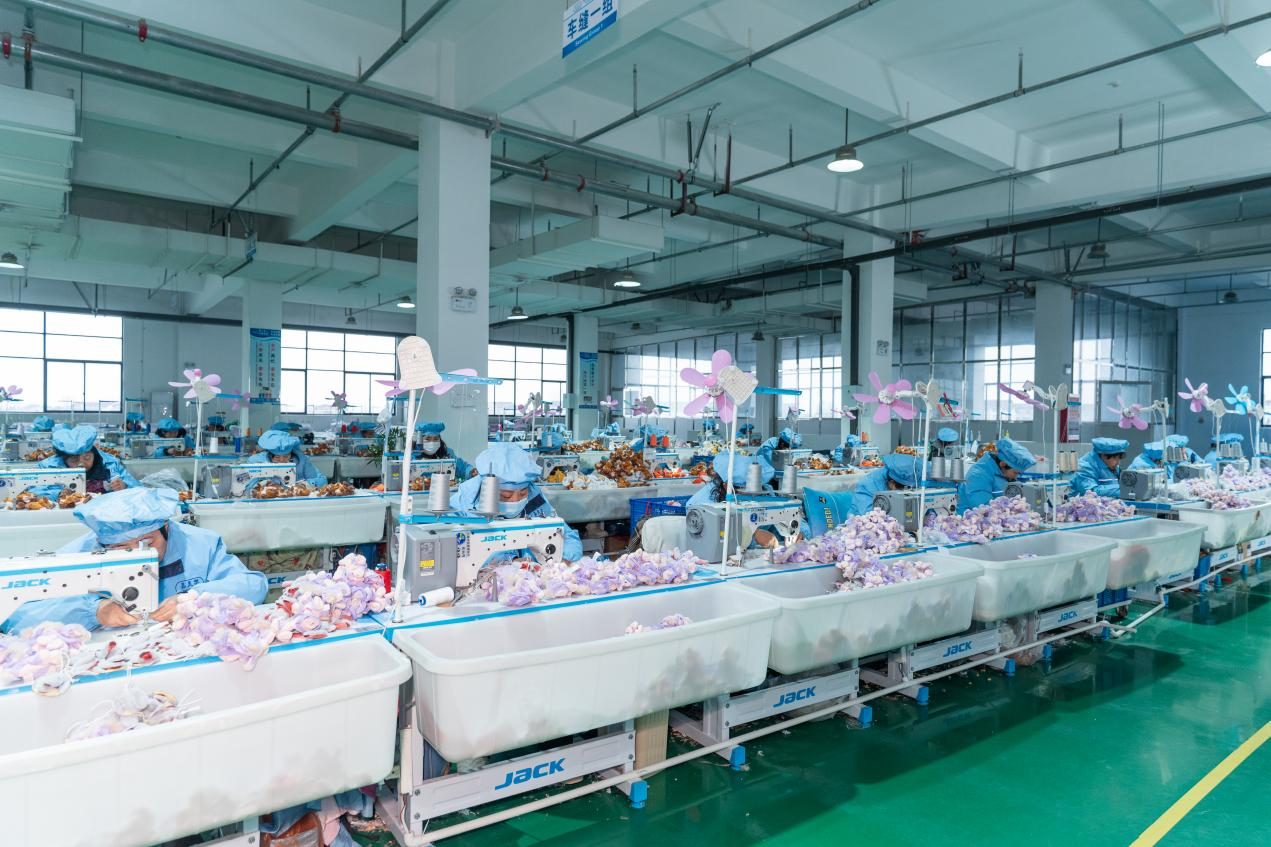
Tianchang Jiameile Gifts Co., Ltd. (Jiameile) is a China-based manufacturer of plush and textile-based toys, including custom plush pet toys, with OEM/ODM and private-label support. The company reports a 6,800 m² facility, approximately 230 employees, a 30-person R&D team, and annual output of 6 million units. This article uses that manufacturing context, the provided product-comparison facts, and the assigned selection brief to explain how a buyer can specify two plush toy profiles instead of one compromise SKU.
Problem Definition: Why One Plush Toy Fails a Two-Dog Home
The problem is not simply that one dog is small and the other is large. The problem is that four variables change at the same time: toy dimension, weight suitability, chew resistance, and the interactive feature set. A toy sized for a 5 kg dog can be too small and too lightly reinforced for a 30 kg dog. A toy sized for a 30 kg dog can be too large, too heavy, or too strongly reinforced for a small dog to carry, mouth, or settle with comfortably.
In a multi-dog household, the buyer is also making a retail or procurement decision, not only a pet-care decision. If the household is a consumer, the buyer wants fewer failed purchases and less frequent replacement. If the buyer is a retailer or brand owner, the buyer needs a clear size and chew-resistance architecture that can be explained on a product page, in a retail bundle, or in an OEM/ODM quotation. In both cases, the decision improves when the product range is split into defined weight bands and chew levels.
The assigned brief frames the solution around weight-specific options under 5 kg, 5–15 kg, 15–30 kg, and 5–40 kg suitability; dimensions of 10–15 cm, 15–20 cm, 20–30 cm, and 30–50 cm; and chew-resistance levels of Light, Moderate, and Aggressive. Those ranges are planning tools. They help the buyer ask better questions before sampling, rather than assuming that one plush toy can be all things to two very different dogs.
Industry Background: Why Size and Chew Resistance Matter in Custom Plush Pet Toys
Plush remains a major format in the dog toy category. Custom Market Insights estimates that plush and soft toys account for approximately 30% of the dog toys market, while Fortune Business Insights reports that the global pet toys market reached USD 9.60 billion in 2025. In the US, the American Pet Products Association reports that the Pet Supplies, OTC Meds & Live segment reached USD 34.4 billion in 2024. These figures do not decide a single household purchase, but they explain why buyers increasingly expect plush toys to be specified by size, durability, and use case rather than treated as a generic soft item.
Compliance expectations also shape the selection. In the US, pet toys fall outside mandatory CPSC jurisdiction, and ASTM F963 is voluntarily applied. That does not remove the need for material safety and quality control; it means the buyer should ask which standards and tests are being applied to the exact product. Jiameile reports that its products comply with EN71, ASTM F963, and GB6675, and the company states that it holds ICTI, BSCI, Disney FAMA, ISO 9001, and ISO 14001 certifications. For a two-dog household or a retail program, those claims should be matched to the specific SKU, materials, squeaker, and any electronic module.

Detailed Solution: Build a Two-Profile Custom Plush Program
The solution is a two-profile custom plush pet toy program under one supplier relationship. The 5 kg dog receives a small-size, light-chew profile. The 30 kg dog receives a larger, moderate-to-aggressive profile. Both profiles can share the same non-toxic material direction and reinforced stitching, but they should not share the same dimension, stuffing density, or chew-resistance target unless the supplier has validated that single SKU against both dogs.
1. Weight-specific suitability
The assigned brief provides four suitability bands: under 5 kg, 5–15 kg, 15–30 kg, and 5–40 kg. For a 5 kg dog, the under-5 kg band or the lower end of the 5–15 kg band is the starting point. For a 30 kg dog, the 15–30 kg band or a 5–40 kg suitability claim is the starting point. The 5–40 kg option can be useful when a retailer wants a broader-range SKU, but the buyer should still confirm the chew-resistance level. A broad weight claim does not automatically make a toy suitable for an aggressive chewer.
2. Dimension ranges
The brief lists four dimension ranges: 10–15 cm, 15–20 cm, 20–30 cm, and 30–50 cm. For the 5 kg dog, 10–15 cm or 15–20 cm is a practical starting point for a carryable plush toy. For the 30 kg dog, 20–30 cm or 30–50 cm is a more realistic starting point for a toy that can be gripped, carried, and chewed without being swallowed or treated as a small mouth object. These are starting ranges, not a substitute for sample validation with the actual dogs.
3. Chew-resistance levels
The brief uses three chew-resistance levels: Light, Moderate, and Aggressive. A 5 kg dog that plays gently is usually a Light starting point. A 5–15 kg dog may move into Light-to-Moderate depending on behavior. A 30 kg dog is more likely to need Moderate or Aggressive, especially if it habitually mouths, shakes, or works on seams. The label should be supported by construction, not only by a size label. For heavy-duty and tear-resistant custom plush pet toys, the buyer should ask how the reinforcement is built: double-layer fabric, reinforced stitching, seam placement, and the type of internal squeaker housing.
4. Materials and reinforced stitching
Jiameile reports chew-resistant reinforced stitching, non-toxic eco-friendly materials, interactive squeaker devices, and washable designs. The company also reports product materials including short plush, Oxford fabric, and TPR. For a two-dog program, material selection should follow the chew level. A small dog may do well with a softer short-plush surface and a light reinforcement package. A large dog needs a more durable outer material and a reinforced seam structure that can tolerate repeated mouthing. The product should remain a plush toy, not a chew toy substitute, but the construction should match the expected intensity of play.
5. Service life and total cost of ownership
Service life is central to the decision because the two dogs will not wear out a toy at the same rate. The assigned brief for the reinforced chew-resistant series uses a 12–24 month average service-life assumption. The available product-comparison units in this article use a narrower class-level comparison: reinforced plush at 3–12 months versus basic plush at 1–3 months, described as a 2–4x lifespan increase for reinforced plush. These are not the same measurement. For procurement, treat 12–24 months as a planning assumption to confirm SKU by SKU, and use the 3–12 month versus 1–3 month class comparison when evaluating replacement cost.
The budget logic is clear. Basic plush toys have the lowest cost but require frequent replacement. Reinforced plush toys carry a medium cost, but they offer balanced performance, lower breakage, and low maintenance. For a 30 kg dog, the reinforced profile is usually the more credible starting point. For the 5 kg dog, a lighter reinforced or standard plush profile may be sufficient, but it should still be checked for seam security and washability.
6. Interactive features: squeaker devices and heartbeat modules
Interactive custom plush pet toys can carry features that change the use case. Jiameile reports interactive squeaker devices as a product feature. The assigned brief also notes heartbeat modules as an option for companionship, teething training, and emotional calming. Squeaky custom plush pet toys can support active play and engagement. Teething custom plush pet toys can support a puppy or young dog that mouths and chews. A heartbeat module may be specified for calming and companionship, but the buyer should confirm that the module is available for the target SKU, how it is secured, and how it is removed before washing.
Step-by-Step Breakdown: How to Specify the Two-Dog Program
- Profile each dog separately. Record weight, mouthing style, play intensity, and whether the dog settles with a toy or destroys it quickly. For the 5 kg dog, note whether it carries, nuzzles, or chews. For the 30 kg dog, note whether it shakes, pulls, or works on seams.
- Map weight to a suitability band. Start the 5 kg dog in under 5 kg or 5–15 kg. Start the 30 kg dog in 15–30 kg or 5–40 kg. Do not use a broader range as proof of durability without checking the chew level.
- Select a dimension range. Start the small dog at 10–15 cm or 15–20 cm. Start the large dog at 20–30 cm or 30–50 cm. Confirm that the toy can be carried and gripped safely by the intended dog.
- Set the chew resistance. Use Light for a gentle small dog, Moderate for a stronger medium or large dog, and Aggressive only when the construction supports it. Ask for the reinforcement details behind the label.
- Choose interactive features by use case. Use a squeaker for active play and engagement. Use a heartbeat module only if the SKU supports it and the module can be removed for washing. Match teething and calming features to the individual dog, not to the household as a whole.
- Specify materials and stitching. Confirm short plush, Oxford fabric, or TPR where relevant. Require non-toxic materials and reinforced stitching at the stress points. Ask how the squeaker is housed and how the seams are finished.
- Plan washability and compliance. Most plush dog toys can be washed on a gentle cold cycle and air dried, and toys with electronic parts should have components removed first. Match the wash instruction to the chosen materials and module. Confirm the applicable EN71, ASTM F963, or GB6675 documentation for the exact SKU.
- Sample and validate. Jiameile reports sample lead times of 7–15 days and a typical MOQ of 500–3,000 pieces per style. Use the sample to test size, squeaker response, seam security, washability, and whether the two dogs actually use the toys as intended.
Use Cases
Multi-dog household. A two-SKU purchase reduces conflict over one toy and gives each dog a size-appropriate object. The small dog gets a small-size custom plush pet toy; the large dog gets a heavy-duty or tear-resistant profile.
Retail bundle. A pet specialty store or e-commerce seller can present a small-and-large bundle for two-dog homes. The bundle should explain the weight band, dimension, and chew level for each item rather than relying on a single size label.
OEM/ODM program. A brand owner can build a size and chew-resistance matrix under one custom plush pet toy program. Jiameile reports OEM, ODM, and private-label support, which is relevant when the buyer needs different sizes, materials, and interactive features under one development process.
Teething and companionship. A teething custom plush pet toy can be specified for a young dog, while a squeaky or heartbeat-enabled toy can support engagement or calming. The feature set should be assigned per dog, not assumed to transfer from the small dog to the large dog.
Comparison Table: Basic Plush vs Reinforced Plush
The table below uses the provided product-comparison facts. It compares product classes, not the individual 5 kg or 30 kg dog.
| Attribute | Basic Plush Toy | Reinforced Plush Toy |
|---|---|---|
| Core structure | No reinforced structure; only basic fabric and stuffing | Double-layer fabric and reinforced stitching |
| Lifespan | 1–3 months | 3–12 months, described as a 2–4x lifespan increase |
| Maintenance | Frequent replacement required | Lower breakage and low maintenance |
| Cost position | Lowest cost | Medium cost |
| Efficiency and performance | Low durability and high loss | Balanced performance and balanced efficiency |
| Suitable programs | Low-end retail, promotional gifts, short-term use | E-commerce platforms, pet specialty stores, retail chains, long-term pet companionship |
Selection Matrix for a 5 kg and 30 kg Dog
The matrix below converts the assigned selection brief into a starting point. Final parameters should be confirmed in the quotation and sample.
| Dog profile | Weight suitability starting point | Dimension starting point | Chew resistance starting point | Interactive feature focus |
|---|---|---|---|---|
| 5 kg dog | Under 5 kg or 5–15 kg | 10–15 cm or 15–20 cm | Light, with Light-to-Moderate considered for stronger play | Squeaker for engagement; heartbeat module only if the SKU supports it and it can be removed for washing |
| 30 kg dog | 15–30 kg or 5–40 kg | 20–30 cm or 30–50 cm | Moderate or Aggressive | Reinforced seam structure and secure squeaker housing; confirm module suitability before adding electronics |
FAQ
What compliance checks should a buyer request for custom plush pet toys used by a 5 kg and a 30 kg dog?
Request the company-stated certifications and product test documents relevant to the target market. Jiameile states that it holds ICTI, BSCI, Disney FAMA, ISO 9001, and ISO 14001, and that its products comply with EN71, ASTM F963, and GB6675. In the US, pet toys fall outside mandatory CPSC jurisdiction and ASTM F963 is voluntarily applied, so the buyer should confirm which tests apply to the exact SKU, materials, squeaker, and any heartbeat module.
Can one supplier produce different sizes and chew levels for the two dogs?
Yes, provided the supplier supports a size and feature matrix. Jiameile reports plush pet toys for dogs and cats in small, medium, and large sizes, with materials such as short plush, Oxford fabric, and TPR. Its reported feature set includes chew-resistant reinforced stitching, non-toxic eco-friendly materials, interactive squeaker devices, and washable designs. The buyer should still confirm the exact size, chew level, and feature combination for each SKU.
Is reinforced plush worth the higher unit cost compared with basic plush?
For a 30 kg dog or a strong chewer, reinforced plush is the more credible starting point because basic plush has no reinforced structure and is positioned at 1–3 months lifespan with frequent replacement. Reinforced plush uses double-layer fabric and reinforced stitching, is positioned at 3–12 months, and is described as a 2–4x lifespan increase. It carries a medium cost but offers lower breakage and low maintenance. For the 5 kg dog, a lighter profile may be sufficient, but the buyer should still compare replacement frequency and total cost of ownership.
What sample process should be used before ordering?
Use the sample to validate the two profiles separately. Jiameile reports sample lead times of 7–15 days and a typical MOQ of 500–3,000 pieces per style. Test the small dog profile for size, carryability, squeaker response, and washability. Test the large dog profile for seam security, reinforcement, squeaker housing, and whether the chew-resistance label matches the dog's behavior. Confirm the print, material, and any interactive module at sample stage.
What lead-time and supply controls should be confirmed before launch?
Confirm capacity planning, material availability, and delivery scheduling before launch. Jiameile reports monthly capacity planning, backup suppliers, inventory and lead-time management, and an IQC/IPQC/OQC quality system with raw-material safety control. For a two-SKU program, ask for a production schedule that separates the small and large profiles and states the sample approval date, bulk lead time, and inspection points. If you are ready to validate a two-SKU program, request a sample or quote from Jiameile through Wendy at winnie@jml-toys.com or WhatsApp +86 173-7538-5845.
Conclusion
A 5 kg dog and a 30 kg dog should not be treated as one plush toy buyer. The better decision is a two-profile custom plush pet toy program: a small-size, light-chew toy for the 5 kg dog and a larger-size, moderate-to-aggressive toy for the 30 kg dog. Use the weight bands, dimension ranges, and chew-resistance levels as starting points, then confirm them through samples. Specify non-toxic materials, reinforced stitching where needed, and interactive features by use case. For a 30 kg dog, the reinforced chew-resistant profile is the more defensible starting point. For the 5 kg dog, a smaller and lighter profile is usually more appropriate. Custom plush pet toys work best when the specification follows the dog, not the other way around.
Next step: sample or quotation for a two-dog custom plush program
Jiameile supports OEM, ODM, and private-label custom plush pet toy projects. Share the two dog profiles, target weight bands, dimensions, chew levels, interactive features, and market requirements to request a sample or quotation.
Contact: Wendy | Email: winnie@jml-toys.com | WhatsApp: +86 173-7538-5845 | Address: Shanghai, China
Have Questions or Need More Details?
Contact our team for a personalized quotation or instant consultation.
Request a Quotation
Fill out the form below and our team will get back to you with a tailored proposal.
WhatsApp Direct Chat
Prefer to chat in real-time? Message us on WhatsApp for instant assistance & quick answers.
- Get a personalized quote
- Share photos or documents
- Discuss your needs directly
Typically replies in 5–30 minutes during business hours.