Electric Machinery and Equipment: UL Switchgear Guide
Electric machinery and equipment, in a power distribution context, is the set of apparatus that switches, protects, and transforms electrical power between a utility connection and the loads inside a facility. The category covers medium voltage switchgear, low voltage switchgear and switchboards, motor control centers, industrial control panels, panelboards, and the transformers that step voltage between those layers.
For buyers working on North American projects, the category name is not a specification. Each equipment family is governed by a different UL standard, each voltage class produces physically different equipment, and the switchgear, transformer, and low voltage distribution sections must be coordinated as one system rather than purchased as independent items.
Jiangsu Dinghong Power Co., Ltd. is a China-based manufacturer of power transmission and distribution equipment — medium voltage switchgear, low voltage switchgear, and transformers — operating from a 20,708 m² manufacturing facility with approximately 120 employees, a 30-engineer R&D team, and annual production capacity of 1,000 units. Export accounts for 80% of total sales, and the company states a strategic focus on the U.S. market.
This guide is written for the discovery stage. It is intended for engineers, procurement managers, and importers who are still mapping the category: what the equipment families are, which UL standard applies to each, how voltage class changes the selection, and what to clarify before requesting a quotation.
Problem Definition: Why 'Electric Machinery and Equipment' Is Not a Specification
The difficulty is not availability. It is that the category label hides three separate specification problems, each of which surfaces at a different point in a project.
1. Each equipment family is covered by a different UL standard
In the North American market, equipment categories are separated by standard. UL 1558 covers metal-enclosed low-voltage power circuit breaker switchgear assemblies, and its scope is expressed in terms of nominal AC voltages not more than 1,000 volts. UL 891 covers switchboards. UL 845 covers motor control centers. UL 67 covers panelboards. UL 508A governs industrial control panels.
These are distinct product categories, not interchangeable labels. A request for quotation that asks for 'UL switchgear' without naming the standard can be answered against a different product family than the buyer intended, and the mismatch is often discovered only during submittal review.
2. Voltage class changes the equipment, not just a rating field
Within medium voltage metal-clad switchgear, the North American market uses several distinct distribution voltage classes. A 38 kV metal-clad lineup is engineered to 80 kV one-minute power frequency withstand and 150 kV lightning impulse withstand, and uses a 42-inch cabinet width to accommodate full 38 kV electrical clearances. The 27 kV class is engineered to 60 kV power frequency withstand and 125 kV lightning impulse withstand, and retains a 36-inch cabinet footprint.
The practical consequence: a 27 kV specification cannot be satisfied by a 38 kV design that has been re-rated on paper, and the reverse is equally true. Insulation levels, creepage distances, internal clearances, and cabinet dimensions all change with the voltage class.
3. The switchgear and the transformer must be coordinated as one system
Medium voltage switchgear, the transformer, and the low voltage distribution equipment form a chain. Protection coordination, short-circuit withstand, cable entry arrangement, and physical layout all depend on decisions made in the other two parts of that chain. When the three are purchased from separate suppliers, the coordination work and the associated risk transfer to the buyer.
One alternative is factory integration. An E-House or containerized substation assembles medium voltage switchgear, transformers, low voltage distribution, protection, and auxiliary systems inside one prefabricated enclosure, and completes factory acceptance testing before shipment.
Selection rule for the discovery stage: state the UL standard by number, the voltage class, the continuous current, and the short-circuit withstand required. Those four items determine which product family can even be quoted, before price or delivery enters the discussion.
Industry Background: What Is Shaping Demand for Distribution Equipment
Demand for medium voltage and low voltage distribution equipment is being shaped by several broad, widely observed trends rather than by a single driver.
Data center capacity continues to expand, and data center power distribution has a distinct character: continuous duty, high availability expectations, and a hierarchy that runs from medium voltage incoming feeders down to low voltage distribution and backup power distribution. That hierarchy rewards equipment coordinated across voltage levels rather than selected item by item.
Utility-scale solar and wind generation has increased the number of projects requiring collection and step-up stations. These projects combine medium voltage switchgear, a step-up transformer, and low voltage distribution inside a defined footprint, frequently in a remote location where on-site construction time is a significant part of the cost.
Distribution networks in many regions are also being renewed, and industrial facilities continue to electrify or upgrade process loads. Both trends add specification decisions between the utility connection and the load.
What these trends share is an emphasis on coordinated supply. Suppliers able to deliver switchgear, transformer, and low voltage distribution as one package reduce the number of interfaces a project team has to manage, which is why the category has been moving in that direction.
Detailed Solution: How Jiangsu Dinghong Power Covers the Category
Jiangsu Dinghong Power Co., Ltd. operates a dual-base model: research, development, and manufacturing in Hai'an City, Nantong, Jiangsu Province, with global marketing through Suzhou, working in collaboration with Jiangsu First Power Co., Ltd. The stated focus is the Americas market, particularly the U.S., with additional coverage of the Middle East and Southeast Asia.
The portfolio spans the four layers a distribution project needs: medium voltage switchgear, low voltage switchgear and control equipment, transformers, and prefabricated enclosure integration. The company also holds ISO 9001 quality management, ISO 14001 environmental management, and ISO 45001 occupational health and safety management system certifications, and manages procurement, production, processing, and delivery through an ERP system with multi-level inspection covering incoming material, critical production steps, and finished-product testing before shipment.
Medium voltage switchgear
The medium voltage lineup covers UL Listed metal-clad switchgear, cubicle-type gas insulated switchgear (C-GIS), and ring main units.

FP-MVSG-38 — UL Listed medium voltage switchgear. Rated from 5 kV to 38 kV with continuous current from 1,200 A to 4,000 A. Short-time withstand current is 31.5 kA or 40 kA for 2 seconds, with peak withstand of 82 kA or 104 kA. One-minute power frequency withstand spans 36 kV to 80 kV, and lightning impulse withstand spans 95 kV to 150 kV. The product is built to UL 347 and ANSI/IEEE C37.20.2 with NEMA 1 or NEMA 2 enclosure protection, and is offered as load-interrupter switchgear, vacuum circuit breaker switchgear, fused load-interrupter switchgear, metal-enclosed switchgear, or arc-resistant medium voltage switchgear.
FP-MCS — 38 kV metal-clad switchgear. Rated 38 kV, 60 Hz, with continuous current of 1,200 / 2,000 / 3,000 A. It provides 80 kV power frequency withstand, 150 kV lightning impulse withstand, 31.5 / 40 kA short-time withstand for 2 seconds, and a 40 kA / 0.5 second internal arc rating across a 42-inch cabinet width. Panel configurations include incoming main circuit breaker, outgoing feeder circuit breaker, bus tie or bus coupler, metering, PT or CPT, transformer feeder, generator feeder, and motor feeder panels.
FP-MCS 2H AR — 27 kV metal-clad switchgear. Rated 27 kV, 60 Hz, with continuous current of 1,200 / 2,000 A and up to 2,500 A for the 2-high added low voltage compartment rating. It provides 60 kV power frequency withstand, 125 kV lightning impulse withstand, 31.5 / 40 kA short-time withstand for 2 seconds, a 40 kA / 0.5 second internal arc rating, and a 36-inch cabinet width.
FP-C-GIS — 38 kV C-GIS switchgear. Rated 38 kV, 60 Hz, from 2,500 A to 4,000 A, with 40 kA short-time withstand for 4 seconds, 100 kA peak withstand, 150 kV lightning impulse withstand, and 80 kV power frequency withstand. The insulation medium is an SF6 / N2 gas mixture with a lower global warming potential than pure SF6, housed in a high-strength stainless steel welded gas enclosure with IP6X protection. Available unit types include VCB switchgear, load break switch, fuse-switch, feeder, metering, bus tie or sectionalizing, and transformer feeder units.
FP-RMU-38 — medium voltage RMU switchgear. Rated 38 kV at 50 / 60 Hz and 600 A, with 80 kV power frequency withstand, 150 kV lightning impulse withstand, 52 kA peak short-circuit making current, and 25 kA short-time withstand for 4 seconds on the main circuit. The outer enclosure is rated IP4X with NEMA 1 / 2 / 3R options, and the stainless steel gas tank is rated IP67.
| Model | Rated voltage | Continuous current | Short-time withstand | Lightning impulse withstand | Power frequency withstand |
|---|---|---|---|---|---|
| FP-MCS 2H AR (metal-clad) | 27 kV | 1,200 / 2,000 A; up to 2,500 A for 2H AR | 31.5 / 40 kA, 2 s | 125 kV | 60 kV |
| FP-MCS 2H / 1H (metal-clad) | 38 kV | 1,200 / 2,000 / 3,000 A | 31.5 / 40 kA, 2 s | 150 kV | 80 kV |
| FP-C-GIS | 38 kV | 2,500 – 4,000 A | 40 kA, 4 s | 150 kV | 80 kV |
| FP-RMU-38 | 38 kV | 600 A | 25 kA, 4 s (main circuit) | 150 kV | 80 kV |
| FP-MVSG-38 (UL Listed) | 5 – 38 kV | 1,200 – 4,000 A | 31.5 / 40 kA, 2 s | 95 – 150 kV | 36 – 80 kV |
Low voltage switchgear, switchboards, motor control centers, control panels, and panelboards
FP-LSG — UL 1558 low voltage switchgear. Three frame families: LSG-4 with air circuit breaker frames of 600 / 1,000 / 1,200 / 1,600 A, LSG-2 covering 800 A to 3,200 A, and LSG-1 covering 3,200 / 4,000 / 5,000 / 6,000 A. Horizontal busbar ampacity reaches 6,000 A across the series, with a horizontal busbar short-circuit rating of 150 kA for 1 second. Vertical busbar short-circuit ratings range from 65 kA symmetrical and 149.5 kA peak on LSG-4 up to 100 kA and 230 kA on LSG-1. Rated voltage options are 254 V, 508 V, and 635 V at 60 Hz, with Type 2B arc resistance rated 100 kA / 0.5 second. The series complies with IEEE C37.20.1, UL 1558, IEEE C37.20.7, and ANSI C37.51.
FP-LSB — UL 891 switchboard. Four models — FP-LSB1-I, FP-LSB1-G, FP-LSB2-I, and FP-LSB2-G — differentiated by front-access, rear-only access, or front-and-rear access construction. Main air circuit breaker ratings span 800 A to 4,000 A on the LSB1 series and 800 A to 6,000 A on the LSB2 series, with main busbar ampacity up to 4,000 A and 6,000 A respectively. Short-circuit withstand reaches up to 100 kA at 480 V, and the full line is rated up to 480 V with both top and bottom cable entry. Configurations include main incoming, feeder, distribution, service entrance, metering, generator, and automatic transfer switchboards.
FP-MCC — UL 845 motor control center. Rated up to 600 V AC at 50 / 60 Hz, with main bus current from 600 A to 3,000 A and unit current from 0.5 A to 800 A. Short-circuit current rating reaches up to 65 kA or 100 kA rms. The line covers conventional, intelligent, VFD, soft starter, combination starter, feeder and distribution, and arc-resistant MCC types, in NEMA 1 / 2 / 4 / 4X enclosures, and is built to UL 845 and NEMA ICS 18.
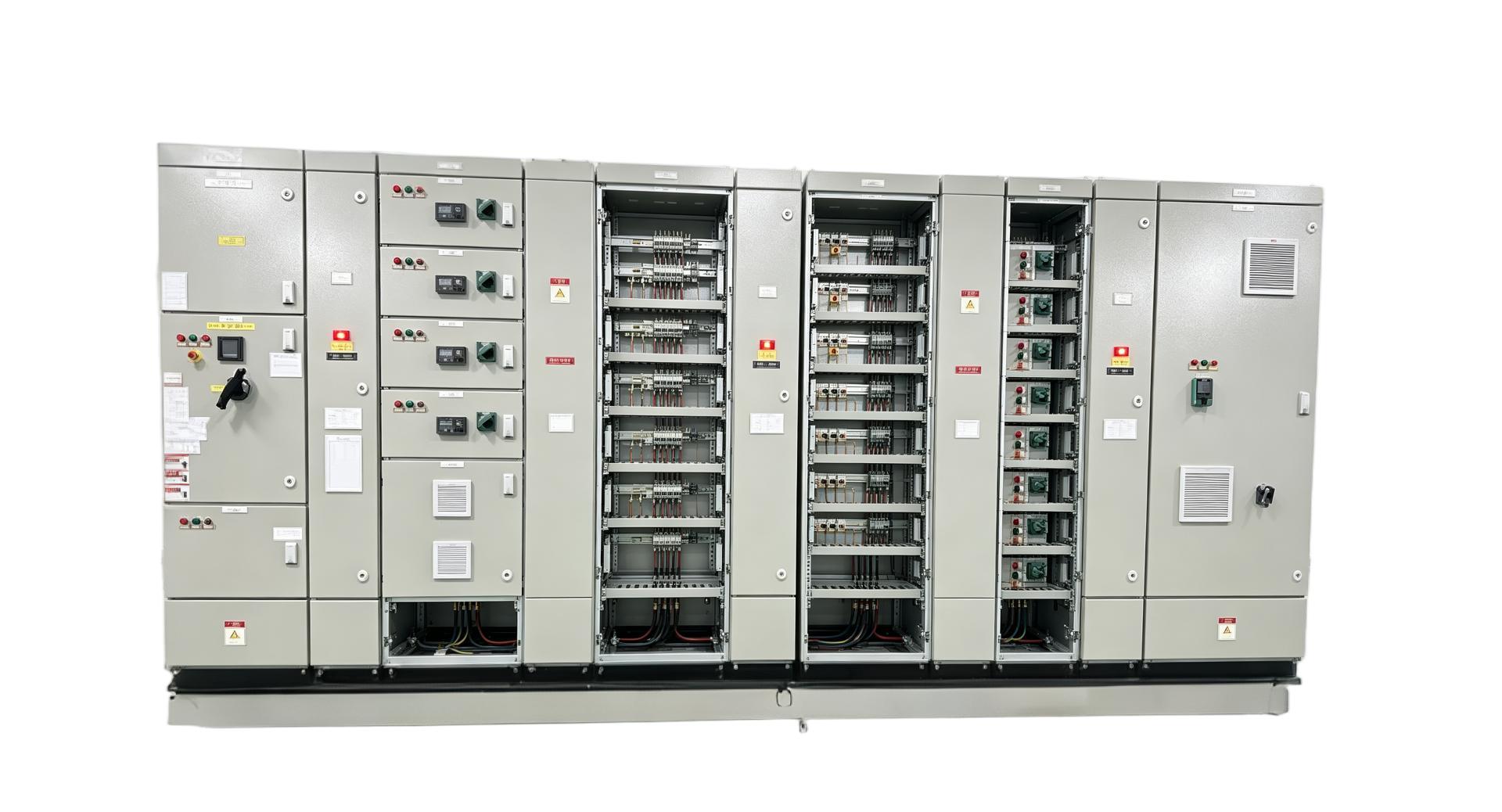
FP-LCP — UL 508A industrial control panel. Rated up to 600 V AC at 50 / 60 Hz, with main busbar current from 100 A to 600 A, a panel short-circuit current rating up to 100 kA rms at 480 V, and a main busbar short-time withstand of 150 kA rms for 1 second. Power frequency withstand voltage is 2,200 V AC for 1 minute on the power circuit and 1,000 V AC for 1 minute on the control circuit, with insulation resistance of at least 100 MΩ at 500 V DC. The standard operating temperature range is −10 °C to +40 °C, with NEMA 1 / 2 / 3R / 4 / 4X enclosure options. Configuration types include PLC, VFD, motor control, MCC control section, process control, HVAC, power distribution and control, and OEM machine control panels.
FP-LPB — UL 67 panelboard. Three series with graded current capacity across 100 AF to 1,200 AF frame sizes. LPB-1 covers main breaker ratings of 15–100 A, 40–150 A, and 150–250 A; LPB-2 covers 250–400 A and 500 / 600 A; LPB-3 covers 400–800 A and 800–1,200 A. Branch circuit ratings run from 15 A to 100 A on LPB-1, 15 A to 250 A on LPB-2, and 15 A to 1,200 A on LPB-3. At 240 V, all series deliver a short-circuit current rating of 50–100 kA rms; at 480 V, LPB-1 provides 25–65 kA rms while LPB-2 and LPB-3 reach 25–100 kA rms. Main busbar construction is rail-type on LPB-1 and LPB-2 and bolt-on on LPB-3, with NEMA Type 1, 2, and 3R enclosure options.
Transformers from distribution class to transmission class
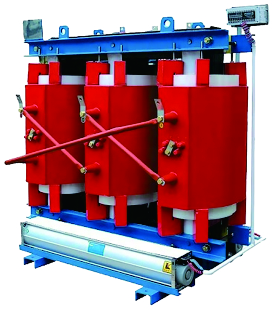
FPSC-B — dry type transformer. Cast resin and VPI construction covering 20 standard ratings from 30 kVA to 4,000 kVA, with high voltage of 6 kV to 11 kV and low voltage of 0.4 kV. Connection symbols are Dyn11 and Ynyn0, no-load loss ranges from 0.14 kW at 30 kVA to 4.3 kW at 4,000 kVA, and total weight ranges from 270 kg to 6,300 kg. Because no insulating oil is required, the design reduces the risk associated with oil leakage and combustible liquids and suits indoor installations, including data centers, commercial buildings, hospitals, and industrial facilities.
S-800/35 — 35 kV oil-immersed transformer. A two-winding OLTC transformer covering 18 standard ratings from 800 kVA to 40,000 kVA. High voltage is 35 kV with tapping of ±5% for 800–2,500 kVA units, 35±5% / 38±5% for 3,150–5,000 kVA units, and ±2 × 2.5% for 6,300–40,000 kVA units. Low voltage options include 10.5 kV, 6.3 kV, and 3.15 kV on lower-capacity models and 11 kV, 10.5 kV, 6.6 kV, 6.3 kV, 3.3 kV, and 3.15 kV on higher-capacity models, with a Yd11 vector group. No-load loss ranges from 1.23 kW at 800 kVA to 28.8 kW at 40,000 kVA.
FP-PM-75 — three phase pad mounted transformer. Covers 11 ratings from 75 kVA to 2,500 kVA. High voltage supports 35 kV, 25 kV, and 15 kV, while the low voltage side covers 240 V, 480 V, 480Y/277 V, and 600Y/347 V three-phase wye configurations. Loop feed, radial feed, dead-front, and live-front configurations are available. The full series delivers efficiency above 99%, rising from 99.03% to 99.53% as rated capacity increases under the U.S. DOE (2016) efficiency standard, and 98.95% to 99.49% under the Canadian CSA (2023) efficiency standard.
FP-SPT-15 — single phase pole mounted transformer. Seven ratings from 15 kVA to 167 kVA, with high voltage options of 7.97 kV at +1/−3 × 2.5% tapping and 19.92 kV at +0/−4 × 2.5% tapping, and standard 120–240 V dual-voltage secondary output. No-load loss ranges from 55 W at 15 kVA to 266 W at 167 kVA, and total weight ranges from 176 kg to 784 kg.
FPIT — isolation transformer. Single-phase and three-phase configurations from 1 kVA to 5,000 kVA, with primary voltage rated up to 15 kV and secondary voltage from 120 V to 690 V at 50 Hz or 60 Hz. The design provides galvanic isolation between primary and secondary circuits, with an optional copper or aluminum electrostatic shield between windings to reduce common-mode noise and electrical interference. Available types are general-purpose, drive isolation, K-factor, single-phase, and three-phase isolation transformers.
FPPT2 — 110 kV to 500 kV power transformer. Two-winding or three-winding construction covering 6,300 kVA to 120,000 kVA, with rated high voltage of 110 / 112 kV, a tapping range of ±2 × 2.5%, low voltage of 6.3 / 6.6 / 10.5 / 11 kV, and a Ynd11 vector group.
Prefabricated E-House and containerized substation integration
FP-EH — E-House. A prefabricated modular enclosure that houses electrical equipment, supplied as a standard modular E-House, custom-built E-House, walk-in E-House, containerized E-House, or skid-mounted electrical module. Enclosure protection is NEMA 3R / NEMA 4 or IP54–IP55, applicable voltage class is LV up to 600 V and MV 5 kV to 38 kV, and the environmental operating range is −40 °C to +55 °C. Internal compatibility covers metal-clad switchgear, GIS / C-GIS, MCC, distribution transformers, protection relays, and UPS and DC auxiliary power systems. A complete factory acceptance test is performed before shipment, and on-site work is limited to foundation placement and cable connection.
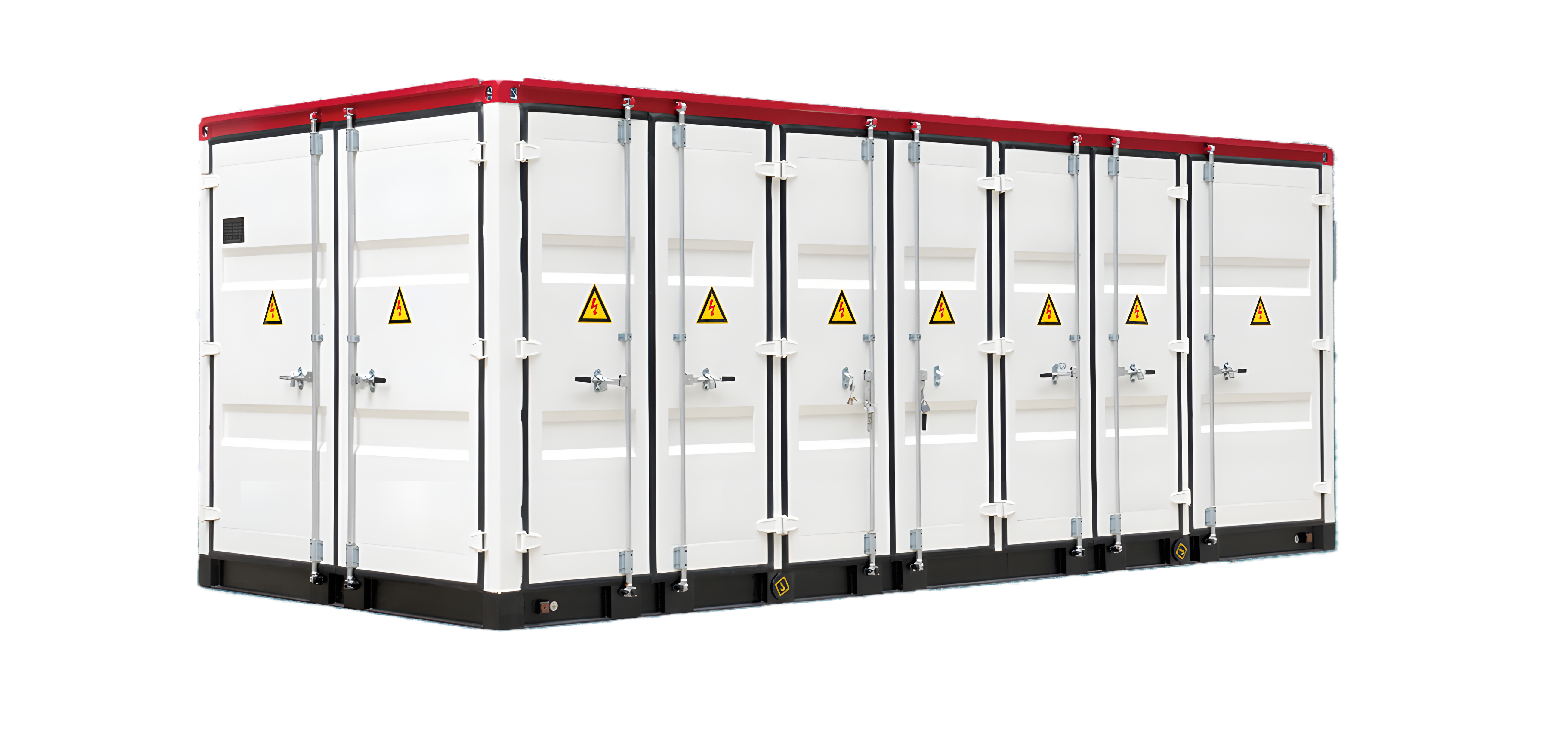
FPCS — compact substation. A photovoltaic containerized substation covering 500 kVA to 5,000 kVA per transformer, with medium voltage of 10 kV to 35 kV and low voltage of 0.4 kV, 0.69 kV, or 0.8 kV. Available configurations include radial-feed, loop-feed, single-transformer, dual-transformer, and PV plus energy storage integrated containerized substations. Container protection is IP54 or higher, with external equipment protection up to IP65 depending on configuration, an ambient temperature range of −25 °C to +55 °C, and altitude rated up to 1,000 m as standard.
Step-by-Step Breakdown: Scoping a Switchgear and Transformer Package
The sequence below reflects the order in which specification decisions constrain one another. Skipping a step usually means revisiting an earlier one.
- Define the service and the voltage class. Establish the incoming voltage, the distribution voltage inside the facility, and the low voltage utilization level. In North American medium voltage distribution this usually resolves to a 15 kV, 27 kV, or 38 kV class, each with its own insulation levels and cabinet dimensions.
- Map every equipment family to its UL standard. Assign UL 1558 to low voltage power circuit breaker switchgear, UL 891 to switchboards, UL 845 to motor control centers, UL 67 to panelboards, and UL 508A to industrial control panels. For medium voltage metal-clad switchgear in the 5–38 kV range, the reference standards are UL 347 and ANSI/IEEE C37.20.2.
- Confirm short-circuit and arc ratings. Specify the short-time withstand current, the duration, and the internal arc rating. For example, a 38 kV metal-clad lineup may be specified at 31.5 / 40 kA for 2 seconds with a 40 kA / 0.5 second internal arc rating, while a 38 kV C-GIS unit may be specified at 40 kA for 4 seconds with 100 kA peak withstand.
- Select the transformer type and rating. Choose between dry type and oil-immersed based on installation environment, and size the rating against the load profile with margin for growth. Dry type suits indoor locations where oil leakage risk is a concern; pad-mounted and pole-mounted designs suit outdoor distribution.
- Decide indoor, outdoor, or E-House installation. Outdoor installations require enclosure protection matched to the site, such as NEMA 3R or NEMA 4. Where site construction time is critical, a prefabricated E-House or containerized substation shifts assembly, wiring, and testing into the factory.
- Confirm the protection, control, and monitoring scheme. Define transformer protection, overcurrent and ground-fault protection, metering, and whether local control, remote monitoring, or a SCADA interface is required.
- Plan factory testing, inspection, and documentation. Agree on incoming material inspection, control of critical production steps, finished-product testing before shipment, and the technical documentation set. For E-House deliveries, agree on the factory acceptance test scope.
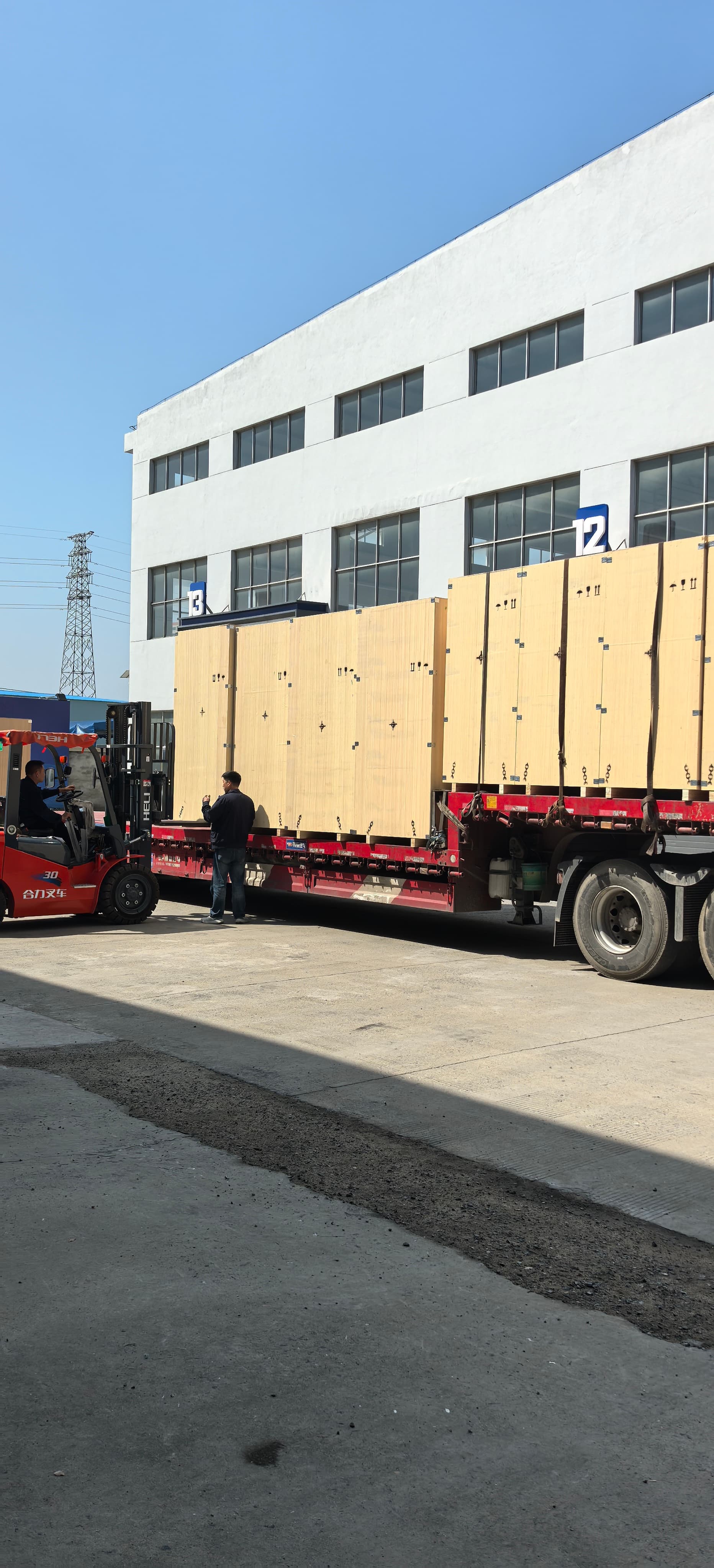
- Plan packaging and site delivery. Confirm export packaging, transport mode, and full-unit hoisting requirements. On-site work for a prefabricated solution is limited to foundation placement and cable connection.
Use Cases: Where This Equipment Package Fits
Data centers
Data center power distribution combines low voltage distribution and backup power distribution under continuous duty. Relevant equipment includes UL 1558 low voltage switchgear for critical distribution, UL 891 switchboards, UL 845 motor control centers, UL 67 panelboards, dry type transformers for indoor distribution, isolation transformers for UPS and PDU systems, 38 kV C-GIS for main incoming feeders, and 38 kV metal-clad switchgear for primary MV feeders.
Utility and substation projects
Substation and power-system projects typically combine medium voltage switchgear with step-up or step-down transformers. In one outdoor substation project environment with large ambient temperature variations and a dusty environment, the specified requirements were dust resistance, outdoor installation, UV resistance, and general harsh-environment adaptability, with switchgear as the matched equipment under 24/7 operation. A separate power-industry project with similar outdoor conditions added seismic resistance and wide temperature adaptability alongside dust and UV resistance, with a power transformer as the matched equipment.
Power generation and transmission
For a power station project in the United States, the equipment set was specified for outdoor installation with continuous operation under variable ambient temperature and weather conditions, covering voltage transformation, power transmission, and grid interconnection. Matched equipment included a forced-air cooling system, transformer protection and monitoring equipment, high-voltage switchgear, bushings, surge arresters, and a grounding system, with requirements for dust resistance, high-altitude adaptability, UV resistance, and harsh-environment adaptability.
Renewable energy
Utility-scale solar and wind projects require collection and step-up stations. The FPCS compact substation covers 500 kVA to 5,000 kVA per transformer at 10 kV to 35 kV, with radial-feed, loop-feed, single-transformer, dual-transformer, and PV plus energy storage integrated configurations. The S-800/35 oil-immersed transformer is intended for renewable energy including solar PV and wind power, and the FP-PM-75 pad-mounted transformer is intended for solar PV, wind power, and energy storage projects.
Industrial, commercial, and healthcare facilities
Industrial motor control applications — production lines, mining conveyor systems, water treatment plants, HVAC systems, food and beverage processing, and port material handling equipment — are served by the UL 845 motor control center range. Commercial buildings, healthcare facilities, educational facilities, hospitality, and infrastructure projects are served by the UL 67 panelboard range, while the FPIT isolation transformer is applied to operating rooms and critical medical equipment power systems, and to industrial production lines, motor drives, and automation systems.
Comparison Table: Matching Standard, Equipment, and Product Line
The following table maps the North American low voltage equipment standards to the product family that satisfies each standard in this portfolio.
| UL standard | Equipment category covered | Reference scope | Corresponding product line |
|---|---|---|---|
| UL 1558 | Metal-enclosed low-voltage power circuit breaker switchgear assemblies | Nominal AC voltages not more than 1,000 V | FP-LSG low voltage switchgear |
| UL 891 | Switchboards | Rated up to 480 V in this portfolio, with main busbar ampacity up to 6,000 A | FP-LSB switchboard |
| UL 845 | Motor control centers | Up to 600 V AC, 50 / 60 Hz | FP-MCC motor control center |
| UL 67 | Panelboards | 240 V and 480 V short-circuit ratings, 100 AF to 1,200 AF frames | FP-LPB panelboard |
| UL 508A | Industrial control panels | Up to 600 V AC, 50 / 60 Hz | FP-LCP industrial control panel |
For medium voltage equipment in the 5–38 kV class, the applicable reference standards in this portfolio are UL 347 and ANSI/IEEE C37.20.2, satisfied by the FP-MVSG-38 UL Listed medium voltage switchgear and the FP-MCS metal-clad series.
The second table compares the transformer families by type, capacity, and voltage, so a buyer can locate the right starting point before a detailed specification is written.
| Transformer type | Model | Capacity range | Voltage | Typical application |
|---|---|---|---|---|
| Dry type, cast resin / VPI | FPSC-B | 30 – 4,000 kVA | HV 6 – 11 kV; LV 0.4 kV | Indoor distribution, data centers, commercial buildings, healthcare |
| Oil-immersed, 35 kV | S-800/35 | 800 – 40,000 kVA | HV 35 kV; LV 3.15 – 11 kV | Utility distribution, industrial facilities, renewable energy |
| Three phase pad mounted | FP-PM-75 | 75 – 2,500 kVA | HV 35 / 25 / 15 kV; LV 240 V, 480 V, 480Y/277 V, 600Y/347 V | Outdoor utility distribution, commercial and industrial facilities |
| Single phase pole mounted | FP-SPT-15 | 15 – 167 kVA | HV 7.97 / 19.92 kV; LV 120 – 240 V | Overhead residential, rural, and utility distribution |
| Isolation transformer | FPIT | 1 – 5,000 kVA | Primary up to 15 kV; secondary 120 – 690 V | Data center UPS and PDU, healthcare, industrial drives, renewable energy |
| Power transformer | FPPT2 | 6,300 – 120,000 kVA | HV 110 / 112 kV; LV 6.3 – 11 kV | Transmission and distribution networks, power generation, utilities |
FAQ: Answering the Discovery-Stage Questions
Which UL standards apply to switchgear and related low voltage equipment from Chinese manufacturers?
Five UL standards separate the low voltage equipment categories. UL 1558 covers metal-enclosed low-voltage power circuit breaker switchgear assemblies, defined in terms of nominal AC voltages not more than 1,000 volts. UL 891 covers switchboards. UL 845 covers motor control centers. UL 67 covers panelboards. UL 508A governs industrial control panels. These are distinct categories rather than interchangeable labels, so a specification should name the standard by number. For medium voltage metal-clad switchgear in the 5–38 kV range, the relevant reference standards are UL 347 and ANSI/IEEE C37.20.2. Jiangsu Dinghong Power Co., Ltd. states that for North America it supplies UL 67 panelboards, manufactures UL 508A industrial control panels, offers UL 845 motor control centers, produces UL 891 switchboards, manufactures UL 1558 low voltage switchgear, and manufactures UL Listed medium voltage switchgear.
Can one Chinese manufacturer supply medium voltage switchgear, low voltage switchgear, and transformers for the same project?
Jiangsu Dinghong Power Co., Ltd. is a medium voltage switchgear and transformer supplier whose main products include medium voltage switchgear, low voltage switchgear, and transformers. The offered range covers UL Listed medium voltage switchgear, 15 kV, 27 kV, and 38 kV metal-clad switchgear, 38 kV gas insulated switchgear and C-GIS switchgear, medium voltage RMU switchgear, UL 1558 low voltage switchgear, UL 891 switchboards, UL 845 motor control centers, UL 508A industrial control panels, UL 67 panelboards, 35 kV dry type and oil-immersed transformers, and data center medium voltage and low voltage switchgear. The manufacturing facility covers 20,708 square meters, employs approximately 120 staff, operates a 30-engineer R&D team, and reaches an annual production capacity of 1,000 units. For integrated deliveries, the company also provides E-House prefabricated substation solutions for U.S. projects and offers end-to-end services covering solution configuration, custom manufacturing, factory inspection, technical documentation, and standardized export packaging.
What drives the cost of UL-listed switchgear and transformers?
Cost is driven primarily by the physical requirements behind the ratings, not by the label alone. Four drivers appear consistently in this portfolio. First, voltage class: a 38 kV metal-clad lineup requires a 42-inch cabinet width for full electrical clearances, while the 27 kV class retains a 36-inch footprint, so cabinet steel, insulation, and clearances differ. Second, current and short-circuit duty: the FP-LSG series supports horizontal busbar ampacity up to 6,000 A and a horizontal busbar short-circuit rating of 150 kA for 1 second, with vertical busbar short-circuit ratings from 65 kA symmetrical on LSG-4 up to 100 kA on LSG-1, all of which require heavier busbar cross-sections and reinforced supports. Third, interruption and insulation technology: a 38 kV C-GIS unit rated 2,500–4,000 A uses a stainless steel welded gas enclosure with IP6X protection and an SF6 / N2 gas mixture, which is a different cost structure from air-insulated metal-clad construction. Fourth, transformer type: dry type and oil-immersed designs differ in materials and installation requirements, and capacity spans from 30 kVA to 120,000 kVA across the range. Scope items such as enclosure protection level, metering, monitoring, and factory acceptance testing also affect the total.
How can a buyer validate equipment before placing a full production order?
Validation happens at three points. Before manufacturing, the company provides solution configuration and custom manufacturing based on customer blueprints and equipment requirements, so drawings and specifications are confirmed first. During manufacturing, quality control follows a multi-level inspection process covering incoming material inspection, control of critical production steps, and comprehensive testing of finished products before shipment, with closed-loop control across procurement, production, processing, and delivery through an ERP system. Before delivery, buyers can agree on factory inspection and technical documentation, and for E-House and prefabricated solutions a complete factory acceptance test is completed prior to shipment, which removes quality risks that field assembly would otherwise introduce. Standardized export packaging and delivery preparation are part of the same scope.
What determines lead time on a UL switchgear and transformer order?
Lead time is shaped by how much of the scope has to be engineered rather than by a fixed catalogue cycle. The main variables are the degree of customization required for the configuration, the transformer type and rating selected, the extent of factory testing and inspection agreed with the buyer, and the export packaging and transport arrangement. Prefabrication is the main lever available to compress the total project schedule: an E-House is fully pre-assembled and pre-commissioned in the factory, so on-site work is limited to foundation placement and cable connection, and the containerized substation design minimizes on-site assembly, electrical installation, and civil construction requirements. To receive a schedule that reflects your actual scope, send the voltage class, equipment list, and drawing set to the address below and request a quotation with a delivery plan.
Conclusion
Electric machinery and equipment is a category label, and the work of a discovery-stage buyer is to convert that label into a specification. In the North American market, that conversion runs through three decisions: naming the UL standard that applies to each equipment family, selecting the voltage class that matches the distribution network, and deciding whether the switchgear, transformer, and low voltage distribution will be sourced as separate items or as one coordinated package.
Jiangsu Dinghong Power Co., Ltd. covers the full chain described here — UL Listed medium voltage switchgear from 5 kV to 38 kV, 27 kV and 38 kV metal-clad switchgear, 38 kV C-GIS and RMU switchgear, UL 1558 low voltage switchgear, UL 891 switchboards, UL 845 motor control centers, UL 508A industrial control panels, UL 67 panelboards, transformers from 30 kVA dry type units to 120,000 kVA power transformers, and prefabricated E-House and containerized substation integration — supported by a 20,708 m² manufacturing facility, a 30-engineer R&D team, and an annual production capacity of 1,000 units.
The next step is to specify. Name the standard, the voltage class, the current rating, and the short-circuit duty, and the equipment family follows from those four answers.
Next Step: Sample, Quotation, or Full Documentation
If you are scoping a medium voltage or low voltage distribution package and need to validate a configuration before committing to a purchase order, the practical next step is a documented quotation and, where required, a factory inspection during production or a factory acceptance test before shipment.
Contact: Jiangsu Dinghong Power Co., Ltd. — Email: info@js-firstpower.com · Website: www.firstpowerglobal.com
Product catalog (PDF): download the English product brochure