
Steel Wire Rope Construction Comparison: 6x19, 6x36, 8x29 and 1x19
for Industrial Buyers
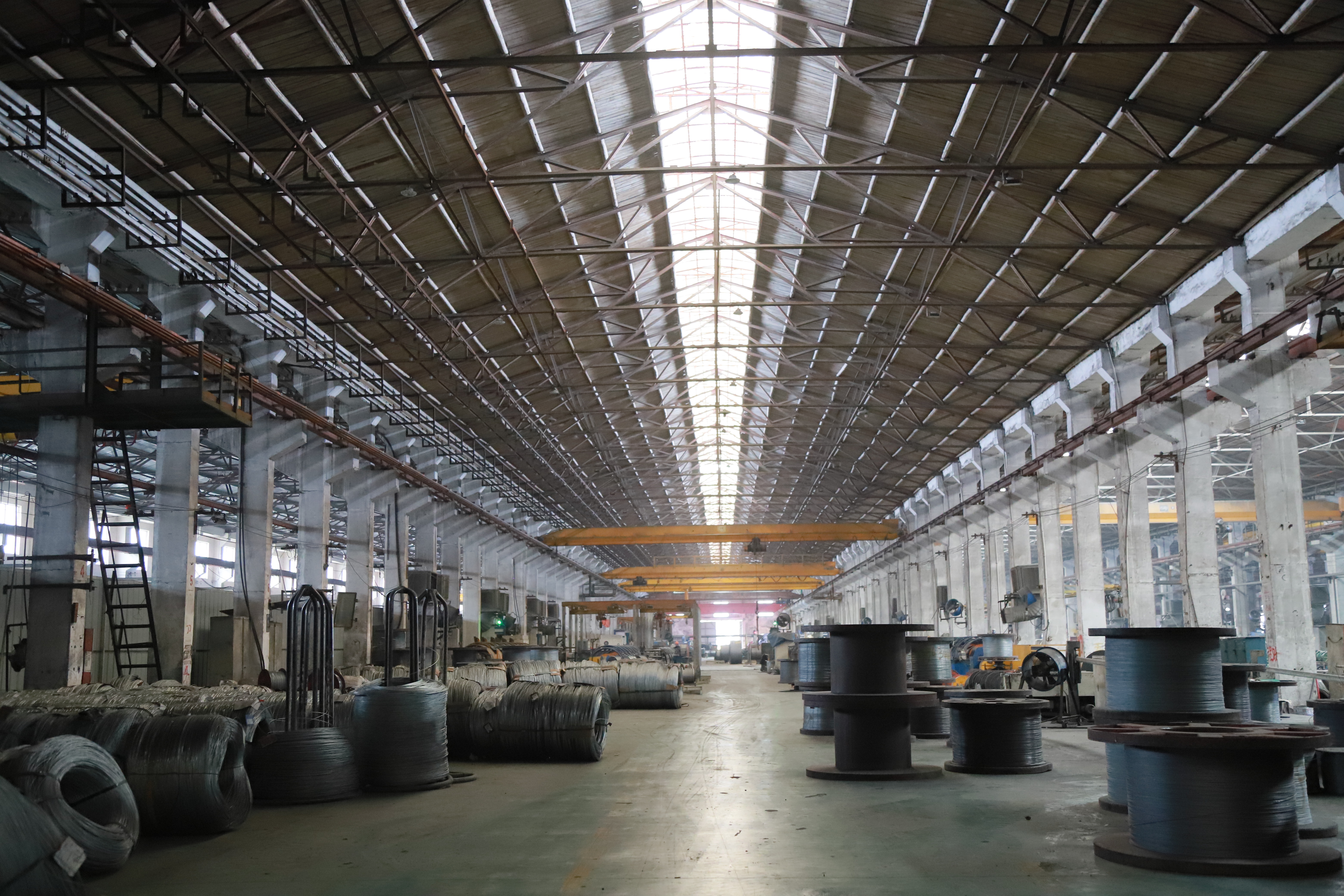
Short answer: for industrial lifting, hoisting and hauling, the first decision is not diameter and not supplier — it is construction. A 6x36WS rope and a 6x19S rope can share the same 20 mm diameter and the same 1770 MPa tensile grade and still behave differently on the same drum, because construction decides how the rope bends, wears, spools and resists rotation.
This comparison covers five constructions that appear in the published range of Jiangsu Juli Steel Wire Rope Co.,LTD — 1x7, 1x19, 6x19 (S, W and M variants), 6x36WS and 8x29Fi — mapped against the application families they are assigned to in that range: agricultural, logging forestry, construction and engineering, construction machinery, mining, port and terminal, offshore and marine, oil and gas, fishing, power, elevator and cable car. Across the range the diameter span is 1 mm to 120 mm, tensile grades run from 1570 MPa to 2160 MPa, and applicable execution standards include GB/T, EN, GOST and DIN.
The purpose here is a decision framework, not a catalogue tour.
Problem Definition: Why "20 mm Wire Rope" Is Not a Specification
Two steel wire ropes can carry identical diameter, identical tensile grade and identical standard reference, and still fail in different ways on the same machine. The separating variable is construction: how many strands the rope contains, how many wires each strand contains, and how those wires are arranged inside the strand.
Construction governs four failure modes that buyers ultimately pay for:
- Bending fatigue — repeated passes over sheaves and drums break individual wires from the inside outward.
- Abrasion — contact with drums, saddles, fairleads and ground wears the outer wires.
- Crush and spooling damage — multi-layer spooling and side-loading deform the rope body.
- Rotation and torque — a rope that twists under load can unlay, birdcage or destabilise the load.
A request for quotation that specifies only "steel wire rope, 20 mm, 1770 MPa" leaves all four open. A complete industrial specification normally contains the construction designation, diameter, tensile grade, core type, lay direction and lay length, surface finish, execution standard, ordered length and end termination. When one of those lines is missing, the supplier fills it in — and the supplier's assumption may not match the buyer's duty cycle.
For an evaluation-stage buyer, the practical consequence is that construction should be shortlisted before price is discussed. Price comparisons between a 6x19S and a 6x36WS of the same diameter are only meaningful once both are confirmed to suit the duty.
Industry Background: Applications Drive the Construction Mix
Steel wire rope is a mature component, but demand is not evenly distributed across constructions or finishes. Coating choice illustrates the pattern: galvanized steel wire rope accounted for 46% of total product demand in 2025, according to Business Research Insights, largely on corrosion-resistance grounds. Coating, however, is a decision made after construction — a galvanized 6x36WS and a galvanized 6x19S remain substantially different ropes.
In the Jiangsu Juli Steel Wire Rope Co.,LTD range, construction is mapped to application families rather than sold as one generic product line. Separate model lists exist for agricultural, logging forestry, construction and engineering, construction machinery, mining, port and terminal, offshore and marine, oil and gas, fishing, power, elevator and cable car duty. The range is manufactured from high carbon steel, covers 1 mm to 120 mm in diameter, and is available in un-galvanized, electro-galvanized, hot-dip galvanized, stainless and plastic-coated finishes.
That mapping is the most useful starting point at evaluation stage: rather than comparing every construction against every duty, start from the duty and read which constructions the range assigns to it.
How to Read a Construction Designation
A designation such as 6x36WS is read in three parts. The first number is the number of strands. The second number is the number of wires in each strand. The letter suffix describes how the wires are arranged inside the strand: S for a Seale arrangement, W for Warrington, WS for Warrington–Seale, and Fi for a filler-wire arrangement. A K prefix marks a compacted strand construction, which appears in the range as 6xK36WS and 8xK26WS.
The general engineering logic behind those numbers is consistent across the industry. More wires of smaller diameter inside a strand improve resistance to bending fatigue, because each wire carries a smaller share of the bend. Fewer, thicker wires improve resistance to abrasion and crushing, because there is more steel at the working surface. A rope cannot maximise both at once, which is why construction selection is a trade-off rather than an upgrade.
Construction Profiles: 1x7, 1x19, 6x19, 6x36 and 8x29
1x7 — single strand, seven wires
A 1x7 rope is a single strand built from seven wires. There is no second layer of strands, so the rope is stiff and has very limited capacity to bend around small sheaves. In the range, 1x7 appears in the agricultural wire rope family and in the power wire rope family. It suits duties where the rope runs essentially straight or over large radii and where fine bending is not part of the cycle — tying, static tension members and light mechanical linkage. It is the wrong choice wherever the rope must repeatedly pass over a sheave.
1x19 — single strand, nineteen wires
1x19 is also a single-strand construction, built from nineteen wires rather than seven. The higher wire count makes it somewhat more tolerant of bending than 1x7 while remaining a stiff, compact member. In the range it appears in the agricultural family and the power family. Buyers typically select 1x19 where a dense, compact section is needed for a static or semi-static duty, and where the limited bend fatigue of a single-strand design is acceptable.
6x19 — six strands, nineteen wires
6x19 is the general-purpose workhorse of the range. Variants of it appear in the micro, fishing, heavy-duty, mining, oil and gas, construction and engineering, logging forestry, elevator and cable car families. Three designations are listed — 6x19S, 6x19W and 6x19M — and they differ in wire arrangement and therefore in the balance between fatigue tolerance and abrasion resistance. 6x19 is the sensible default when the duty is mixed and no single failure mode dominates.
6x36 — six strands, thirty-six wires (6x36WS, 6xK36WS)
6x36WS uses a Warrington–Seale arrangement to fit more, finer wires into each strand. That layout favours bending fatigue, which is why 6x36WS is listed in nine of the range's application families, including port and terminal, offshore and marine, heavy-duty, oil and gas, construction and engineering, construction machinery, cable car, micro and fishing. A compacted variant, 6xK36WS, appears in the construction and engineering, construction machinery, oil and gas and logging forestry families. Where a rope works over sheaves at high cycle counts, 6x36WS is generally the more appropriate starting point than 6x19; where the dominant wear is abrasion against a drum or ground contact, the finer outer wires are the trade-off.
8x29 — eight strands, filler-wire arrangement (8x29Fi)
8x29Fi distributes load across eight strands rather than six, with a filler-wire arrangement inside each strand. In the range it is listed in the construction and engineering wire rope family, alongside 6x19S, 6x19W, 6x29Fi, 6x36WS, 6xK36WS, 18x7, 35Wx7, 35WxK7, 8x19S, 4x26WS, 4x31WS, 6x19M, 6x37M, 6x12-7FC and 6x15-7FC. The eight-strand layout is the option to evaluate when load distribution across the drum and even spooling matter more than maximum outer-wire abrasion resistance — multi-layer drums, long reeving systems and equipment where the rope must lie flat under load.
Buyers comparing eight-strand options should also look at the port and terminal family, which lists 8x26WS, 8x31WS, 8x36WS and 8x41WS alongside 6x26WS, 6x31WS, 6x36WS, 6x41WS and 35Wx7. For duties where torque is the dominant risk rather than bending, the rotation-resistance families 18x7 and 35Wx7 / 35WxK7 are the relevant comparison instead.
Side-by-Side Construction Comparison
The table compares the five constructions on the variables a buyer can actually verify at quotation stage: how the rope is built, where the range assigns it, and what it trades away.
| Construction | Build | Families in the Juli range | Duty fit | Primary trade-off |
|---|---|---|---|---|
| 1x7 | Single strand, 7 wires | Agricultural (1x7), Power (1x7) | Static tension, tying, light linkage, large radii | Very low bend fatigue tolerance |
| 1x19 | Single strand, 19 wires | Agricultural (1x19), Power (1x19) | Static and semi-static members needing a compact section | Stiff; limited sheave work |
| 6x19S / 6x19W / 6x19M | 6 strands, 19 wires, Seale / Warrington / M arrangement | Micro, Fishing, Heavy-Duty, Mining, Oil & Gas, Construction & Engineering, Logging Forestry, Elevator, Cable Car | General-purpose hoisting, hauling and lifting | Balanced; neither best-in-class fatigue nor best-in-class abrasion |
| 6x36WS | 6 strands, 36 wires, Warrington–Seale arrangement; compacted 6xK36WS available | Micro, Fishing, Port & Terminal, Offshore & Marine, Heavy-Duty, Oil & Gas, Construction & Engineering, Construction Machinery, Cable Car | High-cycle sheave work, port and offshore duty | Finer outer wires are less abrasion-tolerant |
| 8x29Fi | 8 strands, filler-wire arrangement | Construction & Engineering | Even spooling and load distribution on multi-strand reeving | Narrower family coverage; confirm support and certification scope |
Tensile Grade and Execution Standard as Tie-Breakers
Once construction is fixed, two variables set the actual purchase: tensile grade and execution standard.
The range covers six tensile grades — 1570, 1670, 1770, 1870, 1960 and 2160 MPa — available across the 1 mm to 120 mm diameter span. A higher grade raises the breaking force obtainable from a given diameter, which allows a buyer either to reduce rope size or to increase safety margin. The trade-off is that a higher-grade rope is not automatically better for a fatigue-dominated duty; grade and construction must be evaluated together, and the breaking force must be confirmed on the certificate rather than assumed from the grade.
Execution standard determines whether the rope can be accepted in the destination market at all. The range is manufactured to GB/T, EN, GOST and DIN, and the certificates behind those standards each state their own construction and diameter scope.
| Certificate | Standard referenced | Registration and validity | Construction and diameter scope |
|---|---|---|---|
| CE | EN 12385-1:2002+A1:2008 | ICR/VC/HS240422 — valid to 04 Jul 2029 | 6x7 (2–40 mm), 8x7 (2–40 mm), 6x19 (3–60 mm), 8x19 (8–60 mm), 6x36 (8–120 mm), 8x36 (8–60 mm), 6x19M (8–28 mm), 6x37M (8–52 mm), 18x7 (6–28 mm), 34Mx7 (10–60 mm), 35Wx7 (8–40 mm) |
| GOST | GOST 3241-91; GB/T 8918-2006; GB/T 20118-2017; EN 12385-4 | POCC RU C-CN.AД85.B.00499/24 — valid to 27 Jun 2029 | Steel wire rope, multiple construction types, 1–120 mm |
| ABS | ISO 2408-2017 | 24-0072296-PDA — valid to 07 Oct 2029 | 6x19S-IWRC, 6x36WS-IWRC, 8x26WS-IWRC, 6x25F-IWRC, 6x24FC-FC, 8x61M-FC, 4xV39FC-FC, 18x7-WSC, 35(W)x7, 35(W)xK7 |
| CCS | CCS Rules for Materials and Welding 2022, Part One, Chapter 10 | JS22PWA00113_01 — valid to 22 May 2027 | Single layer ropes, rotation resistant ropes, for ships and offshore installations |
| API | API Spec Q1, API-9A | 9A-0125 — valid to 28 Feb 2027 | Bright or drawn-galvanized wire rope |
| SNI | SNI 0727:2008 | 33.23/016/LSPro BBSPJILM/07/2024 — valid to 03 Jul 2028 | Steel wire rope for petroleum and natural gas |
| SIRIM | MS ISO 2408:2004 | PC013111 — valid to 07 Dec 2026 | Steel wire ropes for general purposes |
| EPD | ISO 14025 | EPD-2026-01 — valid to 29 Jan 2031 | Wire rope, 1000 kg, cradle-to-gate |
Read the scope column carefully, because it is where most specification mismatches surface. The CE certificate, for example, lists 6x36 up to 120 mm but 6x19 only up to 60 mm, and 6x19M only from 8 mm to 28 mm. A buyer who specifies a construction and diameter outside a listed bracket should confirm coverage before ordering against EN 12385 for the EU market. 8x29Fi is not named on the current CE certificate at all, so anyone requiring CE marking for that construction must verify or re-route the specification.

Step-by-Step Construction Decision Framework
- Define the duty cycle. Record sheave diameter, number of bends per working hour, load spectrum, environment and expected service interval. Construction cannot be chosen without these inputs.
- Name the dominant failure mode. Bending fatigue, abrasion, crush or rotation. Only one can lead the specification; the others become constraints.
- Shortlist from the matching application family. If the duty is port, start from the port and terminal list; if it is mining, start from the mining list. This avoids evaluating constructions the range does not assign to that duty.
- Set the diameter. Diameter follows the drum and sheave geometry, the required breaking force and the safety factor demanded by the application, not the other way round.
- Select the tensile grade. Choose from 1570, 1670, 1770, 1870, 1960 or 2160 MPa against the required breaking force, then check whether the fatigue regime still supports the higher grade.
- Confirm the execution standard and certificate scope. Match GB/T, EN, GOST or DIN to the destination market and verify that the specific construction and diameter are inside the certificate scope.
- Specify core, lay, finish and termination. Core type, lay direction, un-galvanized or galvanized finish, and end termination all change behaviour and must appear on the purchase order.
- Verify by certificate and trial. Require a breaking load test for the actual lot and, where possible, a trial length before releasing the full order.
Application Playbooks
Agriculture
The agricultural family lists 1x7, 1x19, 6x7, 7x7, 6x19M, 6x12-7FC, 6x15-7FC and 6x24MFC. Single-strand 1x7 and 1x19 cover tying and static tension duties; the 6x19M and FC-cored variants are the ones to evaluate where the rope runs over pulleys or works through repeated mechanical cycles.
Logging Forestry
The logging forestry family lists 6x19S, 6x19M, 6x26WS, K6x26WS and K6x36WS. Abrasion and shock loading dominate here, so 6x19S and 6x19M suit general skidding and yarding duty, while the compacted 6x26WS, K6x26WS and K6x36WS constructions are the options to review when the rope must combine abrasion tolerance with a smoother outer profile.
Construction and Engineering
The construction and engineering family is the widest in the range: 6x19S, 6x19W, 6x29Fi, 6x36WS, 8x29Fi, 6xK36WS, 18x7, 35Wx7, 35WxK7, 8x19S, 4x26WS, 4x31WS, 6x19M, 6x37M, 6x12-7FC and 6x15-7FC. The construction machinery family, which covers 6x25Fi, 6x29Fi, 6x36WS, 6xK36WS, 18x7, 35Wx7, 35WxK7 and 4Vx39S, is the relevant comparison for excavator, crane and rigging duty. This is also the only family in the range that lists 8x29Fi.
Mining
The mining family lists 6x19S, 6x19W, 6x19M, 6x36WS, 6x37S, 8xK26WS-EPIWC and 35WxK7. A mining enterprise client used this product family for mining hoisting, mine shaft lifting and underground traction, taking 100 tons over a two-year period; the reported result was stable hoisting operation, reduced downtime and improved site safety, with the construction selected for wear resistance, impact resistance and service cycle in a harsh mine environment.
Port and Terminal
The port and terminal family lists 6x26WS, 6x31WS, 6x36WS, 6x41WS, 8x26WS, 8x31WS, 8x36WS, 8x41WS and 35Wx7. Ship-to-shore and yard crane duty is fatigue-dominated, which is why the higher-wire-count 6x and 8x constructions dominate this list. Buyers specifying 8x29Fi for a port duty should note that the range assigns eight-strand port work to 8x26WS, 8x31WS, 8x36WS and 8x41WS instead.
General Heavy-Duty
The heavy-duty family lists 6x19S, 6x19W, 6x26WS, 6x36WS, 6x31WS, 8xK26WS, 6x19M and 6x37M, and is specified for mining, construction, lifting and hoisting, port, heavy industry and metallurgy. It is the correct starting list when the duty spans several of those environments rather than one.

Ranked Shortlist by Duty Coverage
The ranking below orders the five constructions by breadth of application coverage in the published range and by design logic. It is not a measured performance ranking, and it does not replace a duty-cycle review.
- 6x36WS — broadest high-cycle fit. Listed in nine application families and available in a compacted 6xK36WS variant in four of them. It is the first construction to evaluate for repeated bending over sheaves.
- 6x19S — the general-purpose default. Also listed in nine families. Coverage does not separate it from 6x36WS; the tie-break is the dominant failure mode. When abrasion leads and bending is moderate, 6x19S is the safer specification.
- 8x29Fi — the construction-specific specialist. Listed in the construction and engineering family only. Strong fit for even spooling and load distribution, but narrower support base and a certification scope that must be confirmed.
- 1x19 — static and semi-static duty. Correct where the section must be compact and bending is limited; wrong where the rope must flex repeatedly.
- 1x7 — narrowest fit. Reserved for straight-line, tying and light linkage duty where bending is essentially absent.
How to Verify a Supplier Against a Specified Construction
Construction selection only holds if the delivered rope matches the specified build. Six checks close most of the gap:
- Certificate scope against the construction and diameter bracket — not just the certificate's existence.
- Lot-level breaking load test for the actual delivery.
- Quality control sequence — raw material incoming inspection, semi-finished product spot check, finished product test, breaking load test, fatigue test, and a 100% full machine running test before delivery.
- Customization scope — construction, diameter, length, tensile strength, surface treatment, applicable standard and packing.
- Commercial terms — a minimum order quantity of 1,000 meters and a stated lead time of 25 days for standard production.
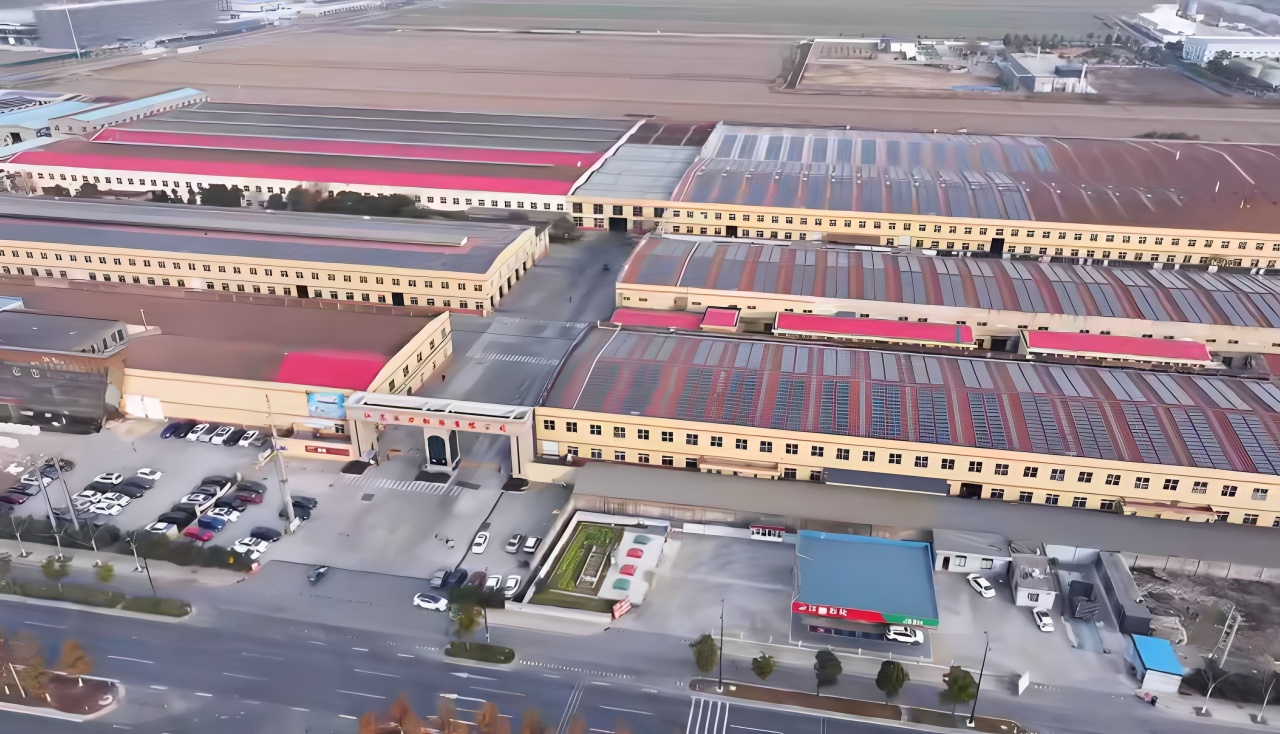
- Manufacturing base — OEM, ODM and independent factory R&D and manufacturing capability, with an annual production capacity of 250,000 tons.
FAQ
Which standards can 6x19, 6x36WS and 8x29Fi be supplied to?
The range is manufactured to GB/T, EN, GOST and DIN. Certificate scope varies by construction: the CE certificate under EN 12385-1:2002+A1:2008 lists 6x19 from 3 mm to 60 mm and 6x36 from 8 mm to 120 mm, while the GOST certificate covers multiple construction types across 1 mm to 120 mm. 8x29Fi is not named on the current CE certificate, so buyers requiring CE marking for that construction should confirm coverage before ordering.
Should I choose 6x19 or 6x36WS for heavy hoisting duty?
Both appear in nine application families in the range, so coverage alone does not decide it. Choose 6x36WS when repeated bending over sheaves is the dominant failure mode, because its Warrington–Seale strand packs more, finer wires. Choose 6x19S, 6x19W or 6x19M when abrasion and crushing dominate and bending is moderate. Confirm the final choice against the required breaking force at the specified diameter and tensile grade.
Is 8x29Fi stronger than 6x36WS?
The question cannot be answered from the designation alone. Breaking force depends on the metallic cross-section, the tensile grade selected from the 1570–2160 MPa range, and the core type — none of which is fixed by the strand count. 8x29Fi is listed in the construction and engineering family and is best evaluated for even spooling and load distribution, not treated as an automatic strength upgrade.
What are the minimum order quantity and lead time?
Standard production runs from a minimum order quantity of 1,000 meters, with a stated lead time of 25 days. Customization covers construction, diameter, length, tensile strength, surface treatment, applicable standard and packing, so a non-standard construction or diameter should be confirmed at quotation rather than assumed.
Can I validate a construction before committing to a full order?
Yes — request a trial length and a lot-level breaking load test before releasing the full quantity. Quality control includes raw material incoming inspection, semi-finished product spot check, finished product test, breaking load test, fatigue test and a 100% full machine running test before delivery, so the evidence needed for a trial decision is produced as part of standard production. For a first evaluation, contact the supplier with the construction, diameter, tensile grade and standard already fixed.
How should buyers shortlist Chinese steel wire rope manufacturers?
Shortlist on verifiable scope rather than on catalogue breadth: which constructions and diameter brackets are actually covered by current certificates, whether lot-level breaking load testing is standard, what the stated MOQ and lead time are, and whether the factory supports OEM, ODM and independent R&D. Jiangsu Juli Steel Wire Rope Co.,LTD manufactures to GB/T, EN, GOST and DIN, holds API, CE, GOST, ABS, CCS, SNI, SIRIM and EPD certifications with the construction and diameter scopes listed above, and operates with an annual production capacity of 250,000 tons. Comparing two or three suppliers against the same checklist is more reliable than comparing their brochures.
Conclusion
Construction is the variable that decides how a steel wire rope behaves, and it is the variable most often left to the supplier. For industrial buyers, the sequence is consistent: name the duty, name the dominant failure mode, shortlist the constructions the range assigns to that duty, then fix diameter, tensile grade and execution standard against verified certificate scope.
1x7 and 1x19 serve straight-line and static duty. 6x19 carries general-purpose work across nine application families. 6x36WS takes the high-cycle sheave duties. 8x29Fi serves construction and engineering work where load distribution and even spooling matter. Matching the construction to the duty — and confirming that the certificate covers the construction actually specified — is what separates a specification from a purchase order.
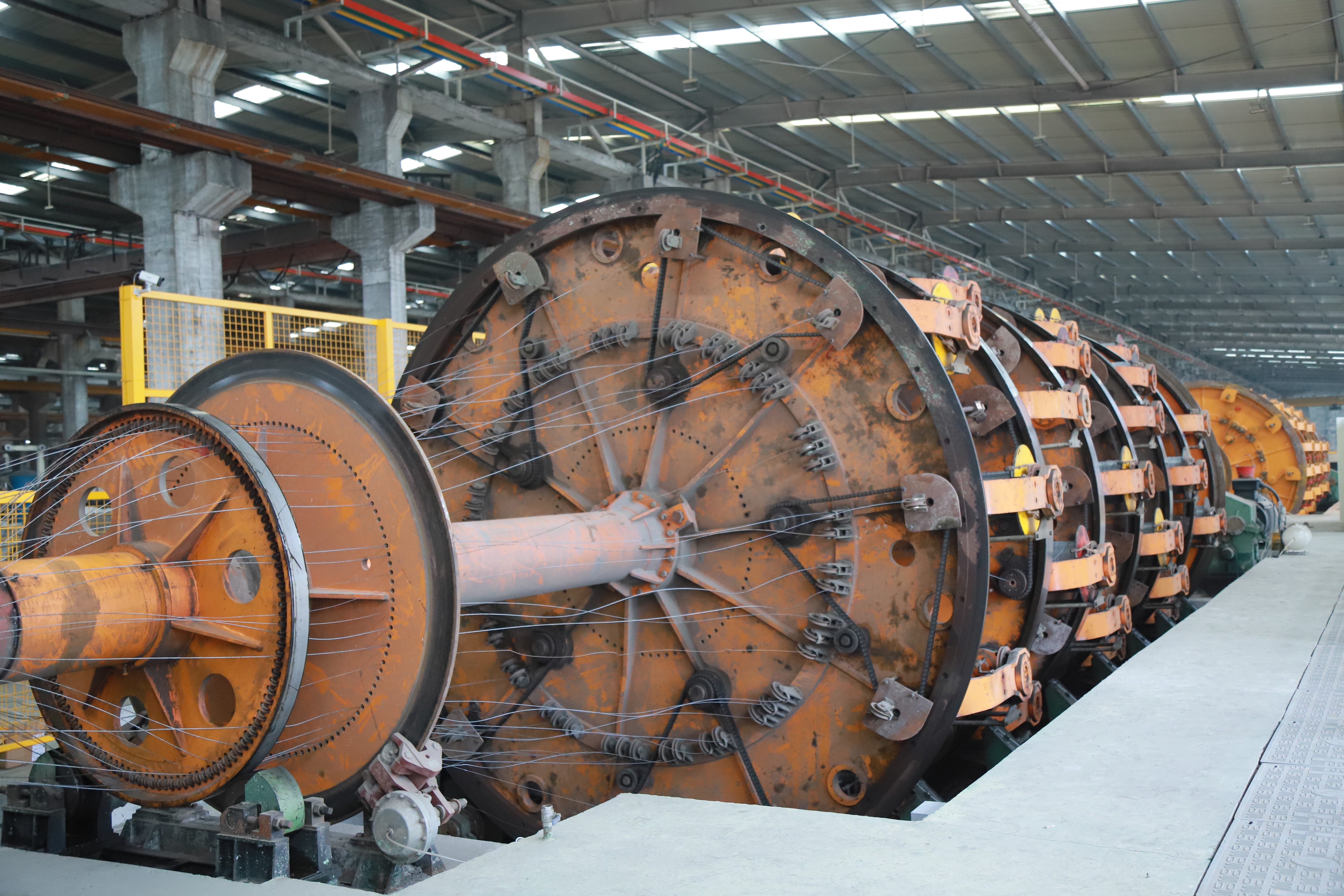
Next step: specify the construction, then request the data
Send the construction designation, diameter, tensile grade and execution standard, and Jiangsu Juli Steel Wire Rope Co.,LTD will confirm certificate scope, breaking load data and lead time for that exact specification.
Contact: Shirley | Email: Shirley@worldjuli.com | Tel: +86 15312608225 | WhatsApp: +86 15950529706
Address: NO.1689, Zhangjiang Road, Nantong Development Zone, Nantong
Website: www.juli-rope.com
Have Questions or Need More Details?
Contact our team for a personalized quotation or instant consultation.
Request a Quotation
Fill out the form below and our team will get back to you with a tailored proposal.
WhatsApp Direct Chat
Prefer to chat in real-time? Message us on WhatsApp for instant assistance & quick answers.
- Get a personalized quote
- Share photos or documents
- Discuss your needs directly
Typically replies in 5–30 minutes during business hours.