Choosing Steel Wire Rope for High-Risk vs Heavy-Duty Applications: A Buyer Comparison Guide
Choosing Steel Wire Rope for High-Risk vs Heavy-Duty Applications: A Buyer Comparison Guide
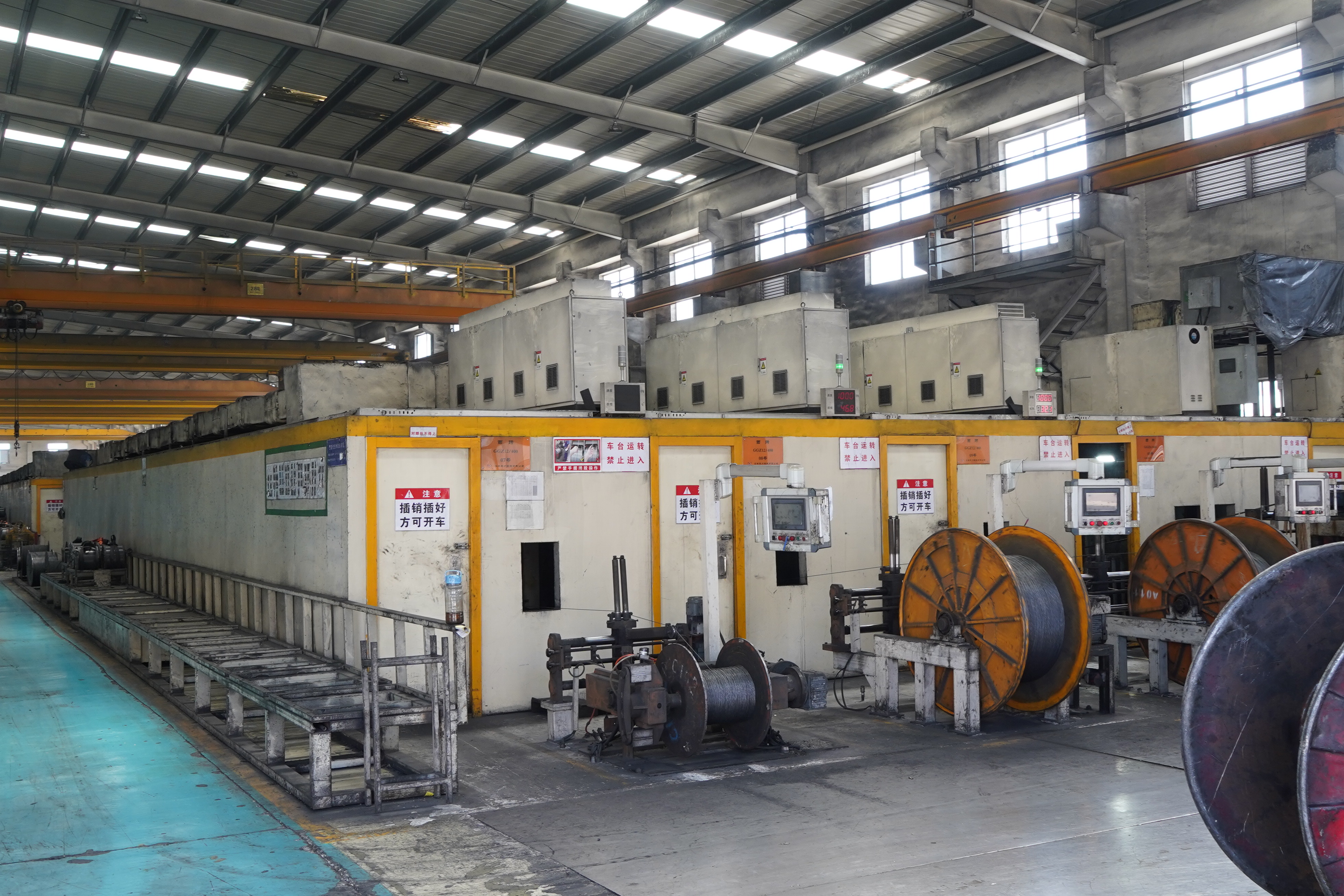
Choosing steel wire rope for high-risk versus heavy-duty applications is decided by one question before a single specification is opened: what happens if the rope fails? A heavy-duty rope on a quarry haulage drum and a rope used where people work in the load path can carry comparable loads and still belong to different risk classes. Diameter, breaking force and tensile grade describe what a rope is able to carry; failure consequence describes what the buyer is able to tolerate.
This guide compares two families produced by Jiangsu Juli Steel Wire Rope Co., LTD: Micro Steel Wire Rope, positioned for high-risk industry applications, and Heavy-Duty Wire Rope, positioned for mining, construction, lifting & hoisting and port operations. Both are made from high carbon steel and share a published specification platform, so the comparison is deliberately close rather than theoretical: 1–120 mm diameters, tensile strength grades from 1570 to 2160 MPa, corrosion-resistant finishes, and execution to GB/T, EN, GOST and DIN standards. The separation between them comes from application severity, not from base material.
Problem Definition: What Actually Separates High-Risk from Heavy-Duty
Answer first: a high-risk application is a lifting or hauling duty where a single rope failure can put people in the load path, drop a load into an occupied area, or remove a safety function that has no redundancy. A heavy-duty application is one where loads are high, duty cycles are punishing and the environment is abrasive or corrosive, but human exposure is controlled by barriers, exclusion zones, scheduled inspection and planned replacement windows.
Heavy-duty is a statement about load and wear. High-risk is a statement about consequence. Buyers who treat the two as synonyms end up either paying for severity they do not need or under-specifying severity they cannot see. The following criteria separate the two profiles in practice.
- Failure consequence. Does a rope failure cause downtime and repair cost, or injury and a dropped load? Downtime is a heavy-duty problem; injury risk is a high-risk problem.
- Personnel exposure. Under heavy-duty conditions, operators and ground crews normally work outside a controlled exclusion zone. Under high-risk conditions, people work below, beside or within the load path during normal operation.
- Environmental aggressiveness. Sheltered or intermittent exposure to moisture suits standard heavy-duty selection. Open-air, humid, acid-base or salt-laden conditions allow corrosion to progress between inspections and push the decision toward a more protected, higher-severity rope.
- Cyclic loading and bending fatigue. Repeated bending over sheaves and drums is the dominant wear mechanism in heavy lifting. Where that cycling is continuous and inspection windows are short, fatigue risk becomes a design input rather than a maintenance item.
- Inspection access. If the full rope length can be examined on a fixed schedule, the buyer retains control. If sections sit inside structures, sheaves or drums, invisible internal fatigue cracks must be assumed rather than observed.
- Standard and approval requirement. General-purpose standards may satisfy a heavy-duty site; a specific execution standard and certification set is often mandatory for a high-risk project.
The cost of misclassification runs in both directions. Over-specifying a low-exposure duty raises unit cost and changes handling characteristics without adding safety value. Under-specifying a high-exposure duty converts a planned maintenance item into an unplanned incident. The comparison framework later in this guide is built to stop both errors at the quotation stage.
Industry Background: Why Two Demand Profiles Coexist
Both profiles are commercially significant. The global steel wire rope market was valued at USD 10.49 billion in 2025 and is projected to reach USD 13.88 billion by 2030, a compound annual growth rate of 5.8% (MarketsandMarkets). Construction is the largest end-user segment, accounting for approximately 27% to 40.7% of total market share in 2024–2025 (Grand View Research and industry research). Mining follows as a heavy-duty stronghold: compacted strand ropes were adopted in roughly 57% of heavy-duty hauling systems globally in 2025 (Business Research Insights).
Corrosion resistance has become a selection driver in its own right. Galvanized steel wire ropes accounted for 41.3% to 46% of total product demand globally in 2025, driven mainly by marine and mining environments (Dataintelo / Business Research Insights). On the supply side, China remained the largest exporter of stranded wire, ropes and cables of iron or steel in 2024 with an export value of approximately USD 2.60 billion (World Integrated Trade Solution). Global supply is concentrated at the top end of the market, where Bekaert (Belgium) and WireCo WorldGroup (US) are identified as the two companies with the highest global market share.
Standards set a floor, not a decision. ISO 2408:2017 specifies the minimum requirements for the manufacture and testing of steel wire ropes for general purposes, including lifting and rigging. Compliance with a minimum manufacturing standard does not tell a buyer whether an application needs the higher-severity family. That judgment stays with the buyer, which is why a comparison framework — rather than a single specification sheet — is the more useful purchasing document.
The Two Rope Families in This Comparison
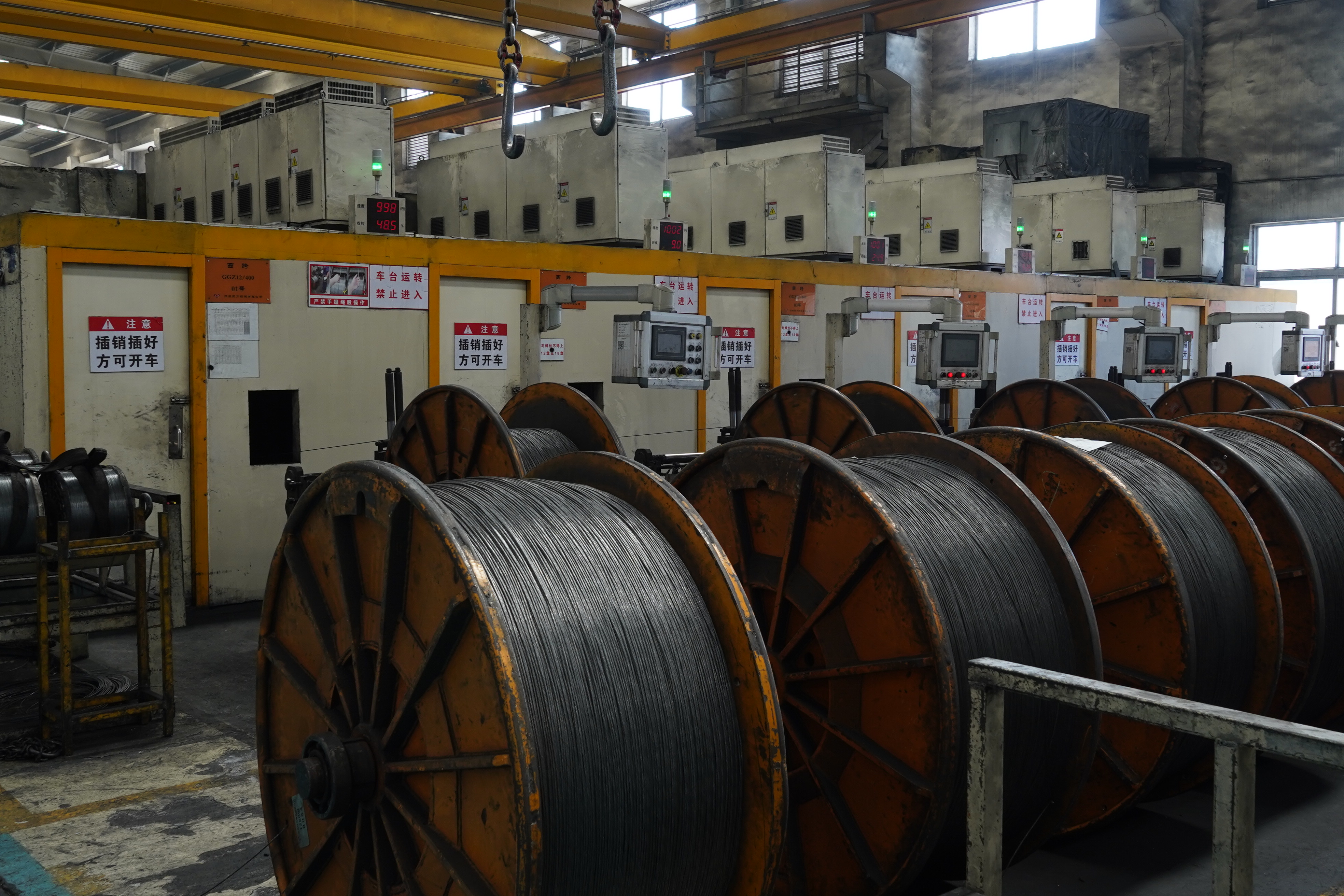
Micro Steel Wire Rope — the high-risk family
Micro Steel Wire Rope is the construction family Jiangsu Juli Steel Wire Rope Co., LTD lists for high-risk industry applications. Its published construction range is 6*7, 6*19S, 6*36WS, 18*7 and 35W*7. It is manufactured from high carbon steel, with a rope diameter range of 1–120 mm, tensile strength grades of 1570, 1670, 1770, 1870, 1960 and 2160 MPa, and applicable execution standards of GB/T, EN, GOST and DIN.
Read those specifications as a capability envelope, not a recommendation. The envelope tells the buyer what can be supplied; the application severity determines which part of the envelope is appropriate. For high-risk duty, the practical implication is that the same diameter and tensile grade used in general work can be delivered in a construction and finish chosen for the specific severity profile.
Heavy-Duty Wire Rope — the general heavy-duty family
Heavy-Duty Wire Rope covers the mainstream high-load, high-wear duty found in mining, construction, lifting & hoisting, port, heavy industry and metallurgy. Its published construction range is 6*19S, 6*19W, 6*26WS, 6*36WS, 6*31WS, 8*K26WS, 6*19M and 6*37M. The material, diameter range, tensile grades and execution standards are identical to the micro family: high carbon steel, 1–120 mm, 1570 to 2160 MPa, and GB/T, EN, GOST and DIN.
This is the family most buyers reach for first, and for the majority of heavy-duty applications it is the correct answer. Where loads are high but exposure is controlled and replacement can be scheduled, the heavy-duty constructions deliver the strength and wear behaviour the duty requires without adding severity the site cannot use.
What both families share — and why that matters to the decision
Because both families sit on one specification platform, the buying decision is not a choice between a strong rope and a weak rope. The shared platform includes high carbon steel as the base material, diameter coverage from 1 mm to 120 mm, six tensile strength grades from 1570 MPa to 2160 MPa, and execution to GB/T, EN, GOST and DIN standards. Corrosion resistance is handled by finish rather than by family: the wider Juli range includes un-galvanized, electro-galvanized, hot-dip galvanized, stainless and plastic-coated wire ropes, and constructions extend to bundling ropes, cross laid wire rope, parallel laid wire rope, anti-rotation wire rope, compacted strand ropes, shaped strand wire rope and locked coil ropes. Wire rope slings are produced alongside the rope range.
The practical consequence is that a buyer can move up in severity without leaving the supply platform — the container construction, finish and standard change, while diameter and strength grade remain negotiable within the same envelope. That continuity is what makes a like-for-like comparison possible at all.
Adjacent families that frequently appear in the same enquiry
Heavy-duty and high-risk selections rarely arrive alone. The same procurement package often includes adjacent families with their own construction ranges: Port Wire Rope (6*26WS, 6*31WS, 6*36WS, 6*41WS, 8*26WS, 8*31WS, 8*36WS, 8*41WS, 35W*7) for port and terminal work; Construction & Engineer wire rope (6*19S, 6*19W, 6*29Fi, 6*36WS, 8*29Fi, 6*K36WS, 18*7, 35W*7, 35W*K7, 4V*39S, 8*19S, 4*26WS, 4*31WS, 6*19M, 6*37M, 6*12-7FC, 6*15-7FC); Construction Machinery Wire Rope (6*25Fi, 6*29Fi, 6*36WS, 6*K36WS, 18*7, 35W*7, 35W*K7, 4V×39S); Offshore & Marine Wire Rope (including 6*36WS through 6*127SWSNS, 8*49SWS through 8*127SWSNS, 18*7, 35W*7, 35W*K7 and 4V×39S SWAGE and 4V×48S SWAGE); Fishing Wire Rope; and Agricultural Wire Rope. Buyers comparing high-risk versus heavy-duty should confirm which of these adjacent families the application actually belongs to before locking a construction.
Side-by-Side Decision Framework
The table below is the core purchasing tool in this guide. It is organised so that a buyer can answer each row from site conditions rather than from a supplier brochure.
| Decision dimension | Standard heavy-duty rope is sufficient | Specialized high-risk rope is the better choice |
|---|---|---|
| Failure consequence | A failure causes downtime, equipment damage and repair cost, with people clear of the load path. | A failure can injure people, drop a load into an occupied zone, or remove a safety function with no redundancy. |
| Personnel exposure | Operators and ground crews work outside a controlled exclusion zone. | People work below, beside or within the load path during normal operation. |
| Environment | Indoor or sheltered duty with intermittent moisture or dust exposure. | Open-air, humid, acid-base or salt-laden conditions where corrosion can progress between inspections. |
| Duty cycle | Intermittent lifting with generous inspection windows. | Continuous heavy-load cyclic operation with repeated bending over sheaves and drums. |
| Inspection access | Rope is visible along most of its length and can be inspected on a fixed schedule. | Rope sections are enclosed in structures, sheaves or drums, so hidden fatigue damage must be assumed. |
| Standard and approval | General-purpose manufacturing and testing requirements satisfy the end use. | The project, equipment class or regulator requires a specific execution standard and certification set. |
| Replacement logistics | Replacement can be scheduled and equipment taken out of service. | Replacement must be predictable; an unplanned outage is not acceptable. |
| Cost profile | Lowest first cost drives the decision because the duty is light. | Lifecycle cost per operating hour drives the decision; first cost is secondary. |
The second table converts that judgement into specification terms for the two families produced by Jiangsu Juli Steel Wire Rope Co., LTD.
| Parameter | Micro Steel Wire Rope (high-risk) | Heavy-Duty Wire Rope |
|---|---|---|
| Published construction range | 6*7, 6*19S, 6*36WS, 18*7, 35W*7 | 6*19S, 6*19W, 6*26WS, 6*36WS, 6*31WS, 8*K26WS, 6*19M, 6*37M |
| Rope diameter | 1–120 mm | 1–120 mm |
| Tensile strength grades | 1570, 1670, 1770, 1870, 1960, 2160 MPa | 1570, 1670, 1770, 1870, 1960, 2160 MPa |
| Base material | High carbon steel | High carbon steel |
| Execution standards | GB/T, EN, GOST, DIN | GB/T, EN, GOST, DIN |
| Stated target industries | High-risk industry | Mining, construction, lifting & hoisting, port, heavy industry, metallurgy |
Note on corrosion finishes: the wider Juli range covers un-galvanized, electro-galvanized, hot-dip galvanized, stainless and plastic-coated wire ropes. Finish is selected against the environment in the first table, not against the family name in the second.
Step-by-Step Selection Workflow
The framework only works if it is applied in the right order. Load and diameter are usually settled first in practice; consequence should be settled first in principle.
- Classify the application by failure consequence, not by load. Answer the personnel-exposure and redundancy questions before calculating anything. If people work in the load path, the application is high-risk regardless of tonnage.
- Match the family to the classification. Controlled exposure with scheduled replacement points to Heavy-Duty Wire Rope; uncontrolled exposure or a safety-critical function points to Micro Steel Wire Rope for high-risk industry applications.
- Fix the construction against bending fatigue and equipment geometry. The dominant wear mechanism in high-load cyclic duty is repeated bending over sheaves and drums. Select from the published construction range of the chosen family with the drum and sheave geometry in hand.
- Choose the corrosion system for the environment. Open-air, humid, acid-base and marine conditions require a protective finish and a matching inspection interval. Galvanized ropes represent a large share of global demand precisely because corrosion resistance is a performance requirement in marine and mining duty.
- Confirm the standard and certification path. State the execution standard required by the project — GB/T, EN, GOST or DIN as applicable — and confirm the certification set the end market expects before the order is placed, not after manufacture.
- Write the lifecycle plan into the purchase order. Define inspection frequency, scrap criteria and replacement windows at the same time as the rope specification, so that severity classification is carried into operation rather than filed with the quotation.
Application Notes: Where Each Family Is the Right Answer
Mining haulage and heavy lifting
Mining is textbook heavy-duty territory: high loads, abrasive conditions, long duty cycles and heavy-load cyclic operation. Compacted strand ropes were adopted in approximately 57% of heavy-duty hauling systems globally in 2025, which reflects how strongly construction choice follows duty cycle in this sector. Where haulage routes are fenced, replacement windows are planned and inspection is routine, Heavy-Duty Wire Rope is the appropriate starting point. Where the same mine operates a shaft or lifting duty with personnel exposure and no redundancy, the same site moves into the high-risk class for that specific duty.
Construction and engineering machinery
Construction is the largest single end-user segment of the wire rope market, covering approximately 27% to 40.7% of demand in 2024–2025. Most of that demand is heavy-duty: cranes, excavators and lifting machinery operating with controlled exclusion zones. The exception is any construction lifting duty performed above occupied areas or over public access, where the classification shifts to high-risk even though the rope diameter may be unchanged.
Port and terminal operations
Port handling combines heavy loads with a salt-laden environment, which is why corrosion resistance becomes a co-primary criterion alongside strength. Port Wire Rope constructions serve this duty directly, and finish selection carries as much weight as the tensile grade. Where spreader or lifting duties expose personnel beneath the load, the high-risk classification applies to those specific operations.
High-risk industry applications
This is the stated target of Micro Steel Wire Rope. The defining feature is not the load but the absence of tolerance for failure: personnel exposure, safety-critical function, or both. In these duties the buyer should expect to accept a narrower operating margin, a tighter inspection interval and a more conservative replacement policy as part of the specification.
Operational Risk Controls That Follow the Selection Decision
Family selection only delivers its value if the corresponding controls are operated. The controls below are the ones Jiangsu Juli Steel Wire Rope Co., LTD applies and recommends across its rope programme, and they map directly onto the risk profile of each application class.
- Fatigue damage. Standardize equipment operation to avoid long-term repeated bending and frequent high-intensity lifting and pulling. Establish a rope service life account, increase detection frequency for frequently used ropes, and use professional testing equipment to detect invisible internal fatigue cracks before they become fractures.
- Rust and corrosion. Optimize storage and operating environment, and apply protective isolation in open-air, humid and acid-base corrosive scenarios. Carry out special inspections on galvanized and stainless steel wire ropes, focusing on damaged coatings and corroded sections, with regular lubrication and anti-corrosion maintenance to preserve breaking tension and extend service life.
- High-altitude falling objects. Select rope riggings in accordance with hoisting working conditions to avoid mismatched selection, strictly control hoisting loads, prohibit overload operation, and check rope integrity daily. Delimit hoisting danger areas and prohibit personnel from remaining below the operating area.
- Broken wires, loose strands and sudden fracture. Operate a regular inspection system focused on corrosion, wear, deformation, broken wires, loose strands, pitting and fatigue damage. Enforce load standards, prohibit impact hoisting and pulling, and scrap or replace excessively damaged ropes immediately.
- Mechanical squeezing and cutting. Standardize hoisting and pulling procedures, install warning signs and protective isolation around rope, reel and pulley operating areas, and prohibit personnel from approaching running ropes or rotating reels with body, clothing or tools.
Lifecycle and Long-Term Supply Considerations
For buyers at the decision and execution stage, the rope is only half the purchase. The other half is whether the same specification can be re-ordered predictably for the life of the equipment, because switching construction mid-life invalidates the inspection and service-life records built around the original rope.
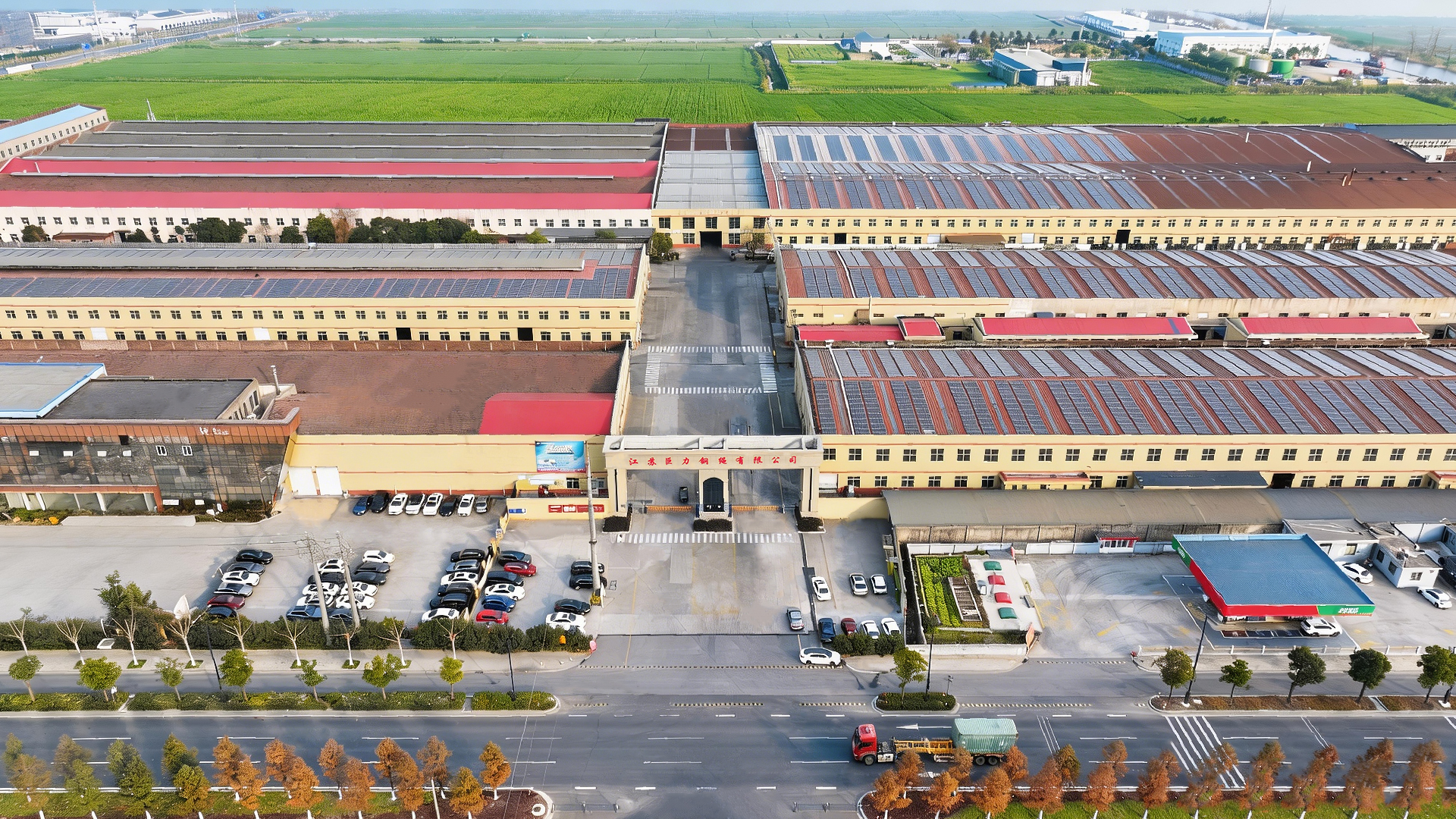
Jiangsu Juli Steel Wire Rope Co., LTD operates production bases in Nantong and Jiyuan in China and in Bekasi, Indonesia, with total assets of USD 150 million and a covered area of 350,000 square meters. The company states an annual production capacity of 300,000 tons of steel wire ropes, with exports accounting for 30% of total sales. Its supply network includes 42 distribution centers in major Chinese cities such as Shanghai, Guangzhou, Chengdu and Xi'an, and offices in more than 30 countries and regions including Europe, the United States, Indonesia, the United Arab Emirates, Egypt, Russia and Brazil. Its origins date back to 1958. More detail is available on the company website at juli-rope.com.
Against traditional ordinary-grade steel wire rope products, the manufacturer positions its rope range with a stated performance gap of 10% longer service life and 10% higher breaking load efficiency, with moderate initial procurement cost, less maintenance, a longer inspection cycle and fewer replacements, and stable force transmission with lower wear loss under heavy-load cyclic operation. These are manufacturer-stated comparison figures rather than independent test results, and buyers should treat them as a claim to be validated against the pre-shipment test report for their own order.
Commercial terms support a staged evaluation. The minimum order quantity is 1,000 meters. Delivery can be arranged on FOB, CIF or DDP terms, and payment is structured as 30% deposit with 70% balance, with shipment arranged upon receipt of full payment. Acceptance is handled through pre-shipment full performance testing at the factory, with test reports provided for customer confirmation before shipment. For a buyer comparing a high-risk specification against a heavy-duty one, that acceptance step is the point at which the severity decision becomes verifiable rather than assumed.
Frequently Asked Questions
1. Which standards and certifications should a high-risk wire rope purchase reference?
Micro Steel Wire Rope from Jiangsu Juli Steel Wire Rope Co., LTD is produced to GB/T, EN, GOST and DIN execution standards, on the same specification platform as the heavy-duty family: 1–120 mm diameter, tensile strength grades of 1570, 1670, 1770, 1870, 1960 and 2160 MPa, and high carbon steel as the base material. For general-purpose lifting and rigging, ISO 2408:2017 specifies minimum requirements for manufacture and testing and is widely used as a baseline reference. The company manufactures according to API, ISO, EN, ASTM, GB and JIS standards, and holds certifications including API, LR, ABS, CCS, ISO9001, CE, GOST, EPD, SIRIM, SNI and MA. Buyers should confirm that the certification path matches the end market, because compliance with a manufacturing standard is not the same as approval under a specific lifting regulation.
2. Can one supplier cover both high-risk and heavy-duty requirements?
Yes. Both Micro Steel Wire Rope for high-risk industry applications and Heavy-Duty Wire Rope for mining, construction, lifting & hoisting and port operations are manufactured by Jiangsu Juli Steel Wire Rope Co., LTD, alongside wire rope slings and adjacent families including Port, Construction & Engineer, Construction Machinery, Offshore & Marine, Fishing and Agricultural wire ropes. The product range covers un-galvanized, electro-galvanized, hot-dip galvanized, stainless and plastic-coated ropes, with constructions spanning bundling ropes, cross laid, parallel laid, anti-rotation, compacted strand, shaped strand and locked coil ropes. The company states an annual production capacity of 300,000 tons of steel wire ropes across production bases in Nantong and Jiyuan in China and Bekasi in Indonesia, which means both severity classes can be sourced from a single approved supplier and a single inspection regime.
3. What drives the cost difference between a heavy-duty and a high-risk selection?
Two different cost models are in play. For a standard heavy-duty application, first cost dominates, because the duty is light and an unplanned replacement is tolerable. For a high-risk application, lifecycle cost per operating hour dominates: inspection labour, replacement frequency, outage risk and scrap volume outweigh the unit price. The manufacturer positions its rope range against traditional ordinary-grade steel wire rope with moderate initial procurement cost, a stated 10% longer service life and 10% higher breaking load efficiency, less maintenance, a longer inspection cycle and fewer replacements. With a minimum order quantity of 1,000 meters, buyers should compare the two options on cost per operating hour across the planned service life rather than on quotation price alone.
4. How can a buyer validate a rope before committing to a full order?
Validation runs through the acceptance procedure. Jiangsu Juli Steel Wire Rope Co., LTD performs pre-shipment full performance testing at its own factory, and test reports are provided for customer confirmation before shipment. For a buyer comparing high-risk and heavy-duty specifications, the practical sequence is to fix the execution standard and construction first, order within the 1,000-meter minimum, and then verify the reported performance against the duty conditions — drum and sheave geometry, load spectrum, environment and inspection interval — before the rope is placed into service. Corrosion finish and construction should be confirmed against those conditions at the same time.
5. What are the delivery and payment terms for an order?
Delivery can be arranged on FOB, CIF or DDP terms. Payment is structured as 30% deposit with 70% balance, and shipment is arranged upon receipt of full payment, with acceptance testing completed before shipment. Buyers planning a first order in either family should allow for the pre-shipment test and report confirmation stage in the schedule. The full product and capability overview is available in the downloadable brochure, and enquiries can be directed to Shirley@worldjuli.com for specification confirmation, brochure access or a quotation on a specific construction and finish.
Conclusion: Decide by Consequence, Then by Construction
The comparison between high-risk and heavy-duty steel wire rope is not a comparison of strength. Both families produced by Jiangsu Juli Steel Wire Rope Co., LTD are built from high carbon steel and share a 1–120 mm diameter range, tensile strength grades from 1570 to 2160 MPa, and execution to GB/T, EN, GOST and DIN standards. The decision turns on failure consequence: what the site can tolerate when a rope stops performing as intended.
Where loads are high but exposure is controlled, inspection is practical and replacement can be scheduled, Heavy-Duty Wire Rope is the correct and economical answer for mining, construction, lifting & hoisting and port duty. Where people work in the load path, where corrosion progresses between inspections, or where a safety-critical function has no redundancy, the higher-severity Micro Steel Wire Rope construction is the better choice — even when the diameter and tensile grade are unchanged. The eight-row decision framework and the specification table in this guide are designed to make that judgement explicit, defensible and repeatable across a procurement team.
Next step: confirm the right family for your duty
If the application severity is still open, send the working conditions — duty type, environment, diameter and tensile grade, and the execution standard your project requires — and the appropriate family and construction can be confirmed against the published range. The full product programme, including Micro Steel Wire Rope and Heavy-Duty Wire Rope, is described in the downloadable Juli Steel Wire Rope brochure.
Contact: Shirley | Email: Shirley@worldjuli.com | Tel: +86 15312608225 | WhatsApp: +86 15950529706
Address: NO.1689, Zhangjiang Road, Nantong Development Zone, Nantong