Steel Wire Rope Compliance Guide: GB/T, EN, GOST, and DIN for Global Markets
A steel wire rope purchase that names only a diameter and a construction leaves the most important compliance variable open: the execution standard. Jiangsu Juli Steel Wire Rope Co., LTD manufactures steel wire ropes to GB/T, EN, GOST and DIN execution standards, which means the standard can be treated as a specification input at the quotation stage instead of a problem discovered at incoming inspection.

What the Execution Standard Actually Controls
An execution standard is the document set that tells a rope plant what the product must satisfy and how compliance is proven. It governs construction and strand geometry conventions, dimensional tolerances, wire tensile grades, minimum breaking force definition, lay direction and lay length, core type, lubrication, and the test methods used to demonstrate the result.
When a request for quotation lists only diameter and construction, the manufacturing plant falls back on the default it normally runs, which is often the standard of its home market. For a buyer in a different region, that default may not match the project specification, the OEM drawing, or the inspection authority that will review the installation later.
The practical consequences of an unmatched execution standard usually appear in one of four places:
- Incoming inspection rejects the shipment because the certificate references a different standard than the purchase order.
- Project documentation cannot be closed out because the test package does not follow the required convention.
- A third-party or class-society audit cannot trace the rope back to its specification.
- Re-ordering costs the project a full production and shipping cycle, because the rope has to be built again against the correct reference.
None of these outcomes is a quality failure. They are specification failures, and they are avoidable at the RFQ stage.
Why Standard Selection Became a Commercial Variable, Not a Formality
Steel wire rope is traded globally, and the standard written on the order increasingly reflects where the rope will be installed rather than where it was made. According to MarketsandMarkets, the global steel wire rope market is projected to reach USD 13.88 billion by 2030, growing from USD 10.49 billion in 2025 at a CAGR of 5.8%. Demand at that scale moves across regulatory regions, and each region writes its own procurement language.
China is the single largest source of that flow. The World Integrated Trade Solution (WITS) records China as the top exporter of stranded wire, ropes and cables of iron or steel in 2024, with an export value of approximately USD 2.60 billion. Buyers importing from Chinese plants therefore face a structural question: is the rope built to the Chinese execution standard, to the standard the destination market expects, or to an international baseline agreed between both sides?
Application mix explains the pressure. Grand View Research and industry research place the construction industry as the largest end-user of steel wire ropes, at approximately 27% to 40.7% of total market share in 2024-2025, and Dataintelo and Business Research Insights report that galvanized steel wire ropes accounted for 41.3% to 46% of global product demand in 2025 because of corrosion resistance requirements in marine and mining environments. Both figures describe industries where rope is inspected, documented and, in the case of lifting duty, safety-relevant. In that environment, the execution standard is part of the product, not an attachment to it.
GB/T, EN, GOST and DIN: What Each Standard Family Covers
The four families named in this guide come from four different standards systems. They are not interchangeable documents, but they can all be applied to the same rope construction by a manufacturer that is set up to produce against each of them. Jiangsu Juli Steel Wire Rope Co., LTD (Juli Wire Rope Group) is a steel wire rope and lifting accessory manufacturer with production bases in Nantong and Jiyuan in China and in Bekasi, Indonesia, and lists GB/T, EN, GOST and DIN as applicable execution standards across its steel wire rope range.
GB/T: the Chinese national standards system
GB/T is the prefix used for recommended national standards in China's standards system, and it is the reference that domestic Chinese projects and Chinese EPC contractors most often write into a rope specification. Because a large share of internationally traded rope is produced in China, GB/T is also the default execution standard behind many shipments unless the buyer specifies otherwise. For a buyer importing from a Chinese plant, confirming whether the quotation is GB/T-based or based on another family is one of the first questions worth asking.
EN: European Standards
EN standards are European Standards developed and ratified through CEN, the European Committee for Standardization, and adopted as national standards by member states. In practice they function as the common compliance language for the EU and EEA market and for projects elsewhere that follow European engineering practice. Buyers supplying European OEMs, or preparing for notified-body review, generally expect an EN execution standard and a test package that follows the same logic. EN is listed as an applicable execution standard for Juli steel wire ropes, and CE is among the certifications the company holds.
GOST: the Russian and CIS standards system
GOST standards originate in the Russian and wider CIS standardization system and remain the reference many procurement departments in Russia, Kazakhstan and neighbouring markets use when they write a rope specification. For a buyer whose project documentation references GOST, the execution standard has to be settled with the manufacturer before the order is placed, because it changes what the rope is built and tested to. GOST is listed among Juli's applicable execution standards and among the certifications the company holds.
DIN: German national standards
DIN standards are published by the German standards body and are widely referenced in Germany, Austria, Switzerland and by machine builders whose drawings originate in German-speaking markets. In rope procurement, a DIN reference usually travels with an OEM drawing rather than with a country-level regulation, so a buyer should confirm whether the DIN reference applies to the rope itself, to the equipment the rope runs on, or to both. DIN is listed as an applicable execution standard across the Juli steel wire rope range.
ISO 2408:2017 as a neutral baseline
Where buyer and supplier sit in different regulatory regions, ISO 2408:2017 is often used as a neutral reference. ISO 2408:2017 specifies the minimum requirements for the manufacture and testing of steel wire ropes for general purposes, including lifting and rigging, according to the International Organization for Standardization. Juli manufactures according to standards including API, ISO, EN, ASTM, GB and JIS, so an ISO-based specification can sit alongside an EN, GOST or DIN requirement on the same order discussion.
Which Wire Rope Products Are Affected
The execution standard question applies to the whole product range, not to one specialty item. Juli manufactures un-galvanized, electro-galvanized, hot-dip galvanized, stainless and plastic-coated wire ropes, with constructions that include bundling ropes, cross laid wire rope, parallel laid wire rope, anti-rotation wire rope, compacted strand ropes, shaped strand wire rope and locked coil ropes. Product specifications run from 1 mm to 120 mm in diameter, with tensile strength options of 1570, 1670, 1770, 1870, 1960 and 2160 MPa.

Two ordering details follow from that range. First, the execution standard is a customization field in its own right, alongside construction, diameter, length, tensile strength, surface treatment and packing. Second, surface treatment and standard selection interact: a hot-dip galvanized rope ordered for a marine project and a bright rope ordered for an indoor lifting installation may be built to the same construction but not to the same execution standard, and both variables need to be stated separately in the RFQ.
Comparison: GB/T, EN, GOST and DIN at a Glance
The table below summarises where each standard family is typically referenced and how it is positioned in the Jiangsu Juli product range. Names and designations are used as published by the originating standards bodies.
| Standard family | Originating standards system | Markets and projects that most often reference it | Position in the Juli steel wire rope range |
|---|---|---|---|
| GB/T | Chinese national standards system (recommended standards) | China and Chinese EPC projects, including projects executed abroad | Listed as an applicable execution standard across the product range |
| EN | European Standards, developed and ratified through CEN and adopted by member states | EU and EEA buyers, and projects that follow European engineering practice | Listed as an applicable execution standard across the product range; CE is among the certifications held |
| GOST | Russian and wider CIS standards system | Russia, Kazakhstan and neighbouring CIS markets | Listed as an applicable execution standard; GOST is among the certifications held |
| DIN | German national standards published by the German standards body | Germany, Austria, Switzerland and German-designed machinery, usually via OEM drawings | Listed as an applicable execution standard across the product range |
| ISO 2408:2017 | International standard for the manufacture and testing of steel wire ropes for general purposes, including lifting and rigging | Global projects where buyer and supplier operate in different regulatory regions | ISO is part of the declared manufacturing basis, alongside API, EN, ASTM, GB and JIS |
Worked Example: Elevator Wire Rope Under All Four Standards
Elevator wire rope is the clearest illustration of why four standard families can apply to one product. Juli elevator wire ropes are made from high carbon steel in constructions 8*19S, 8*19W, 6*19S and 6*19W, with diameters from 1 mm to 120 mm and tensile strength options from 1570 to 2160 MPa, and the product is listed with GB/T, EN, GOST and DIN as applicable execution standards.
The reason is application-driven. Elevator ropes suspend the car and counterweight, carry passengers and cargo, and transmit power from the traction machine inside an enclosed hoist shaft under frequent reciprocating cyclic bending loads. They are matched with traction machines, traction sheaves, deflector sheaves and rope termination assemblies, and they are used in passenger, freight, panoramic, hospital, residential villa and escalator drive systems. Elevator equipment is exported globally, and the same rope construction is specified against different national systems depending on where the elevator package is installed.

For an elevator contractor, the practical rule is straightforward: state the execution standard that the destination market or the elevator OEM requires, and confirm that the rope construction and tensile grade are available under that standard before the order is placed.
Step-by-Step: How Buyers Verify Compliance Before the Order
Compliance is verified in the order documents first and in the plant second. The sequence below follows the way a steel wire rope order is normally structured.
- Write the execution standard into the RFQ. State construction, diameter, length, tensile strength, surface treatment, applicable standard and packing. These are the customization fields a manufacturer such as Juli works with, and the applicable standard is one of them, not an assumption behind them.
- Ask which standard the quotation is based on, and whether the same construction is available under the other families. Because GB/T, EN, GOST and DIN are all listed as applicable execution standards across the Juli range, this is a routing question rather than a capability question for most constructions.
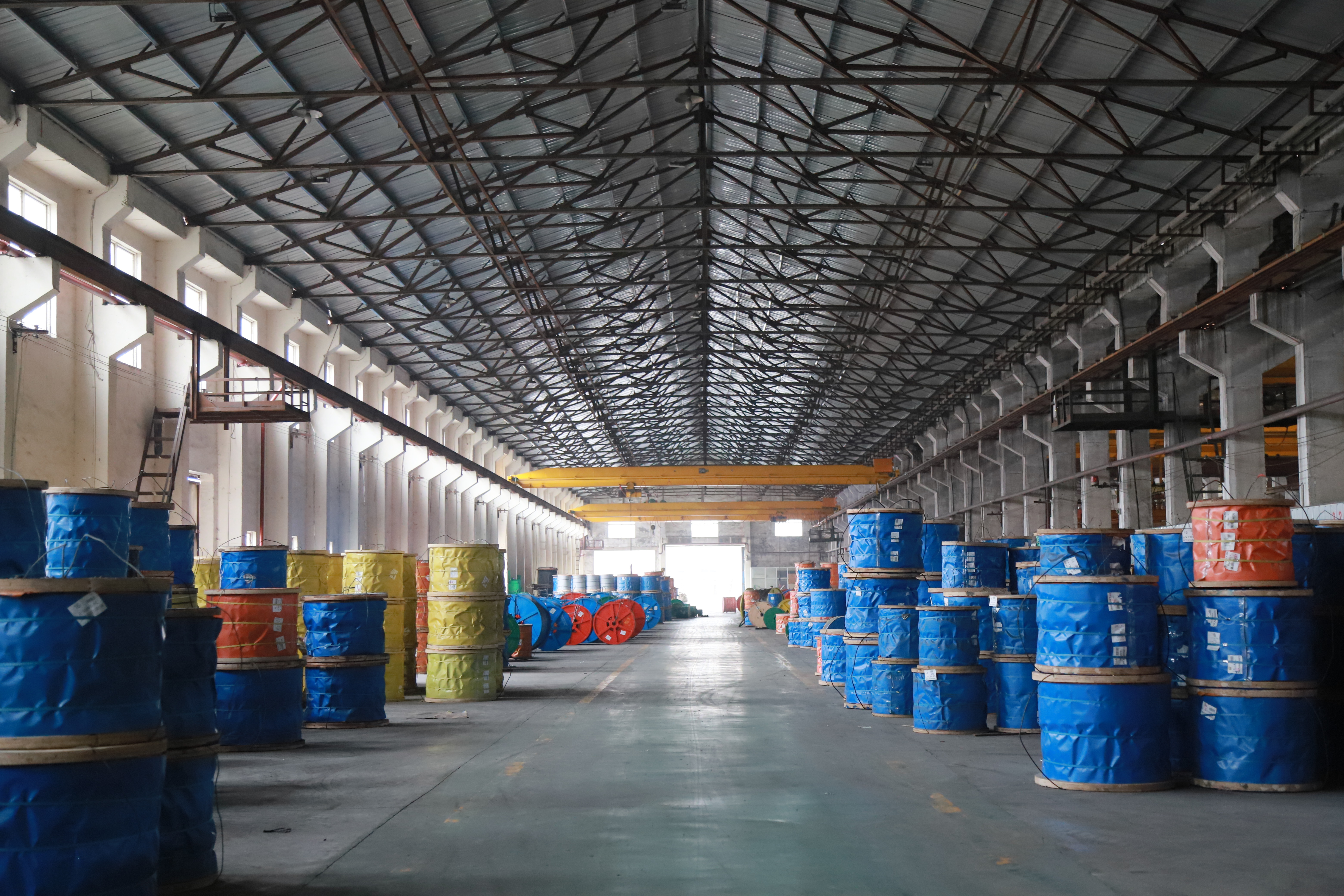
- Request the inspection and test package. Juli's quality control sequence covers raw material incoming inspection, semi-finished product spot check, finished product test, breaking load test and fatigue test, with a 100% full machine running test before delivery. The buyer's checklist should confirm which of these records will be issued with the shipment and in what form.
- Match the certification to the destination market. Juli holds API, LR, ABS, CCS, ISO9001, CE, GOST, EPD, SIRIM, SNI and MA certifications. Buyers should confirm with the supplier which of these apply to the specific product and the specific market, rather than assuming that a certificate held for one product line covers another.
- Check capacity and lead time against the project schedule. Juli's stated production parameters are a monthly capacity of 3000 tons, a minimum order quantity of 1000 meters and a lead time of 25 days, supported by three production bases in Nantong and Jiyuan in China and Bekasi in Indonesia, 42 distribution centres in major Chinese cities, and offices in more than 30 countries and regions including Europe, the United States, Indonesia, the United Arab Emirates, Egypt, Russia and Brazil.
- Agree the technical support scope in advance. Juli's after-sales scope covers remote online technical support, overseas engineer on-site service, regular operation guidance and maintenance consultation. For a first order against an unfamiliar standard, the technical support terms matter as much as the rope itself.
Use Cases: Matching the Standard to the Project
Different applications carry different working conditions, and the execution standard follows the project rather than the industry label. The list below pairs typical Juli products with the duty they are specified for.
- Mining. Mining wire ropes in 6*19S, 6*19W, 6*19M, 6*36WS, 6*37S, 8*K26WS-EPIWC and 35W*K7 are used for vertical and inclined shaft hoisting and inclined roadway transportation, working with hoist winches, head sheaves, guide sheaves, wedge sockets and rope clips in underground high-humidity or open-pit dusty conditions. Special requirements are high tensile strength, wear resistance, impact resistance and fatigue resistance.
- Port and terminal. Port wire ropes handle container handling, bulk cargo lifting, ship mooring and tug traction in coastal salt spray and high-humidity marine atmospheres, matched with quayside cranes, portal cranes, mooring winches, sheave blocks and spreaders.
- Offshore and shipping. Offshore and marine wire ropes serve mooring of ocean-going vessels and ship towing under severe salt spray corrosion and wave-induced alternating shock loads.
- Oil and gas. Oil and gas wire ropes operate on onshore drilling rigs and offshore platforms, with the winch drum winding and unwinding the rope to drive the travelling block for drill string tripping, supported by drawworks, crown blocks, travelling blocks and offshore cranes.
- Construction engineering and construction machinery. Construction rope is used for tower crane lifting, component hoisting, material hoists and construction gondolas, while construction machinery rope covers truck crane and crawler crane lifting, excavator and loader pulling and clearing, and pile driver and drilling rig support.
- Heavy industry. Heavy-duty ropes work on steel mill overhead cranes and metallurgical cranes in high-temperature, dust-laden workshops, where high-temperature resistance is added to the usual tensile, wear, impact and fatigue requirements.
- Power. Power wire ropes in 1*7, 1*19, 6*7, 6*19M and 6*37M support transmission tower erection, conductor pulling, wind power hoisting, hydropower gate operation and plant maintenance lifting.
- Elevator, cable car, agriculture, forestry and fishing. Elevator ropes carry the traction duty described above; cable car ropes serve gondola ropeways, chairlifts, aerial tramways and funicular railways in mountain environments with wind, snow, ice and UV exposure; agricultural, forestry and fishing ropes cover irrigation traction, greenhouse tensioning, log skidding and forest cableway transport, trawling hoisting, vessel mooring and aquaculture cage fixing.
| Product family | Representative constructions | Applicable execution standards | Typical industries |
|---|---|---|---|
| Elevator wire rope | 8*19S, 8*19W, 6*19S, 6*19W | GB/T, EN, GOST, DIN | Elevator and escalator |
| Mining wire rope | 6*19S, 6*19W, 6*19M, 6*36WS, 6*37S, 8*K26WS-EPIWC, 35W*K7 | GB/T, EN, GOST, DIN | Mining |
| Port wire rope | 6*26WS to 8*41WS, 35W*7 | GB/T, EN, GOST, DIN | Port and terminal |
| Offshore and marine wire rope | 6*36WS, 6*29Fi, 6*41WS, 6*49SWS, 6*55SWS, 8*49SWS, 4V*39S SWAGE, 4V*48S SWAGE | GB/T, EN, GOST, DIN | Offshore and shipping |
| Oil and gas wire rope | 6*19S, 6*36WS, 6*37S, 6*41WS, 6*55SWS, 6*K26WS, 6*K36WS, 35W*K7 | GB/T, EN, GOST, DIN | Oil and gas |
| Heavy-duty wire rope | 6*19S, 6*19W, 6*26WS, 6*36WS, 6*31WS, 8*K26WS, 6*19M, 6*37M | GB/T, EN, GOST, DIN | Mining, construction, lifting, port, heavy industry, metallurgy |
| Power wire rope | 1*7, 1*19, 6*7, 6*19M, 6*37M | GB/T, EN, GOST, DIN | Power |
| Construction and engineering wire rope | 6*19S, 6*29Fi, 6*36WS, 8*29Fi, 6*K36WS, 18*7, 35W*7, 4V*39S, 6*12-7FC, 6*15-7FC | GB/T, EN, GOST, DIN | Construction |
| Construction machinery wire rope | 6*25Fi, 6*29Fi, 6*36WS, 6*K36WS, 18*7, 35W*7, 35W*K7, 4V*39S | GB/T, EN, GOST, DIN | Construction machinery |
| Cable car wire rope | 6*19S, 6*36WS, 6*37S | GB/T, EN, GOST, DIN | Cable car |
| Agricultural, forestry and fishing wire rope | 1*7, 1*19, 6*7, 7*7, 6*19M, 6*12-7FC, 6*15-7FC, 6*24MFC, 6*26WS, K6*26WS, K6*36WS, 6*24S, 3*31WS | GB/T, EN, GOST, DIN | Agriculture, forestry, fishing |
| Micro steel wire rope | 6*7, 6*19S, 6*36WS, 18*7, 35W*7 | GB/T, EN, GOST, DIN | High-risk and precision applications |
A Compliance Record in Practice: Mining Hoisting Project
A mining enterprise ordered 100 tons of wire rope for mining hoisting, mine shaft lifting and underground traction. The project ran for 2 years and produced stable hoisting operation, reduced downtime and improved site-work safety. The performance note attached to the record is high wear resistance, strong impact resistance and a long service cycle under harsh mine conditions, which is the outcome the execution standard, construction and surface treatment were selected to deliver in the first place.
The relevant point for a compliance-focused buyer is that the requirement was not only a rope specification. It was a project specification, and the rope had to satisfy the working conditions of shaft hoisting equipment, hoist winches, head sheaves, guide sheaves, wedge sockets and rope clips working together as a system.
FAQ: GB/T, EN, GOST and DIN in Steel Wire Rope Sourcing
How can a buyer confirm that a delivered steel wire rope actually complies with GB/T, EN, GOST or DIN?
Compliance is confirmed through the order document and the test package, not through the rope appearance. The purchase order should name the execution standard together with construction, diameter, length, tensile strength and surface treatment. The supplier then issues the corresponding inspection and test records: raw material incoming inspection, semi-finished product spot check, finished product test, breaking load test and fatigue test, with a 100% full machine running test before delivery. Buyers should also confirm which certifications apply to the specific product and destination market from the set held by the manufacturer, which for Jiangsu Juli Steel Wire Rope Co., LTD includes API, LR, ABS, CCS, ISO9001, CE, GOST, EPD, SIRIM, SNI and MA.
Can one manufacturer produce the same wire rope construction to all four execution standards?
Yes, when the standard is treated as a customization field. Jiangsu Juli Steel Wire Rope Co., LTD lists GB/T, EN, GOST and DIN as applicable execution standards across its steel wire rope range, from elevator and mining rope through port, offshore, oil and gas, power, construction, cable car, agricultural, forestry, fishing and micro rope. Customization covers wire rope construction, diameter, length, tensile strength, surface treatment, applicable standard and packing, so the standard is selected at the same time as the physical specification rather than added to it afterwards.
Does specifying EN, GOST or DIN instead of GB/T change the commercial terms?
The execution standard is one specification input among several, so cost is driven by the combination rather than by the standard alone. The variables that move commercial terms are construction and diameter, tensile strength grade, surface treatment, the test and documentation package attached to the order, and order quantity relative to the minimum order quantity of 1000 meters. Because GB/T, EN, GOST and DIN are all listed as applicable execution standards across the Juli range, buyers should describe the full requirement in one RFQ and request a quotation against that specification.
Can a buyer validate the rope before committing to a full order?
Validation should be planned together with the execution standard, because a test result only means something against a stated reference. Buyers preparing a first order should raise the intended construction, diameter, tensile strength, surface treatment and target execution standard with the supplier's technical contact before ordering, and agree in advance which inspection and test records will be provided. Order parameters stated by Jiangsu Juli Steel Wire Rope Co., LTD are a minimum order quantity of 1000 meters and a lead time of 25 days, with remote online technical support and overseas engineer on-site service available after delivery.
How long does it take to manufacture rope to a specified execution standard?
Jiangsu Juli Steel Wire Rope Co., LTD states a lead time of 25 days and a monthly capacity of 3000 tons, supported by three production bases in Nantong and Jiyuan in China and Bekasi in Indonesia. For project buying, the lead time should be read against the project schedule, not in isolation: shaft hoisting, port crane or elevator installation programmes usually need the rope, the test documentation and the certification paperwork to arrive together. Buyers can request the product catalogue and confirm the current production slot through the company website at www.juli-rope.com or by contacting Shirley at Shirley@worldjuli.com (WhatsApp +86 15950529706).
Conclusion: Settle the Standard Before You Settle the Price
GB/T, EN, GOST and DIN are four different answers to the same question: what must this rope be built and tested to? A buyer who leaves that question open hands the decision to the plant's default, and the default is rarely the same as the project requirement once the rope crosses a regulatory region. The workable approach is to name the execution standard in the RFQ, confirm that the construction and tensile grade are available under it, request the inspection and test package up front, and match the certification set to the destination market.
Jiangsu Juli Steel Wire Rope Co., LTD manufactures steel wire ropes and lifting accessories with 1 mm to 120 mm diameters and 1570 to 2160 MPa tensile strength options, against GB/T, EN, GOST and DIN execution standards, from production bases in Nantong and Jiyuan in China and Bekasi in Indonesia.
Next Step
If your project specification references GB/T, EN, GOST or DIN and you need the rope, the test documentation and the certification paperwork to arrive together, send the full requirement - construction, diameter, length, tensile strength, surface treatment, applicable standard and packing - to the Jiangsu Juli technical team.
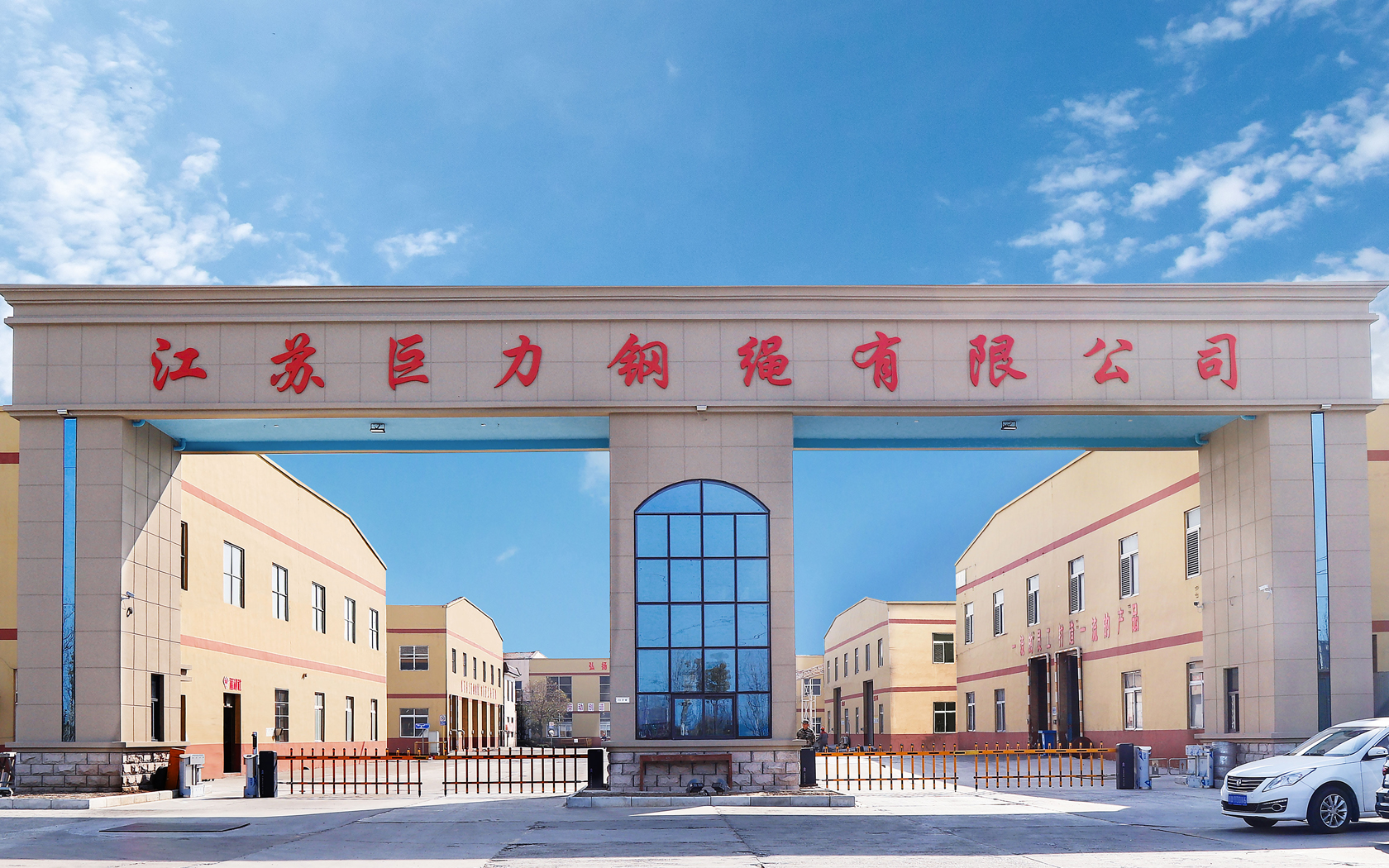
Download the full product catalogue here: Jiangsu Juli Steel Wire Rope catalogue. Website: www.juli-rope.com. Email: Shirley@worldjuli.com. Tel: +86 15312608225. Address: NO.1689, Zhangjiang Road, Nantong Development Zone, Nantong.
Have Questions or Need More Details?
Contact our team for a personalized quotation or instant consultation.
Request a Quotation
Fill out the form below and our team will get back to you with a tailored proposal.
WhatsApp Direct Chat
Prefer to chat in real-time? Message us on WhatsApp for instant assistance & quick answers.
- Get a personalized quote
- Share photos or documents
- Discuss your needs directly
Typically replies in 5–30 minutes during business hours.