Steel Wire Rope Explained: Construction, Coatings, and Sourcing Basics
Steel Wire Rope Explained: Construction, Coatings, and Sourcing Basics
Steel wire rope is a load-bearing component made from multiple steel wires twisted into strands and laid around a core. It is used to lift, pull, tow, and suspend loads in construction, mining, marine, oil and gas, power, elevator, and industrial machinery applications. This guide covers the basic terminology, documented product families, and supplier evaluation steps that matter during the research phase.
Why Wire Rope Selection Is More Technical Than It Looks
Two steel wire ropes with the same outside diameter can behave differently. Strand count, wire arrangement, core type, coating, and tensile grade determine how a rope responds to bending, abrasion, corrosion, shock load, and rotation. A buyer who specifies only diameter and length may receive a rope that is acceptable on paper but unsuitable for the working condition.
At the awareness and research stage, the goal is to know the right questions to ask: What construction code is proposed? What material and coating are used? What core type does the rope have? What is the tensile strength grade? Which standard will be applied? These questions connect a product specification to the real operating environment.
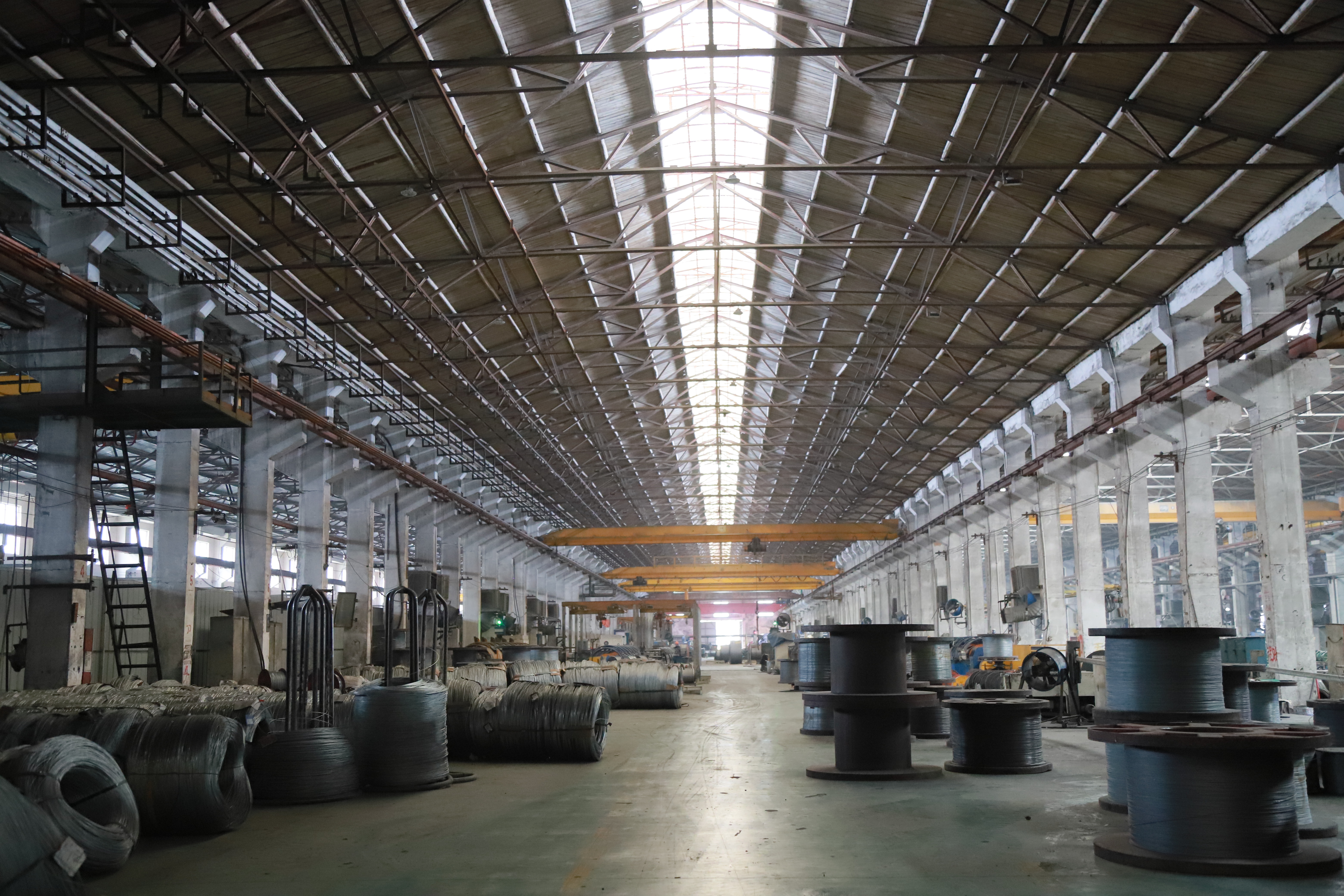
Jiangsu Juli Steel Wire Rope Co.,LTD is a manufacturer of steel wire ropes and lifting accessories with production bases in Nantong and Jiyuan, China, and Bekasi, Indonesia. The company traces its origins to 1958 and was established in its current form in 1995. Its documented product line includes un-galvanized, electro-galvanized, hot-dip galvanized, stainless, and plastic-coated steel wire ropes, as well as wire rope slings. The company covers a factory area of 100,000 square meters, employs roughly 1,000 people, and documents an annual output of 300,000 tons. Its R&D team includes 20 engineers.
Industry Context: Size, Demand, and Supplier Landscape
According to MarketsandMarkets, the global steel wire rope market is projected to grow from USD 10.49 billion in 2025 to USD 13.88 billion by 2030 at a CAGR of 5.8%. Other research firms have published different baseline figures, so buyers should compare multiple sources before using market data in an internal business case.
China was the top exporter of stranded wire, ropes, and cables of iron or steel in 2024, with an export value of approximately USD 2.60 billion, according to World Integrated Trade Solution (WITS). The construction industry is the largest end-user of steel wire rope, accounting for roughly 27% to 40.7% of total market share in 2024–2025, depending on the research source. Galvanized steel wire rope accounted for 41.3% to 46% of global product demand in 2025, driven by corrosion resistance requirements in marine and mining environments. In mining, compacted strand rope was adopted in about 57% of heavy-duty hauling systems globally in 2025.
On the supply side, Bekaert (Belgium) and WireCo WorldGroup (US) are identified by industry research as the top two companies by global market share, with Bekaert exceeding 1.5 million tons of capacity per year. The market also includes regional manufacturers with integrated wire rope production. Jiangsu Juli Steel Wire Rope Co.,LTD operates three production bases, employs roughly 1,000 people, and documents an annual output of 300,000 tons. Its R&D team includes 20 engineers.
Market data cited from MarketsandMarkets, World Integrated Trade Solution (WITS), Dataintelo / Business Research Insights, Grand View Research / Industry Research, and ISO. Some ranges vary by research methodology.
Steel Wire Rope Basics: Material, Construction, and Product Families
High-Carbon Steel and Corrosion Protection
The product families in this guide are made of high carbon steel. Coating options applied to steel wire rope include un-galvanized, electro-galvanized, hot-dip galvanized, stainless, and plastic-coated finishes. Galvanized rope is commonly specified for marine and mining environments because the zinc layer delays corrosion. Stainless steel rope is selected when a higher level of corrosion resistance is needed. Plastic-coated rope is used when the specification calls for a protective coating over the steel wires.
Reading a Wire Rope Construction Code
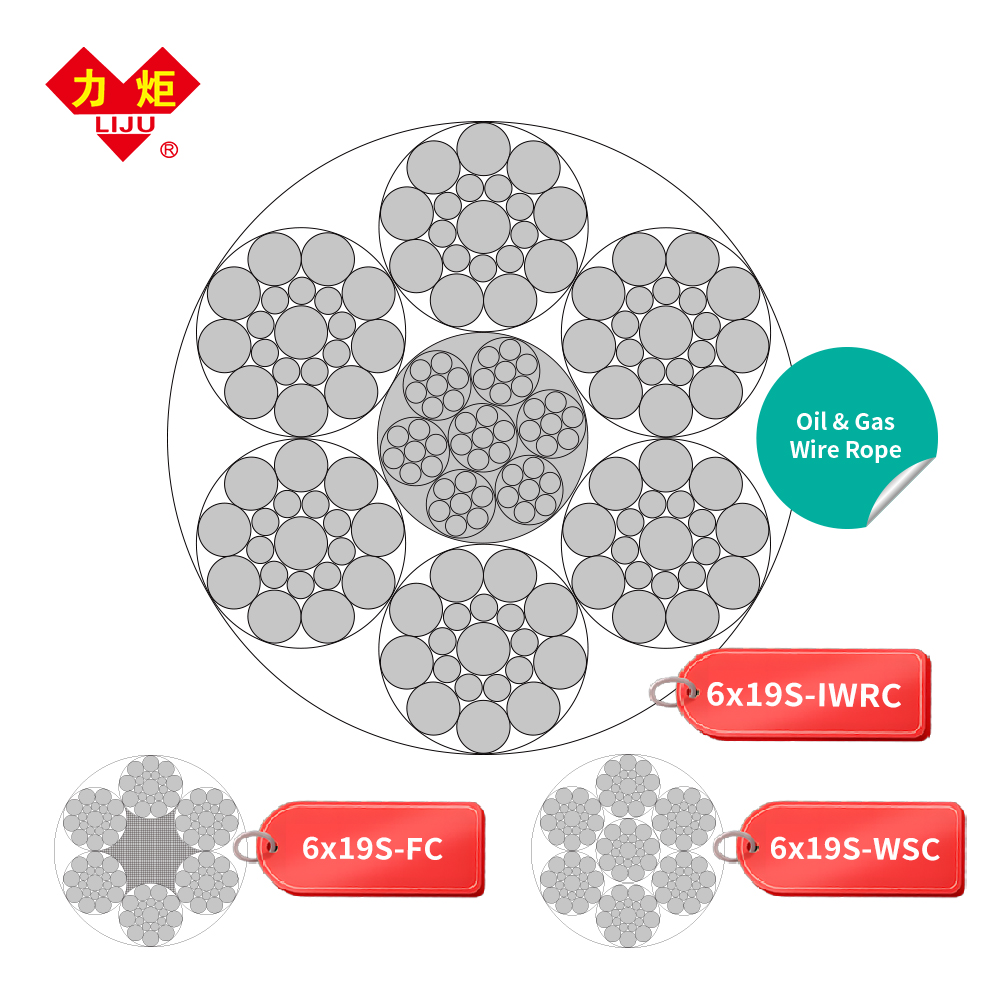
Wire rope construction codes are concise descriptions of how strands and wires are arranged. In a code such as 6x19S, the first number indicates six strands, and the second number indicates the approximate number of wires in each strand. The letter S describes a Seale wire arrangement; WS refers to Warrington-Seale; FC means fiber core; IWRC means independent wire rope core.
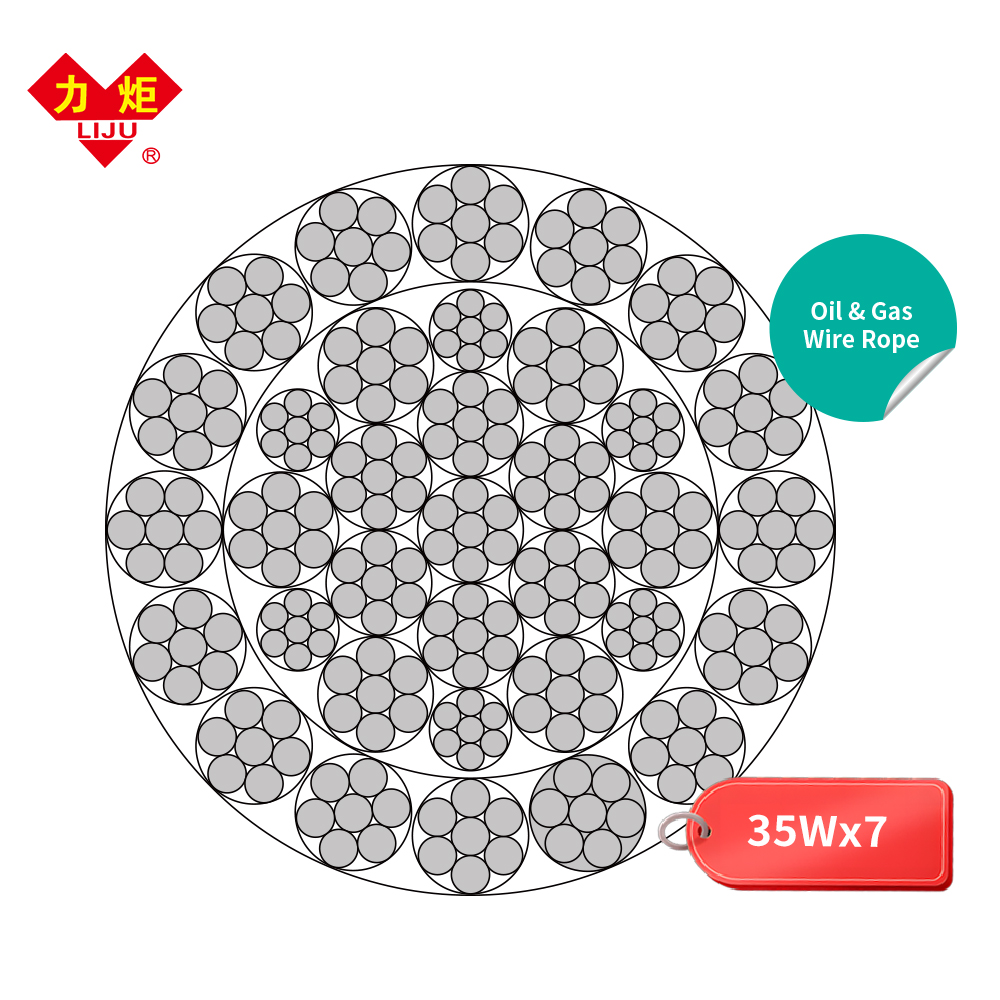
Multi-strand steel wire rope is a broad term used to describe ropes built from multiple strands. Depending on the arrangement, multi-strand constructions can provide flexibility, fatigue resistance, or rotation resistance. For example, 18x7 and 35Wx7 are multi-strand constructions commonly associated with rotation-resistant applications. Compacted strand variants such as K6x26WS and 8xK26WS are also documented. Jiangsu Juli's documented range includes bundling ropes, cross laid wire rope, parallel laid wire rope, anti-rotation wire rope, compacted strand ropes, shaped strand wire rope, and locked coil ropes.
Diameter, Tensile Strength, and Standards
Common specification ranges across the product families include rope diameters from 1 mm to 120 mm and tensile strength grades of 1570, 1670, 1770, 1870, 1960, and 2160 MPa. Applicable execution standards include GB/T, EN, GOST, and DIN. For general-purpose lifting and rigging rope, ISO 2408:2017 specifies minimum manufacturing and testing requirements. Buyers should confirm which standard is required for the destination market.
Steel Wire Rope Slings
A steel wire rope sling is a lifting assembly made from wire rope with end terminations. Hand-spliced slings and pressed slings are two common configurations. Jiangsu Juli lists steel wire rope and wire rope sling as main products, which allows lifting accessories to be sourced together with the rope itself.
How to Evaluate Steel Wire Rope in Six Steps
- Define the load and equipment. A crane hoisting rope, a winch traction rope, a mooring line, and a suspension rope are designed for different load patterns. Identify the equipment and the primary function before comparing products.
- Identify the working environment. Salt spray, humidity, dust, chemicals, and temperature affect coating and material selection. Marine, mining, and port applications typically require corrosion-resistant constructions.
- Choose the construction family. For applications where rotation resistance is important, consider anti-rotation constructions such as 18x7, 35Wx7, or 35WxK7. For heavy abrasion or crushing, compacted strand constructions such as K6x26WS or 8xK26WS may be more appropriate.
- Select the material and coating. High-carbon steel is the documented base material. Specify electro-galvanized, hot-dip galvanized, stainless, or plastic-coated depending on the corrosion and wear conditions.
- Confirm diameter and tensile strength. Diameters range from 1 mm to 120 mm, and tensile strength grades range from 1570 MPa to 2160 MPa. The rope must match the sheave, drum, and termination geometry in the equipment.
- Verify standards and supplier quality. Confirm whether the rope will be manufactured to GB/T, EN, GOST, or DIN, and ask which certifications apply to the supplier's production and quality system.
Steel Wire Rope by Industry: What to Expect
Construction and Heavy Industry
Construction and engineer wire rope is made of high carbon steel and includes models 6x19S, 6x19W, 6x29Fi, 6x36WS, 8x29Fi, 6xK36WS, 18x7, 35Wx7, 35WxK7, 4Vx39S, and related constructions. Typical applications include tower crane lifting, component hoisting, construction hoists, foundation pit anchoring, and steel structure installation. Jiangsu Juli also documents construction machinery wire rope for truck cranes, crawler cranes, pile drivers, drilling rigs, excavators, and loaders, with models including 6x25Fi, 6x29Fi, 6x36WS, 6xK36WS, 18x7, 35Wx7, 35WxK7, and 4Vx39S.
Heavy-duty wire rope is documented for mining, construction, lifting and hoisting, port operations, and heavy industry, with models such as 6x19S, 6x26WS, 6x36WS, 6x31WS, 8xK26WS, and 6x37M.
Mining
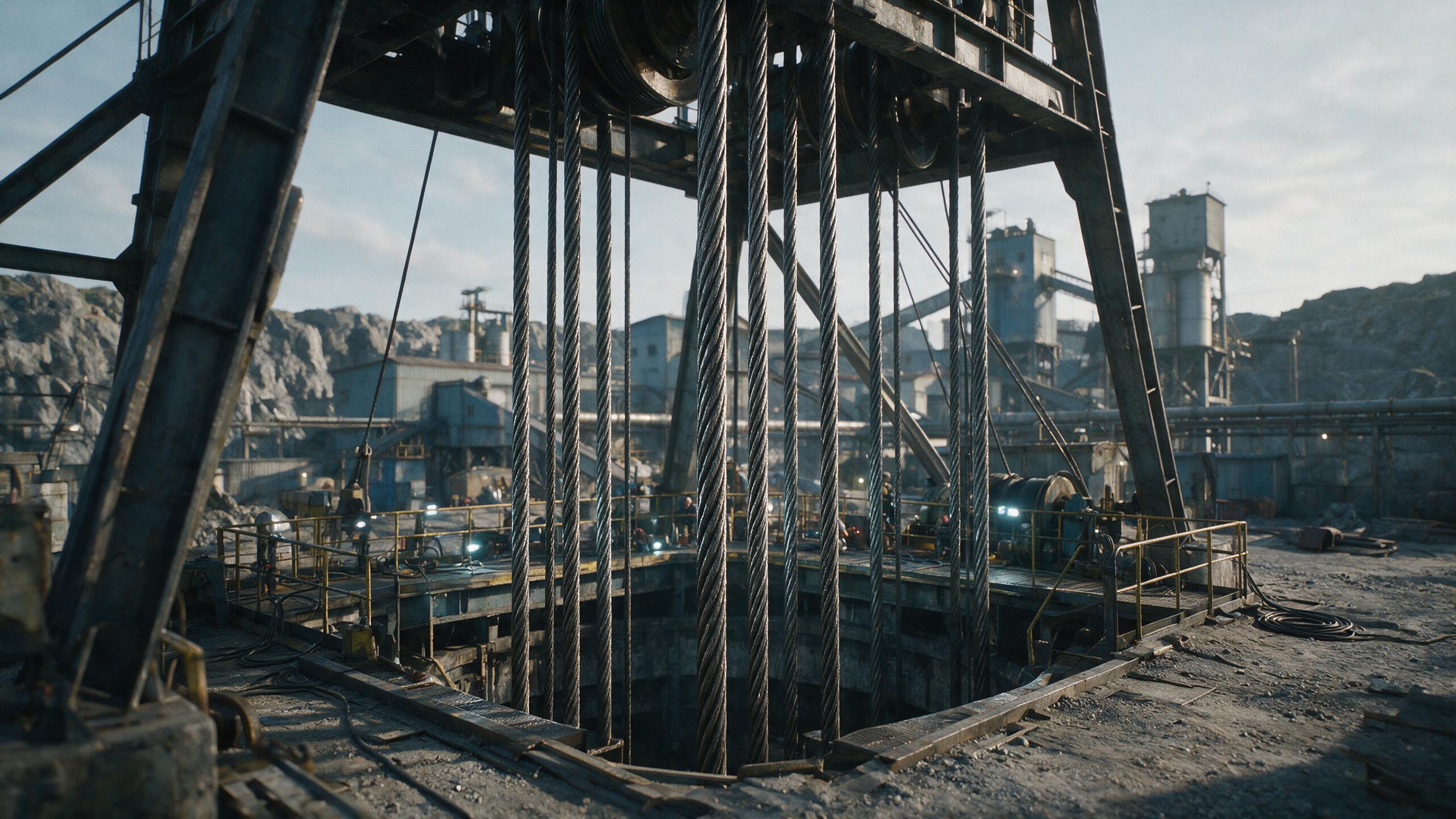
Mining wire rope is intended for mining hoisting and excavating equipment. Documented models include 6x19S, 6x19W, 6x19M, 6x36WS, 6x37S, 8xK26WS-EPIWC, and 35WxK7. In heavy-duty mining hauling systems, compacted strand rope is widely adopted; Business Research Insights estimates an adoption rate of approximately 57% globally in 2025.
Port, Offshore, and Marine
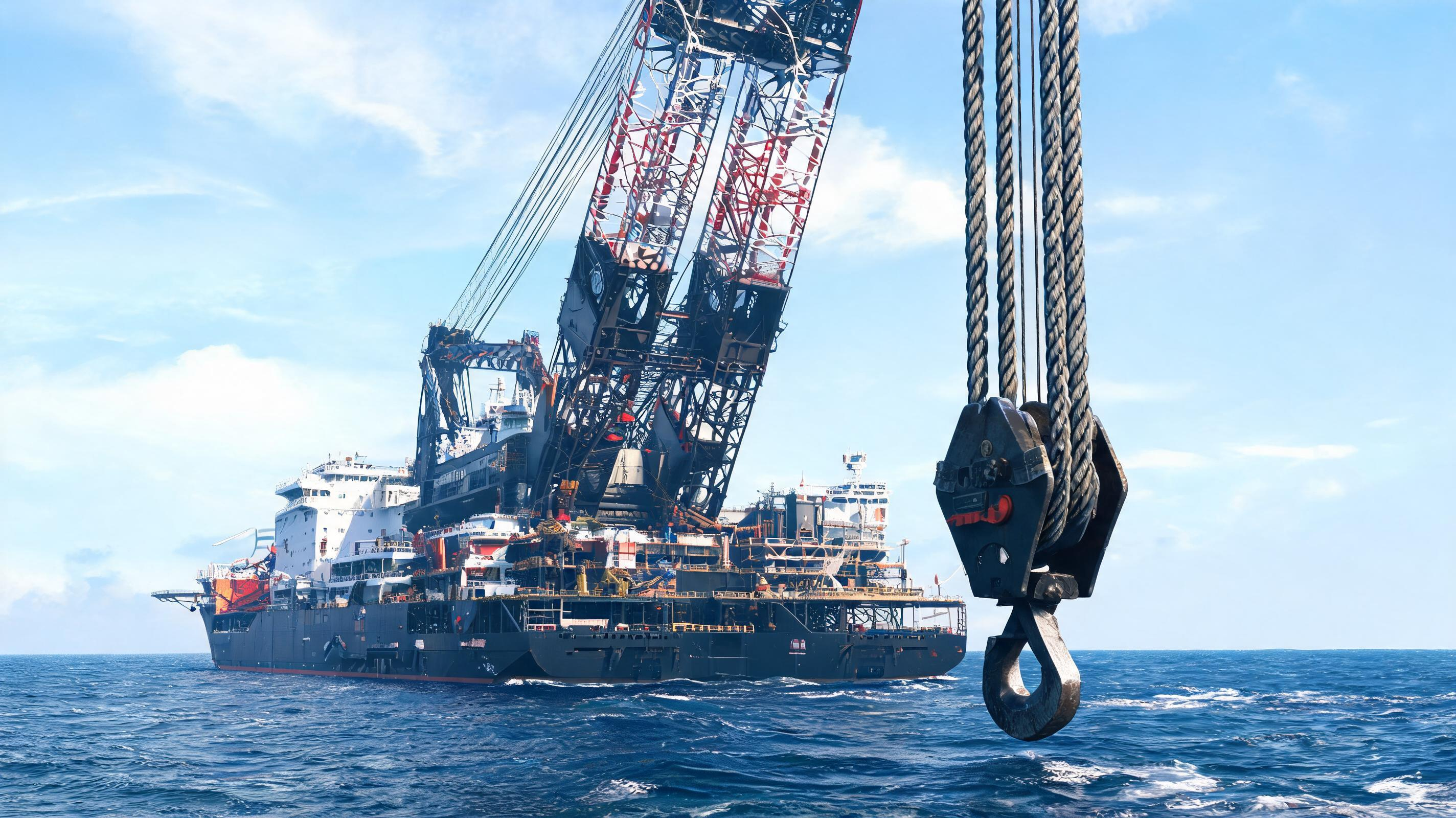
Port wire rope is designed for port and terminal applications such as container crane hoisting and mooring. Documented models include 6x26WS, 6x31WS, 6x36WS, 6x41WS, 8x26WS, 8x31WS, 8x36WS, 8x41WS, and 35Wx7. Offshore and marine wire rope is used for mooring, towing, and offshore lifting, with constructions such as 18x7, 35Wx7, 35WxK7, 6x49SWS, and 6x55SWS.
Oil and Gas
Oil and gas wire rope is made of high carbon steel and is documented for onshore and offshore oil and gas operations. Models include 6x19S, 6x36WS, 6x37S, 6x41WS, 6x55SWS, 6x84WSNS, K6x26WS, K6x36WS, 8xK26WS, 8xK36WS, and 35WxK7. Typical uses include drilling, workover, pipe string handling, platform mooring, and subsea construction.
Agriculture, Forestry, Fishing, Power, Elevator, Cable Car, and Specialty
Agricultural wire rope covers greenhouse tensioning, baler tying, and farm traction; documented models include 1x7, 1x19, 6x7, 7x7, 6x19M, 6x12-7FC, 6x15-7FC, and 6x24MFC. Logging and forestry wire rope includes models such as 6x19S, 6x19M, 6x26WS, K6x26WS, and K6x36WS for skidding and log handling. Fishing wire rope includes 6x7, 6x19S, 6x24S, 6x36WS, 6x26WS, and 3x31WS for trawling, mooring, and fishing gear handling.
Power wire rope is used in transmission tower erection, cable pulling, and wind power hoisting, with models such as 1x7, 1x19, 6x7, 6x19M, and 6x37M. Elevator wire rope is produced in 8x19S, 8x19W, 6x19S, and 6x19W configurations for elevator and escalator traction systems. Cable car wire rope includes 6x19S, 6x36WS, and 6x37S for passenger ropeways and aerial cable systems. Micro steel wire rope is documented for high-risk specialty industries, with constructions 6x7, 6x19S, 6x36WS, 18x7, and 35Wx7.
Comparison: Documented Steel Wire Rope Product Families
| Product family | Typical use | Example constructions | Diameter | Tensile strength |
|---|---|---|---|---|
| Construction & engineer wire rope | Construction lifting, hoisting, and guy fixing | 6x19S, 6x36WS, 18x7, 35Wx7 | 1–120 mm | 1570–2160 MPa |
| Heavy-duty wire rope | Mining, construction, port, heavy industry | 6x19S, 6x26WS, 6x36WS, 8xK26WS | 1–120 mm | 1570–2160 MPa |
| Mining wire rope | Mining hoisting and excavating equipment | 6x19S, 6x36WS, 8xK26WS-EPIWC, 35WxK7 | 1–120 mm | 1570–2160 MPa |
| Port wire rope | Container crane hoisting and mooring | 6x26WS, 6x36WS, 8x31WS, 35Wx7 | 1–120 mm | 1570–2160 MPa |
| Offshore & marine wire rope | Mooring, towing, and offshore lifting | 18x7, 35Wx7, 35WxK7, 6x49SWS | 1–120 mm | 1570–2160 MPa |
| Oil & gas wire rope | Drilling, workover, and platform operations | 6xK36WS, 8xK26WS, 35WxK7 | 1–120 mm | 1570–2160 MPa |
Table based on Jiangsu Juli documented product ranges. Construction codes should be confirmed with the supplier before ordering.
FAQ: Steel Wire Rope Questions from Buyers
What is steel wire rope used for?
Steel wire rope is used for lifting, hoisting, traction, mooring, and suspension. Typical applications include construction cranes, mining hoists, port cranes, offshore mooring, oil and gas drilling equipment, agricultural machinery, fishing vessels, elevators, cable cars, and industrial machinery.
What is the difference between galvanized and stainless steel wire rope?
Galvanized steel wire rope has a zinc coating applied by electro-galvanizing or hot-dip galvanizing. It is widely used in marine and mining environments because the coating improves corrosion resistance. Stainless steel wire rope is selected when the application requires a higher level of corrosion resistance. Jiangsu Juli's product line includes both galvanized and stainless options.
What does 6x36WS mean in a steel wire rope specification?
6x36WS describes a rope with six strands and 36 wires per strand in a Warrington-Seale arrangement. It is a common construction in Jiangsu Juli's documented range for construction, heavy-duty, mining, port, and offshore applications.
What certifications should a steel wire rope supplier have?
Buyers should ask for certificates that match the destination market and the application. Jiangsu Juli documents certifications including API, LR, ABS, CCS, ISO9001, CE, GOST, EPD, SIRIM, SNI, and MA. The applicable standard should be confirmed before a purchase order is placed.
How should I shortlist steel wire rope suppliers?
Shortlist suppliers by product range, manufacturing standards, certifications, production footprint, and technical response quality. Jiangsu Juli Steel Wire Rope Co.,LTD was established in 1995, operates three production bases, maintains 42 distribution centers in major Chinese cities, and has offices in more than 30 countries and regions. For a current project, you can download the brochure or send a technical inquiry to Shirley@worldjuli.com for specification confirmation and sample support.
Conclusion
Steel wire rope is not one generic product. It is an engineered component defined by construction, coating, core, diameter, tensile strength, and manufacturing standard. Buyers who start with the application and working environment, then verify supplier documentation, are more likely to select a rope that performs safely and predictably.
Jiangsu Juli Steel Wire Rope Co.,LTD publishes a documented product range across construction, heavy-duty, mining, port, offshore, oil and gas, agriculture, forestry, fishing, power, elevator, cable car, and specialty applications. Use the brochure below to compare the range before sending a formal inquiry.
Next step: Download the Jiangsu Juli Steel Wire Rope brochure to review the documented product range, or contact Shirley at Shirley@worldjuli.com for a specific technical query.