Steel Wire Rope Supplier Capability Matrix: Verifying Rope Types, Standards, and Delivery Assurance
Direct answer: a steel wire rope supplier's capability is verifiable across five dimensions — the material and construction base, the diameter and tensile-grade range, the rope types the supplier can actually produce for a given duty environment, the execution standards named on the specification, and the purchasing terms and acceptance criteria that govern delivery. Jiangsu Juli Steel Wire Rope Co., Ltd. (Juli Steel Rope) is a Chinese manufacturer of steel wire ropes and lifting accessories, established in 1995 with origins dating back to 1958, operating three production bases: Nantong and Jiyuan in China and Bekasi in Indonesia. Its documented steel wire rope range covers rope diameters from 1 mm to 120 mm and tensile grades of 1570, 1670, 1770, 1870, 1960 and 2160 MPa, manufactured to GB/T, EN, GOST and DIN execution standards.

This guide is written for buyers in the discovery and research stage — the point where you know the application, you may know the diameter, but you have not yet fixed a supplier, a specification sheet, or an acceptance process. It gives you a matrix you can run on any supplier and shows how that matrix maps onto the documented range of one manufacturer.
Why Supplier Capability Is Hard to Verify From a Catalogue
Steel wire rope is a configured product, not a shelf item. Diameter, tensile grade, strand construction, finish and the standard the rope is made to all change what the rope can do in service, and most of them change the commercial terms as well. Because of that, a capability claim is only useful when it can be tied to a model designation and to a document.
Three gaps appear repeatedly in first-round supplier research:
- The coverage gap. A catalogue lists a rope family, but the supplier will not confirm it for a specific diameter, grade or order quantity. The buyer only discovers this after the specification is written.
- The standard gap. The quotation says an international standard will be applied instead of naming GB/T, EN, GOST or DIN. The buyer cannot compare offers that are not anchored to the same reference.
- The delivery gap. The model designation, quantity and acceptance criteria never make it into the purchase order, so when the shipment arrives there is no agreed basis against which to check it.
A capability matrix closes these gaps by converting marketing language into checkable items. The rest of this article is that matrix, applied.
Industry Background: Why Verified Coverage Matters More Each Year
The global steel wire rope market is projected to reach USD 13.88 billion by 2030, growing from USD 10.49 billion in 2025 at a compound annual growth rate of 5.8%, according to MarketsandMarkets. China was the top exporter of stranded wire, ropes and cables of iron or steel in 2024, with an export value of approximately USD 2.60 billion, according to the World Integrated Trade Solution.
Demand is concentrated in a small number of duty environments. The construction industry is the largest end user of steel wire ropes, accounting for approximately 27% to 40.7% of total market share across 2024-2025, based on Grand View Research and related industry research. Galvanized steel wire ropes accounted for 41.3% to 46% of total product demand globally in 2025, driven by corrosion resistance requirements in marine and mining environments, according to Dataintelo and Business Research Insights. Mining operations adopted compacted strand ropes in approximately 57% of heavy-duty hauling systems globally in 2025, per Business Research Insights.
One caveat is worth keeping in view. Published baselines diverge: for 2025 market size, MarketsandMarkets uses USD 10.49 billion, Dataintelo uses USD 8.4 billion, and Market Research Future uses USD 15.37 billion on a 2024 base. That spread is a reminder that third-party figures are context, not specification.
Standards are the more stable reference. ISO 2408:2017, published by the International Organization for Standardization, specifies the minimum requirements for the manufacture and testing of steel wire ropes for general purposes, including lifting and rigging.
The Capability Matrix: Five Dimensions You Can Check
Dimension 1 — Material and Construction Base
The documented base material for the steel wire rope range produced by Jiangsu Juli Steel Wire Rope Co., Ltd. is high carbon steel. Company documentation describes the wider range as including un-galvanized, electro-galvanized, hot-dip galvanized, stainless and plastic-coated wire ropes, with constructions covering bundling ropes, cross laid wire rope, parallel laid wire rope, anti-rotation wire rope, compacted strand ropes, shaped strand wire rope and locked coil ropes.
For a buyer, this dimension answers one question: can the supplier produce the construction family your duty cycle requires, or only a general-purpose rope that happens to fit the diameter? Compaction, anti-rotation geometry and strand shaping are the items that most often separate a catalogue entry from an actual production capability.
Dimension 2 — Diameter and Tensile Grade Coverage
Across the documented steel wire rope families, rope diameter ranges from 1 mm to 120 mm and tensile strength grades of 1570, 1670, 1770, 1870, 1960 and 2160 MPa are available. Material is high carbon steel throughout the families listed below.
The practical check is not whether a supplier can quote a 1 mm rope and a 120 mm rope, but whether the grade you need exists at the diameter you need. A 2160 MPa grade is chosen for a reason, and if it is only offered at part of the size range, that constraint belongs on the specification sheet before the order is placed.
Dimension 3 — Rope Type Coverage Across Duty Environments
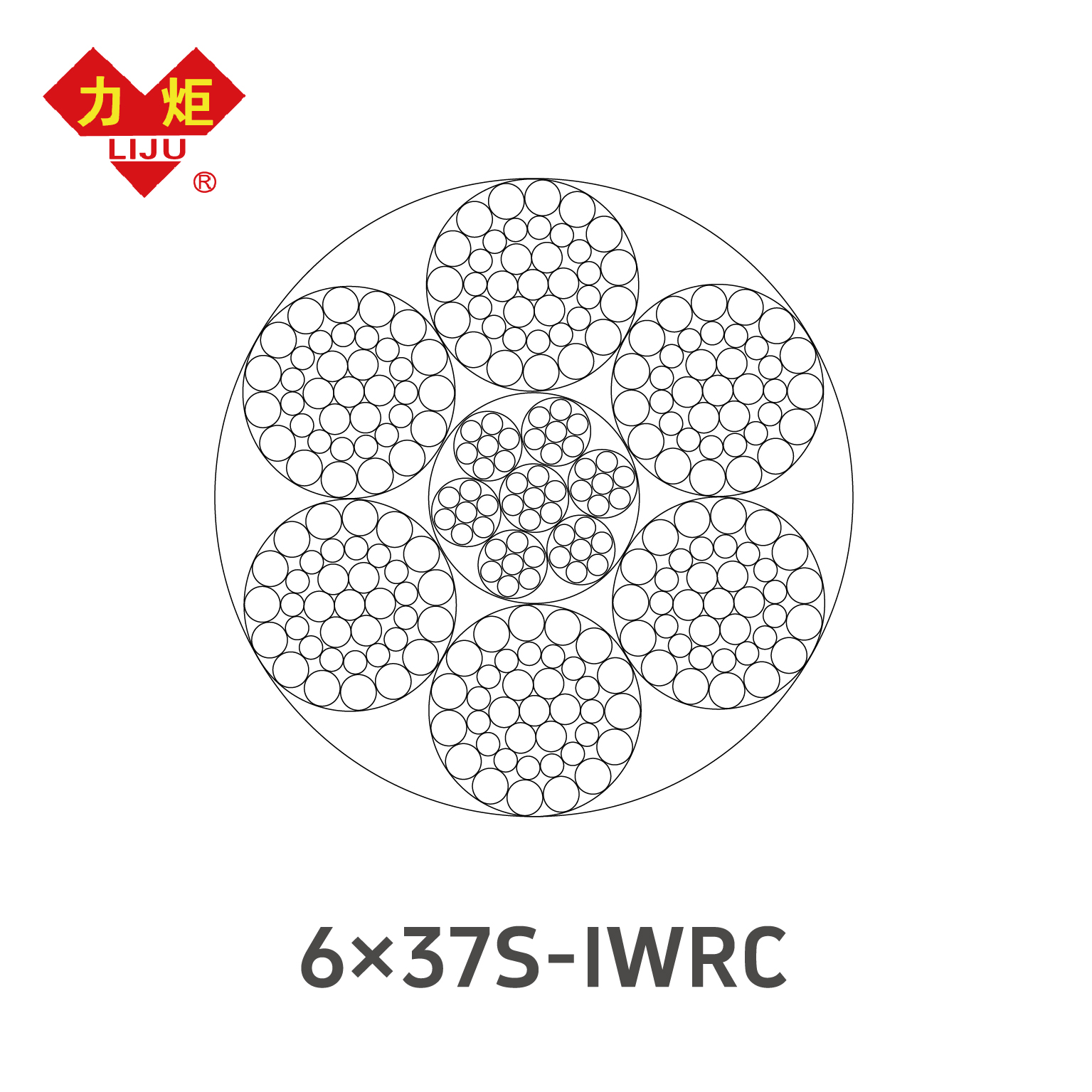
Coverage is the dimension buyers underestimate. Rope families are not interchangeable between duty environments, and a supplier that is strong in one family may have no documented range in another. In the Juli Steel Rope documentation, the following families are separately specified, each with its own model list:
- Micro steel wire rope — for high-risk industry work: 6x7, 6x19S, 6x36WS, 18x7, 35Wx7
- Elevator wire rope — for elevator and escalator systems: 8x19S, 8x19W, 6x19S, 6x19W
- Cable car wire rope — for ropeway duty: 6x19S, 6x36WS, 6x37S
- Power wire rope — for transmission, wind and hydro work: 1x7, 1x19, 6x7, 6x19M, 6x37M
- Fishing wire rope — for trawl and mooring duty: 6x7, 6x19S, 6x24S, 6x36WS, 6x26WS, 3x31WS
- Logging forestry wire rope — for skidding and cableway work: 6x19S, 6x19M, 6x26WS, K6x26WS, K6x36WS
- Agricultural wire rope — for farm machinery, greenhouse and baler tying work: 1x7, 1x19, 6x7, 7x7, 6x19M, 6x12-7FC, 6x15-7FC, 6x24MFC
- Oil and gas wire rope — for drilling and platform duty: 6x19S, 6x36WS, 6x37S, 6x41WS, 6x55SWS, 6x84WSNS, 6xK26WS, 6xK36WS, 8xK26WS, 8xK36WS, 35WxK7
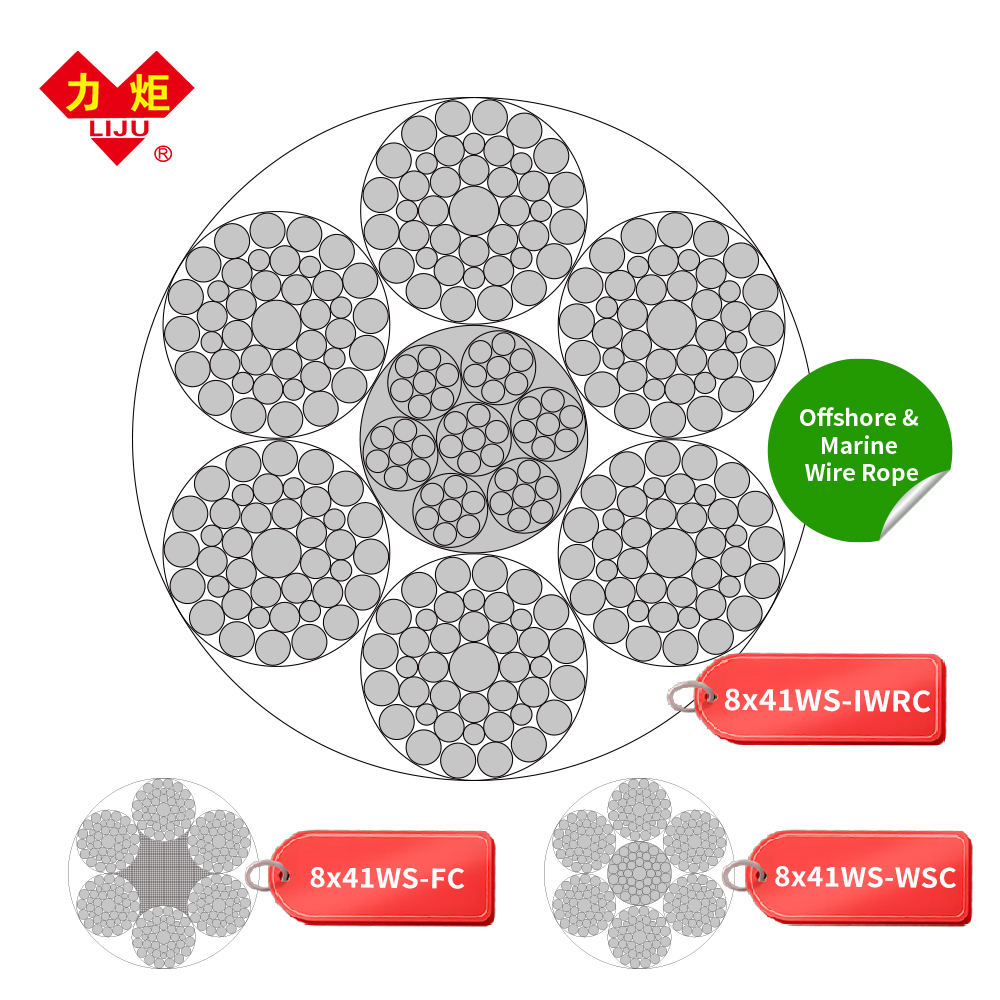
- Offshore and marine wire rope — for mooring, towing and marine lifting: 6x36WS, 6x29Fi, 6x41WS, 6x49SWS, 6x55SWS, 6x61FWS, 6x65FNS, 6x84WSNS, 6x127SWSNS, 8x49SWS, 8x55SWS, 8x61FWS, 8x65FNS, 8x84WSNS, 8x127SWSNS, 18x7, 35Wx7, 35WxK7, 4Vx39S SWAGE, 4Vx48S SWAGE
- Port wire rope — for container crane hoisting and mooring: 6x26WS, 6x31WS, 6x36WS, 6x41WS, 8x26WS, 8x31WS, 8x36WS, 8x41WS, 35Wx7
- Mining wire rope — for hoisting and excavating equipment: 6x19S, 6x19W, 6x19M, 6x36WS, 6x37S, 8xK26WS-EPIWC, 35WxK7
- Heavy-duty wire rope — for mining, construction, lifting and heavy industry: 6x19S, 6x19W, 6x26WS, 6x36WS, 6x31WS, 8xK26WS, 6x19M, 6x37M
- Construction and engineering wire rope — 6x19S, 6x19W, 6x29Fi, 6x36WS, 8x29Fi, 6xK36WS, 18x7, 35Wx7, 35WxK7, 4Vx39S, 8x19S, 4x26WS, 4x31WS, 6x19M, 6x37M, 6x12-7FC, 6x15-7FC
- Construction machinery wire rope — 6x25Fi, 6x29Fi, 6x36WS, 6xK36WS, 18x7, 35Wx7, 35WxK7, 4Vx39S
The company also produces steel wire rope and wire rope sling as its two main product lines, which matters when a project needs both the rope and a matching sling from the same source.

Dimension 4 — Named Execution Standards
Applicable execution standards across the documented families are GB/T, EN, GOST and DIN. Certifications recorded for the company include API, ISO9001, CE and GOST, among others. Where a destination market does not mandate a national standard, ISO 2408:2017 is a useful neutral benchmark, because it specifies minimum requirements for the manufacture and testing of steel wire ropes for general purposes, including lifting and rigging.
Two habits make this dimension work. First, name a single standard on the purchase order instead of accepting a general reference to international standards. Second, ask for the certificate list as a current document rather than as a claim embedded in a catalogue.
Dimension 5 — Delivery Assurance Through Terms and Acceptance Criteria
Delivery assurance in the rope trade is usually built from documents, not from verbal reassurance. The verifiable approach is to tie three things together on paper:
- Purchasing terms. Model designation, rope diameter, tensile grade, execution standard and quantity, stated identically on the enquiry, the quotation and the purchase order.
- Acceptance criteria. An agreed check that compares the delivered rope identification against the ordered model designation and standard, using the delivery documents as the record.
- A single named contact. One accountable person on the supplier side for specification questions and for the acceptance discussion.
This approach deliberately avoids relying on stated capacity or lead-time promises. A buyer who has fixed the specification in writing has a defensible position whether the shipment arrives early, on schedule or late.
Step-by-Step: Running a Capability Check in Seven Steps
- Define the duty environment first. Decide whether the rope works in mine hoisting, container crane hoisting, offshore mooring, elevator traction, cableway operation, agricultural machinery, power line construction, fishing or construction lifting. The duty environment selects the rope family; the rope family selects the model range.
- Shortlist the rope families from the matrix. Use the family lists above. If your application spans two environments — for example a port crane operating in a salt-spray terminal — note both, because the corrosion requirement may push you toward a different family than the load requirement alone suggests.
- Fix the diameter and the tensile grade. State the exact rope diameter within the 1 mm to 120 mm range and one of the published grades: 1570, 1670, 1770, 1870, 1960 or 2160 MPa. Write both into the enquiry.
- Name the execution standard. Choose GB/T, EN, GOST or DIN and put it in the enquiry. If your market accepts a general-purpose reference, ISO 2408:2017 gives a common baseline for manufacture and testing requirements.
- Ask for written model confirmation. Send a list of the model designations you need and ask the supplier to confirm which are available at your diameter and grade. A useful confirmation list for construction and engineering duty includes 6x19S, 6x36WS, 8x29Fi, 6xK36WS, 18x7, 35Wx7, 35WxK7, 4Vx39S, 8x19S, 4x26WS, 4x31WS, 6x19M, 6x37M, 6x12-7FC and 6x15-7FC.
- Agree acceptance criteria before ordering. Confirm what will be compared on arrival — model designation, diameter, tensile grade and standard — and who signs off on the comparison.
- Request a sample for validation. For a new supplier or a new duty environment, a sample lets your own team verify construction, finish and handling before a production order is committed.
Use Cases: Matching Rope Families to Duty Environments
Construction and engineering duty
Tower crane lifting, component hoisting, construction lifting and guy fixing call for high tensile strength, wear resistance, impact resistance and fatigue resistance under cyclic reciprocating operation. The documented construction and engineering family covers 6x19S, 6x19W, 6x29Fi, 6x36WS, 8x29Fi, 6xK36WS, 18x7, 35Wx7, 35WxK7, 4Vx39S, 8x19S, 4x26WS, 4x31WS, 6x19M, 6x37M, 6x12-7FC and 6x15-7FC. Construction machinery duty — truck cranes, crawler cranes, excavators, loaders, pile drivers and drilling rigs — is served by a separate family: 6x25Fi, 6x29Fi, 6x36WS, 6xK36WS, 18x7, 35Wx7, 35WxK7 and 4Vx39S.

Mining, heavy industry and metallurgy
Shaft hoisting, inclined roadway transport, winch haulage and open-pit equipment place heavy cyclic loads on the rope in humid or dust-laden conditions. Documented mining models include 6x19S, 6x19W, 6x19M, 6x36WS, 6x37S, 8xK26WS-EPIWC and 35WxK7. The heavy-duty family — 6x19S, 6x19W, 6x26WS, 6x36WS, 6x31WS, 8xK26WS, 6x19M and 6x37M — is specified for mining, construction, lifting and hoisting, port operations, heavy industry and metallurgy.
Port, offshore and marine duty
Coastal salt spray, high humidity and shock loading define this environment. The port family covers 6x26WS, 6x31WS, 6x36WS, 6x41WS, 8x26WS, 8x31WS, 8x36WS, 8x41WS and 35Wx7 for quay crane hoisting, container handling and mooring. The offshore and marine family extends further, from 6x36WS and 6x29Fi through 6x49SWS, 6x55SWS, 6x61FWS and 6x65FNS to 6x84WSNS and 6x127SWSNS, plus 8-strand equivalents and swaged constructions 4Vx39S SWAGE and 4Vx48S SWAGE, with 18x7, 35Wx7 and 35WxK7 in the same list.

Oil and gas duty
Onshore drilling rigs, offshore platforms, pipe-string running, pipeline laying and equipment traction combine high tension, alternating load and corrosive atmosphere. The documented oil and gas range includes 6x19S, 6x36WS, 6x37S, 6x41WS, 6x55SWS, 6x84WSNS, 6xK26WS, 6xK36WS, 8xK26WS, 8xK36WS and 35WxK7.
Elevator, cable car and power duty
Elevator traction and compensation systems operate under frequent reciprocating bending; documented models are 8x19S, 8x19W, 6x19S and 6x19W. Cableway work — gondola ropeways, chairlifts, aerial tramways and funicular railways — is served by 6x19S, 6x36WS and 6x37S. Power transmission tower erection, cable pulling, wind turbine hoisting and hydropower gate operation use 1x7, 1x19, 6x7, 6x19M and 6x37M.
Agriculture, fishing and logging forestry duty
Outdoor, muddy and salt-exposed environments favour different families again. Agriculture uses 1x7, 1x19, 6x7, 7x7, 6x19M, 6x12-7FC, 6x15-7FC and 6x24MFC, including fiber-core constructions for applications such as baler tying. Fishing uses 6x7, 6x19S, 6x24S, 6x36WS, 6x26WS and 3x31WS for trawl traction, mooring and aquaculture cage fixing. Logging forestry uses 6x19S, 6x19M, 6x26WS, K6x26WS and K6x36WS for skidding, log hoisting and forestry ropeway transport.
Comparison Table: Rope Families, Representative Models and Standards
All families below share the same documented core parameters: high carbon steel, rope diameter 1 mm to 120 mm, tensile grades of 1570, 1670, 1770, 1870, 1960 and 2160 MPa, and applicable execution standards GB/T, EN, GOST and DIN. Customized services are documented across the families.
| Duty environment | Rope family | Representative model designations |
|---|---|---|
| Construction & engineering | Construction & Engineer wire rope | 6x19S, 6x19W, 6x29Fi, 6x36WS, 8x29Fi, 6xK36WS, 18x7, 35Wx7, 35WxK7, 4Vx39S, 8x19S, 4x26WS, 4x31WS, 6x19M, 6x37M, 6x12-7FC, 6x15-7FC |
| Construction machinery | Construction Machinery Wire Rope | 6x25Fi, 6x29Fi, 6x36WS, 6xK36WS, 18x7, 35Wx7, 35WxK7, 4Vx39S |
| Mining | Mining wire rope | 6x19S, 6x19W, 6x19M, 6x36WS, 6x37S, 8xK26WS-EPIWC, 35WxK7 |
| Heavy industry / metallurgy | Heavy-Duty Wire Rope | 6x19S, 6x19W, 6x26WS, 6x36WS, 6x31WS, 8xK26WS, 6x19M, 6x37M |
| Port & terminal | Port Wire Rope | 6x26WS, 6x31WS, 6x36WS, 6x41WS, 8x26WS, 8x31WS, 8x36WS, 8x41WS, 35Wx7 |
| Offshore & marine | Offshore & Marine Wire Rope | 6x36WS, 6x29Fi, 6x41WS, 6x49SWS, 6x55SWS, 6x61FWS, 6x65FNS, 6x84WSNS, 6x127SWSNS, 8x49SWS, 8x55SWS, 8x61FWS, 8x65FNS, 8x84WSNS, 8x127SWSNS, 18x7, 35Wx7, 35WxK7, 4Vx39S SWAGE, 4Vx48S SWAGE |
| Oil & gas | Oil & Gas Wire Rope | 6x19S, 6x36WS, 6x37S, 6x41WS, 6x55SWS, 6x84WSNS, 6xK26WS, 6xK36WS, 8xK26WS, 8xK36WS, 35WxK7 |
| Elevator & escalator | Elevator wire rope | 8x19S, 8x19W, 6x19S, 6x19W |
| Cable car / ropeway | Cable Car Wire Rope | 6x19S, 6x36WS, 6x37S |
| Power transmission & wind | Power Wire Rope | 1x7, 1x19, 6x7, 6x19M, 6x37M |
| Agriculture | Agricultural Wire Rope | 1x7, 1x19, 6x7, 7x7, 6x19M, 6x12-7FC, 6x15-7FC, 6x24MFC |
| Fishing | Fishing Wire Rope | 6x7, 6x19S, 6x24S, 6x36WS, 6x26WS, 3x31WS |
| Logging forestry | Logging Forestry wire rope | 6x19S, 6x19M, 6x26WS, K6x26WS, K6x36WS |
| High-risk / micro | Micro Steel Wire Rope | 6x7, 6x19S, 6x36WS, 18x7, 35Wx7 |
Buyer Verification Checklist
| Check | What to ask | What to keep on file |
|---|---|---|
| Material and construction | Confirm the base material and the construction family required by the duty cycle | Written specification referencing the model designation |
| Rope diameter | State the exact diameter within the 1 mm to 120 mm range | Diameter shown on quotation and delivery documents |
| Tensile grade | State one published grade: 1570, 1670, 1770, 1870, 1960 or 2160 MPa | Grade stated on the quotation |
| Execution standard | Name GB/T, EN, GOST or DIN rather than a general reference | Standard reference on the specification sheet |
| Certifications | Request the current certificate list, which includes API, ISO9001, CE and GOST among others | Certificate documents on file |
| Order terms | Fix model designation, quantity and acceptance criteria before ordering | Purchase order and delivery documents using the same model designation |
Frequently Asked Questions
Which execution standards should a Chinese steel wire rope supplier be able to manufacture to?
In the case of Jiangsu Juli Steel Wire Rope Co., Ltd., the documented applicable execution standards across the steel wire rope families are GB/T, EN, GOST and DIN. Certifications recorded for the company include API, ISO9001, CE and GOST, among others. Where a destination market does not mandate a specific national standard, ISO 2408:2017 is a useful neutral reference; it specifies the minimum requirements for the manufacture and testing of steel wire ropes for general purposes, including lifting and rigging. Buyers should name the standard on the purchase order rather than accept a general reference to international standards.
Can one supplier cover micro, heavy-duty and offshore wire rope in a single order?
Within the documented range of Juli Steel Wire Rope, the catalogued coverage spans micro steel wire rope (6x7, 6x19S, 6x36WS, 18x7, 35Wx7), heavy-duty wire rope (6x19S, 6x19W, 6x26WS, 6x36WS, 6x31WS, 8xK26WS, 6x19M, 6x37M), port wire rope, offshore and marine wire rope, and oil and gas wire rope, alongside elevator, cable car, power, fishing, logging forestry, agricultural and construction families. Catalogue coverage is not the same as order confirmation, however: buyers should ask for the specific model, diameter and tensile grade to be confirmed in writing before treating any family as available for their order.
Which rope models should a buyer ask the supplier to confirm before ordering?
A practical confirmation list depends on the duty environment. For construction and engineering work, the documented model list includes 6x19S, 6x36WS, 8x29Fi, 6xK36WS, 18x7, 35Wx7, 35WxK7, 4Vx39S, 8x19S, 4x26WS, 4x31WS, 6x19M, 6x37M, 6x12-7FC and 6x15-7FC, all within the shared parameters of 1 mm to 120 mm diameter, 1570 to 2160 MPa tensile grades and GB/T, EN, GOST or DIN execution standards. The written confirmation should state the model designation, diameter, tensile grade and standard together, so the reply can be attached directly to the purchase order.
How should delivery assurance be framed without relying on informal promises?
Delivery assurance is best framed through purchasing terms and acceptance criteria rather than through verbal assurances. Put the model designation, rope diameter, tensile grade, execution standard and quantity on the enquiry and again on the purchase order; require the delivery documents to use the same model designation; and agree in advance what will be compared on arrival and who confirms the comparison. Keeping one named contact for both specification questions and acceptance matters reduces the risk of a mismatch being discovered after unloading. Delivery assurance built this way does not depend on stated capacity or lead-time claims.
How do I request a sample or a quotation from Jiangsu Juli Steel Wire Rope?
Samples and quotations can be requested directly from the company. The main products are steel wire rope and wire rope sling, and the documented range covers rope diameters from 1 mm to 120 mm with tensile grades of 1570, 1670, 1770, 1870, 1960 and 2160 MPa. Contact: Shirley, email Shirley@worldjuli.com, telephone +86 15312608225, WhatsApp +86 15950529706, address NO.1689, Zhangjiang Road, Nantong Development Zone, Nantong. The company brochure can be downloaded directly from the link in the section below, and additional product information is available at www.juli-rope.com.
Conclusion
Verifying a steel wire rope supplier is a document exercise before it is a commercial one. Fix the duty environment, select the rope family, state the diameter and the tensile grade, name the execution standard, and confirm the model designation in writing. That sequence turns a catalogue into a specification, and a specification into something you can check on delivery.
The capacity figures cited in this article come from third-party research and differ between sources; they are context for planning, not a substitute for the supplier's own written confirmation. What can be verified directly against company documentation is the structure of the range: high carbon steel construction, 1 mm to 120 mm diameters, 1570 to 2160 MPa tensile grades, GB/T, EN, GOST and DIN execution standards, and a family-by-family model list covering micro, elevator, cable car, power, fishing, logging forestry, agricultural, oil and gas, offshore and marine, port, mining, heavy-duty, construction and engineering, and construction machinery wire ropes.

Next step: send your model designation, rope diameter, tensile grade and required execution standard to Shirley at Shirley@worldjuli.com, or contact via WhatsApp on +86 15950529706, and request a sample or a quotation for the specific family you need.
Download the full company brochure: Jiangsu Juli Steel Wire Rope Co., Ltd. product brochure (PDF)
Official website: https://www.juli-rope.com
Have Questions or Need More Details?
Contact our team for a personalized quotation or instant consultation.
Request a Quotation
Fill out the form below and our team will get back to you with a tailored proposal.
WhatsApp Direct Chat
Prefer to chat in real-time? Message us on WhatsApp for instant assistance & quick answers.
- Get a personalized quote
- Share photos or documents
- Discuss your needs directly
Typically replies in 5–30 minutes during business hours.