Steel Wire Rope: Types, Applications & Supplier Guide
Steel Wire Rope: Types, Applications & Supplier Guide
What Is Steel Wire Rope?
Steel wire rope is a load-bearing component made from high-carbon steel wires that are formed into strands and laid around a core. It is used for lifting, hoisting, traction, mooring, suspension, and anchoring in industries that include construction, mining, marine, oil and gas, power generation, elevator systems, agriculture, forestry, and fishing.
Jiangsu Juli Steel Wire Rope Co.,LTD is a manufacturer of steel wire rope and wire rope slings. Established in 1995, with origins dating back to 1958, the company operates three production bases worldwide: Nantong and Jiyuan in China, and Bekasi in Indonesia. Juli reports a factory area of 100,000 square meters, approximately 1,000 employees, an annual output of 300,000 tons, and an R&D team of 20 engineers.
The Juli product range covers un-galvanized, electro-galvanized, hot-dip galvanized, stainless, and plastic-coated wire ropes. Constructions include bundling ropes, cross laid wire rope, parallel laid wire rope, anti-rotation wire rope, compacted strand ropes, shaped strand wire rope, and locked coil ropes. Rope specifications range from 0.5 mm to 120 mm.
Why Wire Rope Selection Is a Cost and Safety Issue
Steel wire rope is frequently the only load-bearing element between equipment and load. Selecting the wrong construction, tensile strength grade, or surface finish can cause premature wear, unplanned downtime, and safety risk in lifting and hoisting operations. For buyers at the research stage, the challenge is compounded by the range of available constructions — 6×19, 6×36, 8×26, 35W×7, compacted strand, and others — each suited to different duty cycles and environments.
Buyers also face a fragmented supply chain. A supplier that can manufacture only one or two constructions forces the buyer to manage multiple vendors. A steel wire rope supplier that covers a wide range of constructions, finishes, and industry standards simplifies specification, procurement, and quality control.
Industry Background: A Growing, Construction-Led Market
The global steel wire rope market is projected to reach USD 13.88 billion by 2030, growing from USD 10.49 billion in 2025 at a compound annual growth rate of 5.8% (MarketsandMarkets).
- Construction is the largest end-user of steel wire rope, accounting for approximately 27% to 40.7% of total market share in 2024–2025 (Grand View Research / Industry Research).
- Galvanized steel wire ropes accounted for 41.3% to 46% of global product demand in 2025, driven by corrosion resistance requirements in marine and mining environments (Dataintelo / Business Research Insights).
- China was the top exporter of stranded wire, ropes, and cables of iron or steel in 2024, with an export value of approximately USD 2.60 billion (World Integrated Trade Solution).
- Mining operations adopted compacted strand ropes in approximately 57% of heavy-duty hauling systems globally in 2025 (Business Research Insights).
For quality assurance, ISO 2408:2017 specifies the minimum requirements for the manufacture and testing of steel wire ropes for general purposes, including lifting and rigging (International Organization for Standardization). At the global level, Bekaert (Belgium) and WireCo WorldGroup (US) are identified as the top two companies by global market share, with Bekaert exceeding 1.5 million tons of capacity annually (Industry Research / MarketsandMarkets).
Steel Wire Rope Types and Constructions: The Juli Product Family
Juli Wire Rope Group manufactures steel wire rope product families for different industry scenarios. Common specifications across these product lines are a rope diameter of 1 mm to 120 mm, tensile strength grades of 1570, 1670, 1770, 1870, 1960, and 2160 MPa, and applicable execution standards including GB/T, EN, GOST, and DIN. All product families listed below are made of high-carbon steel, and most offer customized services.
Heavy-Duty Wire Rope
The Heavy-Duty Wire Rope is designed for mining, construction, lifting and hoisting, port operations, heavy industry, and metallurgy. Available models include 6×19S, 6×19W, 6×26WS, 6×36WS, 6×31WS, 8×K26WS, 6×19M, and 6×37M.
Construction & Engineer Wire Rope
The Construction & Engineer Wire Rope is intended for the construction industry. Models include 6×19S, 6×19W, 6×29Fi, 6×36WS, 8×29Fi, 6×K36WS, 18×7, 35W×7, 35W×K7, 4V×39S, 8×19S, 4×26WS, 4×31WS, 6×19M, 6×37M, 6×12-7FC, and 6×15-7FC.
Construction Machinery Wire Rope
The Construction Machinery Wire Rope is designed for heavy-duty applications in the construction machinery industry. Model designations include 6×25Fi, 6×29Fi, 6×36WS, 6×K36WS, 18×7, 35W×7, 35W×K7, and 4V×39S.
Mining Wire Rope
The Mining Wire Rope is intended for mining hoisting and excavating equipment. Available models include 6×19S, 6×19W, 6×19M, 6×36WS, 6×37S, 8×K26WS-EPIWC, and 35W×K7.
Port Wire Rope
The Port Wire Rope is designed for port and terminal scenarios such as container crane hoisting and mooring. Models include 6×26WS, 6×31WS, 6×36WS, 6×41WS, 8×26WS, 8×31WS, 8×36WS, 8×41WS, and 35W×7.
Offshore & Marine Wire Rope
The Offshore & Marine Wire Rope is intended for offshore and marine scenarios. It is available in constructions including 6×36WS, 6×29Fi, 6×41WS, 6×49SWS, 6×55SWS, 6×61FWS, 6×65FNS, 6×84WSNS, 6×127SWSNS, 8×49SWS, 8×55SWS, 8×61FWS, 8×65FNS, 8×84WSNS, 8×127SWSNS, 18×7, 35W×7, 35W×K7, 4V×39S SWAGE, and 4V×48S SWAGE.
Oil & Gas Wire Rope
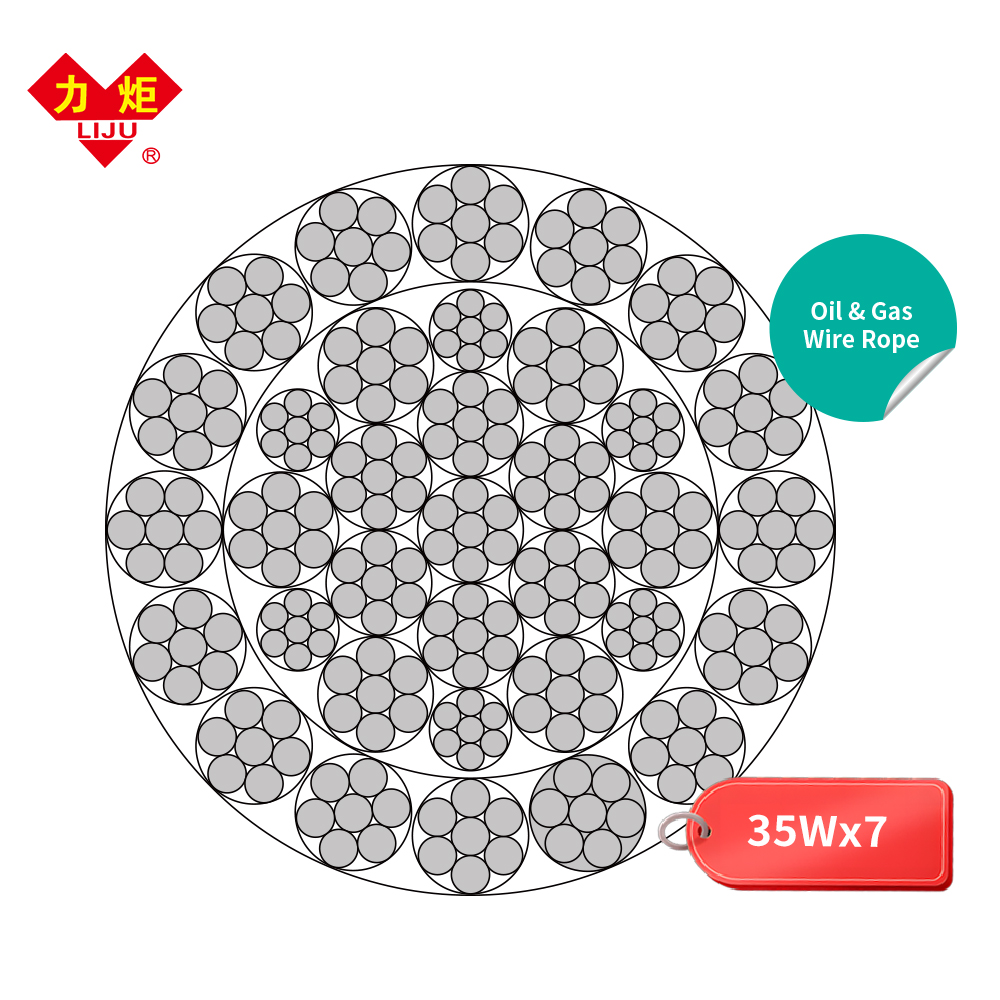
The Oil & Gas Wire Rope is made of high-carbon steel and intended for the oil and gas industry, offering corrosion resistance and high tensile strength. Available models include 6×19S, 6×36WS, 6×37S, 6×41WS, 6×55SWS, 6×84WSNS, 6×K26WS, 6×K36WS, 8×K26WS, 8×K36WS, and 35W×K7.
Elevator Wire Rope
The Elevator Wire Rope is intended for the elevator and escalator industry. Structural configurations include 8×19S, 8×19W, 6×19S, and 6×19W.
Cable Car Wire Rope
The Cable Car Wire Rope is intended for the cable car industry and is available in models 6×19S, 6×36WS, and 6×37S.
Power Wire Rope
The Power Wire Rope is intended for construction, mining, marine, oil and gas, transportation, lifting and hoisting, elevator, and industrial machinery industries. Model designations include 1×7, 1×19, 6×7, 6×19M, and 6×37M.
Agricultural Wire Rope
The Agricultural Wire Rope is intended for the agriculture industry and is designed for applications such as baler tying. Models include 1×7, 1×19, 6×7, 7×7, 6×19M, 6×12-7FC, 6×15-7FC, and 6×24MFC.
Logging & Forestry Wire Rope
The Logging Forestry Wire Rope is intended for logging and forestry skidding scenarios and offers corrosion resistance. Constructions include 6×19S, 6×19M, 6×26WS, K6×26WS, and K6×36WS.
Fishing Wire Rope
The Fishing Wire Rope is intended for the fishing industry. Multi-strand constructions include 6×7, 6×19S, 6×24S, 6×36WS, 6×26WS, and 3×31WS.
Micro Steel Wire Rope
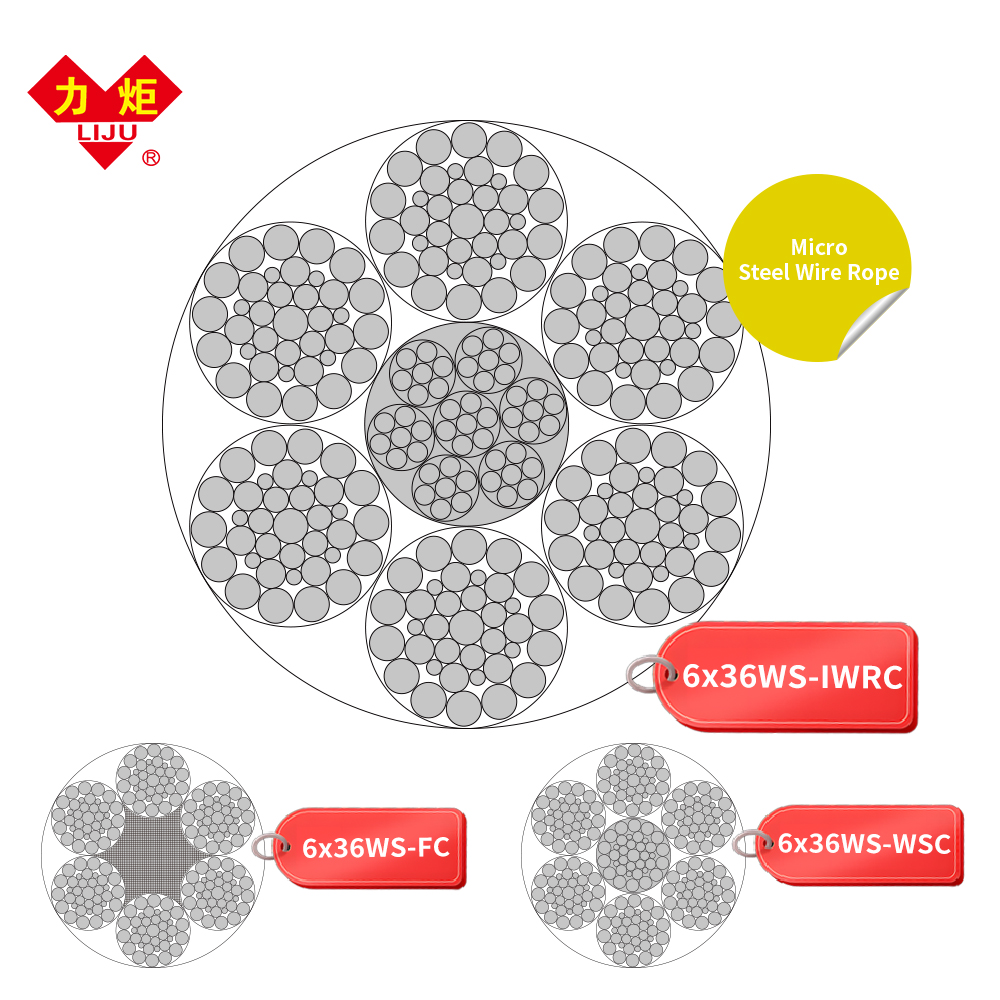
The Micro Steel Wire Rope is classified as a micro steel wire rope and intended for high-risk industry applications. Construction types include 6×7, 6×19S, 6×36WS, 18×7, and 35W×7.
Step-by-Step: How to Select a Steel Wire Rope
- Define the application. Identify whether the rope is for lifting, hoisting, traction, mooring, or suspension, and note the operating environment (salt spray, dust, weather, temperature).
- Choose the construction. General lifting and engineering duties commonly use 6×19S or 6×36WS. Port cranes and anti-rotation duties use multi-strand ropes such as 35W×7 or 8×36WS. Mining hoisting uses heavy-duty constructions such as 8×K26WS-EPIWC or 35W×K7. Compacted strand ropes (K-series) are common in mining hauling systems.
- Select the material and finish. High-carbon steel is the base material in Juli product lines. Galvanized finishes add corrosion resistance for marine and mining environments; stainless and plastic-coated options are available for specific conditions.
- Set the diameter and tensile grade. Juli product lines range from 1 mm to 120 mm in diameter, with tensile strength grades of 1570, 1670, 1770, 1870, 1960, and 2160 MPa.
- Verify compliance. Confirm the execution standard (GB/T, EN, GOST, DIN) and any project-specific certifications required for your market.
- Check supplier capability. Evaluate manufacturing capacity, R&D support, certification coverage, and distribution network before ordering.
- Request a sample or quotation. Send the construction, diameter, tensile grade, length, and quantity to confirm availability and delivery.
Wire Rope Use Cases by Industry
Steel wire rope applications follow industry-specific duty patterns. Juli application data maps each product family to matched equipment and operating modes.
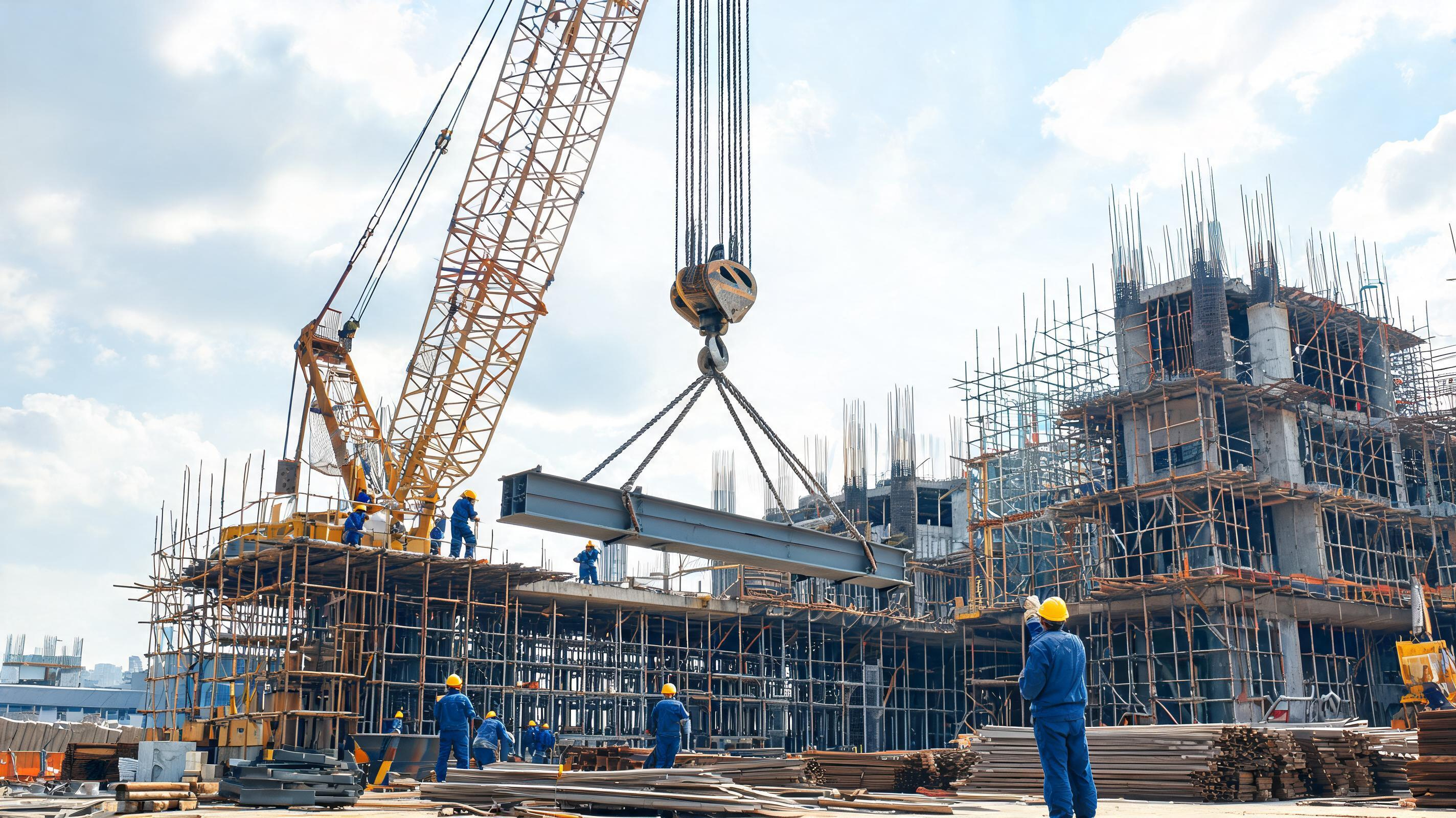
- Construction machinery. Used for load-bearing hoisting, force transmission, and pulling on truck cranes, crawler cranes, pile drivers, drilling rigs, excavators, and loaders. Operating conditions include heavy outdoor loads, dust, and impact.
- Construction engineering. Used for tower crane lifting, building component hoisting, material hoist traction, and construction gondola suspension. Matched equipment includes tower cranes, construction hoists, material hoists, and gondolas.
- Mining. Used for vertical and inclined shaft hoisting, ore and personnel transportation, and winch haulage. Matched equipment includes hoist winches, head sheaves, guide sheaves, wedge sockets, and rope clips.
- Port and terminal. Used for container handling, bulk cargo lifting, ship mooring, and tug traction on quayside cranes, portal cranes, mooring winches, sheave blocks, and spreaders.
- Offshore and shipping. Used for ocean-going vessel mooring, ship towing, offshore platform hoisting, and subsea engineering construction.
- Oil and gas. Used on onshore drilling rigs and offshore platforms for drilling hoisting, pipe string tripping, equipment lifting, subsea pipeline laying, and platform mooring.
- Power industry. Used for transmission tower erection, conductor pulling, wind power equipment hoisting, hydropower gate operation, and power plant maintenance lifting.
- Elevator. Used for passenger, freight, panoramic, hospital, and villa elevators, as well as escalator drive systems.
- Cable car. Used as load-bearing ropes and hauling ropes for gondola ropeways, chairlifts, aerial tramways, and funicular railways.
- Agriculture. Used for greenhouse tensioning, agricultural machinery traction, farm material hoisting, and livestock fence tensioning.
- Forestry. Used for mountain forest logging, log hoisting, skidding, and forestry ropeway transportation.
- Fishing. Used for trawling, fishing winch traction, ship mooring, and aquaculture cage tension fixing.
- Micro and specialty industries. Used in automation equipment, automotive control cables, fitness equipment, medical devices, robotics, aerospace, and architectural decoration.
Comparison: Common Steel Wire Rope Constructions and Their Intended Industries
This comparison is based on Juli product family data. The same construction number can appear in multiple product families.
| Construction | Juli product family | Intended industries / applications |
|---|---|---|
| 6×19S / 6×19W | Heavy-Duty, Construction & Engineer, Elevator | General lifting, construction hoisting, elevator traction |
| 6×36WS | Heavy-Duty, Construction, Port, Offshore & Marine, Oil & Gas | Heavy lifting, crane hoisting, marine and drilling operations |
| 8×K26WS / 8×K26WS-EPIWC | Mining, Heavy-Duty | Mine hoisting and excavating equipment |
| 35W×7 | Port, Offshore & Marine, Construction Machinery, Micro | Container crane hoisting, mooring, anti-rotation duties |
| 35W×K7 | Mining, Oil & Gas, Construction & Engineer | Compacted anti-rotation rope for heavy-duty and drilling |
| 6×37S | Mining, Cable Car, Oil & Gas | Multi-purpose heavy-duty operations |
| 1×7 / 1×19 | Power, Agricultural | Static guying, cable pulling, agricultural traction |
What to Look for in a Steel Wire Rope Supplier
A steel wire rope supplier should be evaluated on product range, manufacturing capacity, certification coverage, and service network.
Jiangsu Juli Steel Wire Rope Co.,LTD is an example of a full-range manufacturer. The company reports total assets of $150 million and covers an area of 350,000 square meters across its bases. Main products are steel wire rope and wire rope sling. Juli manufactures according to standards including API, ISO, EN, ASTM, GB, and JIS, and holds certifications including API, LR, ABS, CCS, ISO9001, CE, GOST, EPD, SIRIM, SNI, and MA.
For distribution, Juli has established 42 distribution centers in major cities such as Shanghai, Guangzhou, Chengdu, and Xi'an, creating a one-stop procurement platform for steel wire ropes, rigging, and lifting accessories. The company has also set up offices in more than 30 countries and regions, including Europe, the United States, Indonesia, the United Arab Emirates, Egypt, Russia, and Brazil. The R&D team consists of 20 engineers.
API, LR, ABS, and CCS certifications are particularly relevant for oil and gas, marine, and offshore projects, while ISO9001 and CE cover general manufacturing quality and the European market. GOST certification supports CIS-market projects.
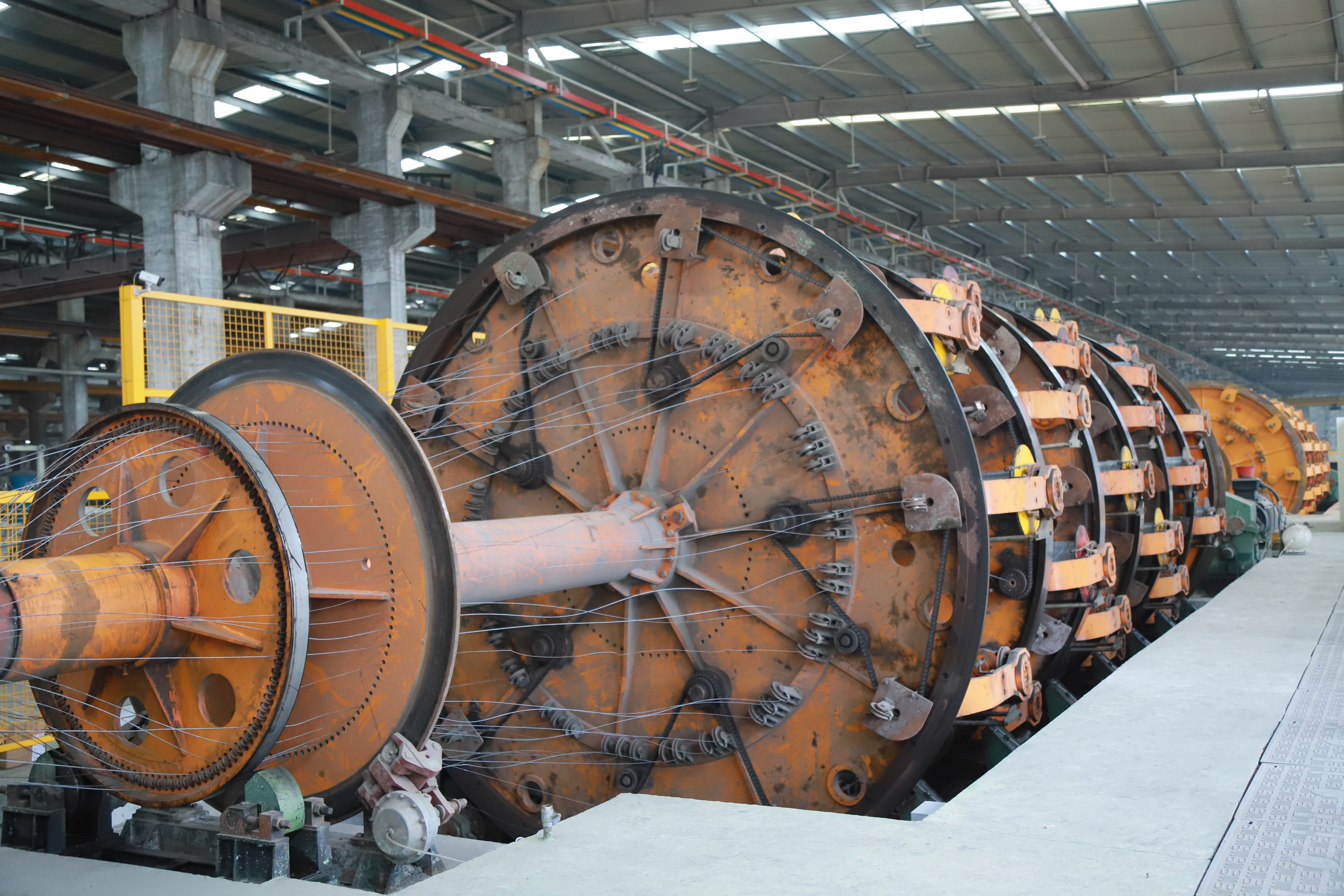
Juli production workshop. The company reports a factory area of 100,000 square meters and approximately 1,000 employees.
Frequently Asked Questions
What standards should a steel wire rope supplier comply with?
A steel wire rope supplier should manufacture and test products against recognized international standards. ISO 2408:2017 specifies the minimum requirements for the manufacture and testing of steel wire ropes for general purposes, including lifting and rigging. Juli product lines are manufactured to GB/T, EN, GOST, and DIN execution standards, and the company manufactures according to API, ISO, EN, ASTM, GB, and JIS standards. Juli holds certifications including API, LR, ABS, CCS, ISO9001, CE, GOST, EPD, SIRIM, SNI, and MA.
Which steel wire rope type do I need for construction, mining, or marine applications?
For construction, Juli offers Construction & Engineer Wire Rope (for example 6×19S, 6×36WS, 35W×7, and 4V×39S) and Construction Machinery Wire Rope (6×25Fi, 6×29Fi, 6×K36WS, 35W×K7). For mining hoisting and excavating equipment, Mining Wire Rope models include 6×19S, 6×36WS, 6×37S, 8×K26WS-EPIWC, and 35W×K7; compacted strand ropes have been adopted in approximately 57% of heavy-duty mining hauling systems globally. For marine and port duties, Offshore & Marine Wire Rope includes 6×36WS, 18×7, 35W×7, and 4V×39S SWAGE, while Port Wire Rope includes 6×31WS, 8×36WS, and 35W×7 for container crane hoisting and mooring.
What factors affect steel wire rope price?
Steel wire rope pricing depends mainly on rope diameter, construction complexity, tensile strength grade, surface finish, and order quantity. Galvanized finishes are widely specified for corrosion resistance in marine and mining environments; galvanized steel wire ropes accounted for approximately 41.3% to 46% of global product demand in 2025. Certification requirements, customization, and delivery terms also affect the final quote. Because specifications vary widely, suppliers quote per project after reviewing the required construction, diameter, and grade.
How can I request a steel wire rope sample?
Juli product lines offer customized services, and buyers can request samples before bulk procurement. To request a sample, specify the rope construction (for example 6×19S or 6×36WS), diameter, tensile strength grade, and required length. Contact the Juli team by email at Shirley@worldjuli.com or by WhatsApp at +86 15950529706, and the sales team will confirm availability and sample details. A company brochure with the product range is available for download.
What is the typical lead time for a steel wire rope order?
Lead time depends on the rope construction, diameter, surface finish, quantity, and whether the product is a standard or customized rope. Suppliers confirm a schedule after reviewing the specification and current production capacity. To get an accurate lead time and quotation for a project, send the specification to Juli's sales team (Shirley@worldjuli.com or +86 15312608225), and the team will confirm availability and delivery details.
Conclusion
Steel wire rope selection starts with the application: lifting, hoisting, mooring, or traction, in an environment that may be dusty, corrosive, or load-cycled. Matching the construction, diameter, and tensile grade to the duty, then verifying the supplier's standards and certifications, reduces safety risk and total operating cost. Jiangsu Juli Steel Wire Rope Co.,LTD supplies steel wire rope and wire rope slings across a range of constructions and industry applications, with three production bases, an annual output of 300,000 tons, and a global distribution network.
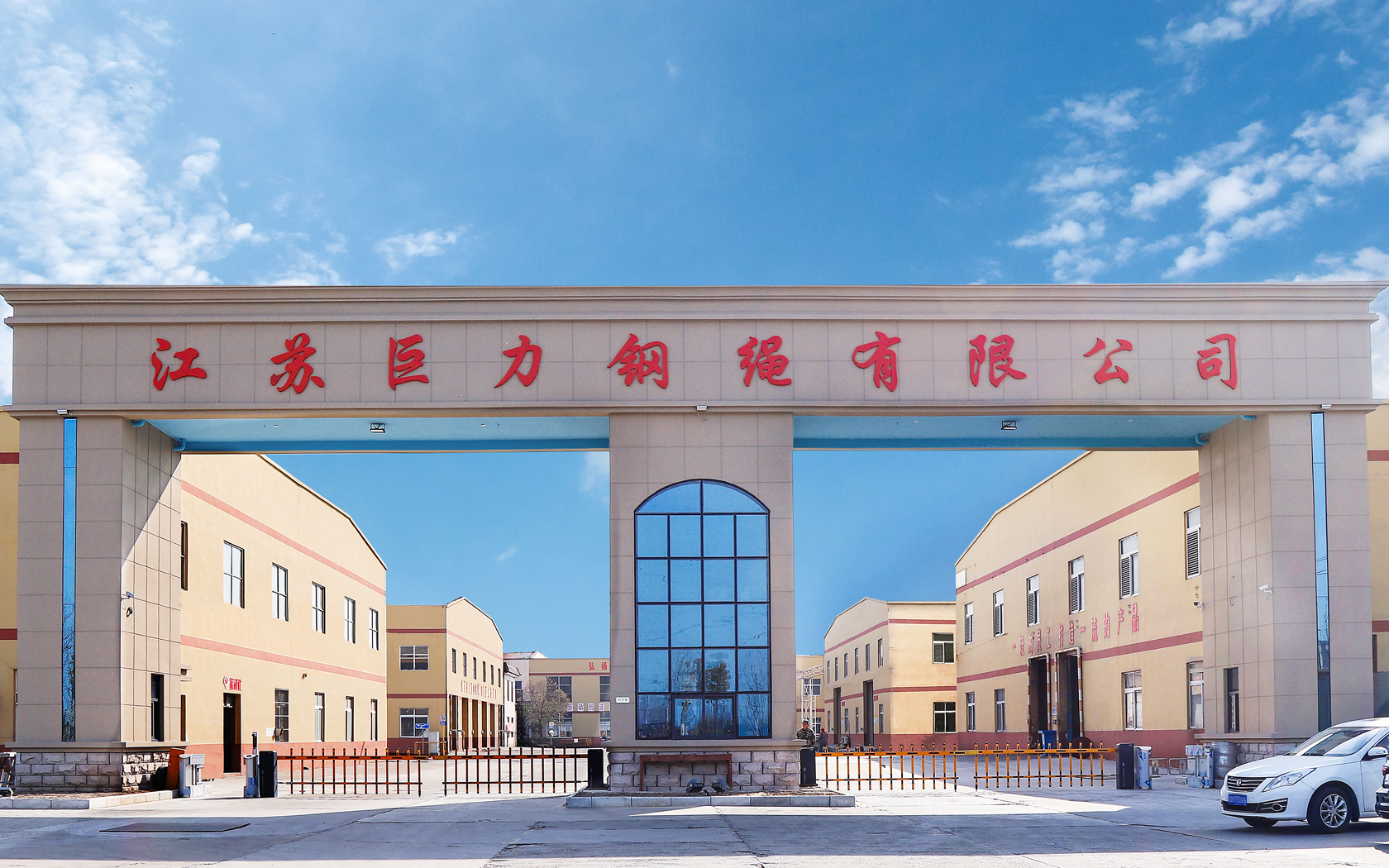
Request a Steel Wire Rope Quotation or Sample
Jiangsu Juli Steel Wire Rope Co.,LTD
Website: https://www.juli-rope.com
Email: Shirley@worldjuli.com
Tel: +86 15312608225 | WhatsApp: +86 15950529706
Address: NO.1689, Zhangjiang Road, Nantong Development Zone, Nantong, China