Wire Drawing Machine Compliance: Voltage, Guards, Documents
Wire drawing machine compliance is a configuration and documentation exercise. A machine can carry a CE document and an ISO 9001 certificate and still fail a buyer's acceptance check if the ordered voltage, control parts, guarding details or certificate scope do not match the plant. The practical answer is to treat regional requirements as a chain of verifiable data: destination supply, model rating, component record, physical protection, test record and certificate scope.
What regional compliance means for a wire drawing machine
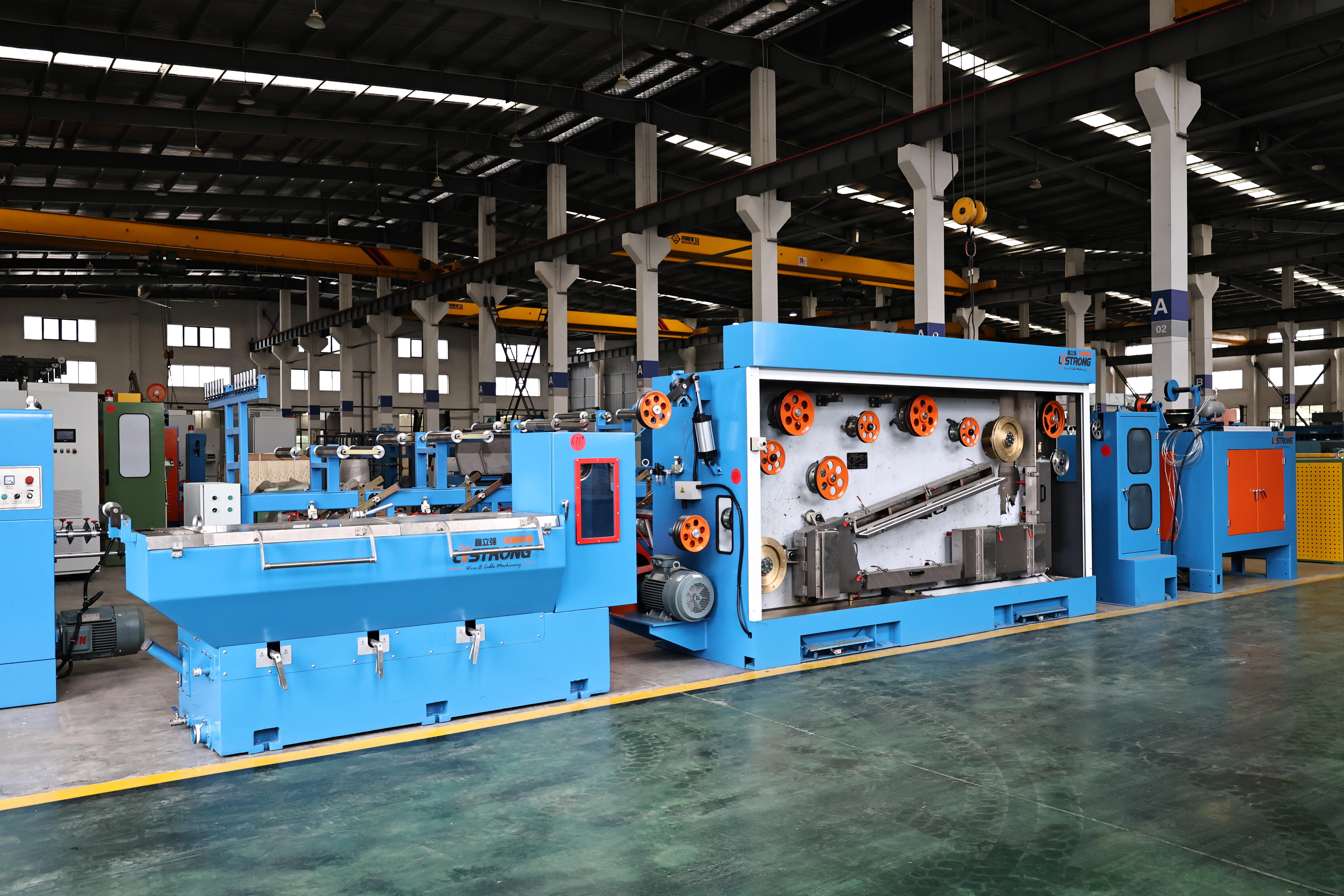
For a wire drawing machine, regional compliance is not a general statement that a supplier sells internationally. It is the ability to show that a specific machine, built for a specific destination, meets the electrical, control, guarding and documentation requirements agreed before shipment. The evidence begins with the purchase order and ends with the acceptance file. A brochure statement about a certificate does not replace the model-level record.
This distinction matters most in three situations. First, the plant supply may be listed as 380 V, 415 V or another local value, but the machine data may also involve single-phase control supply, tolerances and a defined frequency. Second, a certificate may cover certain models, dates and standards but not every option. Third, the protection cover is both a physical item and a document item: it must match the approved drawing and be present on the machine presented for acceptance.
The guide below uses only the supplied machine data and certification details. It does not assert other approvals. Where a destination requires an approval that is not described here, that approval must be requested and verified as a separate document.
Industry background: why a certificate label is not the whole answer
Wire drawing machines are built-to-order capital equipment used upstream in cable and wire production. Supplied models serve power cables, communication cables, automotive wiring harnesses, electronic components and building wiring, and the machine configuration can change with inlet and outlet wire range, dies, spool size, annealing, speed and destination supply. That is why compliance is model-specific and order-specific rather than a single label applied to a catalogue page.
An ISO 9001 certificate is a quality management system certificate. It can show that a management system has been certified within a stated scope, but it does not by itself prove that a particular machine meets a particular product-safety standard. A CE Verification of Conformity operates at the product-and-standard level and still needs scope checking: the model, standards, issuer, certificate number and validity period must match the equipment being purchased.
For the buyer, the useful question is not 'Does the supplier have a certificate?' It is 'Which document covers this model, this configuration and this destination, and what acceptance evidence confirms it on the machine I am receiving?'
Voltage and frequency: map the plant supply to the exact model
The destination electrical schedule should be converted into one controlled line before the order is released. That line should state the number of phases, nominal voltage, voltage tolerance, frequency, frequency tolerance and any single-phase supply. The machine nameplate and order confirmation should then repeat the same values. If the plant data and machine data use different assumptions, the compliance file is incomplete before the machine is even shipped.
The supplied model data shows why the details matter. The 13DST intermediate wire drawing machine specification lists a three-phase voltage of approximately AC 3 × 380/415 V (±10%), a single-phase voltage of approximately AC 220 V (±10%) and a current frequency of 50 Hz (±2%). It also states that power is 'only for reference, it is according to customer's requirement.' That wording is important: the values are a configuration guide, not a promise that one build suits every plant.
The 14D fine wire drawing machine lists a three-phase 415 V 50 Hz power source. The 24DT fine wire drawing machine lists a three-phase 380/415 V 50 Hz power source according to the client's requirement. These are model-specific examples. A buyer should not average them into a universal '380–415 V' statement or assume that a single-phase value listed for one model applies to every machine.
The supplied data is 50 Hz. For a plant operating at another frequency, the 50 Hz figures should not be treated as proof of suitability. The buyer should request a written configuration review and a revised order schedule before acceptance. This is a verification requirement, not a claim that a different configuration cannot be supplied.
| Model | Category in supplied data | Documented supply data | Documented control detail |
|---|---|---|---|
| 13DST | Intermediate wire drawing machine | Three-phase AC 3 × 380/415 V (±10%); single-phase AC 220 V (±10%); 50 Hz (±2%); power values stated for reference and according to customer requirement | PLC with human machine interface; INOVANCE inverter for speed adjustment |
| 14D | Fine wire drawing machine | Three-phase 415 V 50 Hz | AC frequency converter control for drive motor and spooling motor; OMRON relays and LG switches listed |
| 24DT | Fine wire drawing machine | Three-phase 380/415 V 50 Hz according to client requirement | AC frequency converter control for drive motor and spooling motor; OMRON relays and LG switches listed |
The table is a comparison of documented characteristics, not a declaration that all three models are interchangeable for every plant. Inlet and outlet wire ranges, speed, annealing and spooling requirements differ by model and must be checked in the same order review.
Control parts and protection covers: what the documents should show
Control-part documentation is a frequent weak point in purchase acceptance because a brand name can appear in a specification without a part number, quantity or approved location. The 14D and 24DT specifications list OMRON relays and LG switches. The 14D also states that electric control parts are sourced from China, Taiwan or overseas brands. Those details are useful for the approved control bill of materials, but acceptance should compare the delivered control panel and component labels with the approved order file. A brand name alone does not establish that the correct part number was fitted.
The 13DST specification adds a different control detail: PLC with human machine interface and INOVANCE inverter speed adjustment. If the project's acceptance file is built around PLC control, the model and control architecture should be stated explicitly in the order documents rather than inferred from a generic 'automatic' description.
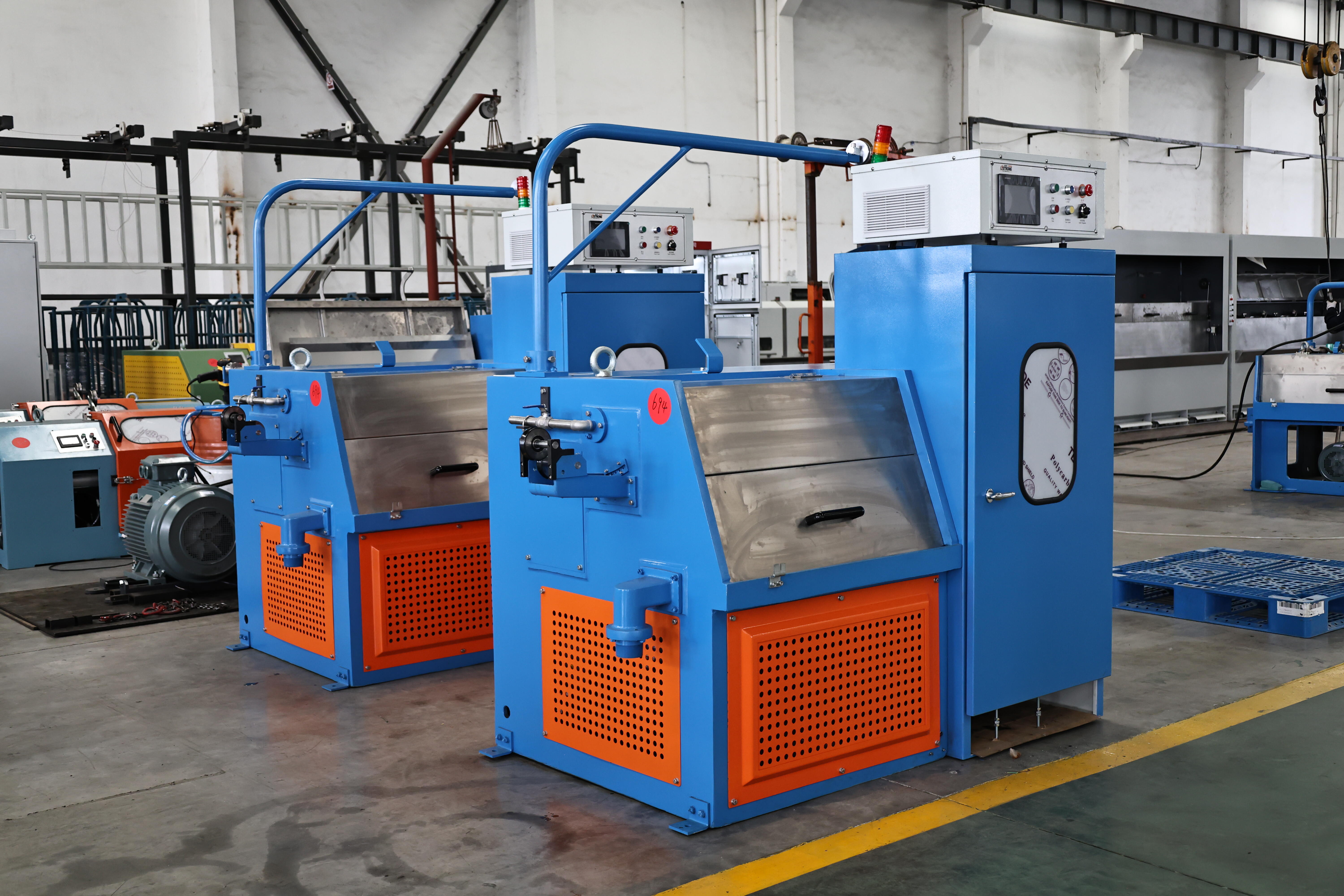
Protection covers should be treated with the same discipline. The supplied specifications for the 14D, 24DT and 24DW fine wire drawing machines list a grille for the transmission area, a stainless steel plate for the drawing area, and a sealed cover with three inspection windows for the spooling area. These are specific physical acceptance points. The buyer should check that all three elements are present on the ordered model, that the materials match the approved description, and that the inspection windows are in the stated spooling area.
The supplied data does not state an interlock or a specific guard standard for these covers. That means an interlock should not be recorded as verified unless it appears in the order drawing, the supplier's written confirmation or the acceptance test record. The absence of an unsupported claim is not a finding that a feature is missing; it is a signal to request the applicable document.
A purchase acceptance checklist for regional projects
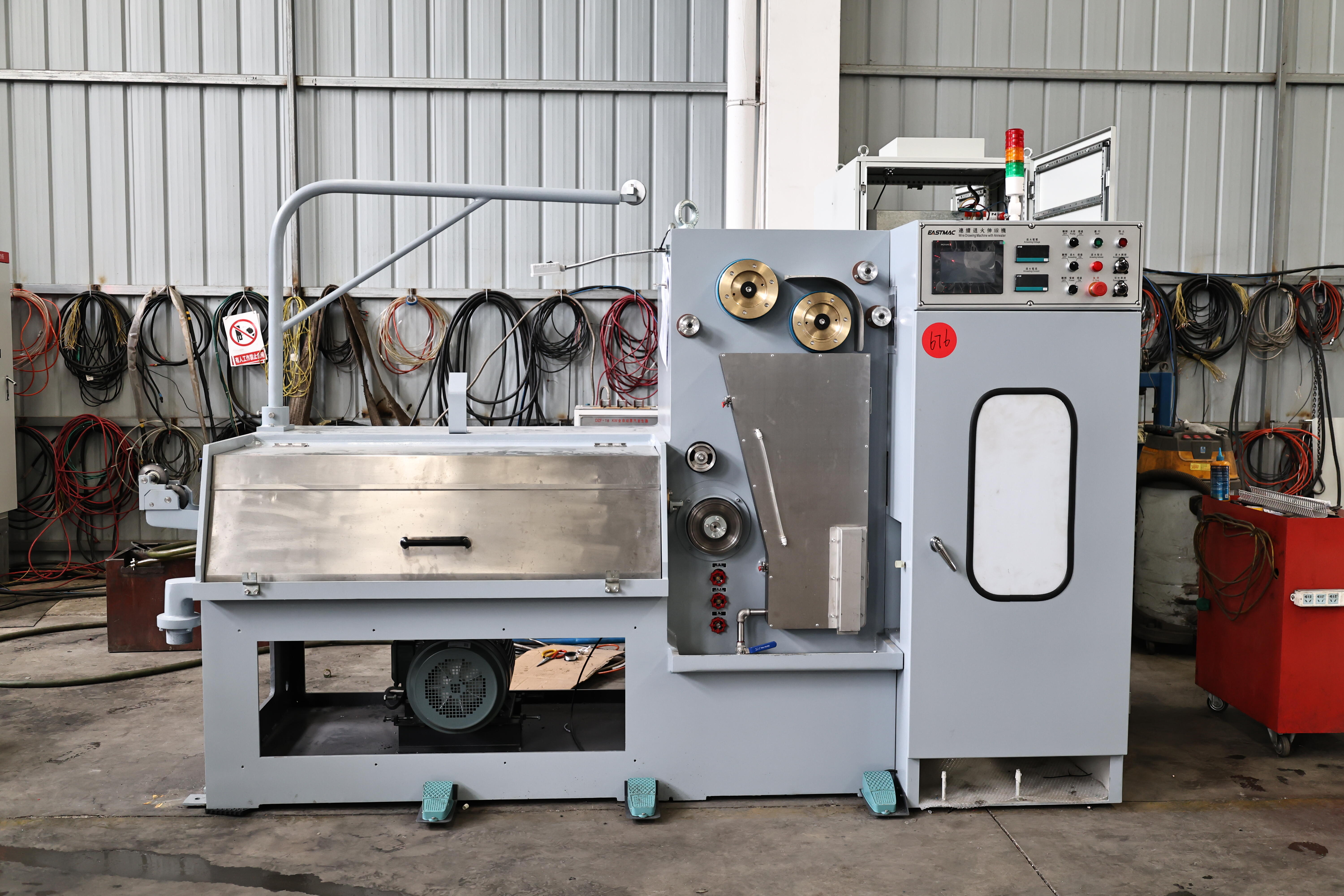
Acceptance should begin before shipment and continue at installation. The goal is a file that an engineer, purchaser and service technician can read without asking which version of the specification was approved. The checklist below uses the documents and machine details supplied for this guide; it should be adapted to the specific contract rather than copied blindly.
Step 1: freeze the destination supply schedule
Record the plant voltage, phase count, frequency, tolerances and any single-phase circuit. For the 13DST example, the schedule should show AC 3 × 380/415 V (±10%), AC 220 V single-phase (±10%) and 50 Hz (±2%) only if those values match the approved order. Confirm what the single-phase supply serves; do not assume it applies to the main drive. The final machine nameplate should agree with the approved schedule.
Step 2: match the model and configuration to the certificate scope
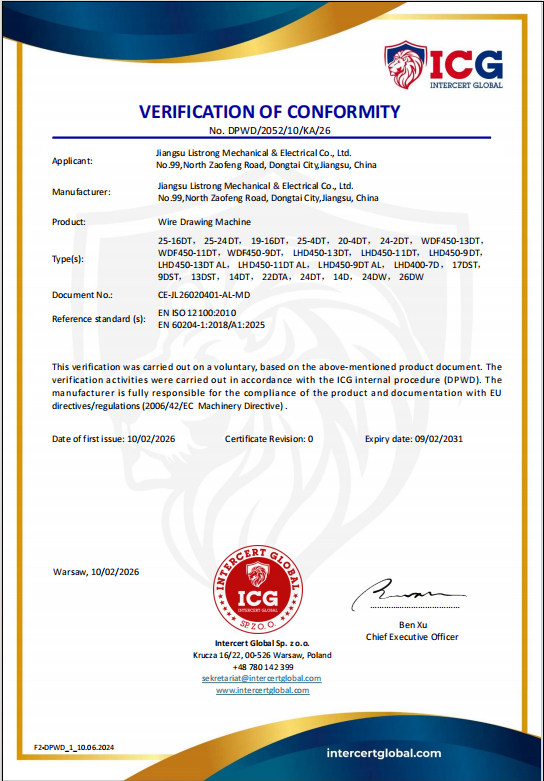
Request a legible copy of the relevant certificate and compare the model, product description, standards, issuer, certificate number and validity dates. The ISO 9001 certificate in the supplied data is number 41625QT0833R0, issued by Zhejiang Standard Service Certification Co., Ltd against GB/T19001-2016/ISO9001:2015, valid from 2025-08-27 to 2028-08-26, with a scope covering wire drawing machines, stranding machines and annealing machines. The CE Verification of Conformity is number CE-JL26020401-AL-MD, issued by ICG, references EN ISO 12100:2010 and EN 60204-1:2018/A1:2025, applies to the EU market and is valid from 2026-02-10 to 2031-02-09. The certificate scope lists models including the 13DST, 14D, 24DT, 24DW and 25-16DT. The buyer should still confirm that the exact ordered configuration is within that scope.
Step 3: approve the control bill of materials
List the PLC, human machine interface, inverter, relays, switches and other control items that affect the agreed configuration. Where the specification names OMRON relays and LG switches, the approved list should show those items and the delivered panel should be checked against it. The same rule applies to an INOVANCE inverter or any other named control item. A photograph of a label is useful evidence, but it should be supported by the approved bill of materials and the inspection record.
Step 4: verify the protection cover against the machine
Use the order drawing to confirm the transmission-area grille, the stainless steel plate for the drawing area and the sealed cover with three inspection windows for the spooling area. At acceptance, check position, fixing, material description and access. If the contract includes an interlock or another safety function, add it to the drawing and test record explicitly. Do not mark it as verified on the basis of a general photograph.
Step 5: assemble the acceptance file
The file should contain the approved order configuration, electrical schedule, control bill of materials, protection-cover drawing, nameplate record, test record and certificate copies. The supplier's stated quality-control step is a 100% pre-shipment test; the acceptance file should identify what was tested and when, rather than merely repeating the phrase. The stated warranty is 12 months from the date of dispatch from the factory, and remote technical support is listed as part of after-sales service. Those commitments should appear in the commercial documents.
| Acceptance record | Why it matters | What to check |
|---|---|---|
| Destination supply schedule | Prevents a machine being built to an assumed voltage or frequency | Phase count, nominal voltage, tolerance, frequency, frequency tolerance and single-phase circuit |
| Order configuration sheet | Links the model to the actual dies, spool, speed and options | Model, wire range, spool or bobbin size, colour and customer-specific requirements |
| Control bill of materials | Makes brand-level claims checkable at part level | PLC, HMI, inverter, OMRON relay and LG switch records where specified |
| Protection-cover drawing | Connects the physical guard to the approved design | Transmission-area grille, stainless steel drawing-area plate and three inspection windows for spooling |
| Test and warranty record | Shows the machine was checked before shipment and states support terms | 100% pre-shipment test record, 12-month warranty from dispatch and remote technical support terms |
| Certification pack | Supports the compliance statement with traceable documents | ISO 9001 certificate 41625QT0833R0 and CE document CE-JL26020401-AL-MD, including scope and dates |
| Supplier identity file | Clarifies who controls the technical file and after-sales response | Legal name, factory address, visit record, capacity statement and export document arrangements |
Manufacturer or trade company: how to verify the supplier
The manufacturer-versus-trade-company question is not about labels alone. A trade company can be a legitimate supply channel, but the buyer still needs to know who controls the technical file, who approves the final configuration, who signs the acceptance documents and who provides after-sales support. If the supplier presents itself as a manufacturer, that claim should be matched to a factory identity, a production and assembly capability and a documented after-sales route.
Jiangsu Listrong Mechanical & Electrical Co., Ltd. is a wire drawing machine manufacturer based in Dongtai, Jiangsu, China. The company was founded in 2009 and its supplied profile lists a 15,000 m² factory, 70 employees, 15 engineers, annual output of 550 sets, OEM and ODM capability, monthly capacity of 45–50 sets, a lead time of 50–90 days and a minimum order quantity of one set. Its company FAQ states that it is a real wire drawing machine manufacturer and that buyers can visit the factory online or offline. These are company-provided facts. They are useful starting points for verification, not substitutes for the factory visit, certificate check or acceptance record.
The company profile also lists export experience in the Middle East, India and South East Asia, a 40% export ratio, 100% pre-shipment testing, remote technical support and a one-year warranty. A buyer comparing a manufacturer with a trade company should ask which entity appears on the quotation, which entity issues the warranty, which entity can provide the control bill of materials and which entity will respond to a service issue after installation. The answers should be consistent across the contract, certificate file and shipping documents.
Europe export questions: certificate scope before shipping
The Europe export question is not only 'Can you ship?' It is 'Which document covers this model and this configuration?' The company FAQ states that it has a CE certificate and can export wire drawing machines to Europe. That statement should be followed by the actual certificate review. In the supplied data, the CE document is a Verification of Conformity numbered CE-JL26020401-AL-MD, issued by ICG, with EN ISO 12100:2010 and EN 60204-1:2018/A1:2025 as applicable standards and 2031-02-09 as the stated validity end date.
For a Europe-bound order, check four points in writing. First, confirm that the exact model and configuration appear in the certificate scope. Second, confirm that the destination supply matches the ordered voltage and frequency, including any single-phase circuit. Third, confirm that the control bill of materials and protection-cover description match the approved order. Fourth, confirm that the commercial documents and customs documents required for the destination are available; the company FAQ states that it can arrange customs clearances and supply the documents needed for export.
The ISO 9001 certificate should be reviewed alongside the CE document, not used as a substitute for it. The supplied ISO certificate is number 41625QT0833R0, issued by Zhejiang Standard Service Certification Co., Ltd, valid from 2025-08-27 to 2028-08-26, covering wire drawing machines, stranding machines and annealing machines. A buyer should keep the quality-system certificate and the product conformity document separate in the acceptance file so that each can be checked against its own scope.
Use cases: how the checklist changes by project
Intermediate copper line with a 380 V plant supply
A plant producing bare copper within the 13DST range of Ф3.5 mm inlet and Ф2.8–0.8 mm outlet would start with the 13DST electrical schedule. The order file should confirm the three-phase AC 3 × 380/415 V (±10%) option, the 50 Hz (±2%) frequency and any single-phase 220 V circuit. The acceptance record should also confirm the PLC and human machine interface control and the inverter arrangement. The machine should not be accepted on a generic '380 V' label alone.
Fine copper line with a 415 V supply
A fine wire project using the 14D would check the three-phase 415 V 50 Hz supply, the AC frequency converter control for the drive and spooling motors, the OMRON relays and LG switches, and the protection-cover details. The 14D outlet range is Ф0.25–0.6 mm and the maximum drawing speed is 1500 m/min, so the electrical acceptance should be read together with the wire-range and spool requirements rather than in isolation.
Europe-bound project with a fine wire machine
For the 24DT, the supplied CE documentation is available under CE-JL26020401-AL-MD and the machine specification lists a three-phase 380/415 V 50 Hz supply according to client requirement. The buyer should confirm the exact model in the certificate scope, check the two applicable standards and confirm that the control and guarding descriptions in the order match the delivered machine. The certificate date range should be current at the time of shipment and acceptance.
Buyer comparing a factory with an trading intermediary
A buyer may receive a similar quotation from a factory and an intermediary. The comparison should use the same acceptance file structure for both: factory identity, model-level certificate scope, control bill of materials, protection-cover drawing, test record, warranty issuer and export document responsibility. The supplier with the clearer document trail is easier to audit, even if both quotations look similar at the price line.
FAQ
China wire drawing machine manufacturers for verified factory sourcing: what should a buyer check?
Check the legal entity, factory address and production scope against the quotation and certificate file. Ask for a factory visit, online or offline, and compare the stated capacity, lead time and after-sales route with the contract. For Jiangsu Listrong Mechanical & Electrical Co., Ltd., the supplied profile lists a 15,000 m² factory, 70 employees, 15 engineers, annual output of 550 sets, monthly capacity of 45–50 sets, a 50–90 day lead time and OEM/ODM capability. These facts should be verified against the specific order, not accepted as a substitute for model-level documents.
How should a buyer map regional voltage to a wire drawing machine order?
Write the plant supply as phase count, nominal voltage, tolerance, frequency, frequency tolerance and any single-phase circuit. Then match that line to the exact model data. The 13DST lists AC 3 × 380/415 V (±10%), AC 220 V single-phase (±10%) and 50 Hz (±2%). The 14D lists three-phase 415 V 50 Hz. The 24DT lists three-phase 380/415 V 50 Hz according to client requirement. The approved order and nameplate should repeat the final values.
Which protection-cover details should be checked at acceptance?
For the supplied 14D, 24DT and 24DW specifications, check the grille for the transmission area, the stainless steel plate for the drawing area and the sealed cover with three inspection windows for the spooling area. Confirm these against the approved drawing and the machine itself. If an interlock or another safety function is required, it should be stated separately in the order and test record because the supplied excerpts do not state one.
Which documents support a Europe-bound wire drawing machine order?
Use the CE Verification of Conformity CE-JL26020401-AL-MD, issued by ICG, referencing EN ISO 12100:2010 and EN 60204-1:2018/A1:2025 and valid from 2026-02-10 to 2031-02-09, and confirm that the exact model is in scope. Keep the ISO 9001 certificate 41625QT0833R0 separate; it is valid from 2025-08-27 to 2028-08-26 and covers wire drawing machines, stranding machines and annealing machines. Also confirm the export and customs documents required for the destination.
Is an ISO 9001 or CE document enough to accept a wire drawing machine?
No single certificate replaces the model and order check. ISO 9001 is a quality management system certificate, while the CE Verification of Conformity has its own product scope, standards and validity dates. Acceptance should also include the voltage and frequency schedule, control bill of materials, protection-cover drawing, pre-shipment test record and warranty terms. A certificate becomes useful when it is matched to the machine being delivered.
Conclusion
Regional compliance for a wire drawing machine is built from specific, checkable details: the plant supply schedule, the model's documented voltage and frequency, the control bill of materials, the protection-cover description and the certificate scope. The 13DST, 14D and 24DT examples show why those details should stay model-specific. The ISO 9001 and CE documents add value when they are read against the exact order, not when they are treated as general marketing labels.
For a project review, prepare the destination voltage, frequency, wire range and required documents, then request a written configuration and acceptance list for the selected model. The Listrong catalogue is available here: download the wire drawing machine catalogue (PDF).
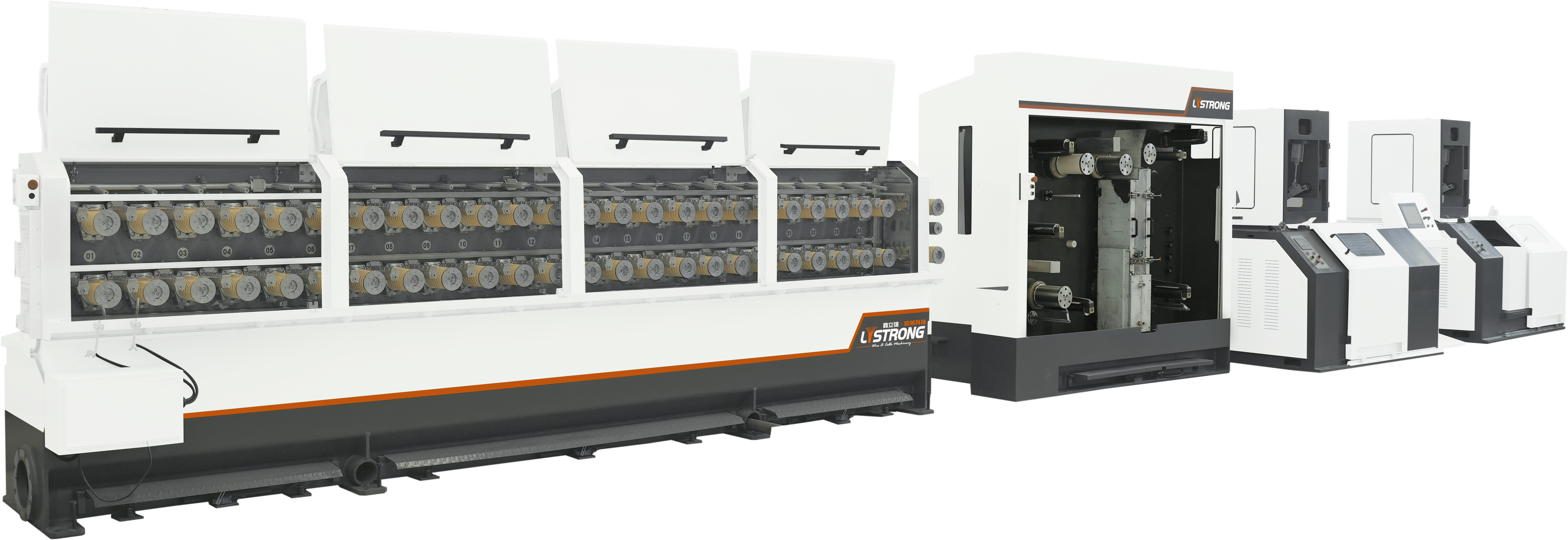
If the destination supply, wire range and certificate scope are already defined, include them in the inquiry so the reply can address the exact model rather than a generic machine category.
Have Questions or Need More Details?
Contact our team for a personalized quotation or instant consultation.
Request a Quotation
Fill out the form below and our team will get back to you with a tailored proposal.
WhatsApp Direct Chat
Prefer to chat in real-time? Message us on WhatsApp for instant assistance & quick answers.
- Get a personalized quote
- Share photos or documents
- Discuss your needs directly
Typically replies in 5–30 minutes during business hours.