Wire Drawing Machines for Automotive Wiring Harness Lines
A harness plant does not need the fastest drawing machine available; it needs a machine whose outlet band, elongation stability and take-up behaviour match the conductors it actually ships. For automotive harness conductors between 0.40 mm and 1.60 mm, the LISTRONG 17DST intermediate wire drawing machine draws from a Φ3.5–Φ2.5 mm inlet through 17 dies to a Φ1.6–Φ0.4 mm outlet, running 1000–1500 m/min in the 0.40–0.80 mm range with online annealing, and 1300–600 m/min in the 0.80–1.60 mm range.
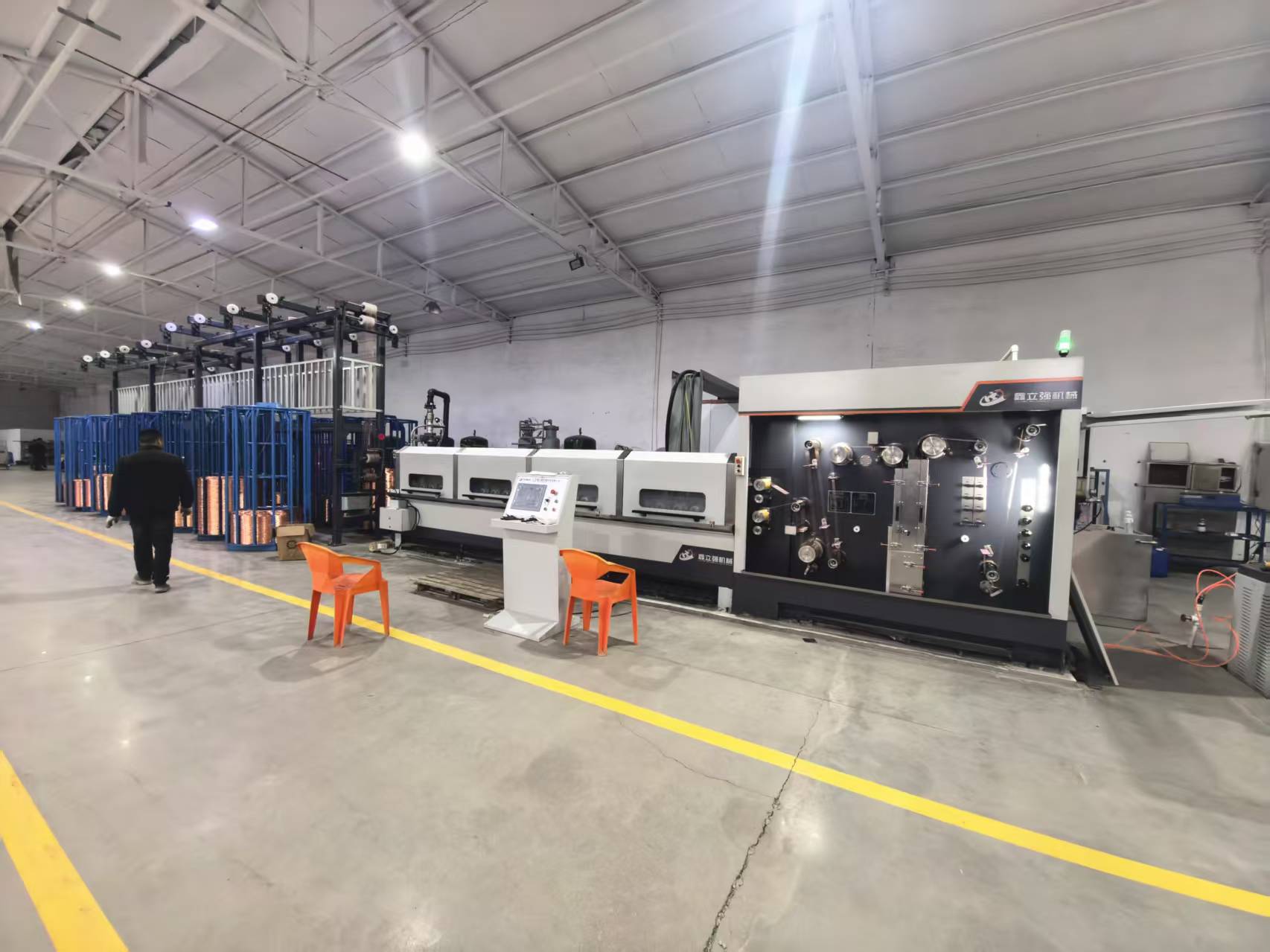
A LISTRONG drawing machine on the production floor. Harness lines are selected on outlet band, elongation and take-up behaviour rather than on headline speed alone.
Jiangsu Listrong Mechanical & Electrical Co., Ltd. is a wire and cable equipment manufacturer based in Dongtai City, Jiangsu, China, producing wire drawing machines, annealing machines and wire bunching machines for bare copper, copper alloy and stainless steel wire. Its stated scope covers development design, whole plant planning, manufacture, installation, commissioning and after-sales service.
This guide is written for the decision stage rather than the discovery stage: a harness or cable plant already knows it needs intermediate drawing capacity, and now has to fix the conductor band, the pass schedule, the annealing arrangement, the spooling format and the long-term support terms around one machine. Each section below ties a specification to the operational consequence that matters after installation.
The Harness Conductor Problem: Many Sizes, One Drawing Line
Automotive wiring harness production is a multi-size, multi-changeover business. A single harness family can call for 0.35 mm, 0.50 mm, 0.75 mm and 1.00 mm conductors, plus larger power conductors in the same plant, and each size change pulls on the same upstream drawing capacity. That is structurally different from a cable plant running one or two conductor sizes for long campaigns.
The drawing problem is therefore not maximum speed. It is the ability to hold diameter tolerance and elongation across a wide outlet band without resetting the machine for every harness variant, and to hand the downstream bunching or stranding line a spool that behaves consistently.
- Band coverage. The machine must span the small and mid-size conductors in one pass schedule instead of forcing a split between two machines.
- Elongation consistency. Conductor softness affects crimp quality and cut-and-strip behaviour downstream, so annealing has to be repeatable at every speed in the band.
- Take-up discipline. Spool build quality, traversing accuracy and tension control determine whether the bunching line runs without interruption.
- Changeover cost. Die changes and rethreading time convert directly into lost harness output.
A machine that satisfies three of these four criteria and fails on the fourth usually shows up later as either scrap at the crimp station or unplanned downtime at the bunching line. That is why specification review for harness work concentrates on the outlet band, the reduction schedule and the annealing and spooling chain together.
What Automotive Harness Production Actually Demands
Wire drawing machines sit at the start of the conductor chain and are classified under HS 8463.30.00, machine tools for working metal wire without removing material. For harness work the machine is normally the intermediate stage: rod breakdown reduces 8 mm rod to an intermediate size, intermediate drawing brings it into the harness band, and fine or multi-wire drawing produces the smallest conductors.
The commercial context supports the case for planning capacity rather than buying opportunistically. Dataintelo's 2026 market research report values the global wire drawing machine market at USD 3.8 billion in 2025 and projects USD 6.1 billion by 2034, a CAGR of 5.47% across 2026–2034. Market-size estimates differ between research houses depending on whether spare parts, dies and service revenue are included, so the useful signal is the direction of demand rather than the absolute figure.
Two further demands are specific to harness work. First, the annealing stage has to be stable across the speed range, because a harness plant runs the same machine at different speeds for different conductor sizes in the same shift. Second, the machine has to be serviceable in place: a drawing line stopped for a die or capstan issue takes the downstream bunching and assembly line with it.
The 17DST as the Core Intermediate Machine
The 17DST is an intermediate wire drawing machine for bare copper wire drawing with online annealing, applied in power cables, communication cables, automotive wiring harnesses, electronic components and building wiring. It draws from a Φ3.5–Φ2.5 mm inlet to a Φ1.6–Φ0.4 mm outlet through 17 dies, with a maximum mechanical speed of 1800 m/min and 1500 m/min when annealing is running.
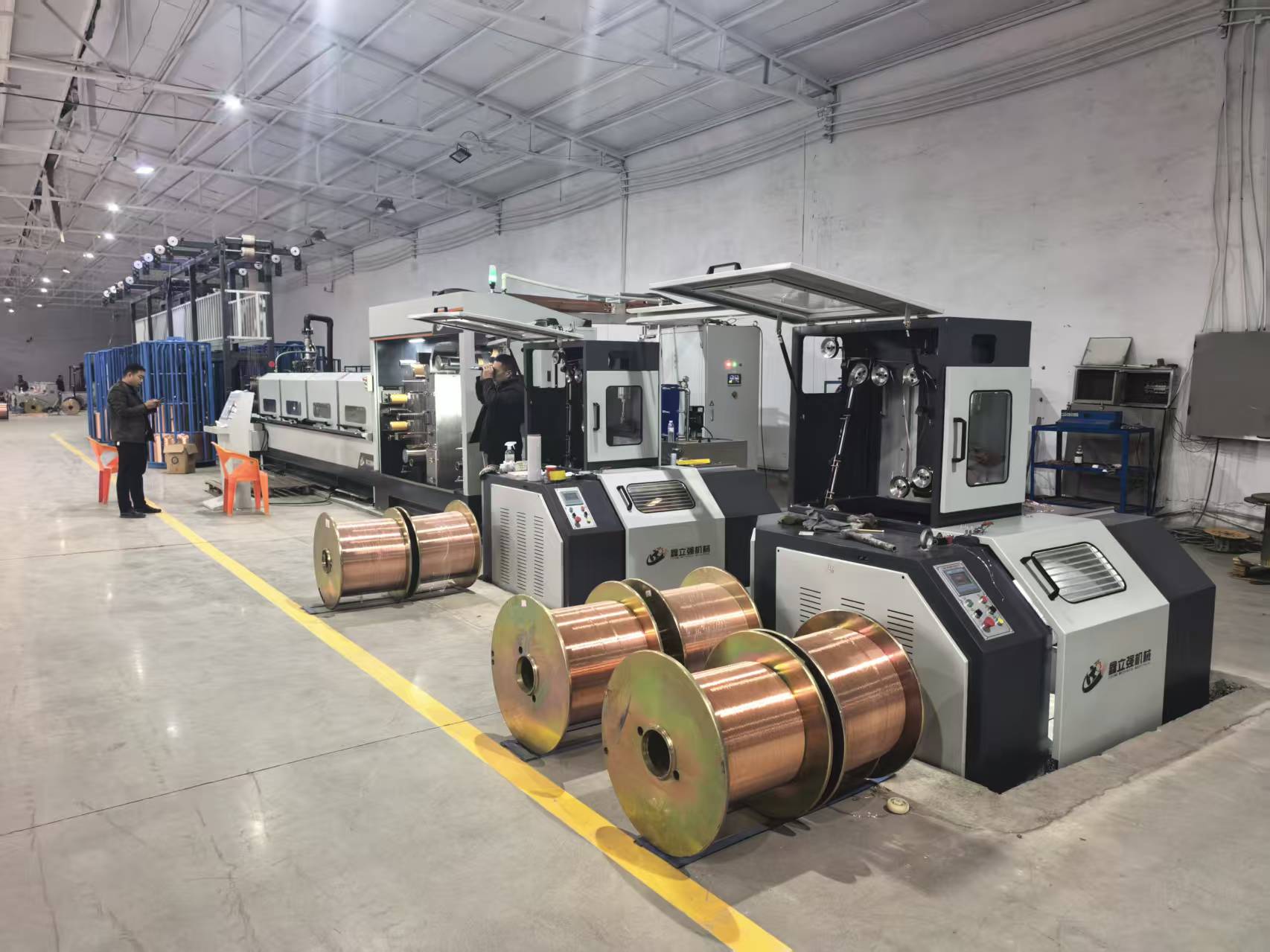
Drawing section with the die and capstan arrangement that determines the pass schedule for a given outlet diameter.
Conductor range and pass design
The 17DST uses 17 dies, customer self-provided, with a die dimension of Φ30 mm × 15 mm thickness or Φ25 mm × 10 mm thickness, and the last die at Φ25 mm × 10 mm thickness. The die pedestal is adjustable to the capstan. The mechanical surface reduction rate is 20% from die No.1 to No.16 and 15.5% at die No.17.
That reduction profile is the reason the machine suits harness work. A 20% reduction through the main body followed by a lighter final pass keeps the last deformation gentle, which supports surface quality and elongation control on the finished conductor. Because dies are customer-supplied, die quality and die inventory become part of the plant's own process control rather than a machine-supplier variable — an important point for long-term operation.
Speed and throughput across the outlet band
Published reference speeds for the 17DST are 1000–1500 m/min at 0.40–0.80 mm outlet and 1300–600 m/min at 0.80–1.60 mm outlet, with reference elongation of 25% and 30% respectively. The machine is a four-shaft horizontal arrangement, so the drawing path stays accessible for threading and inspection.
For harness planning, the consequence is straightforward. The same machine can hold the small conductor sizes at the higher end of its speed range and the larger harness power conductors at moderate speed, without a second machine for the 1.0–1.6 mm band. Where a plant also needs very fine conductors below 0.40 mm, that work belongs to a fine or multi-wire machine, which is covered later in this guide.
Annealing, spooling and traversing
The drive chain is specified as a 55 kW main driving motor, a 7.5 kW annealing motor and a 15 kW spooling motor. The separation matters: annealing power is controlled independently of drawing power, so the annealer can be trimmed to the conductor size and line speed instead of being tied to the main drive.
Traversing is driven by a 90 W motor with a position-limited switch, which fixes the spool build envelope and prevents the wire from running past the spool flange at the end of a traverse stroke. The machine is fitted with a sliding safety door at the drawing area. For a harness plant running multiple sizes per shift, the spooling and traversing behaviour is often the difference between a spool that feeds the bunching line cleanly and one that causes tension spikes downstream.
Lubrication and machine protection
Drawing lubrication on the 17DST is fully immersing type with a lubrication oil requirement of 100 litres per minute. Full immersion rather than spray lubrication is a deliberate choice for intermediate drawing: the die and capstan surfaces stay wetted through the whole pass, which supports die life and surface finish on the heavier reductions used at this stage.
For the buyer, 100 L/min is a utility requirement, not a footnote. The lubrication circuit needs the corresponding tank, pump and cooling capacity on site, and the oil has to be maintained as a consumable across the machine's service life. Plants that plan the oil supply and filtration at the same time as the machine order avoid the most common early-life quality complaint in intermediate drawing.
When the Line Needs a Second Machine: The 22DTA at the Fine End
Harness plants frequently need conductors below the 17DST's 0.40 mm floor, particularly for sensor wiring, signal circuits and small electronic connections. The 22DTA fine wire drawing machine covers that band: bare copper wire drawing and annealing, inlet Φ1.0–1.6 mm, outlet Φ0.15–0.6 mm, 22 dies, maximum drawing speed 2000 m/min, with a 15% reduction rate from die No.1 to No.21 and 8% at die No.22.
The 22DTA's drive and annealing arrangement is sized for fine wire: an 18.5 kW drive motor and 2.2 kW spooling motor, DC three-section annealing at 60 V with 600 A maximum and 36 KVA annealing power, four 10-tier ceramic capstans, spray lubrication at 40 L/min, and spool sizes to DIN200/250 with 25 kg spool capacity. Its stated application scope includes special electromagnetic wire, electrical and communication cables, automotive electronics and hardware conductors.
The division of labour is therefore clean. The 17DST carries the mid-band harness conductors; the 22DTA carries the fine end and the electromagnetic wire work. A single supplier covering both stages shortens the engineering conversation, because the pass schedule at the intermediate stage has to leave the right inlet condition for the fine stage.
Step-by-Step: Configuring a Wire Drawing Machine for a Harness Line
- Map the conductor list before the machine list. Collect every finished conductor size the plant expects to produce over the next three to five years, not only the sizes running today. The widest and narrowest sizes decide whether one intermediate machine is sufficient or whether a fine machine is needed alongside it.
- Fix the inlet condition. The 17DST takes Φ3.5–Φ2.5 mm inlet. Confirm what the upstream rod breakdown stage actually delivers, because an inlet outside that band changes the whole pass schedule and may push the work to a different model such as the 9DST with its Φ2.5–3 mm inlet and Φ1.0–2.8 mm outlet.
- Check the pass schedule against the reduction limits. With 17 dies at 20% body reduction and 15.5% final reduction, the achievable outlet band is fixed by mechanics. Attempting a smaller outlet than the band allows does not produce a better conductor; it produces die wear and breakage.
- Match speed to the real shift pattern. Reference speeds are 1000–1500 m/min at 0.40–0.80 mm and 1300–600 m/min at 0.80–1.60 mm with the 17DST. Size the machine against the conductor mix the plant runs, not against the fastest single size.
- Confirm annealing and spooling fit downstream. Annealing motor 7.5 kW, spooling motor 15 kW, traversing by 90 W motor with a position-limited switch. Check spool format compatibility with the bunching or stranding equipment before the order is placed, since spool changes after commissioning are far more expensive than spool specification at order stage.
- Plan the utilities. 100 L/min fully immersing lubrication, plus cooling water and compressed air at the plant's own conditions. Utility shortfalls show up as surface defects and die failure, not as obvious machine faults.
- Fix the acceptance and support terms in writing. Agree the pre-shipment test as the acceptance criterion, the warranty start point, the installation and training scope, and the consumable supply plan for dies and lubrication oil.
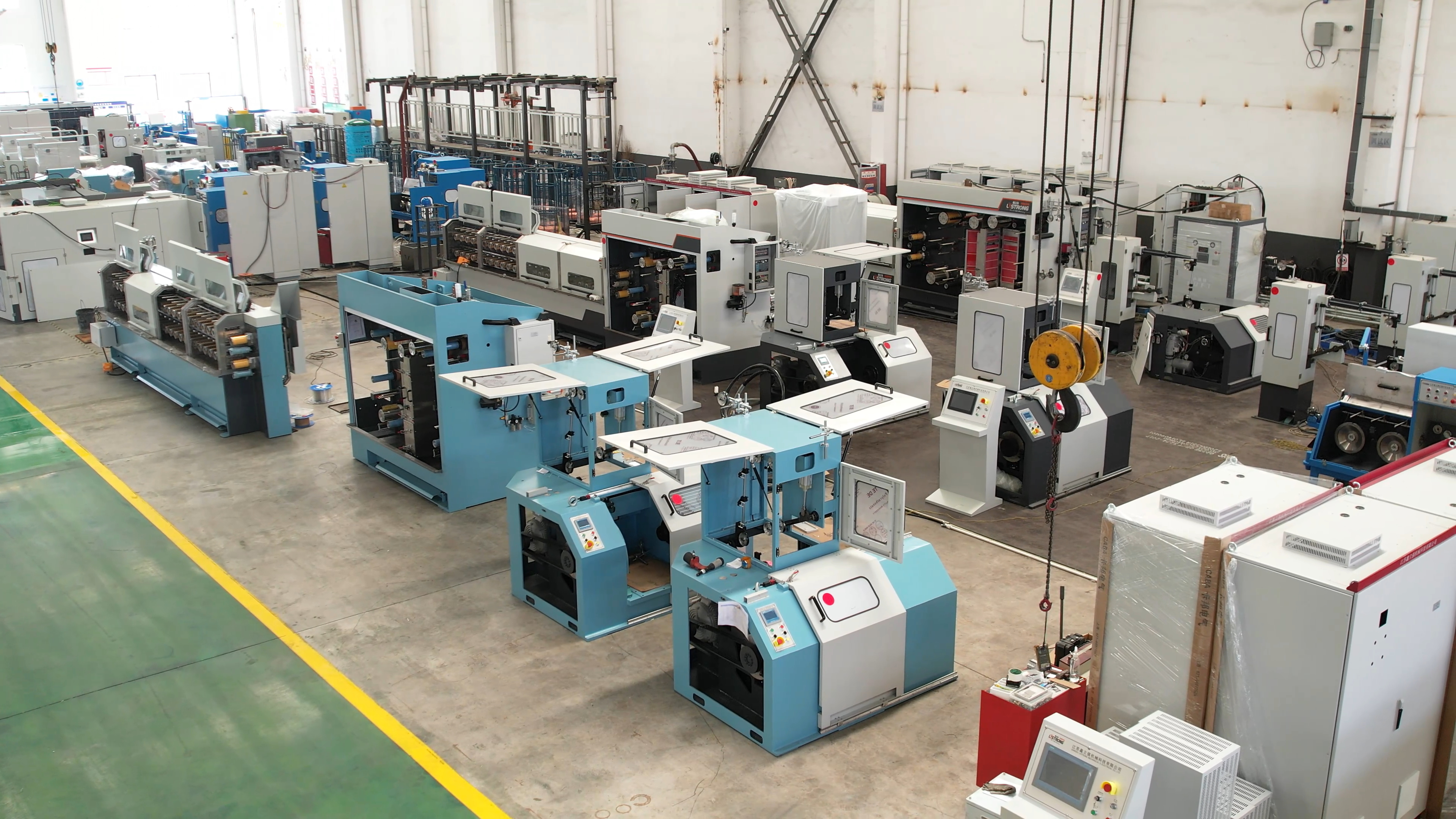
Commissioning work in the LISTRONG workshop. Installation, commissioning and operator training are handled by dispatched engineers.
Use Cases Across Harness, Building Wire and Cable Plants
0.40–1.00 mm automotive harness conductors
This is the 17DST's core band. The machine holds small and mid-size conductors in one pass schedule with reference elongation of 25% at 0.40–0.80 mm, which supports consistent crimp and cut-and-strip behaviour downstream. Plants running several harness families per week benefit from not having to split the band across two machines.
Larger harness power and battery conductors
At 0.80–1.60 mm outlet, the 17DST runs 1300–600 m/min with reference elongation of 30%. This covers the larger power conductors used in vehicle power distribution, where the requirement shifts from fine diameter control to surface quality and elongation consistency at moderate speed.
Building wiring and power cable conductors
The 17DST's stated application scope includes building wiring and power cables. Building wire production is closer to continuous campaign work than harness work, so the same machine's utility comes from the wide outlet band and the fully immersing lubrication system, which supports long uninterrupted runs.
Communication cable and electronic component wire
Communication cable conductors and electronic component leads are also listed in the 17DST scope, with the 22DTA covering the finer end down to 0.15 mm. For plants serving both harness and electronic customers, the two machines form a continuous chain from Φ3.5 mm inlet to Φ0.15 mm outlet.
Special electromagnetic wire
The 22DTA's scope includes special electromagnetic wire for motor, transformer, compressor and generator windings. Plants producing enamelled fine wire alongside harness conductor work can use the same fine machine platform for both, which simplifies spares and operator training.
Model Comparison: Intermediate and Fine Machines in the LISTRONG Range
The table below compares models from the LISTRONG range on published specifications only. It is a fit comparison, not a quality ranking: the correct model depends on the inlet condition and outlet band a plant actually needs.
| Model | Type | Inlet (mm) | Outlet (mm) | Dies | Max speed | Main motor | Lubrication | Typical role |
|---|---|---|---|---|---|---|---|---|
| 17DST | Intermediate, with annealing | Φ3.5–Φ2.5 | Φ1.6–Φ0.4 | 17 | 1800 m/min (1500 with annealing) | 55 kW | Fully immersing, 100 L/min | Core harness band 0.40–1.60 mm |
| 17-2DST | Intermediate, two-line | Φ2.5–Φ3.0 × 2 | 2 × Φ0.4–1.6 | 17 × 2 | 1800 m/min | 90 kW | Fully immersing, 150 L/min | Two-line output for high-volume harness plants |
| 9DST | Intermediate | Φ2.5–Φ3.0 | Φ1.0–Φ2.8 | 9 | 1200 m/min | 55 kW | Fully immersing, 150 L/min | Larger conductor sizes, lighter pass count |
| 22DTA | Fine, with annealing | Φ1.0–Φ1.6 | Φ0.15–Φ0.6 | 22 | 2000 m/min | 18.5 kW | Spray, 40 L/min | Fine harness, electronic and electromagnetic wire |
| 24DT | Fine | Φ1.2–Φ0.6 | Φ0.30–Φ0.10 | 24 | 2000 m/min | 15 kW | Spray, 40 L/min | Very fine bare copper and copper-clad aluminium |
| 14DT | Fine, with annealing | Φ1.6–Φ0.8 | Φ0.6–Φ0.25 | 14 | 1500 m/min | 15 kW | Spray, 40 L/min | Narrower fine band with annealing |
| 25-16DT | Multi-wire | 16 × Φ1.50–1.80 | 16 × Φ0.15–0.40 | 25 passes | 1800 m/min | — | — | Sixteen-wire output for volume conductor supply |
All values are published machine specifications. Speeds are reference values and depend on wire quality, die quality, lubricating oil quality, spool quality and operator proficiency.
Long-Term Supply: Warranty, Engineering Support and Consumables
A drawing machine is bought once and operated for years, so the terms that surround it matter as much as the specification sheet. LISTRONG is a wire drawing machine manufacturer rather than a trading company, and customers may inspect the factory online or offline at any time — a point that shortens due diligence for buyers who cannot travel before an order.
Warranty and service scope
Under the supplier's standard terms, wire drawing machine warranty coverage lasts 12 months starting from the date of dispatch from the factory. Installation and commissioning support is provided, together with after-sales service, and a post-sales service team supports products to remain in good working condition. For ongoing production partnerships, engineers can be dispatched for machine installation and operator training; the supplier reports that its engineers have service experience in more than 60 countries.
Compliance for European-bound machines
For audited long-term sourcing of European-bound wire drawing machines, the supplier cites European Union compliance with the CE directive, EN ISO 12100:2010 and EN 60204-1:2018/A1:2025. Buyers building a multi-year supply relationship around EU delivery should treat this as the baseline documentation set and confirm it at order stage rather than at shipment.
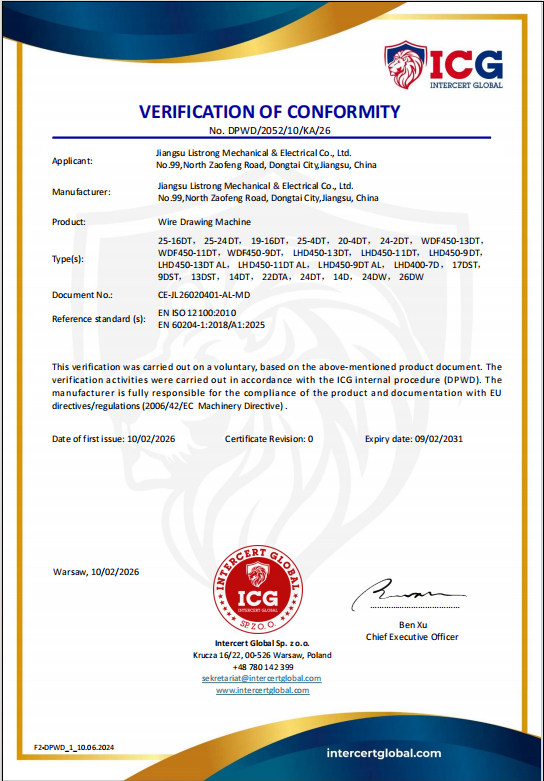
CE documentation referenced by the supplier for European Union-bound wire drawing machines, alongside EN ISO 12100:2010 and EN 60204-1:2018/A1:2025.
Consumables as part of the supply plan
On the 17DST, dies are customer self-provided and lubrication runs at 100 L/min in a fully immersing circuit. Both are continuing costs that sit outside the machine price. A long-term supply conversation that ignores die inventory and oil quality tends to surface as surface defects or short die life months after commissioning, at which point the cause is often attributed to the machine.
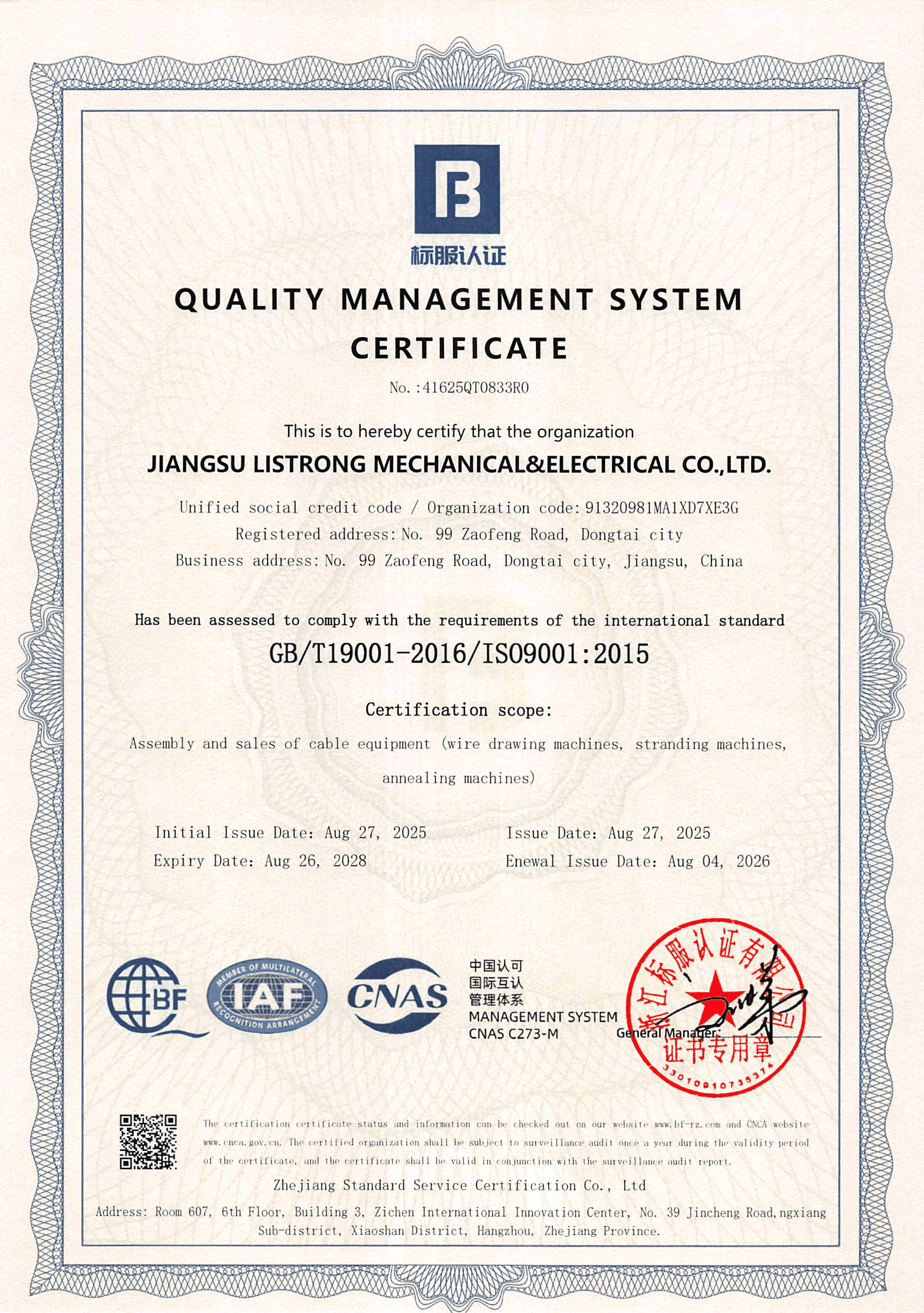
Listrong states that it operates standardized management and strict testing standards across production.
Commercial terms and acceptance
Standard purchasing terms are a minimum order quantity of one set, delivery on FOB, EXW or CIF terms, and payment of 30% T/T in advance with 70% T/T before shipment. Acceptance is based on a pre-shipment test. For a harness plant adding capacity in stages, a one-set minimum makes it practical to start with a single intermediate machine and add fine or multi-wire capacity once the conductor mix is confirmed in production.
Frequently Asked Questions
Are LISTRONG wire drawing machines CE compliant for delivery to the European Union?
For European Union-bound machines, the supplier cites compliance with the CE directive, EN ISO 12100:2010 and EN 60204-1:2018/A1:2025. This is the compliance basis stated for audited long-term sourcing of EU-bound wire drawing machines, and it should be confirmed as part of the order documentation rather than assumed at shipment.
Can one 17DST cover the full 0.40–1.60 mm automotive harness conductor band?
Yes, within its published band. The 17DST draws from a Φ3.5–Φ2.5 mm inlet to a Φ1.6–Φ0.4 mm outlet through 17 dies, with reference speeds of 1000–1500 m/min at 0.40–0.80 mm outlet and 1300–600 m/min at 0.80–1.60 mm outlet. Conductors finer than 0.40 mm fall outside its outlet range and require a fine machine such as the 22DTA, which covers Φ0.15–0.6 mm.
What are the minimum order quantity, payment terms and acceptance criteria?
The stated terms are a minimum order quantity of one set, delivery on FOB, EXW or CIF terms, and payment of 30% T/T in advance with 70% T/T before shipment. Acceptance is based on a pre-shipment test, which gives the buyer a defined verification point before the machine leaves the factory.
Can a buyer inspect the factory or verify the machine before committing to a long-term order?
The supplier states that it operates as a wire drawing machine manufacturer rather than a trading company, and that customers may inspect the factory online or offline at any time. Combined with the pre-shipment test used as the acceptance criterion, this gives a buyer two separate verification points: the manufacturing environment and the finished machine.
What warranty and engineering support continues after delivery?
Warranty coverage lasts 12 months from the date of dispatch from the factory. Installation and commissioning support is provided, engineers can be dispatched for machine installation and operator training, and the supplier reports service experience in more than 60 countries. Because dies on the 17DST are customer-supplied and lubrication runs at 100 L/min, long-term operation also depends on the buyer's own die inventory and oil quality plan. The full machine range and specifications are set out in the LISTRONG catalogue.
Conclusion: Match the Machine to the Conductor Mix, Then to the Support Terms
For automotive wiring harness lines, the 17DST is a fit where the conductor mix sits between 0.40 mm and 1.60 mm and the plant wants one intermediate machine holding that band with online annealing, 55 kW main drive, 7.5 kW annealing motor, 15 kW spooling motor and 100 L/min fully immersing lubrication. Where the mix extends below 0.40 mm, the 22DTA carries the fine end from a Φ1.0–1.6 mm inlet to Φ0.15–0.6 mm.
The selection decision does not end at the specification sheet. Warranty of 12 months from dispatch, dispatched engineers for installation and operator training, factory inspection on request, and a documented CE basis for EU-bound machines are the terms that determine how the machine performs in year three rather than in month one. Dies and lubrication oil belong in the same plan, because both continue long after commissioning.
Next Step
Send the conductor size list, the inlet condition from your rod breakdown stage and the spool format used downstream. LISTRONG will match the request against the 17DST, 22DTA or multi-wire options and confirm the pass schedule, utility requirements and delivery terms.
Email: sale02@xlq-machinery.cn | WhatsApp: +86 15261941206 | Download the catalogue
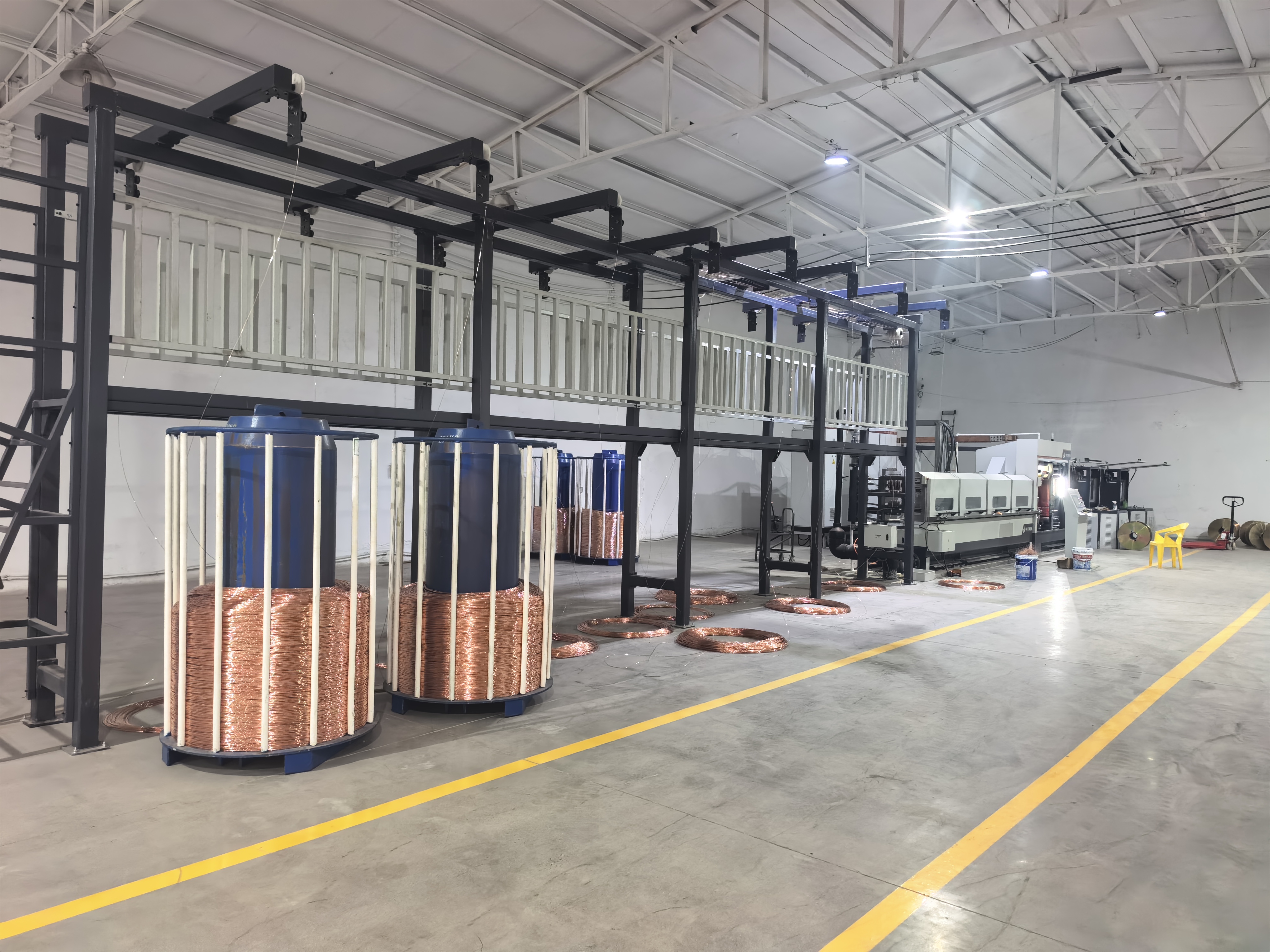
Machines are tested before shipment, and acceptance is based on the pre-shipment test.
Have Questions or Need More Details?
Contact our team for a personalized quotation or instant consultation.
Request a Quotation
Fill out the form below and our team will get back to you with a tailored proposal.
WhatsApp Direct Chat
Prefer to chat in real-time? Message us on WhatsApp for instant assistance & quick answers.
- Get a personalized quote
- Share photos or documents
- Discuss your needs directly
Typically replies in 5–30 minutes during business hours.