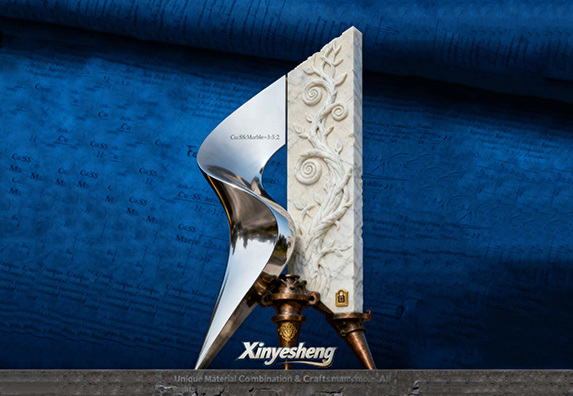
Custom Sculpture Manufacturing Explained: From Design to Global Installation
Custom Sculpture Manufacturing Explained: From Design to Global Installation
Custom sculpture manufacturing is a project-driven process that combines artistic design, material engineering, precision fabrication, and logistics. This guide explains how custom sculptures are designed, produced, and installed, with a focus on stainless steel, bronze, corten steel, stone, and monument categories.
What Is a Custom Sculpture?
A custom sculpture is a one-of-a-kind or made-to-order artwork produced according to a client's design, concept, or site requirement. Unlike mass-produced decorative items, custom sculptures are typically engineered for permanent installation in public, architectural, or private spaces. Buyers may commission them for a specific space, brand image, memorial purpose, or landscape design.
Custom sculpture manufacturing is not just about casting or welding metal. It involves a complete workflow: concept confirmation, 3D design, material selection, prototyping, fabrication, surface treatment, export packaging, shipping, and on-site installation guidance.
Why Custom Sculpture Demand Is Growing
Art and sculpture remain a substantial global market. Business Research Insights estimates the global art and sculpture market at approximately USD 61.83 billion in 2026. Sculptures account for about 21% of global art acquisitions by transaction volume, and in the United States, the sculpture market reached an estimated value between $5.8 and $6.2 billion in 2024.
Custom fabrication is increasingly important because buyers want unique pieces that match their architectural environment, brand identity, or cultural context. Public art, hotel lobbies, residential landscapes, memorial parks, and commercial plazas each require sculptures designed for a specific location, scale, and material performance.
Core Categories of Custom Sculpture
Custom sculpture covers several main material and product families. Each has different visual characteristics, durability, maintenance, and suitable applications.
| Category | Common Types | Typical Applications |
|---|---|---|
| Stainless Steel Sculpture | Abstract art, metal sculpture, garden decoration, urban landmark | Urban public art, modern architecture, seaside landscape, luxury hotel, shopping mall |
| Bronze Sculpture | Bronze statue, animal sculpture, religious statue, figurine | Public art, museum, real estate, religious institutions, private collection |
| Corten Steel Sculpture | Landscape sculpture, garden edging, fire pit, metal screen, planter box | Landscape architecture, public parks, modern garden design, industrial style decor |
| Stone Sculpture | Marble statue, stone fountain, religious carving, fireplace mantels, carved marble bathtub | Landscape design, architectural construction, home & garden, temple decoration |
| Tombstone / Monument | Granite tombstone, European style, American style, kerbset monument | Cemetery construction, memorial stone engineering, landscape architecture, funeral industry |
Custom Sculpture Materials and Their Performance
Material choice determines not only appearance but also the sculpture's lifetime, maintenance cost, and structural safety. Four material families dominate custom outdoor sculpture manufacturing.
Stainless Steel Sculpture
Custom stainless steel sculptures are widely used for modern and large-scale landmarks. Premium grades are 304 and 316 stainless steel. Grade 304 is suitable for most urban environments; grade 316 offers higher corrosion resistance and is recommended for coastal or humid settings. Common surface finishes include mirror polished, brushed (satin), painted, and electroplated.
A key technical element is the internal steel skeleton. Large stainless steel sculptures rely on a heavy-duty inner frame to ensure structural stability. Seamless welding technique also matters, because visible joints break the visual flow of an abstract piece.
Bronze Sculpture
Bronze is a classical material for figurative and commemorative works. High-purity cast bronze typically contains more than 85% to 95% copper. Bronze can be finished with patina, gold leafing, high polish, or antiqued surfaces. The lost-wax casting process captures fine detail such as facial expression, muscle structure, and fabric texture.
Bronze develops a characteristic patina over time and is well suited to public art, museums, religious institutions, real estate developments, and private collections. Brass is a lower-cost alternative with a brighter gold-like tone, but bronze has a stronger outdoor durability record.
Corten Steel Sculpture
Corten steel, also called weathering steel, is a low-alloy structural steel that forms a stable rust-like patina. It is often specified as ASTM A242 or A588. The surface may be supplied as a natural pre-rusted finish or a raw finish that weathers on site.
Corten steel is effectively maintenance-free because the protective oxide layer prevents deeper corrosion. It is commonly used for landscape sculptures, garden edging, fire pits, metal screens, and planter boxes in landscape architecture and modern garden design.
Stone Sculpture
Natural stone remains a preferred material for garden ornaments, fireplaces, fountains, and religious carvings. Common stones include white marble, granite, and travertine. High-density Grade A blocks provide better texture and durability. Surface treatments include hand-carving, honing, high-gloss polishing, and acid washing.
Stone sculptures can be scaled from small garden pieces to large monuments. They are weatherproof and resistant to chemical fading, making them suitable for long-term exterior display.
Tombstone and Memorial Monuments
Memorial sculpture is a specialized custom category. The most common material is natural granite, including Shanxi Black, G603, and Blue Pearl. Standard sizes begin at 80x60 cm and 120x80 cm, but fully customized dimensions are available. Surface treatment typically includes 100% mirror polishing, laser engraving, or sandblasting.
Granite is selected for memorials because of its acid and alkali resistance, anti-weathering properties, and color stability. Professional B2B manufacturers support global shipping, bulk orders, laser-etched portraits, and custom inscriptions.
Custom Sculpture Design Process
A successful custom sculpture project begins with design clarity. Most manufacturers offer a structured workflow to reduce risk and avoid expensive revisions.
- Provide drawings, photos, or concepts. The client submits reference images, sketches, CAD files, or a verbal concept.
- 3D design confirmation. The manufacturer creates a digital 3D model for approval before production. This step verifies proportions, scale, and details.
- Prototyping (optional). Some projects benefit from a small physical prototype or a 1:1 clay model visualization to confirm form and texture.
- Production. Fabrication begins after design approval, using casting, welding, forging, or carving depending on material.
- Surface treatment. Finish options such as mirror polish, patina, paint, or gold leaf are applied.
- Shipping. Sculptures are packed in reinforced wooden crates and steel frames for seaworthy export.
- Installation. The manufacturer provides installation guidance, including on-site video call support.
Step-by-Step Manufacturing and Installation Breakdown
Understanding the fabrication and installation steps helps buyers plan budgets, timelines, and site preparation.
Fabrication Stage
- Material sourcing: Materials such as 304/316 stainless steel, cast bronze, corten steel, or natural marble are sourced and inspected.
- Sculpting or molding: For bronze, lost-wax casting creates the original form. For stainless steel, sheet metal is cut, shaped, and welded over a steel skeleton.
- Welding and assembly: Components are assembled, and welds are ground and polished to produce seamless joints.
- Surface finishing: The visible surface is treated according to specification, such as 8K mirror polishing or multi-color patina.
- Quality inspection: Finished pieces are checked for structural integrity, surface defects, and compliance with approved drawings.
Packaging and Shipping Stage
Custom sculptures are often large and heavy. Professional seaworthy packaging typically includes reinforced wooden crates, steel frames, and shockproof plastic film. Door-to-door delivery is available from many export manufacturers, with specific shipping costs quoted by destination.
On-Site Installation Stage
Proper installation is critical for safety and longevity. The manufacturer should provide installation drawings, foundation requirements, and on-site guidance.
- Confirm the installation site. Check ground flatness, load-bearing capacity, and the position of embedded parts against drawings.
- Select hoisting equipment (forklift or crane) according to the sculpture's size and weight. Determine hoisting points and secure them firmly.
- Hoist the sculpture into position. Align it with the base or embedded parts and adjust horizontal and vertical alignment.
- Fix the sculpture with bolts or reinforce it by welding. Treat welds with anti-corrosion coating.
- Conduct an overall inspection. Clean the surface, check vertical deviation, and confirm that the sculpture is securely fixed.
Safety rules for lifting and installation include using certified lifting personnel, keeping people away from under the sculpture, cordoning off the work area, and stopping lifting during strong wind or thunderstorms. For heavy sculptures, the base load-bearing capacity must be checked to prevent tipping.
Use Cases and Applications
Custom sculptures appear in different contexts, each with its own requirements.
Public Art and Urban Landmarks
Large stainless steel and corten steel sculptures are common in public parks, city squares, and campus art. They need high corrosion resistance, structural safety, and minimal maintenance.
Luxury Hotel and Commercial Spaces
Hotel lobbies, resorts, and shopping malls use custom sculptures to establish space identity. Stainless steel mirror sculptures and bronze figurines are popular choices. Installation often integrates with lighting systems and architectural features.
Landscape and Garden Design
Garden sculptures include marble statues, corten steel planters, stone fountains, and metal screens. They must withstand weather exposure while complementing planting and hardscape design.
Memorial and Cemetery Projects
Granite tombstones and bronze memorial statues serve commemorative functions for individuals, families, and religious institutions. Customization includes portraits, inscriptions, and culturally specific symbolism.
Choosing a Custom Sculpture Manufacturer
Selection criteria go beyond price and reputation. Buyers should evaluate design support, material authenticity, production capacity, quality control, export packaging, and installation service.
| Evaluation Factor | Why It Matters | What to Check |
|---|---|---|
| Design capability | 3D visualization reduces interpretation risk | Ask for a 3D design draft before production |
| Material certification | Determines corrosion resistance and lifetime | Verify material grade (e.g., 304/316 stainless, copper content) |
| Factory scale | Affects lead time and order capacity | Review facility size, staff, and annual output |
| Packaging quality | Prevents damage during international shipping | Request seaworthy wooden crates and steel frame details |
| Installation support | Ensures safe and correct on-site assembly | Confirm whether installation guidance is included |
About Jiangsu Xinyesheng Sculpture Co., Ltd.
Jiangsu Xinyesheng Sculpture Co., Ltd. is a China-based manufacturer specializing in sculpture design, production, processing, transportation, installation, and after-sales service. The company is headquartered in Jiangyin City, China. Its main products include sculptures, statues, reliefs, tombstones, fireplaces, and bathtubs.
The manufacturing facility covers 13,320 square meters, and the company employs approximately 50 staff, including an R&D team of 12 engineers. Annual production capacity reaches 10,000 units. The company serves major markets in the EU, USA, and Middle East, with export business accounting for 100% of total sales.
Xinyesheng's cooperative factory integrates traditional hand-carving techniques with modern 3D modeling and CNC precision processing. It strictly uses Grade A natural marble, anti-corrosion weathering steel, and premium 304/316L stainless steel. The company provides a one-stop delivery system, including 1:1 clay model visualization, professional seaworthy packaging (reinforced wooden crates and steel frames), and global on-site installation guidance.
FAQ
1. Can you customize sculptures? What is the minimum order quantity?
Yes, full customization is supported. Customers provide design drawings, photos, or concepts. The manufacturer first produces a 3D design draft for confirmation before production. Single-piece orders are accepted, with more favorable pricing for bulk orders. The customization process is: provide drawings/concepts → 3D design confirmation → prototyping (optional) → production → shipping. Lead time depends on size and manufacturing process.
2. What materials are available for custom sculptures?
Custom sculptures can be made from 304/316 stainless steel, cast bronze, brass, corten steel (ASTM A242/A588 weathering steel), natural marble, granite, and travertine. Stainless steel offers modern aesthetics and corrosion resistance, with grade 316 recommended for coastal environments. Bronze is suitable for classical and historical styles. Corten steel develops a stable rust patina and is maintenance-free. Stone is used for garden, architectural, and memorial applications.
3. How is the custom sculpture design process handled?
The process typically includes concept submission, 3D design confirmation, optional prototyping, production, surface treatment, shipping, and installation guidance. A 3D design draft is provided before production so the client can verify proportions and details. This reduces the risk of costly changes after fabrication begins.
4. How is the sculpture packaged and delivered?
Professional seaworthy packaging uses reinforced wooden crates and steel frames. Internally, shockproof plastic film protects the product. Door-to-door delivery is available; the shipping cost is quoted based on the destination address. Buyers can also request All Risks insurance during transport. If damage is caused by packaging failure, the manufacturer bears responsibility.
5. Do you provide installation guidance after shipping?
Yes. Each sculpture comes with installation instructions. The manufacturer can also provide on-site installation guidance via video call. Installation includes foundation checking, hoisting, alignment, fixing with bolts or welding, anti-corrosion treatment of welds, and final inspection.
If you are planning a custom sculpture project and need a design-oriented manufacturing partner, Jiangsu Xinyesheng Sculpture Co., Ltd. supports custom design, OEM service, single-piece orders, and bulk pricing. You can request a quotation or discuss your project with the sales team.
Download the company profile and production capabilities brochure.
Start your custom sculpture project
Send your drawings, photos, or concept to receive a 3D design draft and production quote.
Email: mikey@xingyesheng.com | WhatsApp: +86 138-1259-9789