Custom Sculpture: Materials, Process, and Manufacturer Selection
Custom Sculpture: Materials, Process, and Manufacturer Selection
Custom sculpture is a design-and-build process that turns a concept, drawing, or photo into a physical artwork for a specific site. It includes public art landmarks, hotel lobby installations, garden statues, memorial monuments, and architectural metalwork. Unlike ready-made decor, a custom piece is developed around the project's location, aesthetic goals, and material requirements.
This guide is written for architects, landscape designers, hotel developers, public art coordinators, and buyers researching custom sculpture manufacturers. It explains material selection, fabrication steps, logistics, and the questions to ask before commissioning a piece.
The Problem: Turning an Artistic Concept into a Built Sculpture
Commissioning a custom sculpture is not like ordering a standard product. Buyers must connect artistic intent with engineering reality. Common issues include unclear design ownership, material choices that do not suit the local climate, underestimating the structural needs of large outdoor installations, and damage during shipping. Without a clear supplier evaluation process, quotations are difficult to compare because the scope of design, engineering, packaging, and installation often differs.
Industry Background: A Project-Driven Global Market
The market for sculpture and custom art is large and fragmented. Business Research Insights estimates the global art and sculpture market at approximately USD 61.83 billion in 2026. Market Research Report data shows that sculptures account for 21% of global art acquisitions by transaction volume. In the United States, the sculpture market was estimated between USD 5.8 and 6.2 billion in 2024, according to Premier Sculpture Industry Analysis. A more specific segment — the global bronze sculpture commission market — reached USD 1.47 billion in 2024, based on a Dataintelo report.
Public art budgets also shape demand. CODAworx reports that over 80% of public art open call projects in North America fall below a budget of USD 250,000. This means clients need manufacturers that can produce customized work efficiently, not only at a studio scale.
Trade compliance is another factor. Original sculptures under HS Code 9703 often bypass EU anti-dumping duties, while mass-produced decorative items under HS Code 8306 may face higher scrutiny. Importers should confirm how a piece will be classified before placing an order.
Detailed Solution: Working with a Full-Service Custom Sculpture Manufacturer
A full-service manufacturer brings design, engineering, fabrication, packaging, and installation support under one contract. This reduces coordination risk and gives buyers a single point of responsibility.
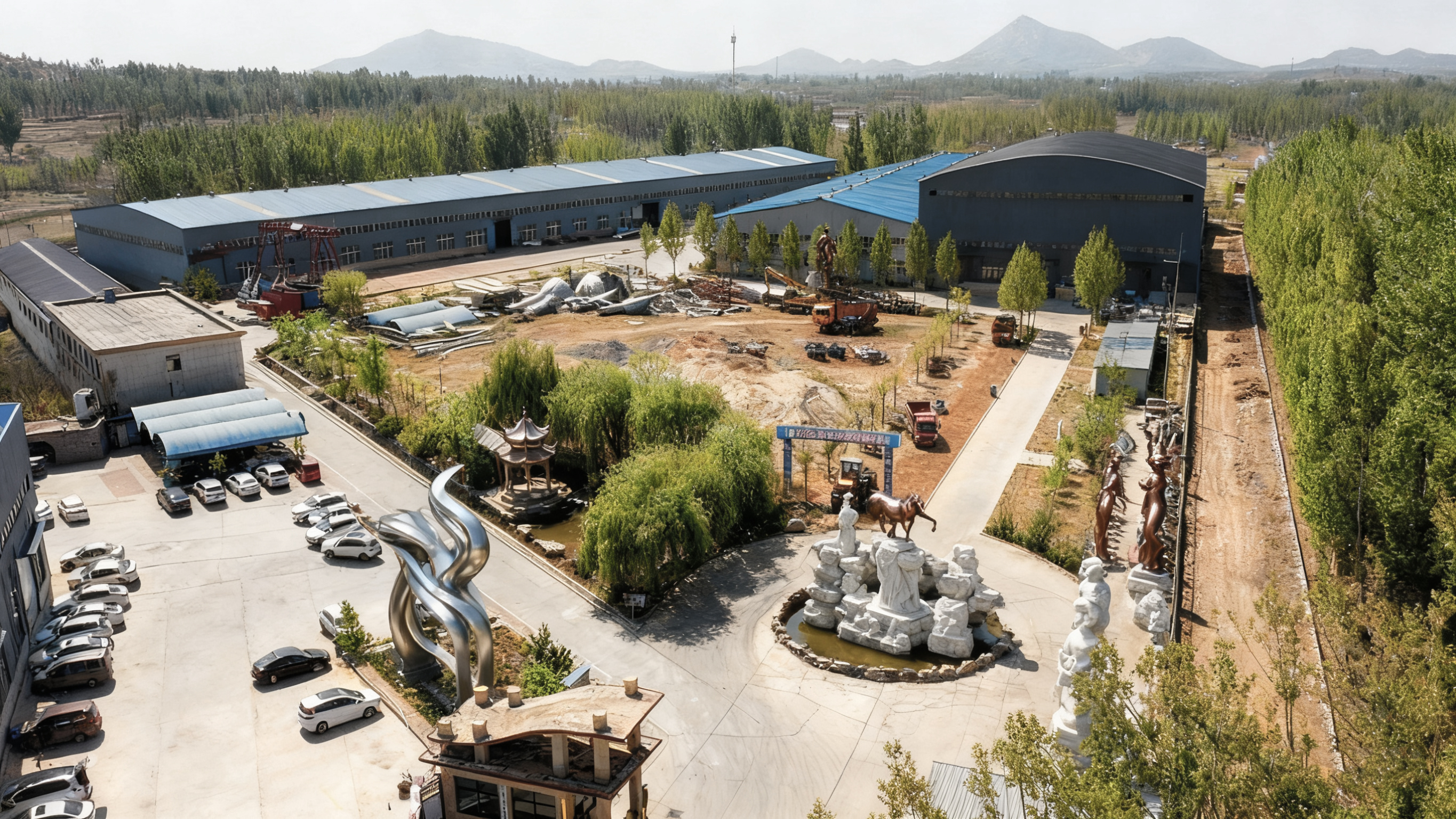
Jiangsu Xinyesheng Sculpture Co., Ltd. is an example of this model. The company is headquartered in Jiangyin City, China, and was established in 2025. It focuses on sculpture design, production, processing, transportation, installation, and after-sales service. Its manufacturing facility covers 13,320 square meters, and the company employs about 50 people. Annual production capacity reaches 10,000 units, and exports account for 100% of sales, with main markets in the EU, the USA, and the Middle East.
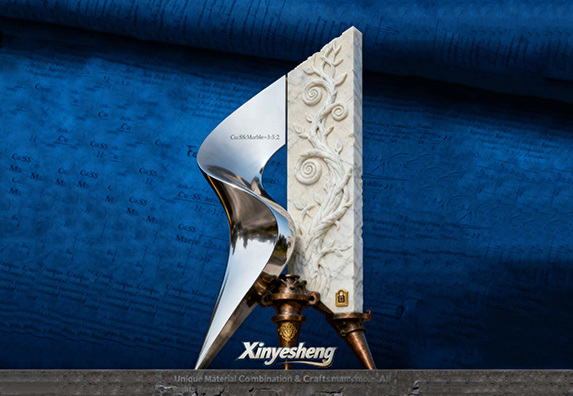
XinyeSheng produces stainless steel mirror sculptures, marble sculptures, weathering steel sculptures, copper sculptures, and cemetery tombstones. It also produces statues, reliefs, fireplaces, and bathtubs. The company combines traditional hand-carving with modern 3D modeling and CNC precision processing, which supports both detailed figurative pieces and large geometric structures.
Material Options for Custom Sculpture
Material selection is the first major technical decision. Each material has different corrosion resistance, weight, finish, and style.
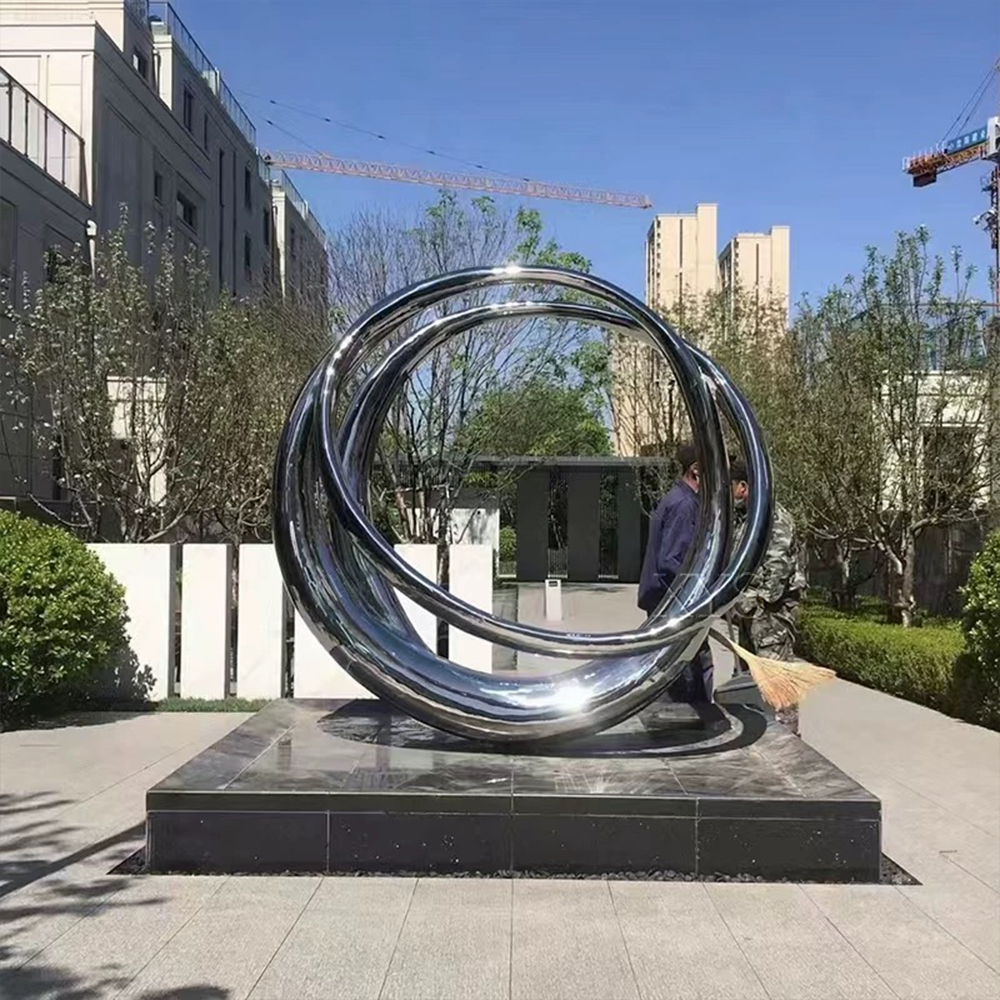
Stainless steel — Model XYS-Stainless-Custom uses premium 304 or 316 stainless steel. Common finishes include mirror polished, brushed, painted, and electroplated. The typical height range is 1 to 20 meters, making it suitable for large urban landmarks. Because 316 stainless steel has high corrosion resistance, it is often used for seaside landscapes, luxury hotels, and shopping malls.
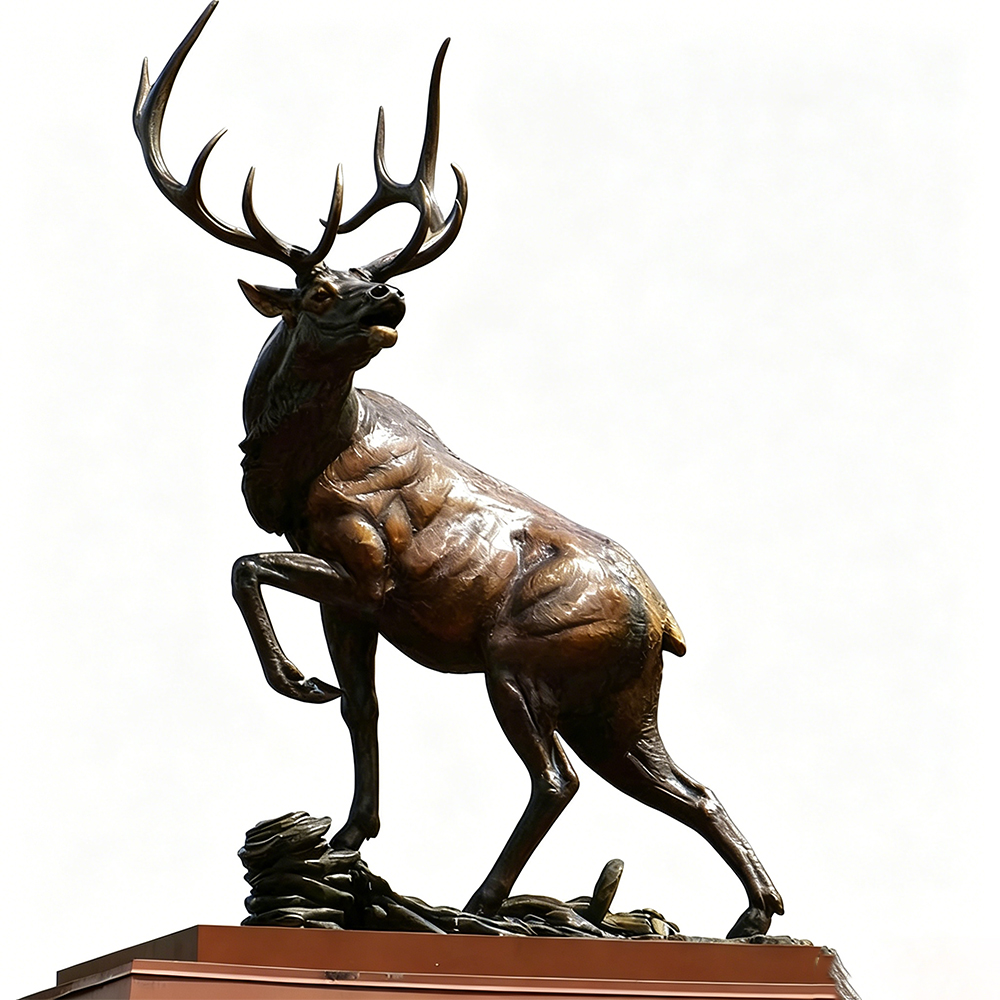
Bronze / brass — Model XYS-Bronze-Custom is made from high-purity cast bronze with a copper content of more than 85% to 95%. It is available in sizes from 50 cm to 10 meters, including life-size statues. Lost-wax casting captures fine details, and surface treatments include patina, gold leafing, high polishing, and antiquing. Bronze suits public art, museums, religious institutions, and private collections.
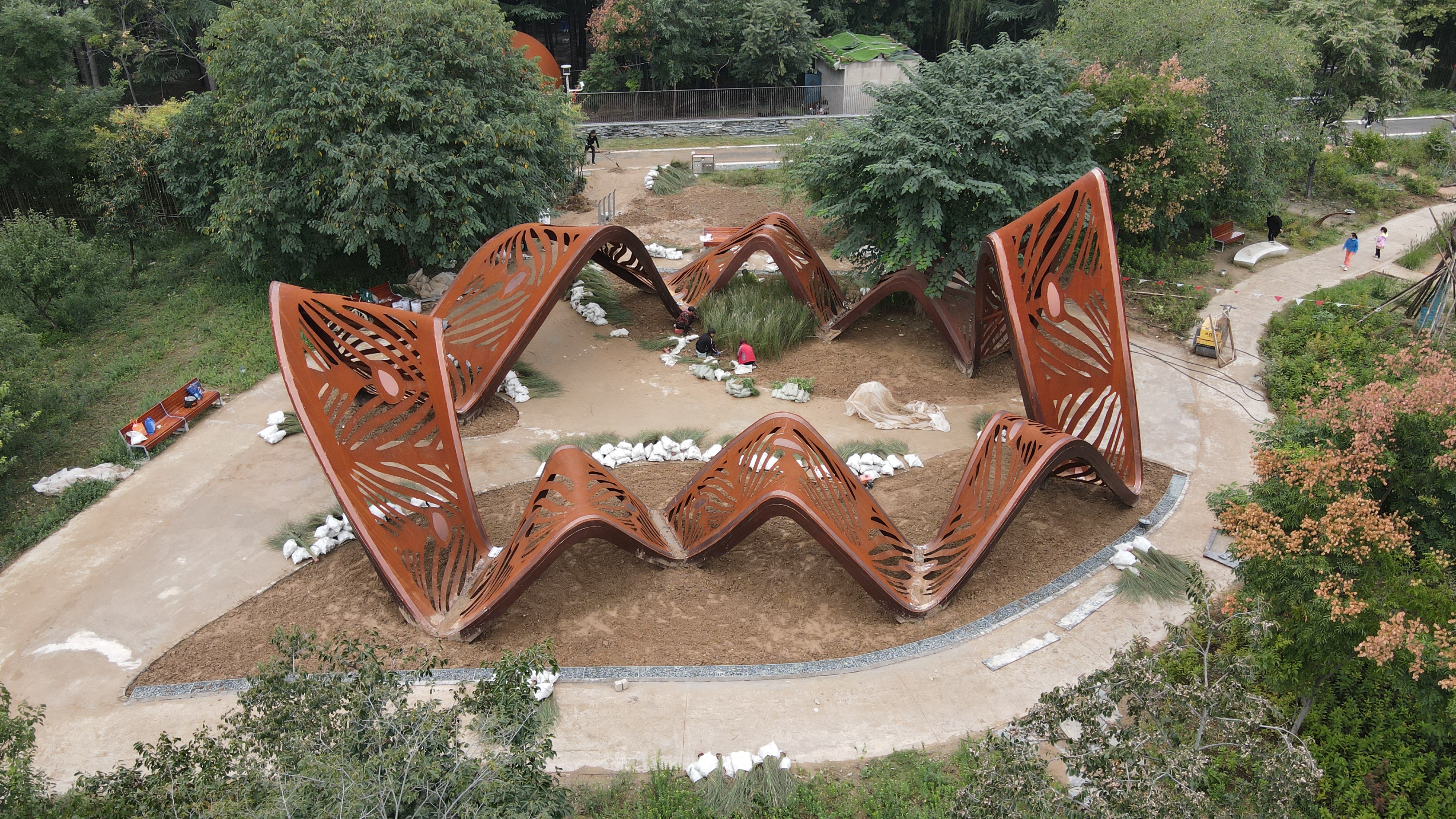
Corten steel — Model XYS-Corten-Custom uses authentic weathering steel such as ASTM A242 or A588. It develops a stable, natural patina and is maintenance-free. Corten steel is often used in landscape architecture, public parks, modern garden design, and industrial-style decor.
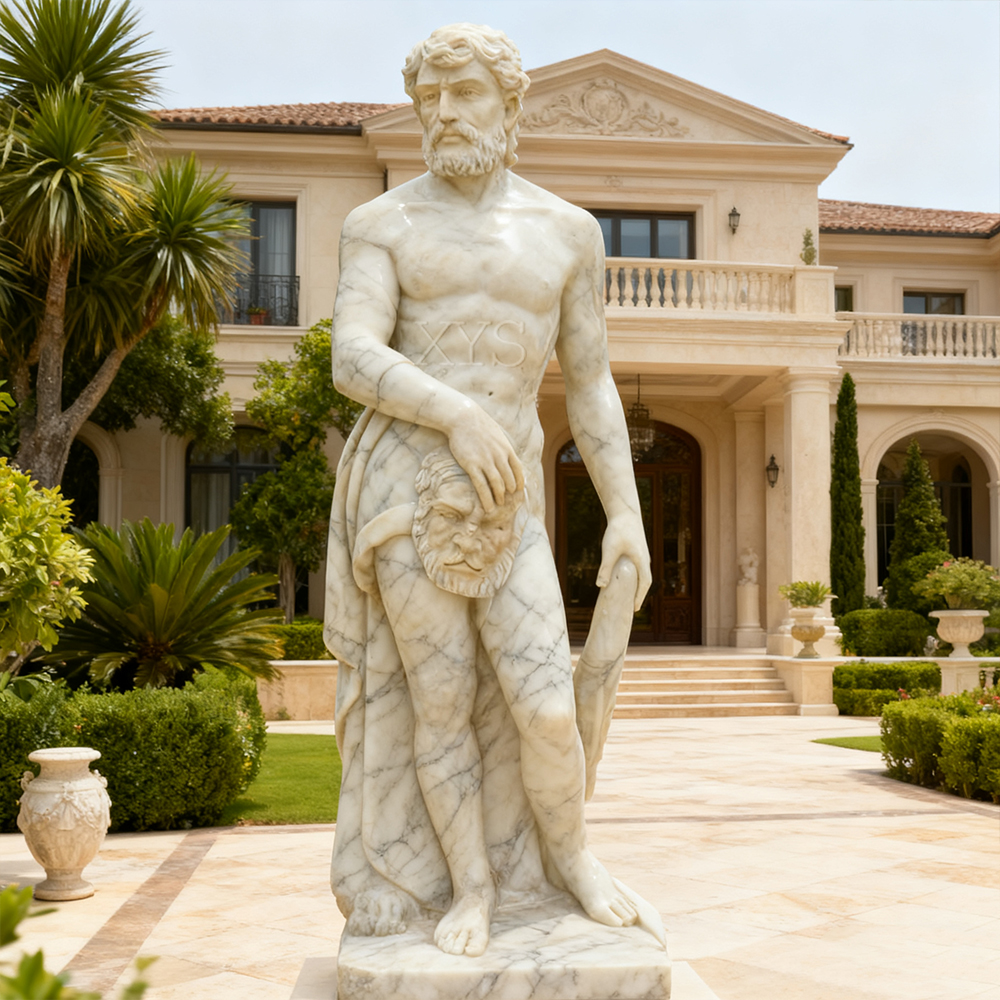
Natural stone — Model XYS-Stone-Custom includes white marble, granite, and travertine. Pieces can be hand-carved, honed, acid-washed, or high-gloss polished. Stone is a common choice for garden ornaments, stone fountains, fireplace mantels, religious carvings, and architectural construction.
Granite monuments — Model XYS-Monument-Custom uses natural granite such as Shanxi Black, G603, and Blue Pearl. Styles include European, American, and kerbset monuments, with standard sizes of 80x60 cm or 120x80 cm. Surface options include 100% mirror polishing, laser engraving, and sandblasting.
Step-by-Step: How a Custom Sculpture Is Made
The exact process varies by material and size, but a reliable manufacturer follows a clear sequence.
- Concept and brief: The buyer provides drawings, photos, or a written concept.
- 3D design: The factory produces a 3D design draft for confirmation before production.
- Material and finish selection: The buyer approves the material, surface treatment, and dimensions.
- Prototyping / clay model: A 1:1 clay model can be created to visualize the final sculpture.
- Fabrication: Craftsmen use casting, welding, forging, carving, or a combination of these methods.
- Surface treatment: Polishing, patina, painting, or other finishes are applied.
- Quality inspection and packaging: The sculpture is inspected and packed in reinforced wooden crates and steel frames.
- Shipping and installation: Door-to-door delivery is arranged, and on-site installation can be guided.
Use Cases for Custom Sculpture
- Public art landmarks: Large stainless steel or corten steel pieces define plazas, parks, and civic spaces.
- Luxury hotel and commercial spaces: Custom sculptures create a strong arrival experience in lobbies, entrances, and atriums.
- Landscape and garden design: Stone and weathering-steel sculptures complement planting, water features, and outdoor living areas.
- Memorials and cemetery monuments: Granite monuments are customized for individual or family memorials with engraving and polishing.
- Museum, religious, and private collections: Bronze statues and reliefs preserve cultural, historical, and spiritual narratives.
Comparison Table: Custom Sculpture Materials
| Material / Product | Model | Typical Size Range | Surface Options | Durability / Corrosion | Best For |
|---|---|---|---|---|---|
| Stainless Steel | XYS-Stainless-Custom | 1m to 20m | Mirror polished, brushed, painted, electroplated | High; 316 is especially resistant in coastal or humid settings | Urban public art, seaside landscapes, luxury hotels, shopping malls |
| Cast Bronze / Brass | XYS-Bronze-Custom | 50cm to 10m | Patina, gold leafing, high polished, antiqued | High copper content (above 85%-95%) supports outdoor durability | Public art, museums, religious institutions, private collections |
| Corten Steel | XYS-Corten-Custom | Custom sizes | Natural pre-rusted finish, raw self-weathering | Atmospheric corrosion resistance; maintenance-free | Landscape architecture, public parks, modern garden design |
| Natural Stone | XYS-Stone-Custom | Custom dimensions | Hand-carved, honed, high-gloss polished, acid-washed | High-density natural stone; weatherproof | Garden ornaments, fountains, temple decoration, architectural construction |
| Granite Monument | XYS-Monument-Custom | Standard 80x60cm / 120x80cm or custom | 100% mirror polished, laser engraving, sandblasting | Acid & alkali resistance, anti-weathering, color stability | Cemetery construction, memorial projects, funeral industry |
Frequently Asked Questions
What should you look for in a custom sculpture manufacturer?
Look for a manufacturer with full-service capability: design support, 3D modeling, fabrication, professional packaging, and installation guidance. Confirm the material standards they use. Jiangsu Xinyesheng Sculpture Co., Ltd. was established in 2025 and operates a 13,320 square-meter facility with about 50 staff and an annual capacity of 10,000 units. The company handles design, production, processing, transportation, installation, and after-sales service, using Grade A natural marble, anti-corrosion weathering steel, and premium 304/316L stainless steel.
Can you customize sculptures, and is there a minimum order quantity?
Yes. Full customization is supported. Customers provide design drawings, photos, or concepts. The manufacturer produces a 3D design draft for confirmation before production. Single-piece orders are accepted, and bulk orders receive more favorable pricing. The standard workflow is: drawings/concepts, 3D design confirmation, prototyping (optional), production, and shipping.
Which material is better: bronze or stainless steel?
Bronze offers a warm, classic reddish-brown tone and can develop a natural patina over time. It is often chosen for traditional, historical, museum, and religious works. Stainless steel has a modern silver-gray finish and high corrosion resistance, especially grade 316, making it suitable for coastal environments and large structural installations. If the project needs a classical look, bronze is a strong option. If it needs low maintenance and a contemporary style, stainless steel is usually more suitable.
How do you handle packaging for international shipping?
Professional seaworthy packaging is used: reinforced wooden crates and steel frames externally, and shockproof plastic film internally. Optional "All Risks" insurance can be purchased. If damage occurs because of packaging failure, the company takes full responsibility. This reduces the risk of damage during overseas transport.
Can you offer door-to-door delivery and installation guidance?
Yes. Door-to-door delivery is available; the shipping fee can be quoted after the customer provides the detailed address. Each sculpture includes installation instructions, and on-site installation can be guided by video call. The company also provides global on-site installation guidance as part of its one-stop delivery system.
How can I get a quote or start a custom sculpture project?
Send your design drawings, photos, or concept to the sales team. The process begins with a 3D design confirmation before fabrication. For project-specific lead time and pricing, contact the sales staff directly. A company profile with available production capabilities is available here: Download Company Profile. You can also reach Mikey at mikey@xingyesheng.com or WhatsApp +86 138-1259-9789.
Planning a custom sculpture project?
Request a quote or download the production capability brochure.
Download Company Profile & Production Capabilities
Or contact mikey@xingyesheng.com / WhatsApp
Conclusion
The custom sculpture market is large, project-driven, and international. Buyers who understand materials, fabrication steps, packaging, and trade compliance can avoid costly mistakes. A full-service manufacturer simplifies the process by connecting design and engineering under one roof.
Jiangsu Xinyesheng Sculpture Co., Ltd. is an example of a China-based manufacturer providing custom stainless steel, bronze, corten steel, stone, and monument sculptures for global buyers. Its facility size, annual capacity, and export focus make it a useful reference when evaluating custom sculpture manufacturers.
Download the company profile to review available production capabilities: Company Profile & Production Capabilities.