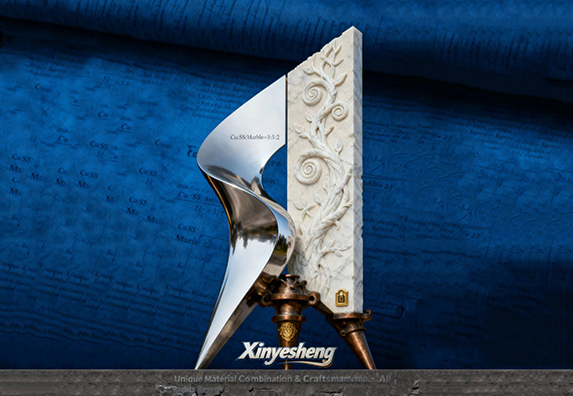
Custom Sculpture Compliance: Standards, Certificates and Regional Rules
Compliance for a custom sculpture is a document trail, not a single certificate. A buyer sourcing from China should be able to answer four questions before production starts: which material standard is written into the specification, what proof exists that the delivered metal or stone matches it, what inspection records cover the finished piece, and which trade and site documents the destination market expects. Answer those four and the rest of the project becomes ordinary project management.
Jiangsu Xinyesheng Sculpture Co., Ltd. is a sculpture manufacturer based in Jiangyin City, China, established in 2025 and working across sculpture design, production, processing, transportation, installation and after-sales service. Its stated product range covers sculpture, statue, relief, tombstone, fireplace and bathtub, with export business accounting for 100% of sales and main markets in the EU, the USA and the Middle East.
This guide explains what to request and why each request matters. It does not replace review by your local authority, structural engineer or customs broker, and it makes no claim about which certificates any particular supplier holds. Certificates must be verified supplier by supplier and project by project.
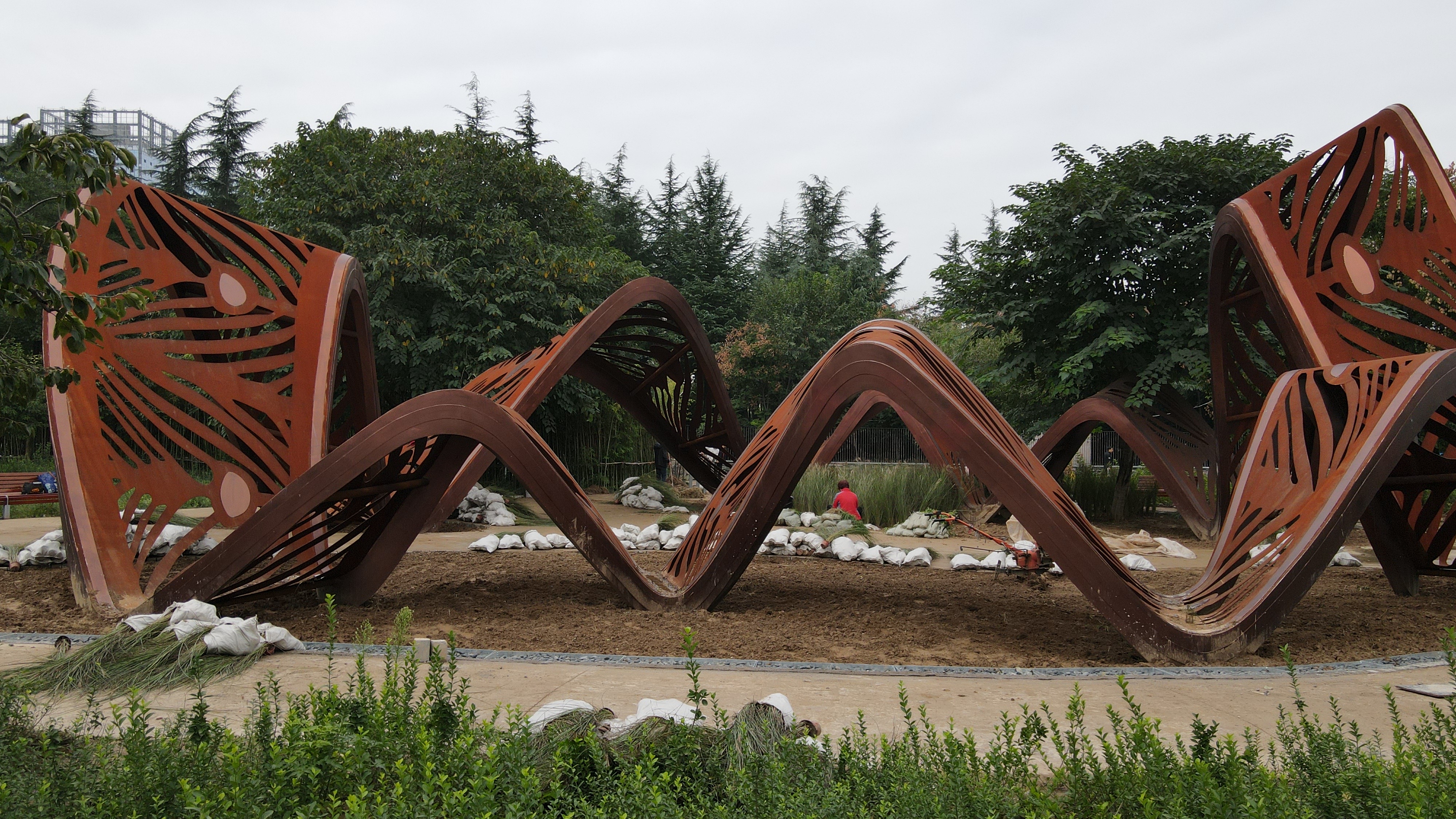
Weathering steel in a large outdoor installation: the material designation and finish should both be fixed in writing before fabrication begins.
What “Compliant” Actually Means for a Custom Sculpture
Compliance works in four layers, and a supplier can be strong in one while leaving another open. Buyers who check all four separately avoid the most common failure in cross-border sculpture procurement: accepting a general assurance that covers none of them specifically.
- Specification layer. The contract names the material, the standard designation, the finish, the size range and the exposure conditions. “Stainless steel” is not a specification; “316 stainless steel, mirror polished, 4 m overall height, coastal site” is.
- Material layer. Documents prove what was actually supplied — grade, alloy chemistry, stone type. This is where mill certificates and alloy statements belong.
- Fabrication layer. Records cover the internal structure, welding, surface treatment and the finished piece as inspected before packing.
- Site layer. Foundation and structural sign-off, installation method, maintenance instructions and the trade paperwork needed at the border.
The reason to split the layers is practical. A supplier can hand over a well-known material certificate and still leave you unable to show what your specific sculpture was built from, because the certificate was not linked to the batch used.
The Document Pack to Request Before You Pay a Deposit
Ask for the pack as a list, in writing, and state which items must arrive before production, which before packing and which with the shipping documents. The table below sets out what each document is for and what to check once it lands.
| Document | What it establishes | What to check |
|---|---|---|
| Material certificate or mill certificate (stainless steel, Corten steel, bronze alloy) | The grade and chemistry of the material supplied | Grade designation, heat or batch number, issue date, and whether it covers the thickness and quantity actually used |
| Alloy or purity statement for cast bronze | The copper content of the casting alloy | Whether a numeric range is stated and whether it is supported by test evidence rather than description alone |
| Approved 3D design confirmation | The geometry the workshop is authorised to build | Version date, dimensional envelope, and that the approved version matches what is fabricated |
| Structural and welding record | How the piece is held together and supported | Whether the internal frame, joints and base connection are covered |
| Finished-product inspection record | The piece itself, not just the raw material | Dimensions, surface finish, joint quality, date and photographs |
| Surface and finish specification | What the visible surface should be | Patina type, polish grade and coating, expressed as a standard the inspector can check |
| Packing record | How the piece is protected in transit | Crate type, bracing, moisture protection, and photographs before the container closes |
| Installation and maintenance documentation | How the piece is fixed and cared for on site | Assembly drawings, guidance arrangement, and care instructions for the chosen finish |
| Trade documents | How the goods enter the destination market | Invoice description, HS classification and origin documents, confirmed against your broker’s advice |
Material Standards That Carry Real Weight
Four material families dominate outdoor and architectural sculpture, and each has its own verification logic. The standards below are the ones that appear in the manufacturer’s own product documentation, which makes them the right starting point for a specification conversation.
Corten steel: ASTM A242 and A588
The Corten range (model XYS-Corten-Custom) is documented as authentic Corten steel to ASTM A242/A588 weathering steel, with a natural pre-rusted finish (stable patina) or a raw self-weathering finish, and is described by the manufacturer as maintenance-free, with natural aging and atmospheric corrosion resistance. The material is used for landscape sculpture, garden edging, fire pits, metal screens and planter boxes.
Two points deserve attention in the purchase order. First, A242 and A588 are separate designations, so the specification should name one and the certificate should match it; a document that says only “weathering steel” tells an inspector very little. Second, pre-rusted and raw finishes start from different appearances, and the manufacturer notes that the surface continues to change colour with its environment over time. If a client expects a fixed colour from day one, that expectation belongs in the conversation before the contract, not after installation.
Stainless steel: 304 versus 316 and 316L
The stainless steel sculpture range (model XYS-Stainless-Custom) is documented as 304/316 stainless steel, with 316 recommended for coastal areas, sizes from roughly 1 m to 20 m, and finishes including mirror polish, brushed, painted and electroplated. Fabrication is described as hand-forged with precision welding and an internal steel skeleton; the manufacturer also describes a heavy-duty internal anti-rust steel framework for large-scale stability, seamless welding for continuous lines, and 8K mirror polishing achieved through six to eight hand-polishing stages.
There is one inconsistency worth resolving deliberately. The product documentation refers to 304/316 stainless steel, while the manufacturer’s material standards description refers to premium 304/316L stainless steel. These are not interchangeable designations on a certificate. A buyer should fix a single grade in the purchase order — 316 for a coastal or humid site, for example — and require the material certificate to state the same designation.
Cast bronze: copper content above 85% to 95%
The cast bronze range (model XYS-Bronze-Custom) is documented as high-purity cast bronze with copper content greater than 85% to 95%, with brass available as an alternative material, sizes from 50 cm to 10 m including life-size figures, and finishes including patina, gold leafing, high polish and antiqued treatment. Production is described as lost-wax casting with professional welding, applied to bronze statues, animal sculpture, religious statues and figurines for public art, museum, real estate, religious and private collection use.
For a buyer, the risk sits in the word “range”. An 85% to 95% band allows two castings to differ materially in composition while both remain inside the description. If the project has an appearance or durability expectation tied to copper content, the contract should fix a figure or a narrower band and ask the supplier to confirm it with test evidence rather than a verbal assurance. Where the budget leads to brass instead, the substitution should be recorded in writing, because brass and bronze are different alloys with different surface behaviour, and the manufacturer notes that bronze develops a patina over time.
Granite, marble and stone
The stone range (model XYS-Stone-Custom) is documented as natural white marble, granite and travertine, hand-carved and finished by honing, high-gloss polishing or acid washing. The monument range (model XYS-Monument-Custom) uses natural granite with options including Shanxi Black, G603 and Blue Pearl, in European, American and kerbset styles, with 100% mirror polishing, laser engraving or sandblasting, and standard sizes of 80 × 60 cm or 120 × 80 cm alongside custom dimensions.
The properties that matter for outdoor approval are stated directly in the product documentation: acid and alkali resistance, anti-weathering behaviour and colour stability. These are the claims an inspector can test against a sample, and a buyer should ask which of them is critical for the specific site — a coastal memorial exposed to salt and pollution places different demands on stone than a sheltered garden piece. The granite range is also where the manufacturer describes its zero-defect quality approach, built on strict finished-product inspection and material traceability, a point covered in more detail below.
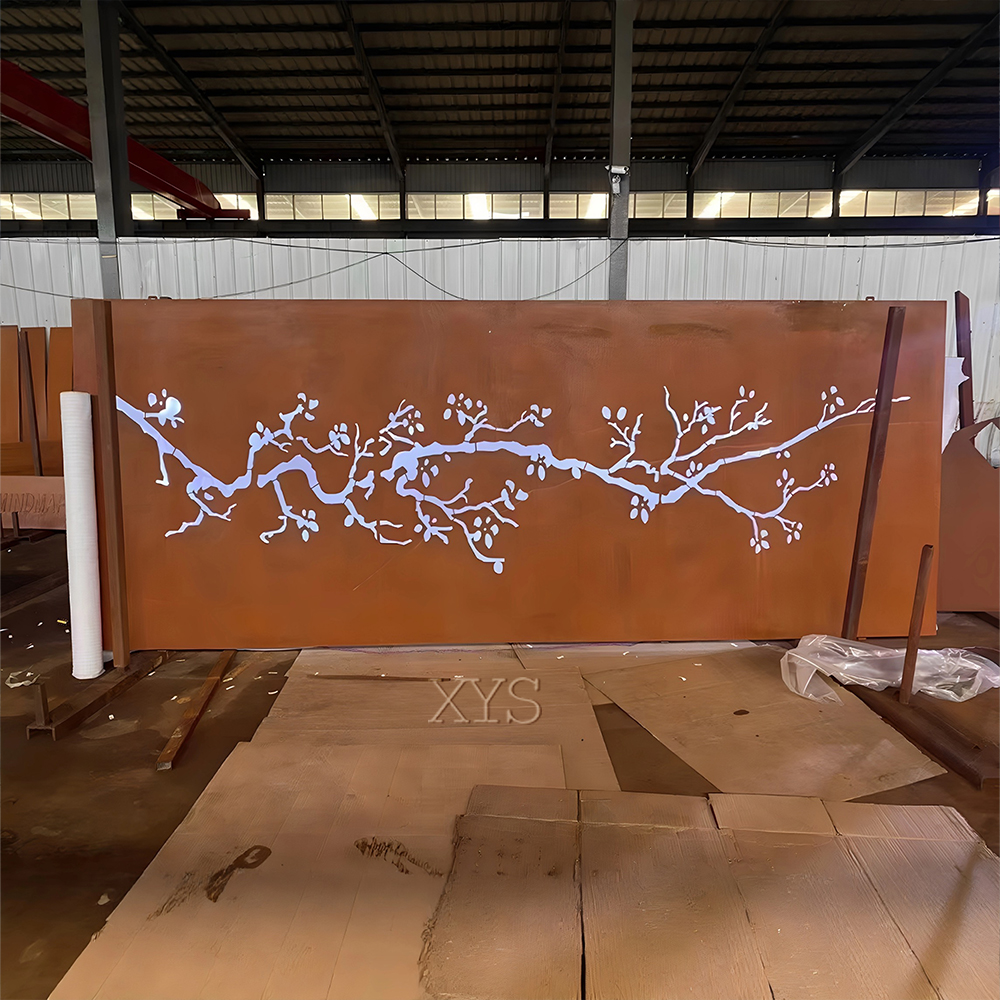
A stable weathered surface is a documented finish condition, not a defect — the specification should say whether the piece ships pre-rusted or raw.
Regional Requirements: What Actually Changes by Market
No single document satisfies every destination. What changes is which standard a specifier cites, which trade code applies, and which climate the material has to survive. The global art and sculpture market was estimated at about USD 61.83 billion for 2026 by Business Research Insights, and demand of that scale sits behind very different local approval processes.
| Market | What buyers usually need to settle | Evidence to request from the supplier |
|---|---|---|
| United States | Which material standard the project specification cites, and whether the public art programme or architect requires third-party inspection | Material certificates, finished-product inspection record, structural documentation for the anchoring design |
| European Union | Trade classification of an original artwork versus a mass-produced decorative item, plus importer declarations | Invoice description and originality documentation that support the HS code used, material certificates, packing list |
| Middle East | Coastal humidity, high heat and long inland transport legs, which push grade and finish decisions | 316 stainless recommendation in writing, finish specification, seaworthy packing record |
In the United States, ASTM designations are the usual language of material specification, and a project’s architect or public art programme decides whether to cite them. Documentation effort should scale with the commission: CODAworx reported in its 2024 public art data that 80.2% of open call projects in North America fall below a budget of USD 250,000, so a documentation pack designed for a multi-million-dollar capital project is rarely proportionate to a smaller civic piece.
In the European Union, the classification question is often more consequential than the material question. A 2025 market analysis published by CloudscapeArt reports that original sculptures under HS code 9703 often bypass EU anti-dumping duties, while mass-produced items under HS 8306 face higher scrutiny. That is a trade-classification judgement for your importer and broker, but the supplier’s invoice description and the documentation of the work’s originality have to support the code being used.
In the Middle East, climate drives the specification more than any single certificate. The manufacturer’s guidance recommends 316 stainless steel for coastal areas, which is the relevant starting point for seafront installations, and the same logic applies to finish selection and to packing that will sit in a container through a long overland leg.
Certifications: How to Read Them and What to Verify
“Certified” is used loosely in sculpture procurement. Four different things get called a certificate, and each answers a different question.
- Material certificate. Ties a batch of metal or stone to a stated grade. Useful only if the batch number can be linked to your piece.
- Test report. Records a measurement, such as alloy composition. Ask which laboratory, which sample and which date.
- Management-system certificate. Confirms that a factory’s quality system has been assessed against a scheme. It says nothing about the copper content of your statue.
- Installer or structural qualification. Covers the people and the engineering behind the base and anchoring, which is usually the highest-risk part of a large outdoor installation.
Whatever the type, check three things before you accept it: the scope (does it cover this material, this product or this site?), the validity date, and the issuing body. A certificate that covers a different product family, or that expired before production began, does not support the claim being made. Certificates are also not a substitute for inspecting the actual piece — they document a system or a batch, while the finished-product inspection documents your sculpture.
Traceability and Finished-Product Inspection in Practice
The manufacturer describes a zero-defect quality approach built on strict finished-product inspection and material traceability. Translated into project terms, that means two chains have to stay connected: the material chain, from certificate to batch to the piece, and the inspection chain, from design approval to pre-packing check.
Three practices make the difference. First, agree inspection points in advance — a pre-production review of the 3D design, an in-process check on the internal frame and welds, and a final inspection before packing. Second, require records at each point rather than a summary at the end; dated photographs and dimensional notes are more useful than a closing statement. Third, keep the identification consistent, so that the certificate reference, the inspection sheet and the packing list all point to the same item.
Scale matters here too. Jiangsu Xinyesheng Sculpture Co., Ltd. operates a manufacturing facility covering 13,320 m² with approximately 50 staff, an R&D team of 12 engineers and an annual production capacity of 10,000 units, which is the kind of volume at which written traceability stops being optional and becomes the only way to keep projects apart on the floor.
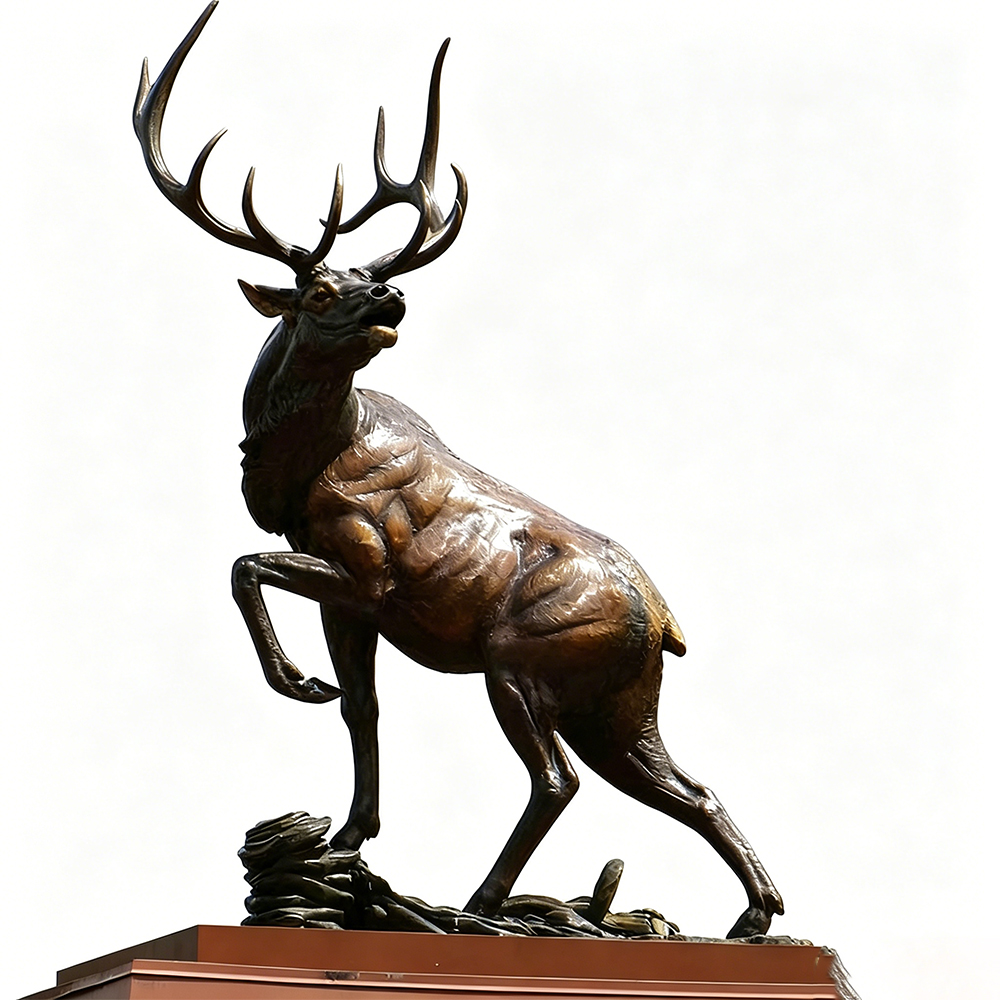
Bronze compliance is largely a chemistry question — the alloy statement should state a copper content the contract actually fixes.
Step by Step: Building the Compliance File Through a Project
- Write the specification, not the wish list. Name the material and designation, the finish, the size envelope and the exposure conditions for the site.
- Require a 3D design confirmation before production. The manufacturer produces a 3D design draft for customer confirmation before fabrication, and that approved version becomes the reference for inspection.
- Fix one material designation in the purchase order. Resolve 304 versus 316 or 316L, A242 versus A588, and the bronze copper band at contract stage.
- Request material certificates at production start. Certificates that arrive with the shipping documents are hard to act on if the grade is wrong.
- Agree the inspection points and the record format. Specify what is photographed, what is measured and who signs.
- Confirm the finish standard and the protective treatment. Express polish grade, patina type or coating in terms an inspector can check rather than in adjectives.
- Confirm packing and shipping documentation. The manufacturer describes professional seaworthy packaging using reinforced wooden crates and steel frames; the packing record should show it was applied to your piece.
- Plan installation and handover. The manufacturer supplies installation instructions and can guide on-site installation by video call; agree in advance who is responsible for the foundation and the structural sign-off.
Where This Matters Most: Four Project Types
Public art and urban landmarks. Approval usually runs through a programme or authority, so the documentation pack is reviewed by people who did not buy the sculpture. Structural documentation for the internal frame and base carries as much weight as the material certificate.
Hotel lobbies and commercial interiors. Stainless steel and bronze dominate here, and the compliance question is mainly about finish consistency, grade confirmation and access for installation in an operating building.
Gardens and landscape schemes. Corten steel and stone are the common choices. The manufacturer documents Corten as maintenance-free with a self-protecting rust layer that continues to age, and stone as acid and alkali resistant with anti-weathering behaviour — both are properties a client should accept as design intent, not as promises of an unchanging surface.
Memorials and monuments. Granite in Shanxi Black, G603 or Blue Pearl with laser engraving and mirror polishing is the typical specification, and colour stability plus acid and alkali resistance are the properties that decide long-term appearance.
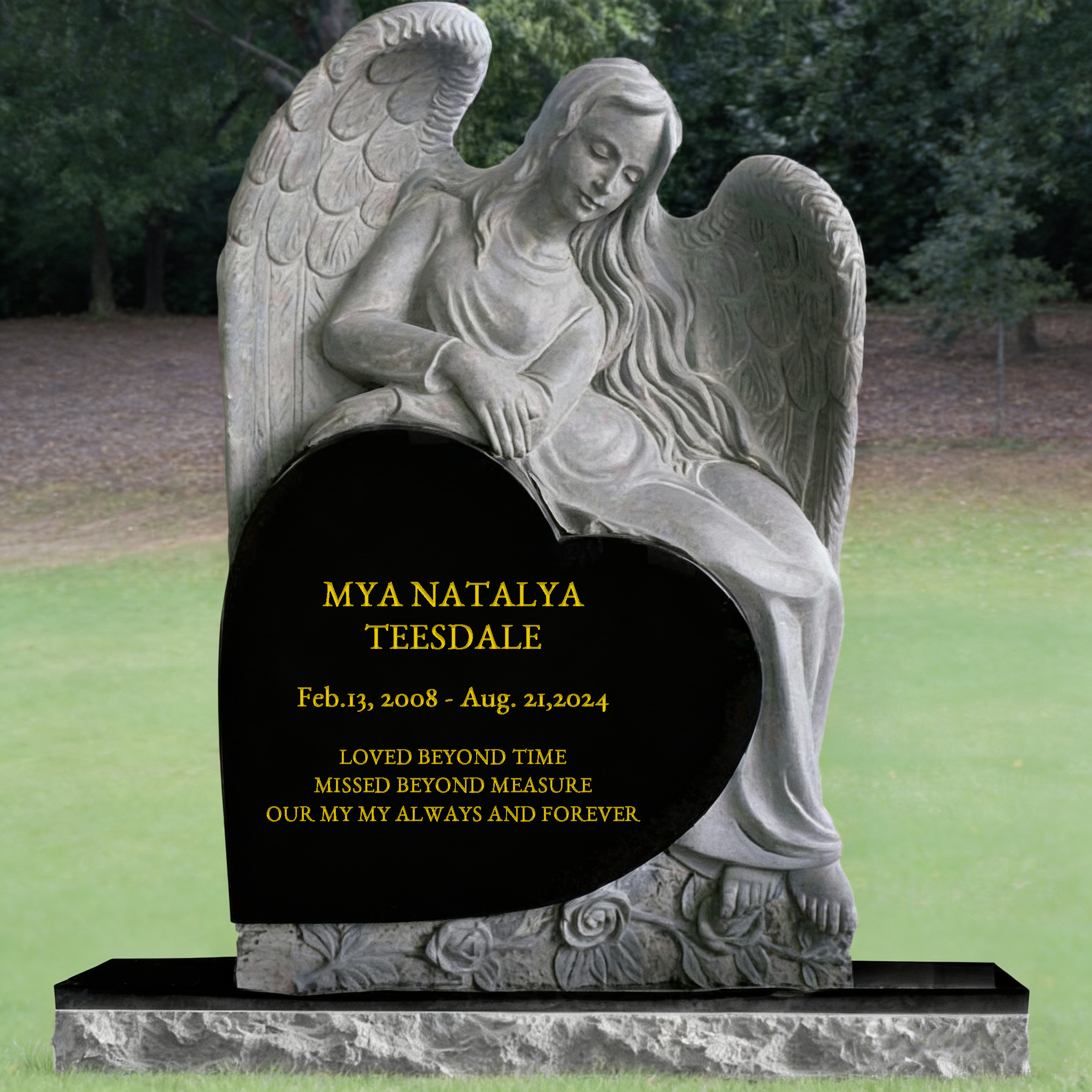
For granite work, colour stability and acid/alkali resistance are the documented properties to match against a physical sample.
Frequently Asked Questions
How can I verify that custom sculpture manufacturers actually meet the standards they quote?
Ask for four items in writing: the standard designation recorded on the purchase order, the material certificate for the batch used, the finished-product inspection record, and the approved 3D design version the piece was built to. Then check that the designations match each other. A supplier who can produce a mill certificate for 304 stainless steel but cannot say which batch went into your sculpture has not yet given you traceability.
Should the specification name ASTM A242 or ASTM A588 for a Corten steel sculpture?
The Corten range (model XYS-Corten-Custom) is documented as authentic Corten steel to ASTM A242/A588 with a natural pre-rusted finish or a raw self-weathering finish. A242 and A588 are separate designations, so the purchase order should name one and the material certificate should match it. Whichever is chosen, confirm whether the delivered surface is pre-rusted or raw, because the two start from different appearances.
What copper content should a custom bronze sculpture have?
The cast bronze sculpture (model XYS-Bronze-Custom) is documented as high-purity cast bronze with copper content greater than 85% to 95%, with brass available as an alternative material. Because that is a range rather than a single value, the contract should fix a figure or a narrower band and require the supplier to confirm it with test evidence rather than a description alone.
Is 304 or 316 stainless steel better for an outdoor sculpture?
Both grades appear in the stainless steel sculpture range (model XYS-Stainless-Custom), documented as 304/316 stainless steel, with 316 recommended for coastal areas. For a seafront plaza or a humid climate, specify 316 and then check the grade on the material certificate. The manufacturer’s material standards description also refers to 316L, so the purchase order should fix a single designation instead of accepting either.
What inspection and traceability records should arrive with the finished sculpture?
At minimum: the material certificate for the metal or stone actually used, the approved 3D design version, a finished-product inspection record covering dimensions and surface finish, a packing record, and installation and maintenance documentation. The manufacturer describes a zero-defect quality approach built on strict finished-product inspection and material traceability, and supplies installation instructions with optional video-call guidance. Buyers assembling a compliance file can also review the company profile and available production capabilities document before requesting a sample or quotation.
Conclusion
Compliance for a custom sculpture is built from named standards, matched certificates and dated inspection records — not from a single badge on a supplier’s homepage. The buyer’s leverage sits in the purchase order: fix the designation (A242 or A588, 304 or 316/316L, a copper band for bronze, Shanxi Black or G603 for granite), require the material proof at production start rather than at shipment, and agree the inspection points before fabrication begins. Regional differences then become manageable, because you are adjusting documents to a known specification rather than asking a supplier to justify a finished object after the fact.
For projects moving into the research or evaluation stage, the practical next step is to request the documentation pack against your own specification and compare what comes back. Jiangsu Xinyesheng Sculpture Co., Ltd. publishes a company profile and production capability document covering its facilities, product range and service scope, which is a reasonable first item to read alongside your project’s material requirements.
Download the company profile and available production capabilities (PDF)
Have Questions or Need More Details?
Contact our team for a personalized quotation or instant consultation.
Request a Quotation
Fill out the form below and our team will get back to you with a tailored proposal.
WhatsApp Direct Chat
Prefer to chat in real-time? Message us on WhatsApp for instant assistance & quick answers.
- Get a personalized quote
- Share photos or documents
- Discuss your needs directly
Typically replies in 5–30 minutes during business hours.