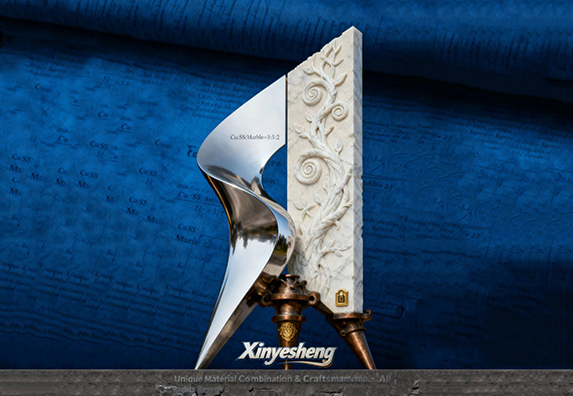
Custom Sculpture Material Matching: Memorial to Urban Art
A sculpture's material is a site decision before it is an artistic one. Granite, weathering (Corten) steel, 304 or 316 stainless steel, natural stone and cast bronze behave differently under salt spray, acid rain, freeze–thaw, irrigation, public handling and interior cleaning regimes, and each commits the owner to a different maintenance obligation over the decades the work is expected to stand.
This guide maps each material family to the settings it is normally specified for — memorial and cemetery work, landscape architecture, urban public art, hospitality interiors, temples and gardens, museums and private collections — and shows how surface treatment, size logic and fabrication route follow from that setting. It is written for buyers at decision and execution stage: the shortlist is short, the design is close to frozen, and the remaining question is whether the specified material will still be correct in year ten.
Why material mismatch is the most expensive specification error
The costly material errors on sculpture projects are rarely exotic. They are ordinary materials placed in an exposure class they were not chosen for.
- Salt exposure assigned to 304 stainless steel. 304 contains no molybdenum; in salt spray or marine air it may show rust spots and pitting within a few years, while 316 in the same position is expected to hold for decades.
- Acid exposure assigned to carbonate stone. Marble and limestone are calcium-carbonate stones, so acidic rain, acidic cleaning agents and bird residue attack the surface and soften carved lettering. Granite, a silicate stone, is far less affected — which is why it dominates cemetery work.
- Unmanaged water against weathering steel. Corten needs free drainage and air access to build a stable oxide layer; where water ponds, or runs off onto pale paving, the result is an uneven surface and rust staining on neighbouring finishes.
These errors share a cost structure. The material itself is a modest share of a sculpture budget; the correction — dismantling, re-anchoring, refinishing or replacement — is not. That is why material, grade and finish should be fixed on the fabrication drawing before the base, anchor and lighting designs are developed, and why the installation acceptance criteria should be written at the same time.
What the commissioning market implies for material choice
Custom sculpture is project-driven, and the budget available per site shapes how the material trade-off is resolved. In its 2024–2026 public art trend review, CODAworx reported that 80.2% of public art open call projects in North America fall below a budget of USD 250,000 (2024 figure). Dataintelo separately estimated the global bronze sculpture commission market at USD 1.47 billion in 2024.
Read together, those figures describe a market in which most public commissions cannot specify the most durable option for every element. The workable approach is to spend where exposure and access are worst — coastal facings, ground-level contact surfaces, elements that cannot be reached for servicing — and to let the exposure class justify the material elsewhere. A specification that records why a material was chosen for a given site, and what maintenance it commits the owner to, is easier to defend at handover than one that simply names a preferred material.
Granite: memorial sculpture, headstones and cemetery settings
Granite is the default material for memorial sculpture, headstones and cemetery monuments because its performance matches the exposure. It is a silicate stone with high hardness and low porosity, and it resists acid and alkali attack and weathering better than carbonate stones, so acid rain, cleaning agents and repeated wet–dry cycles affect it far less. Carved edges, lettering and colour remain stable, which matters where the work must stay legible and unchanged for generations.
The limitations are practical rather than chemical. Edges and arrises can chip on impact, and fine undercut detail is slower to carve in granite than in marble or bronze, so relief depth and lettering style should suit the grain instead of fighting it. Weight drives the base design, the lifting plan and, in a cemetery, the constraints of the plot and the access route.
Finish should follow the viewing condition. A polished face gives high contrast for lettering and a dense appearance but shows water spotting and handling marks; honed or matte surfaces reduce glare and reveal grain; split-face work suits monument bases and rustic settings. Horizontal ledges and joints need drainage, and sealing decisions should follow the stone's absorption rather than habit. Acceptance for a memorial piece normally includes vertical deviation no greater than 5 mm, secure fixing, and a surface free of chips and stains.
Weathering (Corten) steel: landscape architecture and outdoor elements
Weathering steel — usually called Corten steel — is specified where the material should read as landscape rather than as a monument. Exposed to alternating wet and dry conditions, it forms an adherent oxide layer that progressively slows further corrosion, so it can be used unpainted, with a matte brown surface that sits well against planting and architectural concrete. Typical uses are landscape sculpture, metal screens, planter boxes and fire pits.
The behaviour that makes it attractive also sets its limits. During the initial weathering cycle the surface releases rust-laden runoff that can stain pale paving, render, adjacent stone and building facades; detailing at the base — a plinth, a drainage path, a sacrificial surface — is part of the material specification, not an afterthought. Corten is generally avoided where chloride exposure is high, such as direct coastal frontage, and where the steel stays permanently wet or is buried in wet soil, because the protective layer depends on cycles of wetting and drying. Since the surface is consumed slowly over time, plate thickness is a corrosion-allowance decision as well as a structural one.
A fire pit shows how one material can carry two design problems. The weathering behaviour governs appearance and runoff; the heat load governs thickness, lining and base. Both belong on the drawing, and both should be agreed with the landscape architect before fabrication.
304 and 316 stainless steel: urban public art and hospitality
Stainless steel is the standard choice for contemporary urban public art, seaside landscape features and hospitality interiors, and the grade decision is where most of the risk sits. 316 stainless steel contains 2%–3% molybdenum, which gives it much stronger resistance to chloride and salt corrosion; 304 contains no molybdenum and is more vulnerable to pitting in salty or humid environments.
The figures are specific enough to write into a specification. 316 offers over 30% higher pitting resistance than 304 (PREN ≈ 26 versus ≈ 19) and can withstand decades of coastal salt spray and marine air, while 304 may show rust spots and pitting within a few years in the same environment. The trade-off is cost: 316 typically costs about 20%–30% more than 304, depending on sculpture size, thickness and surface finish.
That produces a clear application split. 316 suits coastal cities, seaside parks, swimming pools, humid tropical regions and any marine-adjacent installation, as well as hotel and shopping-mall interiors where the work must stay bright with minimal intervention. 304 suits inland cities, dry climates, indoor plazas and general outdoor decoration where salt exposure is not a concern.
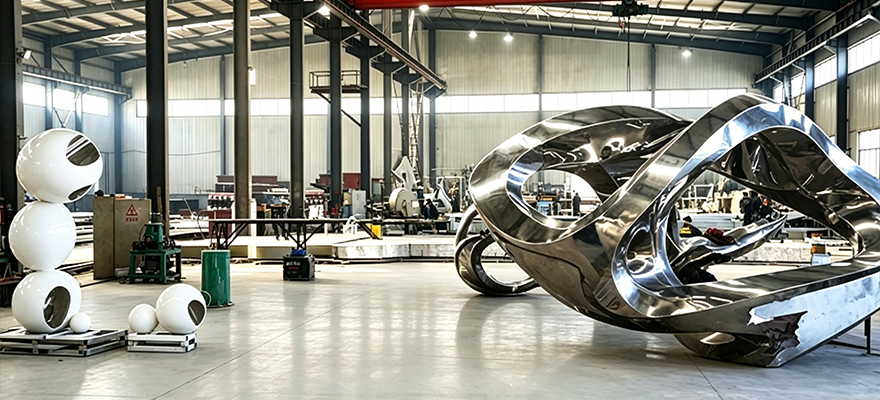
Finish and post-weld treatment matter as much as grade. Mirror-polished surfaces, common in hotel lobbies and mall atria, show handling marks and require a cleaning routine; pickling and passivation restore the passive layer after welding and remove the heat tint that would otherwise become the starting point for corrosion. Both grades are near maintenance-free compared with other materials, but neither is maintenance-free in coastal air: 316 stays rust-free with occasional rinsing, while 304 needs salt deposits cleaned off to prevent pitting and tea staining.
Natural stone: temples, gardens and architectural construction
Natural stone — marble, limestone and sandstone — is chosen when the sculpture has to belong to architecture, a garden or a temple rather than stand apart from it. It takes chisel and undercut detail that metal fabrication cannot reproduce economically, it can be matched to surrounding masonry, and hand-carved surfaces read correctly at close range. Grade A natural marble is used for this kind of work, alongside other stones selected for the setting.
The constraints are geological. Carbonate stones such as marble and limestone are acid-sensitive, so acid rain, acidic cleaners and bird residue etch the surface and erode fine lettering. Porosity and frost resistance vary by stone type, so a stone that performs in a dry garden may fail in a wet, freezing climate, and soil contact or shaded irrigation encourages biological growth. Slender carved forms also need a structural review, because stone is strong in compression and weak in tension.
Finish should be chosen with maintenance in mind. A hand-carved texture hides weathering better than a polished face, while a honed or polished finish shows form and detail but records every stain. Joints, weep holes and drainage details belong on the drawing, and cleaning instructions should specify non-acidic products.
Cast bronze: museums, religious institutions and private collections
Cast bronze is the material of the museum, the religious institution, real-estate feature work and the private collection. Bronze sculpture contains over 85% copper, casts fine undercut detail and thin projections that stone cannot hold, and ages well: over roughly a hundred years it develops a green patina that becomes part of the work. A sealed patina finish controls the colour delivered and the point at which that change begins.
The comparison buyers usually face is bronze against brass. Brass contains over 60% copper and uses zinc rather than tin as the alloying element; it is cheaper — bronze costs roughly 20%–30% more for the same size and casting process — but it blackens over time instead of greening, and it needs regular polishing to keep its golden appearance. Bronze develops a protective patina and needs almost no maintenance outdoors. Where a warm, classical colour and long-term patina are wanted and the budget allows, bronze is the appropriate choice; indoors, where appearance is maintained by staff, brass remains a reasonable option.
Typical bronze settings include museums, religious institutions, real estate and private collections, and on the larger side wetland parks, villas and government projects. Weight and fixing deserve early attention: a cast piece needs a base and hoisting plan designed for it, and hollow sections need drainage or venting so water cannot stand inside the casting and drive uneven patina.
Matching surface treatment and size to the setting
Surface treatment is where a correct material becomes a correct sculpture. The rule that works across materials is to match reflectivity to viewing distance and light: matte surfaces read form and are forgiving of weathering, while mirror and polished surfaces read reflection and place the piece in dialogue with its surroundings, at the cost of showing every mark. On stainless steel, welds should be dressed, pickled and passivated, because an untreated weld is the first place pitting appears. On bronze, the patina should be approved as a physical sample rather than from a screen. On Corten, the surface should be detailed to weather evenly, with no ponding and free air access. On stone, carved texture, joint width and the sealing decision should be fixed before the block is cut.
Size is a site calculation rather than a catalogue choice. The controlling dimensions come from viewing distance, the surrounding envelope and the piece's role as landmark or detail, and the number is then verified against four constraints: structural load and base design; local wind and seismic requirements set by the engineer of record; fabrication and transport limits; and the lifting equipment and access available on site. Production schedules are confirmed after design approval and assessed against size, material and surface finish rather than quoted as a fixed range.
Installation quality decides whether the material choice survives contact with the public. A typical acceptance standard requires the foundation and embedded parts to match the drawings, vertical deviation no greater than 5 mm, bolts tightened or welds full with no movement under a shake test, anti-corrosion treatment on welds and connections, and a surface free of bumps, scratches and stains. Lifting is carried out by certified personnel, with the work area cordoned off and lifting stopped during strong wind or thunderstorms.
Specification sequence: from site brief to installed work
- Classify the exposure. Record salt, acid, frost, irrigation, soil contact, public handling and interior cleaning products for the actual position of the work, not the general region.
- Set the maintenance capacity. Decide who will rinse, clean or polish the piece, and how often; a material that needs work nobody will do is the wrong material.
- Shortlist two materials and compare lifecycle cost. Compare purchase, installation, maintenance and the risk of correction, not purchase price alone.
- Freeze grade and finish on the fabrication drawing. "Stainless steel" is not a specification — 304 and 316 behave differently in the same position.
- Confirm the design in three dimensions. A 3D design preview is confirmed before production, so proportion, footprint and fixings are resolved before material is cut.
- Approve a physical sample. Patina, stone finish and stainless reflection should be approved as a sample, ideally under the site's own light.
- Design the base, anchor and installation access. Load, embedded parts, lifting equipment and the route to site constrain size before fabrication starts.
- Inspect before shipment. Photographs and videos are taken before the goods are loaded into the container, and the balance is settled after that inspection.
- Package for the voyage and hand over the maintenance record. Reinforced wooden crates and steel frames with internal shockproof protection, plus installation instructions and material-specific maintenance guidance.
Material comparison by application
The table below compares the five material families on the criteria that drive a site decision. Cost relationships are shown only where a stated comparison exists; granite and Corten are excluded from that column because no comparable figure is available.
| Material | Settings it is normally specified for | Weathering and corrosion behaviour | Surface treatment | Maintenance obligation | Main limitation |
|---|---|---|---|---|---|
| Granite | Memorial sculpture, headstones, cemetery monuments | Silicate stone; resists acid and alkali attack and weathering better than carbonate stones; colour and carved edges stay stable | Polished, honed/matte, split-face | Periodic cleaning; joint drainage and sealing where specified | Chips at edges on impact; slower to carve fine undercut detail; heavy |
| Weathering (Corten) steel | Landscape sculpture, metal screens, planter boxes, fire pits | Forms an adherent oxide layer under alternating wet and dry exposure; used unpainted | Bare weathered surface; stabilizing treatment where specified | Keep drainage clear; avoid ponding | Rust-laden runoff can stain paving and facades; avoided in high-chloride or permanently wet conditions |
| 304 stainless steel | Inland cities, dry climates, indoor plazas, general outdoor decoration without salt | No molybdenum; PREN ≈ 19; may show rust spots and pitting within a few years in salt-exposed positions | Mirror or polished; pickled and passivated after welding | Occasional rinsing and cleaning; salt deposits removed | Chloride pitting; not for coastal or marine-adjacent sites |
| 316 stainless steel | Coastal cities, seaside parks, pools, humid tropics, marine-adjacent sites, hotel and mall interiors | 2%–3% molybdenum; PREN ≈ 26; over 30% higher pitting resistance than 304; withstands decades of salt spray | Mirror or polished; pickled and passivated after welding | Occasional rinsing; stays rust-free in coastal air | Typically about 20%–30% more costly than 304 |
| Natural stone (marble, limestone, sandstone) | Temples, gardens, architectural construction | Takes carving detail; carbonate stones are acid-sensitive; porosity and frost resistance vary by stone | Hand-carved texture, honed, polished | Non-acidic cleaning; drainage at joints and weep holes | Acid attack and freeze–thaw on exposed carbonate stone; biological growth in damp shade |
| Cast bronze | Museums, religious institutions, real estate, private collections, wetland parks, villas, government projects | Over 85% copper; develops a green patina over about a hundred years | Sealed patina, approved as a physical sample | Almost none outdoors thanks to the protective patina | Roughly 20%–30% more expensive than brass for the same size and process; heavy |
What long-term partnership adds after installation
Material performance is decided at specification, but the value of a manufacturing partner is realized after handover. Three things separate a supplier that can carry a public art programme from one that can deliver a single piece: the ability to repeat a result across orders, a documented inspection point before shipment, and support that continues when the work is installed and later repaired or extended.
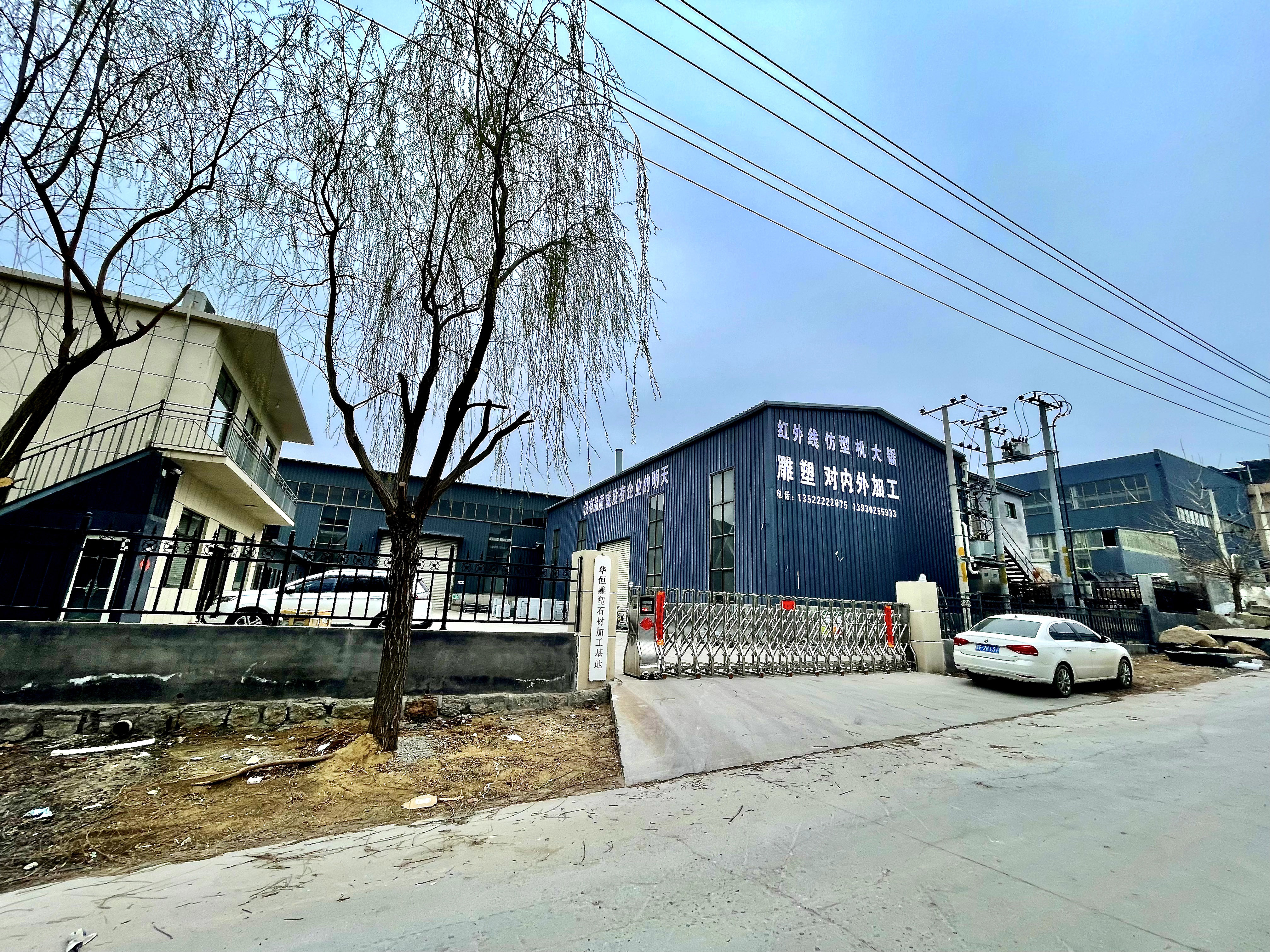
Jiangsu Xinyesheng Sculpture Co., Ltd is a sculpture manufacturer working through a cooperative factory in Quyang, producing custom sculpture, statuary, relief, tombstones and fireplaces in cast bronze, brass, 304/316 stainless steel, weathering steel and natural stone, with output exported to EU, USA and Middle East markets. The R&D team comprises 12 engineers supported by researchers with over ten years of experience in the sculpture industry, and the cooperative factory took 13 years to develop from a small workshop in Quyang into a bridge connecting Chinese production with the global art market.
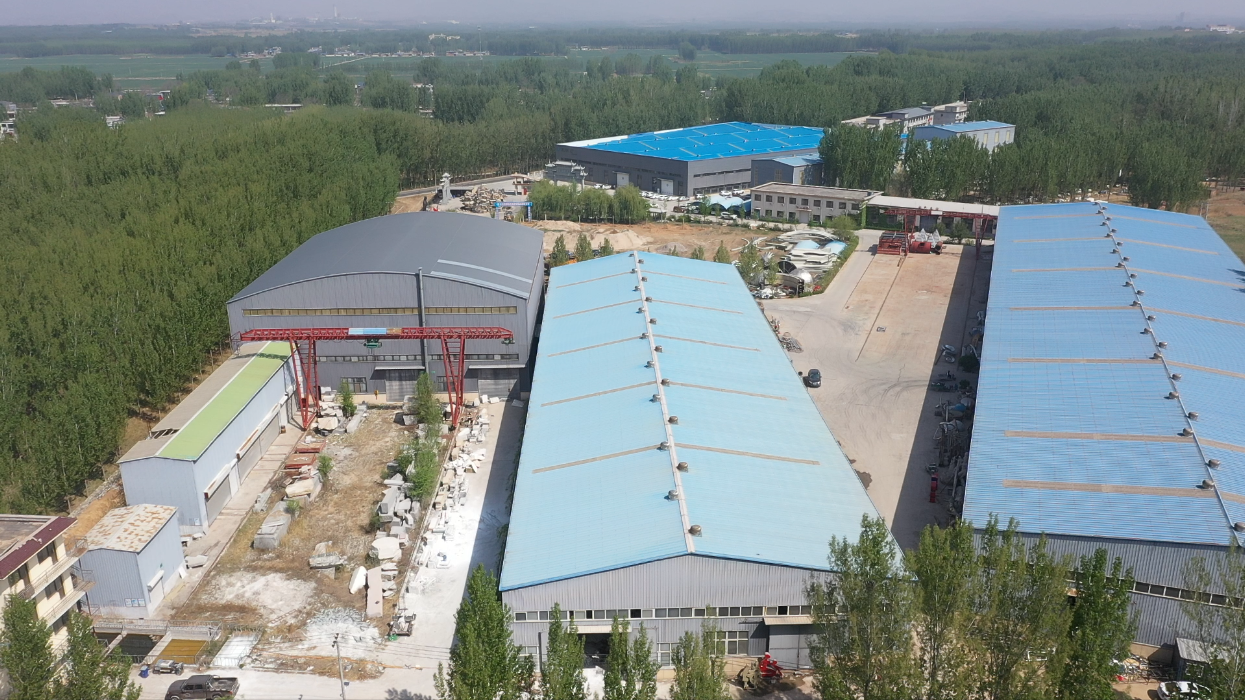
The delivery model is built around the checks that matter at execution stage: 3D design confirmation before production, 1:1 clay model visualization for figurative work, professional seaworthy packaging in reinforced wooden crates and steel frames, and global on-site installation guidance. Photographs and videos are provided for inspection before the container is loaded, and payment follows that inspection — 50% deposit, 50% before shipping. Applied to repeat orders, that same sequence is what a long-term public art programme actually needs.
Frequently asked questions
Which materials can be specified for a custom sculpture?
Cast bronze, brass, 304 and 316 stainless steel, weathering steel and natural stone including Grade A natural marble. Grade choice follows exposure: 316 stainless steel is recommended for coastal and marine-adjacent sites, while 304 is used for inland, dry or indoor locations where salt exposure is not a concern.
Can a custom sculpture be ordered as a single piece, and what is the minimum order quantity?
Yes. Jiangsu Xinyesheng Sculpture Co., Ltd accepts single-piece custom orders; there is no strict minimum order quantity, and ordering several pieces together is recommended so that mould and shipping costs are shared. A project starts from drawings, photographs or a written concept, and a 3D design draft is confirmed before production begins.
What are the payment, delivery and acceptance terms?
The minimum order quantity is 1 unit. Delivery terms available are DDP, EXW, FOB, CIF, DAP and FCA. Payment is 50% of the total as a deposit, with the remaining 50% due after the finished work has been inspected through photographs and videos; shipping begins after the balance is received. Inspection photographs and videos are taken before the goods are loaded into the container.
How is a large sculpture packed, and who is responsible if it is damaged in transit?
External packing uses sturdy wooden crates and metal strips, with shockproof plastic film protecting the surfaces internally. "All Risks" insurance can be purchased according to the buyer's requirements. Where damage results from packaging failure, the company takes full responsibility; other transit damage is handled with the insurer.
How long does production take, and what decides the schedule?
Standard production runs 15–30 days after design approval. The final schedule is confirmed after the design is approved and is assessed against the sculpture's size, material and surface finish, so larger or more heavily finished pieces take longer than the standard window.
Is on-site installation guidance included?
Yes. Each sculpture comes with installation instructions, and installation can be guided on site by video call; the company also provides global on-site installation guidance as part of its delivery system. Acceptance checks include vertical and horizontal alignment within the drawing tolerance (vertical deviation no greater than 5 mm), secure fixing with tightened bolts or full welds, anti-corrosion treatment on welds and connections, and a surface free of bumps, scratches and stains.
What makes a long-term custom sculpture manufacturing partner suitable for public art projects?
Look for evidence that the partner can repeat the same result across orders and support the work after handover: a confirmed 3D preview before production, documented photographic and video inspection before shipment, installation instructions plus remote or on-site installation guidance, and maintenance guidance written for the specific material — occasional rinsing for stainless steel, a self-protecting patina for bronze, drainage checks for weathering steel. Jiangsu Xinyesheng Sculpture Co., Ltd works through a cooperative factory in Quyang that developed over 13 years from a small workshop, with an R&D team of 12 engineers and researchers with more than ten years in the sculpture industry, and delivers 1:1 clay model visualization, seaworthy packing in reinforced wooden crates and steel frames, and global on-site installation guidance.
Conclusion
Matching a material to a site is a short list of questions asked in the right order: what will the surface be exposed to, who will maintain it, from how far will it be viewed, and how will it be fixed and reached for servicing? Granite answers memorial exposure; Corten answers landscape settings where a weathering surface is acceptable and runoff is managed; 316 stainless steel answers coastal and high-visibility urban work, with 304 reserved for inland and indoor positions; natural stone answers architectural and garden settings where carving and material continuity matter; cast bronze answers museum, religious and collection work where detail, patina and long-term value justify the cost.
Fix the material, grade and finish on the fabrication drawing, write the acceptance criteria at the same time, and ask for maintenance guidance per material at handover.
Next step: the company profile and available production capabilities can be downloaded as a PDF. For a project-specific answer, send the site type, exposure and intended size to mikey@xingyesheng.com or +86 138-1259-9789.
Have Questions or Need More Details?
Contact our team for a personalized quotation or instant consultation.
Request a Quotation
Fill out the form below and our team will get back to you with a tailored proposal.
WhatsApp Direct Chat
Prefer to chat in real-time? Message us on WhatsApp for instant assistance & quick answers.
- Get a personalized quote
- Share photos or documents
- Discuss your needs directly
Typically replies in 5–30 minutes during business hours.