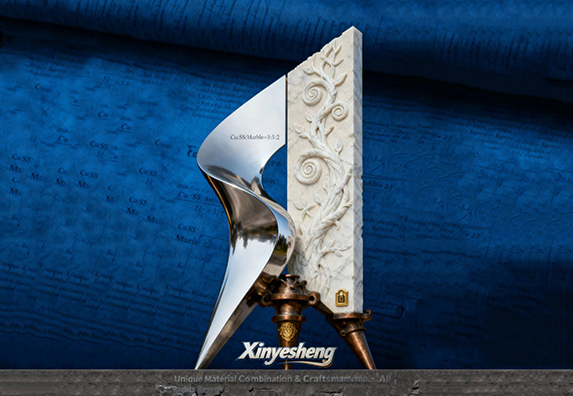
Custom Sculpture Problems, Solved: Scenario-Based Fixes for Real Projects
A custom sculpture is a built-to-order three-dimensional work — cast, carved or fabricated to a client's design, dimensions and finish — rather than an item selected from stock. Projects rarely go wrong at the carving stage. They go wrong earlier, when a site condition, a budget line or a lifting constraint never becomes part of the written specification, and the mismatch only surfaces after fabrication has started. The fix is a scenario-first brief: decide where the piece will stand, what it must survive and how it will be moved into place, then choose the material system that carries those conditions.
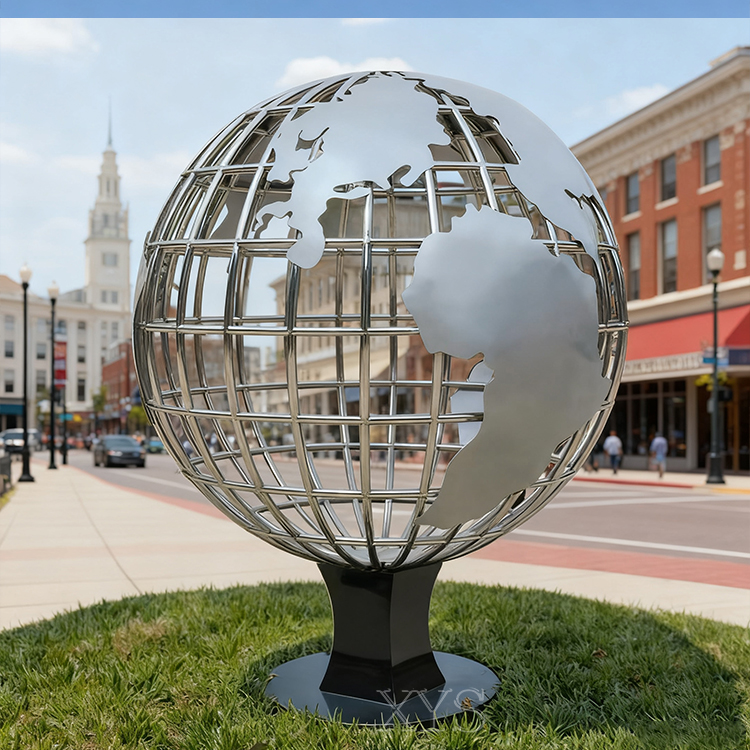
Jiangsu Xinyesheng Sculpture Co., Ltd is a sculpture manufacturer established in 2025, operating from a 13,320 m² manufacturing facility in Jiangyin City, China, with approximately 50 staff and a 12-engineer R&D team. Export accounts for 100% of its sales, with major markets in the EU, USA and Middle East. Its range covers stainless steel, bronze, Corten steel, natural stone and granite memorial work — which is precisely why a problem-solution approach is useful. When a site problem is described accurately, a material system can be matched to it instead of guessed at.
Problem definition: six ways a custom sculpture project goes off track
The same six problems appear across hotel installations, public plazas, private gardens and memorial commissions. Each one is cheaper to solve on paper than in the workshop.
1. The design exists as a rendering, not as a scale decision
Concept images are usually made for a screen. On site, a piece is read from a distance, in real light, against a real background. Height, footprint, viewing distance and sight lines decide whether a form reads as intended. A brief that states the viewing distance and the reference scale — a doorway, a tree line, a lobby ceiling — removes most of this risk before modelling begins.
2. Material is chosen for how it looks in a photo, not for the environment
Salt spray, humidity, freeze-thaw cycling and direct sun all change how a surface behaves over time. Stainless steel, bronze, Corten steel and stone each respond differently. The material decision is an environmental decision first and an aesthetic decision second.
3. Large works are briefed without a structural plan
Above a few metres, a sculpture stops being an object and becomes a structure. Wind load, base fixing, foundation detail and the internal frame have to be settled with the artwork, not after it. A stainless steel piece of the scale covered by the XYS-Stainless-Custom line — stated at 1 m to 20 m — needs an internal steel skeleton and a base design agreed before fabrication.
4. Finish expectations are never written down
"Mirror polished" is not a specification on its own. Mirror finishing on stainless steel is achieved through a defined sequence of polishing stages; bronze patina varies by oxidation process; stone may be honed, high-gloss polished or acid-washed. If the finish is not named in the order, the result is a judgement call rather than a delivery item.
5. Budget is fixed before scope is
Public art and hospitality budgets are frequently set before material, size and installation method are known. Published sector data points to a market where most commissions sit in a mid-range band: CODAworx reported in 2024 that over 80% of public art open call projects in North America fall below a budget of USD 250,000. Scoping the material system and structural requirement against that band is more productive than negotiating a price on an undefined object.
6. Packing and installation are treated as someone else's problem
A finished sculpture that arrives chipped, distorted or unloadable is a failed project regardless of craft quality. Seaworthy packing, a lifting plan and site guidance belong in the quotation, not in a separate conversation after shipping.
Industry background: why scoping discipline matters more than style preference
Custom sculpture sits inside a large and fragmented market. Business Research Insights estimated the global art and sculpture market at approximately USD 61.83 billion in 2026, and sculptures accounted for roughly 21% of global art acquisitions by transaction volume in 2024. Regionally, the United States sculpture market was estimated at between USD 5.8 and 6.2 billion in 2024, while the global bronze sculpture commission segment alone was reported at USD 1.47 billion in 2024.
Public funding shapes a meaningful share of demand. U.S. federal cultural agencies were budgeted at USD 708.8 million for 2025, including USD 207 million for the National Endowment for the Arts. On the trade side, 2025 market analysis noted that original sculptures classified under HS code 9703 often bypass EU anti-dumping duties, while mass-produced decorative metal items under HS 8306 face higher scrutiny — a reminder that how a work is classified and documented affects landed cost, not just customs paperwork.
What the numbers imply for a single project: most commissions are mid-sized rather than monumental, budget bands are tight, and the difference between a workable and an unworkable quote is usually the material and structural decision made at briefing stage — not the sculpting hours.
The solution: match the material system to the site, then lock the process
Each product line in the manufacturer's range solves a specific cluster of site problems. The table further down summarises them; the sections below explain what each one is actually for.
Stainless steel (XYS-Stainless-Custom) — corrosion, structure and reflectivity
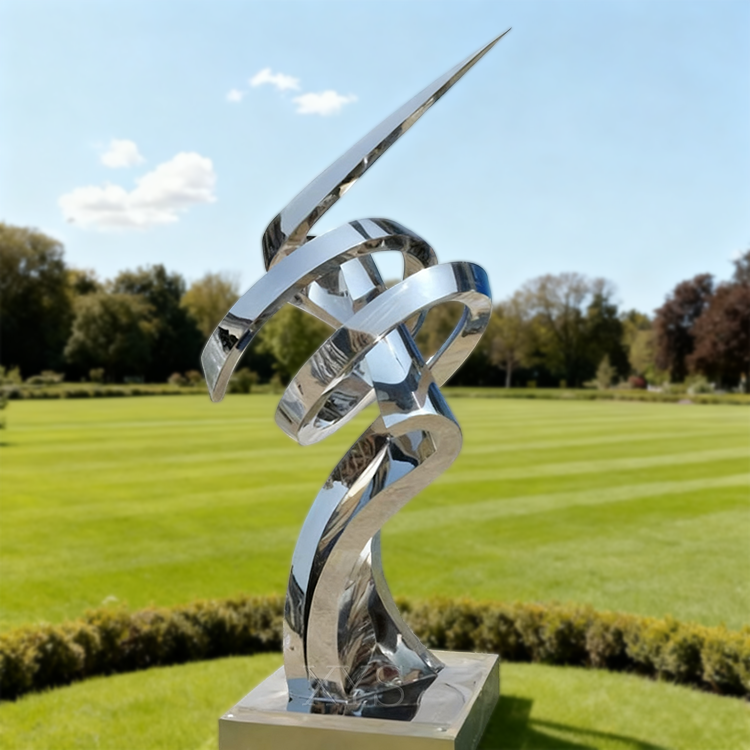
XYS-Stainless-Custom is produced in 304 and 316 stainless steel, with customised heights from 1 m to 20 m and surface options including mirror polishing, brushed satin, painted and electroplated finishes. The line addresses three problems at once. Corrosion: 316 grade is the recommended option for coastal areas, where salt exposure attacks lower grades. Structure: the build uses a heavy-duty internal anti-rust steel framework, which is what allows large-scale outdoor installation to stay stable. Surface: mirror finishing is achieved through six to eight stages of hand-polishing, and welding is controlled so that joints read as continuous lines rather than seams. Typical settings are urban public art, modern architecture, seaside landscapes, luxury hotels and shopping malls.
Bronze (XYS-Bronze-Custom) — detail fidelity and controlled patina
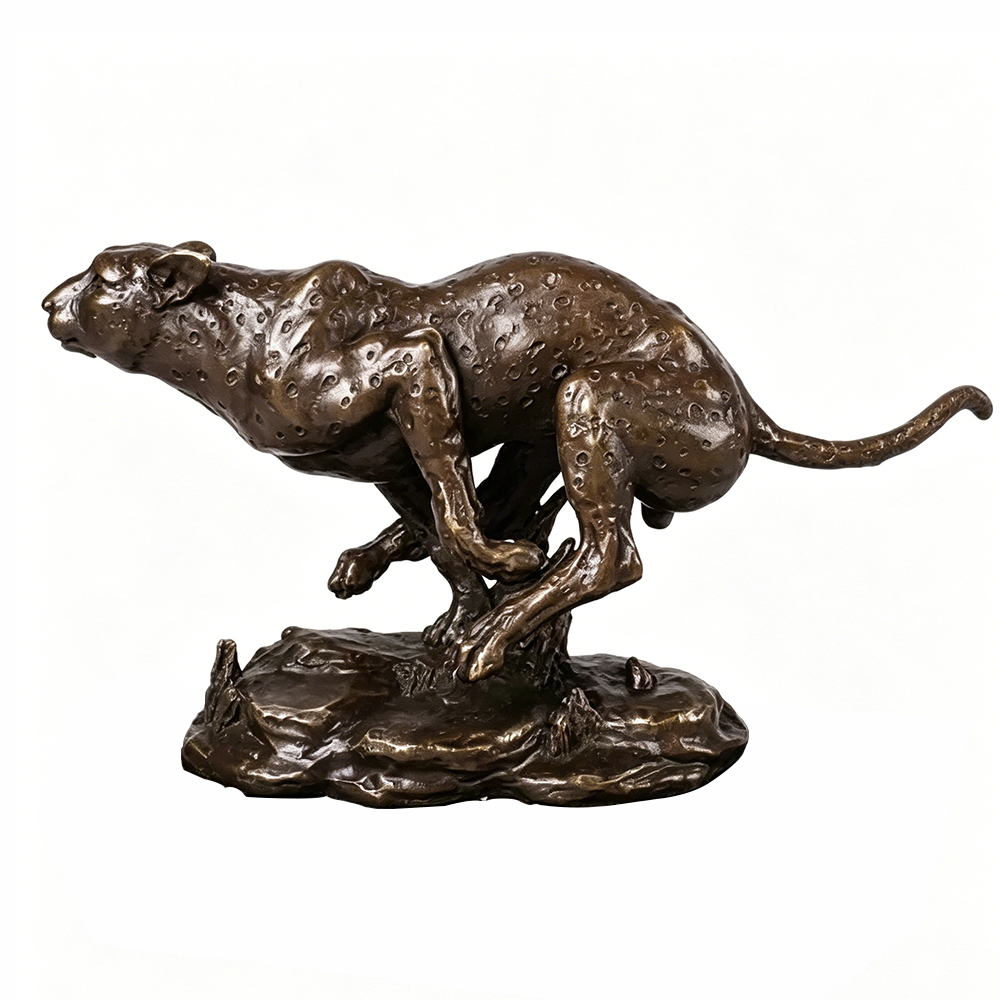
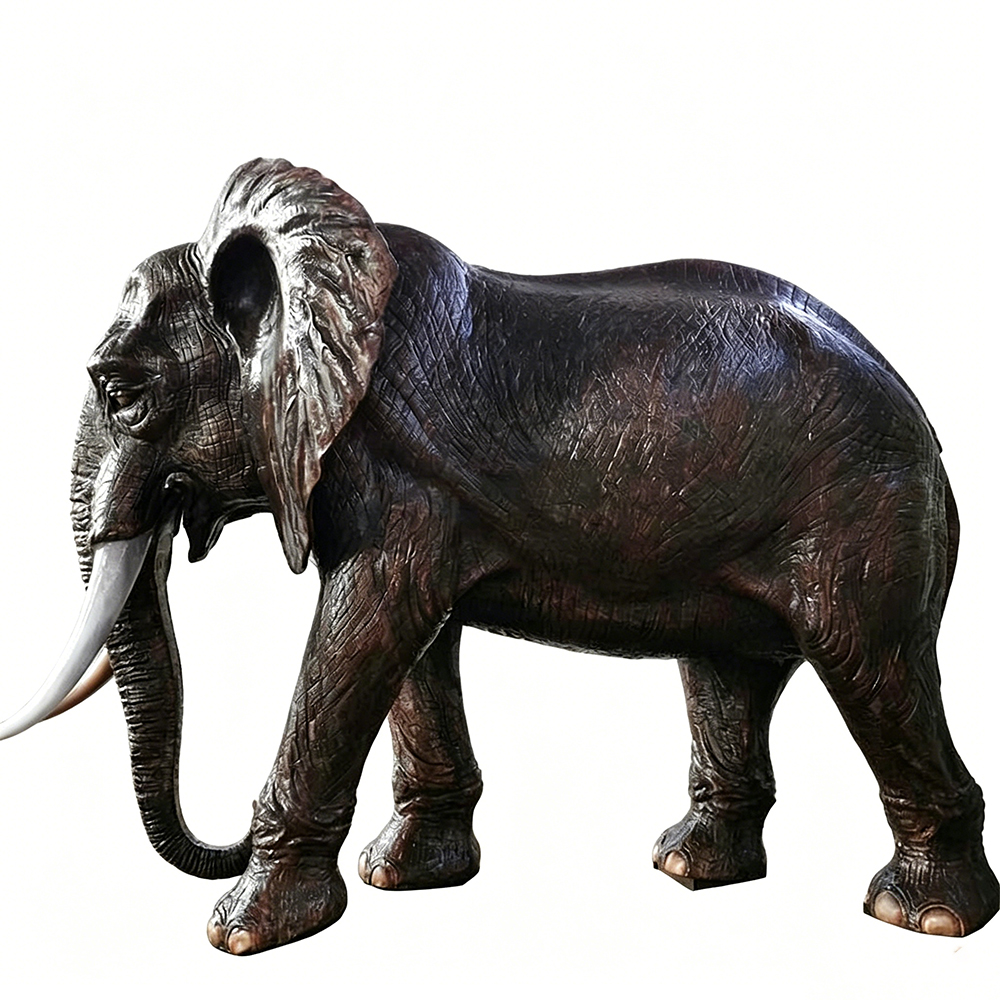
XYS-Bronze-Custom covers bronze statues, animal sculpture, religious statues and figurines, cast in high-purity bronze with copper content stated at above 85%–95%, or in brass. Customised heights run from 50 cm to 10 m, including life-size work. Lost-wax casting is the reason this line is chosen when fine detail matters — facial features, fabric folds, animal anatomy. Surface treatment is where most bronze disputes originate, so it is specified rather than assumed: patina, gold leafing, high polish or antiqued finishes, each producing a different reading of the same form. Bronze is also the material that changes appearance over time as patina develops, which suits classical and commemorative work and does not suit buyers who want the delivered appearance preserved unchanged.
Corten steel (XYS-Corten-Custom) — maintenance burden and landscape fit
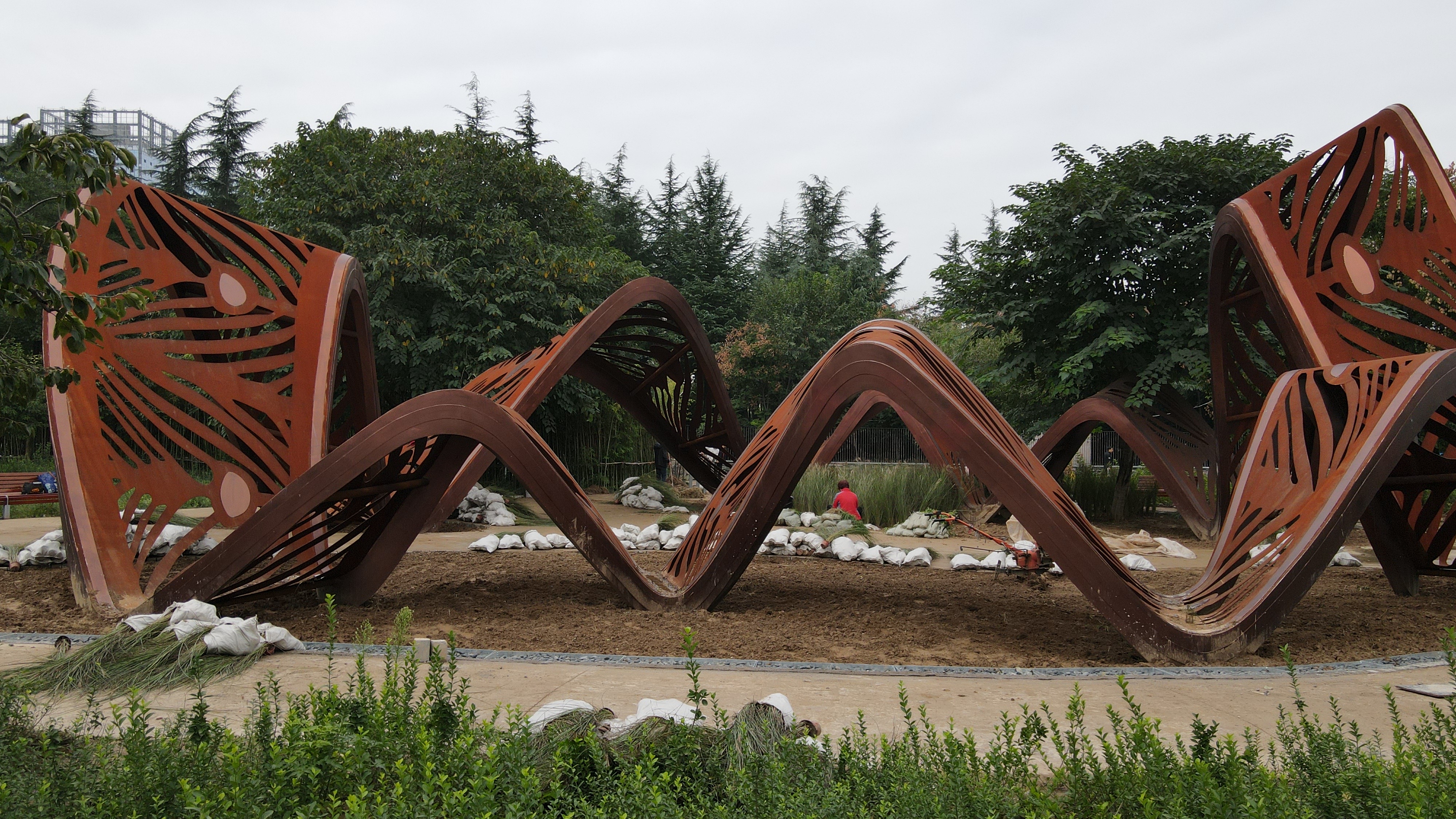
XYS-Corten-Custom is fabricated in authentic Corten steel to ASTM A242 / A588 weathering steel, in customised height and width from small garden pieces to large architectural structures. Two surface states are offered: a natural pre-rusted finish with a stable patina, or a raw self-weathering finish. The material solves the maintenance problem directly — the protective rust layer that forms on the surface prevents further corrosion and requires no painting or ongoing care. It also solves an aesthetic problem: the industrial, organic look that contemporary landscape architecture calls for is inherent to the material, not applied to it. The line also covers garden edging, fire pits, metal screens and planter boxes, so a landscape scheme can hold a consistent material language across objects.
Natural stone (XYS-Stone-Custom) — texture, tradition and permanence
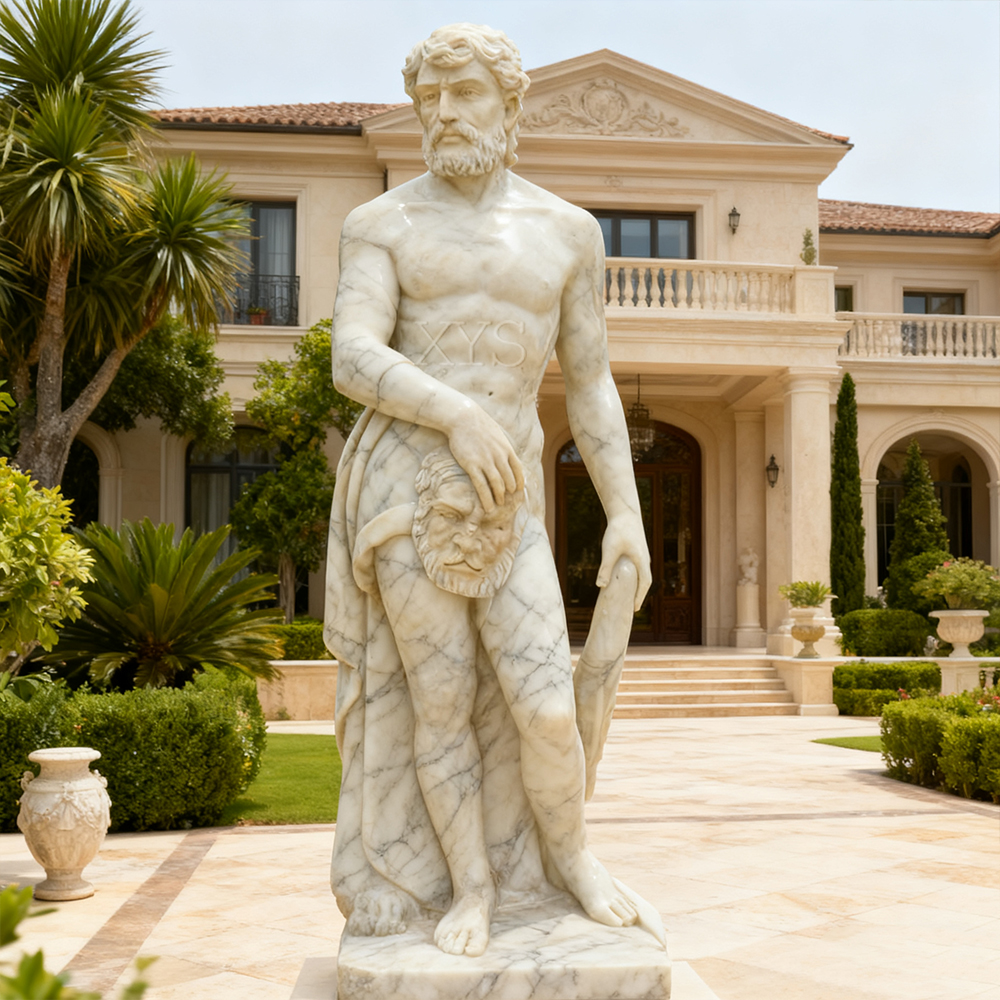
XYS-Stone-Custom uses Grade A natural white marble, granite and travertine, hand-carved to customised width, height and depth, with honed, high-gloss polished or acid-washed surfaces. Sizing scales from small garden pieces to large monuments. The category covers garden ornaments, fireplace mantels, stone fountains, religious carving, marble statues and carved marble bathtubs. Stone is the right answer when the brief is about mass, texture and hand-carved depth of relief rather than reflectivity — and when the client accepts that a natural material carries variation between blocks.
Granite memorial work (XYS-Monument-Custom) — legibility and colour stability
XYS-Monument-Custom covers granite tombstones and monuments in European, American and kerbset styles, in Shanxi Black, G603 and Blue Pearl granite, at standard sizes of 80×60 cm and 120×80 cm or customised dimensions. Surfaces are 100% mirror polished, laser engraved or sandblasted, and the material is specified for acid and alkali resistance, anti-weathering behaviour and colour stability. The problem being solved here is legibility over decades: laser etching of portraits and gold-leaf lettering keeps inscriptions readable where surface erosion would otherwise blur them.
Process fixes that apply to every material
Material choice only works if the workflow around it is fixed. Three process elements carry most of the risk reduction. First, the manufacturer integrates traditional hand-carving with modern 3D modelling and CNC precision processing, which means a design can be reviewed digitally before a tool touches material. Second, the delivery system includes 1:1 clay model visualisation, so scale and proportion can be judged physically rather than on screen. Third, packing and installation are treated as part of the product: seaworthy packing in reinforced wooden crates and steel frames, plus global on-site installation guidance.
Step-by-step breakdown: closing each problem in sequence
- Site brief. Record location, climate exposure, viewing distance, lighting, public access and the base or foundation situation. This alone resolves problem 1 and most of problem 3.
- Reference input. Supply drawings, photos or a written concept. Full customisation is supported from any of these starting points.
- 3D design draft. A digital draft is produced and confirmed before production — the formal checkpoint where scale, proportion and detail are agreed.
- Material and structure lock. Fix the grade (304 or 316 stainless, ASTM A242 / A588 Corten, Grade A marble, granite type, bronze copper content) and the internal frame requirement for the height involved.
- Model or prototype. Optional prototyping and 1:1 clay model visualisation let the client verify the physical reading of the work before committing to the full piece.
- Fabrication and finishing. Hand-forging, lost-wax casting or hand-carving is combined with precision welding and CNC processing, followed by the specified surface treatment — polishing stages, patina, plating, honing or engraving.
- Inspection and packing. Finished-product inspection and material traceability, then seaworthy packing in reinforced wooden crates and steel frames.
- Installation and after-sales. Each piece is supplied with installation instructions, and on-site installation can be guided by video call where required. Transport, installation and after-sales service sit inside the same supply chain.
Use cases: the same six problems, four different sites
Luxury hotel lobby and entrance. The constraint is interior scale and lighting rather than weather. Mirror-polished or electroplated stainless steel gives a controlled reflective surface that reads well under architectural lighting, while bronze suits a warmer, classical interior. Fixing the ceiling height and sight line at briefing stage prevents the common outcome of an undersized piece in a double-height space.
Urban plaza or public art landmark. Here the constraint is structural and regulatory. Large stainless steel work at the upper end of the 1 m to 20 m range needs an internal anti-rust steel framework, an installation foundation and steel structure support, plus lifting and transport planning. Where the piece is lit at night, LED lighting is coordinated with the base design rather than added afterwards.
Garden and landscape schemes. The constraint is long-term maintenance. Corten steel in a natural pre-rusted finish removes repainting from the maintenance cycle entirely, and the same material family can be extended to garden edging, screens and planter boxes so the scheme stays visually coherent. Stone suits sites where texture and hand-carved relief matter more than reflectivity.
Memorial commissions. The constraint is legibility and colour stability over time. Granite monuments in Shanxi Black, G603 or Blue Pearl at 80×60 cm or 120×80 cm, with laser engraving and gold-leaf lettering, hold inscriptions where softer surfaces would erode. Bronze figurative work is chosen when the memorial is sculptural rather than architectural.
Comparison table: which line fits which site constraint
| Model | Material | Stated size range | Surface options | Problem it solves |
|---|---|---|---|---|
| XYS-Stainless-Custom | 304 / 316 stainless steel | 1 m to 20 m, customised | Mirror polished, brushed satin, painted, electroplated | Corrosion, structural stability, reflectivity |
| XYS-Bronze-Custom | Cast bronze (copper >85%–95%), brass | 50 cm to 10 m, life size | Patina, gold leafing, high polish, antiqued | Fine detail fidelity, controlled surface ageing |
| XYS-Corten-Custom | Corten steel, ASTM A242 / A588 | Customised, small garden pieces to large structures | Natural pre-rusted stable patina, raw self-weathering | Maintenance burden, landscape aesthetic fit |
| XYS-Stone-Custom | Grade A white marble, granite, travertine | Customised width / height / depth | Hand-carved, honed, high-gloss polished, acid-washed | Texture and hand-carved relief at architectural scale |
| XYS-Monument-Custom | Granite: Shanxi Black, G603, Blue Pearl | 80×60 cm, 120×80 cm or customised | 100% mirror polished, laser engraving, sandblasting | Inscription legibility, colour stability, weathering |
Source: product specification data supplied by Jiangsu Xinyesheng Sculpture Co., Ltd.
Frequently asked questions
Which material standards should a custom sculpture specification cite?
Name the grade, not the appearance. The product data for this manufacturer's range lists Corten steel to ASTM A242 / A588, stainless steel in 304 and 316 grades (316 being the recommended option for coastal areas), Grade A natural marble, granite in Shanxi Black, G603 and Blue Pearl, and cast bronze with copper content above 85%–95%. On the trade side, 2025 market analysis noted that original sculptures under HS code 9703 often bypass EU anti-dumping duties while mass-produced metal items under HS 8306 face higher scrutiny, so classification and documentation should be agreed with the supplier before shipment.
Can a single custom piece be produced, and can large outdoor works be handled?
Yes on both counts. Full customisation is supported from drawings, photos or a concept, with a 3D design draft confirmed before production, and single-piece orders are accepted. Large outdoor work is supported through the size ranges stated for each line — stainless steel from 1 m to 20 m, bronze from 50 cm to 10 m, stone and Corten to customised dimensions — using a heavy-duty internal anti-rust steel framework for large-scale stainless installations. Each piece is supplied with installation instructions, and on-site installation can be guided by video call when needed.
What drives budget, and is there a minimum order quantity?
There is no strict minimum order quantity; single custom pieces are accepted, and ordering multiple pieces together is recommended because mould and shipping costs can then be shared. Cost is driven by material system, size and height, surface treatment, structural requirement and packing rather than by a catalogue price. For public-sector buyers, budget context matters: CODAworx reported in 2024 that over 80% of public art open call projects in North America fall below USD 250,000, which is why locking size and material before requesting a quote usually produces a more usable number.
Can I review a model or sample before full production?
Yes. The workflow is drawing or concept → 3D design draft for confirmation → optional prototyping → production → shipping. The delivery system also includes 1:1 clay model visualisation, which is the stage at which proportion, mass and detail are judged physically rather than on a screen. Reviewing at this point is the cheapest opportunity in the project to correct a scale or detail mismatch.
How long does production and delivery take, and how is the sculpture shipped?
Lead time is assessed after design approval and depends on size, material and surface finish, so the schedule is confirmed by the supplier against the approved specification rather than quoted as a fixed figure in advance. Shipping uses seaworthy packing with reinforced wooden crates and steel frames, and installation guidance is provided globally. To move a live project forward, the company profile and available production capabilities can be downloaded here: Company Profile & Available Production Capabilities (PDF).
Conclusion: solve the site problem before commissioning the artwork
Custom sculpture is a fabrication decision wrapped around a site decision. The six problems in this guide — unresolved scale, environment-blind material choice, missing structural planning, unwritten finish expectations, premature budgeting and neglected packing or installation — are all settled in the brief, not in the workshop. Once the site condition is stated clearly, the material system follows: 304 or 316 stainless for reflective large-scale work with a structural frame, bronze for detail and controlled patina, ASTM A242 / A588 Corten for maintenance-free landscape pieces, Grade A stone for carved texture, and granite for memorial legibility.
Next step: describe the site, not just the style.
Send a sketch, reference photo or concept together with the location, approximate height and climate exposure, and Jiangsu Xinyesheng Sculpture Co., Ltd will return a 3D design draft direction and a material recommendation for review — single pieces included.
Contact: Mikey · Email: mikey@xingyesheng.com · Tel / WhatsApp: +86 138-1259-9789
Website: www.xys-artsculpture.com · Address: No. 103, Building 22, 1585 Xicheng Road, Qingyang Town, Jiangyin City
Have Questions or Need More Details?
Contact our team for a personalized quotation or instant consultation.
Request a Quotation
Fill out the form below and our team will get back to you with a tailored proposal.
WhatsApp Direct Chat
Prefer to chat in real-time? Message us on WhatsApp for instant assistance & quick answers.
- Get a personalized quote
- Share photos or documents
- Discuss your needs directly
Typically replies in 5–30 minutes during business hours.