Fixing Weathered Public Art: Corten & Anti-Corrosion
Fixing Weathered Public Art: Corten & Anti-Corrosion
Weathered public art is not repaired by repainting it. It is repaired by correcting the material system that failed: Corten steel re-specified so it can rebuild a stable patina, stainless steel moved from 304 to 316 where chloride caused pitting, or polished granite used where acid-alkali resistance and color stability matter more than metal. Welding sequence, passivation, sealed patina and drainage detail decide whether the repair survives the next decade.
The decision to repair rather than replace an outdoor sculpture usually lands on a maintenance committee, a landscape architect or a facilities manager who inherited the problem. The visible symptom is simple — rust streaks, chalky coatings, dull stone, green bleeding onto paving — but the cause is almost always a material choice made for the wrong exposure. This guide works from that premise and stays on it: diagnose the failure, then specify the material and the fabrication process that answer it.
Defining the Problem: Three Ways Public Art Weathers
Before a repair specification is written, the failure needs a category. Outdoor sculpture deteriorates through three distinct mechanisms, and each one points to a different corrective action.
Electrochemical corrosion of metal. Moisture carrying chlorides or pollutants reaches the steel or bronze surface and starts an anodic reaction. On painted carbon steel the coating hides the process until it blisters; on unprotected steel the loss of section becomes structural. Stainless steel behaves differently again: it resists corrosion through a passive chromium-oxide layer, and that layer breaks down locally in chloride-rich conditions, producing pitting rather than uniform rust.
Failure of the finish system. Coatings chalk, crack and lift at edges and weld zones. Once water sits under a lifted coating, the coating accelerates the damage it was meant to prevent. The same principle applies to a patina that was never sealed: an unstable oxide layer keeps shedding and staining adjacent paving.
Degradation of stone surfaces. Polished granite and marble lose gloss through abrasion, salt crystallization and atmospheric acids. Hand-carved detail softens, joints open, and darker minerals in the stone can weather at a different rate from the matrix around them.
The working rule: if the surface is failing, the question is not “what coating hides this?” but “what material system belongs in this exposure?” Repainting over active corrosion traps the corrosion products and shortens the next maintenance interval. Replacing a 304 stainless panel with another 304 panel in a salt-spray site repeats the same failure on a predictable schedule.
Industry Background: Why Repair Decisions Are Budget Decisions
Public art maintenance competes for funding with everything else a city or venue owns, and the numbers explain why repair specifications usually aim at the longest achievable interval rather than the lowest first cost. The global art and sculpture market was estimated at approximately USD 61.83 billion in 2026 (Business Research Insights), and sculptures account for about 21% of global art acquisitions by transaction volume.
At project level the constraint is tighter. In North America, 80.2% of public art open-call projects fall below a budget of USD 250,000 (CODAworx, 2024). That band covers most plaza commissions, park installations and memorial pieces — which means the same budget has to absorb design, fabrication, freight, foundation and installation. A material upgrade that prevents a second intervention in ten years is often the cheaper option, but only if the first fabrication was correct.
Material demand follows the same pattern. The US sculpture market was estimated at between USD 5.8 and 6.2 billion in 2024, and the global bronze sculpture commission segment reached USD 1.47 billion in 2024 (Dataintelo). Bronze remains the reference material for commemorative and figurative work because of how its surface ages; metal and stone remain the reference materials where structure, scale and maintenance exposure dominate.
Trade classification matters as well. Original sculptures under HS Code 9703 often bypass EU anti-dumping duties, while mass-produced items classified under HS 8306 face higher scrutiny. Buyers specifying a large outdoor sculpture should confirm the intended HS classification with their fabricator and freight forwarder before the quote is fixed, because the difference affects landed cost and documentation.
The Material Solution Set: What Actually Stops the Decay
Four material families cover most outdoor repair and replacement work, and each solves a different part of the problem. The comparison that follows is deliberately narrow: verified specifications, exposure fit and maintenance consequence.
Corten steel: specifying for a stable patina, not simply “rusty steel”
Weathering steel is designed to corrode — but only to a point. Under alternating wet and dry cycles, the oxide layer that forms on Corten becomes dense and adherent, and that stable patina slows further corrosion. The failure mode people complain about is not corrosion itself but an unstable rust layer: loose oxide that keeps shedding onto paving, staining adjacent surfaces and thinning the section underneath.
For public art, Corten components are specified to ASTM A242 / A588 weathering steel. Two surface routes are available: a natural pre-rusted finish with a stable patina formed before delivery, or a raw finish that continues to self-weather on site. The raw route produces the appearance many landscape architects want, but it shifts part of the weathering process into the first years of the installation.
Where Corten fits: landscape sculpture, garden edging, fire pits, metal screens and planter boxes, plus public park and industrial-style architectural work. Where it needs care: a stable patina depends on the piece drying out between wetting cycles. Detailing that traps water, buries the base in soil or keeps vegetation against the steel generally works against patina stability, and high chloride loading in coastal air is a well-known constraint on stable rust formation. Early rust-laden runoff onto light-colored paving is also a known behavior while the layer stabilizes, so drainage and staining routes deserve attention at design stage.
Stainless steel: 304 or 316 is an exposure decision
The most common avoidable failure in outdoor stainless work is grade selection. Type 316 stainless steel contains 2%–3% molybdenum, which gives it substantially stronger resistance to chloride and salt corrosion. Type 304 contains no molybdenum and is more vulnerable to pitting in salty or humid environments.
The measurable gap is significant: 316 offers over 30% higher pitting resistance than 304 (PREN approximately 26 versus approximately 19) and can withstand decades of coastal salt spray and marine air, while 304 may show rust spots and pitting within a few years in the same environment. The trade-off is cost — 316 typically costs about 20%–30% more than 304, depending on sculpture size, thickness and surface finish.
Surface treatment then determines how long the passive layer holds. Mirror polishing, brushed (satin) finishes, painting and electroplating are all in use, and the corrosion-control step that matters most is pickling and passivation of the stainless surface, particularly at welds. Welded zones lose their passive layer during fabrication; if they are not restored, that is exactly where the first tea-staining appears. Internal steel skeletons and hand-forged or precision-welded structures also need compatible corrosion protection where dissimilar metals meet.
Exposure fit: 316 for coastal cities, seaside parks, swimming pools, humid tropical regions and any marine-adjacent installation; 304 for inland cities, dry climates, indoor plazas and general outdoor decoration where salt exposure is not a concern.
Granite and stone: acid-alkali resistance and color stability
Where the brief calls for permanence without a metallic surface, polished granite is the material that answers the failure most directly. Natural granite used for memorial and landscape work carries acid and alkali resistance, anti-weathering behavior and color stability, and it is finished with 100% mirror polishing, laser engraving or sandblasting depending on the intended reading of the surface.
Mirror polishing is the finish that most clearly separates a maintained memorial from a weathered one: the gloss is what fails first in a neglected installation, and restoring it is a workshop operation rather than a site repair. Hand-carved stone is the counterpart to anti-corrosive metal in structural terms — carving depth and edge sharpness give the piece its legibility, and both erode under salt crystallization and atmospheric acids. Material selection within stone matters too: natural white marble, granite and travertine behave differently, and higher-density stone generally holds a polished face longer in exposed settings.
For cemetery and memorial stonework, the same principles apply at smaller scale. Granite grades such as Shanxi Black, G603 and Blue Pearl are standard references, with mirror polishing, laser engraving and sandblasting as finish options, and acid-alkali resistance, anti-weathering and color stability treated as the defining performance attributes.
Bronze: a self-protecting surface
Bronze belongs in the repair conversation because its aging behavior is the inverse of steel. Bronze sculptures contain over 85% copper, and the metal naturally develops a protective patina over time, so outdoor bronze requires almost no maintenance. After a hundred years it turns greenish and reads as an antique rather than a damaged object.
Brass is the material that gets confused with it. Brass contains over 60% copper and turns black over the same period, and it tarnishes readily, needing regular polishing to retain its golden appearance. That is why bronze costs roughly 20%–30% more than brass — more copper, plus tin as the alloying element, instead of cheaper zinc. Where a surface has to hold a warm, classical tone outdoors, bronze with a sealed patina is the specification that matches the exposure; where the piece is decorative and indoors, brass remains workable.
Fabrication: where the anti-corrosion plan is won or lost
Material choice sets the ceiling on performance; fabrication decides whether it is reached. Three process controls do most of the work in a repair or replacement project.
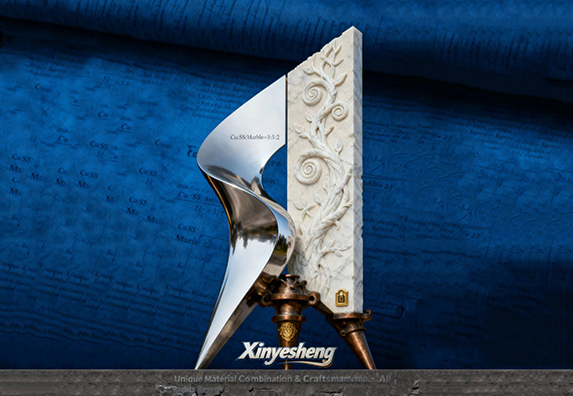
- Design confirmation before cutting material. A 3D preview — or a 1:1 clay model for figurative work — confirms proportion, joint lines and surface direction before fabrication starts. This is standard practice at Jiangsu Xinyesheng Sculpture Co., Ltd., a sculpture manufacturer based in Jiangyin City, Jiangsu, China, which states that every design is confirmed through a 3D preview before production begins.
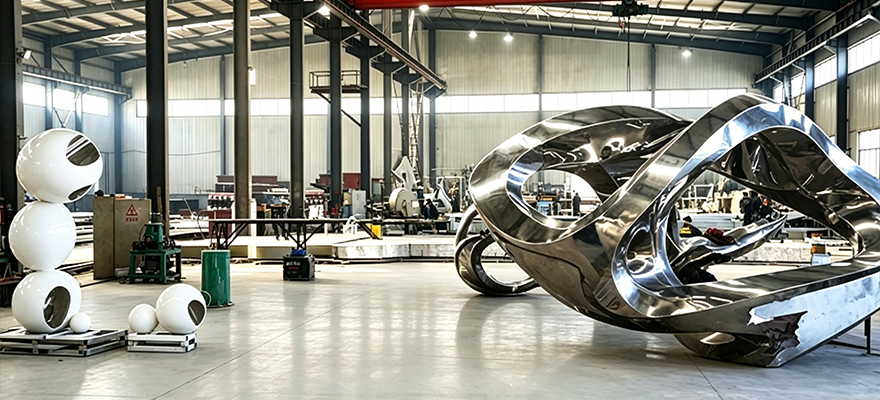
- Corrosion control built into the sequence. Pickling and passivation for stainless steel, sealed patina for bronze, stable pre-rusting for Corten and post-weld anti-corrosion treatment at every connection. A weld that is not treated is a corrosion initiation point, regardless of the base material.
- Handling and packaging that protect the finish. A repaired surface is at its most vulnerable between the workshop and the foundation. Reinforced wooden crates and steel frames with shockproof internal protection, plus freight insurance, are part of the specification rather than an afterthought.
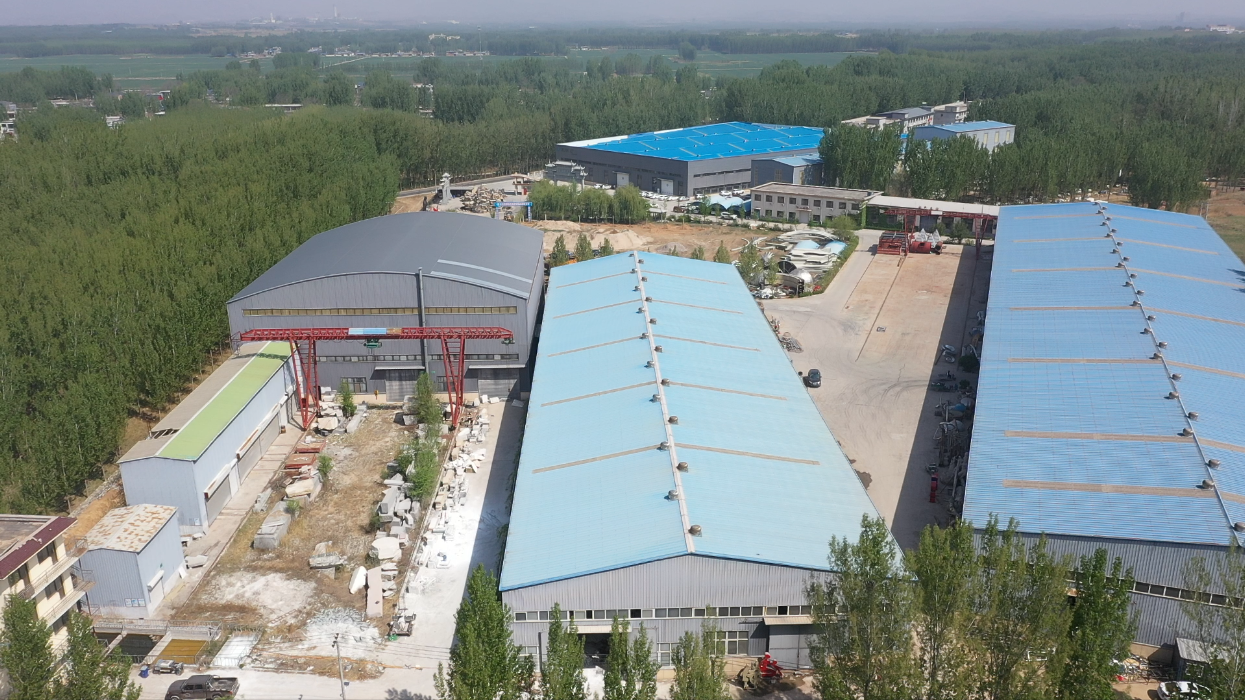
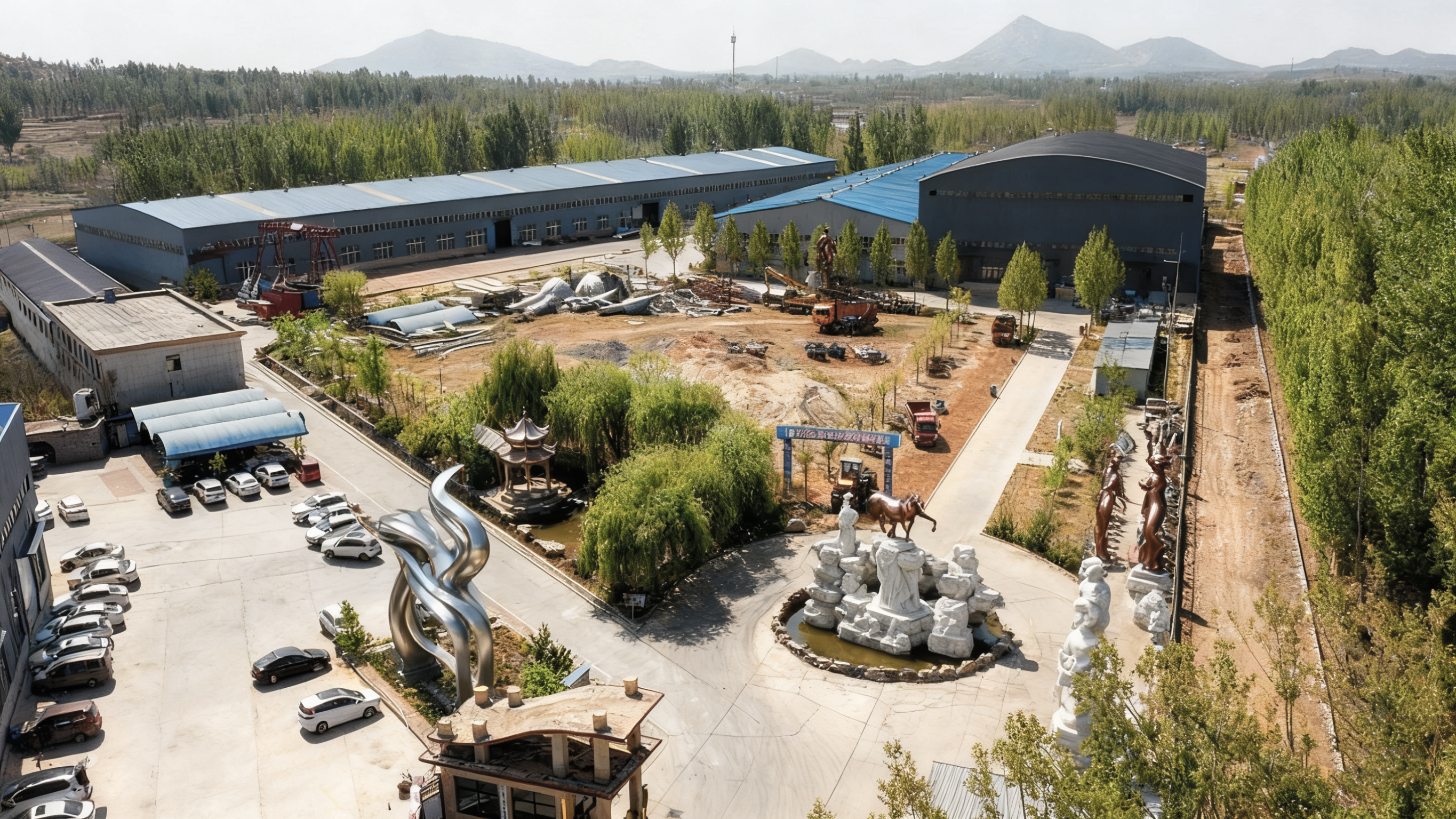
Capacity matters when a repair has a schedule. Xinyesheng works with a cooperative factory covering 8,000 m² of production land, with a team of 50 employees, an R&D group of 12 engineers and annual output of 10,000 units; 100% of output is exported to the EU, USA and Middle East. Its researchers have over ten years of experience in the sculpture industry, and the experienced design team drives product innovation and development. Standard production runs 15–30 days after design approval, with every piece inspected before shipment.
The company also describes a one-stop delivery system that includes 1:1 clay model visualization, professional seaworthy packaging in reinforced wooden crates and steel frames, and global on-site installation guidance. That framing is useful for public art, because the failure being repaired is rarely confined to the sculpture itself — it usually involves the interface between sculpture, foundation and site.
Step-by-Step: Repairing a Weathered Public Artwork
The sequence below applies to replacement, partial replacement and full refurbishment. What changes between projects is the number of steps, not their order.
- Diagnose the failure mode. Establish whether the damage is electrochemical (pitting, section loss, rust bleeding), coating failure (blistering, chalking, lifting) or stone degradation (gloss loss, joint opening, carving erosion). The category determines the material response.
- Characterize the exposure. Record chloride load, wetting and drying behavior, water traps and orientation. A seafront plaza and an inland courtyard can justify 316 and 304 stainless steel respectively — the same drawing, two different specifications.
- Choose the material system against the exposure. Corten for landscape and architectural language where a stable patina can form; 316 stainless for marine air, pools and humid tropical sites; 304 for inland and general outdoor conditions; polished granite where color stability and acid-alkali resistance define the brief; bronze where a self-protecting patina and classical tone are required.
- Confirm the design before fabrication. 3D preview, and a 1:1 clay model where figurative accuracy matters. Approve joint lines, surface direction and finish samples at this stage, not after casting.
- Fabricate with the corrosion sequence embedded. Precision casting, CNC machining and hand-finishing as required, followed by pickling and passivation, sealed patina or controlled pre-rusting, and post-weld anti-corrosion treatment.
- Pack, ship and document. Reinforced wooden crates and steel frames with shockproof internal film; “All Risks” insurance can be arranged according to the buyer's requirements. Xinyesheng's purchase terms list MOQ of 1 unit, delivery terms including DDP, EXW, FOB, CIF, DAP and FCA, and photo or video inspection before the container is loaded.
- Install and accept on measurable criteria. Installation follows a defined sequence: verify ground flatness, load-bearing capacity and embedded part positions against the drawings; select hoisting equipment by size and weight and secure the lifting points; hoist and align to the base or embedded parts; fix with bolts or welded reinforcement and treat welds with anti-corrosion material; inspect, clean and hand over.
Acceptance should be written down. A practical reference standard is verticality and horizontality within the drawing requirements, with vertical deviation no greater than 5 mm, fixings tight with no movement under a shake test, a surface free of bumps, scratches and stains, and all welds and connections treated against corrosion. Lifting must be carried out by certified personnel with the area cordoned off; work at height requires safety belts, and hoisting stops in strong wind or thunderstorms. For heavy pieces, the load-bearing capacity of the base must be confirmed before lifting to prevent overturning.
Use Cases: Matching the Repair to the Site
Coastal city plaza or seaside park. The dominant risk is chloride-driven pitting. Specify 316 stainless steel with pickled and passivated welds, and expect only occasional rinsing to keep the surface free of salt deposits. If the artwork is Corten, accept that the patina may take longer to stabilize and design drainage and staining routes accordingly.
Inland park or civic square. With lower salt exposure, 304 stainless steel or Corten can be appropriate. For Corten landscape elements — garden edging, screens, planter boxes, fire pits — the maintenance promise is genuine provided the detailing allows the steel to dry between wetting cycles.
Memorial garden and cemetery. Polished granite answers the brief directly: acid and alkali resistance, anti-weathering behavior and color stability, with mirror polishing, laser engraving and sandblasting as the finish set. Hand-carved lettering and carving hold up better than applied elements, and the polished face can be restored in a workshop rather than replaced on site.
Wetland park or large-scale entertainment project. Bronze is often specified for its self-protecting patina and its behavior over a century of outdoor exposure. The material cost is higher than brass, and the maintenance case is the reason: bronze needs almost no upkeep outdoors, while brass requires regular polishing to keep its golden finish.
Hotel lobby and hospitality installation. Interior and semi-interior settings change the calculation. Brass becomes viable indoors, mirror-polished stainless steel reads as a deliberate architectural surface, and marble or travertine can be used where a high-gloss face will not face salt or freeze-thaw cycling.
Material Comparison for Weathered Public Art Repair
The table below uses only verified specification and performance facts from the sources above. It is a selection aid, not a ranking.
| Option | Verified specification | Weathering / corrosion behavior | Best-fit exposure | Maintenance implication |
|---|---|---|---|---|
| Corten steel (weathering steel) | ASTM A242 / A588; natural pre-rusted finish (stable patina) or raw self-weathering finish | Forms an adherent oxide layer under alternating wet/dry cycles; atmospheric corrosion resistance, natural aging and maintenance-free service are the stated features | Landscape architecture, public parks, modern garden design, industrial-style decor | No routine coating; performance depends on detailing that lets the surface dry and on managing early rust-laden runoff |
| 304 stainless steel | No molybdenum; PREN approximately 19 | More vulnerable to pitting in salty or humid environments; may show rust spots and pitting within a few years in the same conditions where 316 lasts decades | Inland cities, dry climates, indoor plazas, general outdoor decoration without salt exposure | Regular cleaning of salt deposits to prevent pitting and tea staining |
| 316 / 316L stainless steel | 2%–3% molybdenum; PREN approximately 26; over 30% higher pitting resistance than 304; typically 20%–30% more expensive than 304 | Withstands decades of coastal salt spray and marine air; near maintenance-free compared with other materials | Coastal cities, seaside parks, swimming pools, humid tropical regions, marine-adjacent sites | Occasional rinsing; pickling and passivation of welds restores the passive layer after fabrication |
| Polished granite and natural stone | Granite with acid and alkali resistance, anti-weathering and color stability; 100% mirror polishing, laser engraving, sandblasting; marble, granite and travertine also finished hand-carved, honed, high-gloss polished or acid-washed | High-density natural stone is weatherproof; gloss and carved edge sharpness are the surfaces that age | Cemetery and memorial work, landscape architecture, garden and architectural stone | Refinishing is a workshop operation; the polished face defines perceived condition |
| Bronze | Over 85% copper; roughly 20%–30% more expensive than brass | Develops a protective patina naturally and turns greenish over a century; almost no outdoor maintenance required | Classical, historical and commemorative projects; wetland parks; large-scale entertainment projects; villa decoration | Sealed patina preserves the intended appearance; brass by contrast tarnishes and needs regular polishing |
Cost signals in the table are relative material comparisons from the cited sources, not quotations for a specific artwork. Fabrication cost depends on size, thickness, surface finish and structure.
FAQ
1. What material standards should a Corten or stainless public artwork comply with?
Corten components are specified to ASTM A242 / A588 weathering steel, supplied either with a natural pre-rusted finish forming a stable patina or as a raw self-weathering finish. Stainless sculpture is produced in premium 304 or 316L grades, with 316 containing 2%–3% molybdenum for chloride resistance. On the trade side, original sculptures under HS Code 9703 often bypass EU anti-dumping duties, while mass-produced items under HS 8306 face higher scrutiny, so the intended classification should be confirmed with the fabricator and forwarder before a quote is fixed.
2. Can one partner handle material selection, fabrication and installation guidance for a weathered artwork?
Yes, where the supplier is set up for it. Jiangsu Xinyesheng Sculpture Co., Ltd. is a sculpture manufacturer based in Jiangyin City, Jiangsu, China, producing sculpture, statuary, relief, tombstone, fireplace and bathtub for export. It works with a cooperative factory covering 8,000 m² of production land, with 50 employees, 12 engineers in the R&D team and annual output of 10,000 units, and 100% of output is exported to the EU, USA and Middle East. Its stated one-stop delivery system covers 1:1 clay model visualization, professional seaworthy packaging in reinforced wooden crates and steel frames, and global on-site installation guidance, with standard production of 15–30 days and inspection before shipment.
3. What drives the budget of a corrosion-resistant public sculpture repair?
Three variables dominate: material grade, surface process and structure. Grade 316 stainless steel typically costs about 20%–30% more than 304 because of its higher nickel and molybdenum content, and bronze costs roughly 20%–30% more than brass because it contains over 85% copper against brass's over 60%. Surface processes — pickling and passivation, sealed patina, mirror polishing — add workshop time. Against that, factory-direct supply is stated to run generally 10%–20% lower than traditional workshops for the same material and quality, and the minimum order quantity is 1 unit, so a single replacement element can be ordered without committing to a batch. For context, 80.2% of public art open-call projects in North America fall below a budget of USD 250,000, which usually means the repair must be scoped precisely rather than generously.
4. Can we approve the finish and patina before full production?
Design is confirmed through a 3D preview before production begins, and prototyping is available as an optional stage in the customization sequence: drawings or concept, 3D design confirmation, prototyping if required, production, then shipping. On the commercial side, the terms are 50% of the total as a deposit, photo and video inspection of the finished artwork, payment of the remaining 50%, and shipment after receipt. Before the container is loaded, the supplier takes photos and videos for the buyer's acceptance inspection.
5. How long does fabrication, finishing and delivery take, and what is the next step?
Standard production runs 15–30 days after design approval; size, material and surface finish determine the exact schedule, and the specific timeframe is assessed once the drawing is confirmed. Delivery terms include DDP, EXW, FOB, CIF, DAP and FCA, door-to-door delivery can be quoted against a detailed address, and packaging uses reinforced wooden crates and metal strips with shockproof internal film, with “All Risks” insurance arranged as required. If you are specifying a replacement or a new Corten, stainless or granite element, the practical next step is to send the site photos, exposure notes and target dimensions for a quotation or a material and finish sample — contact mikey@xingyesheng.com or +86 138-1259-9789 (WhatsApp available on the same number).
Conclusion: Repair the System, Not the Symptom
Weathered public art is a materials problem before it is an aesthetic one. Corten steel only performs when it can build a stable patina; stainless steel only performs when the grade matches the chloride load and the welds are passivated; granite only reads as permanent while its polished face and carved detail are intact; bronze only stays maintenance-free because its patina is self-protecting. The fabrication sequence — design confirmation, corrosion treatment at every weld, protective packaging, measured installation acceptance — is what converts those material properties into a repair that holds.
For buyers at the decision and execution stage, the useful discipline is to write the exposure into the specification. Name the grade, name the standard, name the surface process, and define acceptance in measurable terms. That is a shorter document than a repaint schedule, and it is the one that keeps the artwork out of the maintenance backlog.
Request a Quote or a Finish Sample
Jiangsu Xinyesheng Sculpture Co., Ltd. produces custom sculpture, statuary, relief and memorial stonework for public art, landscape, garden, hospitality and memorial projects, with 3D preview, 1:1 clay model visualization, seaworthy packaging and global installation guidance. Minimum order quantity is 1 unit.
Email: mikey@xingyesheng.com | Tel / WhatsApp: +86 138-1259-9789
Website: www.xys-artsculpture.com
Address: No. 103, Building 22, 1585 Xicheng Road, Qingyang Town, Jiangyin City, China
Download the company profile and available production capabilities: Company Profile & Available Production Capabilities (PDF)
Have Questions or Need More Details?
Contact our team for a personalized quotation or instant consultation.
Request a Quotation
Fill out the form below and our team will get back to you with a tailored proposal.
WhatsApp Direct Chat
Prefer to chat in real-time? Message us on WhatsApp for instant assistance & quick answers.
- Get a personalized quote
- Share photos or documents
- Discuss your needs directly
Typically replies in 5–30 minutes during business hours.