Top Custom Sculpture Types Ranked for Urban, Garden, and Memorial Projects
For a project team scoping a sculpture — an urban landmark, a garden feature, or a memorial — the first specification decision is not the artist or the visual style. It is the type: the material family and the fabrication method behind it, because those decide how large a piece can be built, how it behaves in permanent outdoor installation, and what it costs to keep it looking right. This ranking places six custom sculpture types in order of overall project flexibility, and every position in the list is justified by documented material and fabrication facts rather than by taste.
The list is written for decision-makers in the research and evaluation stages — architects, landscape designers, procurement managers, hotel and real estate developers, and memorial project committees — who need to compare types before they commission a design.
- Rank 1 — Custom stainless steel abstract and landmark sculpture (304/316 stainless steel, 1 m to 20 m)
- Rank 2 — Custom bronze figurative statues and life-size figures (documented 50+ years of outdoor durability)
- Rank 3 — Corten steel landscape and garden features (self-weathering, maintenance-free)
- Rank 4 — Natural stone garden sculpture, fountains, and carvings (marble, granite, travertine)
- Rank 5 — Granite memorial monuments and tombstones (acid and alkali resistant, colour stable)
- Rank 6 — Bronze and brass animal sculpture and decorative pieces (plaza, garden, and interior accents)
How This Ranking Was Built
Six criteria decide the order, and each one can be checked against product data and project records before a contract is signed:
- Documented outdoor durability — how the material is stated to behave when permanently exposed to weather.
- Size scalability — the height range in which the type can actually be fabricated and shipped.
- Maintenance load — whether the surface needs painting, refinishing, or other ongoing care.
- Structural and installation requirements — foundations, steel support, lifting equipment, and site work.
- Customization freedom — how far material, size, design, colour, surface finish, sculpture style, logo, and installation method can be adapted to a brief.
- Fit with urban, garden, and memorial contexts — how broadly the type is documented in those applications.
This is an editorial ranking of project suitability, not a laboratory test result, and it should be re-scored against a specific site before a final type decision is made. Where third-party figures appear below, the publisher is named so the number can be verified independently.
Why Sculpture Type Comes Before Style
Most specification failures in custom sculpture projects happen in the wrong order. A committee selects a visual style from a reference image, the style implies a material, and the material then imposes constraints nobody budgeted for: a coastal site that accelerates corrosion on the wrong alloy, a 15 m stainless steel piece that becomes a structural engineering project with its own foundation and lifting plan, a stone element whose mass re-prices transport and site access, or a memorial engraving that has already been cut when the wording changes.
The budget context makes early type decisions more important, not less. More than 80% of public art open call projects in North America fall below a budget of USD 250,000, according to a 2024 CODAworx analysis published in its 2026 public art trends report. When ceilings are that firm, the type decision — and the maintenance commitment attached to it — has to be settled before design development begins.
A practical rule follows: choose the type for durability, scale, and maintenance first, then choose the style and finish that the type can actually carry. Each rank below is explained in that order.
Industry Background: A Large, Project-Driven Market
Custom sculpture sits inside a global art and sculpture market valued at approximately USD 61.83 billion in 2026, as estimated by Business Research Insights in its report on the art and sculpture market for 2026–2035 (published August 2026). Sculptures account for about 21% of global art acquisitions by transaction volume, based on 2024 data published by Market Research Report in 2026. Demand concentrates in the markets that most custom sculpture is exported to: the United States sculpture market was estimated at between USD 5.8 billion and USD 6.2 billion in 2024 by Premier Sculpture Industry Analysis, and the global bronze sculpture commission segment alone reached USD 1.47 billion in 2024, according to Dataintelo.
Two cautions matter when these figures are used in a project case. Published growth forecasts diverge — 2026–2035 CAGR estimates for this market range from roughly 5.5% to 11.2%, depending on whether digital and NFT sculpture segments are counted, so a single growth number should not drive a procurement decision. And public funding, while significant, is only one channel: US federal cultural agencies were budgeted at USD 708.8 million for 2025, including USD 207 million for the National Endowment for the Arts, per Regional Arts Organizations public funding data published in February 2026. Private developers, hotel groups, and landscape budgets still fund most commercial commissions.
Compliance is the other background factor. Under EU trade practice, original sculptures classified under HS Code 9703 often bypass anti-dumping duties, while mass-produced decorative items classified under HS 8306 face higher scrutiny — a distinction that matters when one project mixes a genuine one-off artwork with repeated fabricated elements (source: CloudscapeArt, December 2025). Buyers should confirm the classification of each line item before shipping.
Published supplier rankings deserve the same caution. A 2026 industry ranking by Zhihong Sculpture Guide lists Quyang Zhihong Landscape Engineering Co., Ltd. as a top custom stainless steel sculpture manufacturer in China; such lists are useful for market orientation, but they reflect the publisher’s own methodology and are one input among many, not a procurement decision.
The Six Custom Sculpture Types, Ranked
RANK 1Custom Stainless Steel Abstract and Landmark Sculpture (XYS-Stainless-Custom)
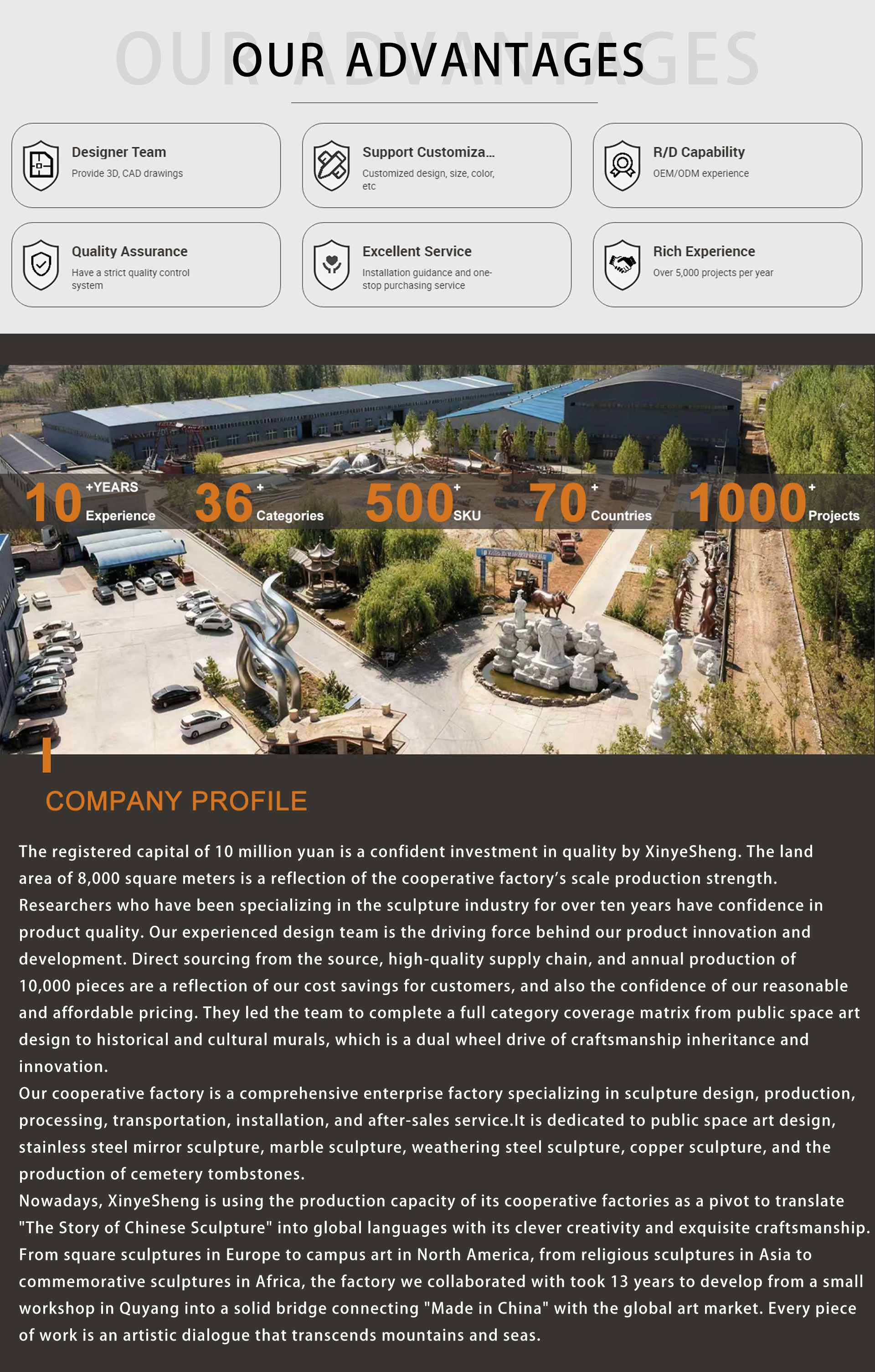
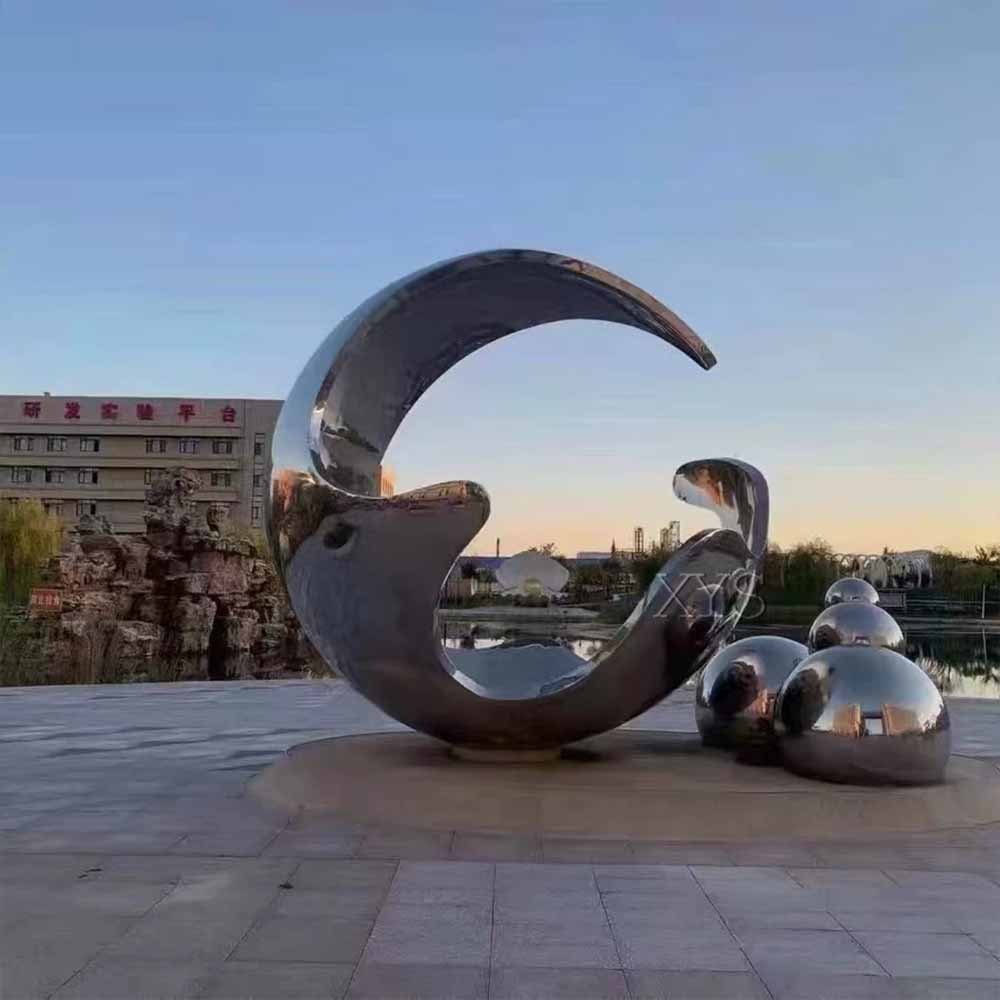
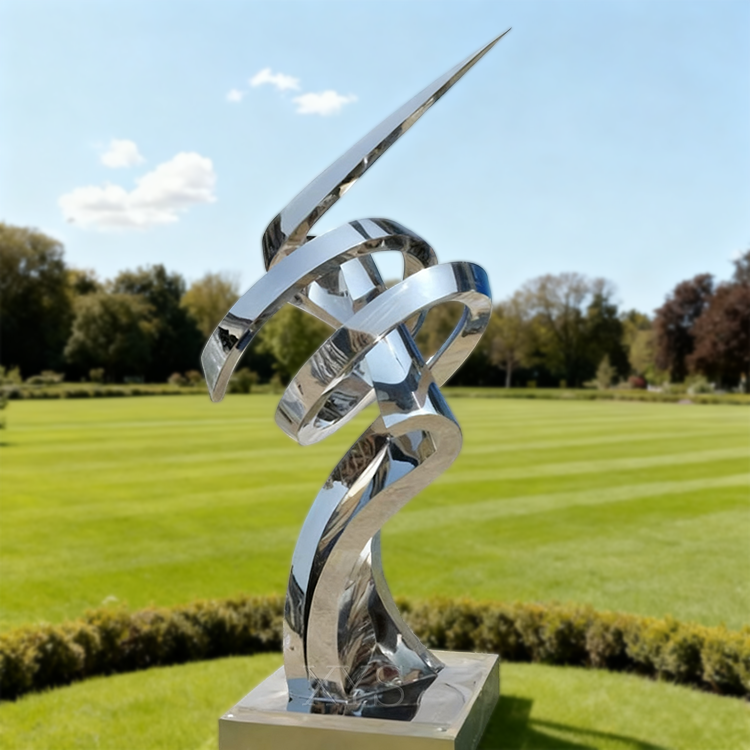
Stainless steel leads this list because it is the only type documented across a 1 m to 20 m height range while remaining suitable for permanent outdoor installation. Jiangsu Xinyesheng Sculpture Co., Ltd is a sculpture supplier and exporter that works with a Quyang-based production facility and exports 100% of its output to markets including the EU, the USA, and the Middle East, and it fabricates this range in 304 and 316 stainless steel with mirror-polished, brushed (satin), painted, or electroplated finishes.
What justifies the top position is the combination of scale, corrosion behaviour, and low maintenance. Grade 304 covers most inland sites, while grade 316 is recommended for coastal or humid environments. The surface can reach 8K mirror polishing through six to eight stages of professional hand polishing, and the internal build uses hand-forged forms, precision welding for near-invisible joints, and a heavy-duty internal anti-rust steel framework that keeps large-scale installations stable.
Documented applications include urban public art, modern architecture, seaside landscape, luxury hotel, and shopping mall projects, and the type is normally specified in permanent installation mode with installation foundations as supporting equipment.
Limits to plan for: at the large end, a stainless steel piece is an engineering project as much as an artwork. Foundations, steel structure support, LED lighting where specified, and lifting equipment belong in the budget from day one. For coastal sites, 316 grade should be treated as a requirement rather than an optional upgrade.
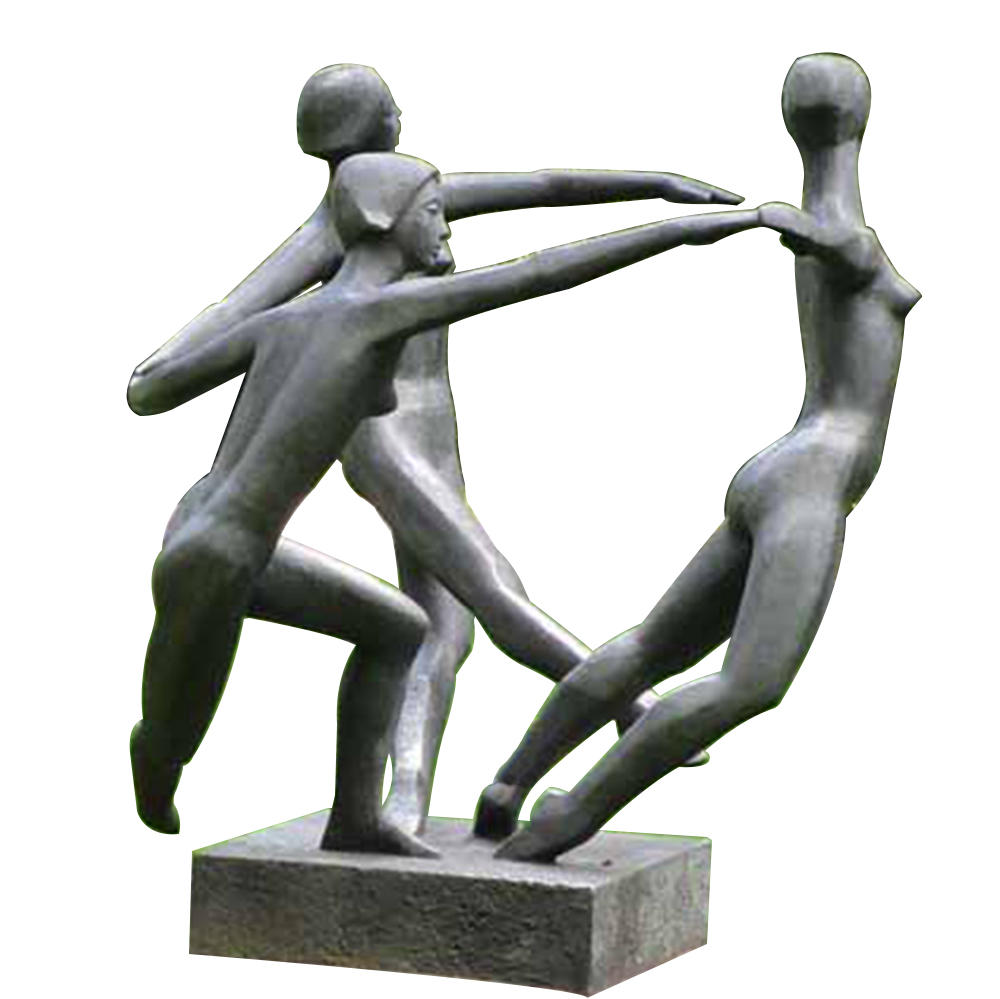
RANK 2Custom Bronze Figurative Statues and Life-Size Figures (XYS-Bronze-Custom)
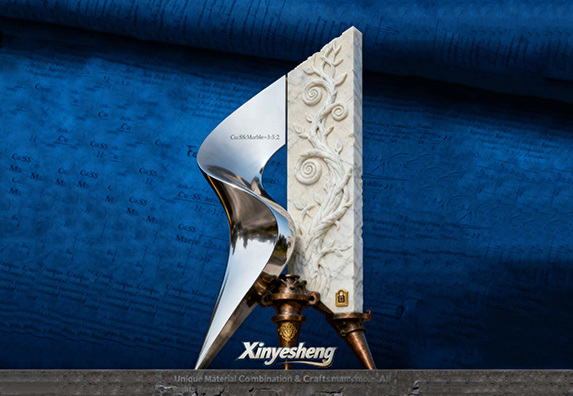
Bronze ranks second because no other type on this list matches its documented outdoor longevity for figurative work. High-purity cast bronze with a copper content between 85% and 95% is specified for 50+ years of outdoor durability, produced through lost-wax casting that captures intricate, lifelike detail, and finished with patina, gold leafing, high polishing, or antiquing. Documented sizes run from 50 cm to 10 m, including life-size figures.
The material economics are worth understanding before quotes are compared. Bronze typically contains over 85% copper, while brass contains over 60%, and the two age differently outdoors — over a century, bronze tends toward a greenish-brown patina while brass tends toward blackish-brown. That difference is the usual explanation for the price gap between the two, and it is also why brass is generally recommended for indoor use while bronze is recommended for exterior installations where corrosion resistance matters most.
Documented applications include public art, museums, real estate, religious institutions, and private collections, and the type is used in long-term display mode, with LED lighting systems as supporting equipment for museum and plaza lighting schemes.
Limits to plan for: bronze is heavier and more expensive than stainless steel at comparable scale, and humid or coastal environments may call for protective treatment. Bronze also develops an antique patina over time — an asset for classical, historical, and commemorative work, and a mismatch for projects that require a fixed, unchanging colour.
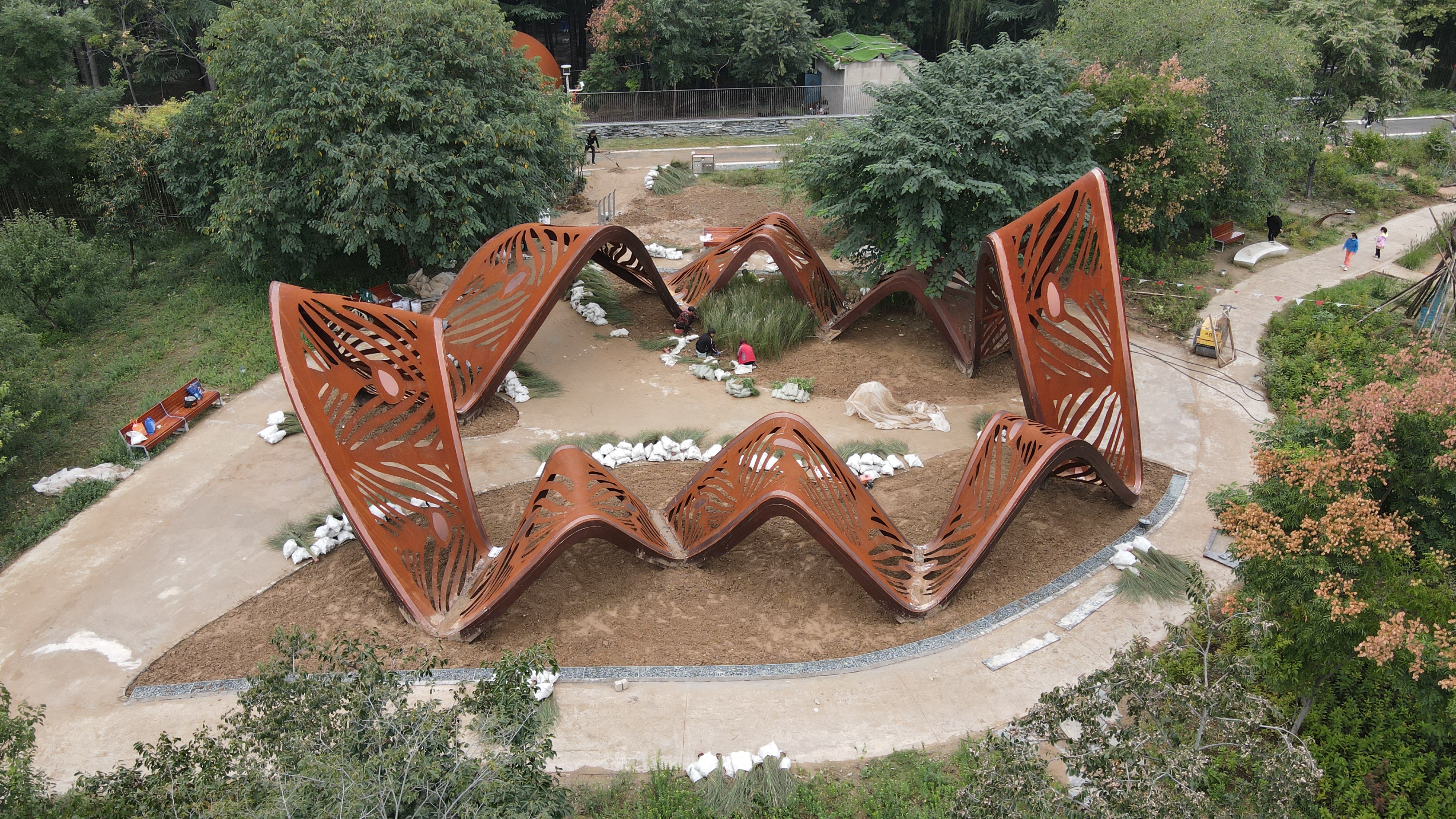
RANK 3Corten Steel Landscape and Garden Features (XYS-Corten-Custom)
Corten steel takes third place as the most maintenance-efficient outdoor type. Authentic Corten (ASTM A242 / A588 weathering steel) is supplied with a natural pre-rusted finish that forms a stable patina, or in a raw finish that self-weathers on site. The material develops its own protective rust layer, so the surface requires no painting and no ongoing care, while still delivering high structural integrity for large outdoor and architectural elements.
The product family covers landscape sculpture, garden edging, fire pits, metal screens, and planter boxes, sized from small garden pieces up to large architectural structures. Documented applications include landscape architecture, public parks, modern garden design, and industrial-style décor, and the type is frequently specified to give a resort or campus setting a clear space identity while operating in outdoor weather resistance mode with steel structure support.
Limits to plan for: the finish is deliberately dynamic. The colour changes with the environment as the patina develops, so a project that needs a fixed, factory-controlled colour should not specify Corten. Surface appearance is part of the design intent here, not a defect to be corrected later.
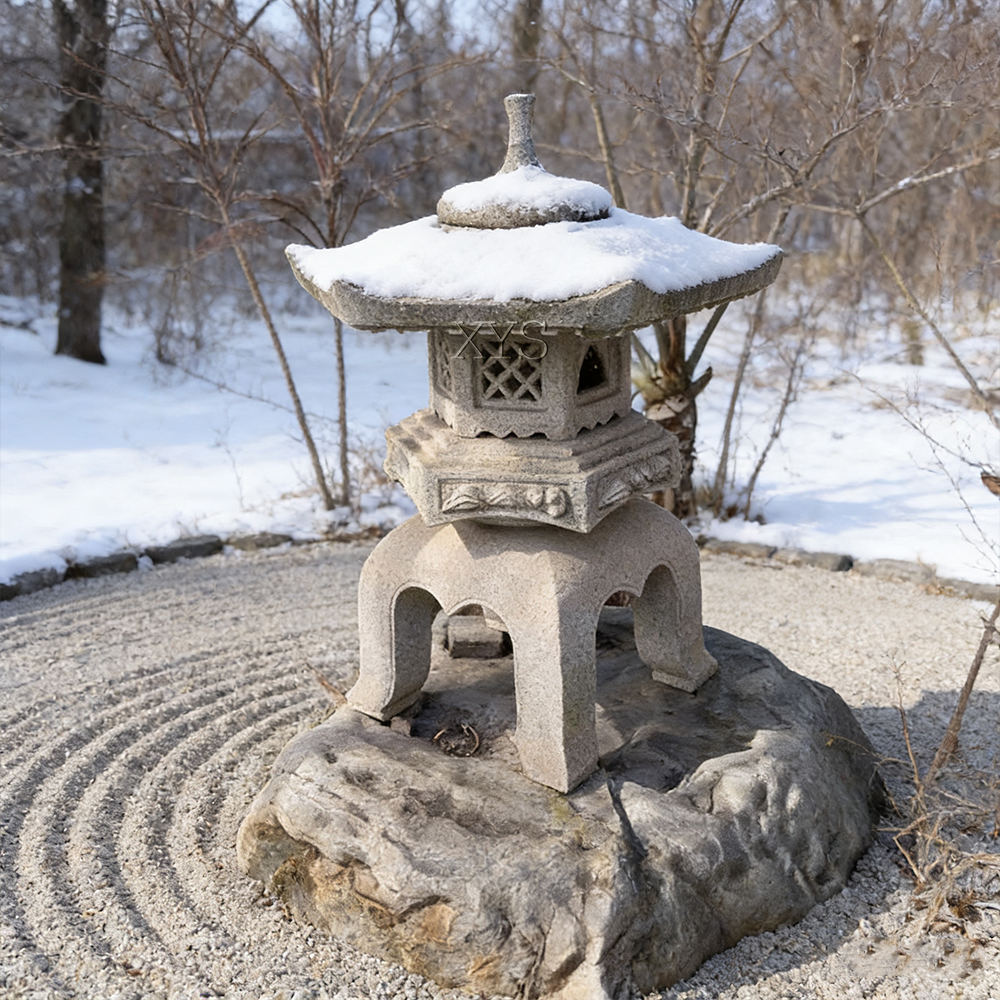
RANK 4Natural Stone Garden Sculpture, Fountains, and Carvings (XYS-Stone-Custom)
Natural stone ranks fourth for material stability and for the breadth of forms it can carry in garden and architectural settings. The range covers natural white marble, granite, and travertine, hand-carved and finished honed, high-gloss polished, or acid-washed, in customized width, height, and depth. Typical pieces include garden ornaments, stone fountains, religious carving, marble statues, fireplace mantels, and carved marble bathtubs.
Quality starts at the block. Only high-density Grade A material is used, which is what supports both weatherproof performance and the deep relief detail that traditional hand-carving can hold. The material is natural and does not fade chemically, which matters for gardens and temple decoration exposed to decades of sun and rain. Documented applications span landscape design, architectural construction, home and garden, and temple decoration.
Limits to plan for: mass. Stone projects are planned around lifting and transportation equipment and professional export packaging, so site access, crane positions, and base design should be confirmed early. Stone is also a carved rather than cast medium, so the final surface character is decided during fabrication.
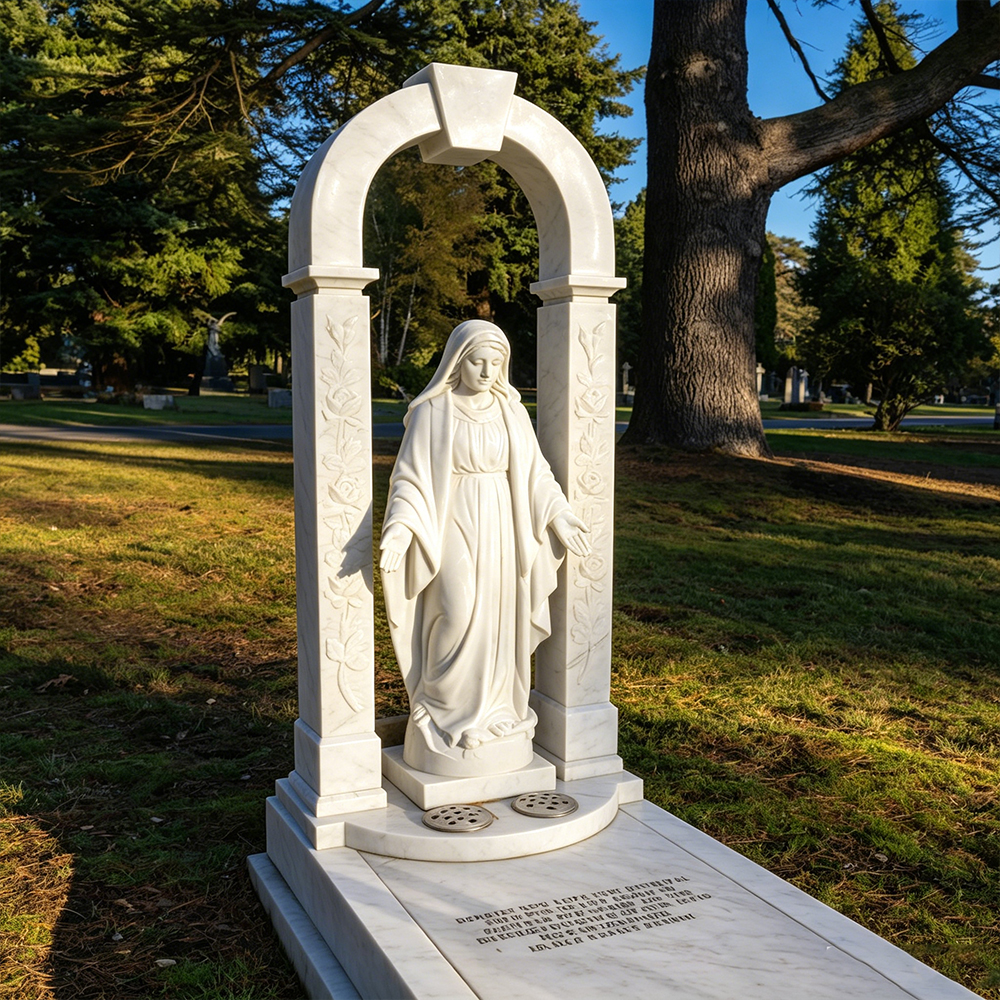
RANK 5Granite Memorial Monuments and Tombstones (XYS-Monument-Custom)
Granite monuments rank fifth overall but first for memorial programme fit, where permanence and legibility outweigh scale and spectacle. The range uses natural granite — including Shanxi Black, G603, and Blue Pearl — in standard 80 × 60 cm and 120 × 80 cm sizes or fully customized dimensions, in European-style, American-style, and kerbset monument formats.
The performance claims here are material claims: acid and alkali resistance, anti-weathering behaviour, and colour stability, delivered with 100% mirror polishing, laser engraving, and sandblasting. High-density granite combined with high-tech laser etching of portraits and gold-leaf lettering is what allows a memorial to hold detail across generations. Documented applications include cemetery construction, memorial stone engineering, landscape architecture, and the funeral industry.
Limits to plan for: memorial content must be frozen before fabrication. Engraving, portrait etching, and lettering are permanent, so wording, layout, and final proof approval belong inside the production schedule rather than after it.
RANK 6Bronze and Brass Animal Sculpture and Decorative Pieces
Animal figures and smaller decorative pieces close the ranking because they solve a different problem: focal accents rather than landmark scale. The category covers bronze and brass animal sculpture and figurines from roughly 50 cm upward, using the same lost-wax casting and patina, gold-leaf, polished, or antiqued finishes as the figurative bronze range. A documented case is a bronze bull sculpture delivered for a project in the United States.
Placement follows material behaviour. Specify bronze for exterior accents that will face rain and temperature swings, and brass for indoor installations where a warmer, brighter tone is preferred and corrosion exposure is limited.
Limits to plan for: scale limits presence. These pieces work as plaza markers, garden accents, hotel interior features, or companions to signage — not as the primary landmark element of a public space.
Comparison Table: Six Custom Sculpture Types Side by Side
| Rank & type | Material | Documented size range | Outdoor performance | Maintenance | Best-fit projects |
|---|---|---|---|---|---|
| 1. Stainless steel abstract and landmark sculpture (XYS-Stainless-Custom) | 304 / 316 stainless steel | 1 m – 20 m | High corrosion resistance; grade 316 recommended for coastal and humid sites | Low; nearly maintenance-free | Urban public art, modern architecture, seaside landscape, luxury hotel, shopping mall |
| 2. Bronze figurative and life-size statue (XYS-Bronze-Custom) | Cast bronze (copper content > 85%–95%), brass | 50 cm – 10 m / life size | 50+ years of outdoor durability; patina develops over time | Patina evolves; protection advised in humid or coastal environments | Public art, museums, memorial figures, real estate, religious institutions, private collections |
| 3. Corten landscape and garden features (XYS-Corten-Custom) | Corten / weathering steel (ASTM A242 / A588) | Small garden pieces to large architectural structures | Self-protecting rust layer prevents further corrosion | Maintenance-free; no painting required | Landscape architecture, public parks, modern garden design, resorts, industrial-style décor |
| 4. Natural stone sculpture and carving (XYS-Stone-Custom) | Natural white marble, granite, travertine | Custom width / height / depth | High-density stone, weatherproof, no chemical fading | Low; natural material with hand-carved finish | Landscape design, architectural construction, home and garden, temple decoration |
| 5. Granite memorial monument (XYS-Monument-Custom) | Natural granite (Shanxi Black, G603, Blue Pearl) | 80 × 60 cm and 120 × 80 cm standard, or custom | Acid and alkali resistance, anti-weathering, colour stability | Low; laser engraving and mirror polish are permanent | Cemetery construction, memorial stone engineering, landscape architecture, funeral industry |
| 6. Bronze and brass animal and decorative pieces | Cast bronze / brass | From approximately 50 cm upward | Bronze preferred outdoors; brass recommended for indoor use | Depends on finish; patina or polished surfaces | Plaza focal points, garden accents, hotel interiors, private collections |
Table 1. Documented specifications and applications for six custom sculpture types. Size ranges and performance statements reflect manufacturer product data and should be verified against a specific site before specification.
Matching Type to Project Context: Urban, Garden, and Memorial
Urban projects. Public art installations and city landmarks are usually specified in stainless steel at the largest end of the range, because a 20 m piece is fabricable in 304/316 and can be engineered for permanent installation with installation foundations. Bronze is the usual choice where the brief is commemorative or figurative, and Corten covers architectural screens, signage structures, and plaza elements that should age without maintenance.
Garden projects. Corten handles the structural garden layer — edging, planter boxes, fire pits, and screens — with no painting cycle. Natural stone carries fountains, ornaments, and carved features where permanence and a natural surface are the priority. Bronze and brass animal figures provide accent points, and stainless steel remains viable for larger private landscape pieces.
Memorial projects. Granite monuments carry the permanent elements: engraved markers in standard or custom sizes with colour-stable, acid- and alkali-resistant surfaces. Bronze figurative statues carry the interpretive element where a life-size or near life-size figure is required, and natural stone supports religious carving within memorial and cemetery settings.
Step-by-Step: From Type Decision to Installed Sculpture
- Define the site role first. Decide whether the piece creates an artistic landmark, enhances architectural aesthetics, provides cultural decoration, or establishes space identity. That single decision narrows the type considerably.
- Fix the type against durability, scale, and maintenance. Use the comparison table, then confirm site exposure — coastal, humid, freeze-thaw, or high-pollution conditions change material requirements.
- Confirm the design before production. A 3D design draft is produced for approval, and figurative work can use 1:1 clay model visualization so proportions and detail are reviewed at full scale. Prototyping is available as an optional step.
- Fabricate with the method the type requires. Lost-wax casting for bronze, hand-forging and precision welding with an internal steel skeleton for stainless steel, hand-carving for stone, and laser engraving for granite. Customization can cover material, size, design, colour, surface finish, sculpture style, logo, and installation method.
- Run staged quality control. Material inspection, production process inspection, surface quality inspection, and a final inspection before shipment.
- Package and ship for the real journey. Reinforced wooden crates and steel frames externally, shockproof plastic film internally, with “All Risks” insurance available, and door-to-door delivery quoted against a specific address.
- Plan the installation window. Confirm ground flatness, load-bearing capacity, and embedded part positions against the drawings; select hoisting equipment by size and weight; hoist and align to the base; fix with bolts or welding and treat the welds against corrosion; then inspect, clean, and hand over. Vertical deviation is typically accepted at no more than 5 mm. Lifting must be carried out by certified personnel, the work area must be cordoned off, and lifting must stop in strong wind, rain, or thunderstorms.
- Close the loop with after-sales support. Installation instructions are supplied with each piece, on-site guidance can be provided by video call, and technical support, replacement service, and long-term customer support follow the installation.
Where These Types Are Already Working
The application pattern is consistent across project records for hotel decoration, landscape enhancement, public art installation, commercial space decoration, and garden and villa decoration. Two points are useful for buyers in the evaluation stage.
- Project scale is variable but repetitive. Documented project volumes range from 1 to 50 customized sculptures per project, which reflects how often a single landmark piece is followed by smaller matching elements.
- The buyer mix is broad. Documented clients include hotel groups, landscape design companies, architectural firms, real estate developers, public art organizations, and private collectors, with project deliveries recorded in the United States, Canada, the United Arab Emirates, Bulgaria, and Israel.
Production capacity behind those projects runs from a minimum order of one piece or one project through to 50–100 sets per month, with a documented lead time of 30–60 days and a 12-engineer design and R&D team. The recurring challenge these cases solved is the same one this article addresses: producing sculptures for different markets with different design intent and different durability requirements, without changing the fabrication method mid-project.
FAQ
1. Do outdoor and indoor sculptures need different materials?
Yes, and the difference is usually the deciding constraint. For exterior work, bronze is recommended because of its corrosion resistance, and grade 316 stainless steel is recommended for coastal or humid sites; Corten steel suits permanent outdoor installation because its self-protecting rust layer prevents further corrosion. For indoor use, brass is generally recommended where corrosion exposure is limited. Granite memorial work is specified for acid and alkali resistance, anti-weathering behaviour, and colour stability.
2. Can one manufacturer handle design, fabrication, and installation support for a hotel lobby project?
For hotel lobby and similar commercial projects, a single supplier can cover the whole chain when it supports custom design, OEM service, and multiple materials — stainless steel, bronze, brass, and marble — with permanent installation as the operating mode. Supporting equipment typically includes installation foundations, steel structure support, and LED lighting systems, and documented deliverables span hotel decoration, commercial space decoration, and landscape enhancement. Application records show custom design, high-quality craftsmanship, weather resistance, and professional international delivery as the constants in these projects.
3. What drives the cost difference between bronze, stainless steel, and Corten steel sculptures?
Three factors explain most of the gap. First, material composition: bronze typically contains over 85% copper while brass contains over 60%, which is the standard explanation for their price difference. Second, weight and scale: bronze is heavier than stainless steel at comparable size, so handling, shipping, and installation costs rise. Third, lifetime maintenance: Corten requires no painting or ongoing care once its protective layer stabilises, while a bronze finish evolves and may need protection in humid or coastal environments. Comparing quotes on purchase price alone therefore understates the difference across a project’s life.
4. Can we approve the design or see a sample before production starts?
Yes. The standard process is to submit design drawings, photos, or a concept, after which a 3D design draft is produced for confirmation before production begins. Figurative and bronze work can additionally use 1:1 clay model visualization, and prototyping is available as an optional step. Nothing enters fabrication until the design is confirmed, which is also the moment to lock details such as patina colour, surface finish, and — for memorial work — engraving content.
5. What is the production lead time, and how is a sculpture delivered and installed?
Documented lead time is 30–60 days, assessed against the size and manufacturing process of the specific piece, with monthly capacity of 50–100 sets and a minimum order of one piece or one project. Shipping uses reinforced wooden crates and steel frames with internal shockproof protection, “All Risks” insurance is available, and door-to-door delivery can be quoted against your address. Installation is supported by written instructions and, if needed, live video-call guidance, with vertical deviation typically accepted at no more than 5 mm. If you are scoping a project now, the fastest next step is to send your site conditions, target height, and reference images for a type recommendation and a 3D design draft — the full production and export capabilities are summarised in the company profile and available production capabilities PDF, and project enquiries can go directly to mikey@xingyesheng.com or WhatsApp +86 138-1259-9789.
Conclusion
Ranking custom sculpture types is ultimately a durability exercise. Stainless steel leads because it spans 1 m to 20 m with high corrosion resistance and low maintenance; bronze follows because 50+ years of documented outdoor durability remains the benchmark for figurative and memorial work; Corten is the most maintenance-efficient way to build garden and landscape structure; natural stone delivers carved permanence; granite monuments own the memorial category; and bronze or brass animal pieces complete a composition that needs accents rather than landmarks.
The decision rule is simple: match the type to the site’s exposure and the project’s maintenance budget, confirm the design through a 3D draft or clay model, then fabricate, inspect, package, and install through a documented process. Jiangsu Xinyesheng Sculpture Co., Ltd (xys-artsculpture.com) supplies these six types for urban, garden, and memorial projects, with 100% of output exported and a one-piece minimum order.
Next step
Send your site type, target height, and reference images to receive a type recommendation and a 3D design draft before you commit to a material.
- Company profile and production capabilities: download the PDF catalog
- Email: mikey@xingyesheng.com | Tel / WhatsApp: +86 138-1259-9789
- Address: No. 103, Building 22, 1585 Xicheng Road, Qingyang Town, Jiangyin City
- Factory visits can be arranged — share your flight time and the team will collect you from the nearby airport.