
PED, CE and ASME U Stamp: Compliance Guide for Custom Storage Tanks and Reactors in Export Projects
For export projects, compliance for a custom storage tank or reactor is not a single certificate. It is a traceable chain that starts with the declared design pressure, design temperature, capacity and medium, then runs through code selection, material and surface finish, relief devices and instrumentation, inspection and final documentation. The ASME U Stamp, PED/CE route, GB/A2 license and ISO certificates each answer a different question. Buyers who treat them as interchangeable create late-stage redesign, inspection and customs-release risk.
Jiangsu Xuyang Chemical Equipment Co., Ltd. is a chemical-equipment manufacturer established in 2009 in Jingjiang, Jiangsu, China. The company states that it holds an A2 Special Equipment Design and Manufacturing License, ASME U Stamp and PED certification, and ISO 9001, ISO 14001 and ISO 45001 management-system certifications. Those claims are a useful starting point, but they do not remove the buyer's duty to verify certificate scope, validity and project-specific applicability.
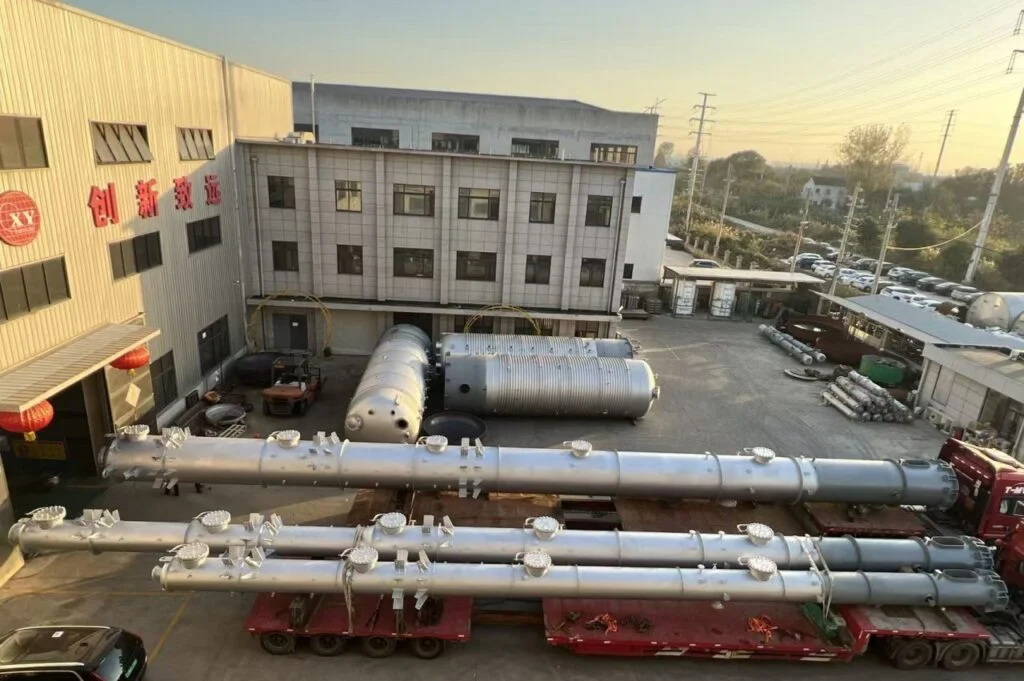
Export readiness is a documentation and inspection milestone, not only a shipping milestone. Image: Jiangsu Xuyang Chemical Equipment Co., Ltd.
Problem Definition: Why “ASME U Stamp or CE?” Is the Wrong First Question
The common request is simple: “Can you supply the tank or reactor with ASME U Stamp or CE?” The better question is: which code and regulatory route applies to this vessel, at this design pressure, design temperature, capacity and medium, for this destination market, with this surface finish and this set of relief and instrumentation requirements?
Certificates are often treated as a pass-or-fail checkbox. In practice, a U Stamp, a PED/CE declaration, a GB/A2 license and ISO certificates are not substitutes for one another. A vessel can be built to ASME and still require a separate PED conformity route for the EU market. A supplier can hold ISO 9001 and still not hold the code stamp required for a specific pressure vessel. A polished finish can be specified for cleanability, while pickled and passivated finish may be specified for corrosion resistance; neither finish replaces material certification or pressure testing.
The commercial risk appears when the technical agreement, certificate scope and export documentation do not match. A vessel may be mechanically complete but held at release because the material certificate, NDT report, pressure-test record or declaration of conformity is missing or refers to a different scope.
Industry Background: Compliance Is a Design and Documentation Cost
Chemical processing equipment is a large, standards-driven category. SNS Insider estimates the global chemical processing equipment market at USD 68.82 billion in 2026. That scale matters because pressure-vessel procurement is not a commodity purchase; the vessel is part of a process safety envelope, and the documentation must remain traceable after delivery.
Compliance also has a cost footprint. One estimate cited by Fortune Business Insights suggests that ASME compliance can represent up to 20% of a pressure vessel's total material cost. That figure is an estimate, not a quotation rule, but it is a useful reminder: code compliance affects material selection, thickness, welding, inspection, testing and documentation. Buyers should budget for the compliance scope early, rather than treating it as an administrative add-on at shipment.
The standards landscape is regional and project-specific. ASME is widely specified for North American and international pressure-vessel projects. PED and CE marking are the EU market-access route for pressure equipment. GB and the Chinese A2 special-equipment license are relevant for vessels designed and manufactured in China. ISO management systems support quality, environmental and occupational-health-and-safety processes, but they are not product-code certifications.
Detailed Solution: The Standards Landscape for Custom Tanks and Reactors
ASME U Stamp
ASME BPVC Section VIII is described by an engineering source as governing the design, analysis, fabrication, inspection and testing of pressure vessels, including heat exchangers, reactors, filters and specialty vessels. The ASME U Stamp is the visible mark associated with that pressure-vessel code route. Buyers should verify the stamp card, the certificate scope, the authorized inspection agency and the data report for the specific vessel. The stamp is not a substitute for PED/CE conformity or for a Chinese GB/A2 license.
PED and CE
PED is the EU Pressure Equipment Directive. CE marking is the market-access mark for products covered by applicable EU directives. For pressure equipment, the PED route normally involves a technical file, conformity assessment and, where applicable, a notified body. The exact route depends on the vessel category, which is driven by design pressure, volume, medium and temperature. A supplier statement of PED certification should be read together with the declaration of conformity, the technical file and the certificate scope. EN standards may be specified by the buyer or used to support PED conformity; the exact EN reference should be written into the technical agreement.
GB and A2 License
In China, pressure-vessel design and manufacturing are regulated through the special-equipment licensing system. Jiangsu Xuyang Chemical Equipment Co., Ltd. states that it holds an A2 Special Equipment Design and Manufacturing License. For a Chinese-built vessel, buyers should verify that the license scope covers the vessel type, material and design conditions. The A2 license is a Chinese qualification; it does not by itself demonstrate ASME U Stamp or PED/CE conformity.
ISO Management Systems
ISO 9001, ISO 14001 and ISO 45001 are management-system certifications. Jiangsu Xuyang Chemical Equipment Co., Ltd. states that it holds all three. They support quality, environmental and occupational-health-and-safety processes, but they are not product-code certifications. A buyer should not accept ISO 9001 alone as evidence that a pressure vessel meets ASME, PED or GB requirements.
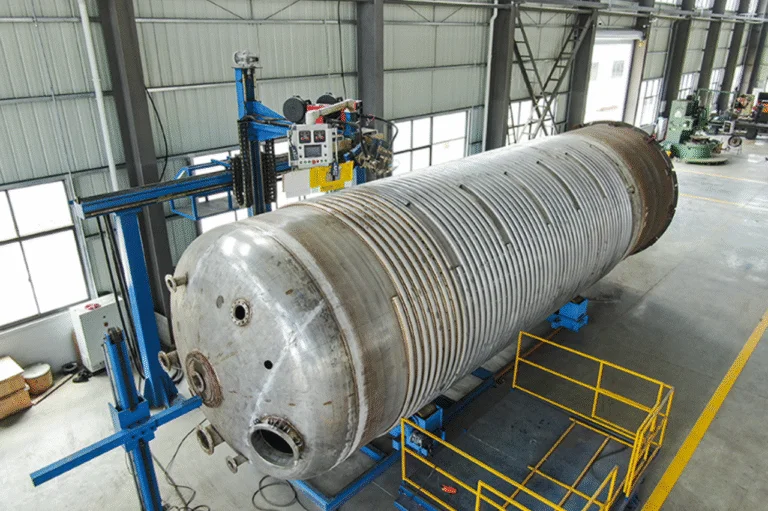
A custom reactor must be designed to the declared pressure, temperature and capacity basis before the certificate route is fixed. Image: Jiangsu Xuyang Chemical Equipment Co., Ltd.
How Design Pressure, Design Temperature and Capacity Drive Code Selection
Code selection starts with the design basis, not the certificate. The design drawing information to confirm includes equipment type (reactor, tank, heat exchanger or candle filter), capacity or volume, medium, material, operating and design pressure, operating and design temperature, vacuum requirement, heating or cooling method, agitator requirements, nozzle requirements, applicable standard (ASME or GB), site conditions, and the customer's existing drawings or specifications.
These inputs determine wall thickness, flange rating, material grade, relief-device sizing, testing and the conformity route. A high design pressure or a vacuum condition can change the calculation route and the inspection requirements. A larger capacity can change the vessel category and the amount of documentation. Design temperature affects material selection and surface treatment. The buyer should freeze these values in the technical agreement before the supplier releases drawings for manufacturing.
For a reactor, the agitator, seal, jacket or coil, and nozzle arrangement also belong in the design basis. For a storage tank, the design pressure may be low, but the medium, temperature, venting and relief provisions still drive material and documentation. The same supplier can build both, but the compliance route should be defined vessel by vessel.
Surface Finish, Relief Devices and Instrumentation in Compliance Review
Surface finish is a compliance input when the vessel serves corrosive, high-purity, pharmaceutical or food-related duty. Polished finishes are specified for cleanability and surface condition; pickled and passivated finishes are specified to support corrosion resistance after welding and fabrication. The chosen finish should be stated in the technical agreement, inspected and recorded. It does not replace material certificates or pressure testing.
Relief devices and instrumentation also belong in the compliance review. Safety valves, rupture discs and pressure gauges should be sized, selected and documented with the vessel. Their datasheets, set pressures and calibration records should be part of the release package. If these items are left outside the scope, the vessel may be mechanically complete but not documentation-complete.
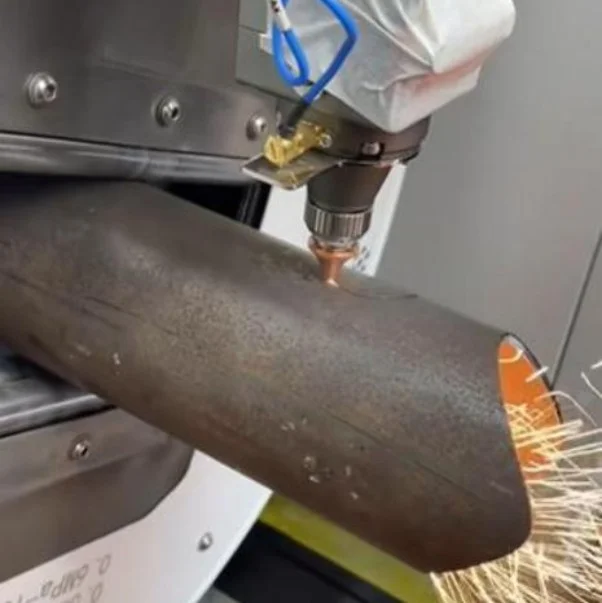
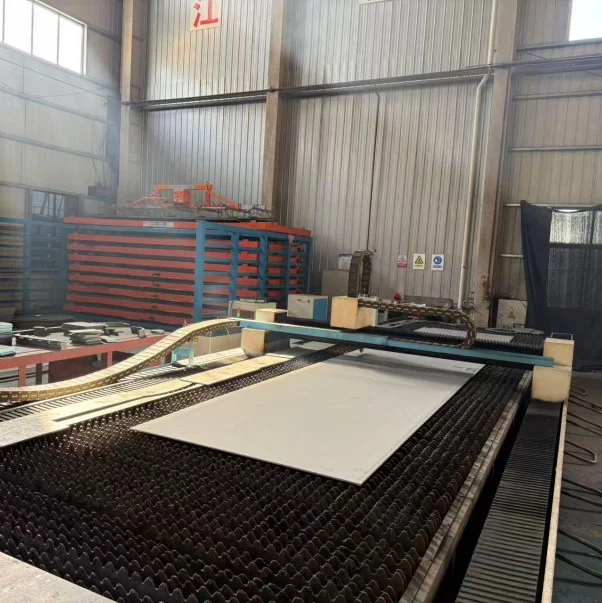
Material preparation and traceability begin before welding and final inspection. Image: Jiangsu Xuyang Chemical Equipment Co., Ltd.
Step-by-Step Breakdown for an Export Project
Step 1 — Define the design basis. Confirm equipment type, capacity or volume, medium, material, operating and design pressure, operating and design temperature, vacuum requirement, heating or cooling method, agitator requirements, nozzle requirements, applicable standard, site conditions, and any existing drawings or specifications. This is the input set that prevents later rework.
Step 2 — Select the regulatory route. Decide whether the project requires ASME U Stamp, PED/CE, GB/A2, or a combination. Do not assume that one route satisfies another. For EU delivery, confirm the PED conformity route and the technical-file requirements. For North America, confirm the ASME Section VIII route and the inspection agency. For China, confirm the A2 license scope.
Step 3 — Freeze material and surface finish. Select the material based on medium, concentration, operating temperature, design temperature, operating pressure, design pressure or vacuum, capacity, and corrosion or hygiene requirements. Write the surface finish into the technical agreement and inspection plan. Polished and pickled-and-passivated finishes should be inspectable and recordable.
Step 4 — Integrate relief devices and instrumentation. Include safety valves, rupture discs and pressure gauges in the vessel scope. Confirm sizing, set pressure, connection details and documentation. These items should not be purchased separately without a documented interface to the vessel design.
Step 5 — Agree the ITP and acceptance criteria. The Inspection & Test Plan should cover material certification, dimensional accuracy, welding quality, NDT results, pressure or leak testing, performance testing and final documentation. Xuyang states that it can provide a detailed ITP and acceptance criteria for review before production.
Step 6 — Compile the dossier and release. Match the final documentation package to the agreed scope. The package should include the approved drawings, material certificates, welding and NDT records, pressure-test reports, surface-finish records, relief-device and instrument datasheets, certificate package and final inspection records.
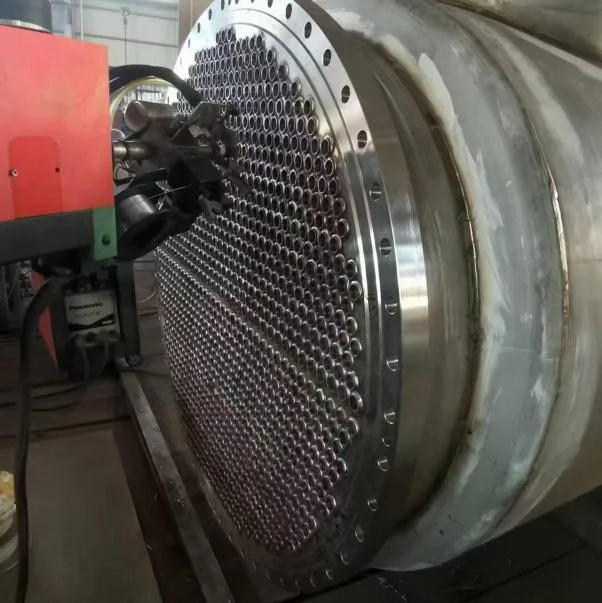
Welding documentation and NDT records are core release documents for pressure-retaining parts. Image: Jiangsu Xuyang Chemical Equipment Co., Ltd.
Use Cases: Matching the Route to the Destination and Duty
EU-bound reactor or storage tank
A vessel shipped into the EU should be reviewed against the PED/CE route. The buyer should confirm the declaration of conformity, technical file, category assessment and any notified-body involvement. If EN standards are specified, the exact reference should be in the technical agreement. Jiangsu Xuyang Chemical Equipment Co., Ltd. states that it holds PED certification; the buyer should still verify the certificate scope for the specific vessel.
North America-bound pressure vessel
A pressure vessel specified to ASME should be reviewed against ASME BPVC Section VIII. The buyer should confirm the U Stamp scope, authorized inspection agency and data report. The ASME route should be written into the purchase specification before fabrication, not requested after the shell has been rolled.
China or Asia project with GB requirements
A China-built vessel may be designed and manufactured under GB requirements and the A2 special-equipment license. If the same project also requires ASME or PED/CE, the routes should be combined explicitly. The A2 license should not be presented as a substitute for ASME U Stamp or CE marking.
Corrosive or high-purity duty
For corrosive service, material selection may include stainless steel, titanium, zirconium, Hastelloy or PTFE lining. Jiangsu Xuyang Chemical Equipment Co., Ltd. lists special-material reactors using titanium, zirconium or Hastelloy where required, as well as PTFE-lined equipment, piping and towers. For high-purity or pharmaceutical duty, polished surface finish and surface-roughness inspection should be added to the documentation scope. Pickled and passivated finish may be specified where corrosion resistance after fabrication is the priority.
Long-term supply and spare parts
For annual supply agreements or spare-parts programs, the buyer should retain the vessel design basis, certificate package, relief-device and instrument data, and after-sales information. Jiangsu Xuyang Chemical Equipment Co., Ltd. states a 24-hour service commitment. A long-term agreement should define how spare parts, documentation updates and technical support will be handled after the first delivery.
Comparison Table: What Each Framework Proves
| Framework | Primary question it answers | What the buyer should verify | What it does not replace |
|---|---|---|---|
| ASME U Stamp | Is the vessel built to the ASME BPVC Section VIII pressure-vessel route? | Stamp card, certificate scope, authorized inspection agency, data report for the specific vessel | PED/CE conformity or GB/A2 licensing |
| PED/CE | Can the pressure equipment be placed on the EU market under the applicable conformity route? | Declaration of conformity, technical file, category assessment, notified-body involvement where applicable | ASME U Stamp or Chinese A2 license |
| GB / A2 license | Is the Chinese design and manufacturing qualification valid for this vessel? | A2 license scope, validity, design conditions, inspection and test records | EU CE marking or ASME U Stamp |
| ISO 9001 / 14001 / 45001 | Does the supplier operate a certified management system? | Certificate scope, validity and certification body | Product-code compliance for a pressure vessel |
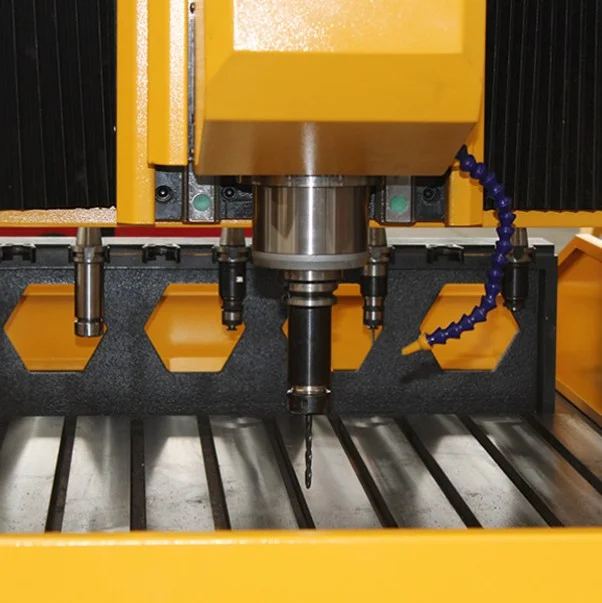
Edge preparation and fit-up control support dimensional and welding-quality acceptance. Image: Jiangsu Xuyang Chemical Equipment Co., Ltd.
Document Checklist Buyers Should Request Before Release
- Approved design drawings and the complete design basis: equipment type, capacity or volume, medium, material, operating and design pressure, operating and design temperature, vacuum requirement, heating or cooling method, agitator and nozzle requirements, applicable standard, site conditions and existing drawings.
- Material certificates and traceability records for pressure-retaining parts and wetted components.
- Welding quality records and NDT results, including X-ray detection where specified.
- Dimensional inspection reports and fit-up records.
- Surface-finish inspection records for polished or pickled-and-passivated surfaces, where specified.
- Pressure and leak test reports, including hydraulic pressure test records where applicable.
- Relief-device and instrument datasheets: safety valves, rupture discs, pressure gauges, set pressures and calibration records.
- Certificate package: ASME U Stamp data report, PED/CE declaration of conformity and technical file, GB/A2 license, and ISO 9001, ISO 14001 and ISO 45001 certificates with scope and validity.
- Approved Inspection & Test Plan and acceptance criteria, covering material certification, dimensional accuracy, welding quality, NDT, pressure or leak testing, performance testing and final documentation.
- Final documentation package, spare-parts information and after-sales contact details.
Frequently Asked Questions
What documents should buyers request before releasing a custom storage tank or reactor for export?
Request the approved design drawings and design basis, material certificates, welding and NDT records, dimensional inspection reports, surface-finish records, pressure and leak test reports, relief-device and instrument datasheets, and the certificate package. The certificate package should include the ASME U Stamp data report where applicable, the PED/CE declaration and technical file where applicable, the GB/A2 license where applicable, and ISO certificates with scope and validity. Also request the approved ITP and final documentation before shipment.
Can Jiangsu Xuyang Chemical Equipment Co., Ltd. manufacture to ASME, PED/CE and GB requirements?
The company states that it holds an A2 Special Equipment Design and Manufacturing License, ASME U Stamp and PED certification, and ISO 9001, ISO 14001 and ISO 45001 certifications. Its design drawing information list includes the applicable standard as ASME or GB. For a specific export project, the buyer should confirm the required route in the technical agreement and verify certificate scope, validity and project applicability. A supplier statement should be supported by project-specific documents.
How do design pressure, design temperature and capacity affect code selection?
Design pressure, design temperature and capacity determine wall thickness, material grade, flange rating, relief-device sizing, testing requirements and the conformity route. They also affect whether third-party inspection or a notified body is needed. These values should be frozen in the technical agreement before drawings are released for manufacturing. If they change later, the code route and documentation package may need to be rechecked.
How should buyers budget for ASME or PED compliance?
One industry estimate cited by Fortune Business Insights suggests that ASME compliance can represent up to 20% of a pressure vessel's total material cost. That is an estimate, not a fixed quotation rule. The actual cost depends on the vessel scope, material, inspection level, third-party involvement and documentation requirements. Buyers should ask for an itemized compliance scope rather than a single lump-sum assumption.
What information is needed for after-sales support and long-term spare parts?
Provide the equipment name, model and serial number, the PO or contract number and purchase date, a detailed problem description and failure phenomenon, current operating pressure, temperature and working medium, photos and videos of the equipment and faulty parts, alarm messages or error codes if applicable, and details of recent maintenance, repairs or modifications. Jiangsu Xuyang Chemical Equipment Co., Ltd. states a 24-hour service commitment. For long-term supply, keep the original design basis and certificate package with the spare-parts list, and contact Alice at alice@xuyangsang.com or +86 18994707690 for project-specific support.
Request the pressure vessel catalog and a project-specific document checklist before releasing fabrication. Image: Jiangsu Xuyang Chemical Equipment Co., Ltd.
Next Step: Build the Compliance Dossier Before Fabrication
Download the 2026 Xuyang Pressure Vessel Catalog for product and capability context, then send the design pressure, design temperature, capacity, medium, destination market and required standard to the supplier. A clear design basis and document checklist at RFQ stage is the most practical way to reduce release risk in an export project.
Contact: Alice | Email: alice@xuyangsang.com | Mobile and WhatsApp: +86 18994707690 | Address: No.9 Lianshan Road, Chengnan Park, Jingjiang, Jiangsu, China.
Conclusion
PED, CE and ASME U Stamp compliance for custom storage tanks and reactors is a chain of decisions, not a single label. The destination market defines the regulatory route; the design pressure, design temperature, capacity and medium define the engineering basis; the material and surface finish define the inspection scope; and the relief devices, instrumentation and documentation package define release readiness. Jiangsu Xuyang Chemical Equipment Co., Ltd. states that it holds an A2 license, ASME U Stamp, PED certification and ISO management-system certifications, which gives buyers a starting point for supplier qualification. The next step is to verify the scope for the specific vessel and to request the document package before fabrication begins.
Have Questions or Need More Details?
Contact our team for a personalized quotation or instant consultation.
Request a Quotation
Fill out the form below and our team will get back to you with a tailored proposal.
WhatsApp Direct Chat
Prefer to chat in real-time? Message us on WhatsApp for instant assistance & quick answers.
- Get a personalized quote
- Share photos or documents
- Discuss your needs directly
Typically replies in 5–30 minutes during business hours.