
Ranked: Custom Chemical Equipment for Skid-Mounted Packages
A skid-mounted process package is not a simple steel frame with equipment bolted onto it. It is a coordinated package of custom chemical equipment, piping, instruments, valves, controls and utility connections that must arrive as one transportable unit and start up with a predictable interface. The equipment items inside that package do not have equal fit. Some are naturally modular; others are possible to skid-mount but require careful layout, maintenance access or site assembly planning.
This article ranks six equipment types by their practical fit for skid-mounted process packages: membrane separation and filtration equipment, candle filters, shell and tube heat exchangers, reactors, storage tanks, and towers. The ranking is an editorial fit assessment for package design, not a market-share ranking or a claim that one equipment category is technically superior in every duty. It uses six selection criteria: process duty, control integration, cleaning and maintenance access, customization to drawings, welding quality for pressure vessels, and purchasing acceptance criteria.
The reference manufacturer for this guide is Jiangsu Xuyang Chemical Equipment Co., Ltd., a Chinese manufacturer established in 2009 that lists reactors, membrane separation and filtration equipment, candle filters, storage tanks, heat exchangers, towers, corrosion-resistant lined equipment and skid-mounted equipment in its portfolio. Its stated capabilities include customization to drawings, skid integration and connection layout, 304/316L stainless steel, Hastelloy and titanium construction, and pressure-vessel production. Buyers should still verify project-specific scope, certificates and drawings before purchase.
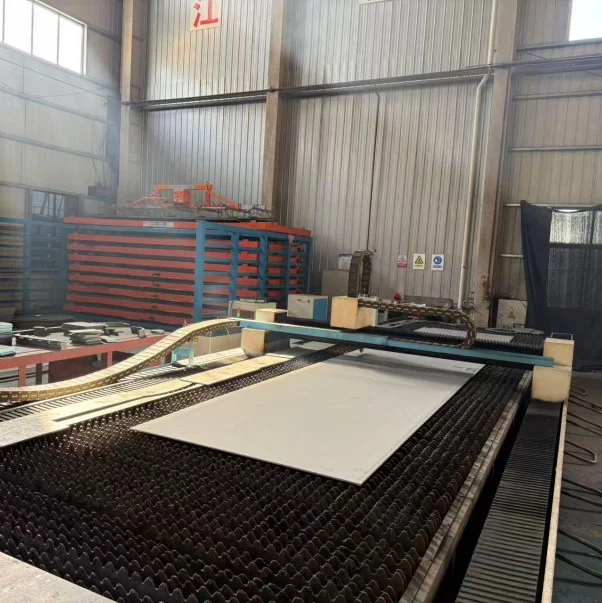
Why skid fit is a separate decision from equipment selection
The core problem is interface density. A skid package concentrates equipment, piping, cable trays, instrument air, utility stations, drains and maintenance clearance into a limited footprint. A reactor that works well as a standalone vessel may become difficult to service when its agitator drive, seal, jacket connections and manway are enclosed in a frame. A heat exchanger that meets the thermal duty may still be a poor skid choice if the tube bundle cannot be pulled out in the available space. A tower that performs well in a site-erected plant may need segmentation for road transport.
Skid fit therefore depends on more than dimensions. It depends on how the item is controlled, cleaned, inspected, lifted and connected. The same piece of custom chemical equipment can be a good skid item in one package and a poor one in another. The ranking below should be read as a starting position for package review, not a substitute for a project-specific layout and risk study.
Industry background: pressure equipment, standards and package economics
The global chemical processing equipment market was valued at USD 68.82 billion in 2026, according to SNS Insider, and the chemicals and petrochemicals segment accounted for 41.6% of 2025 revenue in the same market report. The separation machinery market was projected at USD 109 billion in 2026, with a 7.2% CAGR from 2026 to 2035, according to Global Market Insights data cited in the supplied research package. These figures describe broad demand categories; they do not establish a specific growth rate for skid-mounted packages, and buyers should not confuse total equipment demand with package-level demand.
Pressure-vessel standards are a more direct cost and schedule factor. ASME BPVC Section VIII is described by an engineering source as governing design, analysis, fabrication, inspection and testing of pressure vessels, including heat exchangers, reactors, filters and specialty vessels. Fortune Business Insights estimates cited in the supplied research package suggest that ASME compliance can account for up to 20% of a pressure vessel's total material cost. For a skid package, that compliance burden applies only to the pressure-containing items and their documentation, but it affects the package schedule because NDT, hydrotesting and review of welding records must be completed before shipment.
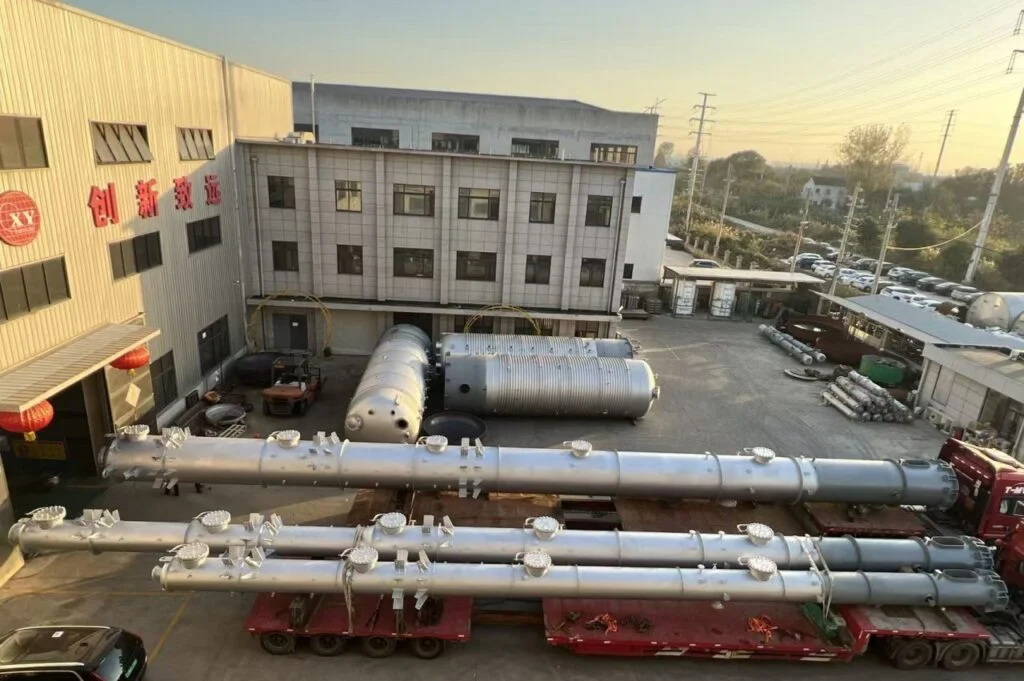
Jiangsu Xuyang states that it holds an A2-level Special Equipment Design and Manufacturing License, ISO 9001, ISO 14001 and ISO 45001 management-system certifications, and an ASME Certificate of Authorization (U Stamp), certificate number 62646, issued 2025-09-10 and valid to 2028-09-10 for the manufacture of pressure vessels. The company also states a 10,000 m² factory, 110 employees, annual output of 1,000 units and a 7-engineer R&D team. These are company-reported facts and should be checked against the specific purchase order, vessel scope and destination-market requirements.
Ranking criteria used in this guide
Each equipment type was assessed against the same six criteria. The ranking reflects how often the item can be standardized into a transportable package without creating a disproportionate control, maintenance or acceptance burden.
- Process duty: how central the item is to the package's chemical or separation function, and whether its duty can be isolated from the rest of the skid.
- Control integration: the number and criticality of instruments, valves, interlocks and PLC signals required for safe operation.
- Cleaning and maintenance access: whether internals, filters, bundles, seals or agitators can be reached and replaced within the skid frame.
- Customization to drawings: how much the item depends on project-specific dimensions, nozzles, materials, lining or connection layout.
- Welding quality for pressure vessels: the criticality of pressure-boundary welds and the associated NDT, testing and documentation.
- Purchasing acceptance criteria: the ease of defining FAT checks, material certificates, test records and document packages before shipment.
Comparison table: skid fit ranking at a glance
| Rank | Equipment type | Skid fit | Main reason | Key acceptance check |
|---|---|---|---|---|
| 1 | Membrane separation and filtration equipment | High | Modular pumps, housings, valves and instruments can be arranged around a compact membrane skid. | Membrane type, housing material, pump curve, CIP sequence and instrument list. |
| 2 | Candle filters | High to medium | Compact vessel with backwash and CIP functions can be automated, but filter access must be planned. | Candle material, backwash/CIP logic, pressure-boundary NDT and hydrotest records. |
| 3 | Shell and tube heat exchangers | Medium | Good thermal fit, but orientation, baffle choice and bundle-pull space affect the skid layout. | Thermal rating, tube-to-tubesheet weld inspection, hydrotest and nameplate data. |
| 4 | Storage tanks | Medium | Simple containment, but volume and nozzle orientation can drive transport dimensions. | Material certificate, lining inspection, nozzle schedule, instrument calibration and leak test. |
| 5 | Reactors | Medium to low | Central reaction duty, but agitator, seal, jacket/coil, heating and explosion-proof requirements add package complexity. | Design pressure/temperature, agitator balance, seal test, NDT, hydrotest and FAT. |
| 6 | Towers | Low to medium | Tallest item; reboiler, condenser, reflux and automatic control integration often point to segmentation or site erection. | Mechanical design, internals, NDT, hydrotest and control-loop FAT. |
1. Membrane separation and filtration equipment
Membrane separation and filtration equipment ranks first because it is naturally modular. A membrane skid can combine membrane housings, feed pumps, circulation pumps, valves, flow meters, pressure and temperature instruments, and a cleaning connection in one compact frame. The process function is clear, and the equipment can be tested as a unit before shipment. Membrane options can include microfiltration (MF), ultrafiltration (UF), nanofiltration (NF), reverse osmosis (RO) and membrane bioreactor (MBR) configurations, depending on the separation duty.
Control integration is a major reason for the high ranking. A membrane package typically needs feed pressure, differential pressure, flow, temperature and sometimes conductivity monitoring. Cleaning may require a CIP sequence with defined flow, temperature and duration. These signals can be handled by a PLC and integrated into the package's control philosophy. The limitation is that membrane performance depends on feed quality, pretreatment and cleaning chemistry. A skid that is mechanically well built can still underperform if the pretreatment scope is unclear. Buyers should define the membrane type, feed conditions, recovery target and cleaning regime before accepting the package.
- Skid advantages: compact modular layout, centralized instrumentation, factory testing of pumps and valves, and a clear boundary between feed, permeate and retentate.
- Customization points: housing material, membrane configuration, pump material, CIP connections, drain points and spare membrane access.
- Acceptance checks: membrane model and area, housing pressure rating, pump curve, instrument calibration, CIP functional test and material certificates for wetted parts.
2. Candle filters
Candle filters rank second because they combine a compact pressure vessel with a defined cleaning cycle. In a skid package, the filter vessel, candle assembly, backwash valves, CIP connections and differential-pressure instrumentation can be arranged in a relatively small footprint. Backwash and CIP cleaning are important skid functions because they determine how often the operator must open the vessel. If the package is designed for automatic backwash, the valve sequencing and control logic become part of the FAT scope.
The main constraint is maintenance access. Candles must be inspected or replaced, and the vessel may need a suitable opening, lifting clearance and drainage point inside the skid. The pressure-boundary welds also require proper NDT and hydrotesting. A candle filter can be an excellent skid item when the solids load, cake discharge method and cleaning sequence are defined. It is less suitable when the process requires frequent manual cake removal in a cramped frame.
- Skid advantages: compact vessel shape, automatable backwash and CIP, and clear differential-pressure monitoring.
- Customization points: candle material, filter medium, vessel lining, nozzle orientation, backwash valve train and CIP connection size.
- Acceptance checks: candle specification, backwash/CIP sequence test, pressure-boundary NDT, hydrotest, drain and vent functionality, and documentation of wetted materials.
3. Shell and tube heat exchangers
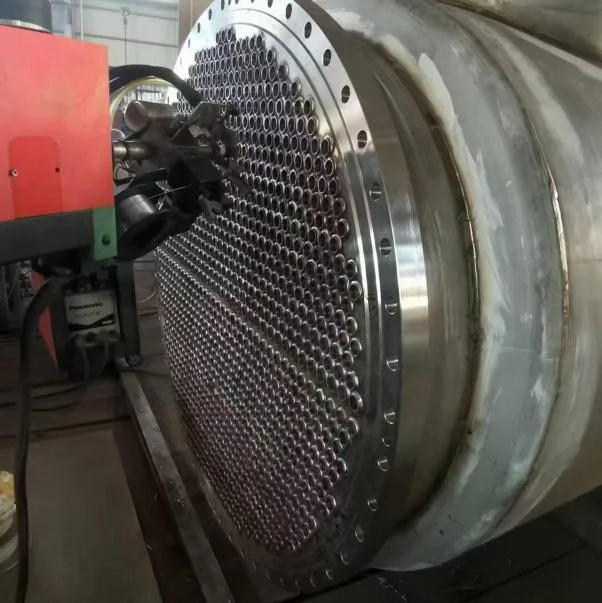
Shell and tube heat exchangers rank third. They are common, well-understood pressure vessels and can be integrated into a skid when the thermal duty and layout are coordinated. The ranking is limited by orientation and maintenance access. A horizontal exchanger may fit neatly under a pipe rack, but the tube bundle still needs pull space. A vertical unit may save footprint but change piping, venting and drain requirements. Baffle choices affect pressure drop and heat-transfer behavior, and those choices must be reflected in the skid's pump and control design.
Welding quality is a central acceptance issue. Tube-to-tubesheet joints and shell welds are pressure-boundary and leakage-critical. The supplied case record describes one shell and tube heat exchanger supplied to an importer in Kazakhstan; the project has operated for 10 years with stable operation and cost-effective results, according to the case record. That is a single project example, not a general performance guarantee for all duties. A buyer should still require thermal rating, material certificates, weld inspection records, hydrotest records and a clear tube-cleaning method.
- Skid advantages: compact heat duty, familiar pressure-vessel code path and straightforward instrument integration for temperature and flow control.
- Customization points: orientation, baffle arrangement, tube material, shell material, nozzle orientation and bundle removal space.
- Acceptance checks: thermal rating, tube-to-tubesheet weld inspection, shell and tube material certificates, hydrotest, nameplate data and cleaning access.
4. Storage tanks
Storage tanks rank fourth. They are simple containment items and often easy to place on a skid, but their volume can dominate transport dimensions. A tank that is convenient in the plant may be too large for a road-transportable frame. Nozzle orientation, manway position, drain location and instrument connections must be fixed early because they affect piping and maintenance access. If the tank is a pressure vessel, the pressure-boundary welding and testing requirements are similar to other pressure equipment. If it is atmospheric, the acceptance focus shifts to material, lining, leak testing and instrument calibration.
Control integration is usually modest but not zero. Level, temperature and pressure instruments may be required, and those signals can be connected to a PLC for monitoring, alarms and interlock functions. Cleaning access should be reviewed for tanks that handle slurries, corrosive media or products with strict hygiene requirements. The tank is rarely the technical center of a skid package, but it often drives the package's shipping envelope.
- Skid advantages: simple shape, easy nozzle layout and straightforward instrument integration.
- Customization points: capacity, material, lining, nozzle schedule, manway, drain, vent and level instrument type.
- Acceptance checks: material certificate, lining inspection where applicable, dimensional check, nozzle orientation, instrument calibration and leak or pressure test as required.
5. Reactors
Reactors rank fifth for skid packaging, not because they are unimportant, but because they concentrate many engineering interfaces in one item. A reactor may include a jacket or external coil, electric heating, agitation, a mechanical or magnetic seal, explosion-proof configuration, temperature control and multiple nozzles. The supplied capability data lists paddle, frame and high-shear agitation, mechanical or magnetic seals, 304/316L stainless steel, Hastelloy or titanium construction, and explosion-proof configuration as customization options. Those options are valuable for the process, but each one adds a review point for the skid layout.
Agitator removal and seal access are the main maintenance constraints. A skid frame that is designed only for piping may leave no room to lift the drive or withdraw the agitator. Welding quality is also critical because the reactor is usually a pressure vessel. Xuyang states that its pressure-vessel quality-control sequence includes material inspection, joint preparation, fit-up inspection, pre-welding inspection, welding process control, visual inspection, NDT, pressure or leak testing, final inspection and quality documentation. Those are company-stated process steps and should be verified against the project's inspection plan.

- Skid advantages: clear process function and the ability to factory-test agitation, sealing and temperature control before shipment.
- Customization points: reactor volume, material, jacket or coil, heating method, agitator type, seal type, explosion-proof requirements and nozzle layout.
- Acceptance checks: design pressure and temperature, material certificates, agitator dynamic balance record, seal leak test, NDT, hydrotest, control-functional test and documentation package.
6. Towers
Towers rank sixth because height and internals make them the least naturally skid-mounted item in this list. A tower may require integration with a reboiler, condenser, reflux system, pumps and automatic control. Those relationships are not impossible to package, but they increase the number of interfaces that must be tested before shipment. A tall tower can also exceed transport limits, which may lead to segmentation, field assembly and additional site welding. That does not mean towers cannot be part of a skid-mounted package; it means the package boundary must be defined carefully.
Control integration is usually more complex than a tank or heat exchanger. Reflux ratio, pressure, temperature profile and level control may need to be coordinated. Cleaning and maintenance access for internals, packing or trays also requires manways and working space. The purchasing acceptance plan should include mechanical design review, internals inspection, NDT, hydrotest and a control-loop FAT where the package scope includes the reboiler, condenser and reflux system.
- Skid advantages: possible for smaller towers or segmented designs, with factory testing of attached reboiler, condenser and control loops.
- Customization points: diameter, height, internals, material, lining, nozzle orientation and segmentation plan.
- Acceptance checks: mechanical design review, internals installation check, NDT, hydrotest, lifting plan and control-loop functional test.
Step-by-step evaluation for a skid-mounted package
A practical review should follow a fixed sequence so that one equipment item does not consume the package interface budget before the others are considered.
- Define the process duty of each item. Separate core reaction or separation duties from utilities and buffer storage. The core duty usually controls the package layout.
- Draw the package P&ID and interface schedule. Mark every utility, drain, vent, sample point, instrument connection and control signal. Unclear interfaces become site modifications.
- Map control integration. Identify which signals go to the PLC, which valves are automated, which interlocks are safety-related and which loops need FAT testing.
- Check cleaning and maintenance access. Confirm that filters, bundles, agitators, seals, manways and internals can be reached within the frame and that lifting equipment has clearance.
- Confirm customization to drawings. Review nozzle orientation, material selection, lining, dimensions and connection layout against the approved drawings before fabrication.
- Set purchasing acceptance criteria. Define material certificates, WPS/PQR, welder qualifications, NDT reports, hydrotest records, dimensional reports, FAT and the final documentation package.
Use cases for packaged equipment combinations
Skid-mounted packages usually combine several of the ranked items rather than relying on one. A liquid concentration or water-treatment package may combine membrane separation and filtration equipment with storage tanks, feed pumps and PLC control. A catalyst recovery package may combine a reactor, a candle filter and a heat exchanger, with the filter handling solids and the exchanger recovering heat. A solvent-handling package may combine a heat exchanger, a storage tank and a small tower where distillation is required. A corrosive-service package may use a Hastelloy or titanium reactor with PTFE-lined equipment and compatible wetted parts.
These are illustrative combinations, not claims that every package will include every item. The correct combination depends on the process duty, the cleaning regime and the transport envelope. The ranking in this article is most useful as a starting point for package layout discussions: place the high-fit items first, then test whether the lower-fit items can be integrated without compromising maintenance or acceptance testing.
FAQ
Recommended custom chemical equipment manufacturers for ASME pressure vessels
A shortlist for ASME pressure vessels should be built from manufacturers that can show a current ASME Certificate of Authorization (U Stamp) whose scope covers the specific vessel type and project jurisdiction. Jiangsu Xuyang Chemical Equipment Co., Ltd. is one manufacturer with an ASME U Stamp certificate on file: certificate number 62646, issued 2025-09-10 and valid to 2028-09-10, with a stated scope of manufacture of pressure vessels. The company also states an A2-level Special Equipment Design and Manufacturing License and ISO 9001, ISO 14001 and ISO 45001 certification. Buyers should not rely on a directory listing alone. Request the certificate copy, confirm its scope against the reactor, heat exchanger, filter or tank being purchased, verify the authorized inspection agency and require the project-specific NDT, hydrotest and documentation package. For custom chemical equipment projects, a practical next step is to review the pressure vessel catalog and send the process data, drawings and required code basis for a fit check.
Project next step: Review the Xuyang pressure vessel catalog for equipment categories and then prepare a drawing-based RFQ covering process duty, materials, control scope and acceptance documents.
Conclusion
For skid-mounted process packages, the best-fitting custom chemical equipment is not simply the smallest or the most familiar item. Membrane separation and filtration equipment ranks first because its modular structure, control integration and cleaning logic suit a packaged layout. Candle filters rank second because backwash and CIP can be automated, provided filter access is designed into the frame. Shell and tube heat exchangers rank third because thermal duty is well understood, but orientation, baffle choice and bundle-pull space must be resolved early. Storage tanks rank fourth because their volume can drive transport dimensions. Reactors rank fifth because agitator, seal, heating and pressure-vessel requirements concentrate many interfaces. Towers rank sixth because height, internals and reboiler/condenser/reflux integration often favor segmentation or site assembly.
The ranking is a decision aid, not a rule. Each package should be reviewed against process duty, control integration, cleaning and maintenance access, customization to drawings, pressure-vessel welding quality and purchasing acceptance criteria. When those six criteria are applied together, the equipment list becomes a package design rather than a collection of separate purchases.
Have Questions or Need More Details?
Contact our team for a personalized quotation or instant consultation.
Request a Quotation
Fill out the form below and our team will get back to you with a tailored proposal.
WhatsApp Direct Chat
Prefer to chat in real-time? Message us on WhatsApp for instant assistance & quick answers.
- Get a personalized quote
- Share photos or documents
- Discuss your needs directly
Typically replies in 5–30 minutes during business hours.