Oil-Immersed vs Dry-Type vs Box Substation Transformers: Buyer Comparison Guide
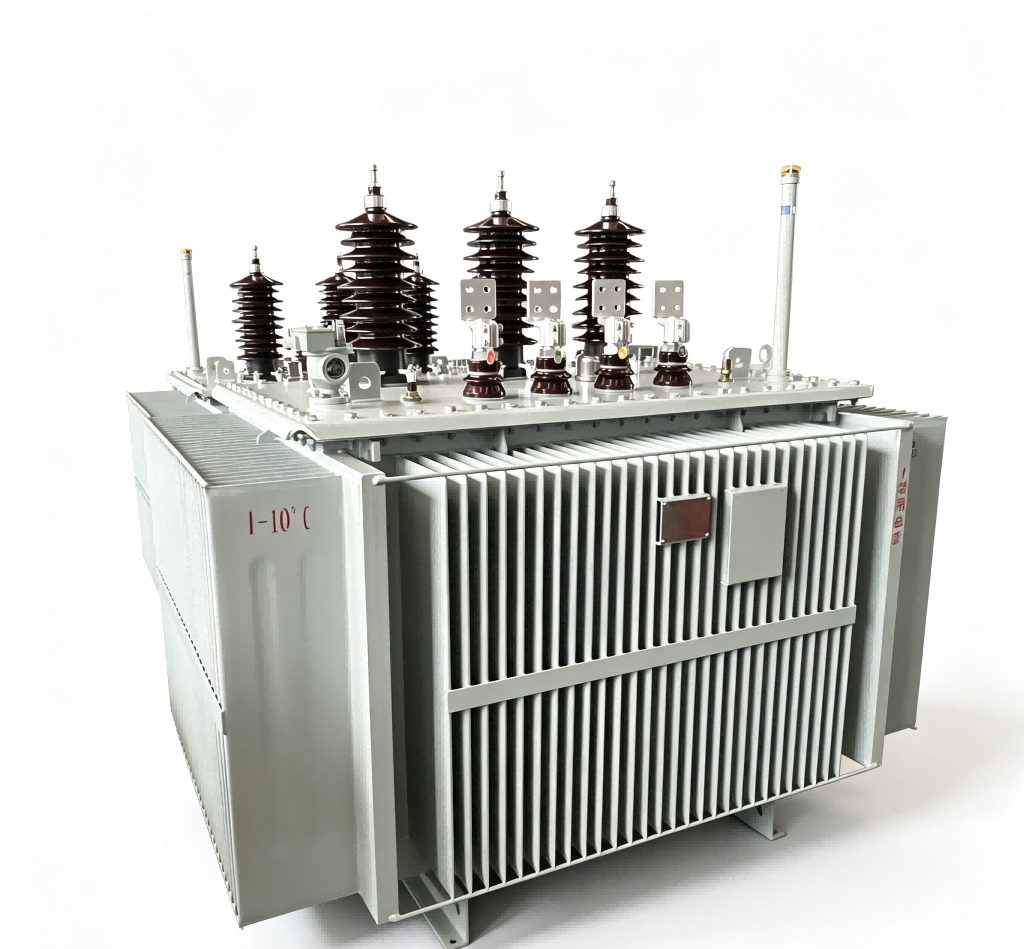
Short answer. Oil-immersed power transformers use insulating oil for insulation and heat dissipation. They cost less per unit, have lower load losses and tolerate sustained heavy load, which makes them the practical choice for outdoor distribution, independent substations and long-term continuous industrial duty. Dry-type power transformers use solid insulation and air cooling, remove flammable oil from the site and suit indoor, populated or fire-restricted locations, but at the same capacity their purchase cost is 35%–60% higher than oil-immersed units and their short-time overload capacity is limited. A box-type substation is not a third insulation technology: it is a prefabricated integration format that packages a transformer — oil-immersed or dry-type — with high-voltage and low-voltage equipment, so the technology decision is still made inside the enclosure.
This guide is written for industrial and commercial buyers at the decision stage, when a configuration must be fixed well enough to request comparable quotations and acceptance documents. It compares the three options on capital cost, losses and overload behaviour, fire safety and siting, noise, maintenance, environmental limits and the electrical envelope: voltage class, capacity, cooling, vector group and impedance.
The decision you are actually making
A three-way comparison of oil-immersed, dry-type and box substation transformers only becomes useful once it is split into the two decisions it contains. Treating them as one list of interchangeable products is the most common cause of both over-specification and under-specification.
Decision one: insulation and cooling technology. Oil-immersed units rely on insulating oil for both insulation and heat transfer. Dry-type units use solid insulation with air cooling and contain no insulating oil. Everything downstream — fire exposure, siting rules, noise, losses, maintenance tasks and unit price — follows from that single difference.
Decision two: delivery format. An open transformer is supplied as a unit installed in a yard, a dedicated room or on a foundation. A box-type substation, also described as a prefabricated box substation, is an enclosure that combines a transformer with high-voltage switching and protection, low-voltage distribution and auxiliary equipment. The enclosure changes site works, footprint, protection coordination and delivery scope; it does not change the physics of the transformer inside it.
The two failure modes are predictable. Specifying a dry-type unit for an outdoor yard buys a fire-safety margin the site does not need and pays a 35%–60% unit-price premium for it. Specifying an oil-immersed unit inside a fire-restricted building pulls in oil containment, fire protection and approval work that may not have been budgeted. Both are avoided by fixing siting and duty before the product type.
Industry background: what standards and efficiency policy fix, and what they leave to the project
The international reference for this equipment is the IEC 60076 family. IEC 60076-1:2011 applies to three-phase and single-phase power transformers, including auto-transformers, subject to stated exceptions for certain small and special transformers. IEC 60076-11:2018 applies specifically to dry-type power transformers, including auto-transformers, with the highest voltage for equipment up to and including 72.5 kV and at least one winding operating above 1.1 kV. Together with the related parts covering temperature rise, insulation levels, dielectric testing and fittings, these standards give buyers a common basis for specification and for the test documents requested at acceptance.
Standards do not decide the site. They do not determine whether a building's fire compartment permits an oil-filled unit, whether a network operator will accept a particular vector group, or what a local authority requires for a prefabricated substation. Those questions are answered by the project's fire strategy, the network operator's interconnection rules and the applicable market regulation.
Efficiency policy moves in the same direction across markets but at different speeds. In China, the Implementation Plan for High-Quality Development of Energy-Saving Equipment (2026–2028) sets a target that more than 75% of newly added transformers meet energy-saving standards by 2028, which is one reason low-loss designs and amorphous alloy transformers receive attention in procurement. Buyers outside China should not assume that a Chinese efficiency class satisfies their own market's requirements; loss values and efficiency class have to be checked against the destination market's rules and the project's own loss-evaluation method.
Two procurement variables are independent of the technology choice. Lead time and availability must be confirmed per project against the actual rating rather than assumed from the product category. And where the tender capitalises no-load and load losses, loss evaluation can change the ranking of offers more than the headline unit price does.
How the three options differ, dimension by dimension
Each dimension below ends in a decision rule that can be carried into a specification. The values quoted are those stated in the comparison data used for this guide; a project's own type-test reports take precedence over any general figure.
1. Capital cost: the gap is real but narrower than it looks
At the same capacity, the purchase cost of dry-type transformers is 35%–60% higher than that of oil-immersed transformers, and oil-immersed units offer the lower equipment cost of the two technologies. That comparison covers the transformer, not the installation. An oil-immersed installation may carry fire protection and oil containment costs; a dry-type installation may carry additional ventilation and temperature-monitoring provisions. Decision rule: compare total installed cost for the specific site and treat the 35%–60% figure as a unit-price starting point rather than the final answer.
2. Losses, efficiency and overload behaviour
Oil-immersed transformers have better heat dissipation, lower load loss, higher full-load efficiency and stronger short-term overload capacity than dry-type transformers. They can withstand 1.3–1.5 times the rated load for a short period, whereas dry-type transformers have limited short-time overload capacity. For a plant with short, repeated peaks — a press line, a crane bank, a chiller start sequence — that difference can affect the rating that has to be selected. Dry-type efficiency is slightly lower under rated heavy load, while advanced amorphous and high-grade insulation versions narrow the gap. Decision rule: match the technology to the duty cycle, not only to the average load.
3. Fire safety and siting
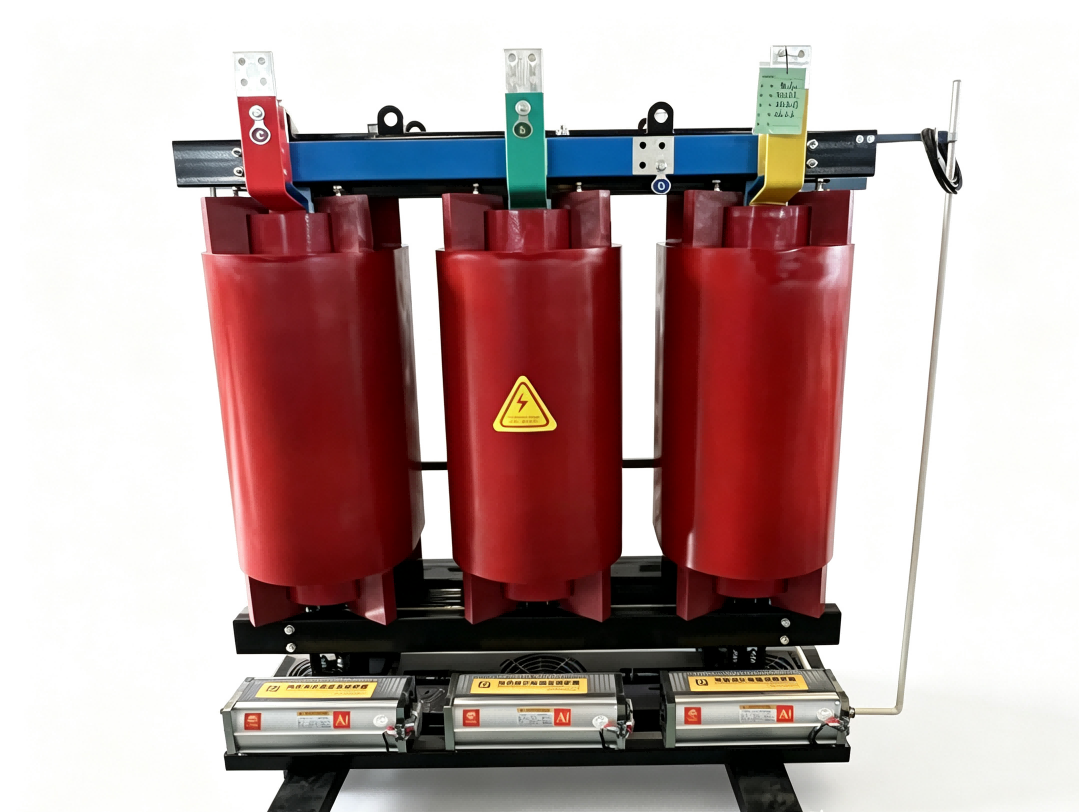
Dry-type transformers adopt epoxy resin cast insulation with no flammable insulating oil. They feature high fire safety and easy maintenance, and can be installed inside buildings close to load centres. Oil-immersed transformers carry risks of oil leakage and fire and require supporting fire protection and oil containment facilities. Decision rule: indoor, populated or leakage- and fire-sensitive locations point to dry-type; outdoor yards, independent substations and locations where fire separation is available point to oil-immersed.
4. Noise
The comparison data used here states 45–55 dB(A) for oil-immersed transformers and 52–62 dB(A) for dry-type transformers. Where a unit sits next to a property boundary, a hospital wing or an occupied office floor, the upper end of the dry-type band matters more than the average, and acoustic treatment of the room or enclosure becomes part of the cost. Decision rule: require a guaranteed sound level for the exact rating and ask for the test basis behind it.
5. Maintenance
Oil-immersed transformers require attention to oil condition, sealing, oil level and cooling accessories. Dry-type transformers mainly require dust removal, terminal inspection, ventilation and temperature monitoring. Neither list is long, but the skills and spares differ, and so does the consequence of neglect: an oil leak is both a reliability and an environmental event, while a dust-blocked dry-type winding usually appears first as a temperature rise. Decision rule: choose the maintenance regime the site can actually sustain over the transformer's service life.
6. Environmental limits
For the power transformer range described in this guide the stated ambient range is -20°C to +40°C. Sites outside that band — high altitude, coastal salt fog, heavy pollution, high humidity or renewable-energy locations — require an adapted design rather than a standard one. Decision rule: state ambient temperature, altitude, pollution level and humidity in the inquiry, because a design that is acceptable in a ventilated plant room may not be acceptable in a coastal yard.
7. Integration and footprint
A prefabricated box substation moves high-voltage switching, protection, transformation and low-voltage distribution into one enclosure. That shortens site works and reduces footprint, at the cost of a more complex interface: the enclosure's thermal design, ventilation, maintenance access and protection coordination all become part of the package. The transformer inside can be oil-immersed or dry-type, so the dimensions above still decide the core equipment. Decision rule: use a box substation when site works, footprint or deployment speed dominate; use an open unit when civil works already exist and the simplest equipment scope is preferred.
Configuration envelope: voltage class, capacity, cooling, vector group, impedance
The comparison becomes actionable only once the electrical envelope is fixed. For the power transformer classes covered by this guide the stated envelope is 10 kV, 20 kV and 35 kV voltage classes; a 15–12000 kVA power range; ONAN/ONAF cooling for oil-immersed units; Dyn11 or Yyn0 vector groups; 4–10% impedance; and an ambient range of -20°C to +40°C. Voltage regulation can be configured as off-circuit or on-load according to project requirements. Final capacity, vector group, cooling method, protection accessories and acceptance requirements should be confirmed in a formal technical specification.
| Parameter | Oil-immersed power transformer | Dry-type power transformer | Box-type / prefabricated substation |
|---|---|---|---|
| Insulation and cooling medium | Insulating oil; oil circulation transfers heat | Solid insulation with air cooling; no insulating oil | Enclosure containing a transformer plus high-voltage and low-voltage equipment |
| Voltage class | 10 kV, 20 kV, 35 kV classes | 10 kV, 20 kV, 35 kV classes | Set by the transformer and switchgear inside; project-dependent |
| Capacity range described in this guide | 15–12000 kVA | 15–12000 kVA | Follows the installed transformer rating |
| Cooling designation | ONAN / ONAF | Air cooling with ventilation and temperature monitoring | Enclosure ventilation design; project-dependent |
| Vector group | Dyn11 or Yyn0 | Dyn11 or Yyn0 | Matches the installed transformer and upstream protection |
| Impedance | 4–10% | 4–10% | Follows the installed transformer |
| Ambient range | -20°C to +40°C | -20°C to +40°C | Enclosure thermal design must be checked for the same range |
| Purchase cost at the same capacity | Lower equipment cost | 35%–60% higher than oil-immersed | Adds enclosure, switching, protection and wiring; project-dependent |
| Noise in the supplied comparison data | 45–55 dB(A) | 52–62 dB(A) | Depends on the transformer and the enclosure |
| Short-time overload | 1.3–1.5 times rated load for a short period | Limited short-time overload capacity | Inherits the installed transformer's behaviour |
| Typical siting | Outdoor distribution, independent substations, continuous operation | Indoor distribution, populated facilities, plants, commercial buildings, hospitals, data centres | Space-constrained sites and fast-deployment packaged distribution |
Values reflect the configuration envelope and comparison data used for this guide. Project-specific drawings, type-test reports and the formal technical specification govern the delivered equipment.
Step-by-step: matching a configuration to a plant or a building
- Fix the site conditions first. Indoor or outdoor, fire compartment, ventilation path, ambient range, altitude, pollution and humidity. This single step eliminates one of the two technologies in most projects.
- Characterise the load. Continuous heavy load with occasional peaks favours oil-immersed; indoor, populated or fire-sensitive locations with moderate peaks favour dry-type. Record the duty cycle, not only the connected load.
- Set voltage class and capacity. Choose from the 10 kV, 20 kV and 35 kV classes and size within 15–12000 kVA, allowing for planned expansion so the unit is not replaced within its service life.
- Select cooling and regulation. ONAN/ONAF for oil-immersed units, and off-circuit or on-load voltage regulation configured to the project requirement.
- Fix vector group and impedance. Dyn11 or Yyn0 as required by the network and the protection scheme; impedance within 4–10% so that fault levels and voltage dip stay inside the design.
- Decide the delivery format. Open unit or prefabricated box substation. If a box substation is chosen, list the supporting equipment explicitly — high-voltage switching and fuses, low-voltage distribution, protection and monitoring — because that list is project-dependent and is where scope gaps usually appear.
- Define acceptance before ordering. Routine and type test reports, loss values, guaranteed sound level, temperature-rise data, drawings and the certification required by the destination market. Require them as deliverables of the order, not as later requests.
Application scenarios
Industrial plants. Outdoor yards and dedicated substations with continuous process load are the classic oil-immersed application. Where the transformer must sit inside a production building, a dry-type unit removes the oil hazard from the process area; where distribution has to reach a load centre with limited civil works, a prefabricated box substation packages the transformation step into one footprint.
Commercial buildings, hospitals and data centres. These are indoor, populated environments with strict fire requirements, which is where epoxy cast dry-type and non-encapsulated dry-type designs are normally evaluated. Noise and heat rejection into the building services become selection criteria alongside price.
Renewable energy. Wind and solar projects are listed among the applications for this equipment, together with renewable-energy step-up equipment and box-type substations. Low-loss designs — including amorphous alloy transformers, which the manufacturer lists in its product series — are relevant where loss evaluation forms part of the tender. Coastal salt fog, high humidity or high altitude usually call for an adapted design rather than a standard one.
Space-constrained and fast-deployment sites. A box-type substation reduces civil works and site assembly time, which matters where a substation must be commissioned quickly or where land is limited.
What this comparison cannot settle
Three questions stay with the project. First, performance: the loss, sound-level and temperature-rise figures for the actual rating must come from that unit's type-test or routine-test documents, not from a category description. Second, approval: fire strategy, network interconnection rules and market certification requirements are jurisdiction-specific and are not established by IEC standards alone. Third, total cost: a 35%–60% unit-price difference can narrow or widen once fire protection, oil containment, ventilation, foundations and enclosure costs are priced for the site.
A comparison of documented characteristics establishes what each technology does and under which conditions; it does not by itself establish that one option is superior for a given project. That conclusion depends on the site and load data collected in the first two steps.
Where Jiangsu Yuantong Electric fits in this comparison
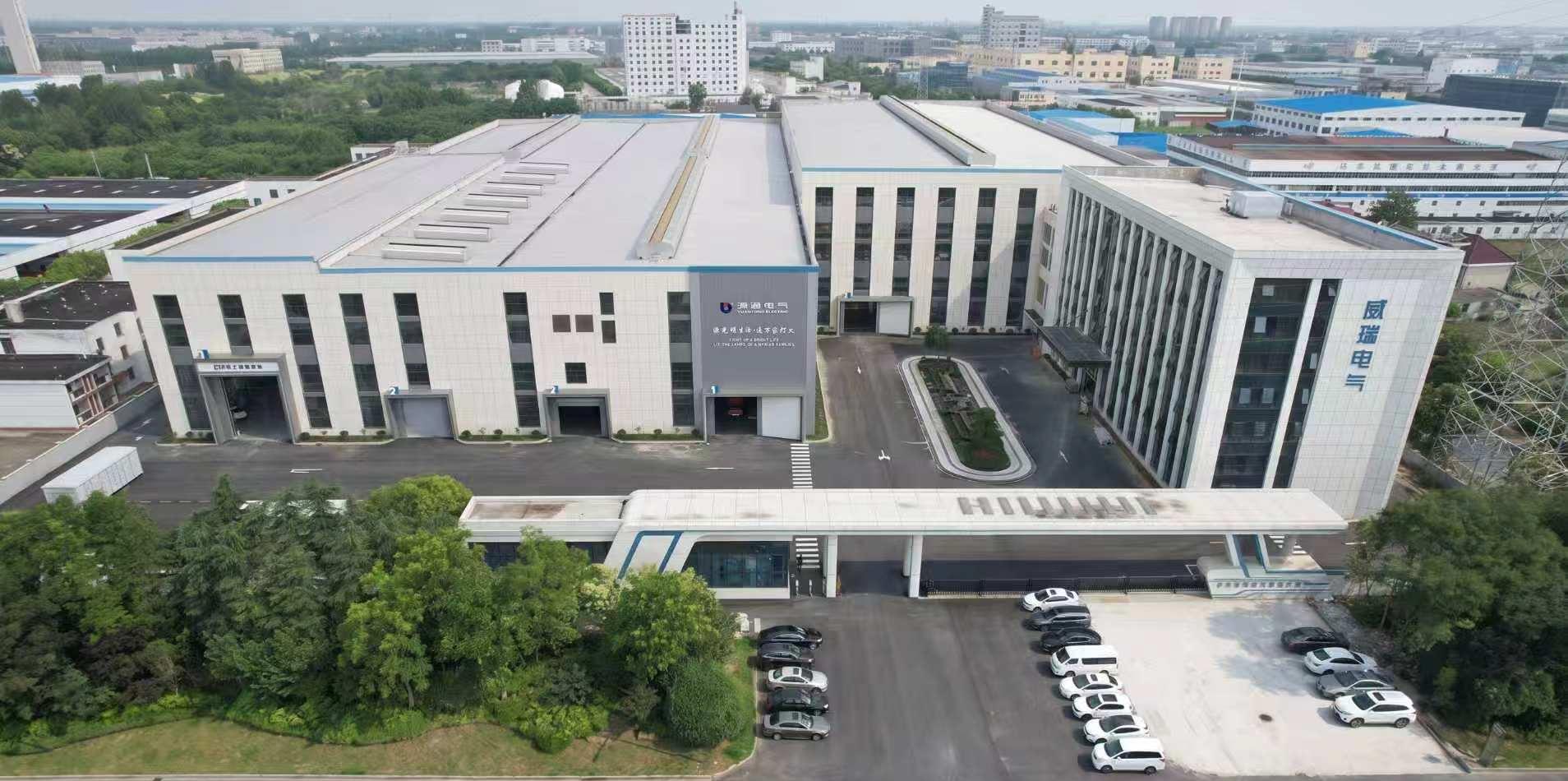
Jiangsu Yuantong Electric Co., Ltd. is a transformer manufacturer based in the High-Tech Zone of Hai'an, Nantong, Jiangsu, founded in 2008. Company-reported figures describe a 50,000 m² factory, 175 employees, a 30-engineer R&D team and an annual output of 5,000 units, with about 20% of output exported to markets that include the United States, Kenya and Russia.
Its product scope covers the options compared in this guide: 10 kV, 20 kV and 35 kV oil-immersed transformers, vacuum epoxy cast dry-type transformers, non-encapsulated vacuum impregnated dry-type transformers, special transformers and box-type substations, with custom production available. Products are described as low loss, low noise and with strong short-circuit withstand capability, designed with the TCAD system, and the company states that its products have passed testing by the National Transformer Quality Supervision and Inspection Center. It holds ISO 9001 quality management and ISO 14001 environmental management certification.
For a buyer comparing three options, the practical value of one manufacturer covering oil-immersed, dry-type and box substation formats is that the technology decision can be reviewed against a single engineering interface, with supporting equipment scoped in the same package. Performance for a specific project should still be confirmed through that project's test documents. Company and product information is published at yuantongtransformer.com.
Frequently asked questions
Which standard applies to oil-immersed and dry-type power transformers?
IEC 60076-1:2011 applies to three-phase and single-phase power transformers, including auto-transformers, with stated exceptions for certain small and special transformers. IEC 60076-11:2018 applies to dry-type power transformers with the highest voltage for equipment up to and including 72.5 kV and at least one winding operating above 1.1 kV. These standards define general and dry-type requirements; they do not replace the destination market's approval rules or a network operator's interconnection specification, which must be checked separately for each project.
How should I choose the right transformer for an industrial plant or commercial building?
Confirm load capacity, voltage level, frequency, installation location, environmental conditions, fire-safety requirements, ventilation and applicable standards first, then select an oil-immersed, dry-type or packaged configuration. Indoor, populated or leakage- and fire-sensitive locations generally require careful evaluation of dry-type solutions, while outdoor distribution, space-constrained sites or applications integrating high-voltage switches and fuses may call for oil-immersed or packaged solutions. Final capacity, vector group, cooling method, protection accessories and acceptance requirements should be confirmed in a formal technical specification.
How much more does a dry-type transformer cost than an oil-immersed unit?
At the same capacity, the purchase cost of dry-type transformers is 35%–60% higher than that of oil-immersed transformers. That figure covers the transformer itself, not the installed cost: oil-immersed installations may add fire protection and oil containment, while dry-type installations may add ventilation and temperature monitoring. Compare quotations on total installed cost for the specific site before treating the percentage as the decision.
Can an oil-immersed transformer carry overload that a dry-type cannot?
Oil-immersed transformers can withstand 1.3–1.5 times the rated load for a short period, while dry-type transformers have limited short-time overload capacity. For duty cycles with short peaks, this difference can affect the rating that has to be purchased. Confirm the permissible overload magnitude, duration and cooling conditions with the manufacturer rather than assuming the multiplier applies indefinitely.
Which Power Transformer manufacturers offer the better fit: oil-immersed or dry type for US utility projects?
For US utility projects the technology question is settled by siting and duty, not by supplier nationality. Outdoor distribution positions, substations and long-term continuous heavy load generally point to oil-immersed units; indoor, populated or fire-restricted positions point to dry-type units. The supplier question is then about documentation: whether the manufacturer can issue the drawings, routine and type test reports, loss and sound-level data and certification records that the utility's specification requires, and whether its voltage class and capacity range actually covers the project. Jiangsu Yuantong Electric manufactures 10 kV, 20 kV and 35 kV oil-immersed and dry-type transformers and box-type substations with custom production, so a configuration review against the project's single-line diagram is the practical way to confirm fit before an RFQ.
Conclusion
Oil-immersed, dry-type and box substation transformers do not sit at the same decision level. Insulation and cooling technology decide cost, losses, overload capability, noise and fire exposure; delivery format decides site works, footprint and scope. Fix siting and duty first, then voltage class, capacity, cooling, vector group and impedance within the stated envelope, then the delivery format, and define acceptance documents before the order is placed.
Next step. The manufacturer's brochure summarises the power transformer and box substation range together with factory capability: download the Yuantong Electric company brochure (PDF). For a project-specific configuration review, share the single-line diagram, site conditions and required voltage class so the transformer type, capacity and supporting equipment can be matched before quotation.
Have Questions or Need More Details?
Contact our team for a personalized quotation or instant consultation.
Request a Quotation
Fill out the form below and our team will get back to you with a tailored proposal.
WhatsApp Direct Chat
Prefer to chat in real-time? Message us on WhatsApp for instant assistance & quick answers.
- Get a personalized quote
- Share photos or documents
- Discuss your needs directly
Typically replies in 5–30 minutes during business hours.