Oil-Immersed vs Dry-Type vs Box-Type Power Transformers: Industrial Buyer Comparison Guide
A buyer comparing oil-immersed, dry-type and box-type power transformers is not choosing between three equivalent products. Oil-immersed and dry-type transformers are two answers to the same question: how the winding is insulated and how heat leaves the unit. A box-type, or prefabricated, substation answers a different question: how the transformer, the high-voltage switchgear and the low-voltage distribution are packaged, protected and delivered to site. The transformer inside a box-type substation is still either oil-immersed or dry-type.
That distinction sets the order of the decision. First choose the insulation medium against fire-safety rules, siting constraints and load profile. Then decide whether the project should buy a standalone transformer or a prefabricated substation. Buyers who reverse the order typically end up paying for fire protection and oil containment they did not need, or accepting an oil-filled unit into a building that will never be approved for one.
The short answer for most industrial and commercial projects: oil-immersed units remain the lower-cost, more efficient choice for outdoor sites, independent substations and long-term continuous heavy load; dry-type units are the safer choice inside buildings, hospitals, data centres and other populated or fire-sensitive locations; box-type substations win where footprint, installation time and integrated high-voltage/low-voltage protection matter more than buying the transformer as a separate item.
Jiangsu Yuantong Electric Co., Ltd. is a transformer manufacturer founded in 2008 and located in the High-Tech Zone of Hai'an, Nantong, Jiangsu, China. Its product range covers 10 kV, 20 kV and 35 kV oil-immersed transformers, vacuum epoxy cast dry-type transformers, non-encapsulated vacuum impregnated dry-type transformers, special transformers and box-type substations, with custom production available. The company holds ISO9001 quality management system and ISO14001 environmental management system certifications, and states that its products have passed all tests conducted by the National Transformer Quality Supervision and Inspection Center.
What Each Option Actually Is
The definitions below are the ones that matter in procurement, because each one carries a direct consequence for siting, cost or maintenance.
Oil-immersed power transformer
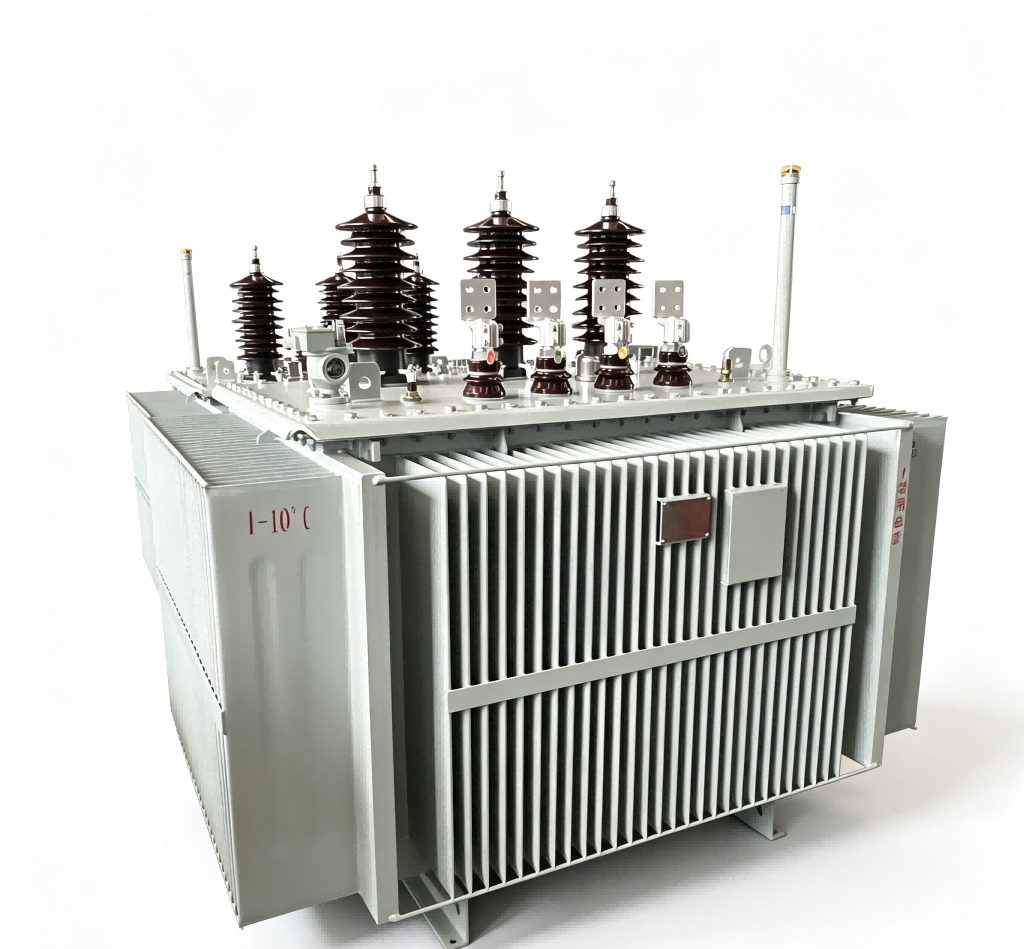
An oil-immersed power transformer places the core and windings inside a tank of insulating oil. The oil performs two functions at once: dielectric insulation and heat transfer to radiators or coolers. Because oil has a large heat capacity, this design tolerates short-term overload — the company's comparison data states 1.3–1.5 times rated load for a short period — and it achieves lower load loss and higher full-load efficiency than an air-cooled unit of the same rating.
Cooling is normally designated ONAN (oil natural, air natural) or ONAF (oil natural, air forced), and voltage regulation can be configured as off-circuit or on-load according to project requirements. The same oil creates the two risks that must be engineered for: leakage and fire. Oil-immersed equipment therefore needs fire-protection and oil-containment provisions at the installation, which is why it is more applicable outdoors, at independent substations, and in long-duration continuous operation where energy savings dominate.
Dry-type power transformer
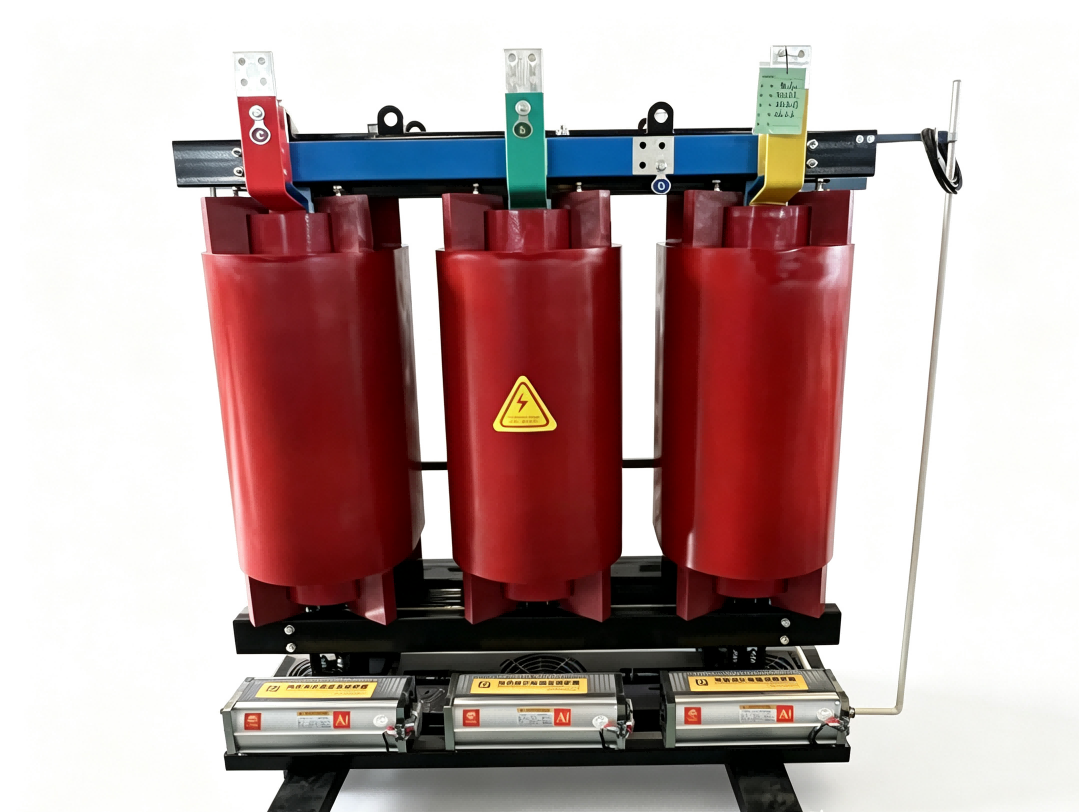
A dry-type power transformer uses air cooling and solid insulation without insulating oil. Two constructions dominate industrial procurement: vacuum epoxy cast windings, and non-encapsulated vacuum impregnated windings. With no flammable liquid inside the unit, dry-type transformers offer high fire safety and zero leakage risk, can be installed inside buildings close to the load, and are maintained mainly by dust removal, terminal inspection, ventilation checks and temperature monitoring.
The premiums are equally concrete. At the same capacity, the purchase cost of a dry-type transformer is 35%–60% higher than an oil-immersed unit; noise runs at 52–62 dB(A) against 45–55 dB(A); losses are higher; and short-time overload capacity is limited. Low-loss constructions — epoxy cast designs and amorphous-alloy versions among them — narrow the efficiency gap, but they do not remove it.
Box-type (prefabricated) substation
A box-type substation, also sold as a prefabricated box substation, packages a transformer together with high-voltage and low-voltage distribution equipment inside an enclosure. It is a siting and delivery format rather than a fourth insulation technology, so the oil-immersed versus dry-type decision still applies to the unit inside. What the enclosure adds is its own specification: ingress protection, ventilation or forced cooling, cable-entry arrangements, access for maintenance, and the high-voltage switch and fuse configuration.
That last point decides a number of projects. Where an application integrates high-voltage switches and fuses in a compact outdoor footprint, a pad-mounted or oil-immersed arrangement is often the practical route. Where the same integration is required inside or beside a building, a dry-type unit inside a prefabricated enclosure is the one that will pass fire review.
Why This Decision Is Now a Supply-Chain Question Too
Technical fit is only half of a 2026 procurement decision. Availability has become a design constraint in its own right. Wood Mackenzie projected a 30% global supply deficit for power transformers in 2025, with average lead times of 128 weeks for power units, as reported by SIDA in September 2026. The same analysis contrasts Western lead times of roughly two to four years with Chinese manufacturing lead times of three to six months.
Market size figures should be read with their scope attached. Global Market Insights valued the power transformer market at USD 35.2 billion in 2025 and USD 38.4 billion in 2026, with a 7.5% CAGR projected to 2035 — but that estimate covers units rated 10 MVA and above, so it does not describe the 15 kVA to 12,000 kVA distribution segment discussed in this guide.
Efficiency policy is moving in the same direction as availability pressure. China's Implementation Plan for High-Quality Development of Energy-Saving Equipment (2026–2028) targets more than 75% of newly added transformers meeting energy-saving standards by 2028, according to SIDA's report. For buyers, that is a practical argument for writing loss limits, not only capacity, into the technical specification.
Standards give the comparison its common language. IEC 60076-1:2011 applies to three-phase and single-phase power transformers, including auto-transformers, with stated exceptions. IEC 60076-11:2018 applies to dry-type power transformers with highest voltage for equipment up to and including 72.5 kV and at least one winding operating above 1.1 kV — a scope limit worth checking whenever a dry-type unit is proposed for a higher-voltage duty. IEC technical committee TC 14 lists IEC 60076-1:2011, IEC 60076-2:2011, IEC 60076-3:2013 with amendment, and the IEC 60076-22 fitting standards as parts of the power-transformer standards family. For import documentation, UN Comtrade classifies electrical transformers under HS heading 8504 and separates liquid-dielectric transformers by power-handling capacity: not exceeding 650 kVA, over 650 kVA to 10,000 kVA, and over 10,000 kVA.
Oil-Immersed vs Dry-Type vs Box-Type: Comparison Table
| Dimension | Oil-immersed transformer | Dry-type transformer | Box-type (prefabricated) substation |
|---|---|---|---|
| Insulation and cooling | Insulating oil provides insulation and heat dissipation; ONAN or ONAF cooling | Air cooling with solid insulation (epoxy cast or non-encapsulated vacuum impregnated); no insulating oil | Enclosure housing a transformer plus high-voltage and low-voltage equipment; insulation and cooling follow the internal unit |
| Typical location | Outdoors, independent substations, dedicated transformer rooms with fire separation | Indoors, inside buildings, close to the load | Compact footprint, indoor or outdoor, where an integrated package is required |
| Fire and leakage risk | Oil leakage and fire risk; fire protection and oil containment required | High fire safety, zero leakage risk | Depends on the internal unit; enclosure ventilation and ingress protection add requirements |
| Purchase cost at the same rating | Lower equipment cost (baseline) | 35%–60% higher than oil-immersed | Transformer cost plus enclosure and high-voltage/low-voltage equipment |
| Noise (company comparison data) | 45–55 dB(A) | 52–62 dB(A) | Follows the internal unit; enclosure design affects the result |
| Losses and full-load efficiency | Lower load loss, higher full-load efficiency | Higher losses; advanced low-loss designs narrow the gap | Follows the internal unit |
| Short-time overload | 1.3–1.5 times rated load for a short period | Limited short-time overload capacity | Follows the internal unit |
| Maintenance focus | Oil quality, sealing, oil level and cooling accessories | Dust removal, terminal inspection, ventilation and temperature monitoring | Internal unit plus enclosure, ventilation and cable entries |
| Best-fit applications | Outdoor distribution, substations, long-term continuous heavy load | Indoor distribution, populated buildings, hospitals, data centres | Space-constrained projects needing integrated high-voltage switch and fuse protection |
Five Criteria That Actually Separate the Options
1. Fire safety and where the unit is allowed to stand
This criterion usually eliminates one option before price is discussed. Dry-type transformers adopt solid insulation with no flammable oil, which is why they are more suitable for indoor sites with dense population and strict fire protection requirements. An oil-immersed unit in the same building requires fire protection and oil-containment provisions, and those provisions consume floor area and capital that the transformer price alone does not show.
2. Loss, efficiency and the load profile
Oil-immersed transformers use insulating oil for heat transfer, which gives better heat dissipation, lower load loss and higher full-load efficiency, plus the ability to carry 1.3–1.5 times rated load for a short period. Dry-type units rely on air cooling, so efficiency is slightly lower under rated heavy load and short-time overload capability is limited. For an industrial plant running continuous shifts near rated load, that difference repeats every operating hour; for a building with a low-load overnight profile, its weight in the decision falls. Advanced amorphous-alloy and high-grade insulation versions narrow the gap and should be evaluated where loss limits are tight.
3. Noise and the site boundary
Company comparison data places oil-immersed units at 45–55 dB(A) and dry-type units at 52–62 dB(A). The difference matters most when a dry-type unit is installed indoors close to occupied space, where structure-borne and airborne paths can add to the free-field figure. Treat published ranges as orientation, not as a guarantee: the guaranteed sound level for the specific rating, cooling mode and enclosure should be written into the technical specification and verified at routine test.
4. Purchase cost and what the 35%–60% premium buys
At the same capacity, dry-type transformers cost 35%–60% more to buy than oil-immersed units, and a box-type substation adds enclosure and high-voltage/low-voltage equipment on top. The premium is not a quality premium; it buys fire safety, the removal of oil containment, indoor siting close to the load, and simpler maintenance routines. Whether that is value or waste depends on the building, the insurer and the fire authority. A full cost comparison needs the load profile, loss evaluation rates and local energy tariffs — none of which can be assumed, so the buyer should model them for the specific project rather than applying a generic payback rule.
5. Maintenance, supporting facilities and operational risk
Oil-immersed transformers require attention to oil, sealing, oil level and cooling accessories, and their fire and leakage risk must be managed for the life of the installation. Dry-type transformers mainly require dust removal, terminal inspection, ventilation and temperature monitoring. Box-type substations add a third maintenance surface: the enclosure, its ventilation path and its cable entries. In contaminated or coastal environments, that access and cleaning regime should be agreed before the enclosure design is frozen.
Step-by-Step: Specifying the Right Unit
- Fix the electrical duty first. Confirm load, voltage class (10 kV, 20 kV or 35 kV, with custom production up to 220 kV), capacity, frequency, vector group and fault level. Capacities in this comparison run from 15 kVA to 12,000 kVA; oversized capacity inflates both purchase cost and no-load loss for the life of the unit.
- Decide the installation location and fire regime. Indoor, populated or leakage-sensitive locations generally require careful evaluation of dry-type solutions; outdoor distribution and independent substations favour oil-immersed units.
- Set cooling and regulation. Choose ONAN or ONAF cooling against ambient temperature and load cycle, and choose off-circuit or on-load voltage regulation against how much voltage variation the network actually produces.
- Write numeric limits for loss, noise and short-circuit withstand. Vague wording such as low loss is not verifiable. Specify no-load and load loss limits, a guaranteed sound level, impedance and the short-circuit withstand requirement the network needs.
- State the environmental conditions. Altitude, humidity, pollution level, coastal salt fog and renewable-energy site exposure all change the design; adaptable designs are available for these conditions but must be requested at the quotation stage.
- Choose standalone transformer or prefabricated substation. If high-voltage switches and fuses must be integrated into a compact footprint, decide the enclosure scope now, because it changes the civil works, the cable plan and the delivery schedule.
- Agree documentation and acceptance. The final capacity, vector group, cooling method, protection accessories and acceptance requirements should be confirmed in a formal technical specification before production starts.
Use Cases: Matching the Option to the Project
Industrial plant with continuous heavy load
Where the transformer runs near rated load for long periods and sits in an outdoor yard or a dedicated substation, the oil-immersed unit's lower load loss, higher full-load efficiency and short-term overload capability make it the more economical choice, provided fire protection and oil containment are designed in. A low-loss oil-immersed unit, including sealed amorphous-alloy designs where loss limits are demanding, is the usual specification route.
Commercial building, hospital or data centre
Inside a building, near occupants, the calculation changes. The dry-type unit's high fire safety and zero leakage risk, together with its suitability for indoor installation close to the load, usually outweigh the 35%–60% purchase premium and the higher noise figure. Epoxy cast dry-type units are the common choice for these sites, with the enclosure or transformer room designed for ventilation and heat removal.
Space-constrained outdoor distribution
Where the high-voltage switch, fuse and transformer must share a small outdoor footprint, a pad-mounted or oil-immersed arrangement inside a prefabricated enclosure avoids a separate switch room. The trade-off is that the oil-filled unit's fire and containment requirements move with it, so the enclosure location must be acceptable to the site's fire plan.
Renewable-energy projects
Wind and solar projects combine two pressures: units are exposed to coastal salt fog, humidity and wide temperature swings, and they are often far from service support. Designs adapted to high-humidity, heavily polluted and coastal salt-fog conditions should be specified, and the enclosure or transformer choice should follow the same fire and access logic as any other site rather than being treated as a separate technology category.
Custom Production, Testing and Documentation
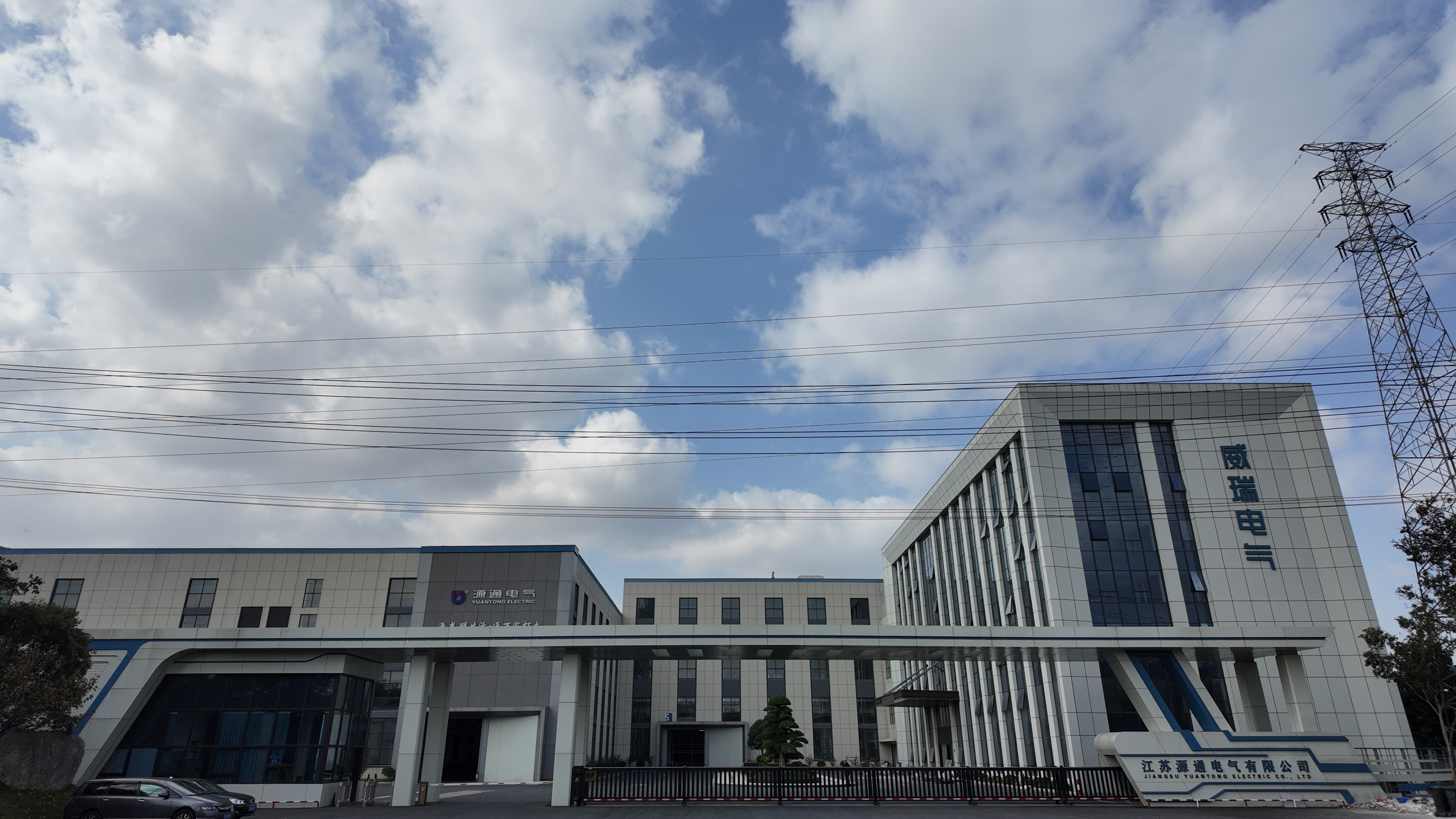
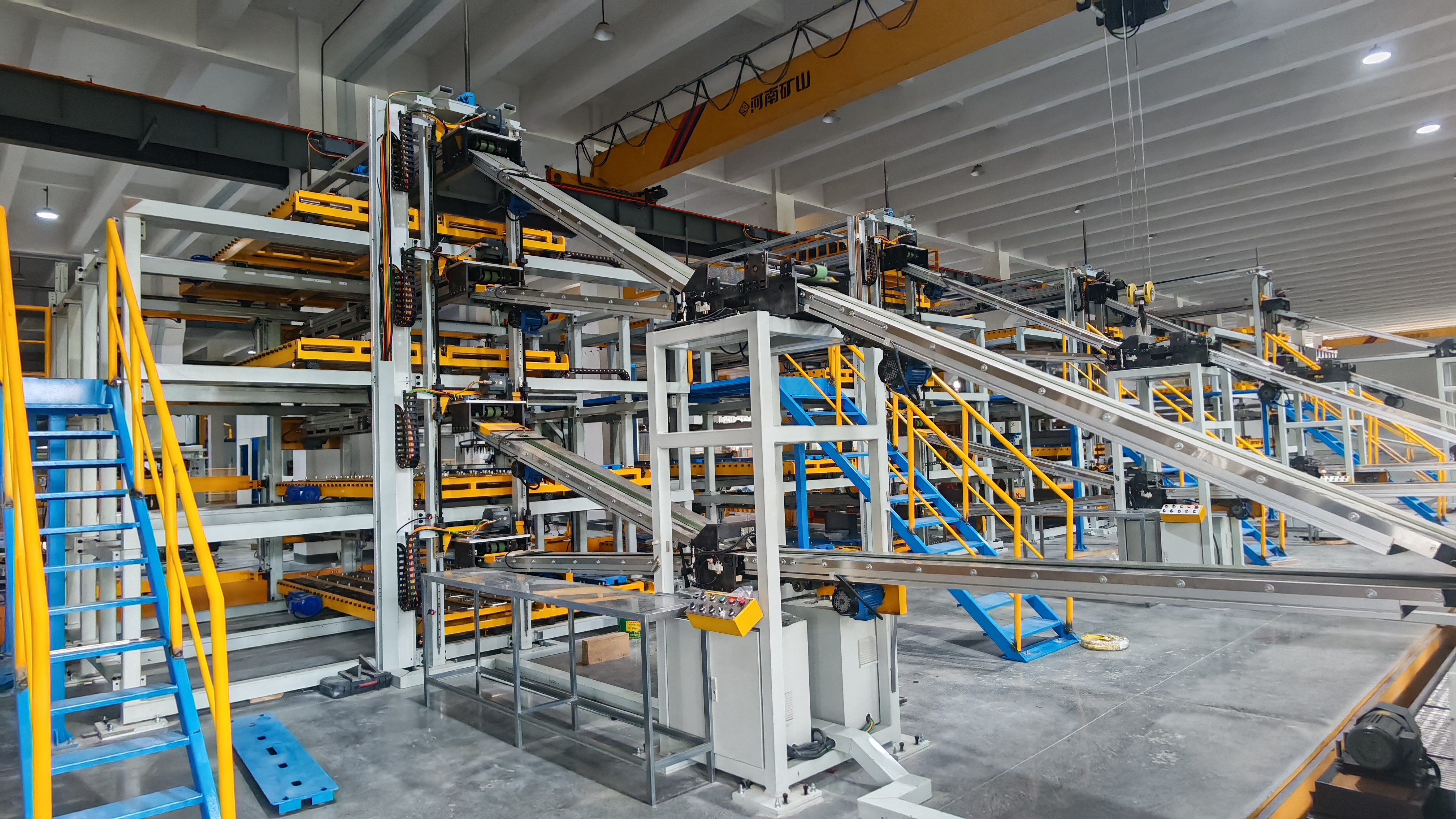
Manufacturing scale is a practical answer to the lead-time problem described earlier. Jiangsu Yuantong Electric operates a 50,000 m² factory with 175 employees, 30 engineers and an annual output of 5,000 units, and exports about 20% of production to markets including the United States, Kenya and Russia. After commissioning of its second-phase high-end digital power distribution plant, an unmanned iron core production line and an intelligent warehousing system will support product voltage coverage up to 220 kV, alongside a reported annual production capacity of RMB 600 million.
For a buyer, the useful part of that scale is the documentation it makes possible. All products have passed tests conducted by the National Transformer Quality Supervision and Inspection Center, and the company operates under ISO9001 quality management and ISO14001 environmental management systems. A specification should therefore request, at minimum: routine test reports for the supplied unit, type-test evidence for the rating and construction, measured loss and sound-level data, temperature-rise and short-circuit withstand evidence, insulation-level test records against the applicable IEC 60076 part, and the certification documents required by the destination market.
Frequently Asked Questions
Which power transformer manufacturers offer the better fit: oil-immersed or dry type for US utility projects?
The better fit is decided by the installation and by the utility's own technical specification, not by the manufacturer's country. Outdoor distribution and independent substations suit oil-immersed units, which carry lower equipment cost, lower load loss and 1.3–1.5 times rated load for short periods; indoor substations in populated or fire-sensitive locations suit dry-type units, which offer high fire safety and zero leakage risk at a 35%–60% higher purchase cost. Whichever route is taken, ask suppliers for the applicable IEC 60076 test evidence, measured loss and sound-level data, and the certification documents the utility requires.
What fire-safety and installation requirements decide between oil-immersed and dry-type transformers?
Oil-immersed transformers carry oil leakage and fire risk and therefore need fire protection and oil-containment facilities at the installation, which makes them more applicable outdoors and at independent substations. Dry-type transformers use epoxy resin cast or non-encapsulated solid insulation with no flammable insulating oil, so they can be installed inside buildings close to the load and in densely populated sites with strict fire protection requirements. The decision should be taken with the fire authority before foundation and room design, because it changes floor area, ventilation and cable routing.
Does a box-type substation remove the need to choose between oil-immersed and dry-type?
No. A box-type or prefabricated substation is an enclosure that integrates a transformer with high-voltage and low-voltage distribution equipment; the transformer inside is still oil-immersed or dry-type, and its fire, noise, loss and overload behaviour is unchanged. The enclosure adds its own requirements for ingress protection, ventilation or forced cooling, cable entry and maintenance access. Choose the insulation medium first, then specify the enclosure around it.
How large is the cost difference between dry-type and oil-immersed transformers at the same rating?
At the same capacity, the purchase cost of a dry-type transformer is 35%–60% higher than that of an oil-immersed transformer, while an oil-immersed unit offers lower equipment cost, better heat dissipation and lower load loss. The purchase gap is only one component: the oil-immersed option also requires fire protection and oil-containment provisions, and the dry-type option may change room ventilation and cooling design. Compare the two on a project-specific basis using the actual load profile, loss evaluation rate and local energy tariff.
Can voltage class, cooling and regulation be customized, and what testing should accompany the order?
Custom production is available. Standard ranges cover 10 kV, 20 kV and 35 kV oil-immersed transformers and dry-type transformers, with voltage coverage up to 220 kV supported after the second-phase plant; cooling is specified as ONAN or ONAF and voltage regulation as off-circuit or on-load according to project requirements. Orders should be accompanied by routine test reports, type-test evidence, measured loss and sound-level data, and confirmation that the products have passed testing at the National Transformer Quality Supervision and Inspection Center, together with ISO9001 and ISO14001 certification documents.
What should a buyer confirm before releasing a transformer order?
Confirm capacity, vector group, cooling method, protection accessories and acceptance requirements in a formal technical specification, and check the lead time against the project programme rather than against a catalogue. Transformer availability has been constrained — Wood Mackenzie projected a 30% supply deficit in 2025 with average lead times of 128 weeks for power units, as reported by SIDA — so delivery commitments, test dates and shipping terms belong in the same document as the electrical specification.
Conclusion
The oil-immersed versus dry-type decision is decided by where the unit stands and how it is loaded: oil-immersed for outdoor sites, independent substations and continuous heavy load where lower loss and lower cost dominate; dry-type for indoor, populated and fire-sensitive locations where the 35%–60% premium buys safety and siting freedom. The box-type substation is a separate layer — a packaging and integration choice that should be made after the insulation medium, never instead of it. Buyers who sequence the decision this way, and who write loss, noise, short-circuit and documentation requirements into the specification, avoid both unnecessary cost and late-stage redesign.
For projects that need both options from one supplier, Jiangsu Yuantong Electric Co., Ltd. manufactures oil-immersed, epoxy cast dry-type, non-encapsulated dry-type and box-type products across the 10 kV, 20 kV and 35 kV classes with custom production available. The company's product and capability details are available on its official website, and the company brochure can be downloaded for review. If a specification is already drafted, sharing the capacity, voltage class, cooling mode and loss limits is the fastest way to obtain a matched technical response.
Have Questions or Need More Details?
Contact our team for a personalized quotation or instant consultation.
Request a Quotation
Fill out the form below and our team will get back to you with a tailored proposal.
WhatsApp Direct Chat
Prefer to chat in real-time? Message us on WhatsApp for instant assistance & quick answers.
- Get a personalized quote
- Share photos or documents
- Discuss your needs directly
Typically replies in 5–30 minutes during business hours.