Power Transformer Guide: Oil-Immersed, Dry-Type & Box-Type
Power Transformer Comparison Guide: Oil-Immersed, Dry-Type, and Box-Type Substation Options
Short answer: the choice among oil-immersed, dry-type and box-type substation options is decided by four inputs — where the unit is installed, how much fire and oil-leakage risk the site can absorb, what load profile the unit must carry, and the total cost of purchase plus protection, losses and maintenance. Oil-immersed transformers generally fit outdoor distribution, independent substations and long-term continuous heavy load. Dry-type transformers generally fit indoor, populated or fire-sensitive locations. A prefabricated box-type substation is an enclosure format for a compact, factory-assembled package, and the transformer inside it still has to be selected on the same technical criteria.
Cost is the second filter, not the first. At the same capacity, dry-type transformers carry a purchase cost 35%–60% higher than oil-immersed transformers. A specification written around unit price alone will therefore point to the wrong technology for at least one of the two siting conditions.
Why this decision is often made in the wrong order
Most of the cost of a transformer decision is fixed before the quotation stage. When a type is chosen to match a preferred unit price, the consequences arrive later as retrofit items: fire protection and oil containment for an oil-immersed unit installed too close to an occupied building, or ventilation, temperature monitoring and noise treatment for a dry-type unit pushed into a duty cycle it was not sized for.
The three options do not share a cost structure. They differ in purchase price, in required protection and civil works, in no-load and load losses over the operating life, and in the maintenance tasks that keep the unit within its rating. Comparing them properly means comparing those four layers on the same capacity, voltage class and load profile.
One structural distinction keeps the comparison clean. Oil-immersed and dry-type describe transformer technologies — how the winding is insulated and how heat leaves the unit. A box-type substation describes packaging: a prefabricated enclosure that houses the transformer together with associated high-voltage and low-voltage equipment. Its electrical behaviour is largely the behaviour of the transformer installed inside it, so the enclosure decision never removes the technology decision.
Industry background: supply constraints, efficiency policy and the standards frame
Procurement conditions in 2026 make lead time a technical criterion rather than an administrative one. Global Market Insights values the power transformer market at USD 35.2 billion in 2025, USD 38.4 billion in 2026, with a projected 7.5% CAGR through 2035; that figure covers units rated 10 MVA and above, so it describes utility-scale demand rather than the distribution-transformer segment where most oil-immersed versus dry-type decisions are made. A separate estimate of USD 30.38 billion uses a different rating threshold, which is why market-size figures for this category are rarely comparable without their scope definition attached.
A September 2026 SIDA analysis of the global transformer shortage reports a projected 30% supply deficit for power transformers in 2025, with lead times averaging 128 weeks for power units. Comparative lead-time data compiled for this guide places Chinese manufacturer delivery at roughly 3–6 months against 2–4 years for Western manufacturers. For a buyer at decision stage, the practical consequence is that availability has to be scored next to technical fit: a technically ideal configuration that cannot be delivered inside the project window is not a viable option.
Efficiency regulation is shifting the default design. China's Implementation Plan for High-Quality Development of Energy-Saving Equipment (2026–2028), as reported in the same 2026 SIDA analysis, targets more than 75% of newly added transformers meeting energy-saving standards by 2028, with amorphous-alloy and first-level efficiency units positioned as replacement technology. Buyers outside China should read this as a supply-mix signal rather than a local rule: low-loss and amorphous-alloy designs are becoming the standard production base, while the efficiency class a given project must meet is still set by its own market and utility specification.
The standards frame separates the two technologies cleanly. IEC 60076-1:2011 applies to three-phase and single-phase power transformers, including auto-transformers, subject to stated exceptions for small and special categories. IEC 60076-11:2018 applies to dry-type power transformers with the highest voltage for equipment up to and including 72.5 kV and at least one winding operating above 1.1 kV. IEC Technical Committee 14 lists IEC 60076-1, IEC 60076-2 and IEC 60076-3 together with the IEC 60076-22 fitting standards within the same family. For trade and customs purposes, UN Comtrade classifies electrical transformers under HS heading 8504, separating liquid-dielectric units by power-handling capacity at 650 kVA and 10,000 kVA — a classification key, not evidence of market size.
Oil-immersed transformer: lower cost, stronger overload, outdoor siting
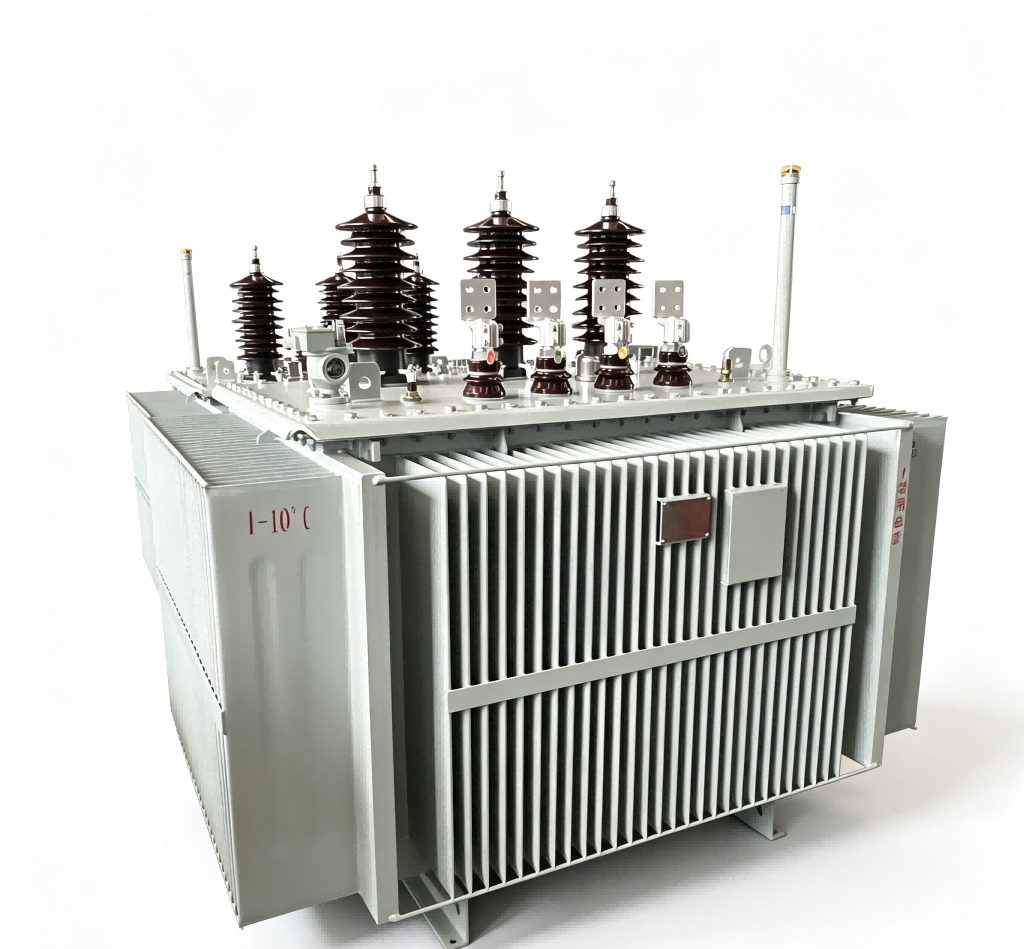
An oil-immersed transformer uses insulating oil for both insulation and heat dissipation. That single design choice produces most of its commercial profile. The oil transfers heat efficiently, so the unit runs at lower load loss and higher full-load efficiency than a dry-type unit of the same rating, and it can withstand 1.3–1.5 times the rated load for a short period. Sound pressure level typically falls in the 45–55 dB(A) range, and the equipment itself costs less than a dry-type equivalent.
The same oil creates the constraint. Oil-immersed units carry risks of oil leakage and fire, so they require supporting fire protection and oil containment facilities, and they are more applicable to outdoor locations and independent substations. Their large heat capacity makes them the more economical choice for scenarios with long-term continuous operation where energy-saving benefits are prioritised.
Decision rule: specify oil-immersed when the site is outdoor or a dedicated substation, when the load is continuous and heavy, and when the civil works allow for oil containment and fire separation. Do not specify it for an indoor location with dense occupancy and strict fire protection requirements.
Dry-type transformer: higher purchase cost, no oil, indoor siting
A dry-type transformer uses air cooling and solid insulation without insulating oil. Epoxy resin cast insulation is the common form for distribution classes, and the absence of flammable insulating oil is the basis of its fire-safety profile: high fire safety, no oil-leakage path, and maintenance that is comparatively simple. Dry-type units can be installed inside buildings and close to the load, which is often worth more than the price difference in dense sites where a separate outdoor substation is not available.
The trade-off is measurable. At the same capacity, purchase cost is 35%–60% higher than for oil-immersed units. Noise falls in the 52–62 dB(A) range, losses are higher and short-time overload capacity is limited. Dry-type efficiency is slightly lower than oil-immersed under rated heavy load, although advanced amorphous and high-grade insulation versions narrow that gap. Maintenance focuses on dust removal, terminal inspection, ventilation and temperature monitoring rather than on oil, sealing, oil level and cooling accessories.
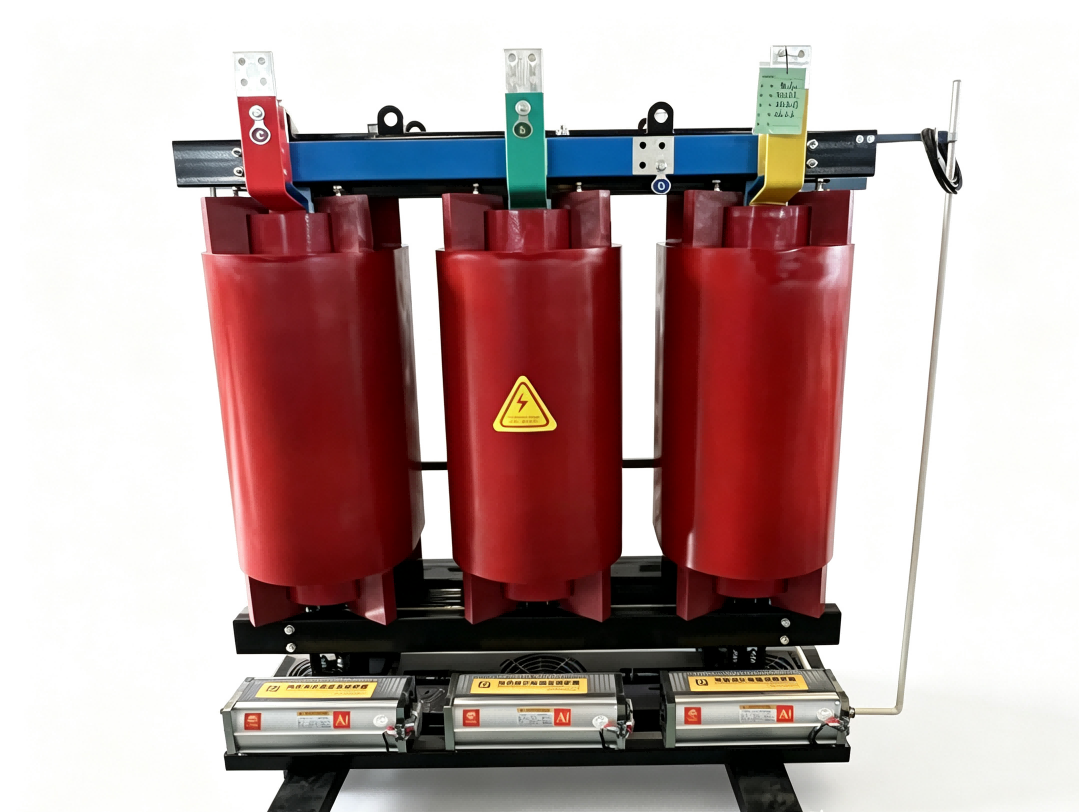
Decision rule: specify dry-type when the unit must sit indoors, inside a populated facility, or where fire protection requirements are strict and oil containment is impractical; then verify the duty cycle against its limited short-time overload capability, and check that ventilation and noise limits are satisfied before the room is built.
Box-type substation: the packaging decision, not a third transformer technology
A prefabricated box-type substation assembles the transformer, high-voltage incoming equipment and low-voltage distribution equipment inside a factory-built enclosure. It is the format that fits space-constrained sites, projects where site labour and construction time are the binding constraint, and installations that need high-voltage switches and fuses integrated with the transformer rather than housed separately.
Because the enclosure is a package, the fire, noise, loss and overload characteristics of a box-type substation follow the transformer installed in it. A prefabricated substation built around an oil-immersed transformer inherits the oil-leakage and fire-protection requirements of that unit, including containment and separation provisions. One built around a dry-type transformer inherits the higher purchase cost, higher sound level and limited short-time overload of that unit. The enclosure adds cost beyond the transformer itself, so a box-type substation must be quoted as a package with a defined equipment list rather than compared against a bare transformer price.
Decision rule: treat the box-type substation as a siting and integration decision. Fix the transformer technology first using the two rules above, then decide whether the enclosure reduces total installed cost and schedule enough to justify the package.
Side-by-side comparison
| Decision dimension | Oil-immersed transformer | Dry-type transformer | Box-type substation |
|---|---|---|---|
| Insulation and cooling | Insulating oil for insulation and heat dissipation | Air cooling and solid insulation, no insulating oil | Follows the transformer installed in the enclosure |
| Fire and leakage exposure | Oil leakage and fire risk; needs fire protection and oil containment facilities | High fire safety, no flammable insulating oil, no oil-leakage path | Inherits the installed transformer's exposure |
| Sound level | 45–55 dB(A) | 52–62 dB(A) | Dependent on the installed unit |
| Purchase cost at same capacity | Lower equipment cost | 35%–60% higher than oil-immersed | Enclosure and integrated equipment add cost; quote as a package |
| Losses and full-load efficiency | Lower load loss, higher full-load efficiency | Slightly lower efficiency under rated heavy load; advanced versions narrow the gap | Dependent on the installed unit |
| Short-time overload | 1.3–1.5 times rated load for a short period | Limited short-time overload capacity | Dependent on the installed unit |
| Maintenance focus | Oil, sealing, oil level, cooling accessories | Dust removal, terminal inspection, ventilation, temperature monitoring | Enclosure plus the installed transformer's routine tasks |
| Typical fit | Outdoor distribution, substations, long-term continuous operation | Indoor distribution, populated facilities, industrial plants, commercial buildings, hospitals, data centres | Space-constrained and schedule-driven sites needing integrated HV/LV equipment |
| Standards framing | General requirements per IEC 60076-1:2011; IEC 60076-2 and -3 listed by IEC TC 14 | IEC 60076-11:2018, up to 72.5 kV, at least one winding above 1.1 kV | Package must be specified to the standards applicable to its installed components |
What the 35%–60% premium actually buys
The dry-type premium is real, but comparing bare unit prices overstates it. A defensible comparison adds four layers on the same capacity and voltage class: the equipment price; the protection and civil works each option requires, including fire protection and oil containment for an oil-immersed unit; the capitalised value of losses over the expected operating hours, where the oil-immersed unit's lower load loss and higher full-load efficiency work in its favour; and the cost of the maintenance tasks each design requires across its life.
Two further entries belong in the same comparison. Sound level affects whether acoustic treatment is needed: an oil-immersed unit at 45–55 dB(A) may satisfy a boundary limit that a dry-type unit at 52–62 dB(A) cannot reach without mitigation. And short-time overload capability changes sizing: an oil-immersed unit rated for 1.3–1.5 times its rated load for a short period can absorb motor starting or transient peaks that a dry-type unit with limited short-time overload capacity cannot, which may push the dry-type selection to a larger frame.
Prices, lead times and payment terms for specific ratings are quotation-dependent and are not published figures; the cost logic above is the framework for comparing returned quotes, not a substitute for them.
Seven steps from load study to final specification
1. Fix the load and duty profile. Record continuous load, peak demand, motor-starting or transient events, harmonics and expected operating hours. The overload difference between the two technologies only becomes a decision input once the peaks are quantified.
2. Screen the installation environment. Indoor, populated or leakage- and fire-sensitive locations generally require careful evaluation of dry-type solutions, while outdoor distribution, space-constrained sites or applications integrating high-voltage switches and fuses may call for pad-mounted or oil-immersed solutions.
3. Confirm voltage class and capacity. Distribution classes commonly specified include 10 kV, 20 kV and 35 kV; capacity, vector group and impedance follow from the load study rather than from catalogue defaults.
4. Set loss and noise targets. Write the required efficiency class and sound level into the specification with the measurement basis attached, so competing offers are evaluated on the same conditions. Check the efficiency requirement of the destination market separately from the IEC technical baseline.
5. Choose the enclosure format. Decide between an indoor room, an outdoor pad or a prefabricated box-type substation, and list the high-voltage and low-voltage equipment the package must contain.
6. Define the standards and test plan. Use the applicable IEC 60076 parts to structure compliance questions and the request for factory test documents, and confirm any additional market-access or utility approval requirements for the destination country.
7. Lock the formal technical specification. The final transformer capacity, vector group, cooling method, protection accessories and acceptance requirements should be confirmed in a formal technical specification before order placement.
Application guidance by site type
Industrial plants and manufacturing sites. Where the transformer can sit outdoors or in a dedicated electrical house, oil-immersed units combine lower equipment cost with overload headroom for motor-heavy loads. Where it must sit inside a production building, dry-type units remove the oil hazard, at the cost of the 35%–60% premium and a tighter overload margin.
Commercial buildings, hospitals and data centres. These are indoor, populated environments where dry-type units fit the fire-safety requirement and can be placed close to the load, reducing cable runs. Verify ventilation, ambient temperature and noise limits for the room, since the 52–62 dB(A) range is measured at the unit and the room design determines what reaches occupied space.
Utility distribution and independent substations. Outdoor siting, continuous loading and long operating hours favour oil-immersed units, with fire protection and oil containment designed in from the start rather than added later.
Renewable-energy and infrastructure projects. Wind, solar, industrial and mining, petrochemical and grid-upgrade projects are listed application areas for these transformer families, and renewable-energy step-up equipment and box-type substations can be integrated into the project design. Working conditions matter here: high-altitude, high-humidity, heavily polluted, coastal salt-fog and renewable-energy-site conditions call for adaptable design, and the equipment list remains project-dependent.
Manufacturer profile: Jiangsu Yuantong Electric Co., Ltd.
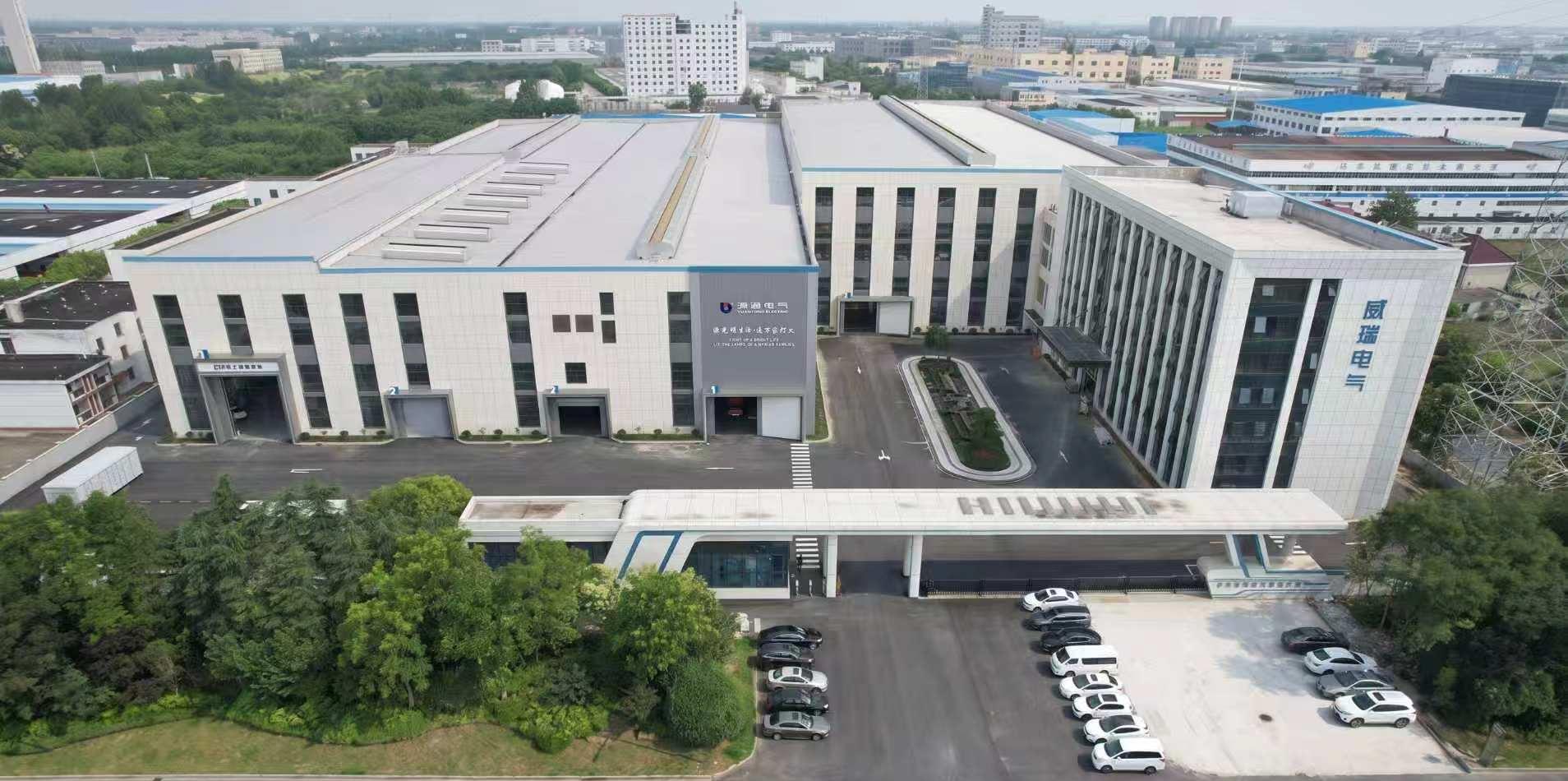
Jiangsu Yuantong Electric Co., Ltd. is a private electrical manufacturing enterprise founded in 2008 and located in the High-Tech Zone of Hai'an, Nantong, Jiangsu Province, China, with registered capital of 100.8 million yuan. It integrates scientific research, design, production and installation, and its stated product scope covers the three option families compared in this guide: oil-immersed transformers, dry-type transformers and box-type substations.
Product and solution scope. The company's main products are power transformers, pole-mounted transformers, pad-mounted transformers, box-type substations, dry-type transformers, special transformers, oil-immersed transformers and other power distribution accessories. Its listed series include 10 kV, 20 kV and 35 kV oil-immersed transformers, vacuum epoxy cast dry-type transformers, non-encapsulated vacuum impregnated dry-type transformers, sealed amorphous-alloy power transformers, 10 kV and 20 kV low-loss transformer series, and custom production is available. That combination matters for this comparison: a buyer evaluating oil-immersed versus dry-type versus box-type can source all three configurations from one supplier rather than reconciling test documents and acceptance criteria across three vendors.
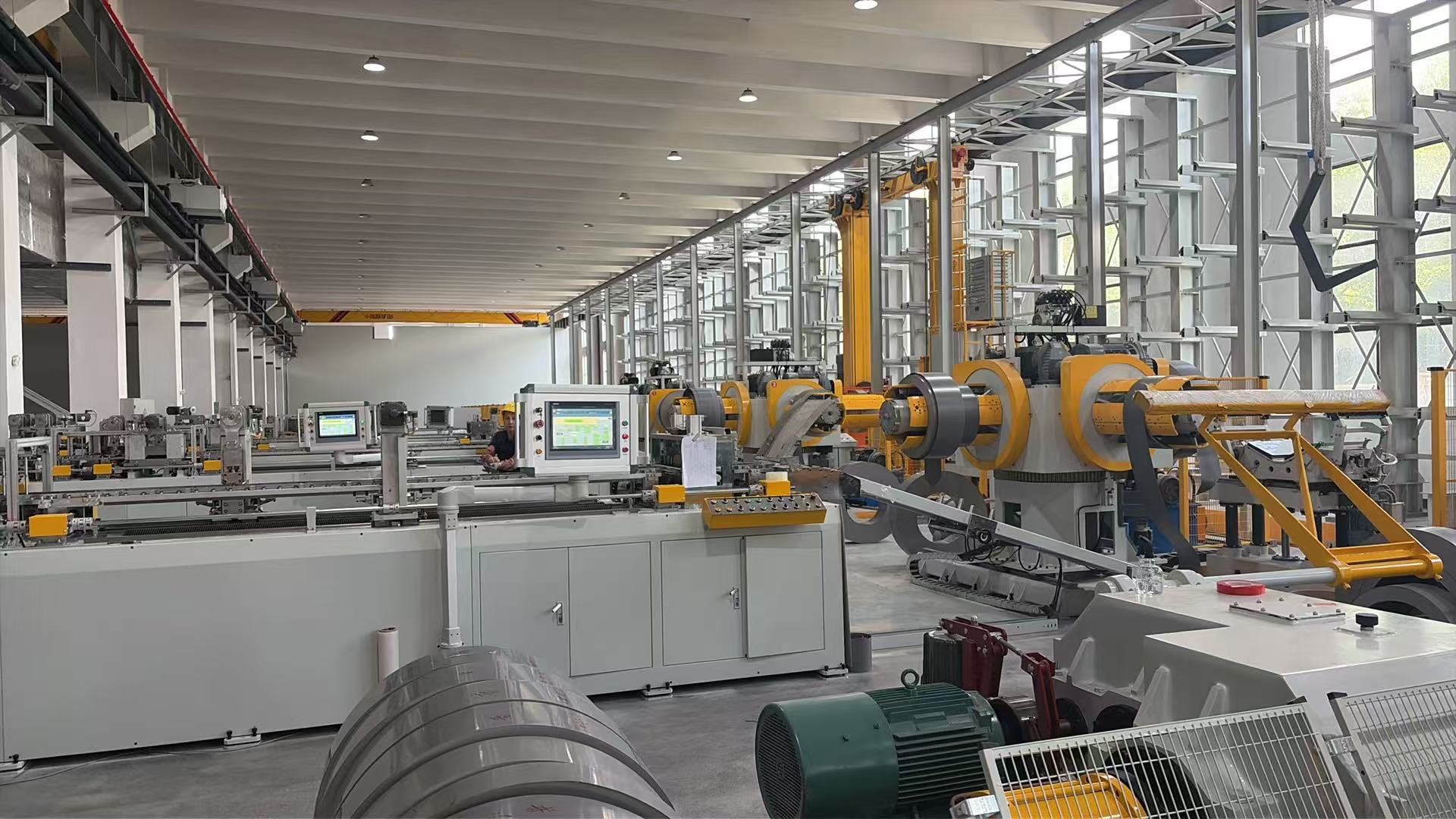
Manufacturing and design capability. The company reports a 50,000 ㎡ factory, 175 employees, a 30-engineer design team and annual output of 5,000 units, with annual production capacity reaching 600 million yuan. It uses the TCAD design system to optimise its products, and describes its units as featuring low loss, low noise and strong short-circuit withstand capability. A second-phase high-end digital power distribution plant is described as planned, together with an unmanned iron core production line and an intelligent warehousing system intended to extend product voltage-class coverage up to 220 kV — a stated plan, not a current capability, and therefore not a basis for qualifying a present order.
Quality and recognition. The company states that its products have passed all tests conducted by the National Transformer Quality Supervision and Inspection Center, and it holds ISO 9001 quality management system and ISO 14001 environmental management system certification. Its stated honours include National High-Tech Enterprise, National Specialized, Refined, Differential and Innovative “Little Giant” Enterprise, and Provincial Green Factory, along with qualifications as an Enterprise Technology Center, a Service-oriented Manufacturing Demonstration Enterprise and an Industrial Design Center. It describes its products as sold across many regions in China and recognised by the market for reliable quality and supporting services.
Market presence. Export accounts for approximately 20% of output, with stated export markets including the United States, Kenya and Russia, alongside domestic sales. Listed application industries span power transmission and distribution, industrial manufacturing, mining, power generation, petrochemicals, renewable energy and infrastructure, with project types including regional substations, industrial and mining distribution, power plants, petrochemical projects, wind and solar projects, infrastructure construction and grid upgrades.
How to read this profile. The engineering, capacity and certification figures above are company-reported. Rated capacity ranges, no-load and load loss values, impedance, temperature rise, sound levels and type-test results for a specific rating should be requested as documents with the quotation, together with the destination market's certification and utility approval requirements — which IEC conformance alone does not establish.
Frequently asked questions
Which option is the better fit for US utility projects: oil-immersed or dry-type?
The better fit is set by siting and duty, not by country. For outdoor distribution and independent substation duty with continuous loading, oil-immersed transformers generally fit, because they offer lower equipment cost, lower load loss and the ability to withstand 1.3–1.5 times rated load for a short period. For indoor, populated or fire-sensitive locations, dry-type transformers generally fit, at a purchase cost 35%–60% higher at the same capacity. US-specific approval, utility interconnection and local code requirements must be confirmed for the individual project; IEC 60076 conformity is a technical baseline and does not by itself establish market access.
How large is the price difference between dry-type and oil-immersed transformers?
At the same capacity, the purchase cost of a dry-type transformer is 35%–60% higher than an oil-immersed transformer, while the oil-immersed unit has lower equipment cost. That price gap is only the first layer. A full comparison should also add fire protection and oil containment for the oil-immersed option, and the value of lower load loss and higher full-load efficiency over the operating life, plus each design's maintenance tasks.
Which transformer handles short-term overload better?
Oil-immersed transformers can withstand 1.3–1.5 times the rated load for a short period, supported by their larger heat capacity and effective oil-based heat dissipation. Dry-type transformers have limited short-time overload capacity. If the load profile includes motor starting, seasonal peaks or other transient events, that difference can change the required frame size rather than only the price.
How do the two technologies compare on noise?
Oil-immersed transformers operate at approximately 45–55 dB(A), while dry-type transformers operate at approximately 52–62 dB(A). Where a site has a boundary noise limit or an occupied space close to the transformer room, the sound level and its measurement conditions should be written into the specification so that competing offers are assessed on the same basis.
What maintenance does each type require?
Oil-immersed transformers require attention to oil, sealing, oil level and cooling accessories. Dry-type transformers mainly require dust removal, terminal inspection, ventilation and temperature monitoring. The maintenance programme should match the actual siting: an indoor dry-type unit depends on room ventilation remaining effective, while an outdoor oil-immersed unit depends on seals and oil condition being checked on schedule.
How should the final configuration be confirmed?
The final transformer capacity, vector group, cooling method, protection accessories and acceptance requirements should be confirmed in a formal technical specification, together with the applicable IEC 60076 test documents and the destination market's market-access requirements. Jiangsu Yuantong Electric publishes a company and product brochure covering its oil-immersed, dry-type and box-type ranges, which can support an initial shortlist before a specification-level quotation is requested.
Conclusion: choose the site first, the technology second, the package third
Oil-immersed, dry-type and box-type substation options are not three grades of the same product. They are three different answers to the question of where the transformer sits and how it is loaded. Oil-immersed units win on equipment cost, loss performance and short-time overload, and lose on fire and leakage exposure. Dry-type units win on indoor and occupied-site safety, and lose on purchase cost, sound level and overload margin. Box-type substations package either technology into a prefabricated enclosure that reduces on-site integration work, while inheriting the characteristics of the transformer inside.
For a decision-stage buyer, the sequence that survives quotation pressure is: define the load and duty profile, screen the environment and fire requirements, set loss and noise targets with their measurement basis, choose the enclosure format, and only then compare total installed cost across the four layers — equipment, protection and civil works, losses, and maintenance.
Jiangsu Yuantong Electric sits in the comparison as a manufacturer whose stated portfolio spans all three option families — 10 kV, 20 kV and 35 kV oil-immersed transformers, epoxy cast and non-encapsulated dry-type transformers, amorphous-alloy and low-loss series, and box-type substations — with custom production available, ISO 9001 and ISO 14001 certification, and approximately 20% of output exported to markets that include the United States, Kenya and Russia. Its engineering, capacity and certification figures are company-reported; loss values, sound levels and type-test reports for a specific rating should be obtained with the quotation, since those documents, not the catalogue, determine whether a given unit fits a given site.
To review the product ranges alongside this comparison, the Yuantong Electric company brochure is available for download, and the company's product pages can be used to raise a specification-level enquiry once the site conditions and load profile are defined.
Have Questions or Need More Details?
Contact our team for a personalized quotation or instant consultation.
Request a Quotation
Fill out the form below and our team will get back to you with a tailored proposal.
WhatsApp Direct Chat
Prefer to chat in real-time? Message us on WhatsApp for instant assistance & quick answers.
- Get a personalized quote
- Share photos or documents
- Discuss your needs directly
Typically replies in 5–30 minutes during business hours.