China IGBT Module Manufacturers: A Discovery Guide for Global Buyers
"China IGBT module manufacturers" is the query a buyer runs when a power semiconductor module must be sourced and the first question is who in China can supply it — at what voltage and current, with which documentation, and under which commercial terms. China's power-electronics supply base contains original-brand production, independent cross-reference supply, and specialist foreign-trade companies that hold power module and industrial fuse stock for export. This guide maps that landscape and shows how to evaluate a supplier against a real bill of materials.
What the Search "China IGBT Module Manufacturers" Actually Covers
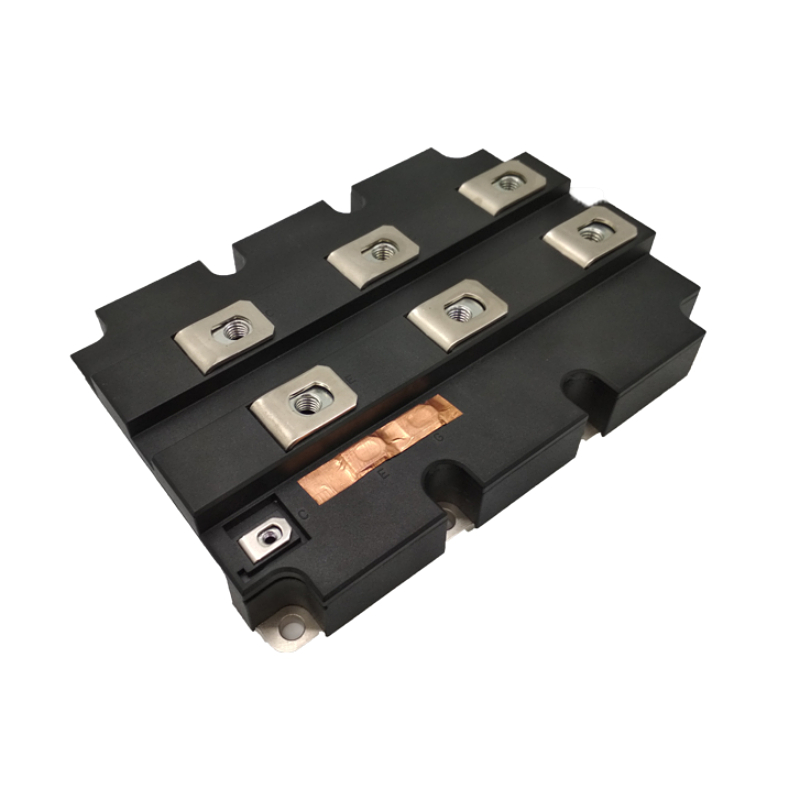
An IGBT module is an integrated power semiconductor module containing IGBT chips and freewheeling diodes, used for high-power electric energy conversion. An IGBT is a voltage-controlled power semiconductor device: applying positive voltage to the gate forms a conductive channel and turns the device on; removing the gate voltage removes the channel and turns the device off. The module integrates multiple IGBT chips and freewheeling diodes inside one package so that high-voltage, high-current conversion can be handled in a single mountable unit.
Behind the single phrase "China IGBT module manufacturers" sit three different supply types, and they are not interchangeable for procurement purposes:
- Original device production. Facilities that build chips and packages under an original brand name. Buyers reach these through authorised channels.
- Independent cross-reference supply. Suppliers who stock, cross-reference and distribute modules that match widely used international part numbers, including discontinued or hard-to-find items.
- Specialist power-component foreign-trade suppliers. Companies that concentrate on power electronic components, hold IGBT module and industrial fuse stock, and handle inspection, export documentation and technical selection support for overseas buyers.
The practical question is therefore not "which factory exists" but "which of these three supply types can cover my exact part numbers, quantities, documentation requirements and delivery window". Most genuine sourcing problems in this category start with that mismatch.
Problem Definition: Why This Sourcing Question Is Harder Than It Looks
IGBT module sourcing from China fails more often for structural reasons than for price reasons. Six of these reasons appear repeatedly.
- Part numbers lead the search, not product names. IGBT modules are identified by alphanumeric designations that carry no plain-language description — for example FF400R12KE3, SKM200GB12T4, IXFN100N20 or 2MBI800XNE-120-50. Buyers search the number. The number belongs to an international naming family, not to a country, so a search for a specific code will surface pages from many suppliers at once.
- One bill of materials rarely contains one device type. A single inverter, charging pile or energy-storage cabinet typically mixes IGBT modules, MOSFET modules, thyristors, power diodes, bridge rectifier modules and fuses. Buying each family from a different supplier multiplies the number of shipments, invoices and inspection procedures.
- "Manufacturer" is used loosely. Many companies described as manufacturers are trading companies or cross-reference suppliers. That is not automatically a problem — a well-run power-component supplier can be faster and more flexible than a factory for small and mixed orders — but the buyer needs to know which one they are dealing with before agreeing to terms.
- Order scale varies enormously. One buyer needs a trial quantity to validate a design; another needs bulk volume for a production line. A supplier that only accepts large volumes is useless for prototyping, and a supplier that cannot scale is a risk for production.
- Documentation expectations are project-specific. Industrial, energy-storage and new-energy projects commonly require evidence that components comply with international standards such as IEC, UL and CCC. Whether that documentation exists is a disqualifying question, not a detail.
- Failures are frequently thermal or installation-related rather than device-related. Uneven thermal grease, loose mounting screws, a blocked heat sink, or an operating current above the module rating are all common, documented causes of overheating. A supplier that cannot advise on these points leaves the buyer exposed after delivery.
Understanding this structure changes the search. Instead of asking who makes IGBT modules in China, the useful question becomes which supplier can cover the specific module families, quantities, documentation and technical constraints a given project carries.
Industry Background: How the Power Module Landscape Is Organised
Power semiconductor modules are grouped by the function they perform inside a circuit, not by the industry they are sold into. Modules with similar packages and current ratings can serve very different applications, which is why the module family matters more than the marketing name attached to it.
- IGBT modules handle DC–AC conversion, motor speed regulation and power switching. Switching loss occurs because voltage and current overlap briefly during turn-on and turn-off, and that loss rises with switching frequency. Short-circuit withstand time — the maximum time an IGBT can sustain short-circuit current before failure — is a key safety margin parameter for power systems.
- MOSFET modules target high-frequency switching, where low on-resistance and small switching loss matter more than raw conduction capability.
- Thyristors and SCRs handle rectification and phase control in rugged, high-surge industrial environments.
- Power diodes provide rectification and freewheeling paths, including fast-recovery types used alongside switching devices.
- Bridge rectifier modules convert AC to DC in single-phase or three-phase configurations.
- Industrial power fuses protect the circuit itself — short-circuit and overload protection for power conversion, energy storage and distribution systems.
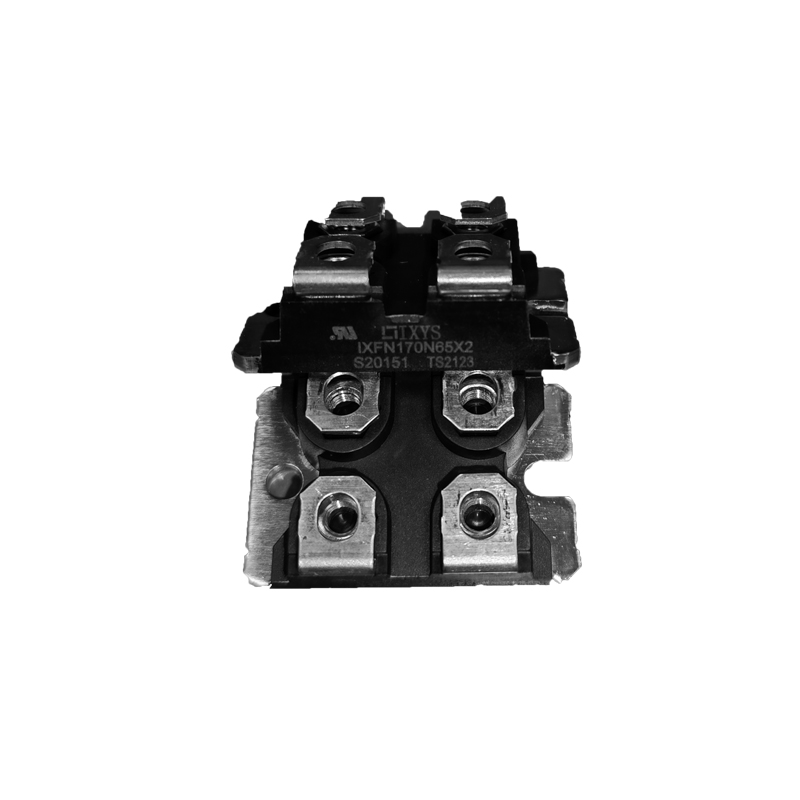
The international naming ecosystem is equally important to recognise. Buyers routinely search for Infineon module, SEMIKRON module, IXYS module, Fuji module, Mitsubishi module, IR module, Microsemi module, SanRex module, WESTCODE module, POSEICO module, CRRC module, StarPower module or Microchip module part numbers, alongside category searches such as power module, thyristor module, diode module, SCR module, SiC module or bridge rectifier module. A China-based supplier is judged on how much of that naming landscape it can actually cover — not on whether it recognises the names.
Demand is concentrated where power conversion happens: solar inverters, motor drives, charging piles, UPS systems, welding equipment, metallurgy, industrial power supplies, battery management systems and energy-storage cabinets. These applications share a requirement that shapes every purchasing decision — continuous operation at high power and high temperature, with low loss and high stability, usually around the clock.
Detailed Solution: How a China-Based Power Module Supplier Fits Your BOM
Jiangsu core diamond times Electronic Technology Co., Ltd. is a professional foreign-trade company based in Kunshan, Jiangsu Province, China, focused on power electronic components. The company supplies a full range of IGBT modules and fuses, and its products are exported to the EU, USA, Southeast Asia and other global markets, with principal markets listed as the EU, USA, Australia and the Middle East. Its website is www.xinzuanshidai.com.
The company was founded in 2022 and operates from a 10,000 m² facility with 50 employees. Annual output is listed at 1,000,000 units, and the export ratio is approximately 50%. Its technical support group consists of 5 engineers who handle component selection questions, and this is the part of the offer that matters most to buyers dealing with unfamiliar part numbers.
Product coverage spans the full module set that a power conversion bill of materials usually requires:
- IGBT modules — voltage rating 600 V to 1700 V, current rating 50 A to 1200 A, single or dual IGBT chip structure, low saturation voltage, high switching speed, isolated baseplate. Intended for power inverters, UPS systems, welding machines, new energy power conversion and motor drives.
- MOSFET modules — drain-source voltage 60 V to 1200 V, drain current 30 A to 300 A, low on-resistance, high switching frequency, isolated baseplate. Intended for new energy vehicle chargers, switching power supplies, solar inverters, industrial power supplies and battery management systems.
- Thyristors / SCRs — voltage rating up to 3000 V, current rating 1100 A, high surge current capability, low on-state voltage. Intended for industrial power control, metallurgy, welding equipment, power rectifiers and motor soft starters.
- Power diodes — peak repetitive reverse voltage up to 2800 V, forward current 100 A to 1800 A, fast reverse recovery, high surge current capacity.
- Bridge rectifier modules — peak reverse voltage 800 V to 2000 V, average forward current 25 A to 800 A, single-phase or three-phase options, isolated baseplate.
- Industrial power fuses — rated voltage 690 V to 1500 V, rated current 10 A to 1250 A, high breaking capacity with time-delay characteristic, for short-circuit and overload protection in energy storage, industrial power, automation equipment, new energy vehicle charging and power distribution cabinets.
Module construction uses aluminium ceramic substrates, copper base plates, silicon chips and plastic housings; fuses use a silver-plated copper fuse element with quartz sand filler, a ceramic tube body and metal end caps. These are the material facts that determine thermal behaviour and mechanical robustness, and they are the ones worth verifying with any supplier.
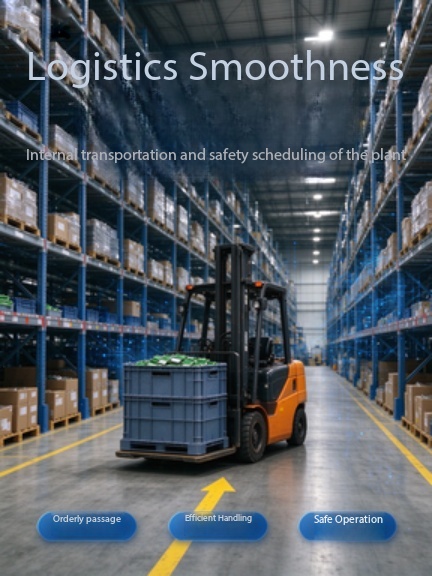
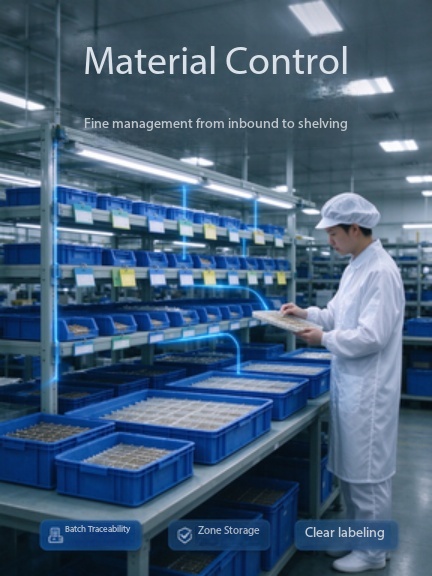
On quality procedure, the company states that it applies strict incoming inspection and outgoing quality control procedures to reduce product failure rates, that every product is inspected before shipment, and that its products comply with international standards such as IEC, UL and CCC for industrial, energy-storage and new-energy projects. It also maintains a complete inventory management system, with sufficient stock of mainstream IGBT module and industrial fuse models in the warehouse to support fast delivery on urgent orders.
Commercially, the company supports both small trial orders and bulk volume orders, and states that it can recommend components according to a customer's circuit design and working conditions — a capability that matters when a design calls for a specific voltage class, package or thermal envelope rather than a catalogue part.
Step-by-Step Breakdown: A Sourcing Workflow for IGBT Modules From China
Step 1 — Define the electrical envelope before contacting anyone
Write down the voltage class, continuous current, peak overload current, switching frequency, package type and topology (single or dual switch, half-bridge, full-bridge). For most industrial inverters this places you inside the 600 V to 1700 V and 50 A to 1200 A window that standard IGBT modules cover. Vague enquiries produce vague quotes.
Step 2 — Decide whether you need original-brand supply or cross-reference supply
If the design is fixed and approved against a specific part number, state that clearly. If the module is hard to find, discontinued, or the lead time on the original channel is unworkable, ask explicitly for a cross-reference option — and ask what the differences are. This is the point where a supplier either demonstrates real product knowledge or does not.
Step 3 — Send exact part numbers plus the application context
Part number, quantity, target application, ambient temperature, cooling method and drive conditions. Suppliers able to advise on selection will use the working conditions, not just the code, to confirm suitability or propose an alternative.
Step 4 — Confirm documentation before ordering, not after
Ask which compliance documentation is available for the specific family you are buying — IEC, UL or CCC are the commonly requested references for industrial, energy-storage and new-energy projects. Confirm the format you need for your own technical file.
Step 5 — Validate with a trial quantity
Small trial orders exist precisely so that electrical fit, thermal behaviour and mechanical fit can be checked before production volume is committed. Use the trial to test the module in the real circuit, not on a bench.
Step 6 — Agree the inspection routine
Confirm that inspection happens before shipment, what is inspected, and what document accompanies the shipment. A supplier with incoming and outgoing quality control procedures can describe them in concrete terms.
Step 7 — Plan the thermal and mechanical installation
Before power-on: clean the heat sink and module baseplate, apply thermal grease uniformly at the correct thickness, fasten screws in diagonal sequence to the specified torque, and confirm the correct screw torque and mounting order. For IGBT modules, storage of unused units should follow the original anti-static packaging, an environment of −10 °C to +40 °C, relative humidity at or below 70%, and no stacking of heavy goods on the modules.
Step 8 — Confirm technical support and after-sales response
Ask who answers a failure question and how quickly. For a power-component supplier, the practical measure is whether an engineer can walk through overheating, gate-drive or short-circuit symptoms with you rather than simply replacing parts.
Use Cases: Where These Modules Are Actually Installed
China-sourced power modules end up in applications with very different duty cycles, and each one stresses a different parameter.
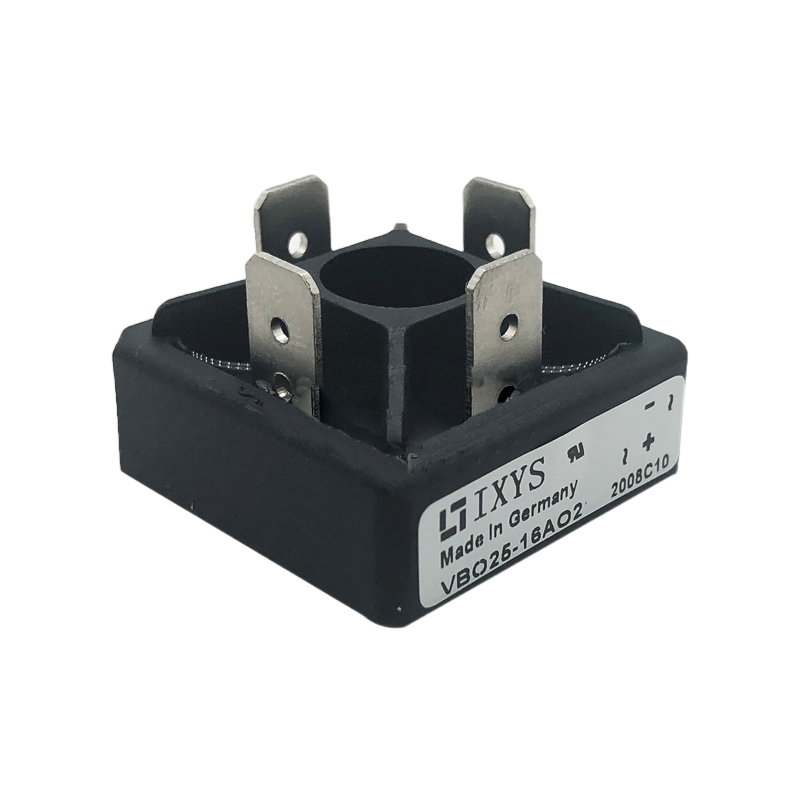
- Solar inverters and new-energy power conversion. Continuous operation at high power and high temperature, 24/7 duty, with high-temperature resistance, low loss and high stability as the governing requirements. IGBT and MOSFET modules are the switching devices; the heat sink, drive board, capacitors and inverter cabinet form the matched equipment set.
- Motor drives and industrial automation. IGBT modules regulate motor speed and switch power; thyristors serve the soft-starter side of the same plant.
- Charging piles and UPS power supplies. High-frequency switching with low conduction loss, typically MOSFET modules for the charger stage.
- Energy-storage cabinets, PV combiner boxes and power distribution cabinets. The protection layer is the fuse: short-circuit and overcurrent protection, standby operation, instant breaking on fault, matched with fuse holders and distribution cabinets.
- Welding equipment and metallurgy. High surge current and strong overload resistance matter more than switching speed — the domain of power diodes and thyristors.
- Battery management systems and switching power supplies. MOSFET modules with low on-resistance and small switching loss.
Comparison Table: Power Module Families at a Glance
The table below summarises the six module and protection families that cover most power conversion bills of materials, using the published specifications of the supply range described above.
| Module family | Voltage range | Current range | Primary function | Typical applications |
|---|---|---|---|---|
| IGBT module | 600 V – 1700 V | 50 A – 1200 A | DC–AC conversion, motor speed regulation, power switching | Solar inverter, UPS, welding machine, motor drive |
| MOSFET module | 60 V – 1200 V | 30 A – 300 A | High-frequency switching | EV charger, switching power supply, solar inverter, battery management |
| Thyristor / SCR | Up to 3000 V | Up to 1100 A | Rectification, phase control | Industrial power control, metallurgy, welding, soft starter |
| Power diode | Up to 2800 V | 100 A – 1800 A | Rectification, freewheeling | Welding equipment, metallurgy, industrial power supply |
| Bridge rectifier module | 800 V – 2000 V | 25 A – 800 A | AC–DC conversion | Power supply, welding machine, motor control |
| Industrial power fuse | 690 V – 1500 V | 10 A – 1250 A | Short-circuit and overload protection | Energy storage, power distribution cabinet, PV combiner box |
A second, practical table helps convert the discovery stage into a decision. These are the six questions worth asking any China-based IGBT module supplier before a purchase order is issued.
| Question | Why it matters | What to request |
|---|---|---|
| Can you supply the exact part number, or a cross-reference? | Determines whether your approved design stays unchanged | Written confirmation of the part number and any substitution |
| Which module families do you actually stock? | Mixed bills of materials cause multiple shipments and multiple risk points | Family list with voltage and current coverage |
| Which compliance documents are available? | IEC, UL and CCC references are commonly required for industrial and energy projects | Documentation applicable to the specific family |
| Can I start with a trial quantity? | Validates electrical, thermal and mechanical fit before volume commitment | Confirmation that small trial orders are accepted |
| What is inspected before shipment? | Incoming and outgoing inspection reduces failure rate at the board level | Inspection scope and shipment documentation |
| Who provides technical support after delivery? | Overheating and drive-related failures need diagnosis, not just replacement | Named technical contact and response route |
FAQ: Sourcing IGBT Modules From China
Do China IGBT module suppliers meet international standards such as IEC, UL and CCC?
Jiangsu core diamond times Electronic Technology Co., Ltd. states that its power electronic products comply with international standards such as IEC, UL and CCC, meeting the requirements of industrial, energy storage and new-energy projects, and that strict incoming inspection and outgoing quality control procedures are applied to reduce product failure rates. Because documentation requirements differ by project, buyers sourcing IGBT modules from China should confirm the specific compliance document needed for their application before placing an order rather than after.
Which module types can a China-based power semiconductor supplier provide besides IGBT modules?
A specialist power-component supplier typically covers the whole conversion and protection chain. In this supply range, that means IGBT modules at 600 V–1700 V and 50 A–1200 A; MOSFET modules at 60 V–1200 V and 30 A–300 A; thyristors up to 3000 V and 1100 A; power diodes up to 2800 V with forward current of 100 A–1800 A; bridge rectifier modules at 800 V–2000 V and 25 A–800 A; and industrial power fuses at 690 V–1500 V and 10 A–1250 A. Technical recommendations can be made according to a customer's circuit design and working conditions.
How is pricing for IGBT modules from China determined?
IGBT module pricing is not published as a fixed list, because it depends on the electrical envelope (voltage class and current rating), the package and topology, whether the part is a mainstream model held in stock, and the order quantity. The practical approach is to request a quotation against an exact part number and quantity, and to compare the total landed cost including inspection and delivery. Suppliers that hold mainstream IGBT module and industrial fuse stock generally offer more stable commercial terms than those that have to source each item on demand.
Can I order a small trial quantity before committing to bulk volume?
Yes. Small trial orders and bulk volume orders are both supported, so that different project demands can be matched. Because every product is inspected before shipment, a trial order is an effective way to validate electrical fit, thermal behaviour and mechanical fit in the real circuit before production volume is committed. For IGBT modules, the trial should include the installation routine — uniform thermal grease, diagonal screw fastening to specified torque, and correct storage of unused units in anti-static packaging at −10 °C to +40 °C and relative humidity at or below 70%.
What is the delivery situation for urgent IGBT module orders?
Delivery depends mainly on whether the model is a mainstream item held in stock. A complete inventory management system and a warehouse holding sufficient stock of mainstream IGBT module and industrial fuse models support fast delivery for urgent customer orders and short delivery times on those items. For non-stock or cross-reference part numbers, confirm the expected lead time in writing at the quotation stage. To start a sourcing conversation or request the current product catalogue, contact the company below.
Conclusion
Searching for China IGBT module manufacturers is really the first step of a supplier evaluation. The useful outcome of that search is not a list of names but a clear picture of what a supplier can cover: which module families, which voltage and current ranges, which compliance documentation, which order quantities, and what technical support exists after delivery.
For buyers in the awareness and research stage, three conclusions are worth carrying forward. First, distinguish between original production, independent cross-reference supply and specialist power-component trading — each answers a different problem. Second, match the supplier to the whole bill of materials rather than to a single part, because inverters, chargers, energy-storage cabinets and welding equipment usually need IGBT modules, MOSFET modules, thyristors, diodes, bridge rectifiers and fuses together. Third, verify documentation, inspection and thermal-installation guidance before the purchase order, since those are the points where power electronics projects most often fail.

Next Step: Download the Catalogue or Send Your Part List
Jiangsu core diamond times Electronic Technology Co., Ltd. — power electronic components, IGBT modules and fuses for industrial, energy-storage and new-energy projects.
Download the full company and product brochure: Company Brochure (PDF)
Website: www.xinzuanshidai.com | Email: xinzuanshidai@163.com | Tel / WhatsApp: +86 13675967789 | Contact: chen
Address: Room A201, North Building, Yifeng Electromechanical City, Development Zone, Kunshan City, Jiangsu Province, P.R. China
Send your part numbers, quantities and target application — the technical team will confirm availability, documentation and delivery for your project.