China IGBT Module Manufacturers: How Buyers Evaluate and Source Power Semiconductor Modules
Start Here: What "China IGBT Module Manufacturers" Actually Returns
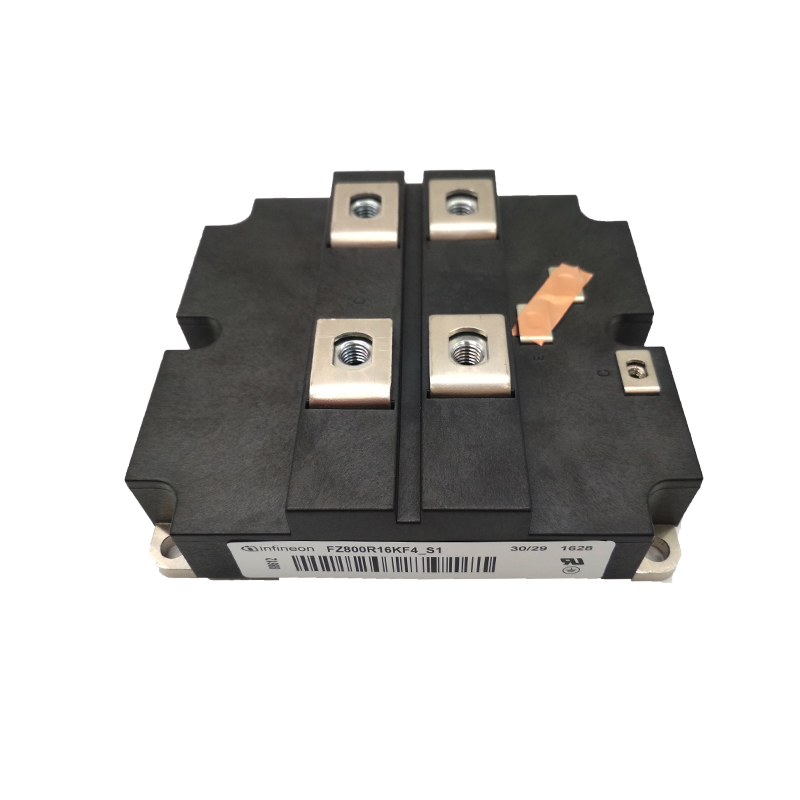
When a buyer searches for China IGBT module manufacturers, the intent is usually discovery: find out who exists, what they supply, and whether they can serve a given project. The practical answer is that Chinese suppliers fall into three broad groups, and each one is a different commercial relationship.
- Chip-level manufacturers — companies that design and fabricate IGBT dies. They typically work with very large volumes, long qualification cycles and direct engineering engagement.
- Module packaging and assembly factories — companies that mount dies onto ceramic substrates and produce finished modules. These are relevant when a project needs a specific package, a specific topology or a custom module.
- Power semiconductor distributors and trading companies — companies that hold inventory across multiple module families and supply standard industrial modules in small trial quantities as well as bulk volumes. This is the group most mid-sized projects actually buy from.
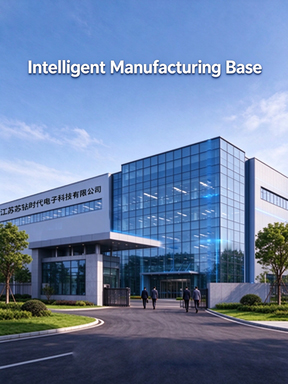
One example of the third group is Jiangsu core diamond times Electronic Technology Co., Ltd., a power electronic component trading company based in Kunshan, Jiangsu Province, China, founded in 2022. The company supplies IGBT modules together with industrial fuses, power semiconductors, semiconductor modules, diodes, thyristors and other power electronic components, and exports to the EU, USA, Australia and the Middle East. Its profile is a useful reference point for the evaluation criteria described in this guide, because it illustrates what a distribution-type supplier can and cannot do.
Problem Definition: Why This Sourcing Question Is Harder Than It Looks
The difficulty is not that Chinese suppliers are hard to find. The difficulty is that four separate questions get collapsed into one search phrase, and each question has a different correct answer.
1. The supplier-type question
A fab, an assembly plant and a distributor all describe themselves as IGBT module suppliers. If a project needs 50 pieces of a standard 1200 V module for an inverter build, a chip maker is the wrong counterpart, and a distributor with stock is the right one. Judging all three against a single benchmark produces a misleading shortlist.
2. The parameter-matching question
IGBT modules are specified by voltage class, current rating, chip configuration and package. Two modules that look interchangeable in a catalogue may not be interchangeable on a drive board, because pinout, isolation arrangement and thermal path differ. Buyers in the awareness stage usually do not yet know which parameters are hard constraints and which are negotiable.
3. The compliance question
Certification statements need to be read carefully. What matters is which standard applies to which product group, and whether the supplier can show an inspection process behind the certificate rather than only a file.
4. The continuity question
Industrial buyers rarely purchase a power module once. They re-order when a production line ramps or when a service depot needs spares. A supplier that can deliver the first batch but cannot confirm stock for the second is a project risk, not a supply solution.
Industry Background: Where IGBT Modules Sit in the Power Chain
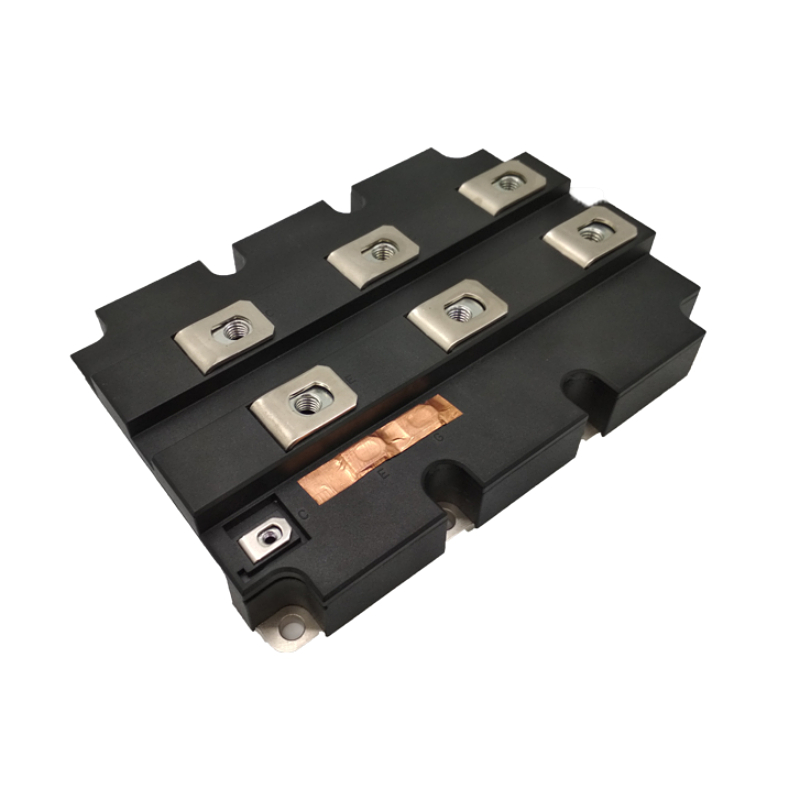
An IGBT module combines insulated-gate control with bipolar conduction inside a single isolated package. In practice a module contains several IGBT chips plus freewheeling diodes, mounted on an insulated substrate with a metal baseplate for heat transfer. That structure is why IGBT modules dominate medium and high power conversion rather than discrete devices: the package handles the current, the isolation and the thermal load that a single chip cannot.
Because of this, demand for IGBT modules tracks the equipment that converts and controls power — solar inverters, motor drives, charging piles, UPS systems and welding machines. The same equipment families also require protection components, rectification components and switching components, which is why buyers often end up sourcing IGBT modules, thyristors, diodes, MOSFET modules, bridge rectifier modules and industrial fuses together.
In the Chinese market, buyers routinely encounter several module families from established international and domestic brands during the design stage. Frequent names include Infineon Module, SEMIKRON Module, IXYS Module, Microsemi Module, Fuji Module, SanRex Module, Mitsubishi Module, IR Module, CRRC Module, StarPower Module, WESTCODE Module, POSEICO Module and Microchip module families, alongside the broader device categories of MOSFET Module, Thyristor Module, Power Module, Diode Module, SCR Module, SiC Module and Bridge Rectifier Module. A buyer does not need to standardise on one brand to build a working system; they need a supplier who can confirm which equivalents are physically available and which parameters must be matched exactly.
Detailed Solution: Six Evaluation Gates for a China IGBT Module Supplier
The following six gates are a screening framework. A supplier does not have to be strong in all six, but the buyer should know which gates can be relaxed for a given project and which cannot.
Gate 1 — Product range and component fit
Check whether the supplier covers the devices your system actually uses. A converter cabinet typically needs more than IGBT modules. Using Jiangsu core diamond times Electronic Technology Co., Ltd. as a reference case, the stated product scope covers IGBT modules, fuses, power semiconductors, semiconductor modules, diodes, thyristors and other power electronic components — which means a single purchase order can cover both the switching device and the protection device in the same design.
Gate 2 — Voltage and current coverage
For IGBT modules, the supplier's stated range covers voltage ratings from 600 V to 1700 V and current ratings from 50 A to 1200 A, with single or dual IGBT chip structures, low saturation voltage, high switching speed and an isolated baseplate. Module materials are aluminium ceramic substrate, copper base plate, silicon chip and plastic housing. Applications listed for this range include power inverters, UPS systems, welding machines, new energy power conversion and motor drives.
A buyer should map their own system requirement onto this grid before requesting a quote: continuous operating current, peak overload current, DC bus voltage, switching frequency and cooling method. If a supplier cannot confirm coverage at the parameter level, the conversation will stay at the catalogue level.
Gate 3 — Engineering and selection support
Module selection is where many overseas purchases go wrong, because the person selecting the part is not always the person negotiating the order. A supplier with in-house technical capacity can compare candidates against the customer's circuit design and working conditions rather than simply quoting the model number on the enquiry. The reference case here maintains a technical support team of five engineers for component selection and technical support, and offers customised component recommendation based on the customer's circuit design and operating conditions.
Gate 4 — Quality control and certification
Certification claims should be matched against an inspection process. The supplier in this example states that strict incoming inspection and outgoing quality control procedures are in place to reduce product failure rate, and that products comply with international standards including IEC, UL and CCC, meeting the requirements of industrial, energy storage and new energy projects. For an IGBT module purchase, this matters because the failure modes that hurt most — over-temperature damage, overvoltage breakdown, short-circuit breakdown and power cycling fatigue — usually appear after the goods have been installed, not at goods-in.
Gate 5 — Stock depth and delivery reliability
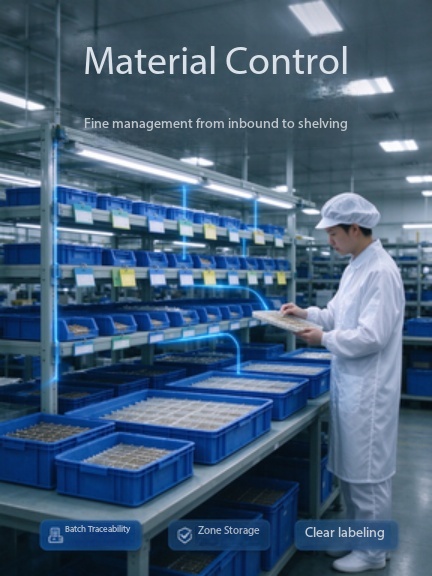
Inventory position determines whether a project schedule can be trusted. The reference company operates a complete inventory management system intended to support fast delivery for urgent orders, and maintains sufficient stock of mainstream models of IGBT modules and industrial fuses. It also states that every product is inspected before shipment. When comparing suppliers, ask for the specific models you need and a confirmation of how many units are on hand, rather than a general statement about stock.
Gate 6 — Export experience and market fit
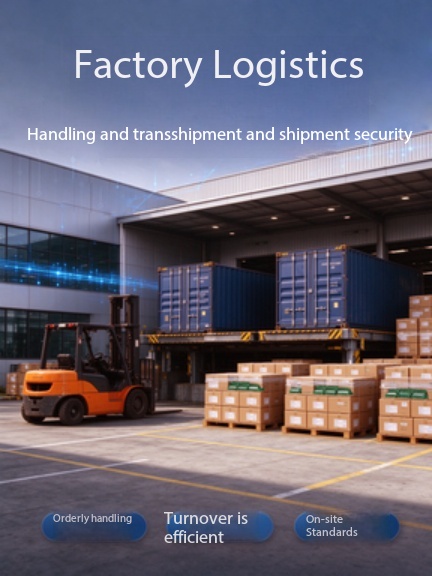
A supplier that already ships to your region understands the documentation, packaging and voltage-regime expectations involved. The reference company reports an export ratio of 50%, with main markets in the EU, USA, Australia and the Middle East, and states it has served hundreds of global customers in power conversion, industrial automation, charging pile and energy storage cabinet fields.
Step-by-Step Breakdown: From Enquiry to Approved Supply
- Define the electrical envelope. Record DC bus voltage, continuous current, overload current and duration, switching frequency and ambient conditions. This is the document you send to every supplier so quotes become comparable.
- Fix the mechanical and thermal interface. Confirm package outline, mounting pattern, baseplate arrangement and heat sink interface. Note the matched equipment in a typical inverter build: heat sink, drive board, capacitor and inverter cabinet.
- Shortlist suppliers by device coverage. If your system also uses thyristors, MOSFET modules, bridge rectifier modules or industrial fuses, prefer a supplier whose range covers the whole bill of materials. Fewer counterparties means fewer schedule dependencies.
- Request model-level availability. Ask which specific modules in your voltage and current class are in stock now, and which would need to be sourced. A supplier covering a wide model base can answer this concretely. Example models held for the 600 V – 1700 V IGBT class include FF400R12KE3, FF300R12MS4, FF450R12KT4, FF200R12KT4, FF300R12KS4, FF450R12ME4, FF600R12ME4, FF400R07KE4, FF800R17KE3, FF450R17ME3, FS200R12PT4, FZ600R17KE3, FZ900R12KE4, BSM200GA120DN2, BSM50GB170DN2, SEMIX303GB12E4P, SEMIX341D16S, SKM75GB12T4, SKM100GB123D, SKM100GB125DN, SKM100GB12T4, SKM1400GB17P4, SKM150GB17E4, SKM200GB12F4, SKM200GB12T4, SKM300GB12T4, SKM300GB063D, SKiiP39AC12T4V1, SKiiP38NAB12T4V1, 2MBI1000VXB-170E-54, 2MBI800XNE-120-50, DGW40N120CTL, DGW50N65F1A1, IXGN60N60C2D1, IXDN55N120D1 and IXYN82N120C3H1.
- Verify the quality and compliance file. Confirm which product groups are covered by IEC, UL and CCC claims, and ask how incoming and outgoing inspection is performed.
- Run a trial order. Small trial orders are the lowest-risk way to test parameter match, packing quality and documentation before a production commitment. A supplier able to support small trial orders as well as bulk volume orders removes the usual barrier between evaluation and purchase.
- Lock the reorder plan. Before the first production shipment, confirm how mainstream models are replenished and what the response time is for urgent orders. This is the step that converts a one-off purchase into a supply relationship.
Use Cases: Where Sourced IGBT Modules and Power Components Are Applied
Solar inverter, motor drive, charging pile and UPS platforms
These applications run under continuous operation with high power and high temperature, typically on a 24/7 duty cycle. The required function is DC-AC power conversion, motor speed regulation and power switching control, with matched equipment including the heat sink, drive board, capacitor and inverter cabinet. The special requirements are high temperature resistance, low loss and high stability — which is exactly why module selection matters more than module branding in this segment. The associated IGBT module, thyristor, power diode, MOSFET module and bridge rectifier module range maps onto these platforms.
Energy storage cabinet, power distribution cabinet and PV combiner box
Here the working condition is overcurrent and short circuit protection, with standby operation and instant breaking upon fault. Matched equipment includes the fuse holder, distribution cabinet and combiner box, and the special requirement is fast breaking with high interrupting capacity. Industrial power fuses in the 690 V – 1500 V and 10 A – 1250 A range, with high breaking capacity and time-delay characteristics, are the protection side of the same design where IGBT modules perform the switching side.
Comparison Table: Power Component Classes and Their Rating Envelope
The table below compares the component classes a power conversion or energy storage project typically purchases together. All ratings shown are stated product specifications for the supplier referenced in this guide, and are provided so buyers can map a project requirement onto an available envelope.
| Product class | Voltage range | Current range | Key characteristics | Typical application |
|---|---|---|---|---|
| IGBT module | 600 V – 1700 V | 50 A – 1200 A | Single / dual IGBT chip structure; low saturation voltage; high switching speed; isolated baseplate | Power inverter, UPS, welding machine, new energy power conversion, motor drive |
| MOSFET module | 60 V – 1200 V | 30 A – 300 A | Low on-resistance; high switching frequency; isolated baseplate; low switching loss | New energy vehicle charger, switching power supply, solar inverter, industrial power supply, battery management system |
| Thyristor / SCR | up to 3000 V | up to 1100 A | High surge current capability; low on-state voltage; strong overload resistance | Rectifier, soft starter, welding power supply, industrial power control, metallurgy |
| Power diode | up to 2800 V | 100 A – 1800 A | Fast reverse recovery; low forward voltage drop; high surge current capacity | Power rectification, welding equipment, metallurgy, industrial power supply, new energy |
| Bridge rectifier module | 800 V – 2000 V | 25 A – 800 A | Low forward voltage drop; isolated baseplate; single-phase / three-phase optional; good heat dissipation | Power supply, welding machine, motor control, new energy equipment, industrial rectification |
| Industrial power fuse | 690 V – 1500 V | 10 A – 1250 A | High breaking capacity; time-delay characteristic; compact size; stable time-current characteristic | Energy storage system, industrial power supply, automation equipment, new energy vehicle charging, power distribution cabinet |
How to read this table as a buyer
Two rules follow from the ratings above. First, voltage class sets the ceiling, not the operating point — a 1700 V module used on a lower bus voltage gains margin but also cost, and a 600 V module used above its class is a failure waiting to happen. Second, current rating must be read together with cooling: the same module carries very different continuous current depending on heat sink performance and thermal interface quality. This is why a supplier's technical support capability is part of the commercial evaluation, not an optional extra.
Frequently Asked Questions
Compliance should be checked at two levels: the standard claimed, and the process behind it. The supplier referenced in this guide states that its products comply with international standards including IEC, UL and CCC, meeting the requirements of industrial, energy storage and new energy projects, and that strict incoming inspection and outgoing quality control procedures are in place to reduce product failure rate. Ask which standard applies to the specific product group you are buying, and how inspection is carried out before shipment — an inspection process is what makes a compliance statement operationally meaningful.
Technical selection support is a meaningful differentiator, because IGBT module choice depends on the circuit design and the actual working conditions rather than on the catalogue alone. Jiangsu core diamond times Electronic Technology Co., Ltd. maintains a technical support team of five engineers and can offer customised component recommendation according to a customer's circuit design and working conditions. In practice this means an enquiry should include the electrical envelope and thermal conditions, so the recommendation can be checked against the module's rated voltage, rated current, chip configuration and isolation arrangement.
Yes — trial ordering is the standard low-risk validation route for power components. The supplier referenced here states that it can support small trial orders as well as bulk volume orders, to match different project demands, and that every product is inspected before shipment. Buyers typically use a trial order to verify parameter match, packing quality, documentation and delivery performance before releasing a production quantity. To start a trial order or request a quotation, you can contact the team directly at xinzuanshidai@163.com or via xinzuanshidai.com.
Delivery reliability depends on whether the supplier holds stock rather than only being able to source it. The reference company operates a complete inventory management system intended to ensure fast delivery for urgent customer orders, and keeps sufficient stock of mainstream models of IGBT modules and industrial fuses. When evaluating any supplier, ask for confirmation of on-hand quantity for the exact model you need, and confirm the shipment inspection step — products are inspected before shipment here, which protects the buyer against receiving non-conforming units on a compressed schedule.
Sourcing related power components from one supplier reduces the number of schedules a project depends on. The product range referenced in this guide covers IGBT modules, fuses, power semiconductors, semiconductor modules, diodes, thyristors and other power electronic components — covering the switching, rectification and protection sides of a typical converter or energy storage design. The stated main markets are the EU, USA, Australia and the Middle East, with an export ratio of 50%.
Conclusion: What to Do Before You Contact a Supplier
Searching for China IGBT module manufacturers is the beginning of a qualification process, not a purchase decision. The suppliers behind that phrase serve genuinely different roles, and the useful question is not which one is largest, but which one matches the structure of your project.
Three things determine whether an evaluation produces a workable result:
- Define your electrical envelope first. Voltage class, continuous and peak current, switching frequency and cooling method are the parameters that make supplier responses comparable.
- Check the process behind the claim. Certifications, inspection procedures and stock depth are the evidence layer that sits under a product catalogue.
- Validate with a trial order. A small order tests parameter match, packing, documentation and delivery behaviour at low risk.
Jiangsu core diamond times Electronic Technology Co., Ltd. is one supplier that fits the distribution model described above: founded in 2022 in Kunshan, Jiangsu Province, operating from a 10,000 m² facility with 50 employees, an annual output of 1,000,000 units and five technical support engineers, supplying IGBT modules, fuses and related power semiconductor components with an export ratio of 50%.
Next Step: Get a Model-Level Quotation
Send your voltage class, current rating, package preference and required quantity, and the technical team will confirm model availability and a quotation. Trial orders and bulk volumes are both supported.
Download the full product brochure: Power Semiconductor Product Brochure (PDF)
Jiangsu core diamond times Electronic Technology Co., Ltd.
Website: www.xinzuanshidai.com
Contact: Chen
Email: xinzuanshidai@163.com
Tel / WhatsApp: +86 13675967789
Address: Room A201, North Building, Yifeng Electromechanical City, Development Zone, Kunshan City, Jiangsu Province, P.R.China