
IGBT Module Application Guide for New Energy and Industrial Power Supply
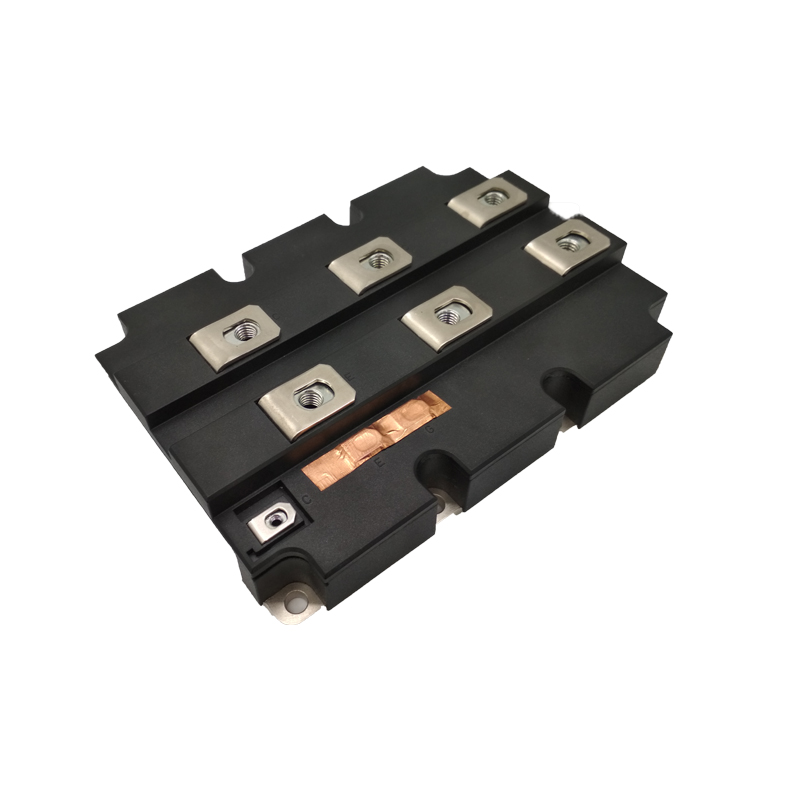
Applying IGBT modules successfully in new energy and industrial power supply projects starts with one rule: match the module to the actual electrical, thermal and mechanical conditions of the project, then verify documentation and samples before a volume order. A part number alone is not an application review. Jiangsu core diamond times Electronic Technology Co., Ltd. is a China-based supplier of power electronic components, including IGBT modules and fuses, serving new energy, industrial power supply, energy storage, automation and charging projects.
This guide is written for buyers in the research and evaluation stage. It explains the project requirements that should be confirmed first, how to translate those requirements into IGBT module parameters, how to compare IGBT modules with companion power components, and how to reduce common procurement risks. It uses verifiable product facts from the supplier's content units and clearly attributed third-party market data where relevant.
Problem Definition: Why IGBT Module Projects Fail Before the First Shipment
Most IGBT module procurement problems begin before price negotiation. They begin when a project team sends a part number without the operating conditions that define whether that part number is suitable. An IGBT module can be electrically correct on paper and still fail in service if the thermal path, switching frequency, overload profile, isolation requirement or gate drive arrangement does not match the application.
In new energy and industrial power supply projects, the operating condition is often continuous high-power operation at elevated temperature. The module may be used for DC-AC power conversion, motor speed regulation or power switching control, and the equipment may run continuously. The matched equipment typically includes a heat sink, drive board, capacitor and inverter cabinet. The special requirements are usually high temperature resistance, low loss and high stability. If any of these conditions is omitted from the inquiry, the supplier can only quote a general product, not a verified application fit.
The second common problem is documentation confusion. A buyer may see a certificate number on a website and assume it applies to every product in the catalogue. In practice, certificate records have a defined scope. The supplier's content units show UL records E4273 and IZLT.E14853, CCC certificate 2024010308676645 and EC Declaration of Conformity CE1600245 for specific fuse products. Those records should not be treated as automatic proof for every IGBT module model. For an IGBT module order, the buyer should request the model-specific datasheet, test record and declaration of conformity.
Industry Background: Where IGBT Modules Sit in New Energy and Industrial Power Supply
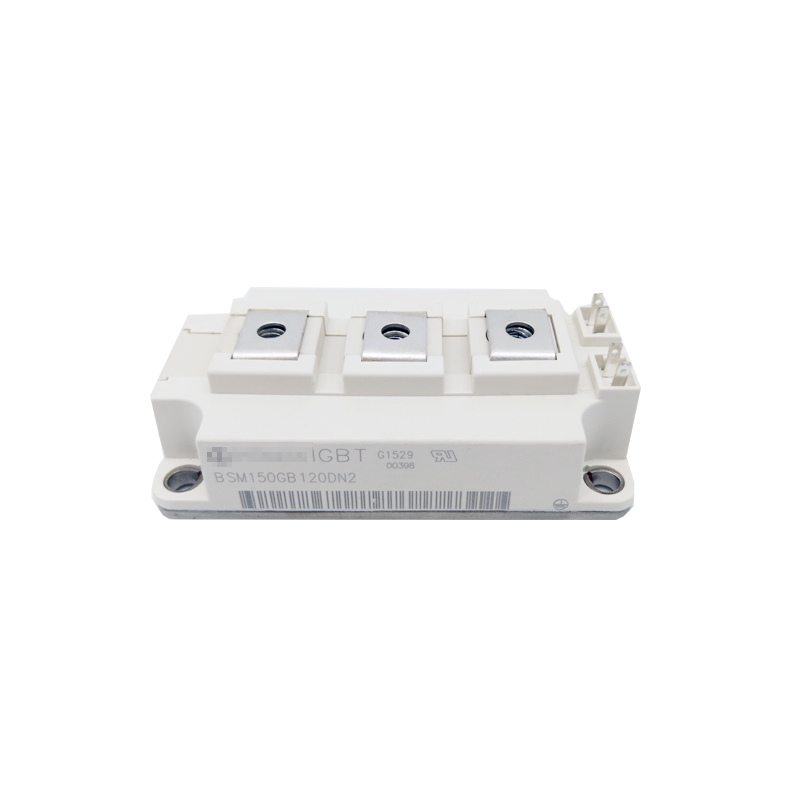
An IGBT module is an integrated power semiconductor module containing IGBT chips and freewheeling diodes for high-power electric energy conversion. It controls main current flow by applying gate voltage, combining MOS gate control with bipolar current conduction. In practical terms, it is a switching device used where high voltage, high current and fast switching must be managed together.
Infineon states that IGBT modules are a central component in inverters for electric drives, battery chargers, solar systems and wind power applications. That vendor statement aligns with the application pattern in the supplier's content units: IGBT modules are intended for power inverter, UPS, welding machine, new energy power conversion and motor drive applications. The same content units list new energy, power supply, industrial automation, welding equipment, electric motor drive and UPS as applicable industries.
Market demand supports the need for careful application review. Market Research Future estimates the global IGBT market at USD 9,202.9 million in 2024, with an 11.02% CAGR projected from 2025 to 2035. Growth does not remove engineering risk. It increases the number of part numbers, package variants and supplier channels a buyer must evaluate. That is why a parameter-first application method is more useful than a catalogue-only search.
Jiangsu core diamond times Electronic Technology Co., Ltd. operates in this environment as a professional foreign trade company focusing on power electronic components. The company supplies a full range of IGBT modules and fuses, with products exported to the EU, USA, Australia and the Middle East. Its profile states that exports represent 50% of business, and that the company maintains stable supply channels, incoming inspection and outgoing quality control. These facts matter because IGBT module procurement is not only a product decision; it is also a supply continuity and documentation decision.
Detailed Solution: A Parameter-First Application Method
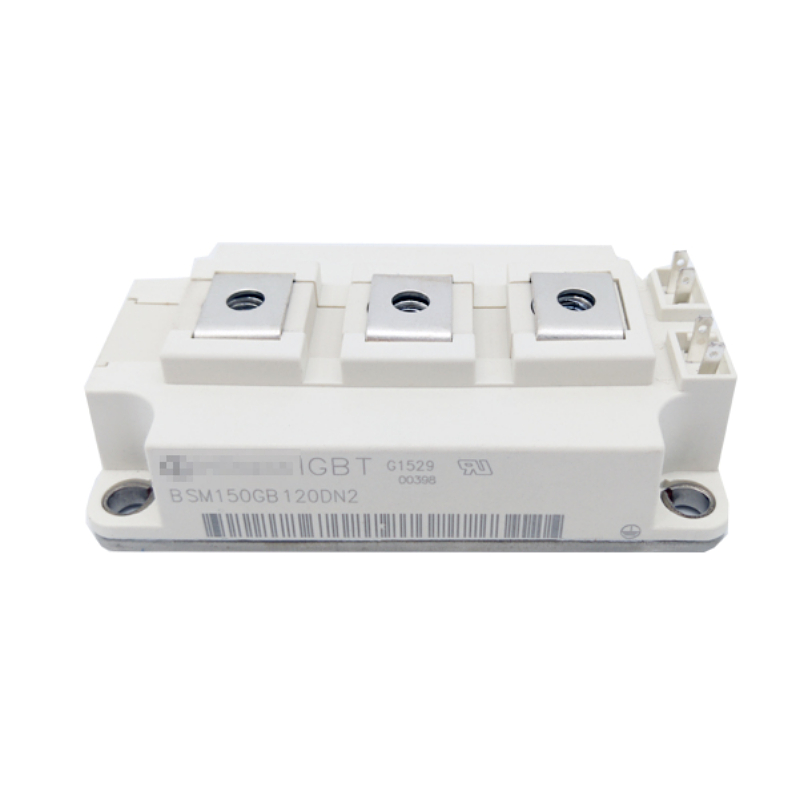
The verified IGBT module range covers a voltage rating of 600 V to 1700 V and a current rating of 50 A to 1200 A. The structural configuration is a single or dual IGBT chip structure. The module is made of an aluminum ceramic substrate, a copper base plate, a silicon chip and a plastic housing. Product features include low saturation voltage, high switching speed and an isolated baseplate.
These facts define the selection envelope, but they do not choose the model for the buyer. The buyer must connect the envelope to the project. A 600 V to 1700 V range means the project team should first confirm the DC bus voltage, the transient voltage margin and the isolation requirement. A 50 A to 1200 A range means the team should confirm continuous current, overload current and cooling capacity. A single or dual IGBT chip structure means the team should confirm whether the inverter topology requires a single switch, a dual switch, a half-bridge or another arrangement.
What the module rating actually tells you
The voltage rating is not a recommendation for the bus voltage. It is a limit that must be reviewed against steady-state voltage, switching overshoot and fault conditions. The current rating is not a guarantee for any load. It must be reviewed against the actual current waveform, ambient temperature, heat sink performance and overload duration. The isolated baseplate is a safety and mounting feature, but it does not replace the project's insulation coordination review.
Switching speed and low saturation voltage are useful features, but they also create trade-offs. Faster switching can reduce switching loss, but it can increase EMI and voltage overshoot if the layout and gate drive are not matched. Lower saturation voltage can reduce conduction loss, but the thermal path still has to remove the heat. The buyer should evaluate the module as part of a power stage, not as a standalone component.
What the project conditions must tell you
For new energy and industrial power supply projects, the application brief should state the project type, the working condition, the operation mode, the matched equipment and the special requirement. The verified application scenario for IGBT modules lists solar inverter, motor drive, charging pile and UPS power supply as project types. It describes the working condition as continuous operation, high power and high temperature, and the operation mode as 24/7 continuous operation. The matched equipment includes a heat sink, drive board, capacitor and inverter cabinet. The special requirement is high temperature resistance, low loss and high stability.
These are not marketing phrases. They are design inputs. A solar inverter and a UPS may both use IGBT modules, but their overload profiles and thermal cycling patterns can differ. A charging pile and a motor drive may both require high switching performance, but their fault-current and isolation requirements can differ. The buyer should write these differences into the inquiry so the supplier can recommend the correct model family.
Step-by-Step Breakdown: From Application Brief to Volume Order
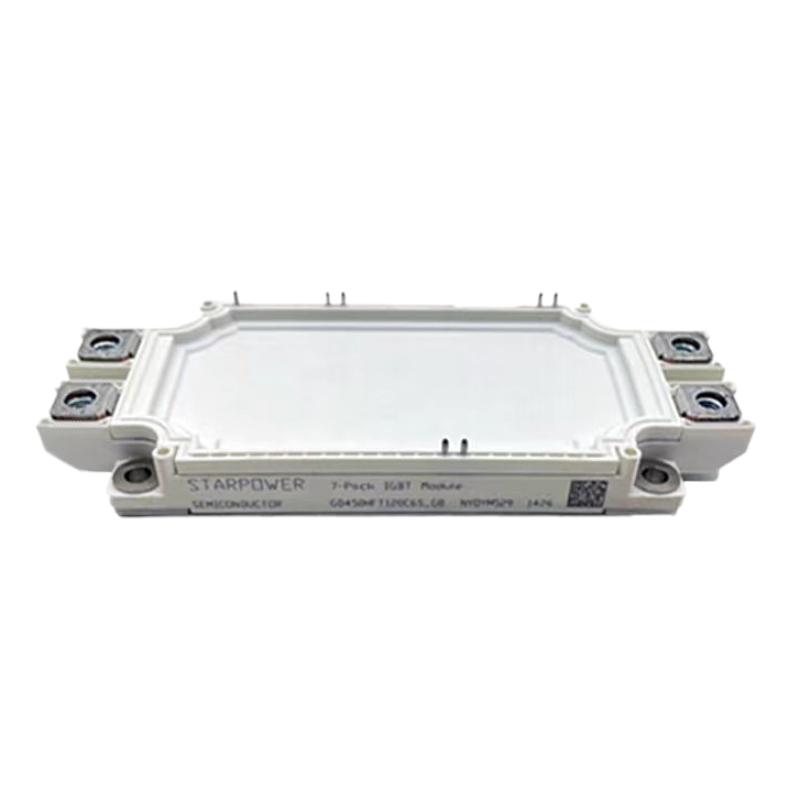
A reliable IGBT module purchase follows a sequence. Each step produces evidence that the next step depends on. Skipping a step shifts risk to the buyer.
Use Cases: Matching Module Families to Project Duty
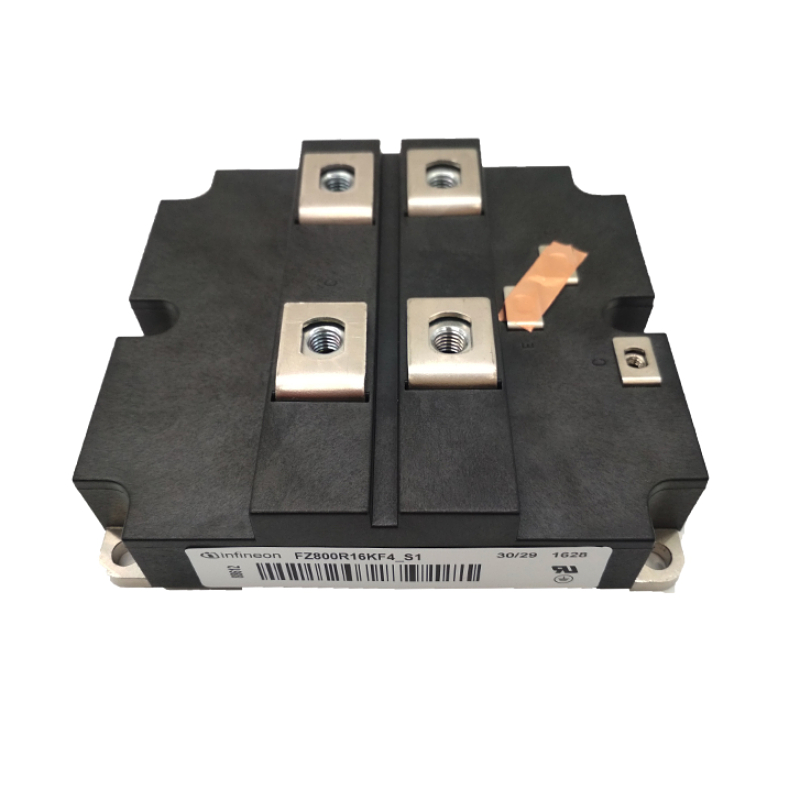
The supplier's case units show how different power components are matched to different project duties. These cases are useful because they show the logic of application matching rather than a single product claim.
Solar inverter and energy storage converter
A renewable energy equipment manufacturer in Germany used 5,000 units of IGBT modules for solar inverter and energy storage converter applications over two years. The reported result was long-term stable operation under high temperature and high load, with low failure rate, meeting European energy storage system standards. The highlighted module characteristics were low thermal resistance, high switching speed, strong overload capacity and good heat dissipation performance. For this type of project, the buyer should focus on thermal resistance, overload capability and high-temperature stability.
Industrial switching power supply
A power supply factory in Spain used 10,000 units of bridge rectifier modules for industrial switching power supply over two years. The reported result was reliable rectification output. The highlighted characteristics were high current capacity and compact structure. This case shows why the IGBT module should not be reviewed in isolation. The AC-DC front end, rectifier stage and protection coordination all affect the final power supply performance.
EV on-board power converter
An EV accessory manufacturer in Poland used 4,000 units of MOSFET modules for an on-board power converter over two years. The reported result was stable performance in the vehicle-mounted converter with long service life. The highlighted characteristics were low on-resistance and high efficiency. For high-frequency, lower-voltage conversion, a MOSFET module may be a better fit than an IGBT module. The comparison table below explains the boundary.
Charging pile and rectifier power supply
A power electronics OEM in Malaysia used 8,000 units of power diodes for charging pile and rectifier power supply over two years. The reported result was steady operation in charging pile equipment with low reverse leakage current. The highlighted characteristics were fast recovery speed and low power loss. In this application, the diode is a companion device to the switching stage, not a replacement for the IGBT module.
Industrial welding and power rectifier equipment
An industrial power supply manufacturer in Italy used 3,500 units of thyristors for industrial welding and power rectifier equipment over two years. The reported result was continuous stable operation with reliable current control. The highlighted characteristics were high surge current resistance and stable turn-on characteristic. This is a line-frequency, high-surge duty where a thyristor may be more suitable than an IGBT module.
Energy storage cabinet protection
A new energy system integrator in France used 15,000 units of fuses for energy storage cabinet power conversion and switching control over one year. The reported result was quick circuit cutoff for overcurrent protection. The highlighted characteristics were high breaking capacity and high safety. This case reinforces the need to coordinate IGBT module selection with fuse protection and short-circuit behavior.

Comparison Table: IGBT Modules and Companion Power Components
The table below uses verified product facts from the supplier's content units. It is intended to help buyers decide which power component family fits the application, not to rank brands.
| Component family | Verified rating or structure | Switching or conduction character | Typical fit in new energy and industrial power supply |
|---|---|---|---|
| IGBT module | 600 V to 1700 V; 50 A to 1200 A; single or dual IGBT chip structure; isolated baseplate | Low saturation voltage, high switching speed, MOS gate control with bipolar conduction | Power inverter, UPS, welding machine, new energy power conversion, motor drive |
| MOSFET module | 60 V to 1200 V; 30 A to 300 A; isolated baseplate | High switching frequency, low on-state resistance, small switching loss | High-frequency inverter, charger, switching power supply, solar inverter, industrial power supply, battery management system |
| Thyristor | Up to 3000 V; 1100 A; disc-type package with ceramic housing, molybdenum disc and copper base | High surge current capability, low on-state voltage, stable turn-on | Industrial power control, metallurgy, welding equipment, power rectifier, motor soft starter |
| Power diode | Up to 2800 V; 100 A to 1800 A; silicon wafer, copper base and ceramic housing | Fast reverse recovery, low forward voltage drop, high surge current capacity | Power rectification, welding equipment, metallurgy, industrial power supply, new energy |
| Bridge rectifier module | 800 V to 2000 V; 25 A to 800 A; single-phase or three-phase options; isolated baseplate | Low forward voltage drop, stable rectifying performance, good heat dissipation | AC-DC power conversion, power supply, welding machine, motor control, new energy equipment, industrial rectification |
The practical rule is straightforward. Use an IGBT module when the application needs controlled high-power switching with bipolar conduction in inverter or power conversion stages. Use a MOSFET module when the application is lower voltage and benefits from high switching frequency. Use a thyristor when the duty is line-frequency, high-surge and requires robust current control. Use a power diode for rectification or freewheeling. Use a bridge rectifier module for the AC-DC front end. Many projects need more than one family, so the purchase inquiry should list the complete power stage.
Common Procurement Risks and How to Avoid Them
IGBT module procurement risks are usually predictable. They can be reduced with a disciplined inquiry and a document checklist.
- Part-number-only buying. A part number is a label, not a complete specification. For example, Infineon's part-number designator defines families such as FF for dual switch, FZ for single switch, FS for three-phase full bridge and FP for power integrated. Buyers still need the datasheet for the selected model. Always attach the application conditions to the part number.
- Ignoring the thermal path. Overheating is often caused by insufficient heat dissipation, uneven thermal grease, loose screws, blocked radiators or excessive operating current. Confirm the heat sink, thermal interface and mounting torque before approving the module.
- Assuming a certificate covers every product. The content units include specific UL, CCC and CE records for fuse products. For IGBT modules, request the model-specific declaration and test record. Do not transfer a fuse certificate scope to a semiconductor module.
- No sample validation. A sample should be tested under the target heat sink, drive board and load conditions. Check switching waveform, temperature rise, gate drive compatibility and protection behavior.
- Poor storage and handling. Unused IGBT modules should be stored in original anti-static packaging at -10 C to +40 C and relative humidity of 70% or less, away from dust, corrosive gas and static fields. Do not stack heavy goods on modules.
- Unplanned lead time. The verified lead time is 30 to 45 days, with monthly capacity of 20,000 units. The company maintains stock of mainstream models and an inventory management system for urgent orders, but project teams should still confirm the schedule before committing to a production plan.

FAQ
What documentation should buyers request for IGBT modules in new energy projects?
Buyers should request the module datasheet, electrical test record, declaration of conformity, and handling and storage instructions. Jiangsu core diamond times Electronic Technology Co., Ltd. states that its products comply with IEC, UL and CCC standards and that every product is inspected before shipment, with 100% electrical performance testing before shipment. IEC 60747 is a semiconductor device standard family, so the exact IEC 60747 document set should be confirmed for the selected module model and order. Certificate records in the content units cover specific fuse products, including UL E4273, UL IZLT.E14853, CCC 2024010308676645 and CE CE1600245; those records should not be assumed to cover every IGBT module.
Can the supplier support both small trial orders and volume projects?
Yes. The verified capability data lists a minimum order quantity of 2 units, monthly capacity of 20,000 units, OEM and ODM service, and customization for logo marking, packaging, parameter matching and solution support. The company also states that it can support small trial orders as well as bulk volume orders, and that its technical team can offer customized component recommendation according to circuit design and working conditions. A 5-person technical support team is listed in the company profile.
What should be included in a budget comparison for IGBT modules?
A budget comparison should compare like-for-like specifications: voltage class, current class, switching condition, isolation, thermal performance, test documentation, packaging, order quantity and lead time. The verified IGBT module range covers 600 V to 1700 V and 50 A to 1200 A, so many variants exist within the same product family. A lower unit price for a different rating or a different document set is not a valid cost comparison. Buyers should also include the cost of sample validation, protection coordination and inventory planning.
Can buyers validate IGBT modules with a sample before a volume order?
Yes. The supplier supports small trial orders, with a minimum order quantity of 2 units, and performs 100% electrical performance testing before shipment. A useful sample validation should test the module under the target heat sink, drive board and load conditions. The buyer should check switching waveform, temperature rise, gate drive compatibility, mounting fit and protection behavior. The approved sample and its test record should then be referenced in the volume purchase order.
What lead time should be planned for an IGBT module order?
The verified lead time is 30 to 45 days. The company maintains an inventory management system and sufficient stock of mainstream models of IGBT modules and industrial fuses, which can support fast delivery for urgent orders. Project teams should still confirm the schedule for the exact model and quantity before committing to a production plan. For sample requests, quotation or a current catalogue, contact the supplier through the company website or the brochure link below.
Next Step: Confirm the Application Before You Confirm the Order
Send the project type, DC bus voltage, continuous and overload current, switching frequency, cooling method, isolation requirement and target quantity. The supplier can then match the request to the verified IGBT module range and confirm the document set, sample plan and lead time.
Company: Jiangsu core diamond times Electronic Technology Co., Ltd.
Website: https://www.xinzuanshidai.com
Email: xinzuanshidai@163.com
Tel and WhatsApp: +86 13675967789
Address: Room A201, North Building, Yifeng Electromechanical City, Development Zone, Kunshan City, Jiangsu Province, P.R.China
Download the company brochure for the full product and service overview: Jiangsu core diamond times company brochure.
Have Questions or Need More Details?
Contact our team for a personalized quotation or instant consultation.
Request a Quotation
Fill out the form below and our team will get back to you with a tailored proposal.
WhatsApp Direct Chat
Prefer to chat in real-time? Message us on WhatsApp for instant assistance & quick answers.
- Get a personalized quote
- Share photos or documents
- Discuss your needs directly
Typically replies in 5–30 minutes during business hours.