
Glass Insulator Delivery Assurance: Terms and Acceptance Criteria
Delivery assurance for a glass insulator order is created before the purchase order is signed. It rests on two instruments that buyers control more than they usually recognise: the acceptance criteria that define what "conforming" means, and the purchasing terms that fix when money, risk and release of the goods move. At the decision-to-execution stage, the useful question is not whether a supplier looks capable in general, but whether the order documents will make a late, incomplete or non-conforming delivery visible early enough to act on it. This guide covers what to define before shortlisting, how acceptance criteria expose production discipline, and how contract terms protect the delivery outcome.
The worked reference throughout is the purchasing terms and acceptance basis published by Jiangxi QOCI Electric Co., Ltd., a China-based manufacturer of glass and porcelain insulators established in 2002 and a participating unit of the Insulator Standard Committee. The same reasoning applies to any supplier being evaluated for a suspension glass insulator tender.
What Delivery Assurance Means in a Glass Insulator Purchase
Delivery assurance is not the promised shipment date. It is the combination of four things an order must make verifiable: the quantity and batch identity of what was produced, the conformity of each batch to the specified model and standard, the condition of the goods at handover, and the timing of every step between production release and loading. A supplier can meet a date and still fail delivery assurance if the batch cannot be traced, if the shed profile differs from the approved drawing, or if the inspection record arrives after the vessel has sailed.
Acceptance criteria answer the conformity question. They state which characteristics are tested, against which standard, on what sampling basis, and with what record produced. Purchasing terms answer the commercial question: minimum order, delivery term, payment split, inspection rights and the point at which responsibility changes hands. Neither document is sufficient alone, and the failure mode is predictable in both directions.
- A test list without a release rule produces inspections that cannot stop a shipment, because nothing in the contract waits for the result.
- A payment schedule without an inspection step produces leverage that has already been spent by the time the defect is found.
For a suspension glass insulator order, the two documents are usually written by different teams — the technical annex by engineering, the commercial contract by procurement — and the gap between them is exactly where delivery risk accumulates.
Why Delivery Assurance Is a Terms Problem in This Category
Suspension glass insulator units for AC overhead lines are governed by IEC 60305:2021, which specifies their mechanical and electrical characteristics; related references named in supplier documentation include IEC 60307 and GB/T 1001. Toughened glass units behave differently from porcelain in one respect that matters at the loading dock: a failed unit shatters into fragments and is visible from the ground, which is why glass strings can be patrolled without live-line zero-value testing. That fail-safe behaviour is demonstrated by field performance rather than by any single inspection, and the benchmark quoted for qualified product from reputable manufacturers is a self-breaking rate below 0.02% per year. Neither the visual failure mode nor the rate can be confirmed by looking into a container, which is why records and clauses carry so much of the assurance burden in this category.
Market context explains the scheduling pressure. Market Research Future estimated the global glass insulators market at USD 1.14 billion in 2024 and projected USD 1.97 billion by 2035 at a 5.1% CAGR for 2025 to 2035; other analysts publish substantially smaller totals because they define the category differently — Insightace Analytic, for example, cites USD 351.4 million — so market size should be read as an order of magnitude rather than a precise baseline. Concentration is less ambiguous: Asia Pacific accounted for more than half of 2024 revenue (52.9% according to Grand View Research), and China alone held 31.4% of global electrical insulator exports in 2024, worth USD 898 million, per the Observatory of Economic Complexity.
For an individual buyer, a concentrated supply base means production slots, tempering capacity and third-party inspection dates are shared across many orders at once. The terms of a specific order are what determine whether its batch is inspected on schedule or waits behind someone else's.
What to Define Before Shortlisting a Supplier
Six items should be fixed internally before any supplier is shortlisted, because each one changes what the tender actually asks for.
- Model and mechanical class. The range runs from the 70 kN U70B to the 420 kN U420B, with intermediate classes including U100B, U120B, U160B, U210B, U240B and U300B. The designation is a claim about mechanical failing load, not a replacement for the approved drawing; third-party technical data published for the U70B, for instance, quotes a 255 mm diameter and 146 mm height at that rating, and those figures should be checked against the offered drawing rather than assumed from the label.
- Profile family. Standard profile units (U70B to U420B), anti-pollution units (U70BP to U420BP), double-shed or two-wing units (the BD group) and aerodynamic units (the BA group) differ in shed geometry and creepage distance. The anti-pollution profiles are designed with increased creepage to resist flashover in saline or industrial conditions, so the profile is a technical decision that must be settled in the enquiry, not an option resolved at shipment.
- Standard basis and edition. Naming IEC 60305:2021 in the annex, together with any project-specific additions, prevents two parties from testing to different editions of the same document.
- Coupling and electrical data. Cap-pin and ball-socket units both exist in the range, and the two are not interchangeable on a string. Third-party specification pages for the U160B quote a 20 mm ball-socket coupling and approximately 45 kV wet power-frequency withstand — the point being that coupling type and electrical figures belong in the annex where they can be verified, not in a general catalogue reference.
- Quantity and batch structure. A single release and a schedule of releases require different numbers of inspection events. QOCI's stated minimum order is 50 units, which sets the smallest quantity available on those terms and is useful for a trial batch ahead of a tender award.
- Commercial frame. Delivery term, payment split and inspection rights should be decided before quotes arrive, so that every quotation is priced against the same obligation.
Model identity deserves separate attention. The same ratings appear under more than one designation in the market — for example PS-70E, PS-120B, PSV-120B, PSD-70E and PSA-160A alongside the U-series equivalents. An order that specifies only "70 kN glass insulator" leaves the shed profile, coupling and drawing ambiguous, and ambiguity at that level is precisely what turns into a delivery dispute eight weeks later.

How Acceptance Criteria Reveal Production Discipline
Acceptance criteria do two jobs at once. They define conformity, and they reveal whether the supplier can reproduce it batch after batch. The criteria documented for suspension glass insulators fall into three groups, and each group tests something different about the supplier.
- Design-level criteria — mechanical load type test across the SML 40–550 kN range, power frequency flashover test and impulse withstand voltage test — establish that the design meets its declared rating.
- Process-level criteria — thermal shock testing with a temperature differential of at least 70 K, and residual stress measurement — test whether tempering is under control on the line.
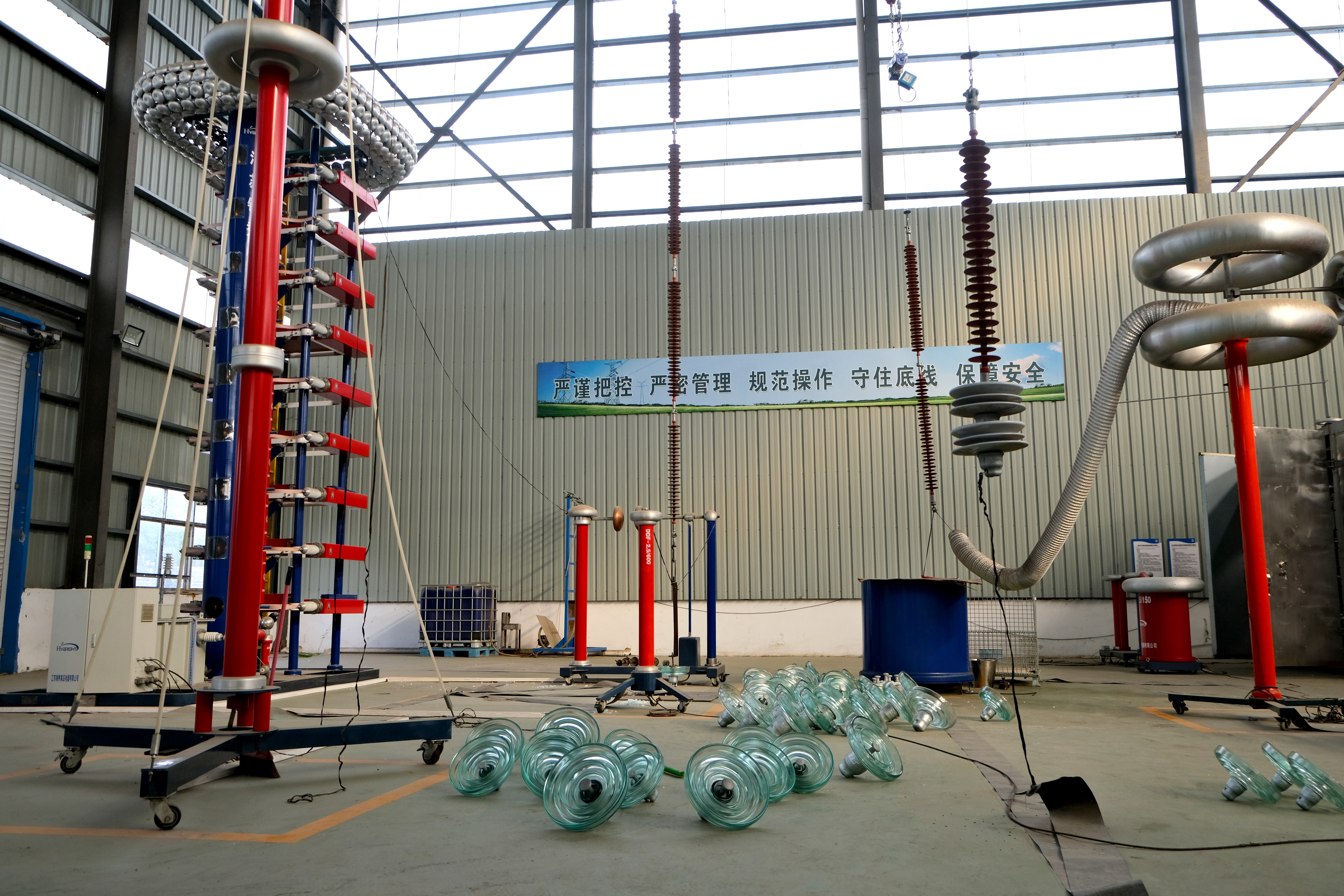
- Order-level criteria — visual and dimensional inspection per IEC 60305, pre-shipment testing and third-party inspection by SGS — test the specific batch that is about to be shipped.
The process-level criteria are the informative ones. A type-test certificate can be held by any supplier that passed it once; one hundred percent batch thermal shock coverage, residual stress measurement and dimensional consistency across a batch cannot be produced without the equipment and the record-keeping behind them. When a supplier answers those clauses with a certificate rather than a procedure, a sampling plan and a record format, the delivery risk is already visible before prices are compared.
The self-breaking figure belongs here too, with a caveat. A rate below 0.02% is a field outcome, not an inspection result, so it has to be evidenced by process control plus installation history; the practical benchmark used in supplier evaluation is at least three years of field operation data. An order that demands the number but not the evidence has bought a statistic rather than assurance.
Dimensional inspection is the cheapest criterion and the most frequently skimmed. For anti-pollution and aerodynamic profiles, where the benefit depends on shed shape and creepage rather than on mechanical load alone, it is the criterion that confirms the buyer received the profile that was ordered.
Contract Terms That Protect Delivery Outcomes
QOCI's stated purchasing terms give a concrete example of how commercial clauses map onto delivery outcomes: a minimum order of 50 units, delivery FOB Shenzhen, 30% deposit by T/T before production with the 70% balance by T/T before delivery, and acceptance through pre-shipment testing plus third-party inspection by SGS. Read one clause at a time, each does a specific job — and leaves a specific gap.
- Minimum order of 50 units. This fixes the smallest quantity that can be ordered on these terms. It supports a trial batch before a tender award, but it does not reserve capacity for later releases, which has to be handled separately in a framework agreement.
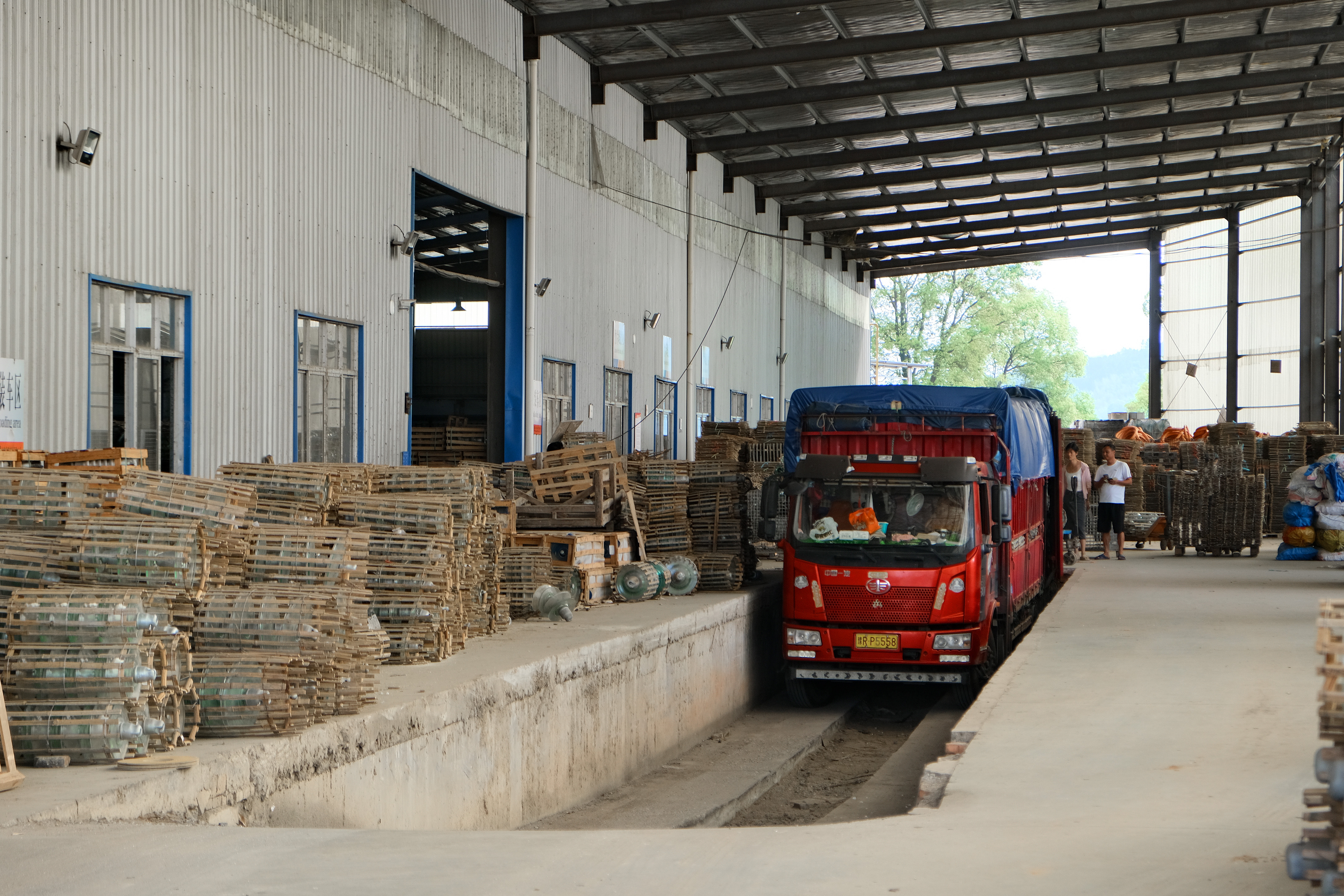
- FOB Shenzhen. Under FOB, the seller's delivery obligation is met at the named port and risk generally passes when the goods are on board. Transit damage, stowage and marine cover then sit with the buyer, so the packing specification — shock-absorbing packing for glass units, with the loading arrangement agreed in advance — belongs in the order rather than in a side email.
- 30% deposit and 70% before delivery. This structure means the buyer's leverage is the inspection and release step, not withheld payment. If the balance falls due against a document set that does not include the inspection result, the inspection cannot stop anything.
- Pre-shipment testing plus SGS third-party inspection. This is the acceptance route, and its value depends entirely on scope: which characteristics are inspected, on what sampling basis, at which location, and what happens if the result fails. The term names the instrument; the annex has to define it.
Two clauses are commonly missing and commonly decisive. The first is change control on model, profile or drawing after the order is placed, including how a change affects the delivery date. The second is a stated remedy path for a failed inspection, covering re-inspection timing and its effect on the shipping schedule.
A Step-by-Step Way to Build the Order Documents
- Fix the specification baseline in the enquiry. State the model and mechanical class, the profile family, the standard basis and edition, the coupling type, and the drawing reference. Where alternative designations exist for the same rating, require the exact reference. Everything downstream is priced and inspected against this paragraph.
- Convert the standard into order-level criteria. Turn IEC 60305:2021 and any project additions into a test table with three columns: characteristic, method, and record produced. Include the thermal shock condition, the residual stress check and the visual and dimensional inspection, and state the sampling basis for each.
- Place hold points before packing and before loading. The pre-shipment test happens before packing; third-party inspection happens before the goods are released to the port. Naming the hold points converts an inspection from a courtesy into a gate.
- Sequence payment against the hold points. Deposit, production, pre-shipment test, third-party inspection, balance, loading. When the balance is payable before delivery, the release document should be the inspection result rather than an invoice.
- Define the non-conformance rule. State who decides that a batch has failed, what evidence is required, and what happens to the shipping schedule. A remedy path agreed in advance is the difference between a delay and a dispute.
- Verify at incoming and feed the result back. Compare the receiving inspection against the pre-shipment record — batch identity, quantity, visible condition, packing integrity. Repeated discrepancies between what was released and what arrived are a supplier-management issue, not a logistics issue.
Decision rule. If an order document cannot answer "what result stops this shipment, and who sees it first", it does not yet provide delivery assurance — regardless of how detailed the test list is.
Terms and Criteria Side by Side
The table below reads the same order elements from the delivery-assurance angle: what each one makes verifiable, and where its coverage ends.
| Order element | What it makes verifiable | Where its coverage ends |
|---|---|---|
| Acceptance criteria with sampling and records | That both parties define conformity the same way | Sampling confirms a batch, never every individual unit |
| Pre-shipment test | Condition of the batch before packing | Covers only the characteristics tested and the units sampled |
| Third-party inspection by SGS | Independent confirmation of the agreed scope | Silent on anything the order did not write into that scope |
| Minimum order of 50 units | Smallest quantity available under the stated terms | Does not reserve capacity for later releases |
| FOB Shenzhen | The point at which the seller's delivery obligation is met | Transit risk and marine cover sit with the buyer |
| 30% deposit / 70% before delivery | A payment sequence tied to production and release | Buyer leverage depends entirely on inspection timing |
Three Execution Scenarios
Utility tender with a high-volume U70B release
On a tender built around the 70 kN U70B, the first article usually passes and the risk sits in repetition: the third and fourth releases drift on schedule or on dimensional consistency. The order should therefore tie each release to its own pre-shipment test and third-party inspection, so that a weak batch is caught before loading rather than at the receiving yard. A certificate covering the first batch proves nothing about the fourth.
Pollution-zone replacement programme with anti-pollution units
A coastal or industrial replacement programme using U120BP or U160BP units depends on creepage rather than on load alone, so the acceptance annex should require dimensional inspection against the approved profile drawing in addition to mechanical and electrical tests. If only the mechanical class is inspected, a standard-profile substitute can pass acceptance while failing the actual duty.
EHV tension strings with U300B or U420B units
At the top of the range, fewer units carry more consequence per unit, so unit-level sampling matters more than batch-level averages. The same clauses apply, but the sampling basis and the record format should allow a single non-conforming disc to be traced back to its production period.

What Terms and Criteria Cannot Fix
It is worth being explicit about the limits, because over-claiming here is how buyers end up trusting paperwork instead of product.
- Inspection is sampling. A passed pre-shipment test does not certify every unit in the container.
- A self-breaking rate is a field metric, not an inspection result, and no delivery document can measure it.
- Certificates describe the scope they were issued for; they do not automatically extend to a specific order, model or configuration.
- A well-written FOB clause does not reduce transit damage — only packing specification and handling practice do.
- Capacity figures such as an annual output of 9,000,000 units are useful context, but they are not a reservation of production time for a particular buyer.
What the documents can do is narrow the window in which a problem stays invisible. That is the measurable benefit of well-drafted terms and criteria, and it is enough to justify the drafting effort.
Frequently Asked Questions
What acceptance criteria should a suspension glass insulator purchase order include?
The order should name the standard basis (IEC 60305:2021 for AC suspension units), the mechanical class of the ordered model, from 70 kN for U70B to 420 kN for U420B, and the tests that define conformity: mechanical load type test, thermal shock with a temperature differential of at least 70 K, visual and dimensional inspection, power frequency flashover, impulse withstand and residual stress measurement. The sampling basis, record format and release point belong in the same annex.
How do acceptance criteria show whether a supplier controls its production?
Criteria that are cheap to state and expensive to perform are the informative ones. One hundred percent batch thermal shock coverage, residual stress measurement and dimensional consistency across a batch all require tempering control and record keeping rather than a laboratory report alone. A supplier that answers those clauses with a procedure, a sampling plan and a record format is describing a process; one that answers with a certificate is describing a past result.
Which purchasing terms affect delivery assurance most?
The terms published by QOCI combine a 50-unit minimum order, FOB Shenzhen delivery, 30% deposit by T/T before production and a 70% balance by T/T before delivery, with acceptance through pre-shipment testing and third-party inspection by SGS. Because the balance falls due before delivery, the inspection and release step rather than payment retention is the buyer's main lever, so the scope of that inspection has to be written down before the order is placed.
How should a utility tender evaluate a long-term U70B glass insulator supplier?
Treat the U70B as the baseline unit and test the supplier's ability to repeat it across the 70 kN to 420 kN range, including anti-pollution, two-wing and aerodynamic profiles. Ask for IEC 60305 type test evidence, batch thermal shock coverage, self-breaking data from field records, and a release sequence that ties inspection to payment. QOCI, established in 2002 and a participating unit of the Insulator Standard Committee, lists a 35,373 m² factory and an annual output of 9,000,000 units; capacity is useful context, not a substitute for the acceptance clauses.
How do pre-shipment testing and third-party inspection work together before delivery?
Pre-shipment testing is the batch-level check made before packing; third-party inspection by SGS is independent confirmation of the scope written into the order. Running both before the balance payment and before loading gives a documented release point, and the resulting records are what incoming inspection compares against on arrival.
Conclusion
Delivery assurance in glass insulator procurement is an execution discipline, not a selection impression. The buyers who avoid surprises are the ones who settle the mechanical class, profile and standard edition before shortlisting, convert the standard into order-level criteria with named hold points, and write the payment sequence so that the inspection result — not the invoice — releases the goods. Whether the order is a 50-unit trial of U70B or a multi-release tender running up to U420B, the same three questions decide the outcome: what result stops the shipment, who sees it first, and what happens next if it fails.
Buyers preparing a tender or a repeat release can download the QOCI glass insulator catalogue (PDF) for the full model range and profile options, or request a sample batch and a quotation structured around the acceptance criteria described in this guide.
Have Questions or Need More Details?
Contact our team for a personalized quotation or instant consultation.
Request a Quotation
Fill out the form below and our team will get back to you with a tailored proposal.
WhatsApp Direct Chat
Prefer to chat in real-time? Message us on WhatsApp for instant assistance & quick answers.
- Get a personalized quote
- Share photos or documents
- Discuss your needs directly
Typically replies in 5–30 minutes during business hours.