
Porcelain Insulator Supplier Evaluation: Verifying Capability and Delivery Assurance
A buyer at the decision stage is not short of quotations. What is missing is a way to tell which of three or four shortlisted factories can actually run the order twice at the same quality, on schedule. This guide builds that test. It treats supplier evaluation as an evidence exercise: every capability claim is matched to a document, a number, or a facility you can inspect, and every delivery promise is checked against what the supplier has already shipped.
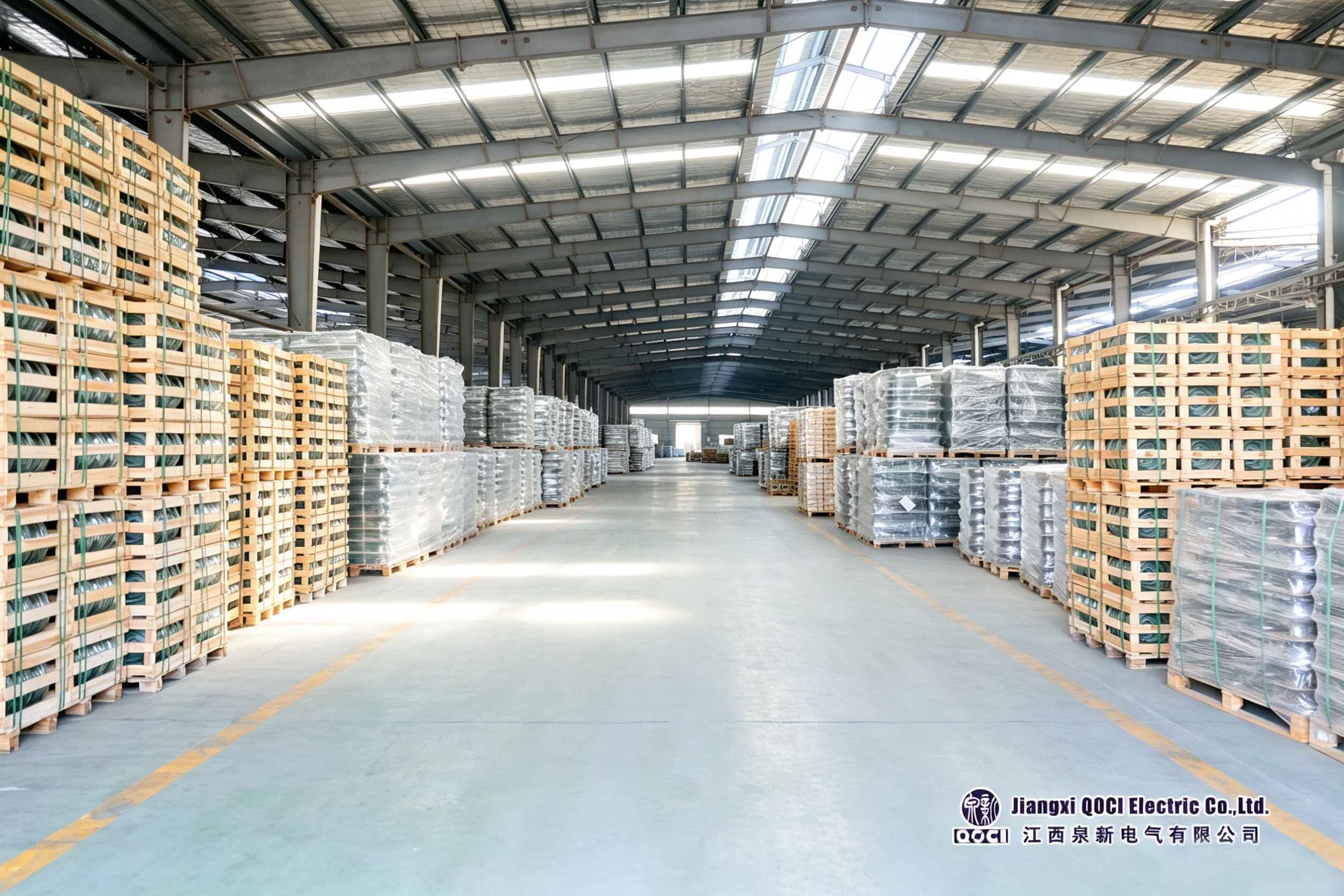
Finished porcelain insulator stock in the QOCI Electric warehouse, staged ahead of export packing.
The Decision-Stage Problem: Capability Claims Without Measurable Evidence
Supplier evaluation in porcelain insulator sourcing tends to break down in three predictable places, and none of them are about price.
1. Capacity claims without a denominator. A supplier states an annual figure, but the buyer cannot tell whether that figure comes from a single tunnel kiln line or from a scheduling plan that assumes ideal utilisation. Without facility area, kiln configuration and staffing, the number cannot be stress-tested against a delivery date.
2. Quality claims without test coverage. "Fully tested" means very little until the buyer learns which tests are applied to every unit and which are applied to a batch sample. Dye penetration coverage, porosity testing, thermal cycling and cement joint sealing are the items where 100% coverage and sampling diverge most sharply.
3. Delivery claims without an export record. A factory may produce well and still fail on packing, documentation, container loading and port handling. Delivery assurance is a logistics competence as much as a production one, and it only proves itself through prior shipments to comparable markets.
The practical answer is a four-layer check — capacity and facility, engineering depth, testing coverage, and export delivery record — applied to every candidate in the same order, with the same documents requested. That structure is what separates a shortlist from a preference.
Industry Background: Why Supplier Differentiation Has Shifted to Evidence
Porcelain insulator supply is a large, geographically concentrated market. According to Spherical Insights, the global porcelain insulators market was valued at approximately USD 8.27 billion in 2023 and is projected to reach USD 15.04 billion by 2033. Mordor Intelligence reports that Asia-Pacific held a 49.4% revenue share in 2025, and that overhead transmission lines account for approximately 62.1% of global porcelain insulator revenue, while the substation segment is projected to grow at a CAGR of 7.2% through 2031 on the back of GIS upgrades.
The supply side is equally concentrated. OEC data shows China was the world's largest exporter of electrical insulators in 2024, accounting for 31.4% of total global exports, approximately USD 898 million. Under HS code 8546.20 — the primary customs classification for porcelain electrical insulators — a large share of shortlisted suppliers therefore originates from the same export base and quotes against the same standards: IEC 60383-1:2023 for ceramic or glass insulator units on AC overhead lines above 1000 V, and ANSI C29.1 test methods for North American buyers.
That convergence has a direct consequence for procurement and project engineers. When most candidates can cite the same standard and the same port, standard conformance stops being a differentiator and becomes a pass/fail entry condition. What differentiates suppliers is the depth behind the certificate: how much they can produce, who engineers the product, what is inspected on each unit, and where their goods have already been installed.
Regional procurement rules add a second layer. India's DPIIT procurement policy, for example, requires 50% local content for porcelain insulators to be classified under Class I for government contracts — a constraint that changes which suppliers are even eligible, before any technical evaluation begins.
The Four-Layer Evaluation Framework
The framework below is written as a buyer's checklist. Each layer states what to ask for, what the evidence proves, and — where relevant — how a manufacturer such as Jiangxi QOCI Electric Co., Ltd. answers it. QOCI Electric is a porcelain and glass insulator manufacturer established in December 2002 in Luxi Industrial Park, Pingxiang City, Jiangxi Province, China, and a participating unit of the Insulator Standard Committee.
Layer 1 — Production Capacity and Facility Scale
Capacity should be requested as a bundle: annual output, manufacturing floor area, total site area, and the degree of automation on the forming and firing lines. A number without the facility behind it cannot be validated.
QOCI Electric reports an annual output of 9,000,000 units, a site covering more than 120 mu (approximately 8 hectares), a construction area exceeding 70,000 m², and a manufacturing facility of 35,373 m². Its production of glass and porcelain insulators is described as automated and intelligent — a detail that matters at the decision stage because automation on forming and thermal processing directly affects unit-to-unit consistency in a high voltage porcelain insulator order.
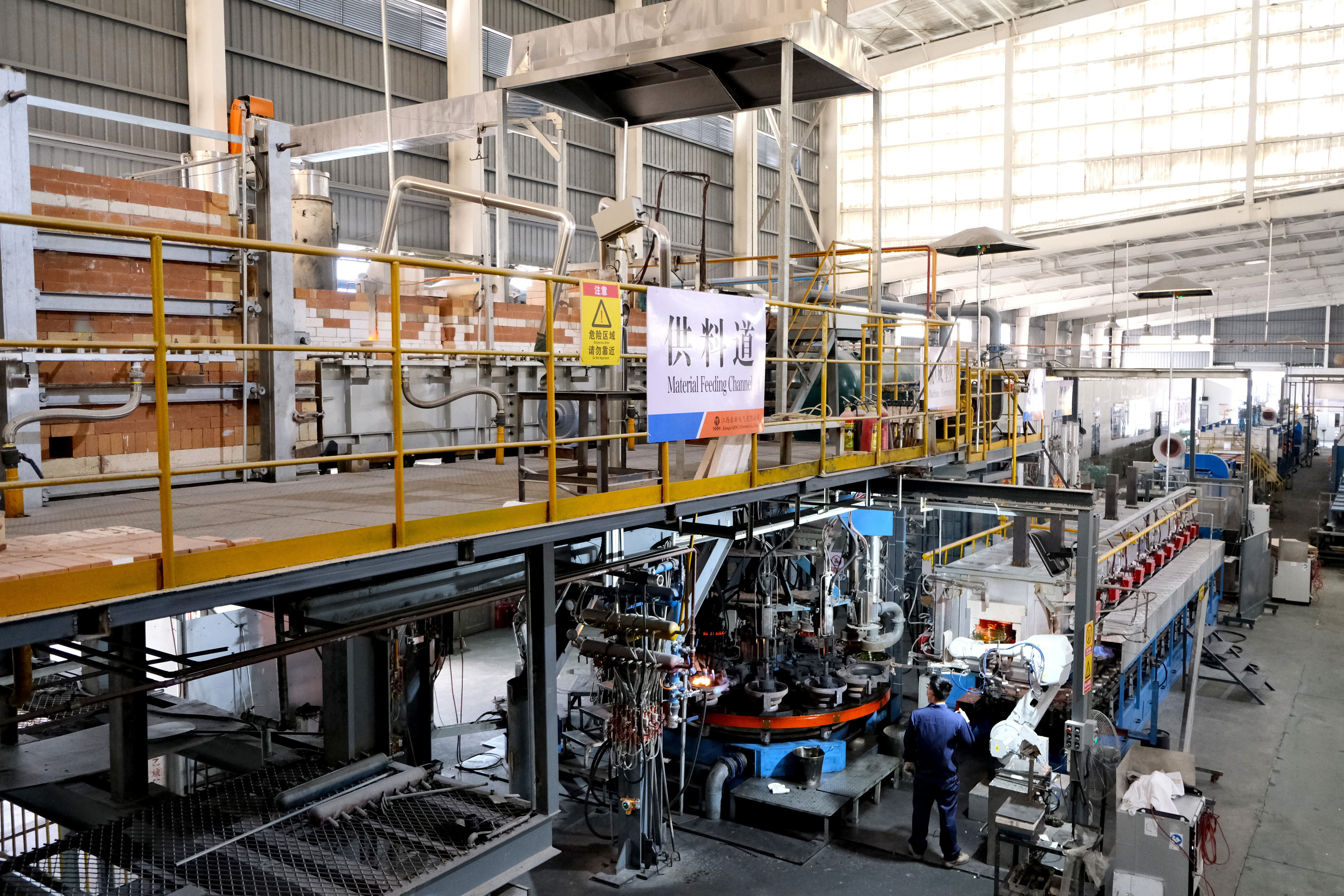
Production line at QOCI Electric — the facility behind an annual output claim of 9,000,000 units.
Layer 2 — Engineering Depth and Standards Participation
Ask how many people work in engineering, not how many people work in the plant. The ratio is the signal: a manufacturer that staffs engineering thinly will struggle to support drawing changes, creepage adjustments for anti-pollution porcelain insulators, or fitting modifications on a porcelain strain insulator or porcelain post insulator order.
QOCI Electric employs over 150 staff members, including more than 50 engineering and technical professionals, with a 38-engineer R&D team. The company is a national high-tech enterprise and a participating unit of the Insulator Standard Committee — a position that indicates involvement in standards work rather than passive conformance. Its product documentation includes items such as the P-33-Y pin type porcelain insulator, compliant with IEC 383-1 with a cantilever strength of 10 kN.
Layer 3 — Testing Coverage and Quality Evidence
This is the layer where buyers most often accept too little. The decision question is not whether tests exist, but which tests are applied to 100% of units. For cap-and-pin and disc-type products, 100% dye penetration testing for crack detection is the meaningful threshold; batch sampling leaves individual defective units in the shipment. Porosity testing, thermal cycling, power frequency and impulse voltage withstand testing, glaze quality inspection against IEC 60672, and cement joint integrity verification complete the picture.
Design parameters should be traceable to the site, not to a catalogue default. Specified mechanical load for string insulator units is commonly quoted across the 40–550 kN range, and creepage distance should be matched to the pollution class of the installation per IEC 60815, classes I to IV. For coastal salt-fog or industrial chemical pollution zones, that means specifying an anti-pollution porcelain insulator profile rather than accepting a standard shed profile at the same nominal voltage.
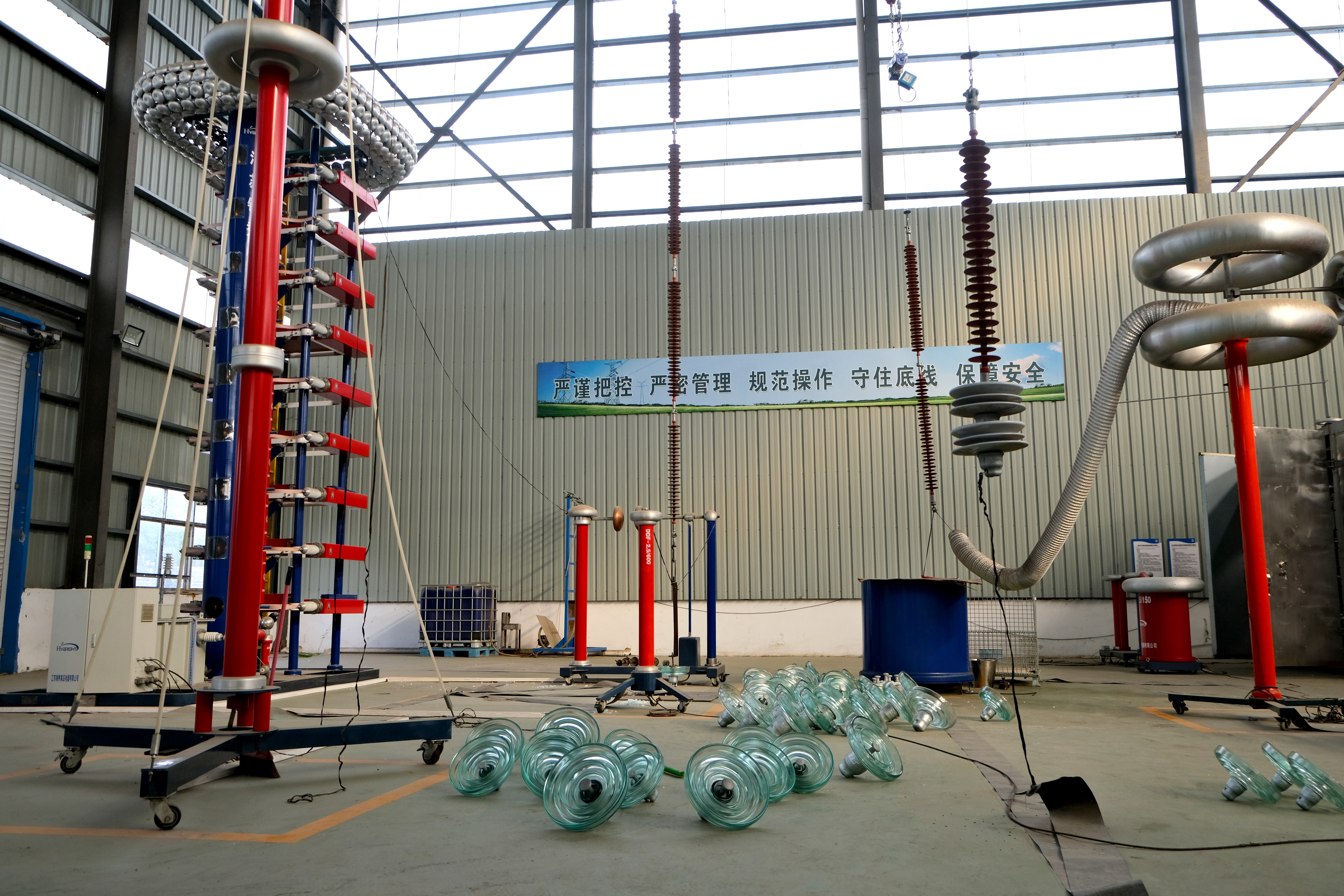
QOCI Electric laboratory — the facility that should be walked through, not just described, during a supplier audit.
Layer 4 — Delivery Assurance and Export Record
Delivery assurance is proven by repeat shipments, not by statements of intent. Ask for the export share of total output, the destination markets, and the process for packing, marking and container loading. A porcelain disc insulator is a heavy, brittle product; loading area discipline and export packing standards are the difference between a clean arrival and a claim.
QOCI Electric reports an export ratio of 20% and main markets covering the USA, Asia, the EU, Africa and South America, with products used in power grid construction projects of State Grid Corporation of China and China Southern Power Grid, and in power grids in over 40 countries and regions including Europe and the Middle East. For a buyer entering a new market, that record is the closest available proxy for how the supplier will behave on the first order.
Step-by-Step: Running the Evaluation in Sequence
Run the layers in the order below. Each step should produce a document or an observation that either passes or fails against a stated criterion, so the final shortlist is a record rather than an impression.
Step 1 — Screen for eligibility first. Confirm the standards the supplier works to (IEC 60383-1:2023, ANSI C29.1 where North America is the destination) and any local-content rule such as the DPIIT 50% requirement for Indian government contracts. Eliminate on eligibility before technical scoring.
Step 2 — Request the facility fact sheet. Annual output, site area, manufacturing floor area, kiln configuration and automation level. Cross-check that the floor area and the stated output are consistent with the product mix being quoted.
Step 3 — Request the engineering headcount split. Total staff, engineering and technical headcount, and R&D team size. Ask which engineers would handle your drawing and fitting approvals.
Step 4 — Request the inspection plan, not the certificate. Ask for the test item list with coverage marked as 100% or sampling for each item: dye penetration, porosity, thermal cycling, power frequency and impulse withstand, glaze inspection, cement joint integrity.
Step 5 — Match the design to the site. Confirm creepage distance against IEC 60815 pollution class I–IV, specified mechanical load for the application, and the correct product family — porcelain suspension insulator, porcelain disc insulator, ceramic pin insulator or low voltage porcelain shackle insulator for distribution work.
Step 6 — Audit the delivery side. Export ratio, destination markets, packing specification, loading procedure and documentation flow. Where possible, view the loading area and confirm how a mixed container is sequenced.
Step 7 — Close the loop with a sample and a megger test. Approve on a physical sample: glaze condition, shed geometry, cement joint finish, fitting dimensions, and an insulation resistance (megger) test before energising. The sample is the last control point before the purchase order.
Where the Framework Changes the Decision
Transmission line construction
For a high voltage porcelain insulator string on a transmission project, the deciding evidence is usually 100% dye penetration coverage plus mechanical load traceability. A supplier quoting a suspension string without unit-level crack detection moves to the bottom of the shortlist regardless of price.
Coastal and industrial pollution zones
Where salt fog or chemical pollution is present, creepage distance design and glaze quality outrank almost everything else. This is where an anti-pollution ceramic insulator profile, specified against IEC 60815 pollution class, should be a mandatory line item in the technical comparison rather than an optional upgrade.
Rural electrification and low-voltage distribution
Programmes built around low voltage porcelain pin insulator, spool insulator, stay insulator and shackle insulator quantities are volume-driven. Here the capacity and staffing layers dominate: a supplier with 9,000,000 units of annual output and a deep engineering bench can absorb schedule changes that a smaller plant cannot.
Distributors and OEM buyers
For channel partners carrying mixed ranges — ceramic disc insulator, ceramic suspension insulator, ceramic post insulator, porcelain post insulator — delivery assurance is the commercial risk. A 20% export ratio across the USA, Asia, EU, Africa and South America indicates a supplier already used to export documentation and multi-market packing requirements.
Comparison Table: Decision Metrics for Porcelain Insulators
Before evaluating suppliers, it helps to confirm that the material choice itself is settled. The table below compares porcelain against composite silicone rubber insulators on the metrics that most often decide a utility project.
| Decision metric | Porcelain insulator | Composite silicone rubber insulator |
|---|---|---|
| Compressive strength | 800 MPa | 300 MPa (167% lower) |
| Initial cost | 20% lower than composite | Baseline |
| Total lifecycle cost over 30 years | 15% lower than composite | Baseline |
| Hydrophobic performance over time | Zero degradation over 30+ years | 5–8% loss per year in tropical climates |
| Routine maintenance | No periodic hydrophobicity monitoring required | Silicone re-coating and hydrophobicity testing every 3–5 years |
| Proven service record | 100+ years of demonstrated reliability | Shorter design life; suited to weight-sensitive or temporary installations |
| Thermal behaviour at the cement joint | Thermal expansion coefficient closer to metal fittings, reducing mechanical stress at the joint | Different expansion behaviour at the polymer-to-fitting interface |
| Chemical resistance | Chemically inert to acids, alkalis and industrial solvents | Polymer surface subject to environmental ageing |
| Typical best fit | High mechanical load zones, tropical/subtropical climates, coastal salt-fog areas, industrial chemical pollution zones | Weight-sensitive installations and shorter design-life lines |
The second table converts the framework into a document request list. It is the practical output of the evaluation and can be sent to every candidate without modification.
| Supplier claim | Evidence to request | What it verifies |
|---|---|---|
| Production capacity | Annual output figure plus site area, manufacturing floor area, kiln lines | Whether the quoted date is achievable at the stated product mix |
| Engineering support | Total staff, engineering headcount, R&D team size, standards membership | Ability to handle drawing approvals and profile modifications |
| Quality control | Inspection plan with 100%/sampling coverage marked per test item | Whether defective units can survive into the shipment |
| Delivery reliability | Export ratio, destination markets, packing and loading procedure | Export logistics competence on comparable routes |
| Product conformity | Standard references, rated values, sample with megger test | Whether the physical unit matches the datasheet |
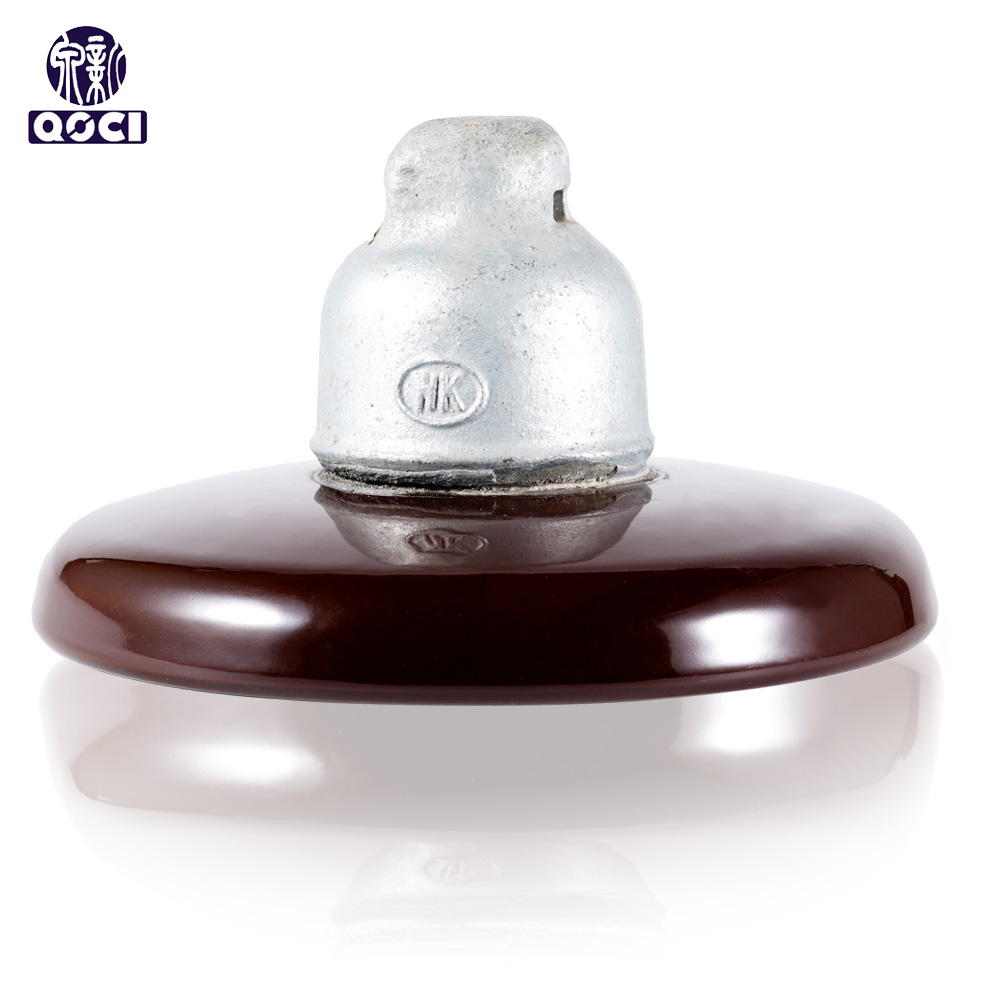
A 70 kN U70B porcelain suspension insulator — the physical sample is the final control point before a purchase order.
Frequently Asked Questions
Which standards should a porcelain insulator supplier demonstrate for utility projects?
IEC 60383-1:2023 is the current international standard for ceramic or glass insulator units used on AC overhead power lines with nominal voltages above 1000 V. For North American destinations, ANSI C29.1 specifies the test methods applied to electrical power insulators. Buyers should also see IEC 60305 for string insulator units, IEC 60672 for ceramic and glass insulating materials, and creepage distance design referenced to IEC 60815 pollution classes I to IV. Customs classification for the shipment is HS 8546.20.
How can a buyer verify production capability instead of accepting a brochure claim?
Ask for capacity and facility data together, then check that the numbers scale with each other. QOCI Electric, for example, reports an annual output of 9,000,000 units, a site of more than 120 mu (approximately 8 hectares), a construction area exceeding 70,000 m² and a manufacturing facility of 35,373 m², supported by over 150 staff including more than 50 engineering and technical professionals and a 38-engineer R&D team. Automated and intelligent production of glass and porcelain insulators, national high-tech enterprise status and participation in the Insulator Standard Committee are the corroborating signals to look for in any candidate.
How do porcelain and composite insulators compare on cost across a project lifecycle?
Porcelain insulators offer a 20% lower initial cost than composite insulators and a 15% lower total lifecycle cost over 30 years. The lifecycle advantage comes partly from maintenance: porcelain requires no periodic hydrophobicity monitoring, whereas composite insulators require routine silicone re-coating and hydrophobicity testing every 3–5 years. Composite units also lose 5–8% of hydrophobic performance per year in tropical climates, while porcelain shows zero degradation in hydrophobic performance over 30+ years.
What should be checked in a porcelain insulator sample before approval?
Check glaze quality and uniformity, shed geometry, fitting dimensions and cement joint finish against the drawing, then run an insulation resistance (megger) test before energising to catch zero-value units. Confirm that the manufacturer applies 100% dye penetration testing for crack detection rather than batch sampling, along with porosity testing and thermal cycling. For a low-voltage distribution item, verify the stated mechanical value directly — the P-33-Y pin type porcelain insulator, for instance, is documented as compliant with IEC 383-1 at a cantilever strength of 10 kN.
How does a buyer confirm delivery assurance before placing a first order?
Delivery assurance is confirmed by export history and loading practice, not by a promise. QOCI Electric reports a 20% export ratio with main markets across the USA, Asia, the EU, Africa and South America, and products in service in power grids in over 40 countries and regions. Ask to see the loading area and packing specification as well as the destination list. To move from evaluation to a purchase decision, request a sample and a quotation, or download the QOCI Electric product catalogue and the company site at quanxinelectric.com.
Conclusion: Score the Evidence, Not the Presentation
Porcelain insulator supplier evaluation at the decision stage comes down to four verifiable layers: how much the plant can produce, who engineers the product, what is inspected on every unit, and where the goods have already shipped. Suppliers that can answer all four with documents — annual output and floor area, engineering headcount and standards participation, 100% dye penetration coverage and material certification, export ratio and destination markets — are the ones that survive a second order at the same quality.
Applied to Jiangxi QOCI Electric Co., Ltd., that evidence set is specific: 9,000,000 units of annual output, a 35,373 m² manufacturing facility within a site of more than 120 mu, over 150 staff with more than 50 engineering and technical professionals and a 38-engineer R&D team, participation in the Insulator Standard Committee, and a 20% export ratio across the USA, Asia, EU, Africa and South America. Those are the facts a buyer can check — and the facts that should decide the shortlist.
Next Step
Send your project specification — voltage class, creepage requirement, pollution class, mechanical load and annual quantity — and request a matching sample plus a formal quotation. Contact: admin@qocielectric.com · Tel +86 079-9761-6589 · WhatsApp +86 199-7997-1591. Address: No. 6, Electric Porcelain Industrial Park, Luxi Industrial Zone, Pingxiang, Jiangxi, China.
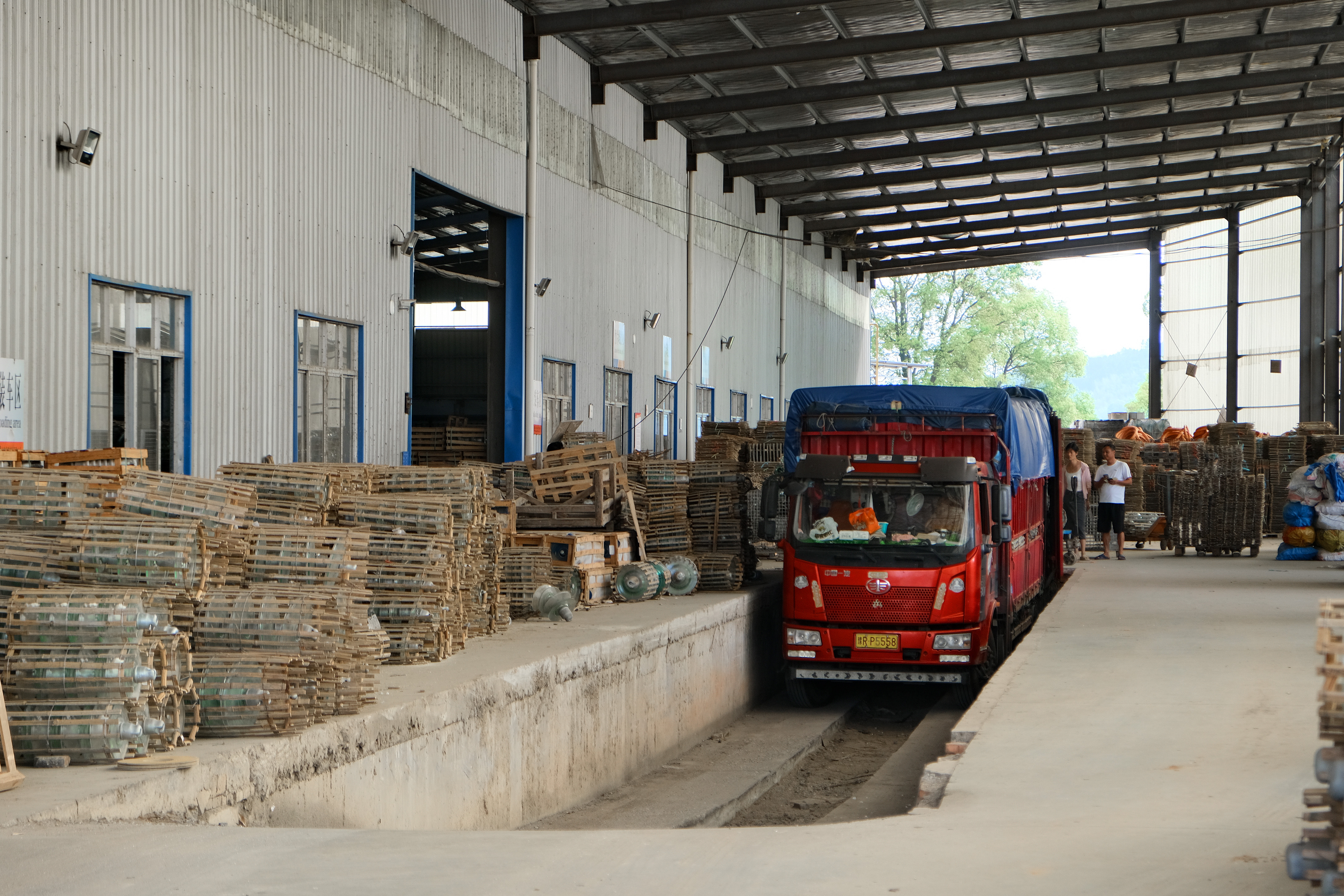
Loading area at QOCI Electric — the delivery checkpoint to inspect before placing a first order.
Have Questions or Need More Details?
Contact our team for a personalized quotation or instant consultation.
Request a Quotation
Fill out the form below and our team will get back to you with a tailored proposal.
WhatsApp Direct Chat
Prefer to chat in real-time? Message us on WhatsApp for instant assistance & quick answers.
- Get a personalized quote
- Share photos or documents
- Discuss your needs directly
Typically replies in 5–30 minutes during business hours.