
Porcelain vs Glass Suspension Insulators: A 210 kN Specification Comparison for Transmission Buyers
Porcelain and glass suspension insulators perform the same two jobs on an overhead line: they isolate the live conductor from the grounded support, and they carry the mechanical load of conductor, hardware and wind. For a transmission buyer in the research and evaluation stage, the decision therefore rarely turns on which material sounds better. It turns on whether the published values of a specific unit match the mechanical class, creepage distance, insulation level and hardware interface of the project.
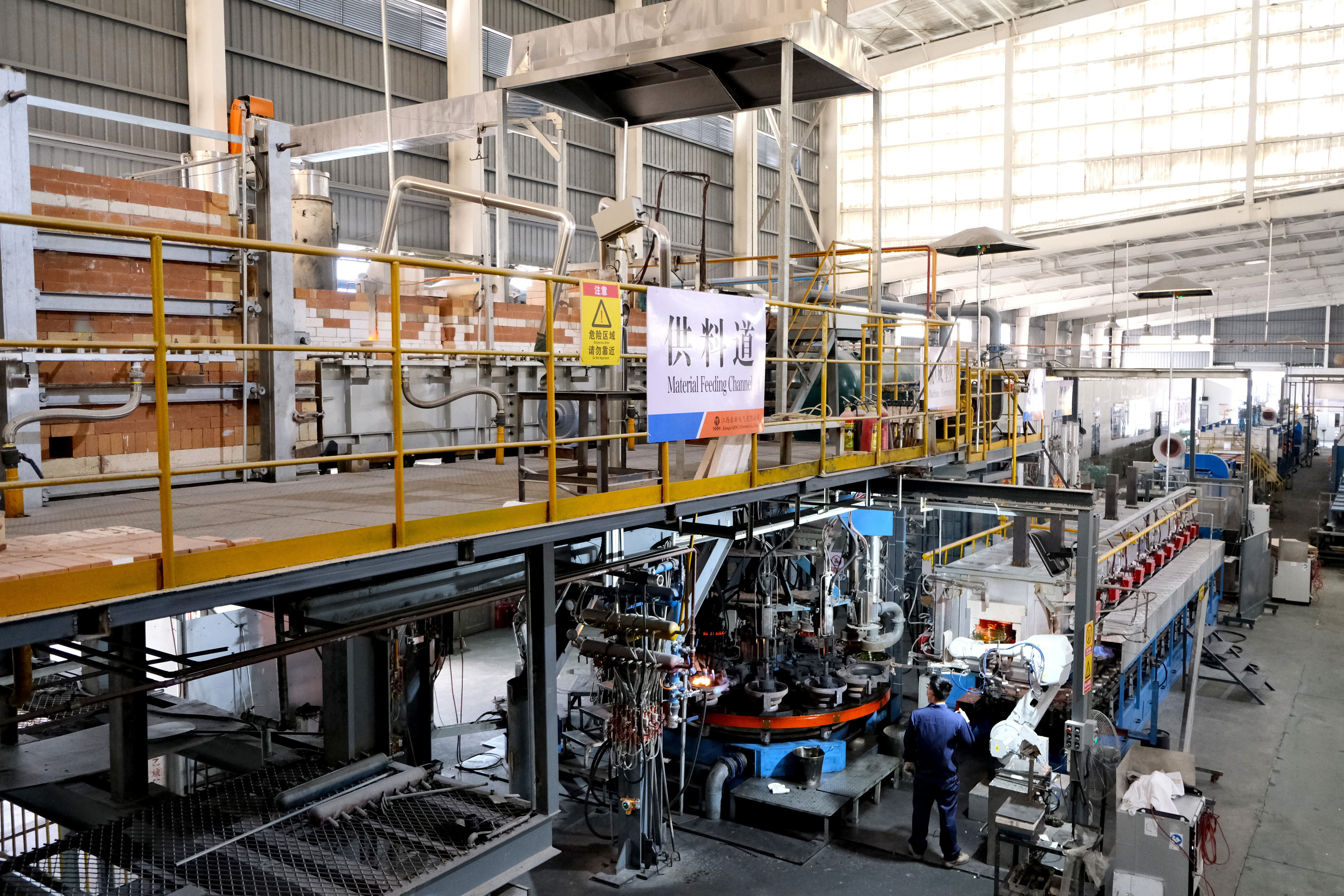
A glass unit such as the PS210V 212V makes that comparison concrete, because its ratings can be set directly against a porcelain offer on the same sheet. Jiangxi QOCI Electric Co., Ltd. is a manufacturer established in December 2002 in Luxi Industrial Park, Pingxiang, Jiangxi, China, which produces both porcelain and glass insulators through automated and intelligent production; its products are used in power grid construction projects in more than 40 countries and regions, including Europe and the Middle East. Because both material families come from the same production system, the comparison can be made on specifications rather than on supplier loyalty.
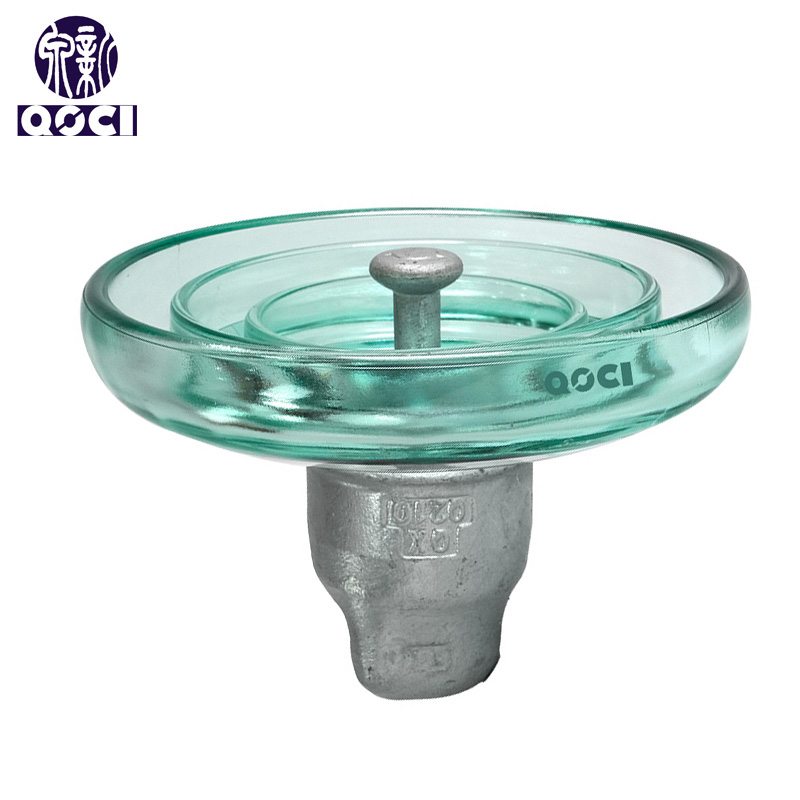
Published values of the glass unit used in this comparison (PS210V 212V):
Mechanical failing load 210 kN · nominal disc diameter 280 mm · nominal spacing 170 mm · creepage distance 400 mm · socket coupling 20 · dry lightning impulse withstand voltage 110 kV · wet power frequency withstand voltage 45 kV · power frequency puncture voltage 130 kV. Body in tempered glass, cap in hot-dip galvanized cast iron, pin in hot-dip galvanized forged steel.
Problem Definition: Why Material-Level Comparisons Mislead Transmission Buyers
Most porcelain-versus-glass discussions fail for one of three reasons, and each of them can be corrected at the specification stage.
1. The units being compared do not sit in the same position. A 210 kN disc unit for a high-voltage transmission string, a porcelain pin insulator rated 11 kV with a 10 kN rated mechanical load, and a porcelain shackle insulator with 13.5 kN mechanical tensile strength are three different products doing three different jobs. Comparing them by material tells a buyer nothing, because the constraint that governs selection is the line position and the load case, not the raw material.
2. The mechanical numbers are expressed on different bases. The glass unit publishes a mechanical failing load of 210 kN. Porcelain string specifications are normally written as a specified mechanical load (SML) within the 40–550 kN range referenced in standard procurement guidance. Failing load and specified mechanical load are not interchangeable terms, and a comparison table that lists them in the same column invites an over-specified or under-specified string.
3. The in-service inspection burden is ignored. Porcelain insulators can develop zero-value degradation, an internal electrical breakdown that leaves no visible external change, which is why periodic live-line testing every three to five years is used to detect faulty units. Glaze quality, assessed against IEC 60672, directly affects contamination adhesion and long-term anti-pollution behaviour. A comparison that only looks at purchase price and nominal ratings will understate the maintenance planning that follows installation.
Industry Background: Where Suspension Insulators Sit in the Market
The material choice matters commercially because suspension and string applications dominate insulator demand. Overhead transmission lines account for approximately 62.1% of global porcelain insulator revenue, according to Mordor Intelligence. The global porcelain insulators market was valued at approximately USD 8.27 billion in 2023 and is projected to reach USD 15.04 billion by 2033, based on Spherical Insights data.
Supply is concentrated. Asia-Pacific held a 49.4% revenue share of the porcelain insulator market in 2025 (Mordor Intelligence), and China was the world's largest exporter of electrical insulators in 2024, accounting for 31.4% of total global exports at approximately USD 898 million, according to OEC data. For buyers, that means most shortlists will contain Asian manufacturers, and the differentiation has to come from documentation quality rather than from country of origin alone.
The compliance frame is comparatively stable. IEC 60383-1:2023 is the current international standard for ceramic or glass insulator units for AC overhead power lines with nominal voltages above 1000 V, and it applies to both materials in this comparison. ANSI C29.1 specifies the American national test methods for electrical power insulators used in North America, and HS 8546.20 is the primary customs classification for porcelain electrical insulators. Buyers in India should also note that the DPIIT procurement policy requires 50% local content for porcelain insulators to be classified under Class I for government contracts.
Detailed Solution: Six Dimensions That Decide Porcelain vs Glass
The practical answer to “porcelain or glass” is produced by six specification dimensions. Each one can be settled with data before a purchase order is discussed.
1. Mechanical load class
The glass PS210V 212V is rated at a 210 kN mechanical failing load and is positioned for ultra-high-voltage and extra-heavy-load transmission projects. A porcelain suspension offer for the same string position must state its specified mechanical load explicitly, along with type-test evidence for that class. Where the requirement is not a suspension string at all — for example a low-voltage distribution line — the relevant porcelain products publish far lower figures: the ED-2B shackle insulator is rated 13.5 kN mechanical tensile strength and the P-11-Y pin insulator 10 kN rated mechanical load. Those values are correct for their positions and wrong for a 210 kN transmission string; the comparison only holds within one position.
2. Disc geometry and string length
Disc diameter and spacing determine how a string is built and how long it becomes. The glass unit publishes a 280 mm nominal disc diameter and a 170 mm nominal spacing, with socket coupling 20. Porcelain suspension units are defined by the offered drawing and standard, so the buyer should request nominal diameter and spacing for the specific unit offered and calculate the assembled string length before comparing tower window clearances.
3. Creepage distance and pollution class
The glass PS210V 212V provides a 400 mm creepage distance. Creepage requirements are not a material property; they are set by site pollution severity. Porcelain insulator profiles are designed against pollution classes I–IV, with the shed geometry extended to match the site class, and anti-pollution designs exist for coastal, industrial and high-humidity conditions. The correct comparison is therefore creepage per unit versus required creepage for the site — not creepage per material.
4. Electrical withstand and puncture strength
The glass unit publishes 110 kV dry lightning impulse withstand voltage, 45 kV wet power frequency withstand voltage and 130 kV power frequency puncture voltage. For porcelain, puncture withstand is specified as at least 1.2 times the dry flashover value, and both dry and wet power frequency and impulse tests sit inside the IEC 60383-1 test series that applies to either material. A buyer comparing the two should line up dry impulse, wet power frequency and puncture values on one row each, then check which ones were type-tested rather than calculated.
5. Hardware, coupling and corrosion protection
The glass unit uses a hot-dip galvanized cast iron cap and a hot-dip galvanized forged steel pin, with socket coupling size 20 for string assembly. Porcelain discs follow the same string logic but the accessory set around them has to be planned: metal fittings, corona rings, suspension and tension clamps, arcing horns, grounding hardware and vibration dampers are all part of a complete installation. Under severe corrosion service conditions, a zinc sleeve can slow rusting and extend the service life of the string, which is worth writing into the specification for coastal and industrial routes.
6. Porcelain families beyond the suspension string
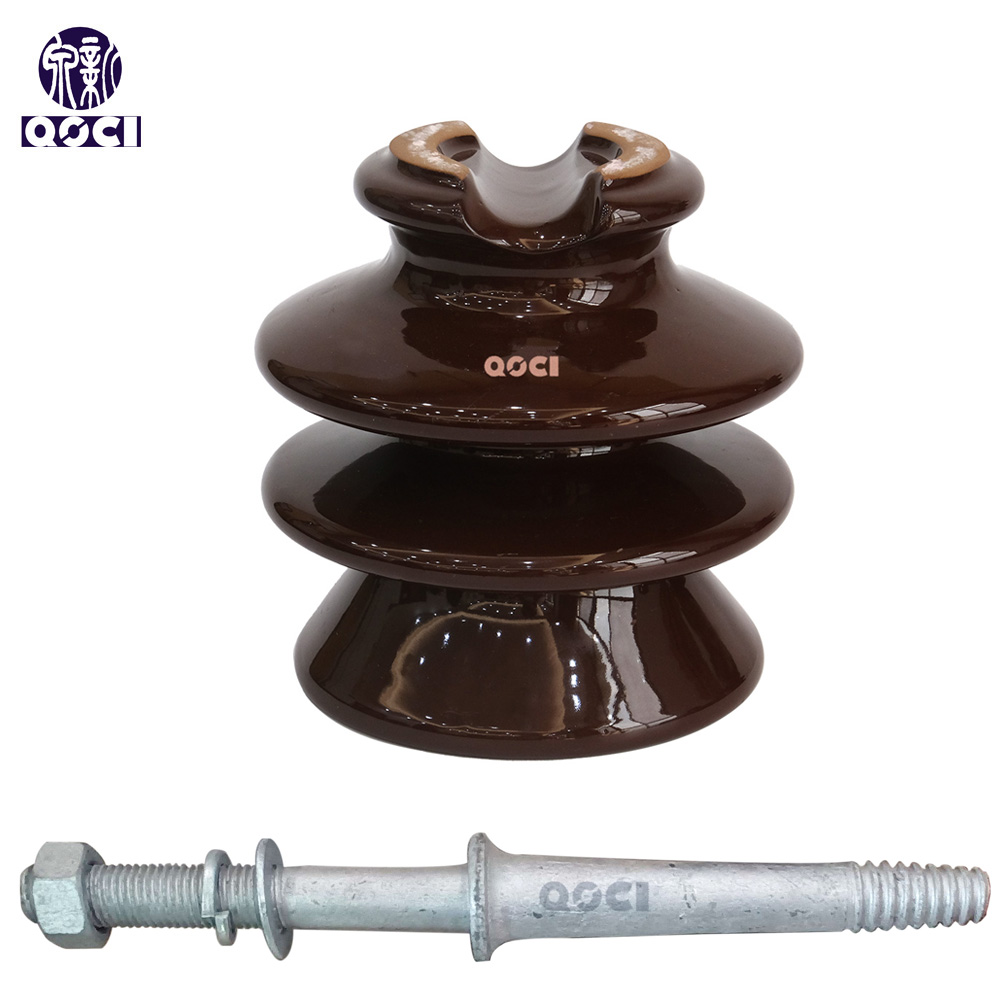
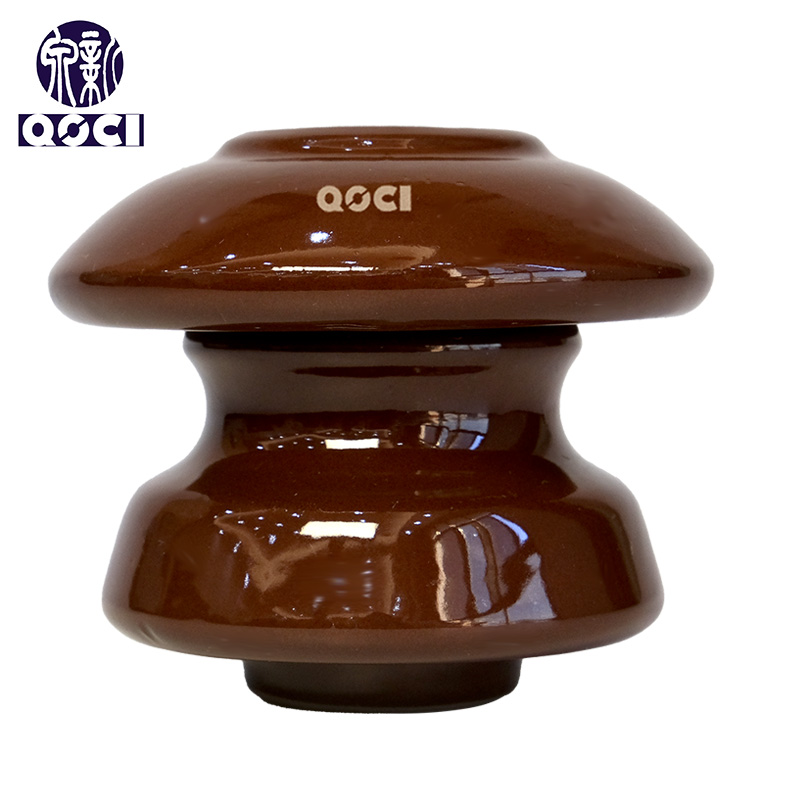
Many transmission projects include distribution and substation scopes where the suspension-versus-glass question does not apply at all. Porcelain covers those positions with products whose values are published separately, and QOCI Electric manufactures pin, shackle and line post porcelain insulators alongside AC disc-shaped suspension porcelain and glass insulators.
Step-by-Step Breakdown: Writing a Comparable Specification
The sequence below converts a material debate into a procurement document that both a porcelain and a glass supplier can answer on equal terms.
Step 1 — Fix the line position. State whether the unit is a suspension, tension, line post, pin or shackle position. Suspension and tension strings on transmission lines are the only positions where a 210 kN disc unit and a porcelain disc unit compete directly.
Step 2 — Convert the mechanical requirement to one basis. Decide whether the tender is written against a failing load or a specified mechanical load, and require every offer to state its own value on that basis. This single step removes most of the apparent difference between a 210 kN glass rating and a porcelain SML figure.
Step 3 — Set creepage from the site pollution class. Define the required creepage distance per unit and per string using the site pollution severity class, and require anti-pollution profile evidence where the route crosses coastal or industrial zones.
Step 4 — Set the electrical values line by line. Write dry lightning impulse withstand, wet power frequency withstand and puncture withstand as separate rows, each with a required value and a required test basis under IEC 60383-1 or ANSI C29.1 as applicable to the destination market.
Step 5 — Specify the interface and the accessory set. For disc units, confirm coupling size and cap/pin material and galvanizing. For the string as a whole, list the fittings, corona rings, clamps, arcing horns and dampers that the installation requires, so that the accessory cost does not appear after award.
Step 6 — Require inspection evidence, not only certificates. Ask for 100% dye penetration testing coverage on porcelain units, glaze inspection against IEC 60672, cement joint integrity verification, and the routine and type test reports for the exact unit offered. QOCI Electric performs 100% pre-shipment testing and accepts third-party inspection such as SGS, which turns the inspection clause into a verifiable step rather than a promise.
Use Cases: Which Project Conditions Favour Which Option
Ultra-high-voltage and extra-heavy-load transmission. This is the design case for the PS210V 212V glass unit, whose 210 kN failing load, 280 mm disc diameter and 170 mm spacing suit critical grid infrastructure with standardised IEC and IEEE dimensions for string assembly. A porcelain offer for the same position must match the load class and string geometry with its own certified values.
Coastal, humid and industrially polluted routes. Anti-pollution creepage design, glaze quality and hardware galvanizing decide long-term behaviour here. The operating conditions covered by these products include outdoor exposure, high humidity, industrial pollution and a wide temperature range from −40 °C to +50 °C, which is where profile choices and zinc protection matter more than the base material.
Substation upgrades, railway electrification and grid modernisation. These scopes draw on line post, pin and disc porcelain units as much as on suspension strings, and the insulator functions remain the same across them: electrical insulation between the live conductor and the grounded support, mechanical load bearing, and corona suppression, operating as a passive component with no power consumption.
Tropical distribution programmes. A porcelain programme covering coastal and inland tropical distribution line insulation and monsoon-region grid reinforcement in Sri Lanka, Egypt and Ukraine totalled 60,000 pieces over three years to 2026. The reported outcome was a 60% reduction in salt fog flashover incidents compared with the previous composite batch, zero UV degradation, a 50% reduction in maintenance cost and a replacement rate under 2% over the three-year period. This is a distribution-scope record for the ED-2B and P-11-Y products, not a transmission suspension result, and should be read within that boundary.
Comparison Table: Porcelain vs Glass Suspension Insulators
| Attribute | Glass suspension unit PS210V 212V | Porcelain suspension insulators |
|---|---|---|
| Body material | Tempered glass | Vitrified electrical porcelain (kaolin, quartz, feldspar, fired at 1200–1300 °C) with glazed surface |
| Mechanical rating as published | Mechanical failing load 210 kN | Specified mechanical load (SML), commonly stated in the 40–550 kN range; confirm the basis offered |
| Nominal disc diameter | 280 mm | Defined by the offered unit drawing |
| Nominal spacing | 170 mm | Defined by the offered unit drawing |
| Creepage distance basis | 400 mm per unit | Designed per IEC 60815 pollution class I–IV; anti-pollution profiles available |
| Dry lightning impulse withstand | 110 kV | Verified per the IEC 60383-1 test series for the offered unit |
| Wet power frequency withstand | 45 kV | Verified per the IEC 60383-1 test series for the offered unit |
| Puncture withstand | 130 kV power frequency puncture voltage | Specified at not less than 1.2× the dry flashover value |
| Cap and pin | Hot-dip galvanized cast iron cap; hot-dip galvanized forged steel pin; socket coupling 20 | Metal fittings per string design; zinc sleeve option for severe corrosion conditions |
| In-service inspection consideration | Routine and type tests per IEC 60383-1 apply | Zero-value degradation may leave no visible change; live-line testing every 3–5 years is used to detect faulty units |
Values in the glass column are the published ratings of the PS210V 212V unit. Values in the porcelain column describe the specification basis buyers should require; they are not a claim that every porcelain unit carries the same numbers.
Porcelain product families referenced in this guide
| Product | Model | Published values | Typical position |
|---|---|---|---|
| Pin type porcelain insulator | P-11-Y | Rated voltage 11 kV; rated mechanical load 10 kN; max diameter 150 mm; height 150 mm; creepage 240 mm; PF wet withstand 50 kV; lightning impulse withstand 90 kV | Overhead distribution lines, rural electrification, wooden or steel cross-arms |
| Shackle / butterfly porcelain insulator | ED-2B | Mechanical tensile strength 13.5 kN; max diameter 90 mm; height 76 mm; PF wet withstand 13 kV; PF dry withstand 25 kV | Low-voltage overhead distribution, anchoring, strain and angle joints |
Frequently Asked Questions
Which standards apply when comparing porcelain and glass suspension insulators?
IEC 60383-1:2023 is the current international standard for ceramic or glass insulator units for AC overhead power lines above 1000 V, so it covers both materials in this comparison. IEC 60305 applies to string insulator units, ANSI C29.1 defines the American national test methods for electrical power insulators, and IEC 60672 covers ceramic and glass insulating materials including glaze quality. HS 8546.20 is the primary customs classification for porcelain electrical insulators. Buyers selling into India should also check the DPIIT requirement of 50% local content for Class I classification under government contracts.
How do I identify a high voltage porcelain insulator manufacturer for transmission projects?
Verify five things: the mechanical rating basis and type-test report for the exact unit offered, 100% dye penetration testing coverage on individual porcelain units, certification against IEC 60305 or ANSI C29 as required by the destination market, creepage distance matched to the site pollution class, and field records from comparable climate and pollution conditions. Jiangxi QOCI Electric Co., Ltd. produces both porcelain and glass insulators through automated and intelligent production, with a 35,373 m² facility, 38 engineers, an annual output of 9,000,000 units, and products used in grid projects in more than 40 countries.
What drives the cost comparison between porcelain and glass suspension insulators?
Four specification variables dominate the commercial comparison: mechanical load class, creepage length driven by pollution class, the accessory set required for the string, and the scope of testing and third-party inspection. Order quantity and lead time then adjust the unit cost. Service cost should sit alongside them — in the Sri Lanka, Egypt and Ukraine porcelain distribution programme, the reported result over three years was a 50% reduction in maintenance cost and a replacement rate under 2%, alongside a 60% reduction in salt fog flashover incidents compared with the previous composite batch.
Can samples be validated before a transmission order is placed?
Yes. QOCI Electric works with a minimum order quantity of 50 units and offers OEM and ODM customization covering voltage and logo, so a validation batch can be produced against the actual project specification rather than a catalogue default. Every shipment is subject to 100% pre-shipment testing, and third-party inspection such as SGS can be arranged for buyers who require independent verification of the sampled units.
What lead time and technical support should a buyer expect?
Lead time is 15 to 35 days against a monthly capacity of 750,000 units, which is the practical buffer for mixed porcelain and glass orders within one project. After-sales support covers online technical support and replacement for defective products. Buyers comparing a porcelain and a glass option for the same transmission position can request the current catalogue and a specification-level quotation from the manufacturer directly — contact details and the downloadable catalogue are listed below.
Conclusion
Porcelain and glass suspension insulators are not competing philosophies; they are two material routes to the same electrical and mechanical function, and the correct choice appears once the specification is written properly. Put the position first, convert every mechanical figure to the same basis, set creepage from the site pollution class, list withstand and puncture values line by line, define the hardware, and require inspection evidence for the exact unit offered. On that basis a 210 kN glass unit such as the PS210V 212V and a porcelain unit of equivalent class can be compared honestly, and the porcelain pin, shackle and line post families can be assigned to the distribution and substation positions where they belong.
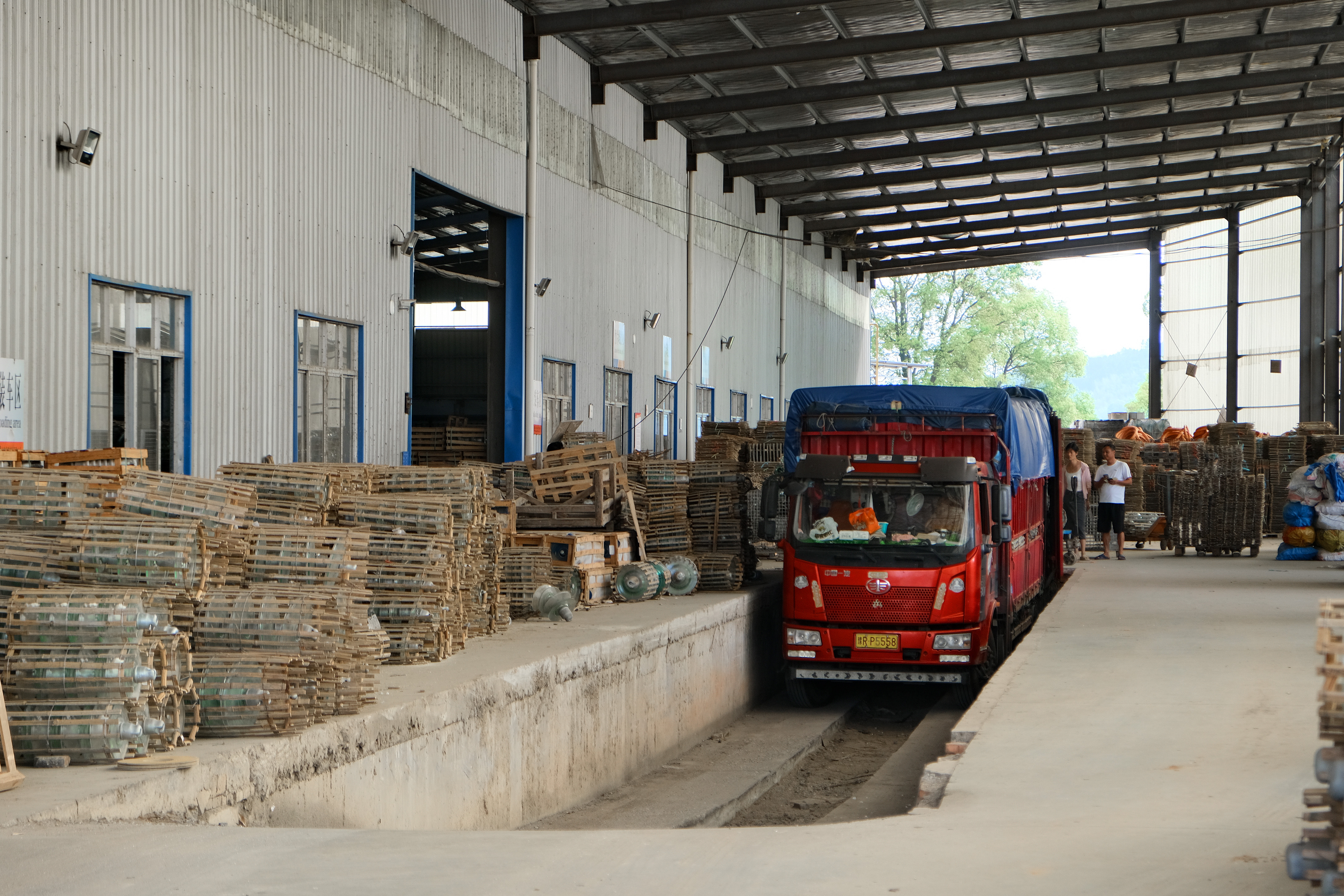
Next step: request samples or a specification-level quotation
Jiangxi QOCI Electric Co., Ltd. — No. 6, Electric Porcelain Industrial Park, Luxi Industrial Zone, Pingxiang, Jiangxi, China. Contact: Samantha Chen, admin@qocielectric.com, Tel +86 079-9761-6589, WhatsApp +86 199-7997-1591. Website: www.quanxinelectric.com.
Download the product catalogue: QOCI Catalogue – Glass Insulators (PDF).
Have Questions or Need More Details?
Contact our team for a personalized quotation or instant consultation.
Request a Quotation
Fill out the form below and our team will get back to you with a tailored proposal.
WhatsApp Direct Chat
Prefer to chat in real-time? Message us on WhatsApp for instant assistance & quick answers.
- Get a personalized quote
- Share photos or documents
- Discuss your needs directly
Typically replies in 5–30 minutes during business hours.