
Suspension Glass Insulator Selection Parameters and Acceptance Tests
A suspension glass insulator specification holds only when every selection parameter is written in a form that can be verified. Selection parameters answer what the line needs: mechanical failing load, coupling geometry, creepage distance and electrical withstand. Acceptance criteria answer a different question: how the supplier proves each of those parameters before shipment, and how the buyer re-proves them on arrival. When the two are collapsed into one price-driven line item, the technical requirement survives on paper and disappears at the factory gate.
This guide is written for utility buyers, EPC procurement teams and transmission engineers working between research and evaluation. It treats the glass insulator as a specified system component rather than a catalogue item, and it separates the technical verification layer from commercial negotiation. Reference values are drawn from Jiangxi QOCI Electric Co., Ltd. suspension glass insulator product data and from published standards and market sources.
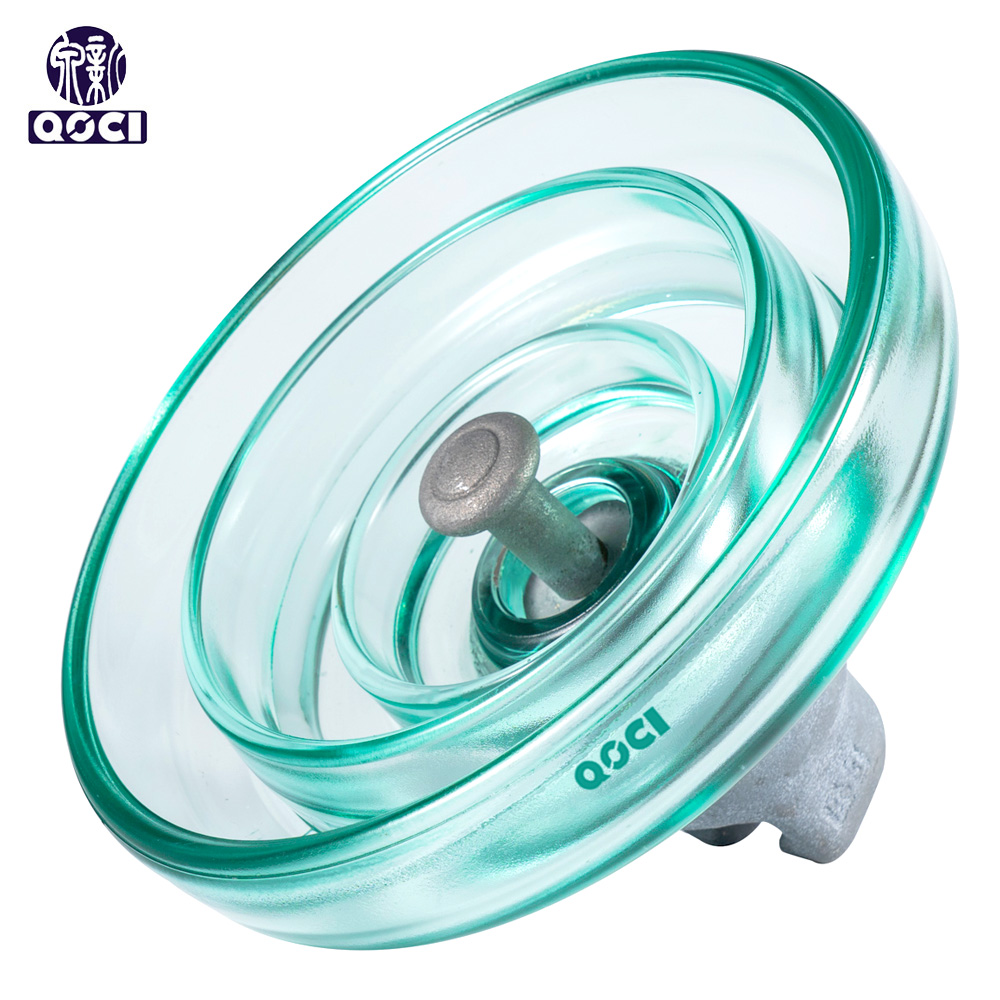
A long-creepage suspension glass insulator unit. The profile, coupling and creepage values are the parameters that acceptance criteria must later verify.
Problem Definition: Where Parameter Lists Break Down
Three failure patterns account for most suspension glass insulator specification disputes, and none of them is a manufacturing problem in the first instance.
- Parameters copied without scenario mapping. A load class and a creepage figure are lifted from a previous project or a supplier catalogue, then issued unchanged to a line with different pollution, corrosion or temperature exposure. The number is real; the fit is not.
- Acceptance narrowed to a visual check. The purchase order names a model but specifies no evidence. Inspection becomes a count of cartons, and dimensional or electrical non-conformity surfaces only after erection.
- Acceptance treated as a commercial lever. When a delivery is late or a budget is tight, the acceptance clause is the first item reopened. The result is a unit that complies with the negotiated version of the specification, not the original one.
The operating environment of a suspension glass insulator makes this costly. These units sit under outdoor overhead exposure with heavy pollution, coastal salt fog and a wide temperature range of -40°C to 60°C, and they are expected to remain anti-aging across a continuous 24/7 in-service life using passive dielectric isolation. A parameter set that does not encode those conditions cannot be rescued by inspection later.
Selection versus acceptance, stated plainly. Selection parameters define the required behaviour of the unit on the line. Acceptance criteria define the evidence that proves the behaviour at the point of delivery. The first is an engineering output, the second is a contractual output, and both must reference the same model.
Industry Background: What Already Sets the Baseline
Demand for suspension glass insulators is expanding with grid construction rather than with replacement alone. Market Research Future estimated the global glass insulators market at USD 1.14 billion in 2024, with a projection of USD 1.97 billion by 2035 and a CAGR of 5.1% across the 2025–2035 forecast period. Grand View Research reported that Asia Pacific held a revenue share above 52.9% in 2024, driven by grid expansion in China and India, and OEC recorded that China concentrated 31.4% of global electrical insulator exports in 2024, totalling USD 898 million.
On the technical side, the baseline is already defined for AC systems. IEC 60305:2021 specifies the mechanical and electrical characteristics of suspension glass insulator units for AC systems. That standard gives buyers a shared vocabulary for load classes, coupling and withstand values, which is exactly why it should be cited in the purchase order.
The standard does not, however, define the pollution level of a specific line, the corrosion severity of a coastal route, the sampling plan of a particular utility, or the documentation package a project owner requires. Those remain the buyer's responsibility, and they are what turn a standard-compliant unit into a project-compliant one.
The Parameter Architecture: Five Families to Specify
A workable suspension glass insulator specification is built from five parameter families. Each family should be written as a required value plus a verification method, not as a required value alone.
1. Mechanical failing load family
The mechanical class anchors everything else, because it determines the string's rated strength and the fittings that can be coupled to it. Verified values across the QOCI range run from 70kN on the PS70E 112W and 120kN on the PS120B 112V, through 160kN on the U160BLP, to 300kN on the PS300V 112V and 420kN on the U420BP and U420B. A specification that states a load class without naming the model leaves the coupling and creepage undefined, since two units of the same class can differ in disc diameter and spacing.
2. Dimensional and coupling family
Nominal disc diameter, nominal spacing and socket coupling size govern string geometry and interchangeability with fittings. In the reference range these run from 255mm disc diameter and 146mm spacing on the PS70E 112W, through 280mm and 170mm on the U160BLP, to 380mm and 205mm on the U420BP, with socket coupling sizes of 16, 20, 24 and 28. Coupling is the parameter most often omitted and most often disputed, because it is the interface where the insulator meets insulator string fittings, tension clamps and the arcing ring.
3. Electrical withstand family
Electrical parameters are usually quoted as three separate values, and all three should appear in the specification. Dry lightning impulse withstand voltage ranges from 90kV on the U100BA to 140kV on the U420B and U420BP. Wet power frequency withstand voltage ranges from 40kV on the PS70E 112W and PS120B 112V to 80kV on the U420B. Power frequency puncture voltage sits between 110kV and 140kV across the same reference models. Quoting only one of the three leaves the acceptance test ambiguous.
4. Creepage and pollution family
Creepage distance is the parameter that connects a product to a route. Reference values span 320mm on the PS70E 112W and PS120B 112V, 450mm on the U100BLD and U160BLP, 485mm on the PS300V 112V and 620mm on the U420BP. Anti-pollution variants are designed with increased creepage distances to limit flashover risk in saline or industrial environments, and long-creepage types such as the U70BLP reach 550mm creepage at the 70kN class. Where severe corrosion is expected, a zinc sleeve can be specified to slow rusting and extend the service life of the insulator string.
5. Material and finish family
The construction of a suspension glass insulator in this range is consistent and should be written explicitly: a tempered glass body, a hot-dip galvanized cast iron cap, and a hot-dip galvanized forged steel pin. Specifying material and finish as a separate family prevents the most common substitution conversation, in which a coating or a cap material is changed without a corresponding change to the acceptance clause.
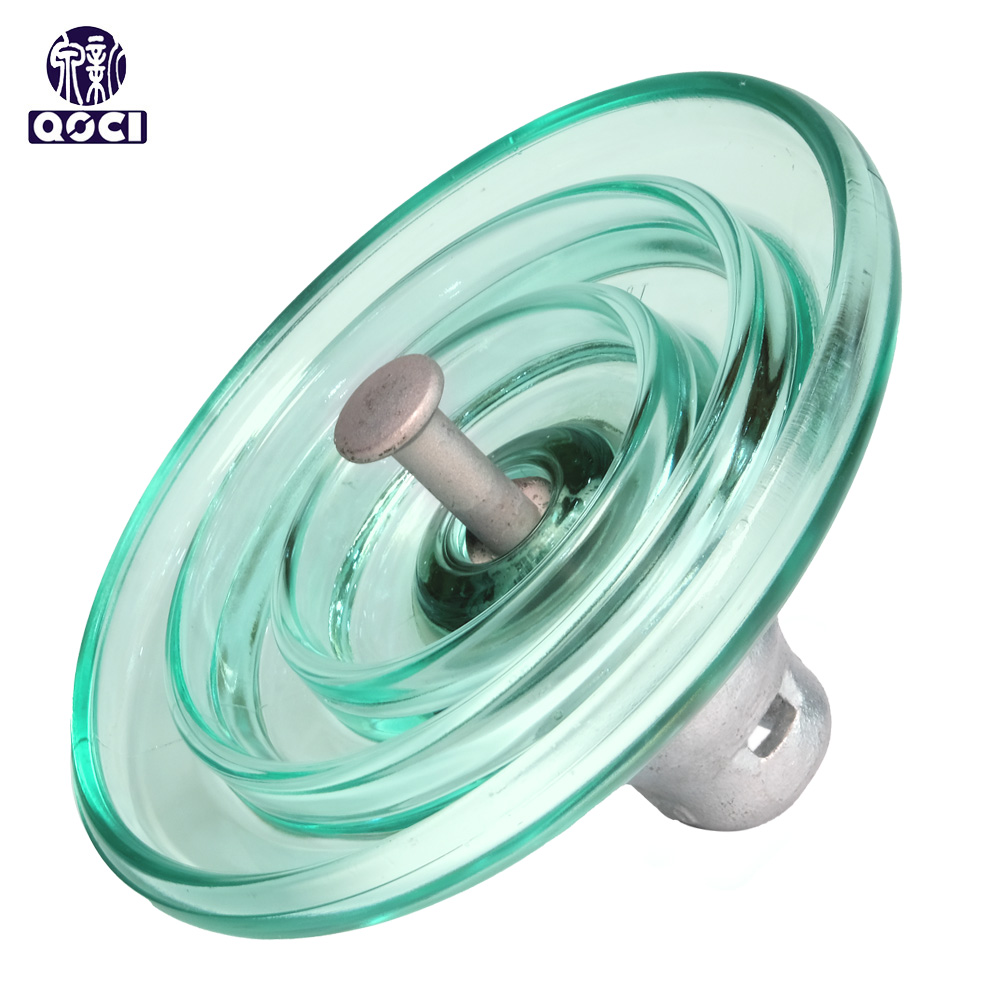
PS120B 112V, a 120kN suspension glass insulator with 320mm creepage distance. Load class alone does not define disc diameter, spacing or creepage.
Acceptance Criteria: Turning Parameters into Verifiable Evidence
Acceptance criteria are the technical verification layer of a suspension glass insulator purchase order. They should be written parameter-family by parameter-family, and each line should name the evidence, not just the requirement. The table below shows how the five families map onto evidence that can be written into a purchase order today.
| Parameter family | What must be verified | Acceptance evidence to write into the order |
|---|---|---|
| Mechanical failing load | Delivered model matches the specified load class (70kN, 120kN, 160kN, 300kN or 420kN) | Model-specific test documentation per lot; 100% pre-shipment test as agreed with the supplier |
| Dimensional and coupling | Nominal disc diameter, nominal spacing and socket coupling size against the approved drawing | Dimensional check record; coupling fit confirmation against insulator string fittings, tension clamps and arcing ring |
| Electrical withstand | Dry lightning impulse, wet power frequency and power frequency puncture values for the selected model | Type-test evidence referenced in the order; lot-level electrical test records |
| Creepage and pollution | Creepage distance and shed profile matched to the declared pollution exposure | Drawing and specification confirmation; shed profile verification; zinc sleeve confirmation where corrosion protection is specified |
| Material and finish | Tempered glass body, hot-dip galvanized cast iron cap, hot-dip galvanized forged steel pin | Material and coating documentation; visual inspection of each unit, supported by zero-value self-breaking which allows 100% visual defect detection without live-line testing |
| Delivery and recourse | Quantity, marking, packing and non-conformity handling | 100% pre-shipment test; third-party inspection (SGS) where required; replacement for defective products |
Two structural points matter here. First, acceptance is not a price negotiation: it is the point at which the selection parameters are either proven or not, and it should not be reopened to fit a budget or a schedule. Second, the supplier's quality routine and the buyer's acceptance clause should overlap deliberately rather than accidentally. Jiangxi QOCI Electric Co., Ltd. runs 100% pre-shipment testing and accepts third-party inspection (SGS), which means the buyer's clause can be written against an existing process rather than invented for the contract.
Step-by-Step: Building a Selection and Acceptance Package
The sequence below keeps the engineering decision and the verification decision in the right order. Each step produces an artefact that the next step depends on.
Step 1 — Write the service scenario before the product
Record the exposure: outdoor overhead operation, pollution severity, coastal salt fog, corrosion severity, temperature range of -40°C to 60°C, and the project type, whether transmission line construction, grid upgrade or rural electrification. Declare the function explicitly as conductor isolation, mechanical load bearing and leakage current blocking under continuous 24/7 passive dielectric isolation. This paragraph becomes the justification for every later parameter choice.
Step 2 — Convert the scenario into the five parameter families
Work from mechanical to dimensional to electrical to creepage to material. Each scenario statement should generate a required value: salt fog generates a creepage and profile requirement, corrosion generates a zinc sleeve requirement, and expected conductor load generates a load class. If a scenario statement generates no value, it is decoration and should be removed from the document.
Step 3 — Select the model, not the family
Match the parameter set to a named model. Anti-pollution types such as U70BLP, U100BLP, U160BLP, U210BP and U420BP serve long-creepage duty; two-wing and double-shed types such as U100BLD and U120BD extend creepage and improve self-cleaning; aerodynamic types such as U100BA address wind and vibration behaviour. Naming a model closes the dimensional and coupling question that a load class alone leaves open.
Step 4 — Write one acceptance line per parameter family
Use the mapping table above. Every acceptance line should name three things: the parameter, the evidence type, and the party responsible for producing it. A line that names only the parameter is a wish; a line that names the evidence is enforceable.
Step 5 — Separate purchase terms from acceptance criteria
Purchase terms define quantity, delivery schedule, packing and commercial remedies. Acceptance criteria define how conformity is proven. Keeping them in separate clauses prevents the common drift in which an acceptance failure is converted into a discount or a schedule concession instead of a conformity decision.
Step 6 — Pre-shipment verification
Schedule 100% pre-shipment testing, and where the project owner requires it, book third-party inspection (SGS) in advance. Production lead time for the reference range is 15–35 days, so third-party inspection should be planned into that window rather than added after notification of readiness.
Step 7 — Incoming inspection and traceability
On arrival, verify model identity and marking against the order, confirm documentation matches the lot, and complete visual inspection of each unit. Retain the records alongside the string assembly drawings so that later maintenance decisions reference the same parameter set used at purchase.
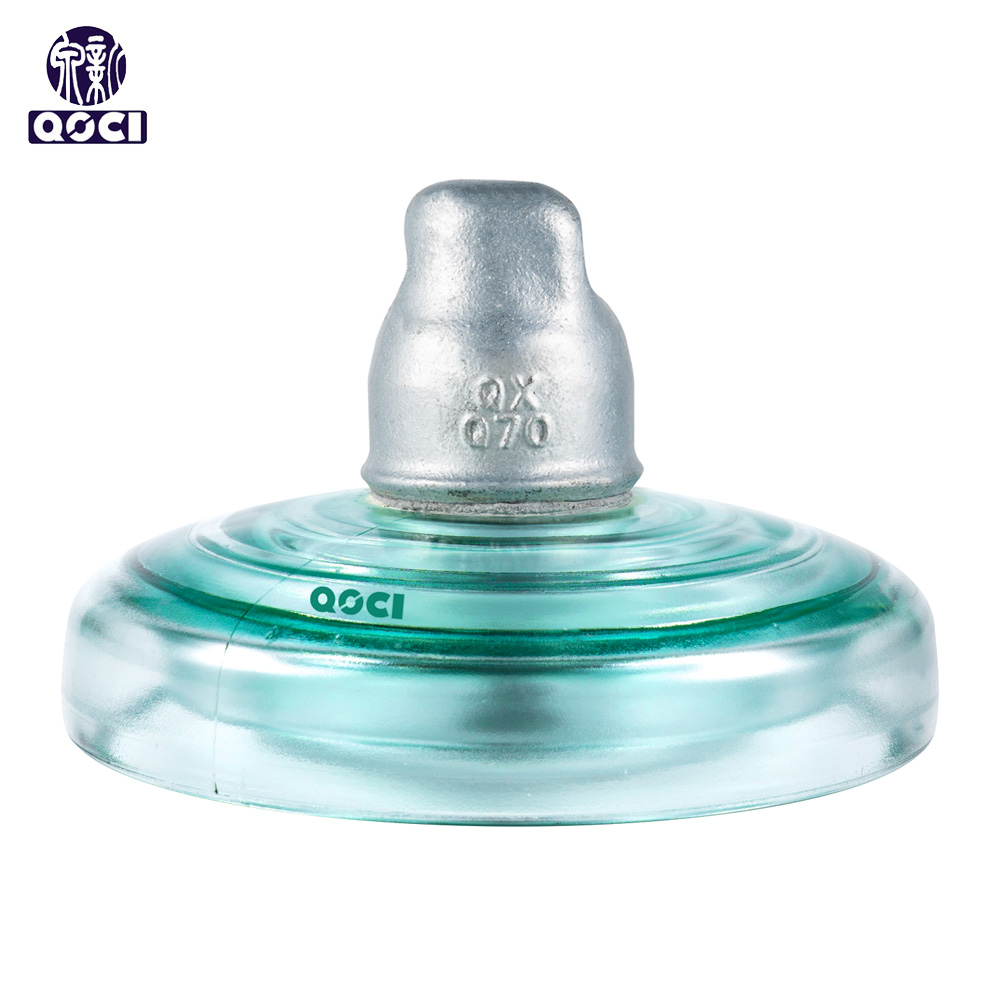
U70BLP anti-fog suspension glass insulator: the 70kN class combined with 550mm creepage, an example of why load class and pollution class must be specified together.
Use Cases: Scenario-to-Parameter Combinations
Selection parameters become easier to defend when they are tied to a concrete line condition. The combinations below are drawn from verified product data and project experience.
Heavy-duty backbone and long crossings
Where string strength governs, the 300kN and 420kN classes come into scope. The PS300V 112V is a 300kN unit with 320mm disc diameter, 195mm spacing, 485mm creepage and a 24 socket coupling, positioned for ultra-high-voltage backbone transmission and crossing tower applications. The U420BP adds 380mm disc diameter, 205mm spacing, 620mm creepage and a 28 coupling, and is specified with a zinc-sleeved pin for heavy-duty applications where corrosion protection matters as much as tensile capacity.
Industrial pollution and coastal salt fog
In saline or industrial environments, creepage and profile decide the outcome more than load class. Anti-pollution variants are designed with increased creepage distances to limit flashover in these conditions, and the U160BLP pairs a 160kN class with 450mm creepage, a 20 socket coupling and a zinc-sleeved pin for combined pollution and corrosion duty. Where corrosion severity is high, the zinc sleeve slows rusting and extends string service life.
Dusty inland routes
On desert and dust-exposed lines, self-cleaning behaviour reduces maintenance. Double-shed designs such as the U100BLD add sheds that provide self-cleaning action and creepage extension, pairing a 100kN class with 450mm creepage and a 280mm disc diameter.
Wind-exposed and vibration-prone sections
Aerodynamic profiles such as the U100BA pair a 100kN class with a 380mm disc diameter and 365mm creepage, and are selected where wind-driven behaviour and vibration exposure shape the string. Long-creepage variants that upgrade the pin fitting, such as the U70BLP, are also used where improved mechanical engagement between pin and cement adds security in vibration-prone sections.
Grid upgrade and rural electrification
Distribution-level and upgrade projects generally sit in the 70kN and 120kN classes, where the PS70E 112W, PS120B 112V and U70B-family units cover the majority of string positions. Specifying these by model and creepage, rather than by load class alone, prevents an anti-pollution position from being filled with a standard-profile unit.
Field evidence from multi-region supply
A supply programme covering Uzbekistan (80,000 pcs), Ukraine (70,000 pcs) and Iraq (50,000 pcs), totalling 200,000 pcs over two to three-year windows ending in 2026, was delivered for UHV and EHV overhead transmission line insulation in desert and industrial pollution zones. Reported outcomes include zero line-tripping incidents, a 70% reduction in maintenance cost, 100% visual defect detection without live-line testing, and an 85% reduction in pollution flashover incidents compared with a porcelain baseline. Extreme temperature tolerance in the -40°C to +55°C band was verified in the Uzbekistan and Iraq installations.
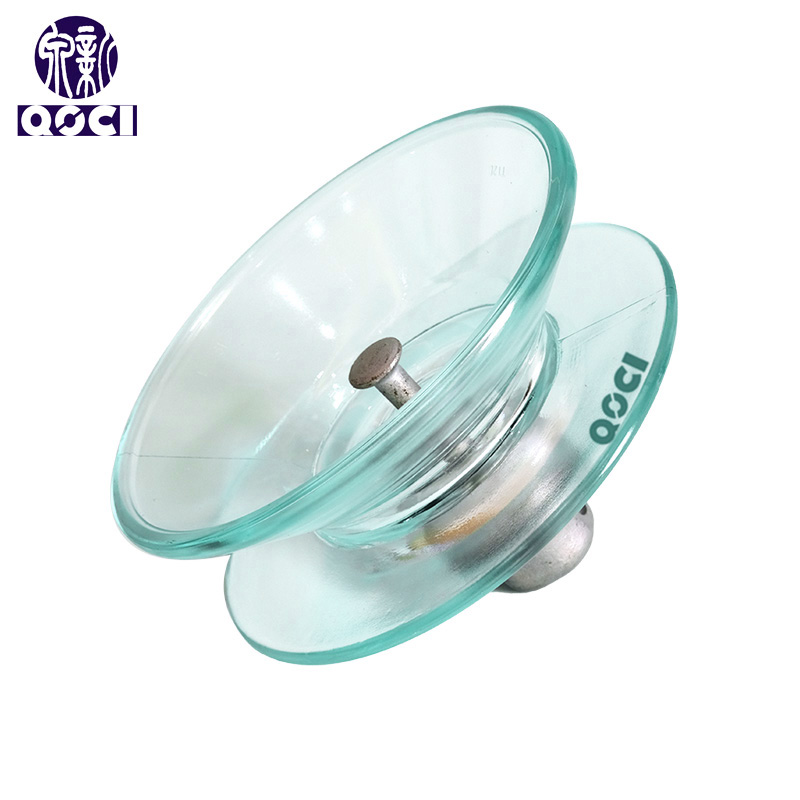
U100BD double-shed suspension glass insulator. The additional sheds support self-cleaning and extend creepage on contaminated routes.
Comparison Table: Reference Parameters for Six Suspension Glass Insulator Models
The values below are reference parameters for model selection. They are not a substitute for the approved drawing, and they should be copied into the purchase order only after the scenario step is complete.
| Model | Mechanical failing load | Nominal disc diameter | Nominal spacing | Creepage distance | Socket coupling | Dry lightning impulse withstand | Wet power frequency withstand | Power frequency puncture |
|---|---|---|---|---|---|---|---|---|
| PS70E 112W | 70kN | 255mm | 146mm | 320mm | 16 | 100kV | 40kV | 130kV |
| PS120B 112V | 120kN | 255mm | 146mm | 320mm | 16 | 100kV | 40kV | 130kV |
| U100BLD | 100kN | 280mm | 146mm | 450mm | 16 | 120kV | 45kV | 110kV |
| U160BLP | 160kN | 280mm | 170mm | 450mm | 20 | 125kV | 50kV | 130kV |
| PS300V 112V | 300kN | 320mm | 195mm | 485mm | 24 | 130kV | 50kV | 130kV |
| U420BP | 420kN | 380mm | 205mm | 620mm | 28 | 140kV | 55kV | 140kV |
Reading the table across rows shows why model-level specification is necessary. PS70E 112W and PS120B 112V share disc diameter, spacing and creepage, and differ only in load class, while U160BLP and U420BP differ in every dimensional and electrical column. An acceptance clause written against a load class rather than a model cannot distinguish these cases.
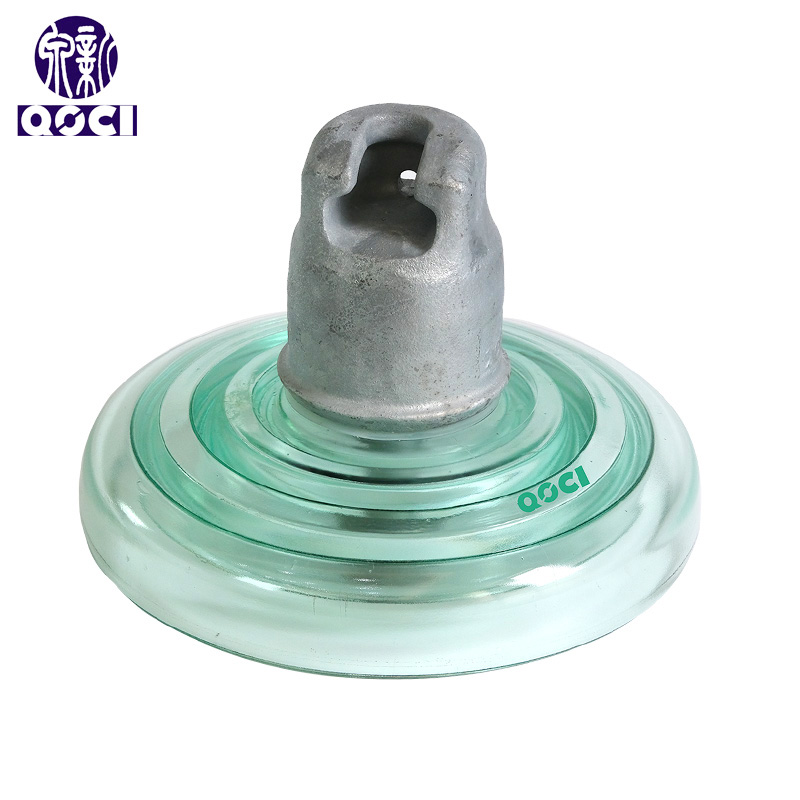
U420B, a 420kN unit reserved for heavy-duty and UHV crossing applications where mechanical capacity and creepage are both critical.
Frequently Asked Questions
Which standard should the acceptance criteria reference for suspension glass insulator units?
For AC systems, IEC 60305:2021 specifies the mechanical and electrical characteristics of suspension glass insulator units, so it is the natural baseline reference in a purchase order. The standard defines characteristics, not project conditions: pollution severity, corrosion exposure, temperature range and sampling plans still have to be written by the buyer. A practical acceptance clause therefore cites the standard as the baseline and adds the project-specific creepage, profile, zinc sleeve and documentation requirements on top of it.
Can one supplier cover both standard-profile and anti-pollution suspension glass insulator types?
Coverage should be confirmed against a named model range rather than a general claim. Jiangxi QOCI Electric Co., Ltd. is a China-based manufacturer of glass and porcelain insulators established in December 2002 in Luxi Industrial Park, Pingxiang City, Jiangxi Province, and a participating unit of the Insulator Standard Committee. Its suspension glass insulator range spans 70kN to 420kN, including long-creepage anti-pollution types, double-shed and two-wing types, and aerodynamic types, with OEM and ODM production, customization of voltage and logo, and a monthly capacity of 750,000 units. For a project with mixed standard and anti-pollution positions, that range allows a single specification and a single acceptance package.
Do stricter acceptance criteria increase the cost of an order?
Acceptance criteria change the verification workload rather than the technical requirement. A package that includes 100% pre-shipment testing and third-party inspection consumes production and inspection time inside the 15–35 day lead-time window, so it has to be planned rather than added at the end. The more important point is structural: acceptance should remain a verification layer and not become a price lever. If a parameter must change to meet a budget, it should be changed in the selection stage and documented, not quietly removed from the acceptance clause.
What should a sample approval record contain for a suspension glass insulator?
A sample approval record should identify the exact model, and then restate the parameter families that the sample represents: mechanical failing load, nominal disc diameter and spacing, socket coupling, creepage distance, dry lightning impulse withstand, wet power frequency withstand and power frequency puncture voltage. It should add the material and finish declaration (tempered glass body, hot-dip galvanized cast iron cap, hot-dip galvanized forged steel pin) and a visual inspection note. Minimum order quantity for the reference range is 50 units, so a sample can be approved against a small quantity before a full lot is released.
How long does production and acceptance take once the specification is agreed?
Lead time for the reference suspension glass insulator range is 15–35 days depending on model mix and testing scope. Third-party inspection (SGS) and 100% pre-shipment testing should be booked inside that window, and after-sales support is provided through online technical support with replacement for defective products. Buyers who want to close the parameter set before issuing a tender can request a sample and a quotation, or download the QOCI glass insulator catalogue, which lists the model range against which acceptance criteria can be written.
Conclusion: Write the Verification Before the Requirement
A suspension glass insulator specification is a two-layer document. The first layer converts a route condition into five parameter families: mechanical failing load, dimensional and coupling, electrical withstand, creepage and pollution, and material and finish. The second layer converts each family into evidence that can be inspected, tested or documented at the point of delivery.
IEC 60305:2021 supplies the shared baseline, but the project conditions, profile requirements and acceptance evidence remain the buyer's work. Written in that order, acceptance stops being a negotiation at the end of a delivery and becomes the technical verification of a decision taken at the start. That is the practical difference between a specification that survives shipping and one that does not.
Next Step
Build the parameter set with the manufacturer before the tender is issued. Jiangxi QOCI Electric Co., Ltd. supplies suspension glass insulators from 70kN to 420kN, including anti-pollution, double-shed and aerodynamic types, with 100% pre-shipment testing and third-party inspection on request.
Email: admin@qocielectric.com · Website: www.quanxinelectric.com · Catalogue: QOCI Catalogue – Glass Insulators (PDF)
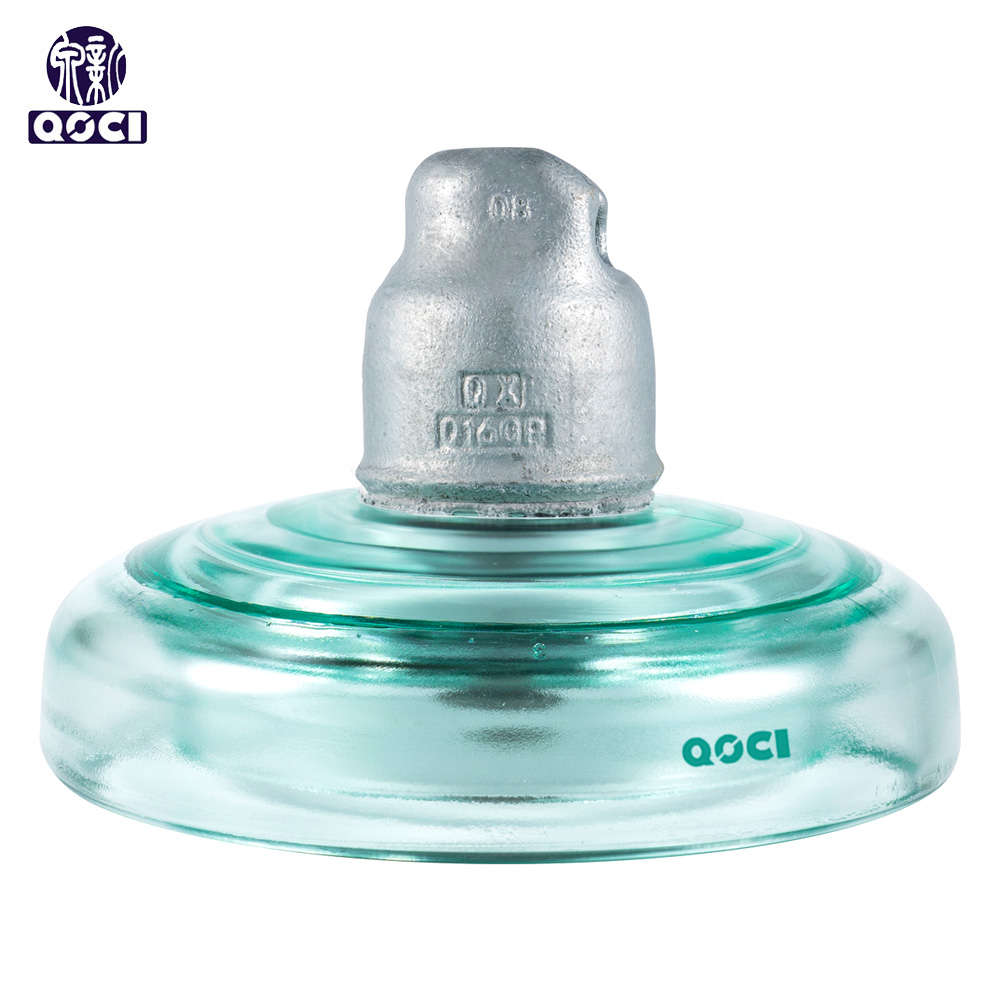
Sample approval and pre-shipment inspection use the same parameter families as the purchase order.
Have Questions or Need More Details?
Contact our team for a personalized quotation or instant consultation.
Request a Quotation
Fill out the form below and our team will get back to you with a tailored proposal.
WhatsApp Direct Chat
Prefer to chat in real-time? Message us on WhatsApp for instant assistance & quick answers.
- Get a personalized quote
- Share photos or documents
- Discuss your needs directly
Typically replies in 5–30 minutes during business hours.