
Stylus Pen Application Guide: iPad & Android Deployment in Education and Field-Service Projects
Stylus Pen Application Guide: iPad & Android Deployment in Education and Field-Service Projects
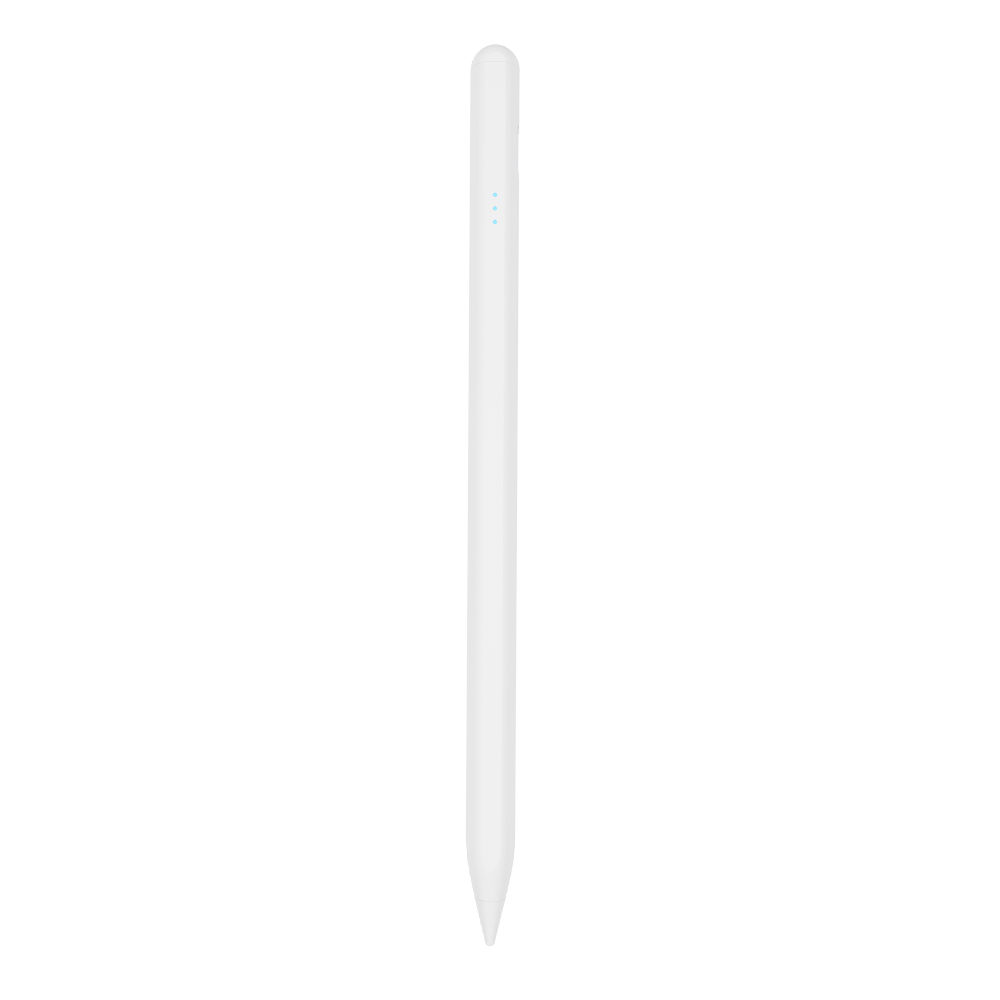
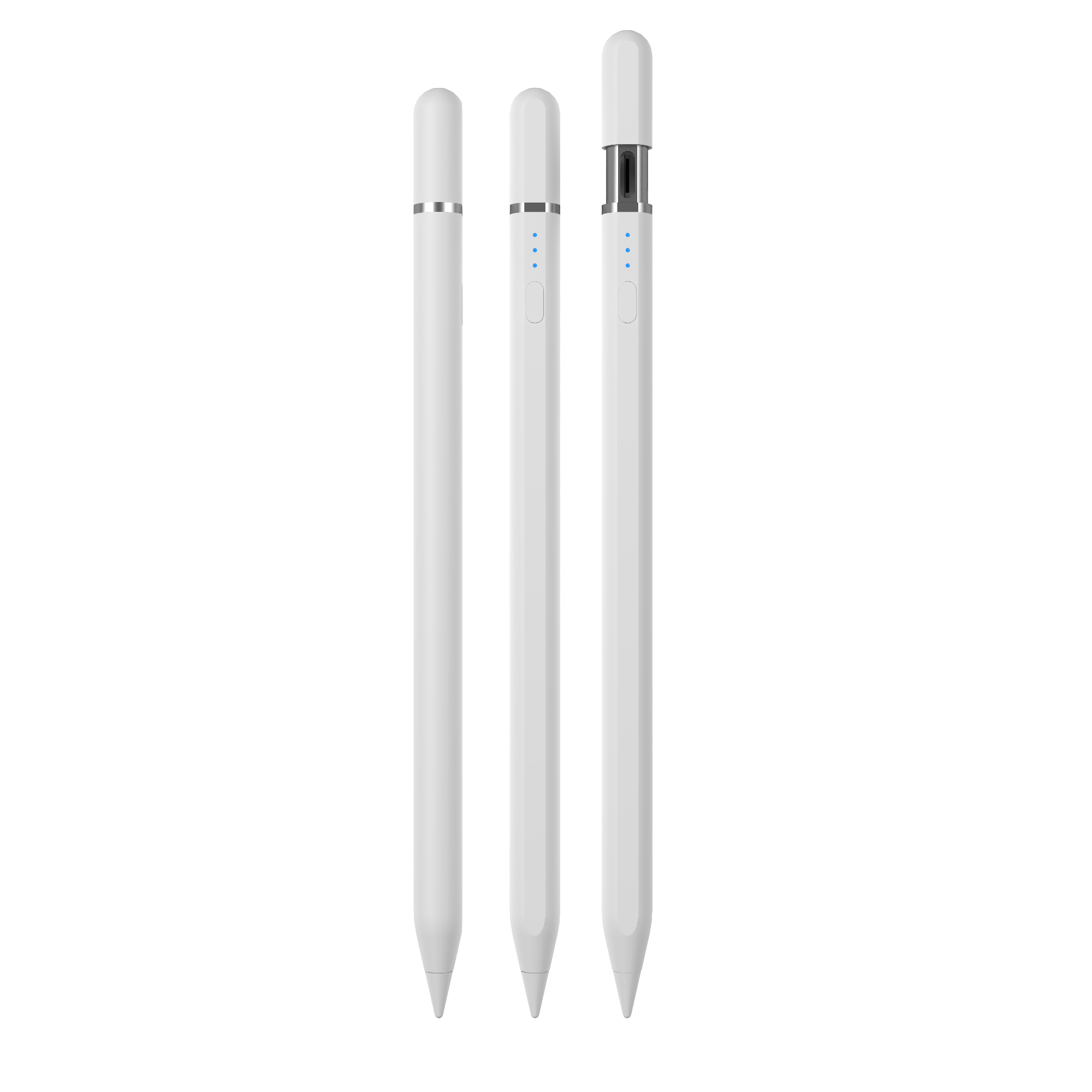
R3-P universal stylus pen for iPad and Android tablets — the mixed-fleet option referenced in this deployment guide.
Short answer: in a tablet rollout, the stylus should be selected by task and by device fleet, not by brand. A passive capacitive stylus is sufficient for navigation, kiosk check-in and simple touch input. An active stylus is required wherever people actually write, annotate or sign — note-taking on iPads in classrooms, or work orders and photo marking on Android tablets in the field. Active pens add palm rejection, tilt response and no-delay writing behaviour at the cost of a battery, a charging routine and a higher unit price.
This application guide is written for the people who plan and execute those rollouts: school IT coordinators, deployment and asset managers, field-service operations leads, OEM buyers and distributor product managers. It maps passive versus active stylus choices to real scenarios — note-taking, form completion and annotation — then explains what iPad and Android compatibility actually requires, and how third-party styluses differ from Apple Pencil without overstating specifications.
Most of the product specifications cited here come from Jiayao stylus. Jiayao is the stylus pen brand of Dongguan Jiayao Intelligent Technology Co.,Ltd, an active stylus pen manufacturer founded in 2021 and based in Humen Town, Dongguan, Guangdong, China. The company develops and produces active and passive capacitive stylus pens for iPad and mainstream tablets, runs OEM and ODM projects from a 2,700 m² facility with roughly 100 employees, and exports about 40% of its output to the EU and the USA.
Why Stylus Deployments Fail Before the Hardware Arrives
In education and field-service projects, stylus problems rarely start with a defective pen. They start with planning gaps that only become visible after a few hundred units are already in users' hands.
- Task mismatch. A passive pen issued to a handwriting cohort cannot deliver palm rejection or tilt sensing, and shows latency and offset when writing. Users rest their palm on the glass, produce stray marks, and conclude that "the tablet does not work".
- Fleet mismatch. iPad-compatible models are specified for iPad (after 2018) running iPadOS 12.2 and above. Those pens are not an Android solution. An Android universal model or a cross-platform model is required wherever the fleet mixes platforms.
- Charging logistics ignored. Active pens need power. Depending on the model, automatic power-off kicks in after 10 minutes or 60 minutes of inactivity, and standby time is listed as one year at full power. Without a defined charging routine, technicians and students lose writing time.
- Attachment and storage assumptions. Side magnetic adsorption is listed on the models below, but for A21B and W13-A the magnetic attachment is stated for 11-inch and 12.9-inch iPads only. A 10.2-inch iPad fleet will not hold the pen the way the project assumed.
- Commercial terms planned too late. MOQ, inspection and payment terms shape the rollout calendar. Jiayao's standard terms are an MOQ of 500 units, EXW/FOB delivery, pre-shipment inspection as the acceptance criterion, and 30/70 payment terms.
Industry Background: A Market Splitting Between Proprietary and Open Standards
The stylus category is large and still expanding, but published market figures should be read with care because definitions differ. IMARC Group valued the global stylus pen market at USD 19.45 billion in 2025, while a narrower definition of active digital pens — reported by Fortune Business Insights — puts the 2025 figure at USD 3.36 billion. Both numbers are published; the gap is a definition gap, not a contradiction of demand.
Within that market, active stylus technology is projected to grow at a CAGR of 9.8% from 2026 to 2034 according to Dataintelo. Two structural forces matter for deployment planners:
- Open standards are maturing. The USI 2.0 specification, released in 2022 by the Universal Stylus Initiative with support from Google, Intel and Lenovo, is the primary cross-platform standard for active styluses. For multi-vendor Android fleets, it is the reason stylus standardisation is now a realistic procurement goal rather than a single-brand decision.
- User expectations are set by premium pens. Samsung S-Pen and other high-end professional active pens feature up to 4,096 levels of pressure sensitivity, according to Samsung's own documentation. That is the experience benchmark users bring to a rollout — even though most third-party styluses used for notes and forms are built around palm rejection and tilt sensing rather than full pressure sensitivity.
On the trade side, stylus pens are typically classified under HS Code 8471.60.90 as "Automatic Data Processing Input Units", which is the code importers and customs brokers generally work with when a rollout crosses a border. Production itself remains concentrated with specialist manufacturers; Jiayao, for example, produces an annual output of 3,000,000 units with a monthly capacity of 500,000 units and a four-engineer R&D team covering PCBA design, battery welding, final assembly and testing.
Matching Stylus Type to the Deployment Task
Passive capacitive stylus pens: when they are enough
A passive stylus contains no electronics and no battery. It replaces a finger with a conductive tip. There is nothing to charge, nothing to pair and nothing to fail on a charging schedule — which makes it attractive for shared devices in corridors, libraries and reception areas.
The limits are equally clear. A passive stylus does not support palm rejection or tilt sensing, and writing shows latency and offset. In practice: choose passive when the dominant action is tapping, scrolling, signing a simple acknowledgement or checking in, and when the device is shared by many users with no charging infrastructure.
Active stylus pens: what the battery buys you
An active stylus carries its own power and electronics. It supports precise writing and palm rejection, so users can rest a hand on the screen while writing — the single feature that determines whether a digital note-taking programme succeeds or collapses into complaints.
Jiayao's iPad-compatible active models are specified with no offset and no delay, interchangeable nibs, side adsorption and a metal or ABS body. Several models add tilt sensing, which allows shading width to change with pen angle, and one model adds a shortcut button for quick actions. The trade-off is operational: batteries, charging methods and warranty handling become part of the project plan.
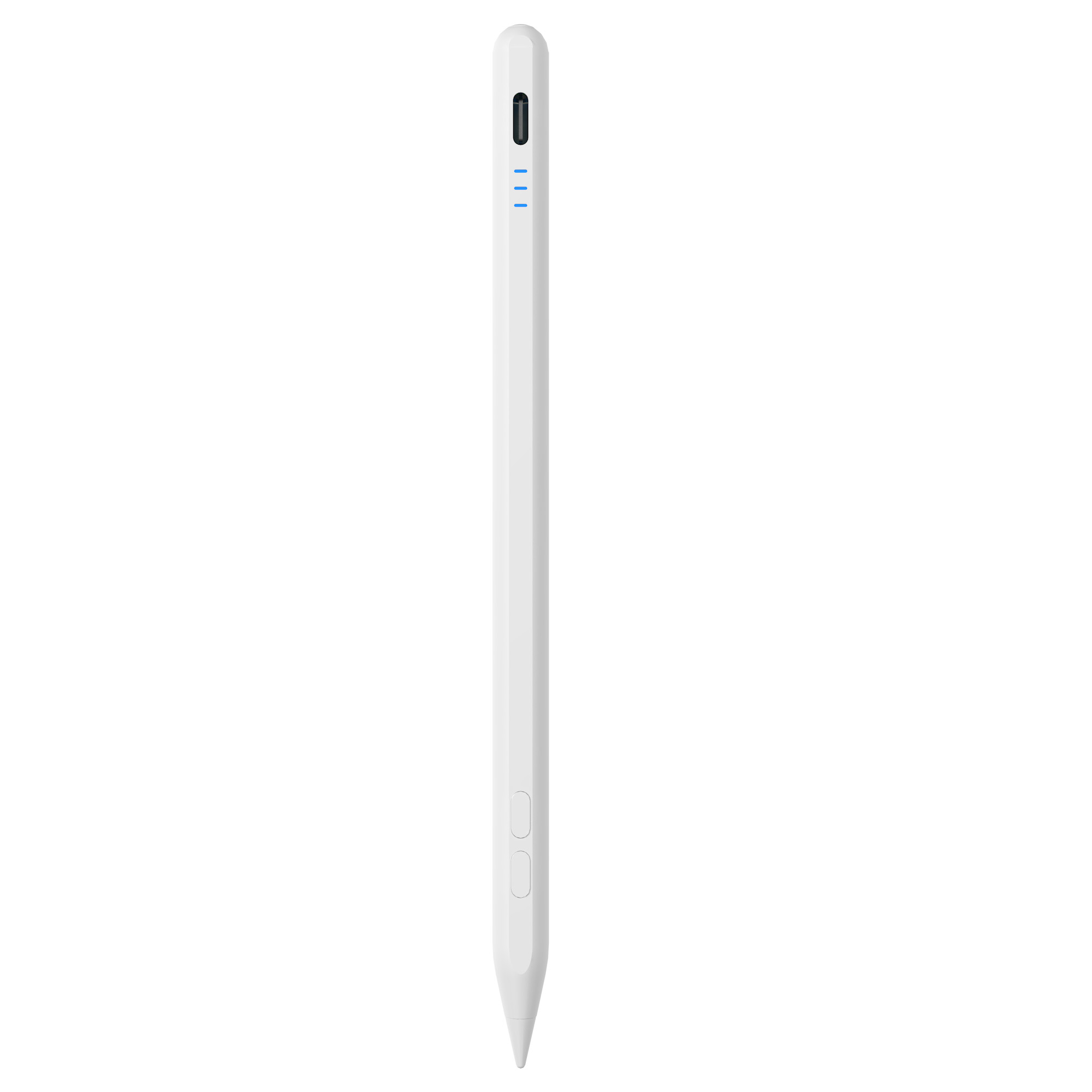
A30-B: an iPad stylus with shortcut button and 25-minute Type-C charging — useful where field teams trigger repeated actions inside forms.
Power, charging and daily operating logistics
Across the Jiayao range used in this guide, charging methods and times vary meaningfully, and they should be matched to the working day rather than to a specification sheet:
- Fast charging: W13-A charges by charging cable in 15 minutes, and A21B and A30-B charge through a Type-C port in 25 minutes.
- Standard charging: A7-H-L and A8-RH charge in 30 minutes, E3-A and R3-P in 40 minutes, S3-GC in 55 minutes, and W3-H in 70 minutes.
- Wireless charging: W12-A and W13-A support magnetic charging in addition to Type-C. W12-A is listed at 60 minutes for wireless charging; W13-A at 60 minutes for adsorption wireless charging.
- Working time per charge: from 9–10 hours (R3-P, W12-A, W13-A) up to 16 hours (A7-H-L) and 44 hours (E3-A).
- Idle behaviour: automatic power-off after 10 minutes is standard on most models; E3-A and R3-P are listed at 60 minutes.
For a school day or an eight-hour shift, the practical question is not peak battery life but whether a pen can be topped up inside an existing break. A 25-minute charge window matters more to a technician than a large battery that needs a full hour on a cable.
iPad and Android compatibility inside one project
Compatibility is where deployment projects most often drift. Jiayao's iPad-oriented models are specified as compatible with iPad (after 2018) running iPadOS 12.2 and above — that group includes A7-H-L, A8-RH, A21B, A30-B, W3-H, W12-A, W13-A and E3-A.
Android coverage is handled by two different designs. S3-GC is an Android universal stylus pen built for Android tablets and phones, while R3-P is described as a universal stylus for iPad and Android tablets. Where a programme must issue one pen across both platforms — for example a district with iPads in classrooms and Android tablets in the maintenance workshop — a cross-platform model reduces SKU count, spare-pen stock and training effort.
One caveat applies to every mixed program: a stylus designed around a specific platform's active layer will deliver its full feature set there, and a passive or universal pen may only deliver basic writing elsewhere. Compatibility should be verified on the actual device models in the fleet during sampling, not assumed from a product name.
iPad Stylus Pen vs Apple Pencil: What a Fleet Actually Gives Up
Buyers comparing a third-party iPad stylus pen with Apple Pencil usually ask the wrong question. The relevant question is which functions the project actually uses.
According to Jiayao's own comparison of its stylus against Apple Pencil, the shared capabilities are precise writing, palm rejection and the pause-doodle function. The stated difference is pressure sensing: Apple Pencil provides it, while the Jiayao stylus offers tilt sensing instead. Apple Pencil is also considerably more expensive.
That maps directly onto deployment roles. For artists and professional illustration work that depends on pressure-driven line weight, Apple Pencil remains the appropriate choice. For note-taking, form completion, signature capture and annotation — which is what education and field-service rollouts overwhelmingly consist of — a third-party active stylus with palm rejection and tilt sensing covers the required workflow at a lower unit cost, leaving budget for charging stations, spare nibs and replacement stock.
Decision rule: if the task list contains the words "note-taking", "form", "signature" or "annotation", budget for an active stylus with palm rejection. If it contains "navigate", "select" or "check in", a passive stylus is sufficient and eliminates the charging programme entirely.
Step-by-Step: Planning a Stylus Rollout
The following sequence works for a 200-unit pilot as well as a multi-year programme, and it keeps every decision traceable to a task rather than a preference.
- Map tasks to stylus functions. List the five most frequent actions per user group. Writing and annotation require palm rejection; tilt matters where users shade, highlight or sketch; a shortcut button matters where users repeat the same action inside an app.
- Inventory the device fleet by platform and OS baseline. Count iPads and Android tablets separately, and confirm that iPads meet the after-2018 / iPadOS 12.2 baseline used by iPad-compatible styluses. Flag any 10.2-inch or smaller iPads if magnetic attachment is part of the plan, since A21B and W13-A magnetic attachment is specified for 11-inch and 12.9-inch iPads.
- Decide the power model. Choose charging method (Type-C, magnetic wireless or both), charging time and expected working hours per shift. Then define who is responsible for charging and how spare pens are rotated.
- Sample and validate on real devices. Jiayao supplies samples in as little as three weeks, and supports sample-based customization covering logo, packaging, function and Bluetooth name. Test writing feel, palm rejection, tilt response and magnetic attachment on the actual tablet models in the fleet before committing to volume.
- Plan consumables and branding. All the models listed here use interchangeable nibs, so include a nib replenishment quantity in the first order. OEM and ODM customization is available across function, colour, shape, tip, logo and packaging.
- Lock commercial terms and production. Confirm MOQ (500 units), lead time (20–35 days), delivery terms (EXW/FOB), acceptance criteria (pre-shipment inspection) and payment terms (30/70). Standard orders ship in 20 days from a stock position, and every unit goes through 100% functional, tactile and visual inspection before dispatch.
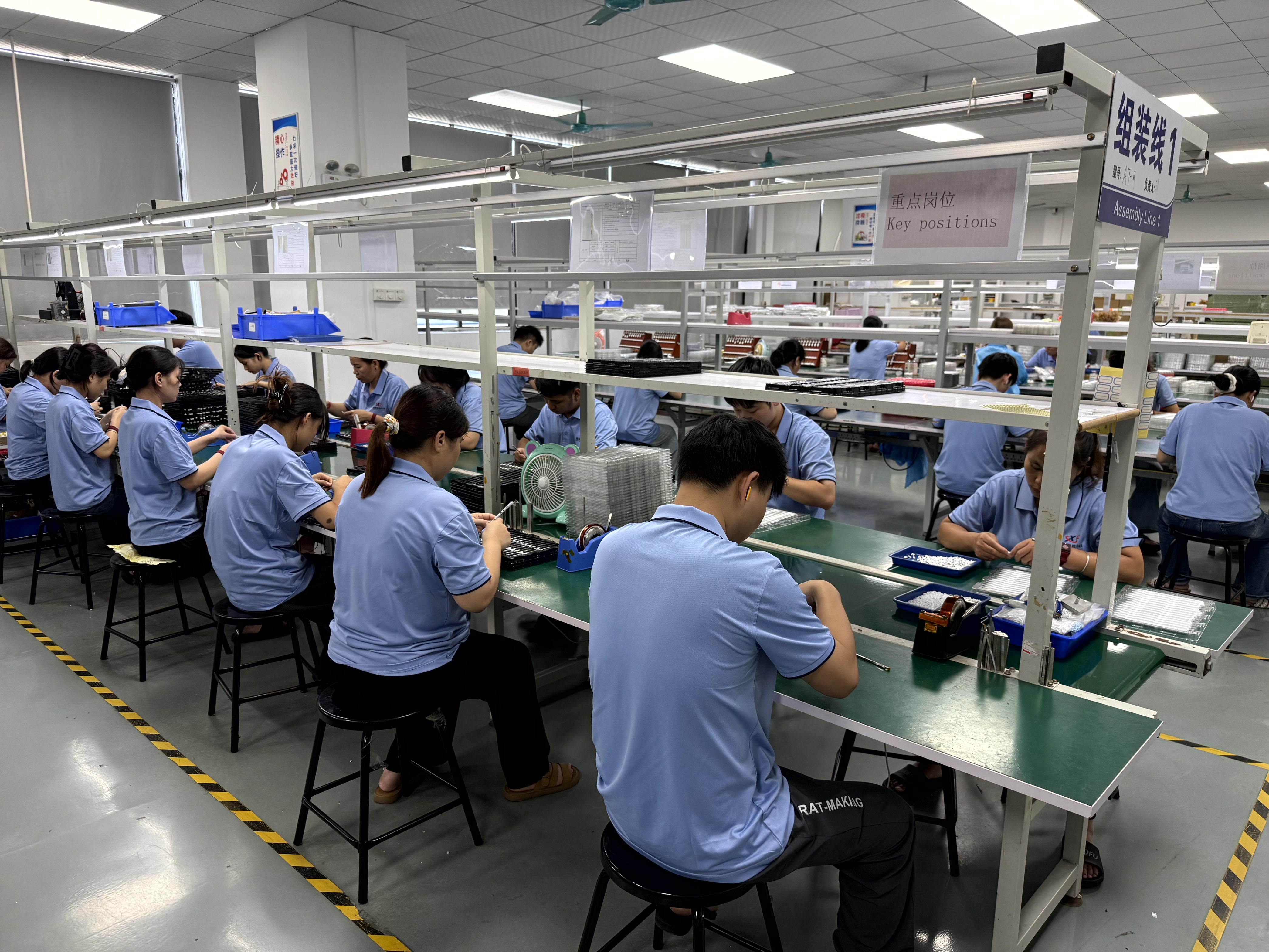
Jiayao's Dongguan workshop: PCBA design, battery welding, assembly and 100% inspection under one roof.
Deployment Use Cases in Practice
Education: 1:1 iPad programmes and classroom annotation
Classroom deployments live or die on handwriting quality. Students rest their palms on the glass, teachers annotate worksheets during lessons, and both groups need the pen to be ready at the start of a period.
A7-H-L is positioned as an iPad pencil for education use: 30-minute Type-C charging, 16 hours of working time after a full charge, palm rejection, tilt sensing, side adsorption, a 12–13 g aluminium alloy body and automatic power-off after 10 minutes of inactivity. Its combination of a long working window and a short charge time fits the rhythm of a school day better than a larger battery that takes over an hour to refill.
For a Vietnamese iPad accessory ODM programme, Jiayao supplied 3,000 units of E3-A over a two-year engagement for precise writing on iPad and retail sale through e-commerce platforms. The recorded result was a smooth, precise handwriting experience, improved tablet operation efficiency and positive user feedback — a relevant reference for distributors building their own education bundle.
Field service: forms, signatures and photo annotation
Field technicians do three things with a stylus: complete structured forms, capture signatures and mark up photographs of the asset they are servicing. All three depend on palm rejection, because the hand is inevitably resting on a tablet held in the other arm.
A30-B adds a shortcut button to the standard iPad feature set — palm rejection, tilt sensing, side adsorption, interchangeable nibs — with 25-minute Type-C charging and 11 hours of working time. Where a technician's day is long and charging opportunities are unpredictable, E3-A is listed at 44 hours of working time from a 230 mAh cell with a 40-minute charge, and its 60-minute idle power-off is more forgiving than a 10-minute timeout during a long job walk-through.
Mixed-fleet programmes
Depots and service hubs frequently run both platforms. A Turkish tablet accessory ODM ordered 5,000 units over two years for precise writing across iPad, iPhone, Android tablet and Android phone; the related product in that programme was W12-A. Where a single SKU must cover both platforms in a classroom-plus-workshop setting, R3-P is the model Jiayao lists as a universal stylus for iPad and Android tablets, with Type-C charging in 40 minutes, 9–10 hours of working time and magnetic side adsorption.
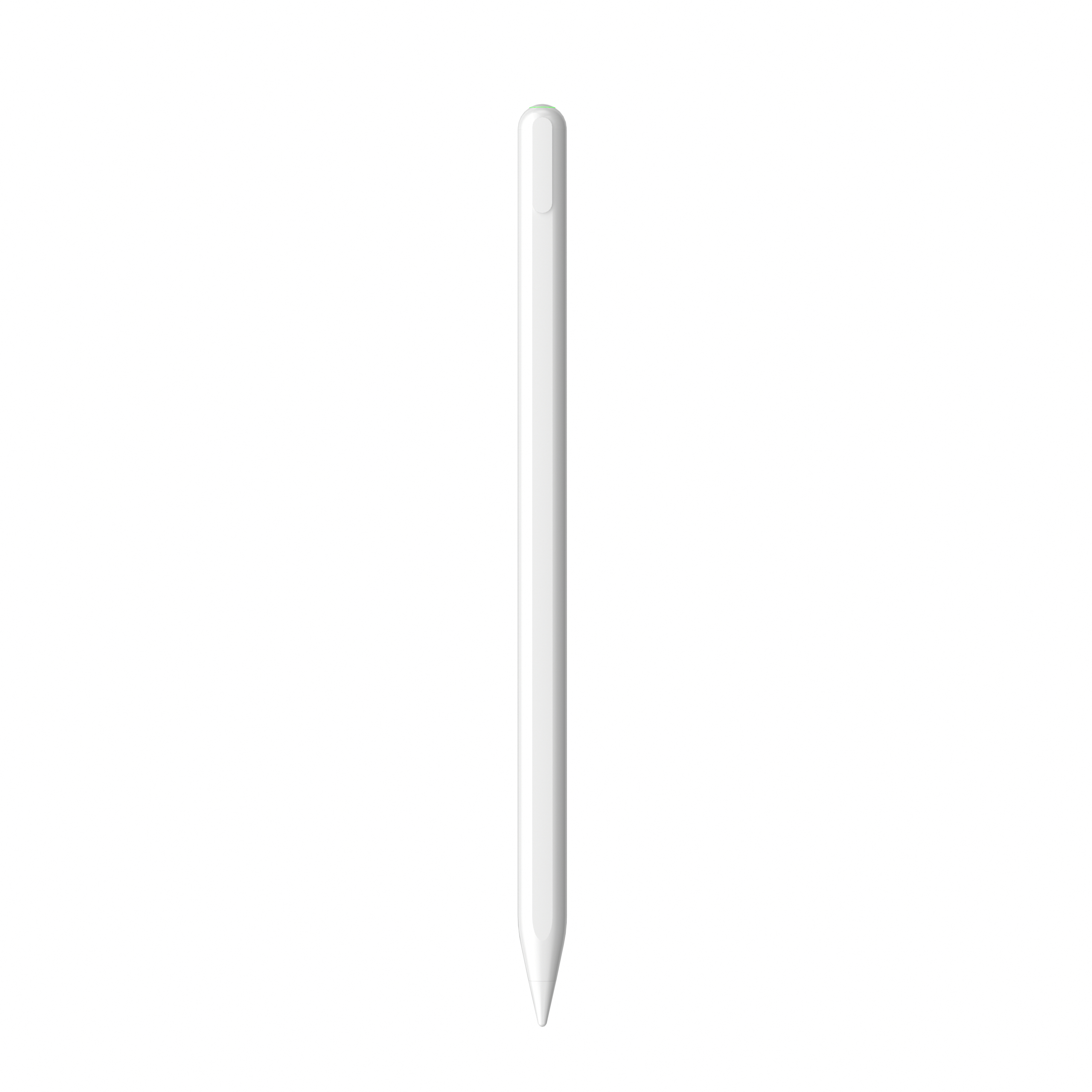
E3-A: the model selected for an iPad accessory ODM programme covering precise writing and retail bundles.
Model Comparison for Education and Field-Service Projects
The table below lists only specifications published by Jiayao. Where a feature is not listed for a model, it is shown as "not listed" rather than assumed.
| Model | Pen type | Charging | Working time | Palm rejection / tilt | Deployment note |
|---|---|---|---|---|---|
| R3-P | Universal stylus for iPad and Android tablets | Type-C, 40 min | 9–10 hours | Not listed | Mixed iPad + Android fleets; magnetic side adsorption |
| S3-GC | Android universal stylus pen | Type-C, 55 min | 10 hours | Not listed | Android-only tablet and phone fleets |
| A7-H-L | iPad pencil (education) | Type-C, 30 min | 16 hours | Palm rejection: yes / tilt: yes | Longest working window among listed iPad models with tilt |
| A8-RH | Tilt sensing stylus pen | Type-C, 30 min | 12 hours | Palm rejection: yes / tilt: yes | Annotation and sketching emphasis |
| A30-B | iPad stylus with shortcut button | Type-C, 25 min | 11 hours | Palm rejection: yes / tilt: yes | Field service with repeated in-app actions |
| E3-A | Palm rejection iPad stylus | Type-C, 40 min | 44 hours | Palm rejection: yes (per model type) / tilt: not listed | High-shift, low-charging-opportunity deployments |
| W13-A | iPad active stylus pen | Charging cable 15 min; magnetic wireless 60 min | 9–10 hours | Not listed | Wireless charging desks; magnetic attach for 11-inch and 12.9-inch iPads |
All listed models use interchangeable nibs and side adsorption, and are supplied in white. Specifications as published by Jiayao; features not listed are not claimed.
Frequently Asked Questions
Are Jiayao stylus pens covered by EU and quality certifications?
Yes. Jiayao holds a Certificate of Conformity for ROHS with certificate number BAC260390119R, issued on 9 March 2026 by Shenzhen Bory Technology Service Co.,Ltd for the EU market. The certificate references the IEC 62321 test series (including IEC 62321-1:2013, IEC 62321-3-1:2013, IEC 62321-5:2013 and IEC 62321-8:2017) and lists the scope W15C, A18 and A19. The company also holds a Quality Management System Certificate for ISO 9001 with certificate number 24626Q00066R001, issued on 16 January 2026 by HIC Certification Service, valid until 15 January 2029, covering the Research and Development of Capacitive Stylus under GB/T-19001-2016 / ISO 9001:2015. In production, every stylus passes 100% functional, tactile and visual inspection.
Can a China-based active stylus OEM manufacturer support a branded tablet rollout?
At Jiayao, yes. Dongguan Jiayao Intelligent Technology Co.,Ltd operates as an OEM/ODM stylus pen manufacturer with customization across function, colour, shape, tip, logo and packaging, including Bluetooth name changes based on customer samples. In-house capability covers PCBA design, battery welding, final assembly and quality testing, supported by a four-engineer R&D team. Capacity is stated at 500,000 units per month and 3,000,000 units per year, from a 2,700 m² facility with about 100 employees; roughly 40% of output is exported to the EU and the USA. Minimum order quantity is 500 units, so a branded pilot programme can start well below container scale.
Is a third-party active stylus a practical budget alternative to Apple Pencil?
For note-taking and form-based workflows, generally yes. Jiayao states that its stylus shares precise writing, palm rejection and the pause-doodle function with Apple Pencil, and that the main difference is that the third-party stylus uses tilt sensing instead of pressure sensing. Apple Pencil remains considerably more expensive. The practical recommendation is straightforward: if the work requires precise drawing with pressure-driven line weight, Apple Pencil is the appropriate tool; if the requirement is note-taking, annotation, signature capture and drawing for everyday school or field-service use, a third-party active stylus meets the requirement and reduces the per-unit cost of the rollout.
How can we validate a stylus before committing to a full rollout?
Through sampling and pre-shipment inspection. Jiayao provides samples in as little as three weeks, and sample-based customization is available for logo, packaging, function and Bluetooth name, so the pilot units match the intended production configuration. The agreed acceptance criterion for orders is pre-shipment inspection, which allows the deployment team to check writing behaviour, palm rejection, tilt response, charging and magnetic attachment on representative tablets before the balance of the shipment is released.
What lead times and order terms should a deployment project expect?
Jiayao's standard terms are an MOQ of 500 units, a production lead time of 20–35 days, EXW/FOB delivery terms and 30/70 payment terms, with pre-shipment inspection as the acceptance criterion. Large quantities of regular models are held in stock to handle small, scattered and urgent orders of standard products, and standard orders are shipped in 20 days. After delivery, the stylus pens carry a one-year warranty with one-to-one replacement. To move from evaluation to a confirmed sample or quotation, contact Lea Tan at LeaTan@dg-xcdz.com or via WhatsApp at +86 166 2065 1838, and review the full model range in the Jiayao Intelligent Stylus Pen Catalogue.
Conclusion: Choose the Pen the Task Demands
Education and field-service deployments do not need the most advanced stylus on the market; they need the stylus that matches the workload, the platform and the charging reality of the people using it. Passive styluses remain the correct answer where the job is navigation and check-in. Active styluses with palm rejection are non-negotiable where people write, sign or annotate — and tilt sensing covers shading and highlighting without paying for pressure sensitivity the workflow never uses.
Once the task list and the device inventory are clear, the rest of the project is execution: validate samples on real tablets, define the charging routine, plan nibs and spares, then lock MOQ, inspection and lead time. A manufacturer that runs PCBA design, battery welding, assembly and 100% inspection in one facility — and that supports OEM and ODM customization from a 500-unit MOQ — removes most of the risk between a pilot and a full rollout.
Next Step for Your Rollout
If you are specifying stylus pens for a school programme, a field-service fleet or a distributor bundle, start with a sample in your target configuration. Jiayao stylus supports samples in as little as three weeks, OEM/ODM customization and a 500-unit MOQ.
Download the full catalogue: Jiayao Intelligent Stylus Pen Catalogue (PDF)
Website: jiayaostylus.com
Email: LeaTan@dg-xcdz.com | Tel / WhatsApp: +86 166 2065 1838
Dongguan Jiayao Intelligent Technology Co.,Ltd — Room 9th Floor, No.12, Lane 11, Wenming Road, Nanzha, Humen Town, Dongguan, Guangdong, China.