
Stylus Pen Partnership FAQ: Purchase Terms, Acceptance Criteria and Long-Term Support
Short answer: a stylus pen partnership is decided by four documents, not by a price list — a model-level specification that doubles as acceptance criteria, a signed sample approval record, an order-and-lead-time clause, and a written after-sales route. Buyers who settle those four before the first purchase order spend far less time resolving disputes during the second one.
This partnership FAQ collects the questions buyers ask most often when they move from comparing stylus pen suppliers to committing to one. It is published by Dongguan Jiayao Intelligent Technology Co., Ltd., the manufacturer behind the Jiayao Stylus brand: a stylus pen factory based in Dongguan, Guangdong, China, founded in 2021, running a 2,700 m² facility with around 100 employees and an annual output of 3,000,000 units, with roughly 40% of output exported to the EU and the USA.
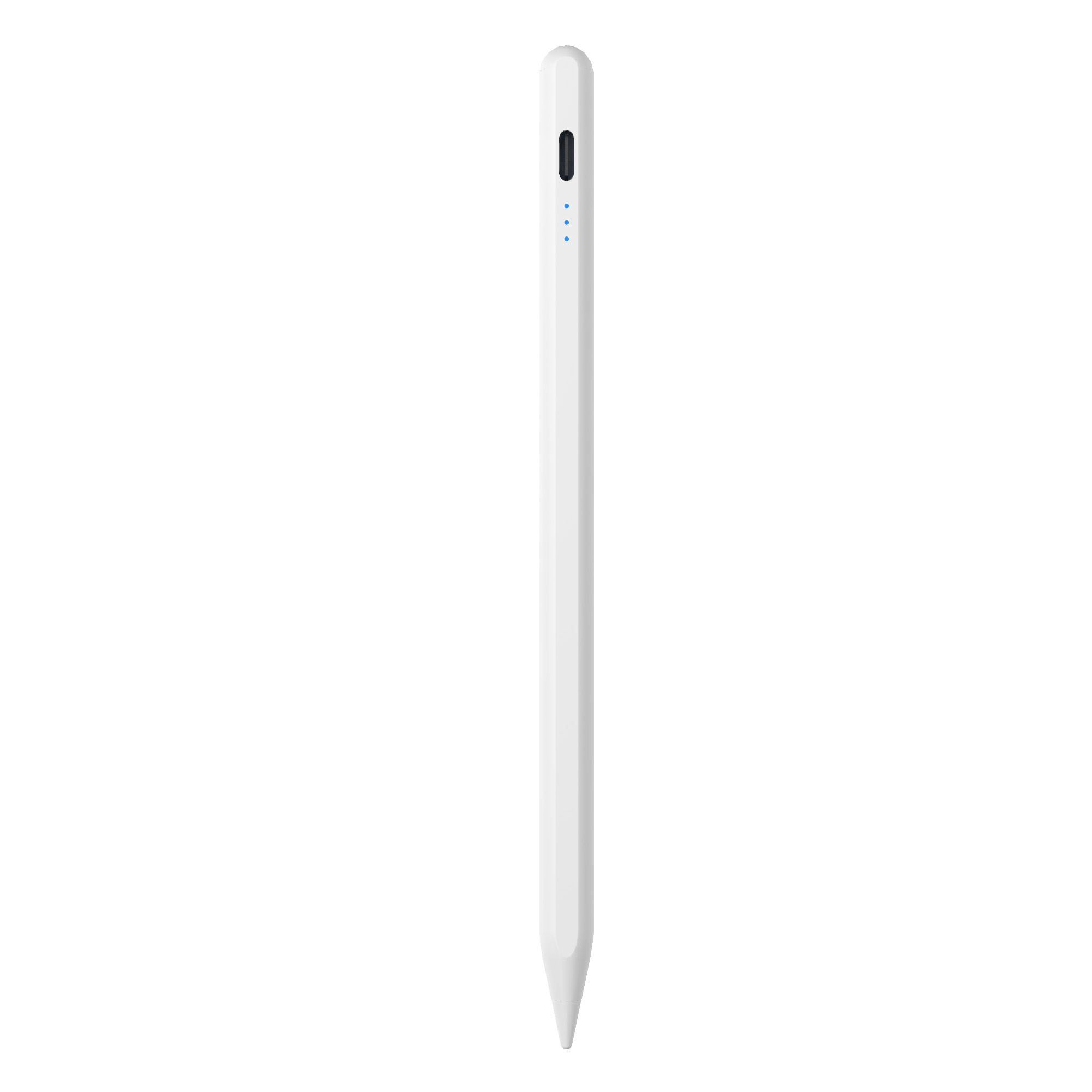
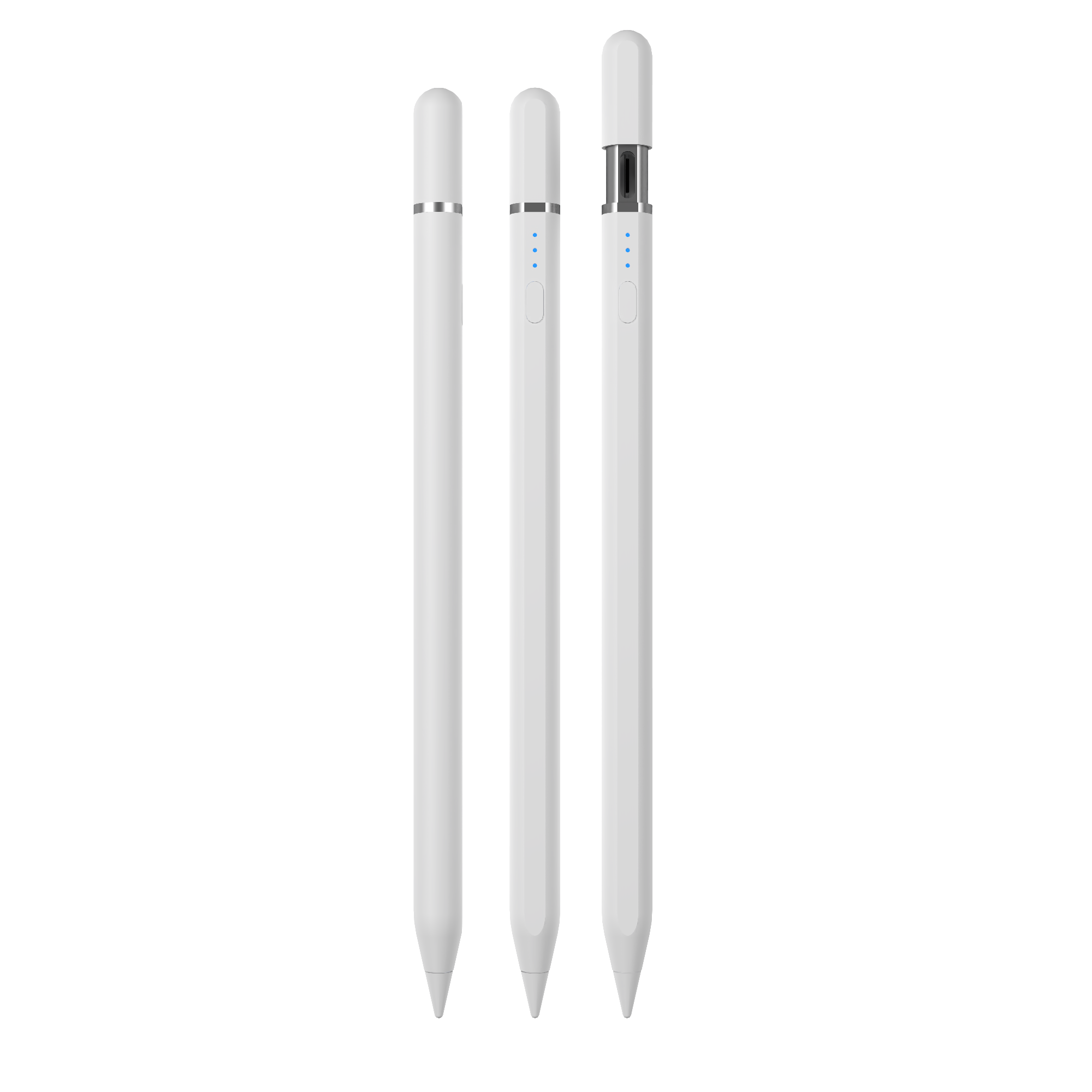
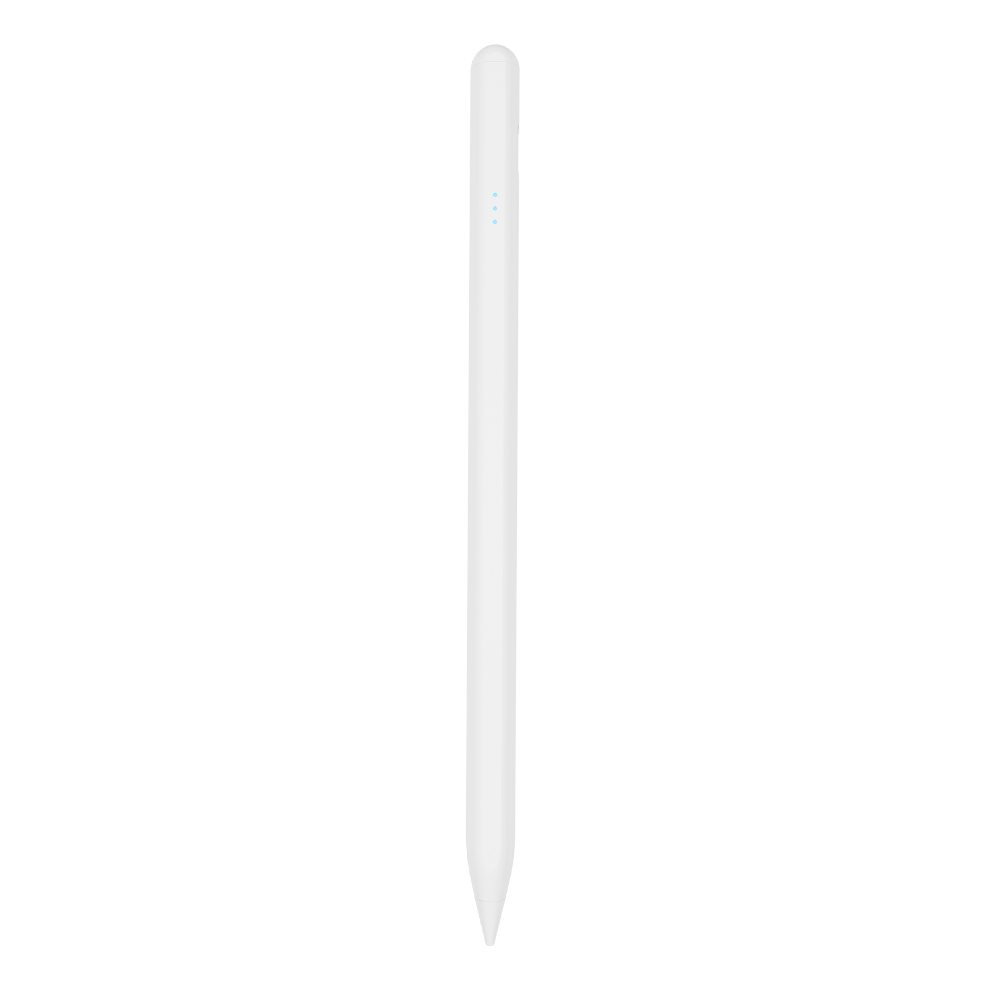
Three product units are used as reference points throughout: the iPad Stylus Pen (models W13-A, W12-A, E3-A), the Stylus Pen (models W3-H, A30-B, A21B, A8-RH, A7-H-L, S3-GC) and the iPad and Android Stylus Pen (model R3-P). Each answers a different purchasing question, and each makes a different clause in the agreement matter.
Problem Definition: Where Stylus Pen Partnerships Actually Break
A stylus pen is a low-unit-price accessory attached to a high-expectation device. That combination produces a specific and repeatable failure pattern.
- The specification is read as marketing copy. Charging time, working time, battery capacity, side adsorption, nib interchangeability and pen body material are published as selling points, then never converted into pass/fail criteria. When a shipment lands, neither side holds a written definition of what conforming means.
- The sample is approved by feel. A sample that writes well is not a sample approval. Without a record of what was tested — compatibility, charging behaviour, writing feel, nib condition, packaging — the approved sample cannot function as a reference later.
- After-sales expectations are assumed. Long-term support means one thing to a procurement manager and another to a factory floor. Unless the scope is written down, the phrase is decorative.
- Lead time is agreed without a trigger. A duration without a defined start event is not a commitment; it is a hope with a number attached.
None of this is caused by bad faith. It is caused by sequence: commercial terms are usually negotiated first and technical terms last, which is the exact reverse of how risk accumulates over a supply relationship.
Industry Background: What Buyers Are Walking Into
Three structural facts shape stylus pen sourcing as buyers research suppliers in 2026.
The category is large and still expanding. IMARC Group valued the global stylus pen market at USD 19.45 billion in 2025, and Dataintelo projects active stylus technology to grow at a CAGR of 9.8% from 2026 to 2034. Published market sizes differ widely between research houses because stylus pen and digital pen are not consistently defined, so the direction of growth is a more reliable planning input than any single figure.
Technology is split between proprietary and open protocols. The USI 2.0 specification released in 2022 is the primary cross-platform standard for active styluses, supported by Google, Intel and Lenovo. Proprietary ecosystems run in parallel: Samsung S Pen and high-end professional active pens support up to 4,096 levels of pressure sensitivity. A third-party supplier therefore has to be explicit about which device families and which system versions a given model supports — and that explicitness belongs in the contract, not in a chat thread.
The product is classified and inspected as an input device. Stylus pens are typically declared under HS code 8471.60.90 as automatic data processing input units, per customs classification references. The classification matters at the border and reinforces the same principle: model-level documentation should travel with the goods.
For a buyer, the practical implication is that supplier differentiation has shifted away from can you make a stylus pen and toward can you state precisely what your stylus pen does, and stand behind that statement when the second order arrives.
Detailed Solution: The Purchase Terms to Fix Before the First Order
1. Define the model, not the category
Stylus Pen is a category label. W13-A, A30-B and R3-P are three different products with different charging architectures and different working times, and the agreement should name the model. The reference units show why. W13-A combines magnetic charging with Type-C and reaches a charge in about 15 minutes by cable. R3-P charges over Type-C in 40 minutes and runs 9–10 hours. E3-A runs up to 44 hours per charge on a 230 mAh battery. Three models, three different sets of buyer expectations, and three different definitions of a conforming unit.
2. Fix the order structure and the MOQ logic
The MOQ question is really a stock and planning question. Jiayao's stated position is flexible MOQs plus a stock of regular models intended to absorb small, scattered and urgent orders of standard products. For a buyer this converts into two clauses worth writing down: which models are treated as standard stock items, and which volumes move an order from stock allocation into a dedicated production run. Without those two lines, flexible MOQ stays a sales phrase rather than an operating rule.
3. Approve a sample against written criteria
Samples are available in as little as 3 weeks. A sample approval should record the model and its language or firmware state, the device compatibility window, measured charging time, measured continuous working time, writing feel with palm rejection engaged where the model states it, nib condition after test writing, colour and packaging. That record is what a future inspection is compared against — nothing else survives a change of staff on either side.
4. Convert the specification into acceptance criteria
Every unit Jiayao produces passes 100% full inspection covering functional, tactile and visual checks. For that to carry contractual weight, the buyer should convert published parameters into pass/fail statements. Worked examples drawn from the reference models:
- Charging: W13-A — about 15 minutes by charging cable, about 60 minutes by magnetic wireless charging on the tablet. A30-B — Type-C port, 25 minutes. S3-GC — Type-C, 55 minutes.
- Continuous working time: A30-B, W3-H and A21B — 11 hours; A8-RH — 12 hours; E3-A — up to 44 hours.
- Battery capacity: 90 mAh on W13-A, W12-A and W3-H; 130 mAh on R3-P; 165 mAh on A30-B, A21B, A8-RH, A7-H-L and S3-GC; 230 mAh on E3-A.
- Power management: automatic power-off after 10 minutes of inactivity on most models (60 minutes on E3-A and R3-P), with one year of standby time.
- Body and weight: white plastic or ABS on W3-H, W12-A and W13-A; aluminum alloy on A30-B, A21B, A8-RH, A7-H-L, R3-P and S3-GC; net weight 12–14 g for most models and 15 ± 1 g for E3-A.
- Writing behaviour: interchangeable nibs, no offset and no delay across the range; palm rejection and tilt bold on the models that state them (A30-B, A21B, A8-RH, A7-H-L).
Written this way, acceptance becomes a checklist instead of an opinion, and a defect conversation becomes a comparison against a document.
5. Fix the customization boundary
OEM and ODM projects are supported, including customization based on samples such as logo, packaging and Bluetooth name. Core processes — PCBA design, battery welding, final assembly and quality testing — are handled in-house, with a four-engineer R&D team. The clause to fix is the boundary between appearance-level customization (logo, colour, packaging, Bluetooth name) and function-level change (switch behaviour, charging configuration, shortcut button). Function-level changes should always be validated through a fresh sample cycle before they enter a production order.
6. Fix delivery, stock and lead time
Standard orders ship in 20 days. The clause should distinguish three cases: standard model from stock, standard model produced to order, and customized model. It should also state what starts the clock — purchase order signature, deposit, artwork approval or sample sign-off — because a duration without a trigger is not a commitment, and most delivery disputes are trigger disputes rather than production disputes.
7. Scope long-term support without inventing numbers
Jiayao describes a one-stop processing service and after-sales support, and inspects every unit before it ships. Those are the verifiable statements, and they are deliberately qualitative. What a buyer should add is scope: who receives a defect claim, what evidence is required (video, photo, batch or model code), what the route is for a single faulty unit versus a faulty batch, and which channel is used for escalation. Defining the route costs nothing and removes most of the ambiguity that later gets read as unwillingness.
Step-by-Step Breakdown: A Pre-Order Sequence
- Name the model and its compatibility window. For example iPad models from 2018 running system version 12.2 and above for W13-A and W12-A, or iPad plus Android tablets for R3-P.
- Fix the configuration. Charging method, battery capacity, pen body material, switch type, nib type and colour.
- Request the sample. Allow up to 3 weeks and test it against the criteria defined in step 4, not against impressions.
- Write the acceptance criteria. Convert published parameters into measurable pass/fail items for charging, working time, writing behaviour and appearance.
- Define the customization boundary. Separate appearance from function, and require a new sample for any function-level change.
- Agree the order structure. Stock models, produced-to-order models, MOQ logic and packaging format.
- Set the lead-time trigger. 20 days for standard orders, with a defined start event and a stated rule for partial shipments.
- Name the after-sales route. Escalation contact, evidence format and replacement logic, written into the order documents rather than agreed verbally.
Use Cases: Three Buyer Profiles, Three Different Priorities
Education and institutional projects. Endurance and batch consistency dominate here. E3-A runs up to 44 hours on a 230 mAh battery, which reduces charging overhead across a class set; A7-H-L, listed for the education industry, delivers 16 hours per charge; A8-RH adds tilt sensing for annotation-heavy work. Because every unit passes functional, tactile and visual inspection, the acceptance criterion becomes a property of the batch rather than a property of the sample.
Private-label retail brands. Appearance-level customization, flexible MOQs and a 20-day standard-order cycle are the operative terms. W12-A and W13-A, both with white plastic bodies and magnetic plus Type-C charging, carry retail presentation; A30-B adds a shortcut button and an aluminum housing for a step-up SKU, with 11 hours of working time and 25-minute Type-C charging.
Distributors with a mixed device base. Covering both iPad and Android is a compatibility problem before it is a price problem. R3-P is explicitly a universal stylus for iPad and Android tablets, S3-GC covers Android tablets, and the iPad Stylus Pen unit covers iPad devices from 2018 onward. For this buyer the clause worth the most is the per-model compatibility statement, not the discount tier.
Comparison Table: Reference Models and the Terms They Affect
Table 1 — reference stylus pen models, using published specification data for each model.
| Model | Product unit | Charging method | Charging time | Working time | Battery | Body material | Net weight |
|---|---|---|---|---|---|---|---|
| W13-A | iPad Stylus Pen | Magnetic + Type-C | ~15 min cable / ~60 min wireless | 9–10 h | 90 mAh | Aluminum alloy + ABS | 12–13 g |
| W12-A | iPad Stylus Pen | Magnetic + Type-C | 25 min Type-C / 60 min wireless | 9–10 h | 90 mAh | ABS | 12–13 g |
| A30-B | Stylus Pen | Type-C | 25 min | 11 h | 165 mAh | Aluminum alloy | 12–14 g |
| A8-RH | Stylus Pen | Type-C | 30 min | 12 h | 165 mAh | Aluminum alloy | 12–13 g |
| E3-A | iPad Stylus Pen | Type-C | 40 min | 44 h | 230 mAh | Aluminum alloy + ABS | 15 ± 1 g |
| R3-P | iPad and Android Stylus Pen | Type-C | 40 min | 9–10 h | 130 mAh | Aluminum alloy | 13 ± 1 g |
| S3-GC | Stylus Pen | Type-C | 55 min | 10 h | 165 mAh | Aluminum alloy | 13 ± 1 g |
Table 2 — terms to settle, and the reference point each one should be measured against.
| Term | What to write down | Reference point |
|---|---|---|
| Model and compatibility | Exact model code, supported device families, minimum system version | W13-A and W12-A: iPad from 2018, system 12.2 and above; R3-P: iPad and Android tablets |
| Specification as acceptance criteria | Measurable pass/fail items for charging, working time, writing behaviour, appearance | Published parameters per model (Table 1) |
| Inspection | Who inspects, what is inspected, what evidence is retained | 100% full inspection: functional, tactile, visual |
| Sampling | Sample quantity, approval record, validity of the approval | Samples in as little as 3 weeks |
| MOQ and stock | Which models are stock items, which volumes trigger a production run | Flexible MOQs; stock of regular models for small, scattered and urgent orders |
| Customization | Appearance-level versus function-level scope, re-sampling rule | OEM/ODM; logo, packaging and Bluetooth name; in-house PCBA design, battery welding, assembly and testing |
| Lead time | Trigger event and duration, by order type | Standard orders shipped in 20 days |
| After-sales | Named contact, evidence format, replacement logic | One-stop processing service and after-sales support |
Frequently Asked Questions
Which compliance documents should be fixed before a stylus pen order ships?
Fix the document set in writing, per destination market and per model, before production — not at the loading dock. A stylus pen combines a lithium battery, a charging circuit, a housing in plastic or aluminum alloy, and in some models a Bluetooth function, so the applicable document set differs by configuration. Buyers shipping into the EU or the USA, Jiayao's two main markets and the destination for roughly 40% of its output, should name the market and the model in the same request, ask which documents apply to that specific model, agree who files what, and attach the list to the purchase order. For customs, stylus pens are typically declared under HS code 8471.60.90 as automatic data processing input units.
What can realistically be customized in an OEM or ODM stylus pen project?
Jiayao supports both OEM and ODM projects, including customization based on samples such as logo, packaging and Bluetooth name. Core manufacturing steps — PCBA design, battery welding, final assembly and quality testing — are handled in-house by a team that includes four R&D engineers, inside a 2,700 m² facility staffed by around 100 people and producing 3,000,000 units per year. In practice, buyers should split the request into appearance-level items (logo, colour, packaging, Bluetooth name) and function-level items (switch behaviour, charging configuration, shortcut button), and expect the second category to require its own sample cycle.
Which specification choices drive the unit cost of a stylus pen?
Cost follows configuration, so configuration should be frozen before a quote is compared. The largest levers visible across the reference models are the charging architecture (Type-C only versus magnetic wireless charging combined with Type-C), battery capacity (90 mAh on W13-A and W12-A, 130 mAh on R3-P, 165 mAh on A30-B and A8-RH, 230 mAh on E3-A), pen body material (ABS on W3-H, W12-A and W13-A versus aluminum alloy on A30-B, A21B, A8-RH, A7-H-L, R3-P and S3-GC), switch type, nib specification, customization depth, packaging format and order volume. Quoting two suppliers against different configurations produces a price difference that means nothing.
How long does a stylus pen sample take, and what should it prove?
Samples can be ready in as little as 3 weeks. A sample should prove five things before it is signed off: that the model matches the stated compatibility window, that measured charging time matches the published figure, that continuous working time holds under realistic use, that writing feel and nib condition are acceptable with palm rejection engaged where the model states it, and that packaging and labelling are correct. The approval record — not the sample itself — becomes the reference for every later inspection.
What lead time and stock support should be written into a long-term agreement?
Standard orders ship in 20 days, and regular models are held in stock so that small, scattered and urgent orders of standard products can be handled without a full production cycle. A long-term agreement should therefore separate standard-from-stock, standard-produced-to-order and customized orders, define the event that starts each clock, and state how stock is reserved for repeat models. To move from terms to a concrete offer, share the model code, target market and configuration through the Jiayao Stylus website, request a sample against your acceptance checklist, or download the catalogue below.
Conclusion: What Long-Term Should Actually Mean
Long-term support is not a promise, it is a structure. In a stylus pen partnership it consists of a named model with a stated compatibility window, a written set of pass/fail criteria derived from the published specification, an approved sample that both sides can point to, an order structure that says which models come from stock and which are produced to order, a 20-day standard lead time with a defined trigger, and an after-sales route with a person and a channel attached to it.
Everything in this FAQ is derived from documents a buyer can request today: the model specification, the sample, the inspection scope and the order terms. That is the practical difference between choosing a stylus pen supplier and starting a stylus pen partnership.
Next step: sample, quote or catalogue
Send the model code, target market and required configuration, and the response can be built around your acceptance criteria instead of a generic overview page.
Download the Jiayao Intelligent Stylus Pen Catalogue (PDF)
Website: jiayaostylus.com | Email: LeaTan@dg-xcdz.com | Tel: +86 166 2065 1838
WhatsApp: +86 166 2065 1838 | Dongguan Jiayao Intelligent Technology Co., Ltd., Humen Town, Dongguan, Guangdong, China
Have Questions or Need More Details?
Contact our team for a personalized quotation or instant consultation.
Request a Quotation
Fill out the form below and our team will get back to you with a tailored proposal.
WhatsApp Direct Chat
Prefer to chat in real-time? Message us on WhatsApp for instant assistance & quick answers.
- Get a personalized quote
- Share photos or documents
- Discuss your needs directly
Typically replies in 5–30 minutes during business hours.