Stylus Pen Supplier Evaluation: From Capability Checks to Delivery Terms
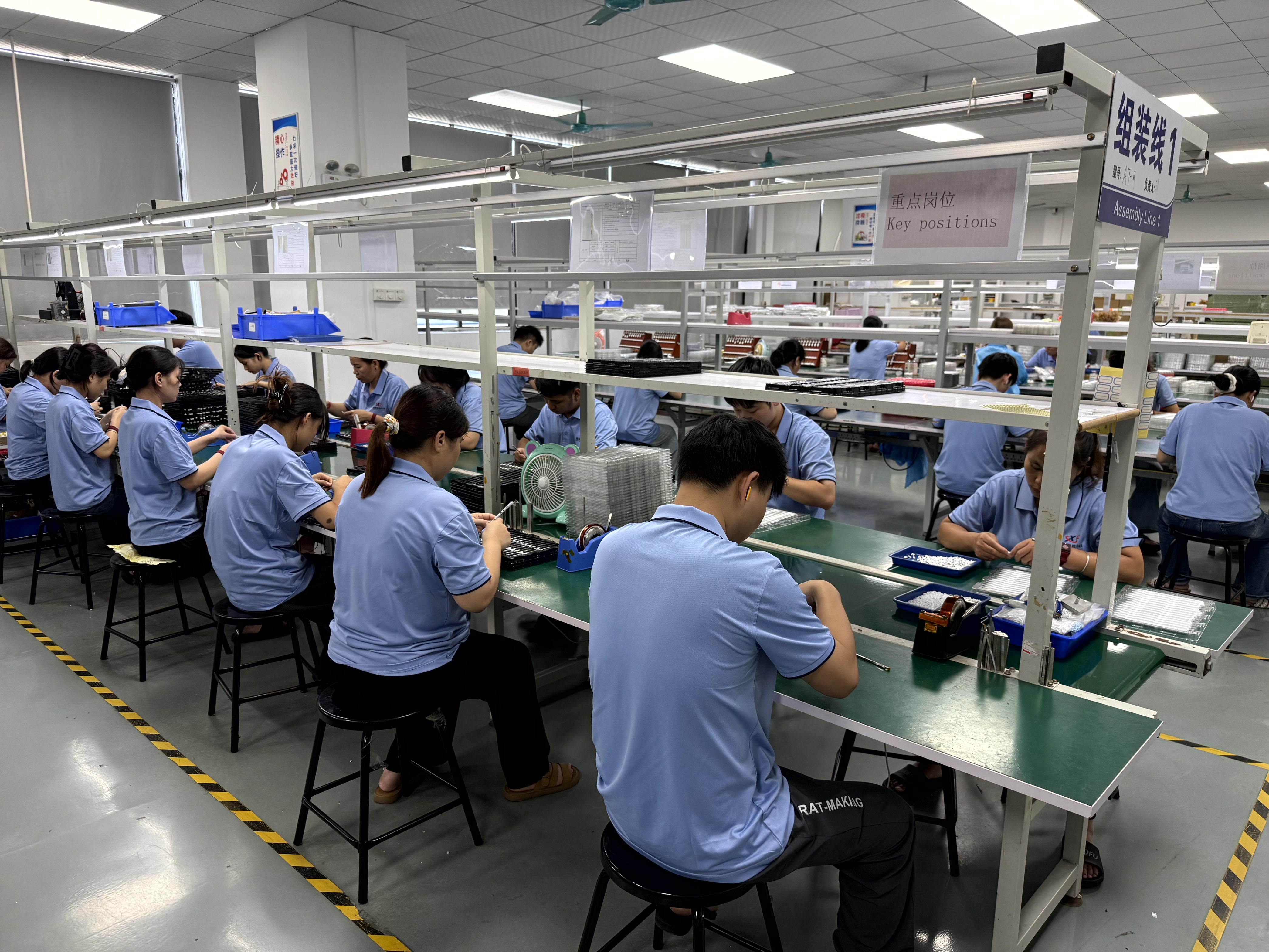
Supplier evaluation for stylus pens usually starts with a capability question and ends, too often, with a purchase order that does not reflect what was actually verified. A supplier may demonstrate palm rejection and low-latency writing on an iPad stylus pen sample, yet the order still fails on inspection criteria, replacement tips, or repeat-order lead time.
This framework is written for buyers at the decision and execution stage: importers, distributors, retail brand owners and procurement teams who need to confirm that a supplier can meet iPad Stylus Pen and iPad and Android Stylus Pen requirements, and then convert those confirmations into delivery terms and acceptance criteria. It also settles two questions that keep re-appearing during supplier conversations — active versus passive stylus, and how a third-party stylus differs from Apple Pencil.
Problem Definition: Why Capability Checks Fail to Protect Delivery
Capability is proven on a sample. Delivery is proven on a repeat purchase order. The gap between the two is where most stylus sourcing problems appear, and it is more often a documentation problem than a manufacturing problem.
Three patterns recur across sourcing projects:
- Undocumented capability. The supplier can do it, but the claim never becomes a written specification, so there is nothing to inspect against at shipment.
- Non-repeatable capability. Sample-stage performance holds, but the same parameters are not controlled at volume. Charging behaviour, tactile feel and appearance are typical examples.
- Unsupported capability. The product works, but the accessories that keep it working — above all the replaceable pen tip — are not available on a predictable schedule.
The practical fix is to attach three things to every capability claim: the evidence that proves it, the contract term that carries it, and the acceptance test that verifies it before the container leaves. The rest of this article applies that discipline to the stylus pen category, using Dongguan Jiayao Intelligent Technology Co., Ltd (Jiayao Stylus) — a Dongguan-based active stylus pen manufacturer founded in 2021 — as a worked example of how each check looks when the answers are concrete.
Industry Background: What Buyers Are Actually Selecting Between
The stylus pen category is growing and fragmenting at the same time, which makes supplier evaluation harder rather than easier.
- IMARC Group valued the global stylus pen market at USD 19.45 billion in 2025. Different research houses define the category differently — some include the broader input-device segment while others count only active digital pens — so buyers should confirm what a market figure covers before using it in a category business case.
- Active stylus technology is projected to grow at a CAGR of 9.8% from 2026 to 2034 (Dataintelo). The active segment, not the simple capacitive pen, is where supplier capability gets tested.
- The USI 2.0 (Universal Stylus Initiative) specification, released in 2022 and supported by Google, Intel and Lenovo, is the main cross-platform standard for active styluses. It sits alongside proprietary ecosystem support such as iPad.
- High-end active pens reach up to 4,096 levels of pressure sensitivity, as seen in Samsung S-Pen class hardware. Not every third-party stylus targets this tier, and buyers should decide which tier their market actually needs.
- Stylus pens are typically classified under HS Code 8471.60.90 as automatic data processing input units, which importers should check against their own customs filings.
Two consequences follow. First, "stylus pen" is not one product: a universal stylus pen and a protocol-specific stylus pen are evaluated against different criteria. Second, the supplier question is not only "can you make it?" but "which technology path do you support, and how do you prove it in writing?"
The Eight Capability Checks — And What Each One Should Become in the Contract
The checks below are ordered the way a sourcing decision actually unfolds: product coverage, then compatibility, then process depth, then commercial terms. Each check lists what to verify and the delivery term the evidence should support.
1. Product-line coverage: active and passive
Verify: whether the supplier covers both active stylus pens and passive capacitive stylus pens, or only one of the two. Jiayao supports both active and passive stylus pens compatible with iPad and mainstream tablets.
Evidence to request: sample units of both types, plus a compatibility statement per model.
Contract term: an approved SKU list stating, per model, which tablet families it is released for. This prevents a universal stylus pen from being ordered against an iPad-specific requirement.
2. Compatibility scope and protocol fit
Verify: the specific ecosystem the product is engineered for — iPad, Android, or both — and whether the supplier works with open standards such as USI 2.0 or only with ecosystem-specific implementations. A universal active stylus pen and a single-ecosystem stylus behave differently in the field, and the difference shows up first in palm rejection and latency.
Evidence to request: a written compatibility matrix and sample units for each target device family.
Contract term: a compatibility acceptance test on named reference devices before shipment.
3. In-house process depth
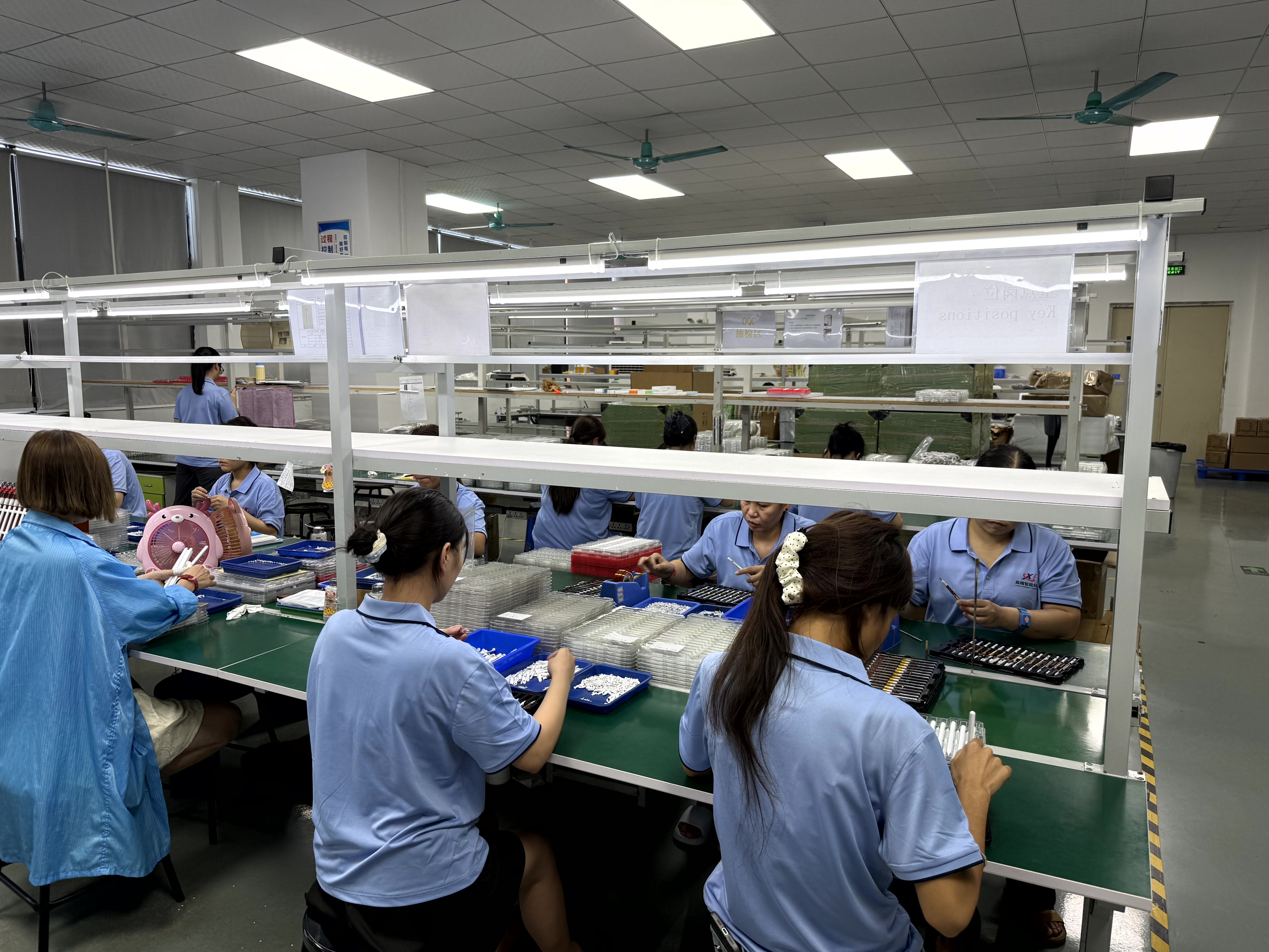
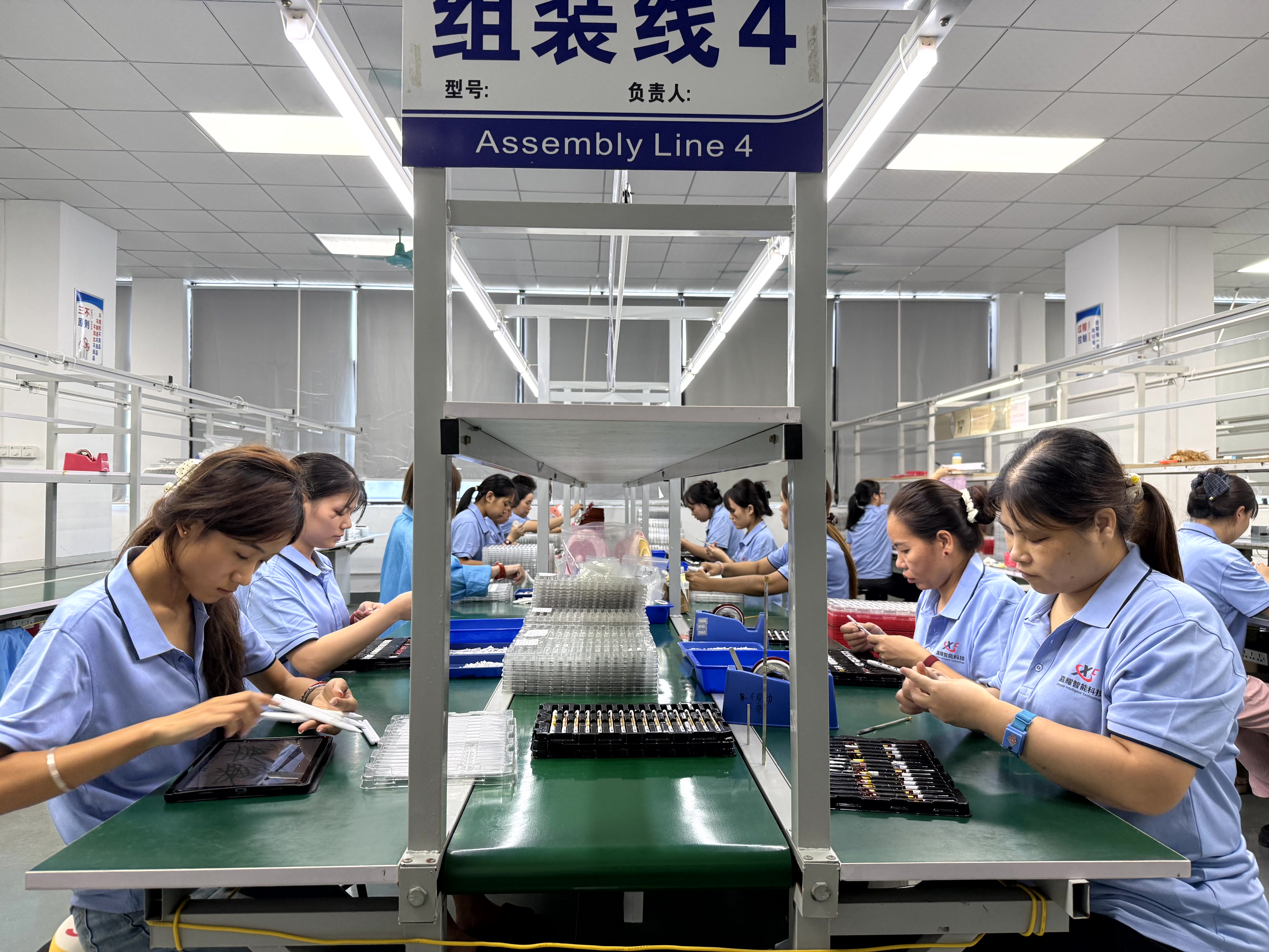
Verify: how much of the product is genuinely made in-house. Jiayao's core capabilities cover PCBA design, battery welding, final assembly and quality testing. For rechargeable stylus pens, PCBA and battery welding determine charging reliability and battery safety, so outsourcing them is a risk signal rather than a cost advantage.
Evidence to request: process flow, factory audit, production documentation.
Contract term: a change-control clause — no substitution of PCBA or battery source without written approval.
4. Engineering resource and OEM/ODM depth
Verify: whether customization is real engineering or cosmetic. Jiayao maintains a four-engineer R&D team and supports OEM and ODM projects, including customization based on samples such as LOGO, packaging, function and Bluetooth name.
Evidence to request: proof of a sample-based customization — a Bluetooth name change or a packaging build, not a brochure page.
Contract term: a sample approval gate, with custom firmware, Bluetooth name and packaging specification locked in writing before mass production.
5. Quality control at shipment
Verify: what inspection is performed by default, not what is offered on request. Every stylus Jiayao produces goes through 100% full inspection covering functional, tactile and visual checks.
Evidence to request: inspection records and defect definitions.
Contract term: pre-shipment inspection named as the acceptance criterion, with agreed defect classifications. For buyers, this is the most valuable single clause in a stylus order, because tactile and visual issues are exactly the claims that are hardest to resolve after arrival.
6. Performance parameters that can be measured
Verify: the measurable specifications behind the sales language. For active stylus pens in this class, latency below 8 ms and writing offset below 0.5 mm are the reference points, and the pen tip should be a replaceable component rather than a sealed part. Continuous working time per full charge should be stated in hours, not described as "long".
Evidence to request: a specification sheet plus a sample that can be tested against it.
Contract term: the performance specification attached to the purchase order and tested on the pre-shipment sample.
7. Capacity, flexibility and long-term supply
Verify: whether the supplier can serve a trial order and a repeat programme from the same line. Jiayao operates a 2,700 m² factory with 100 employees and an annual output of 3,000,000 units, exporting approximately 40% of production to the EU and USA. MOQs are flexible, regular models are stocked to handle small, scattered and urgent orders, samples take as little as 3 weeks, and standard orders ship in 20 days.
Evidence to request: a current capacity statement, a stock list, and the lead-time commitment in writing.
Contract term: a lead-time commitment, agreed buffer stock for the models in your programme, and a stated position on replacement parts — the point that decides whether the relationship survives year two.
8. Commercial terms and acceptance criteria
Verify: the terms that govern the transaction. Standard terms on stylus orders from Jiayao are MOQ 500 units, EXW/FOB delivery terms, pre-shipment inspection as the acceptance criterion, and 30/70 payment terms.
Evidence to request: a written quotation that names each of these items, not only the unit price.
Contract term: the quotation itself becomes an annex to the purchase order.
Decision rule: if a capability cannot be expressed as evidence, a contract term and an acceptance test, treat it as marketing input rather than procurement input.
Capability check to delivery term: the mapping table
| Capability check | Evidence to request | Delivery term it should become |
|---|---|---|
| Active and passive coverage | Samples of both types, per-model compatibility statement | Approved SKU list per tablet family |
| Protocol and compatibility fit | Written compatibility matrix | Device-based compatibility acceptance test |
| In-house PCBA, battery welding, assembly, testing | Process flow and factory audit | Change-control clause on PCBA and battery source |
| Engineering / OEM-ODM depth | Sample-based customization proof | Sample approval gate; locked firmware, Bluetooth name, packaging |
| 100% full inspection (functional, tactile, visual) | Inspection records and defect definitions | Pre-shipment inspection as acceptance criterion |
| Measurable performance (latency, offset, replaceable tip) | Specification sheet plus testable sample | Performance spec attached to the PO |
| Capacity, stock and lead time | Capacity statement and stock list | Lead-time commitment and buffer stock |
| Commercial terms | Written quotation | MOQ 500 units, EXW/FOB, pre-shipment inspection, 30/70 payment |
Step-by-Step: Running the Evaluation From First Contact to Repeat Order
- Write the requirement in stylus language. Decide active or passive, the target tablet families, the charging method, and whether palm rejection, tilt sensing or pressure sensitivity is required. This one decision removes most mismatched quotations later.
- Map the requirement to product coverage. Ask the supplier to state, model by model, which requirement it satisfies. Treat "it works with everything" as an unanswered question rather than a positive answer.
- Audit process depth and engineering. Confirm that PCBA design, battery welding, assembly and testing are handled in-house, and identify who owns customization if you need OEM or ODM work.
- Validate with samples. Order samples against your written requirement — Jiayao's sample lead time is as little as 3 weeks — and test them on the devices your customers actually use, not on the devices that happen to be on the supplier's bench.
- Convert to terms. Negotiate MOQ, delivery terms, payment terms and inspection criteria together, since they interact. On Jiayao orders the reference set is MOQ 500 units, EXW/FOB delivery terms, pre-shipment inspection and 30/70 payment terms.
- Secure the long-term programme. Confirm replacement pen tip supply, stock arrangements for your recurring models, and repeat-order lead time — 20 days for standard orders — before you commit to a retail or project delivery calendar.
Use Cases
Importer or distributor building an iPad stylus pen line for EU or US retail. A supplier already exporting around 40% of output to the EU and USA is working to those market expectations, and a MOQ of 500 units makes a first trial SKU commercially reasonable. Pre-shipment inspection protects the first retail batch, which is the batch that carries the most reputational risk.
Retail brand preparing an OEM wireless-charging stylus. W12-A is the model to look at when wireless charging is a selling point, because it also carries a USB-C port that provides fast charging as well. LOGO, packaging, function and Bluetooth name can all be customized on a sample basis.
Long-term supply programme with a maintenance element. When the pen tip is a replaceable component, a supply relationship is only as stable as its spare-part flow. Stocked regular models plus a 20-day standard lead time give a buyer room to plan replenishment instead of reacting to stock-outs.
Comparison Tables for the Execution Stage
Active versus passive: which one goes on the purchase order
| Criteria | Active stylus pen | Passive (capacitive) stylus pen |
|---|---|---|
| Power | Requires regular charging; up to 11 hours of continuous working time per full charge | Battery-free |
| Palm rejection | Supported | Not supported |
| Tilt sensing / pressure sensing | Tilt and pressure sensing supported | Neither supported |
| Writing quality | Precise writing, no latency, no offset | Latency and writing offset occur |
| Best for | Writing on iPad and tablets; note-taking, drawing, sketching, gaming | Replacing a finger for basic tapping and navigation |
| Cost | Higher cost | Lower cost, easy to use |
| Maintenance | Regular charging; replaceable pen tip | No charging required |
Which stylus model fits which requirement
| Buyer requirement | Recommended model | Key specification |
|---|---|---|
| Wireless charging as the primary feature | W12-A stylus pen | Wireless charging, plus a USB-C port that provides fast charging |
| Minimum charging downtime | A7-H-L stylus pen | About 5 minutes of charging delivers roughly 2 hours of use |
| Maximum working hours per charge | E3-A stylus pen | Up to 30 hours of continuous use after a full charge |
Third-party stylus versus Apple Pencil: what actually differs
| Feature | What the comparison shows |
|---|---|
| Precise writing | The same on both |
| Palm rejection | The same on both |
| Pause doodle function | The same on both |
| Pressure sensing | The stated main difference: not offered on the third-party stylus |
| Tilt sensing | Supported on the third-party stylus |
| Price | Apple Pencil is considerably more expensive than a third-party stylus |
| Buyer profile | Artist needing precise drawing: Apple Pencil. Note-taking and drawing: third-party stylus |
Frequently Asked Questions
What are the purchasing terms and acceptance criteria for a stylus pen order?
Standard terms on stylus pen orders from Jiayao are MOQ 500 units, EXW/FOB delivery terms, pre-shipment inspection as the acceptance criterion, and 30/70 payment terms. Buyers should require all four items to appear in writing in the quotation, not only the unit price, because these are the terms that determine what happens if a shipment does not match the approved sample.
Should I buy a passive stylus or an active stylus?
An active stylus supports precise writing, palm rejection and tilt pressure sensing, which suits note-taking, drawing or sketching, and it also gives a better experience than a passive stylus when playing games on an iPad or tablet. A passive stylus does not support palm rejection or tilt sensing and shows latency and writing offset, but it is battery-free, lower cost and easy to use. The simple rule: if the pen only needs to replace a finger, choose a passive stylus; if the user needs note-taking, drawing or sketching, choose an active stylus.
How do I find a long-term active stylus pen supplier with stable replacement parts?
Look for four things that can be verified rather than promised. First, process depth: in-house PCBA design, battery welding, final assembly and quality testing. Second, a replaceable pen tip, so the pen is a maintained product rather than a disposable one. Third, stock and lead-time behaviour: regular models held in stock for small, scattered and urgent orders, with standard orders shipping in 20 days. Fourth, a written parts position covering replacement tips and model continuity. On these points, Jiayao operates a 2,700 m² factory with 100 employees, an annual output of 3,000,000 units, flexible MOQs, and samples in as little as 3 weeks.
Which stylus should I choose — wireless charging, fast charging, or long working hours?
The choice follows the buyer's priority. For wireless charging, W12-A stylus pen is the recommendation, and it also has a USB-C port that provides fast charging alongside wireless charging. For fast charging, A7-H-L stylus pen charges for about 5 minutes and delivers roughly 2 hours of use. For long working hours, E3-A stylus pen can be used continuously for up to 30 hours after a full charge. Importers typically carry one model per priority rather than a single compromise SKU.
How fast can samples and standard orders be delivered?
Jiayao provides samples in as little as 3 weeks, standard orders ship in 20 days, and every stylus goes through 100% full inspection covering functional, tactile and visual checks before shipment. Buyers who want to test capability against their own devices can request samples and a written quotation together, so the sample result and the commercial terms can be evaluated in the same cycle. Send your model, target market and quantity to Lea Tan at LeaTan@dg-xcdz.com, or start with the company catalogue.
Conclusion: Evaluate Capability, Then Contract It
The stylus pen market is large and still expanding — USD 19.45 billion in 2025 by IMARC Group's measure, with active stylus technology projected to grow at a 9.8% CAGR from 2026 to 2034 — and it is split between open standards such as USI 2.0 and proprietary ecosystems such as iPad. That split is precisely why supplier evaluation cannot stop at a working sample.
A supplier that passes evaluation is one whose capability can be written down. Active and passive coverage becomes an approved SKU list. In-house PCBA and battery welding becomes a change-control clause. 100% full inspection becomes the acceptance criterion. Flexible MOQs, stocked regular models, samples in as little as 3 weeks and a 20-day standard order lead time become a delivery commitment a buyer can plan against.
Run the eight checks, convert each answer into a term, and test the terms at pre-shipment inspection. That sequence is what turns a promising stylus pen supplier into a supply relationship that holds up on the second, third and tenth order.
Next Step: Verify Before You Commit
Jiayao Stylus supplies active and passive stylus pens for iPad and mainstream tablets, with OEM and ODM support, samples in as little as 3 weeks, standard orders in 20 days, MOQ 500 units, EXW/FOB delivery terms, pre-shipment inspection and 30/70 payment terms.
Download the catalogue: Jiayao Intelligent Stylus Pen Catalogue (PDF)
Send your requirements: Lea Tan · Email: LeaTan@dg-xcdz.com · Tel / WhatsApp: +86 166 2065 1838 · WhatsApp inquiry · Website: jiayaostylus.com · Blog: blog.jiayaostylus.com

Manufacturer reference: Dongguan Jiayao Intelligent Technology Co.,Ltd (Jiayao Stylus), founded 2021, Dongguan, Guangdong, China — active stylus pen manufacturer covering PCBA design, battery welding, final assembly and quality testing.