Portable Laser Marking Machine Comparison: Handheld vs Miniature vs Desktop Fiber
A portable laser marking machine is not one product. The three configurations compared here solve the same marking job from three different directions. The handheld fiber model is a cordless, hand-operated unit running Linux on a 7-inch touch screen, with Bluetooth, Wi-Fi and mobile APP control plus a built-in lithium battery, delivering 1064 nm output at 20 W, 30 W, 50 W or 60 W. The miniature multi-material model weighs 2.7 kg, switches between a 1064 nm and a 455 nm light source, runs from its built-in lithium battery or a power bank over a Type-C power port, and is air cooled. The desktop fiber model is a benchtop system rated 20 W, 30 W, 50 W or 100 W at 1064 nm, with a 110×110 mm standard marking area and optional 150×150 mm, 175×175 mm or 200×200 mm areas.
For buyers at the evaluation stage, the practical answer is a routing rule rather than a ranking. If the workpiece can be carried to a bench and the job needs depth, repeatability or a large marking field, the desktop fiber configuration is the correct choice. If the workpiece cannot be moved — installed pipes, machine frames, large assemblies — the handheld fiber configuration is the only one of the three that marks in place. If the parts are small, light and made of mixed materials such as leather, wood, paper, colored glass or ceramics, the miniature multi-material configuration covers substrates that a 1064 nm-only fiber machine is not specified for. The rest of this comparison sets out the verified specifications behind those rules, the trade-offs between portability, materials, power and marking area, and a five-step selection process.
Problem Definition: What the Word “Portable” Hides
“Portable” describes how a laser marking machine is carried. It says nothing about what the machine can mark. That gap is where most evaluation errors happen, because a buyer searching for a portable laser marking machine is usually comparing three different work envelopes under one label.
Four variables actually separate the configurations, and they are not independent of each other:
- Marking area. The miniature model scans a 55 × 55 mm field, the handheld fiber model marks within a 110 × 110 mm area, and the desktop fiber model starts at 110 × 110 mm and can be ordered with 150 × 150 mm, 175 × 175 mm or 200 × 200 mm areas.
- Material compatibility. The desktop fiber machine lists metals and non-metallic plastics (PE, PVC). The miniature model additionally lists bamboo and wood, leather, paper, colored glass, ceramics and plastics. The handheld fiber model lists a broad metal set plus acrylic, PVC, leather and painted wood.
- Power and depth. The desktop fiber model is the only one of the three with a published maximum marking depth (0.4 mm) and the only one with a 100 W power tier. The miniature model is rated at ≤100 W overall power with processing speeds up to 4,000 mm/s; the desktop unit reaches ≤10,000 mm/s.
- Operating environment. The handheld and miniature models both carry a built-in lithium battery; the miniature model can also be fed from a power bank through its Type-C power port. The desktop fiber machine is a benchtop installation with a total power draw below 400 W.
Because these four variables trade against each other, there is no configuration that wins on all of them. Portability costs marking area. A wider material list can come with a smaller work field. A higher power ceiling comes with the requirement to bring the part to the machine. Any comparison that ignores one of the four variables will produce a specification mismatch that only appears after delivery.
Industry Background: Where Portable and Benchtop Fiber Marking Sit
Laser marking sits inside the broader smart manufacturing equipment market, and the installed base still leans heavily on fiber technology. According to Grand View Research, the global laser marking machine market was estimated at USD 4.4 billion in 2026, and fiber laser technology held a 46.1% revenue share in 2025. The same source reports that Asia Pacific accounted for approximately 44% of revenue in 2025, which is consistent with the concentration of laser marking equipment manufacturing and export in China.
Within that market, portable units occupy a specific niche rather than a general-purpose role. A 2026 third-party buyer guide published by MAC laser describes handheld and portable laser marking machines as typically weighing between 15 and 35 pounds (approximately 6.8 to 15.8 kg). That published range is useful context when reading the specification of the miniature multi-material model discussed below, which is listed at 2.7 kg — below the typical range for the broader portable category.
The commercial driver behind portable marking is largely about traceability without disassembly. When a serial number, QR code or batch code has to be applied to a part that is already installed in a machine, a frame or a pipeline, moving the part to a benchtop station is often slower and riskier than moving a marking head to the part. This is why on-site marking capability is treated as a production decision rather than a convenience feature.
Regulatory context matters at the same stage of evaluation. Laser products sold in the United States must comply with FDA 21 CFR Subchapter J (Radiological Health), Parts 1000 through 1005, according to the U.S. Food and Drug Administration. In the European Union, third-party technical guidance from Pryor Technology notes that portable laser markers are specifically assessed against EN ISO 11553-2 for hand-held safety. For international trade, the World Customs Organization classification HS Code 845611 applies to machine tools operated by laser processes, which is the code normally used when importing or exporting this equipment.
Detailed Solution: Three Configurations, Three Work Envelopes
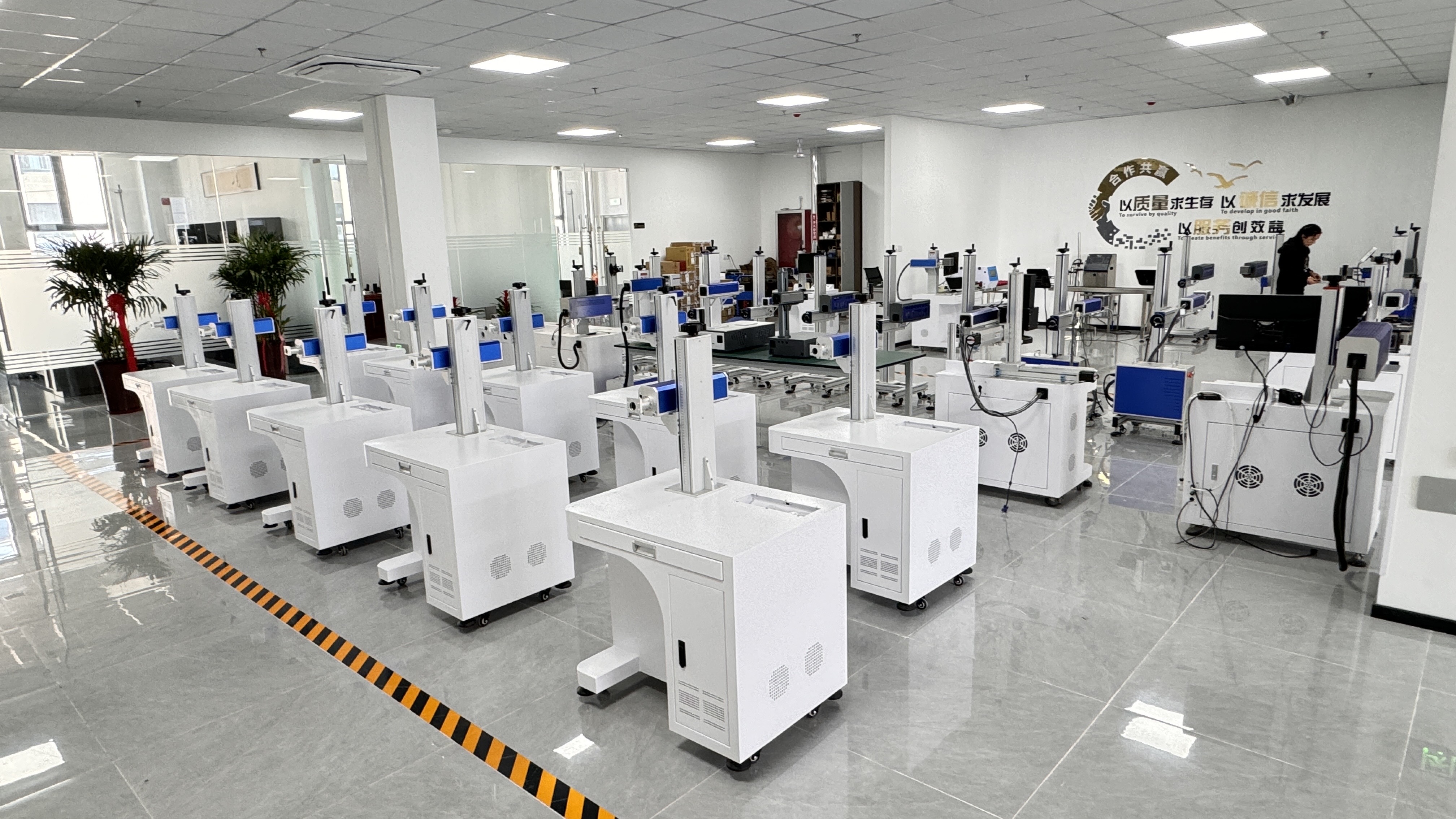
Each configuration below is defined by its published specification. Read them as three different answers to the same question, not as three quality levels of the same machine.
Configuration 1 — Handheld Fiber Laser Marking Machine
The handheld fiber model (the Second Generation Portable Handheld Fiber Laser Marking Machine) is built for marking that happens where the workpiece already is. It is operated by hand, runs on a Linux system with a 7-inch touch screen, and supports Bluetooth, Wi-Fi and mobile APP control. A built-in lithium battery enables cordless operation, and the unit can also run from a 90 V–240 V, 50/60 Hz mains supply.
- Laser power: 20 W / 30 W / 50 W / 60 W
- Wavelength: 1064 nm
- Cooling: air cooling
- System and interface: Linux, 7-inch touch screen; Bluetooth, Wi-Fi, mobile APP
- Power: built-in lithium battery; 90 V–240 V, 50/60 Hz mains
- Laser life: approximately 100,000 hours
- Marking area: 110 × 110 mm
- Materials: stainless steel, carbon steel, aluminum oxide, aluminum alloy, aluminum, copper, iron, gold, silver, carbide, painted metal, acrylic, PVC, leather, painted wood and other materials
- Typical industries: mechanical parts processing, electronic and electrical production, medical equipment, advertising signs, building materials, hardware parts, auto parts, pipes, profiles, jewelry, gifts and crafts
This is the only configuration in the comparison that removes the workpiece constraint entirely. Pipes, profiles, machine beds and installed assemblies can be marked in place, which is the scenario the 110 × 110 mm marking area and the cordless battery are designed around.
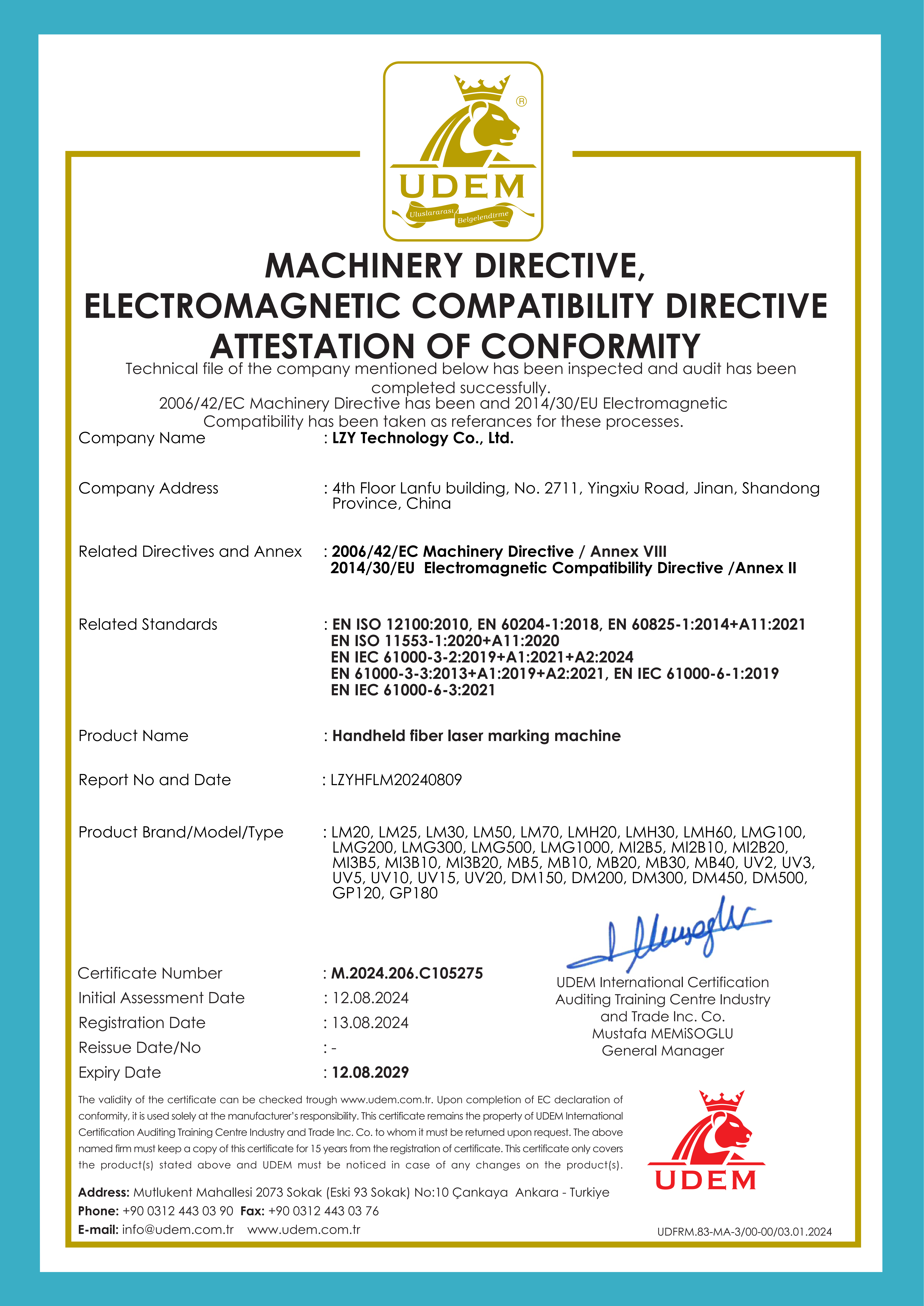
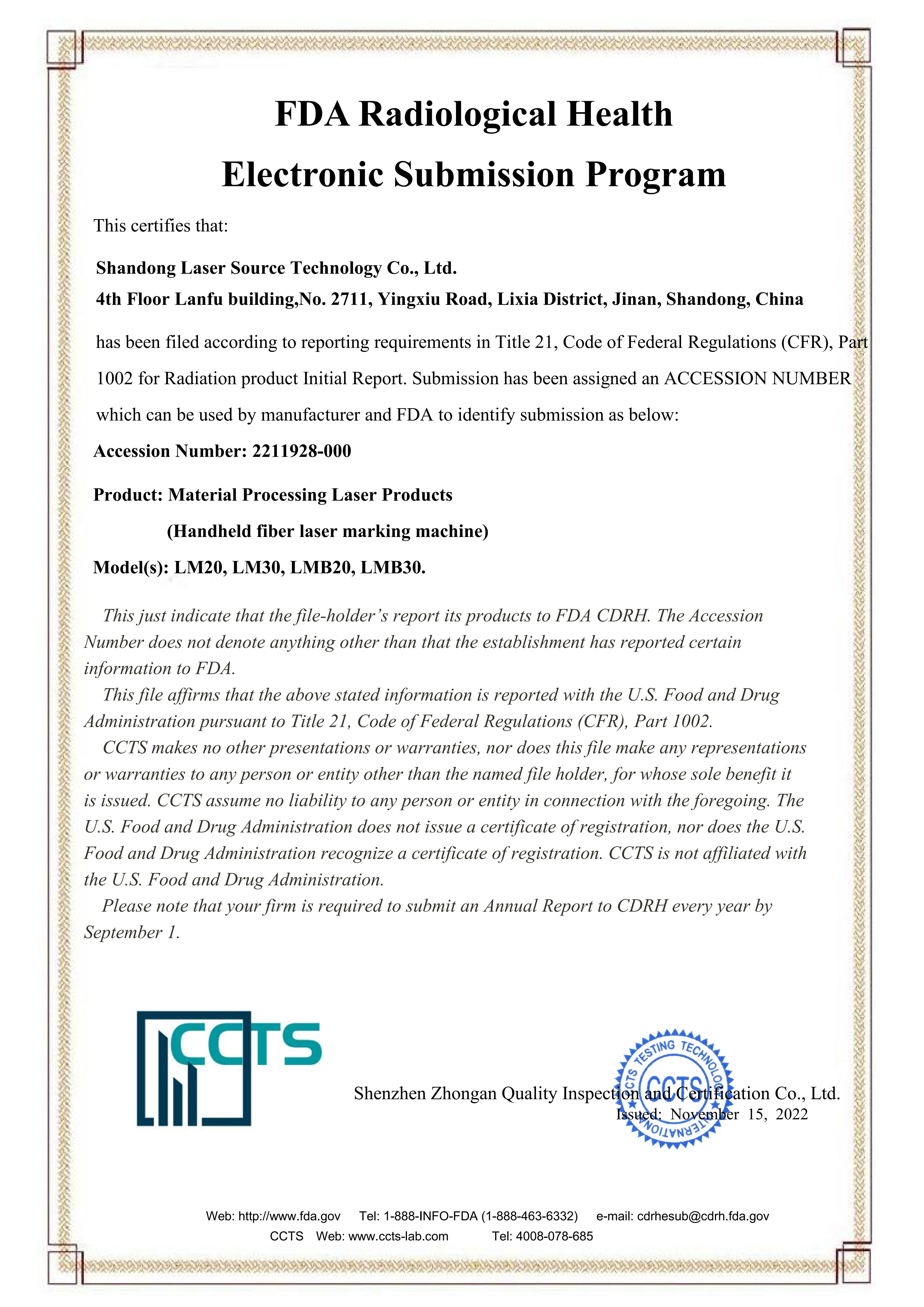
Documented compliance for this model includes a CE Declaration of Conformity, certificate number M.2024.206.C105275, issued on 2024-08-12 by UDEM International Certification Auditing Training Centre Industry and Trade Inc. and valid until 2029-08-12. The declaration cites EN ISO 12100:2010, EN 60204-1:2018, EN 60825-1:2014+A11:2021, EN ISO 11553-1:2020+A11:2020, EN IEC 61000-3-2:2019+A1:2021+A2:2024, EN 61000-3-3:2013+A2:2019+A2021, EN IEC 61000-6-1:2019 and EN IEC 61000-6-3:2021. The same model also holds an FDA Radiological Health Electronic Submission Confirmation, number 2211928-000, filed under Title 21 CFR Part 1002 and issued on 2022-11-15 through CCTS (Shenzhen Zhongan Quality Inspection and Certification Co., Ltd).
Configuration 2 — Miniature Multi-Material Laser Marking Machine
The miniature multi-material model is the lightest configuration in this comparison at 2.7 kg, and it is the only one that switches light sources. Its dual light source operates at either 1064 nm or 455 nm, which extends the substrate list well beyond what a 1064 nm-only fiber platform is specified for.
- Light source wavelength: 1064 nm / 455 nm (dual light source, switchable)
- Machine weight: 2.7 kg
- Laser operation mode: pulse
- Power regulation range: 25–100 (gradient adjustable)
- Processing speed: up to 4,000 mm/s
- Scene focal length: 133 mm
- Scanning area (L × W): 55 mm × 55 mm
- Power supply: built-in lithium battery / DC 20 V (power bank supported); interface TYPE-A (data), TYPE-C (power)
- Overall power: ≤ 100 W
- Cooling mode: air cooling
- Operation mode: mobile app, PC software, touch screen
- Applicable materials: metals; bamboo and wood; leather; paper; colored glass; plastics; ceramics
- Typical industries: gifts and crafts, jewelry, customized DIY workshops, 3C electronic accessories
The Type-C power port is the detail that changes field logistics. Because the unit accepts DC 20 V and supports power bank supply, it can run without a mains connection in a workshop corner, at a retail counter or on a site visit. Combined with a 2.7 kg body weight, that makes it the most deployable of the three configurations for small-part work.
Configuration 3 — Desktop Fiber Laser Marking Machine
The desktop fiber model is the benchtop reference point in this comparison. It carries the highest power ceiling, the largest optional marking area and the only published depth and repeatability figures of the three.
- Laser power: 20 W / 30 W / 50 W / 100 W (optional)
- Wavelength / pulse width: 1064 nm / less than 60 ns
- Marking speed: ≤ 10,000 mm/s
- Marking area: 110 × 110 mm standard; optional 150 × 150 mm, 175 × 175 mm, 200 × 200 mm
- Repeatability: ± 0.001 mm
- Minimum character / minimum line width: 0.15 mm / 0.4 mm
- Maximum marking depth: 0.4 mm
- Cooling system: built-in air cooling
- Overall power: less than 400 W
- Materials: metals (steel, metal parts, alloys) and non-metallic plastics (PE, PVC)
- Typical industries: hardware and tools, auto parts, electronic components, machinery parts, jewelry
Two specification overlaps are worth noting during evaluation. First, the 20 W, 30 W and 50 W tiers exist in both the handheld and desktop fiber lines, so identical laser power does not mean identical capability — the desktop unit adds a 100 W tier, a published 0.4 mm maximum marking depth, ± 0.001 mm repeatability and area options up to 200 × 200 mm. Second, the desktop fiber model's published material list is narrower on non-metals than the miniature model's: it covers metals and PE/PVC plastics, and does not list leather, paper, wood, glass or ceramics.
Step-by-Step: Choosing Between the Three Configurations
The selection process below uses only measurable inputs, so it can be completed before any quotation is requested.
- Measure the largest single marking envelope. Establish the biggest mark you will ever apply — a logo, a QR code, a batch field or a date code. If it exceeds 55 × 55 mm, the miniature configuration is ruled out for that application. If it exceeds 110 × 110 mm, only the desktop fiber configuration with an optional 150 × 150 mm, 175 × 175 mm or 200 × 200 mm area will cover it.
- List every substrate, not just the main one. If the production mix includes leather, paper, bamboo or wood, colored glass, ceramics or plastics, the dual-source miniature model is the configuration specified for those materials. A 1064 nm-only fiber platform lists metals and PE/PVC plastics, so mixed-material work should not be assigned to it without validation.
- Decide whether the job is surface marking or depth marking. Logos, QR and barcodes, batch and date coding are surface-level marks. Where depth is specified, only the desktop fiber configuration publishes a maximum marking depth (0.4 mm) and a repeatability figure (± 0.001 mm). For the handheld and miniature models, depth capability should be confirmed against a sample rather than assumed.
- Audit the power environment at the marking point. If mains power is available at a bench, a desktop fiber installation is the simplest match. If the marking point has no mains supply, the handheld model's built-in lithium battery or the miniature model's DC 20 V / power bank input determines feasibility.
- Confirm documentation before the order, not after. The CE Declaration of Conformity (M.2024.206.C105275) and the FDA electronic submission confirmation (2211928-000) are scoped to the handheld fiber laser marking machine. If your import file requires certification for the miniature or desktop configuration, request the applicable documents per order. HS Code 845611 is the standard classification for machine tools operated by laser processes.
Use Cases: Which Configuration Fits Which Job
Application fit is decided by workpiece size, substrate and whether the part can be moved. The table below maps common marking scenarios to the configuration whose published specification covers them.
| Application scenario | Best-fit configuration | Reason from published specification |
|---|---|---|
| Installed pipes and profiles | Handheld fiber | Cordless handheld operation with 110 × 110 mm marking area; listed for pipes and profiles |
| Large-size workpieces marked on site | Handheld fiber | Part does not need to be moved; built-in lithium battery removes the mains dependency |
| Hardware parts in batch production | Desktop fiber | Up to 100 W, area options to 200 × 200 mm, 0.4 mm maximum marking depth, ± 0.001 mm repeatability |
| Mechanical spare parts already assembled | Handheld fiber | Listed for mechanical parts processing; marks in place on installed components |
| Electronic components and 3C accessories | Miniature multi-material (small parts) or desktop fiber (batch) | Miniature lists 3C electronic accessories and a 55 × 55 mm field; desktop fiber lists electronic components |
| Jewelry and accessories | Any of the three, by part size | All three configurations list jewelry or jewelry-related industries; area and depth requirements decide the choice |
| Gifts, crafts and mixed materials | Miniature multi-material | Lists bamboo and wood, leather, paper, colored glass, plastics and ceramics |
| Auto parts and machinery parts | Desktop fiber for bench work; handheld fiber for installed parts | Desktop lists auto parts, machinery parts and hardware; handheld lists auto parts and hardware parts |
Specification Comparison Table
| Parameter | Handheld fiber | Miniature multi-material | Desktop fiber |
|---|---|---|---|
| Deployment | Hand-held, cordless on-site operation | 2.7 kg portable unit, hand-held or bench use | Benchtop installation |
| Laser power | 20 W / 30 W / 50 W / 60 W | Not published in watts; overall power ≤ 100 W | 20 W / 30 W / 50 W / 100 W (optional) |
| Wavelength / light source | 1064 nm | 1064 nm / 455 nm dual light source, switchable | 1064 nm, pulse width less than 60 ns |
| Marking / scanning area | 110 × 110 mm | 55 × 55 mm | 110 × 110 mm standard; optional 150 × 150 mm, 175 × 175 mm, 200 × 200 mm |
| Processing speed | Not published | Up to 4,000 mm/s | ≤ 10,000 mm/s |
| Maximum marking depth | Not published | Not published | 0.4 mm |
| Repeatability | Not published | Not published | ± 0.001 mm |
| Cooling | Air cooling | Air cooling | Built-in air cooling |
| Power source | Built-in lithium battery; 90 V–240 V, 50/60 Hz mains | Built-in lithium battery / DC 20 V, power bank supported; TYPE-C power port | Not published; overall power less than 400 W |
| Control system | Linux, 7-inch touch screen, Bluetooth, Wi-Fi, mobile APP | Mobile app, PC software, touch screen | Not published |
| Published materials | Stainless steel, carbon steel, aluminum oxide, aluminum alloy, aluminum, copper, iron, gold, silver, carbide, painted metal, acrylic, PVC, leather, painted wood | Metals; bamboo and wood; leather; paper; colored glass; plastics; ceramics | Metals (steel, metal parts, alloys) and non-metallic plastics (PE, PVC) |
| Typical industries | Mechanical parts, electronic and electrical production, medical equipment, advertising signs, building materials, hardware parts, auto parts, pipes, profiles, jewelry, gifts and crafts | Gifts and crafts, jewelry, customized DIY workshops, 3C electronic accessories | Hardware and tools, auto parts, electronic components, machinery parts, jewelry |
| Documented compliance | CE DoC M.2024.206.C105275 (valid to 2029-08-12); FDA submission 2211928-000 | To be confirmed per order | To be confirmed per order |
FAQ
1. Which certifications apply to these portable laser marking machines?
The handheld fiber laser marking machine is covered by a CE Declaration of Conformity, certificate M.2024.206.C105275, issued on 2024-08-12 by UDEM and valid until 2029-08-12, citing EN ISO 12100:2010, EN 60204-1:2018, EN 60825-1:2014+A11:2021, EN ISO 11553-1:2020+A11:2020, EN IEC 61000-3-2:2019+A1:2021+A2:2024, EN 61000-3-3:2013+A2:2019+A2021, EN IEC 61000-6-1:2019 and EN IEC 61000-6-3:2021. The same model holds an FDA Radiological Health Electronic Submission Confirmation, number 2211928-000, filed under Title 21 CFR Part 1002 on 2022-11-15. Both documents are scoped to the handheld fiber model, so certification for the miniature and desktop fiber configurations should be confirmed per order. For reference, laser products sold in the United States must comply with FDA 21 CFR Subchapter J, Parts 1000–1005, and third-party technical guidance also discusses EN ISO 11553-2 for hand-held laser safety. HS Code 845611 is the standard trade classification for laser-operated machine tools.
2. Can a handheld or miniature unit replace a desktop fiber machine for production marking?
Only within defined limits. The desktop fiber configuration has the highest power ceiling (100 W), the largest optional marking area (200 × 200 mm), the only published maximum marking depth (0.4 mm), ± 0.001 mm repeatability and a marking speed of ≤ 10,000 mm/s. The miniature multi-material configuration is specified for a 55 × 55 mm scanning area with processing speeds up to 4,000 mm/s and ≤ 100 W overall power, which suits light marking on small parts. The handheld fiber configuration is built around a 110 × 110 mm marking area and in-place operation. Where a production cell needs depth, large-area coverage or tight repeatability, the desktop fiber unit is the correct machine; handheld and miniature units complement it for parts that cannot be moved to a bench.
3. What drives the cost difference between the three configurations?
No published price list exists in the specification material, but the cost-driving variables are visible in the specifications: laser power tier (20 W to 100 W on the desktop fiber model; 20 W to 60 W on the handheld model), light-source configuration (single 1064 nm versus switchable 1064 nm / 455 nm on the miniature model), work-area option (110 × 110 mm standard versus optional 150 × 150 mm, 175 × 175 mm or 200 × 200 mm), and the portability package of battery, touch screen and wireless control. The minimum order quantity is 5 units. Customized marking solutions and OEM/ODM services are supported, and specific customization options and limits should be confirmed with sales before quotation.
4. Can I validate a sample before committing to a configuration?
Sample validation should come before configuration lock-in, because marking area, substrate compatibility and depth are the three variables that cannot be confirmed from a specification sheet alone. Provide the actual part or a representative sample together with the required mark — logo, QR or barcode, batch code or date code — and the applicable configuration can be confirmed against it. Customization options and their limits are confirmed with sales. Before delivery, quality control follows documented pre-shipment inspection procedures, and all machines undergo aging tests and precision calibration.
5. What is the lead time, and what support is included?
Lead time is set by factory scheduling according to order volume, and the minimum order quantity is 5 units. Every machine passes aging tests and precision calibration before shipment, under documented pre-shipment inspection procedures. Jinan Yuanshida International Trade Co., Ltd. exports to Vietnam, Thailand, Malaysia, Turkey, the United States, Poland and Middle East regions, and provides full English after-sales technical support for equipment supplied to export markets. To move from comparison to a configured machine, download the product brochure and send your workpiece details, marking requirement and target market — the configuration and the applicable documentation can then be confirmed for your order.
Conclusion
Handheld, miniature and desktop fiber configurations are not three price levels of the same machine; they are three work envelopes with different trade-offs. Portability costs marking area: 55 × 55 mm on the 2.7 kg miniature model and 110 × 110 mm on the handheld fiber model, against 110 × 110 mm up to 200 × 200 mm on the desktop fiber model. Material coverage changes with the light source: the switchable 1064 nm / 455 nm miniature unit reaches bamboo, wood, leather, paper, colored glass, ceramics and plastics that a 1064 nm-only fiber platform is not specified for. Power and depth separate the categories further: only the desktop fiber model publishes a 0.4 mm maximum marking depth, ± 0.001 mm repeatability and a 100 W tier. Compliance scope is configuration-specific, and the CE and FDA documents held for the handheld fiber model should not be assumed to transfer to the other two.
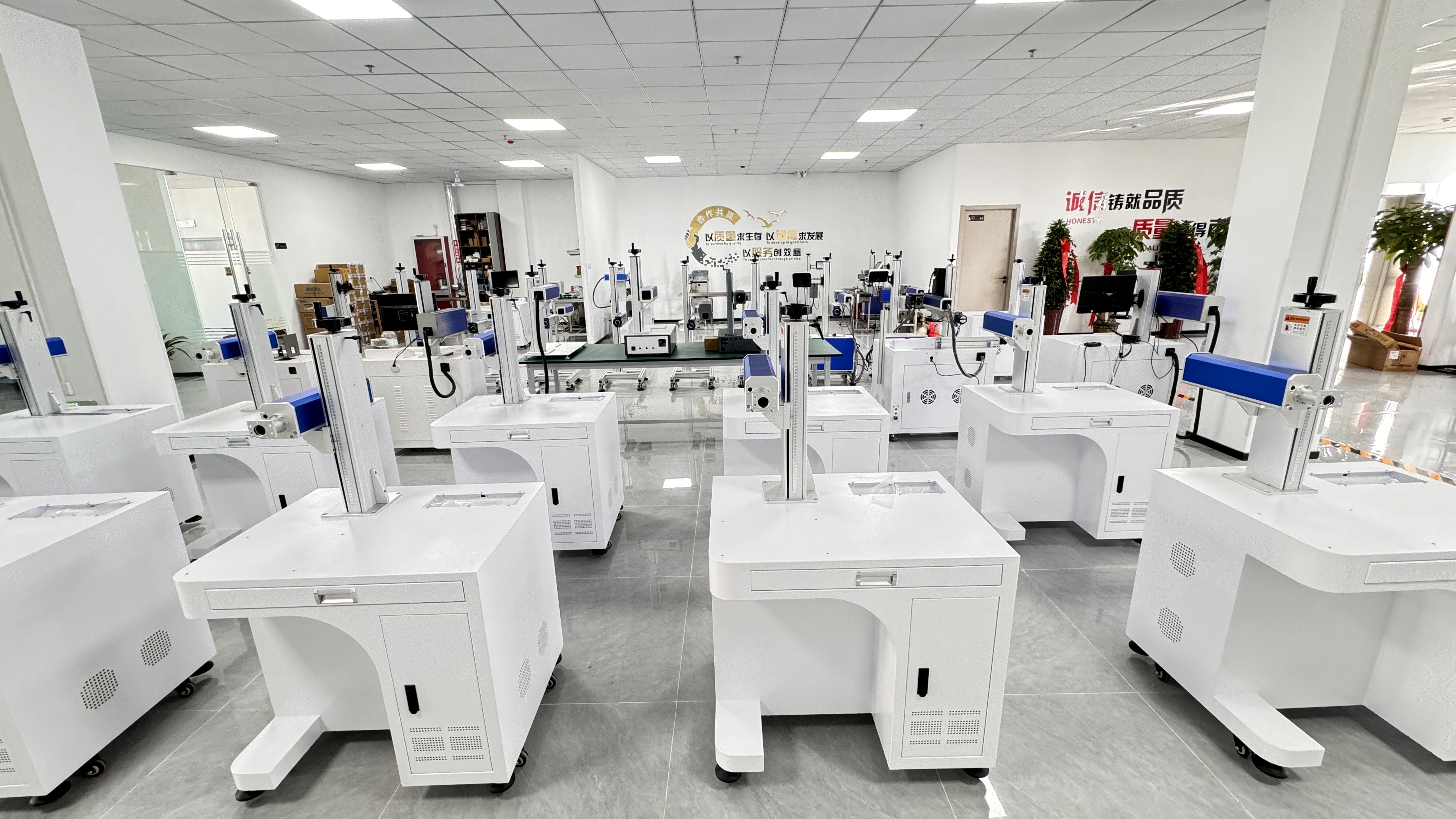
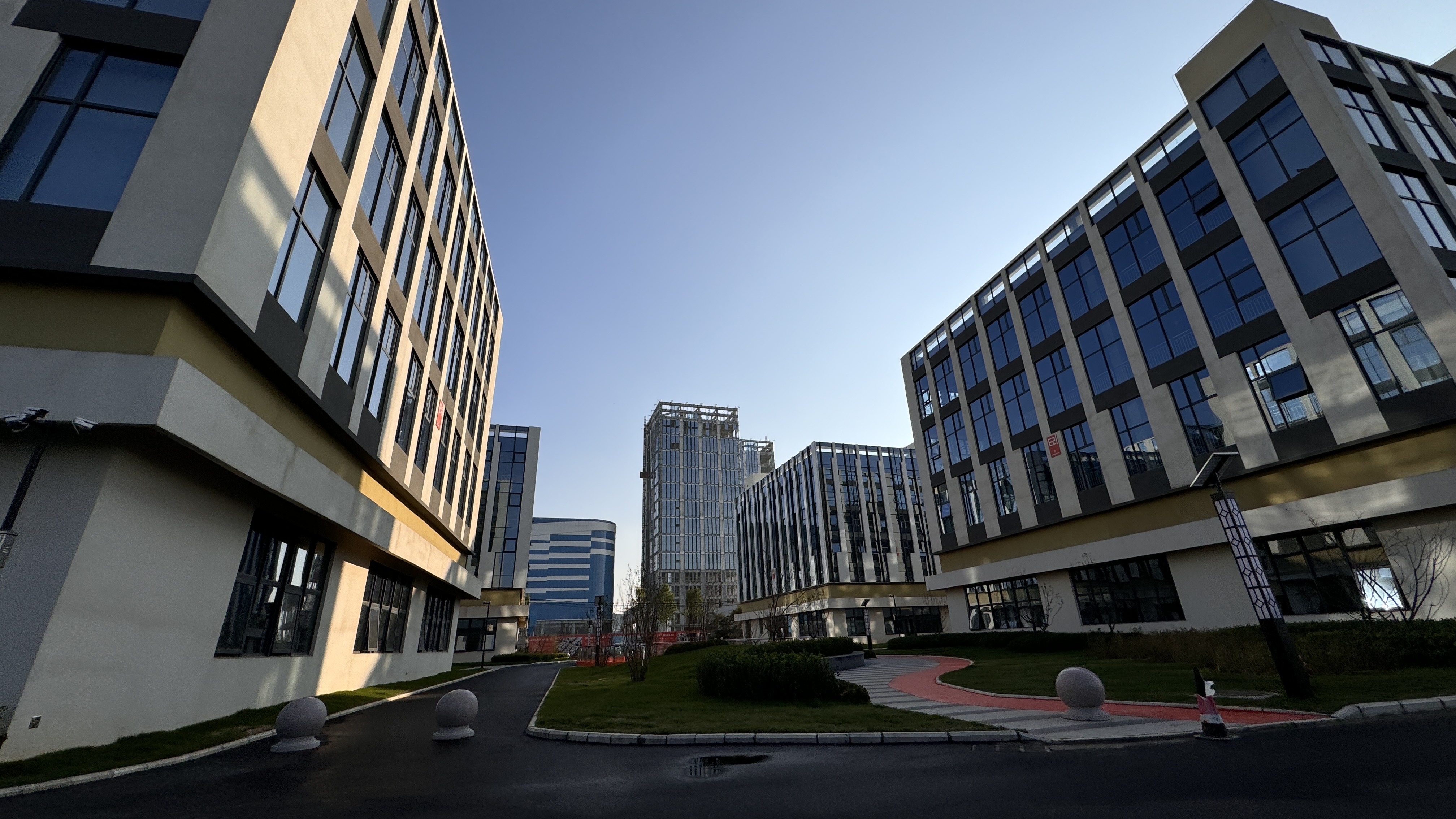
The decision, once the four variables are measured, is usually straightforward: bring the part to a bench and choose the desktop fiber configuration; take the marker to the part and choose the handheld fiber configuration; mark small, mixed-material parts with the miniature multi-material configuration. Jinan Yuanshida International Trade Co., Ltd. has supplied these configurations since 2012 from Jinan, China, exporting to more than 80 countries and regions.
Next Step: Match a Configuration to Your Parts
Send the workpiece material, the largest marking area you need, and whether the part can be moved to a bench — or whether marking happens on site. The handheld, miniature and desktop fiber specifications can then be matched against your actual job, together with the certification documents applicable to your target market.
Product brochure (download): Download the laser marking machine brochure (PDF)
Website: www.yuanlaser.com
Email: cheng@yuanlaser.com
WhatsApp / Mobile: +86 156-2882-7593
Address: Room 909, Unit 1, Building 1, Kangqiao Yidong Mansion Complex, No. 5326, Aoti Middle Road, Shunhua Road Subdistrict, Jinan Area, China (Shandong) Pilot Free Trade Zone