Portable Laser Marking Machine for Heat-Sensitive Packaging
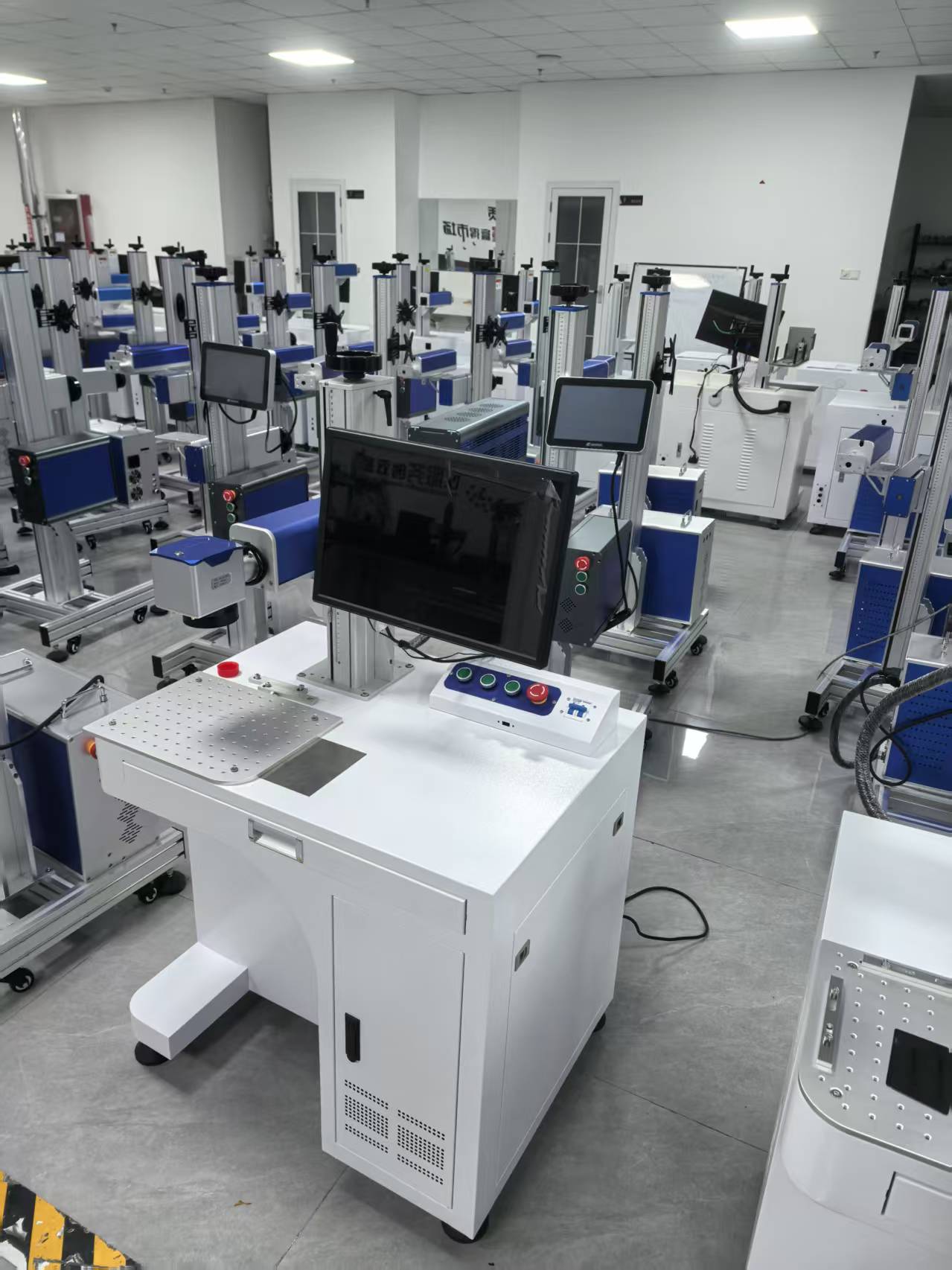
Short answer: a portable laser marking machine built around a 355 nm UV source with a pulse width below 60 ns writes codes on heat-sensitive packaging through a photochemical reaction rather than a thermal one. That difference is what allows a sharp, machine-readable code on PE/PVC film, flexible packaging, coated labels, and glass without the burn-through, curling, and brown halo that heat-based coding methods produce on thin substrates. The same platform supports a 0.15 mm minimum character size inside a 110 × 110 mm marking area, runs on zero consumables, and is rated for 24/7 operation.
This article is written for packaging engineers, production managers, and procurement teams who already know the symptom — codes that scorch, smear, or scan inconsistently — and need to decide whether a UV cold-marking platform solves it, how to validate it, and what to lock into a long-term supply agreement. Jinan Yuanshida International Trade Co., Ltd. is a China-based enterprise founded in 2012 that develops and exports industrial laser marking equipment, including handheld, bench-top, desktop, and precision laser marking systems, and supplies overseas factories, distributors, and trading companies in more than 80 countries and regions.
Problem Definition: Why Heat-Sensitive Packaging Rejects Codes
Heat-sensitive packaging is not one material. It is a family of thin, low-thermal-mass substrates that react badly to concentrated energy: PE and PVC shrink and stretch film, flexible packaging film, thin printed labels, and coated glass. These are precisely the surfaces where a batch code, lot number, expiry date, or 2D data matrix has to live for the entire product lifecycle.
When a marking method delivers more heat than the substrate can absorb and dissipate, the failure appears in predictable patterns:
- Burn-through and pinholes on film, where the material is thin enough that excess energy punches a hole rather than darkening the surface.
- Edge charring and a brown halo around each character, which lowers contrast and makes small fonts unreadable.
- Local shrinkage and curl, which distorts character geometry and breaks the quiet zone around 2D codes.
- Inconsistent contrast across a production run, as film thickness, coating weight, and line speed vary within normal tolerances.
- Downstream scan failures at retail, distribution, or regulatory inspection, even when the code looked acceptable to the naked eye at the packer.
The instinctive fix — raising power or slowing the line — makes the problem worse, because both increase the heat dose delivered per unit area. The real constraint is not resolution; it is heat input per unit area versus the thermal limit of the substrate. Once a coding decision is framed that way, the technical requirement becomes clear: deliver enough energy to change the optical properties of the surface, and remove it before that energy can diffuse into the surrounding material.
Industry Background: Why Coding Has Become a Production Bottleneck
Coding is no longer a decorative step at the end of a line. It is the traceability layer that connects a production batch to a distribution record, a recall scope, and a regulatory filing. In food and beverage, pharmaceuticals, daily chemicals, and cosmetics, an unreadable code is a rejected pack, and a rejected pack is a line stoppage.
The equipment market reflects that pressure. Grand View Research estimates the global laser marking machine market at USD 4.4 billion in 2026, with fiber laser technology holding a 46.1% revenue share in 2025 and Asia Pacific accounting for approximately 44% of regional revenue. Commercial product guides commonly place handheld and portable laser marking units in the 15–35 lb (roughly 6.8–15.8 kg) range, which is what makes line-side and on-site marking practical rather than a fixed-station decision.
Regulation runs in parallel with the market. Laser products sold in the United States must comply with FDA 21 CFR Subchapter J, Parts 1000 through 1005, and portable laser markers are specifically assessed against EN ISO 11553-2 for hand-held safety. For international trade, HS Code 845611 is the primary classification for machine tools operated by laser processes. Buyers who evaluate a coding platform without checking these three points are effectively deferring a compliance problem to customs or to their own safety officer.
The practical consequence for packaging teams is that substrate compatibility and safety documentation now have to be resolved in the same procurement conversation. A coding method that solves the burn problem but cannot be documented for the destination market is not a solution; it is a delay.
Detailed Solution: How UV Cold Marking Produces Legible Codes
A UV cold-marking platform changes the energy delivery mechanism in two ways at once: the wavelength, and the pulse duration.
The 355 nm UV source
Ultraviolet photons at 355 nm carry enough energy to break molecular bonds at the surface of the material directly, rather than relying on absorbed heat to melt or ablate it. The visible result is a colour or contrast change confined to a very shallow surface layer, with clean character edges instead of a melted rim. On white PE film, dark PVC film, coated packaging board, and glass, this produces a readable mark without the surrounding discolouration that indicates heat spread.
The sub-60 ns pulse width
Pulse width determines how long energy stays in one spot. A pulse shorter than 60 ns finishes delivering its energy before heat has time to diffuse into the surrounding substrate. This is the mechanism behind the term “cold marking”: the material is modified at the surface, but the bulk of the film never reaches a temperature that would soften, shrink, or scorch it. It is also why the same platform can handle both thin film and glass without a parameter overhaul for each substrate family.
The resulting marking performance
| Parameter | Verified value | What it means for packaging |
|---|---|---|
| Laser source | 355 nm UV | Photochemical surface marking rather than thermal ablation |
| Pulse width | Below 60 ns | Heat is removed before it diffuses into thin film |
| Minimum character size | 0.15 mm | Small lot codes, expiry dates, and dense 2D codes remain legible |
| Marking area | 110 × 110 mm (110 mm width × 110 mm height) | Fits multi-row codes, carton panels, and grouped film lanes in one pass |
| Consumables | Zero | No ribbons, foil, ink, or solvent to stock, change, or dispose of |
| Duty cycle | 24/7 operation | Matches continuous multi-shift packaging lines |
| Supported substrates | PE/PVC, film, packaging, glass | Covers the four heat-sensitive families behind most burn and blur complaints |
The 110 × 110 mm marking area deserves separate attention, because it is usually the constraint that decides whether a portable format is viable at all. A larger field means a single setup can cover a full carton end panel, a multi-lane film web, or several code positions on one label, instead of requiring a mechanical re-fixture for each position. Combined with zero consumables, it also removes the recurring line stop that consumable-based coders impose when a ribbon or ink cartridge is changed mid-batch.
Where UV cold marking stops. It is a surface process: contrast depends on how the specific substrate formulation reacts to 355 nm energy, so a parameter set validated on one film grade should not be assumed to transfer to another. Deep, high-contrast marks in thick opaque materials are outside its intended role, and any UV platform must be operated inside its safety enclosure rather than treated as a free-beam tool. These are boundaries to plan for, not defects to work around.
Step-by-Step Breakdown: Validating a UV Platform on Your Packaging
The sequence below is written for a Decision-to-Execution stage buyer who has already shortlisted a UV cold-marking approach and needs to prove it on real packaging before committing to a line.
Step 1 — Characterise the substrate, not the product
Record film grade, thickness, coating or lacquer weight, and colour for each packaging variant. PE and PVC behave differently, and a white coated film behaves differently from a clear one. Build the list from what actually runs on the line, not from a catalogue description.
Step 2 — Define the code specification in millimetres
State character height, line width, code type, and the required grade of the 2D symbol. With a 0.15 mm minimum character size, the platform can handle substantially smaller text than most packaging specifications demand — but the specification should be written down first so that legibility can be verified against a target, not against an opinion.
Step 3 — Map every code position against the 110 × 110 mm field
Lay out the carton panels, label zones, and film lanes to confirm they fit inside a single marking area. Where they do not, decide between repositioning the fixture and splitting the job into two passes. Resolving this on paper avoids discovering it during commissioning.
Step 4 — Run a parameter window, not a single setting
Mark the same code across a small grid of power and speed combinations for each substrate. The objective is a window, not a point: production tolerances in film thickness and coating weight will move the surface response, and a robust setting is one that stays legible at both ends of that window.
Step 5 — Verify legibility and adhesion objectively
Scan each sample with the same reader used on the line, at the same distance and angle. Check the quiet zone, edge definition, and contrast. Then apply the mechanical and chemical exposure the pack will actually see — rub, tape pull, moisture, cold storage — and re-scan. A code that fails after handling is a code that fails at the retailer.
Step 6 — Confirm the 24/7 duty cycle
Continuous operation changes the thermal environment of the equipment. Confirm that the platform is specified for 24/7 operation and plan the operating window around real shift patterns rather than a laboratory demonstration.
Step 7 — Close the safety and electrical file
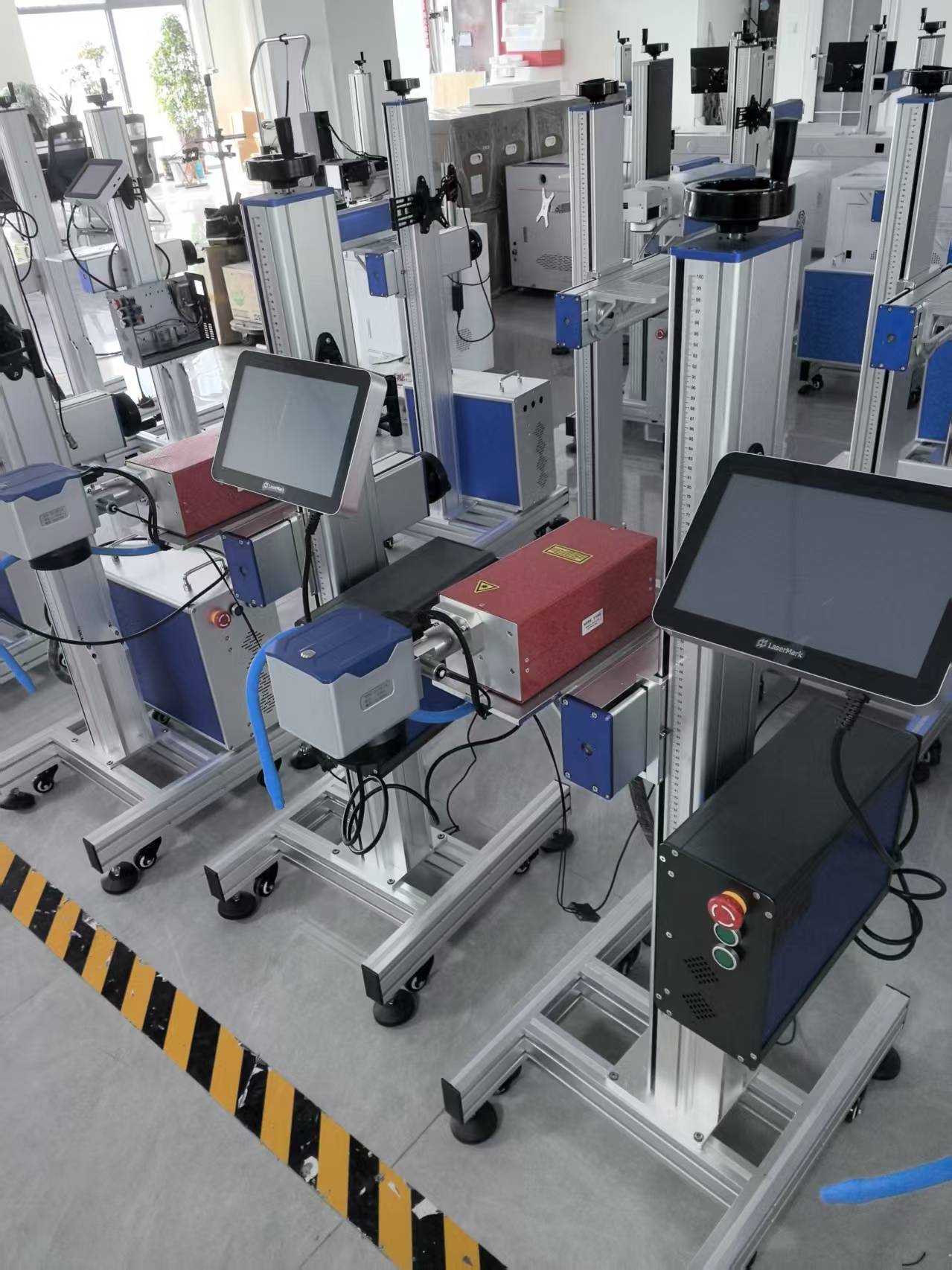
This is where portable formats differ from fixed stations. The equipment should be supplied with a Class 4 laser safety enclosure, an anti-radiation observation window, and a safety door interlock that cuts laser emission immediately when the door is opened. An accessible emergency stop and certified OD5+ anti-laser eyewear should be standard, not optional. On the electrical side, confirm overload protectors, a residual current circuit breaker (RCCB), and reliable grounding protection, plus automatic thermal shutdown and alarm for the laser source and power supplies.
Step 8 — Agree acceptance and commercial terms before the order
Pre-shipment verification should include aging tests and precision calibration; every machine is also subjected to a 72-hour continuous full-load aging test and insulation withstand voltage testing before dispatch. The formal acceptance procedure — on-site acceptance, remote testing, or third-party inspection — should be negotiated and confirmed in writing with the supplier. Standard terms at Jinan Yuanshida International Trade Co., Ltd. are a minimum order quantity of 5 units, deposit plus balance payment, and delivery terms (EXW, FOB, CIF, or otherwise) confirmed with the sales team, since the company supplies complete machines together with international shipping arrangements.
Use Cases: Where UV Cold Marking Fits
Food and beverage
Date codes and lot numbers on flexible film, shrink film, and glass containers are the classic heat-sensitive application. Burn-through on film creates a seal failure risk, and a scorched date code on a glass bottle is immediately visible to the consumer. A cold process keeps the mark inside the surface layer without deforming the pack.
Pharmaceuticals
Batch numbers, expiry dates, and serialisation codes on cartons, labels, and PVC-based packaging film have to remain machine-readable through the supply chain. The 0.15 mm minimum character size is the relevant capability here, because serialisation codes and multi-line regulatory text are often printed at a scale where thermal marking bleeds characters together.
Daily chemicals
Detergent, cleaning, and household product packaging frequently uses PE and PVC in thin-wall or film formats, where a heat-based code can distort the surface finish and undermine the brand presentation. Zero consumables also matters on high-volume lines, where ribbon changes are a scheduled interruption rather than an exception.
Cosmetics
Glass bottles, tubes, and film overwraps carry small, high-visibility codes on surfaces that are often coated or tinted. Because the mark is a shallow surface reaction rather than a deposit, there is no ink to smudge during handling or packing.
| Substrate | Why it is heat-sensitive | UV cold marking fit |
|---|---|---|
| PE film | Thin, low thermal mass; softens and punctures under concentrated heat | Supported; cold process limits heat diffusion |
| PVC film | Softens readily and discolours at elevated temperature | Supported; surface reaction avoids bulk heating |
| Flexible packaging film | Multi-layer structures with differing thermal expansion | Supported; parameter window set per film grade |
| Packaging board and labels | Coated surfaces scorch and halo | Supported; clean character edges |
| Glass | Thermal shock and visible scorching on coated glass | Supported; shallow surface mark |
Comparison Table: Coding Methods Against Heat-Sensitive Packaging
The table compares method characteristics rather than brands. It is intended to help a buyer explain internally why a cold UV process was selected, not to rank suppliers.
| Consideration | UV cold laser marking (355 nm) | Heat-based contact coding | Ink-based coding |
|---|---|---|---|
| Energy delivery | UV photons in pulses below 60 ns | Conductive heat through a heated die or print element | Deposited ink droplets with a solvent or carrier |
| Heat load on thin film | Minimal; short pulse limits thermal diffusion | Direct heat and pressure on the substrate | No contact heat, but wet deposit on the surface |
| Consumables | Zero | Ribbon or foil consumed per print | Ink and solvent consumed per print |
| Behaviour on PE/PVC film | Supported; mark confined to the surface layer | Can burn through, curl, or leave die impressions on thin film | Adhesion and smearing can vary on non-porous film |
| Minimum character size | 0.15 mm | Limited by die and ribbon resolution | Limited by nozzle and ink spread |
| Marking area per setup | 110 × 110 mm | Fixed by die or print head width | Fixed by print head configuration |
| Continuous duty | 24/7 operation | Consumable change interrupts the run | Consumable change and print head cleaning interrupt the run |
How to read this table. If the packaging is paper-based or board and a high-contrast dark mark is required at large character sizes, a heat-based method may remain adequate and simpler. The cold UV case becomes compelling when three conditions overlap: the substrate is thin or thermally sensitive, the code is small or dense, and the line runs continuously. Those three conditions describe most modern flexible packaging operations.
FAQ
1. What safety and compliance evidence should I check on a portable UV laser marking machine?
Start from the standards and work backwards to the hardware. Portable laser markers are specifically assessed against EN ISO 11553-2 for hand-held safety, and laser products sold in the United States must comply with FDA 21 CFR Subchapter J, Parts 1000–1005. On the machine itself, expect a Class 4 laser safety enclosure with an anti-radiation observation window, a safety door interlock that halts emission the instant the door opens, an accessible emergency stop button, and certified OD5+ anti-laser protective eyewear. On the electrical side, expect overload protectors, a residual current circuit breaker (RCCB), reliable grounding, automatic thermal shutdown and alarm for the laser source and power supplies, a 72-hour continuous full-load aging test, and insulation withstand voltage testing before dispatch. Jinan Yuanshida International Trade Co., Ltd. states that its machines comply with CE, FDA, and ISO requirements.
2. Can a portable laser marking machine mark PE/PVC film and glass without burning the surface?
Yes, when the energy is delivered as a cold process. The 355 nm UV source modifies the surface photochemically rather than by melting it, and the sub-60 ns pulse width removes energy before it can diffuse into a thin film. Supported substrates include PE/PVC, film, packaging, and glass, with a 0.15 mm minimum character size and a 110 × 110 mm marking area. Contrast still depends on the specific film grade, so a trial on the actual substrate remains the decisive test.
3. What does the machine cost to run, and how do I request annual pricing?
Running cost is driven by power and maintenance rather than consumables, because the platform operates on zero consumables — there is no ribbon, foil, ink, or solvent to buy, store, or dispose of — and it is rated for 24/7 operation on continuous lines. Standard commercial terms are a minimum order quantity of 5 units with deposit plus balance payment. For annual pricing, send an inquiry that states the packaging substrate and thickness, the code content and character height, the line speed and shift pattern, and the annual volume; that combination is what allows a meaningful quotation rather than a list price.
4. How do I validate code legibility before committing to a full order?
Validate on your own material. Supply the actual film grades and code specification, run a parameter window across power and speed for each substrate, scan every sample with the reader used on the line, then repeat the scan after rub, tape pull, moisture, and cold-storage exposure. Pre-shipment verification for the equipment itself includes aging tests and precision calibration. The formal acceptance procedure — on-site acceptance, remote testing, or third-party inspection — is negotiated and confirmed with the client, so it should be agreed before the order is placed rather than after delivery.
5. How do long-term suppliers handle spare parts and after-sales support?
Long-term supply is an agreement question, not a brochure question. Jinan Yuanshida International Trade Co., Ltd. provides standard equipment, customized marking solutions, OEM/ODM services, and full English after-sales support, and states that it is committed to building long-term, stable, and mutually beneficial partnerships with customers worldwide. Its equipment has been exported for many years to more than 80 countries and regions, serving overseas factories, distributors, and trading companies. Specific warranty periods and spare-parts stocking terms should be written into the quotation and confirmed with the supplier, since they are commercial commitments rather than fixed technical specifications. To begin that conversation, send your packaging specification and code sample requirement through the contact details below.
Conclusion
Codes on heat-sensitive packaging fail for one reason: too much heat arrives, and it stays too long. A portable laser marking machine with a 355 nm UV source and a pulse width below 60 ns addresses both halves of that problem at the physical level, producing a surface mark on PE/PVC film, packaging, labels, and glass without the burn-through and halo that make codes illegible. The practical capabilities that follow — a 0.15 mm minimum character size, a 110 × 110 mm marking area, zero consumables, and 24/7 operation — are what turn that physical advantage into a production decision.
The procurement path is equally clear. Confirm the substrate, define the code in millimetres, map every position inside the marking field, run a parameter window on real material, close the safety and electrical file against EN ISO 11553-2 and FDA 21 CFR requirements, and agree acceptance criteria and commercial terms in writing before the first unit ships. Buyers who follow that sequence end up with a coding platform they can defend to production, to their safety officer, and to their customer's audit.
Next Step: Test a UV Platform on Your Own Packaging
Send Jinan Yuanshida International Trade Co., Ltd. your film grade, code specification, and line conditions to arrange a marking evaluation and a quotation for a portable UV laser marking machine configured for heat-sensitive packaging.
Contact: Yuanyuan | Mobile / WhatsApp: +86 156-2882-7593 | Email: cheng@yuanlaser.com
Website: www.yuanlaser.com
Address: Room 909, Unit 1, Building 1, Kangqiao Yidong Mansion Complex, No. 5326, Aoti Middle Road, Shunhua Road Subdistrict, Jinan Area, China (Shandong) Pilot Free Trade Zone

Have Questions or Need More Details?
Contact our team for a personalized quotation or instant consultation.
Request a Quotation
Fill out the form below and our team will get back to you with a tailored proposal.
WhatsApp Direct Chat
Prefer to chat in real-time? Message us on WhatsApp for instant assistance & quick answers.
- Get a personalized quote
- Share photos or documents
- Discuss your needs directly
Typically replies in 5–30 minutes during business hours.