Configuring a Portable Laser Marking Machine for Your Parts: OEM, ODM, and On-Site Capability Guide
Configuring a Portable Laser Marking Machine for Your Parts: OEM, ODM, and On-Site Capability Guide
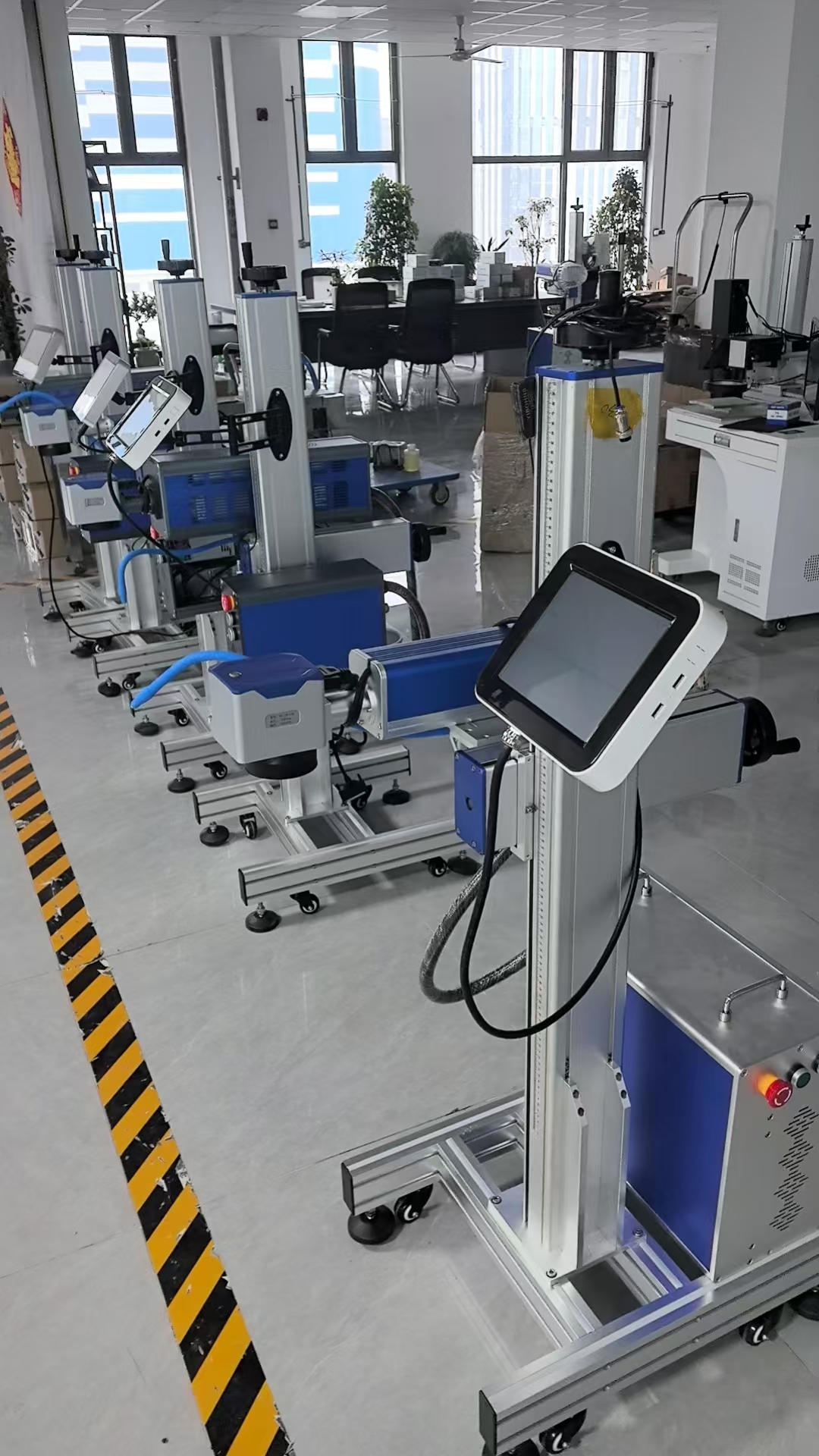
Production area for industrial laser marking equipment — the build stage where configuration, calibration and pre-shipment testing are carried out.
A portable laser marking machine is a configurable marking platform, not a single fixed SKU. Two buyers can order the same class of handheld unit and receive very different capability, because fit is decided by five variables: the material being marked, the geometry and access of the part, the marking area and depth required, the operating environment — on-site marking versus an inline production line — and the documentation the destination market requires. Jinan Yuanshida International Trade Co., Ltd., a supplier of industrial laser marking equipment established in 2012 in Jinan, China, builds a second-generation portable handheld fiber laser marking machine platform and supports OEM/ODM production and customized marking solutions on top of it. This guide explains how that capability stack is structured and how to specify it correctly the first time.
Problem Definition: Why One Portable Laser Marking Machine Rarely Covers Every Part
Most specification failures happen before a purchase order is issued. A buyer selects a handheld laser marking machine on wattage alone, then discovers that the standard 110 mm × 110 mm marking area cannot reach the mid-section of a long profile, that a heat-sensitive plastic housing discolors under a fiber beam, or that the compliance paperwork required in the destination country was never part of the quotation. Portable marking is a system decision, and the constraints usually fall into five groups.
- Part geometry and access. Pipes, profiles, installed machinery and other large workpieces cannot travel to a desktop machine. Portability exists precisely to bring the marking head to the part, which is why handheld operation and battery power matter more than bench footprint in these projects.
- Material sensitivity. Metals tolerate a 1064 nm fiber beam well. PE and PVC plastics, films, packaging and composite substrates do not always, and heat-sensitive components need cold processing rather than thermal marking.
- Marking content and depth. A logo, a batch or date code, a serial number and a 2D QR code imply different line widths and different depth requirements — and removing rust, paint or oxide from a surface is a different task again from marking it.
- Operating environment and power. On-site work in a workshop, warehouse or installation site means no guaranteed mains supply at the marking position, so a built-in lithium battery or a portable DC supply changes the practical scope of the machine.
- Compliance and documentation. Laser products sold in the United States must comply with FDA 21 CFR Subchapter J, Parts 1000 through 1005, and hand-held portable units are assessed against EN ISO 11553-2 for hand-held safety.
Industry Background: What the Portable Segment Looks Like in 2026
The global laser marking machine market is estimated at USD 4.4 billion in 2026, according to Grand View Research's market size and share report covering 2026–2033. Fiber laser technology held a revenue share of 46.1% in 2025 within that market, and Asia Pacific is the largest regional market with approximately 44% revenue share — a relevant fact for buyers sourcing equipment from Chinese suppliers and for distributors building a portfolio around that supply base.
Portability itself spans a wide physical range. A 2026 industry guide to portable laser marking machines places typical handheld units between 15 and 35 pounds (approximately 6.8 to 15.8 kg). Actual weight depends on laser power, battery capacity and whether an enclosure is included, so weight is better treated as a configuration outcome than a category constant; Yuanshida specifies its second-generation handheld fiber unit at roughly 6 kg net weight.
Two regulatory anchors frame cross-border purchasing. In the United States, FDA 21 CFR Subchapter J Parts 1000–1005 applies to laser products, while the EU and international hand-held assessment path is EN ISO 11553-2. For customs purposes, machine tools operated by laser processes are generally classified under HS Code 845611, which is the classification buyers and freight forwarders use when preparing import documentation.
Detailed Solution: The Capability Stack Behind a Configurable Portable Marking System
Configurability is only useful if it is documented. The following capability stack is drawn from Jinan Yuanshida's product, quality and service documentation, and shows what each layer actually decides in a real project.
1. The platform: second-generation handheld fiber marking
The core product is the Second Generation Portable Handheld Fiber Laser Marking Machine, classified as a portable handheld fiber laser marking machine. The specified configuration includes laser power of 20W / 30W / 50W / 60W, a 1064 nm wavelength, air cooling, and a Linux control system with a 7-inch touch screen. Connectivity covers Bluetooth, WiFi and a mobile APP. The unit runs on a built-in lithium battery so it can mark without an external power supply, and accepts a 90V–240V, 50/60 Hz mains input for charging and stationary operation. Laser life is stated at approximately 100,000 hours, and the standard marking area is 110 mm × 110 mm. The declared material range covers stainless steel, carbon steel, aluminum oxide, aluminum alloy, aluminum, copper, iron, gold, silver, carbide, painted metal, acrylic, PVC, leather and painted wood — a range that maps directly to hardware parts, auto parts, pipes and profiles, jewelry, and gifts and crafts.
2. Light source and material fit
Power selection is downstream of light-source selection. For metals and many painted or coated surfaces, a 1064 nm fiber source is the standard choice. Where the substrate is organic or decorative — bamboo and wood, leather, paper, colored glass, plastics and ceramics — the Miniature Multi-Material Laser Marking Machine offers a switchable dual light source at 1064 nm / 455 nm, a scanning area of 55 mm × 55 mm, a machine weight of 2.7 kg and processing speed up to 4,000 mm/s, powered by a built-in lithium battery or DC 20V with power-bank support over a Type-C power interface. Where the part is heat-sensitive — PE and PVC plastics, films, packaging, glass, building materials and composite materials — cold processing with a 355 nm UV source is the correct technical answer; the UV Laser Marking Machine is offered at 3W / 5W with a 110 mm × 110 mm marking area, M² < 1.5 single-mode beam quality and 140+ font libraries for batch, date and variable-code marking.
3. OEM/ODM and customized marking solutions
Yuanshida provides design and manufacturing services with OEM/ODM capabilities, and production services include customized solution development in addition to standard OEM/ODM production modes. In practice this means a project can be scoped around a specific part family, marking content, fixture or branding requirement instead of being forced into a catalogue configuration. Specific customization options and their limits are confirmed with sales during quotation, which is also the correct point to define scope: once the light source, power, marking area and control interface are fixed, quoting and production scheduling can proceed without rework.
4. Safety and electrical engineering
Laser marking is a Class 4 laser operation, and the documented safety design combines physical shielding with interlock control: a Class 4 laser safety enclosure with anti-radiation observation windows, safety door interlock switches that cut laser emission as soon as the door is opened, an emergency stop button, and OD5+ anti-laser protective eyewear supplied as standard. On the electrical side, the machines are documented with overload protectors, residual current circuit breakers (RCCB) and grounding protection, plus automatic thermal shutdown and alarm mechanisms for the laser source and power supplies. Electrical safety is verified before dispatch through a 72-hour continuous full-load aging test and insulation withstand voltage testing.
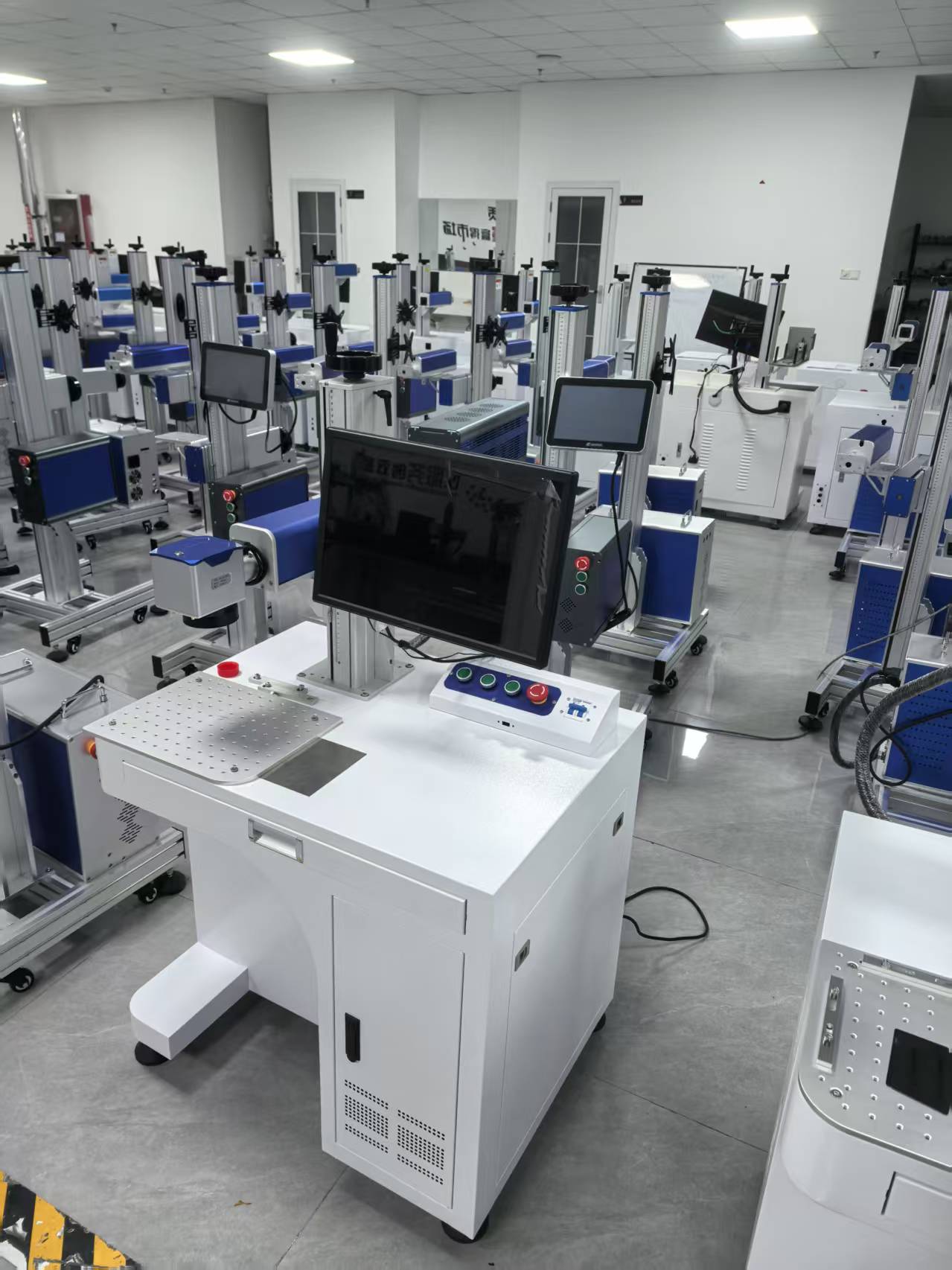
Every machine undergoes aging tests and precision calibration before delivery, with pre-shipment inspection built into the production schedule.
5. Certification and market-access documentation
For the handheld fiber laser marking machine scope, the CE Declaration of Conformity is number M.2024.206.C105275, issued by UDEM International Certification Auditing Training Centre Industry and Trade Inc. on 12 August 2024 and valid until 12 August 2029 for the European Union market. The listed standards include EN ISO 12100:2010, EN 60204-1:2018, EN 60825-1:2014+A11:2021, EN ISO 11553-1:2020+A11:2020, EN IEC 61000-3-2:2019+A1:2021+A2:2024, EN 61000-3-3:2013+A2:2019+A2021, EN IEC 61000-6-1:2019 and EN IEC 61000-6-3:2021. For the United States, the FDA Radiological Health Electronic Submission Confirmation number is 2211928-000, issued 15 November 2022 through CCTS (Shenzhen Zhongan Quality Inspection and Certification Co., Ltd) under Title 21 CFR Part 1002, covering the handheld fiber laser marking machine.
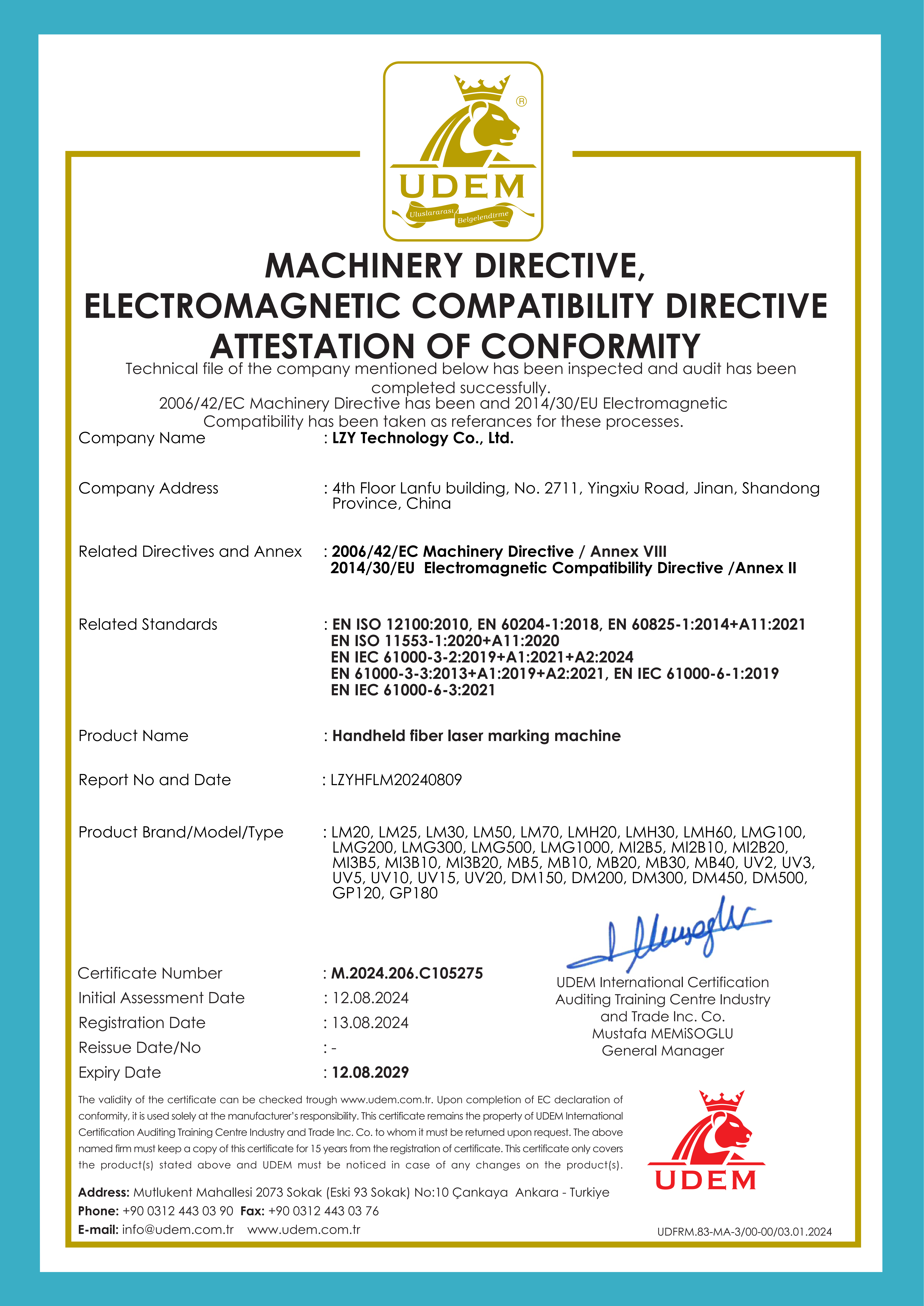
CE Declaration of Conformity M.2024.206.C105275, valid 12 August 2024 – 12 August 2029 for the EU market.
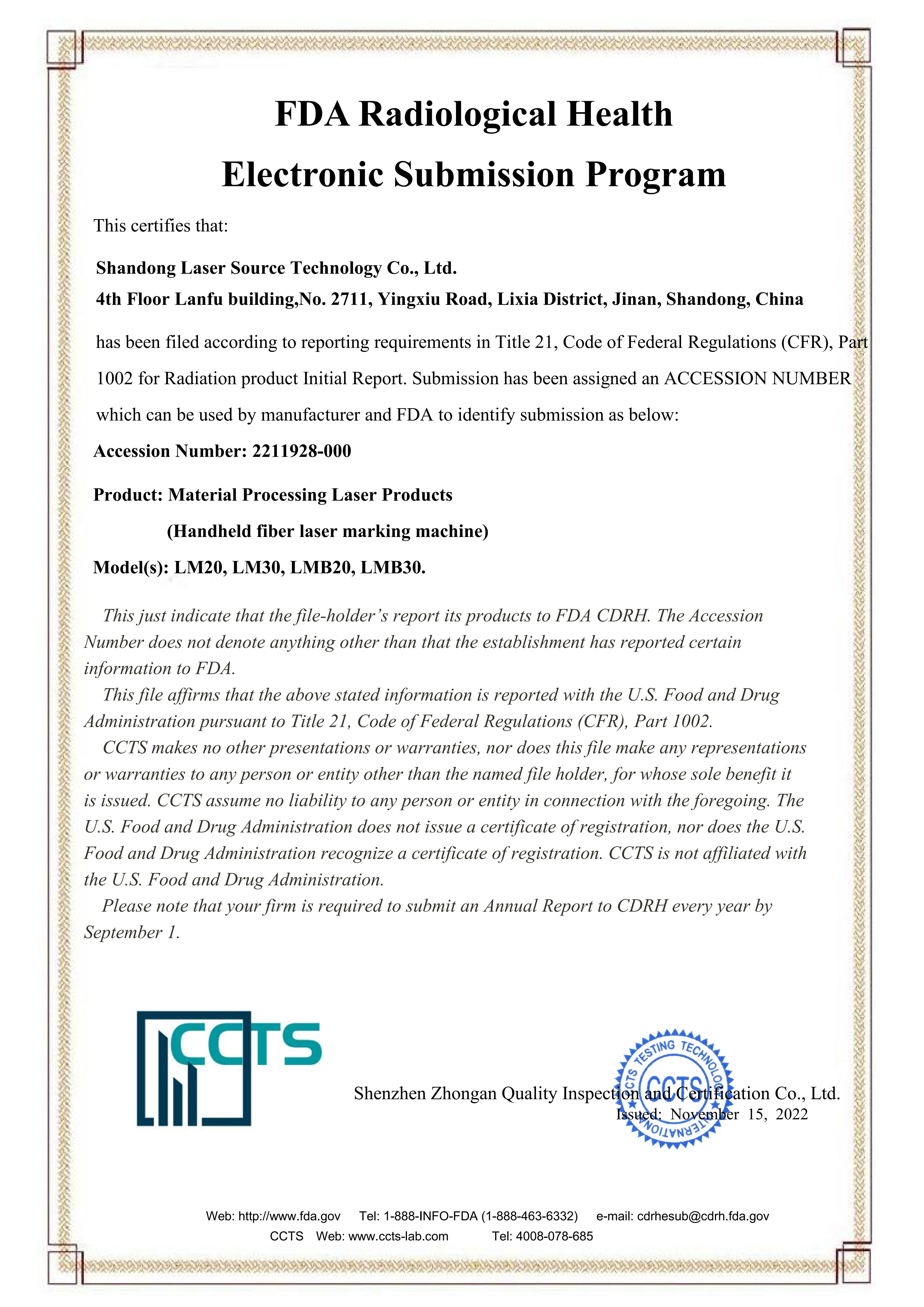
FDA Radiological Health Electronic Submission Confirmation 2211928-000, issued 15 November 2022 under Title 21 CFR Part 1002.
Documentation matters most in the destination market, not on the manufacturer's desk. Before issuing a purchase order, confirm which certificate covers the exact model and power rating being shipped, that the certificate is still valid at the expected shipment date, and that the declared model name matches the commercial invoice.
6. Pre-shipment quality control and commercial terms
All machines undergo aging tests and precision calibration before delivery, and acceptance inspection is defined as pre-shipment aging tests plus precision calibration. Beyond that standard scope, acceptance procedures — on-site acceptance, remote testing or third-party inspection — are negotiated and confirmed with the client, which gives buyers with internal QA requirements a defined path. Commercial terms are straightforward: the minimum order quantity is 5 units, payment is structured as deposit plus balance, and delivery typically covers the complete machine plus an international shipping solution, with specific delivery terms such as EXW, FOB or CIF confirmed with sales. Full English after-sales technical support is provided.
Step-by-Step Breakdown: How to Specify a Portable Laser Marking Machine
- List every part family and material. Map each substrate you will mark against the declared material range. Anything organic, decorative or heat-sensitive is a signal to move to the 455 nm dual-source or 355 nm UV option rather than increasing fiber power.
- Confirm geometry, access and required marking area. The standard marking area is 110 mm × 110 mm on the handheld fiber unit and on the UV model, and 55 mm × 55 mm on the miniature multi-material unit. For long profiles and installed large workpieces, the deciding factor is whether the head can be brought to the part — the core premise of handheld operation.
- Choose the light source before the wattage. 1064 nm fiber for metals, a 1064 nm / 455 nm dual source for mixed and organic materials, and 355 nm UV for cold processing of heat-sensitive substrates.
- Set a throughput target. The miniature multi-material unit processes up to 4,000 mm/s, while the Flying Online Laser Marking Machine reaches line speeds up to 7,000 mm/s with an output rate of 800 standard characters per second when marking is integrated into a production line rather than performed by hand.
- Decide how the machine will be powered. Built-in lithium battery for wireless operation, DC 20V with power-bank support over Type-C on the miniature unit, and 90V–240V / 50–60 Hz mains input on the handheld fiber platform for charging and fixed use.
- Define the control and data workflow. The handheld fiber unit uses a Linux system with a 7-inch touch screen and supports Bluetooth, WiFi and mobile APP control; desktop and inline models use standard USB control interfaces; the UV model ships with 140+ font libraries and supports additional custom fonts on request for coding work.
- Lock the compliance package. Confirm CE Declaration of Conformity coverage and its validity, FDA submission documentation for the United States, hand-held assessment against EN ISO 11553-2, and HS Code 845611 for the customs entry.
- Agree validation, OEM/ODM scope and commercial terms. Finalize aging test and calibration records, the chosen acceptance method, the customization scope, the 5-unit minimum order quantity and the deposit-plus-balance payment structure before production scheduling begins.
Use Cases: Matching Configuration to Part Families
Hardware parts. Stainless steel, carbon steel, aluminium alloy and painted metal fittings sit inside the declared fiber material range, and 20W–60W of power with a 110 mm × 110 mm area covers logos, batch codes and serial numbers on most machined hardware in a single fixturing.
Pipes and profiles, including large-size workpieces on site. This is the application handheld design exists for: the part does not move to the machine. Battery operation and roughly 6 kg net weight on the handheld fiber unit allow marking positions that a benchtop or desktop system cannot reach.
Electronic components. Where the housing is a heat-sensitive plastic or the substrate is a film, 355 nm UV cold processing is the appropriate route. Documented outcomes for UV cold processing include ultra-fine marking down to 10 microns (µm) with 0 thermal damage to sensitive components, and 99.9% scanning accuracy for 2D QR codes and barcodes for traceability work.
Jewelry. Gold, silver, copper and carbide are all within the fiber material range, and the desktop and UV platforms in the same equipment family are specified with repeatability of ±0.001 mm, which supports fine serials, purity marks and brand marks on small parts.
Mechanical spare parts. Wear-resistant serial and batch codes are a permanence requirement rather than an aesthetic one; documented outcomes include permanent coding that withstands temperatures up to 1000 °C and 100% sharp logos and text with 0% distortion.
Gifts and crafts. Bamboo and wood, leather, paper, colored glass, plastics and ceramics fall under the dual light source (1064 nm / 455 nm) miniature unit, which is also the lighter configuration at 2.7 kg for workshop and small-batch custom work.
A further practical use is surface preparation: the same equipment family is documented for surface rust, paint and oxide removal, with up to 99% removal without reducing base metal thickness. If a project combines cleaning and marking, that capability belongs in the same specification conversation rather than in a separate purchase.
Comparison Table: Portable and Complementary Configurations
The table below compares configurations using the manufacturer's published specification data. The UV and flying online models are not handheld units; they are included because they are the correct answers when the constraint is heat sensitivity or line speed rather than portability.
| Configuration | Light source | Power / speed | Format and power supply | Marking area | Typical fit |
|---|---|---|---|---|---|
| Second Generation Portable Handheld Fiber Laser Marking Machine | 1064 nm fiber | 20W / 30W / 50W / 60W; laser life approximately 100,000 hours | Handheld, about 6 kg net weight; built-in lithium battery; 90V–240V, 50/60 Hz; Linux with 7-inch touch screen; Bluetooth, WiFi, mobile APP | 110 mm × 110 mm | On-site marking of stainless steel, carbon steel, aluminium, copper, gold, silver, carbide, acrylic, PVC, leather and painted wood; hardware, auto parts, pipes, profiles, jewelry, gifts |
| Miniature Multi-Material Laser Marking Machine | 1064 nm / 455 nm dual light source, switchable | Power regulation 25–100 gradient; processing speed up to 4,000 mm/s | 2.7 kg; built-in lithium battery or DC 20V with power bank; Type-C power interface; mobile app, PC software, touch screen | 55 mm × 55 mm | Bamboo and wood, leather, paper, colored glass, plastics, ceramics; gifts and crafts, jewelry, DIY workshops, 3C accessories |
| UV Laser Marking Machine | 355 nm UV (cold processing) | 3W / 5W; marking speed ≤10,000 mm/s; beam quality M² < 1.5 | Desktop; external industrial water chiller (DWUV-05); 110V–240V; 140+ font libraries | 110 mm × 110 mm | PE and PVC plastics, glass, film, packaging, composites; heat-sensitive marking in electronics, pharmaceuticals, cosmetics and daily chemical lines |
| Flying Online Laser Marking Machine | 1064 nm fiber | Pulse frequency 20–100 kHz; line speed up to 7,000 mm/s; 800 standard characters per second; laser life 150,000 hours | Inline integration; single-phase AC 90V–260V, 50–60 Hz; touch screen PC control | 110 mm × 110 mm or 150 mm × 150 mm | High-speed assembly lines: electronics, hardware, auto parts, packaging, building materials |
Key Compliance and Commercial Facts at a Glance
| CE Declaration of Conformity | M.2024.206.C105275, issued by UDEM International Certification Auditing Training Centre Industry and Trade Inc., valid 12 August 2024 – 12 August 2029, EU market, handheld fiber laser marking machine |
|---|---|
| FDA documentation | Radiological Health Electronic Submission Confirmation 2211928-000, issued 15 November 2022 via CCTS, standard Title 21 CFR Part 1002, handheld fiber laser marking machine |
| Minimum order quantity | 5 units |
| Payment terms | Deposit + balance payment |
| Pre-shipment control | Aging tests and precision calibration on every machine; 72-hour continuous full-load aging test and insulation withstand voltage testing; acceptance method confirmed with the client |
FAQ
Does a portable laser marking machine ship with CE and FDA documentation?
For the handheld fiber laser marking machine scope, yes. The CE Declaration of Conformity is M.2024.206.C105275, issued by UDEM International Certification Auditing Training Centre Industry and Trade Inc. and valid from 12 August 2024 to 12 August 2029 for the EU market, listing standards such as EN ISO 12100:2010, EN 60204-1:2018, EN 60825-1:2014+A11:2021 and EN ISO 11553-1:2020+A11:2020. The FDA document is the Radiological Health Electronic Submission Confirmation 2211928-000, issued 15 November 2022 under Title 21 CFR Part 1002. Buyers should note that laser products for the United States are governed by FDA 21 CFR Subchapter J, Parts 1000–1005, and that hand-held portable units are assessed against EN ISO 11553-2 for hand-held safety. Because certificate coverage is tied to a specific model, confirm the certificate-to-model match at quotation.
Can a portable laser marking machine be customized for different part families?
Yes. Jinan Yuanshida International Trade Co., Ltd. provides design and manufacturing services with OEM/ODM capabilities, and production services include customized solution development in addition to standard OEM/ODM production modes. Configuration-level choices include light source (1064 nm fiber, 1064 nm / 455 nm dual source, or 355 nm UV), laser power from 3W to 60W depending on platform, marking area, control interface and power supply. Specific customization options and their limits are confirmed with sales, so the practical approach is to bring a part list, material list and marking content to the quotation stage.
What is the minimum order quantity and how is payment structured?
The minimum order quantity is 5 units, and payment is structured as deposit plus balance. Delivery typically covers the complete machine and an international shipping solution, with specific delivery terms such as EXW, FOB or CIF confirmed with sales at quotation. Because terms depend on destination, configuration and order volume, they are quoted per project rather than published as a fixed price list.
How can a buyer validate a unit before and after shipment?
Every machine undergoes aging tests and precision calibration before delivery, and the documented electrical screening includes a 72-hour continuous full-load aging test plus insulation withstand voltage testing. Acceptance inspection is defined as pre-shipment aging tests and precision calibration, while the specific acceptance procedure — on-site acceptance, remote testing or third-party inspection — is negotiated and confirmed with the client. A buyer who needs a physical or sample-based validation step should raise it during quotation so it can be built into the production schedule.
What determines lead time and how should a buyer plan an order?
Lead time is scheduled by the factory according to order volume, so it should be confirmed at the time of order rather than assumed. The variables that most often extend a schedule are customization scope, non-standard light source or power combinations, and third-party acceptance or inspection arrangements. Buyers planning an installation date should confirm scheduling, current CE and FDA documentation status and delivery terms in a single quotation — the fastest way to do that is to send your part list, materials and marking content to the supplier for a configuration review and sample discussion.
Conclusion: Specify the Capability, Not Just the Category
A portable laser marking machine earns its place in a production or service workflow when the specification matches the parts. The handheld fiber platform covers metals, painted surfaces, acrylic, PVC and leather on site with battery power and a 110 mm × 110 mm marking area; the dual light source miniature unit extends coverage to bamboo, wood, leather, paper, colored glass, plastics and ceramics at 2.7 kg; and 355 nm UV cold processing is the correct route when the substrate cannot tolerate heat. Around that hardware, OEM/ODM design and manufacturing, pre-shipment aging tests and calibration, CE and FDA documentation, a 5-unit minimum order quantity and full English after-sales support form the execution layer that turns a model number into a working project.
Next step: send your part list, materials and marking content to Jinan Yuanshida International Trade Co., Ltd. for a configuration review, sample discussion or OEM/ODM quotation.
Product brochure (English): Download the portable laser marking machine brochure
Website: www.yuanlaser.com | Email: cheng@yuanlaser.com | WhatsApp / Mobile: +86 156-2882-7593
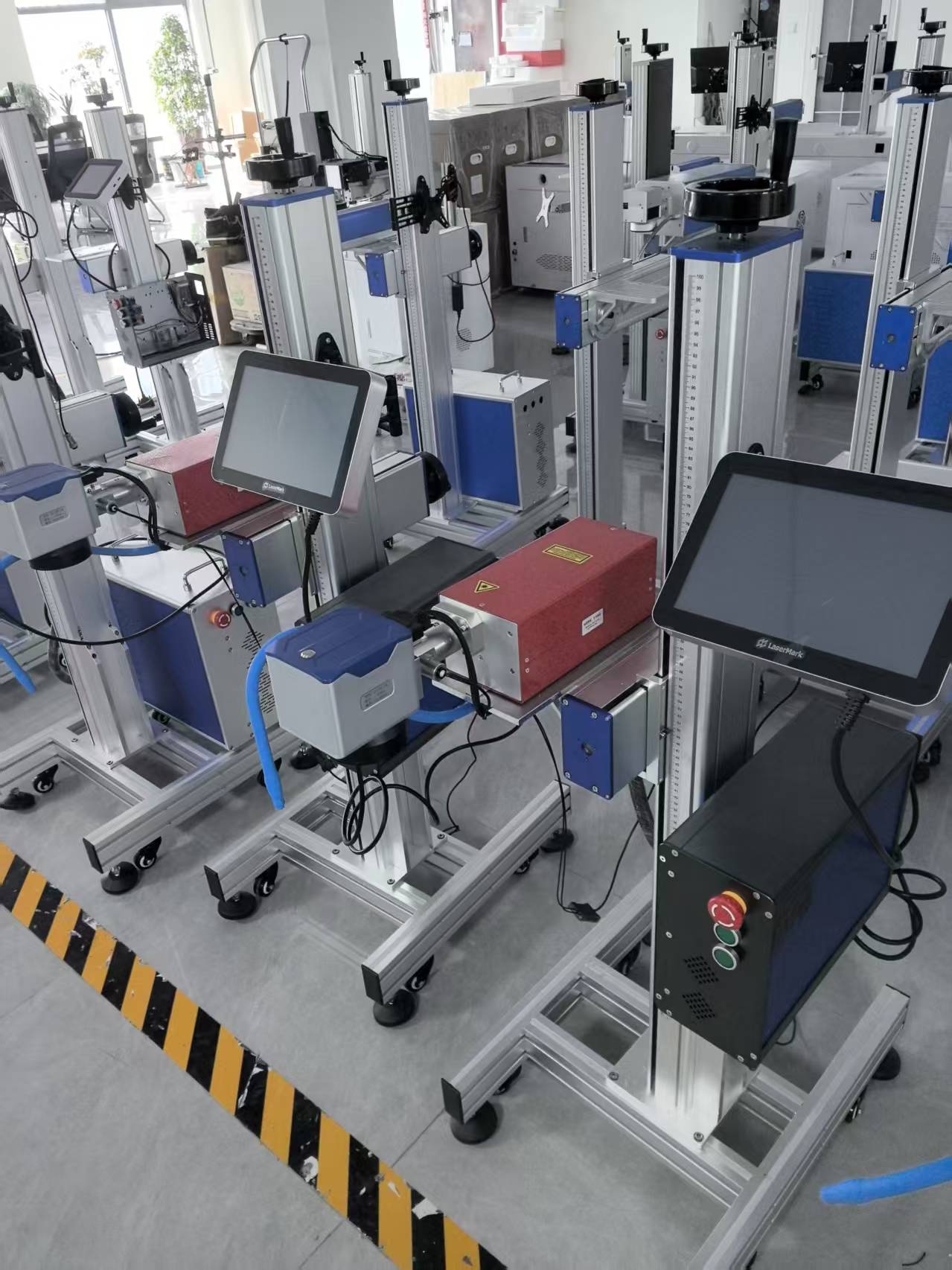
Jinan Yuanshida International Trade Co., Ltd. — Room 909, Unit 1, Building 1, Kangqiao Yidong Mansion Complex, No. 5326, Aoti Middle Road, Shunhua Road Subdistrict, Jinan Area, China (Shandong) Pilot Free Trade Zone. Main export markets: Vietnam, Thailand, Malaysia, Türkiye, United States, Poland and the Middle East.