Custom Glassware OEM Capability for Lighting Glass Components
Custom Glassware OEM Capability for Lighting Glass Components
Custom glassware OEM capability for lighting components is not defined by a catalogue photo or a unit price. It is defined by the ability to hold a fitter opening, to match the glass material to the fixture's heat load, to finish the surface consistently, to document compliance, and to repeat an approved sample at volume. Jingxin Glassware — Yancheng Jingxin Glassware Co., Ltd., a glass manufacturer based in Yancheng, Jiangsu Province, China — produces custom glass lamp shades, light globes and lamp covers on both soda-lime and borosilicate production lines, and supports them with OEM/ODM engineering, in-house surface finishing and a one-stop export service.
This guide is written for lighting brands, importers, and procurement teams that are already past initial discovery and are now evaluating whether a specific supplier can actually execute a lighting glass program — from sample approval through container load.
Hand-blown opal white glass globe lamp shades produced as custom lighting glass components.
What "OEM Capability" Actually Means for a Lighting Glass Component
For a decorative object, "custom" usually means a colour or a logo change. For a lighting glass component, custom work has to satisfy mechanical and thermal constraints at the same time. A lamp shade or light globe is a functional part of a fixture, so it must fit a defined lamp holder, survive the heat the fixture generates, transmit or diffuse light in a predictable way, and arrive at the assembly line or retail shelf without breakage.
In practice, a review of lighting glass OEM capability comes down to a set of verifiable engineering variables rather than marketing statements:
- Fitter-opening control — whether the supplier can hold the opening diameter for standard E27, E14 or G9 lamp holders, or a custom interface, with repeatable dimensional accuracy.
- Material selection — whether the factory can produce in both soda-lime and borosilicate glass, and advise which is appropriate for a given heat load.
- Forming method — hand-blown for artistic individuality, or machine-pressed for tight dimensional tolerance and cost efficiency at volume.
- Surface finishing — frosting, etching, ribbing, tinting, printing or sprayed colour that stays consistent across a production run.
- Compliance evidence — test reports and audit documents that can be handed to a retailer's compliance team.
- Scale-up discipline — the ability to move from an approved sample to a repeatable mass-production batch, and to package the result for export without transit damage.
A supplier that answers only the first two of these is a glass seller. A supplier that can answer all six is an OEM partner.
The Problem: Why Lighting Glass Programs Slip After the Sample Is Approved
Most sourcing failures in lighting glass do not happen at the sample stage. They happen between sample approval and mass production, or after delivery. The recurring patterns are well documented in buyer-side procurement questions:
- Sample-to-mass mismatch. The approved sample fits the fixture, but production units vary in fitter opening size, so the shade sits loose or will not seat.
- Thermal cracking in service. A soda-lime shade is used in a fixture whose operating temperature exceeds what that glass can tolerate, and the part fails under thermal shock instead of at incoming inspection.
- Finish inconsistency. Frosting density, sandblasting depth or printed colour drifts between batches because finishing is not monitored in-process.
- Compliance gaps. A retailer asks for RoHS documentation or a social-compliance audit and the supplier cannot produce it.
- Transit breakage. Glass is fragile, and packaging that protects a single unit in a courier box often fails inside a sea-freight container.
- Documentation friction. Customs clearance, shipping marks, and certificates (including FORM E and CO) are handled poorly, delaying the shipment.
Each of these problems is a capability question, not a price question. The rest of this article maps Jingxin Glassware's capability stack against those six failure points, using the company's own product and process facts.
Industry Background: Lighting Glass Is a Defined, Tradeable Category
Lighting glass is not an informal sub-category of general glassware. It has its own place in customs nomenclature: national tariff schedules explicitly list "glass envelopes (including bulbs and tubes); open, and glass parts thereof, without fittings, for electric lighting" within the glass and glassware chapter (HS chapter 70). That classification pathway means lighting glass components move through formal, documented import and export routes rather than being treated as generic decorative goods.
At the trade-data level, the same chapter is tracked through the United Nations Commodity Trade Statistics Database (UN Comtrade), which stores more than one billion trade records from 1962 and receives annual international trade statistics from over 140 reporter countries. In other words, a buyer evaluating a lighting glass supplier is working inside a category that has defined customs language and measurable cross-border flow.
Two glass material families dominate this category. Soda-lime glass is the mainstream material for decorative and lighting products where optical clarity and cost efficiency matter most. Borosilicate glass is used where heat and thermal shock are the governing constraints, and it typically offers roughly three to five times the thermal shock resistance of soda-lime glass.
A supplier that runs only one of these two material lines can serve only part of a lighting brand's range. A supplier that runs both can take a single brief — say, a decorative opal globe plus a high-temperature industrial cover — and keep it in one production and QC system.
Jingxin Glassware's Custom Glassware Capability Stack
Jingxin Glassware combines multi-material manufacturing with OEM/ODM engineering, in-house surface finishing, documented quality control, and an integrated export service. Each layer is described below in the terms a procurement team can check.
1. Multi-material manufacturing across lighting and adjacent categories
The company maintains production lines for both soda-lime and borosilicate glass. Custom soda-lime work covers products such as lamp shades, candle vessels, drinkware, bottles, and storage containers. Custom borosilicate work covers lamp shades, laboratory instruments, high-temperature glassware, teapots, cups, and home decoration glassware. This two-material structure matters for a lighting buyer because a single brand's range usually spans a decorative table lamp (where soda-lime clarity is ideal) and an industrial or high-heat fixture (where borosilicate is required).
Concrete examples from the current lighting range include:
| Model | Component | Key specification |
|---|---|---|
| JX1004 | Opal White Glass Globe Lamp Shade | Diameter 15 cm, opening 6 cm (E27), 3.0–5 mm wall, solid opal white soda-lime glass, frosted matte finish |
| JX1416 | Double Wall Glass G9 Light Globe | Diameter 10 cm, G9 thread fitter, 1.5–2 mm wall, borosilicate glass, clear outer / frosted inner |
| JX1407 | Borosilicate Glass Globe Lamp Shade | Diameter 15 cm, opening 4.5 cm (E27), 2 mm wall, threaded bottom fitter, hand-blown |
| JXHB-010 | Cylinder Glass Tube Light Shade | Diameter 10 cm, height 15 cm, opening 4.2 cm (E27), 3–4 mm wall, milk frosted finish |
| JX1830 | Explosion-Proof Borosilicate Glass Lamp Shade | Diameter 118 mm, height 132 mm, 6.0–10.0 mm press-moulded wall, IK10 impact rating, −40 °C to +260 °C |
| JX1832 | Pressed Borosilicate Signal Glass Lamp Shade | Diameter 11 cm, height 13 cm, 5 mm pressed wall, working range −60 °C to +450 °C |
2. OEM and ODM engineering, from brief to validated prototype
The company provides OEM and ODM manufacturing services. OEM production runs from concept development through finished production, while ODM design and production places in-house designers alongside the client from initial concept to final production. The company supports both drawing-based and concept-based customization, and custom mould creation is available for shapes that do not exist in the existing tooling.
Two capability signals are relevant to a buyer assessing risk:
- Prototype validation before mass production. New product design and development are carried out against the client brief, and prototype testing and validation are performed before a design is committed to volume.
- In-house IP. The company holds 16 national patents covering product design, manufacturing processes, and functional improvements, and it conducts patent-pending product development in collaboration with clients.
For lighting projects specifically, the customization surface includes product specifications (size, shape, colour, surface finish), logo application (laser engraving, fire decal, silk-screen printing, sandblasting, spray painting, hot stamping), and packaging formats (neutral box, colour box, window box, flip-top box, rigid gift box, folding gift box, anti-shock package box).
3. In-house surface finishing with dedicated production lines
Surface finish is where lighting glass most often diverges from spec, because finishing is a separate process from forming. Jingxin Glassware operates professional production lines dedicated to surface processing, and offers seven named finishing techniques:
- Acid pickling / acid etching — matte and frosted glass effects
- Sandblasting — opaque, textured surfaces
- Silk-screen printing — logos, patterns and text
- Stamping — decorative embossing
- Decalcomania — decal transfer printing for complex patterns
- Spray painting — custom colours and finishes
- Electroplating — metallic surface effects
Multiple techniques can be combined on a single product to achieve complex decorative effects, and the finishing capability covers both soda-lime and borosilicate substrates. Finishing is available either as a standalone service or as part of a full OEM/ODM package. Because the finishing lines are in-house, the client is not exposed to the coordination risk of a separate subcontracted finisher.
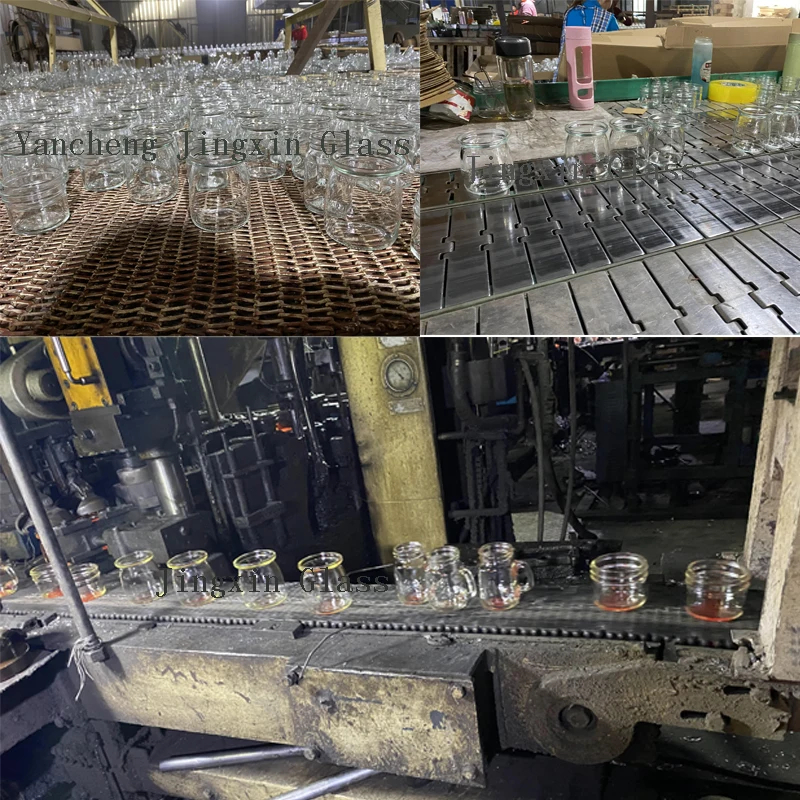
In-house surface finishing: etching, sandblasting, printing and spraying are handled on dedicated lines.
4. Quality control, certifications and traceability
The company applies a documented quality management system with inspection at every production stage, from raw material to finished goods, and performs 100% pre-shipment inspection. Third-party inspection (SGS) is available on request. Raw material sourcing follows defined quality standards with COA (Certificate of Analysis) documentation.
The company holds 19+ professional certifications. Two are directly useful when a lighting buyer has to clear a retailer's compliance gate:
| Credential | Type | Number / Authority | Scope |
|---|---|---|---|
| RoHS | Product compliance (chemical test) | 251016112GZU-001 / Intertek | Glass lamp shades (soda-lime and borosilicate lighting glass) |
| SMETA-4P | Social compliance / ethical audit | ZAA600149732 / TUV Rheinland | All glass products and the manufacturing site |
The RoHS report references the IEC 62321 test series for cadmium, lead, mercury and hexavalent chromium, which is the standard evidence format most EU and global buyers ask for on lighting glass. The SMETA-4P audit was conducted against the four-pillar methodology covering labour standards, health and safety, environment, and business ethics — the audit format that many EU and US retailers require from a supply-chain partner.
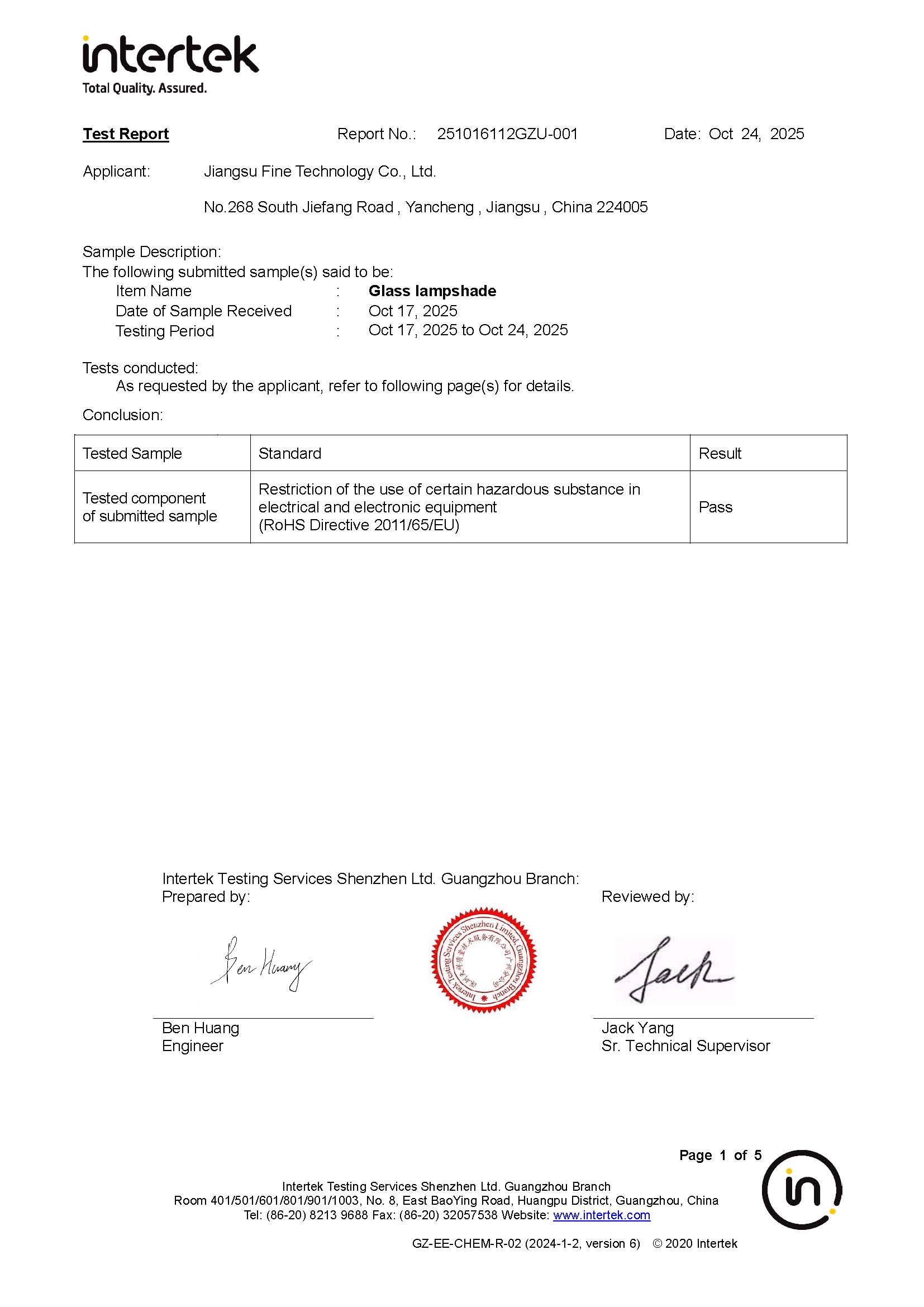
RoHS test report 251016112GZU-001 (Intertek) covering soda-lime and borosilicate lighting glass.
5. One-stop supply chain from production to export delivery
Jingxin Glassware delivers production services under an integrated supply chain model with a single point of contact for international buyers. The service consolidates the procurement steps — design support, sampling, mass production, export documentation and logistics — into one workflow, and order information is systematised for real-time order tracking.
Logistics options include sea, air, rail, truck and express, selected to match each order's cost and timeline. The export team handles customs clearance documentation, shipping marks, FORM E, CO, and other certificates, and packaging is specified according to product fragility, shipment method, and destination market. This is the layer that addresses the "transit breakage" and "documentation friction" failure points directly.
Step-by-Step: How a Custom Lighting Glass Component Moves from Brief to Delivery
The following sequence describes how a custom glassware project is typically structured at Jingxin Glassware. Lead times and MOQ figures below reflect the company's published ranges; they should still be reconfirmed against the specific specification of each project.
- Brief and material selection. The buyer provides the fixture interface (E27, E14, G9 or custom), the target dimensions, the light-transmission or diffusion requirement, and the operating environment. The company provides technical consultation on material selection — soda-lime for standard decorative lighting, borosilicate where heat or thermal shock governs.
- Concept, drawing and mould. For ODM work, in-house designers develop the concept. For OEM work, the client's drawing is translated into production tooling. Custom mould creation is available for unique glass shapes.
- Sample development and validation. Sample development is handled by experienced technicians. Sample lead time is typically 5–7 working days after artwork and specification confirmation, with longer windows (such as 15–20 days on more complex press-moulded parts) depending on the component. Prototype testing and validation are completed before mass production begins.
- Surface finishing. Once the glass form is approved, the required finishes — etching, sandblasting, printing, decal, spray or a combination — are applied on the dedicated finishing lines.
- Inspection and compliance documentation. In-process inspection runs through production, followed by 100% pre-shipment inspection. Third-party inspection (SGS) can be arranged, and material or compliance reports (such as RoHS and REACH documents) can be supplied on request.
- Mass production. After sample approval, mass production lead time is typically 20–30 working days, extending to roughly 25–35 working days for more complex press-moulded or custom items.
- Packaging, logistics and after-sales. Packaging is specified to the product's fragility and the shipment mode. The export team prepares documentation and ships by the agreed route. After-sales support covers quality issue handling and warranty arrangements per product terms.
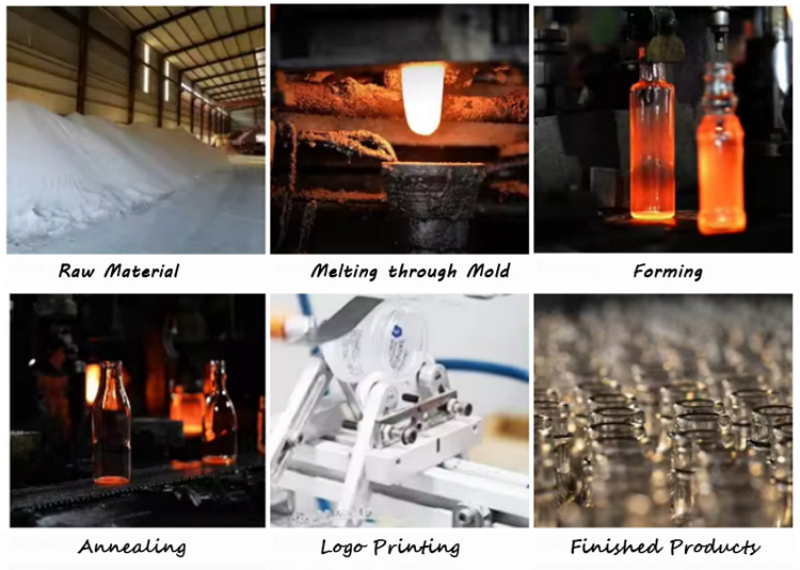
Process control runs from raw-material intake through finished-goods inspection.
Use Cases: Where Jingxin Glassware Components Have Been Deployed
Capability statements are strongest when they map to real projects. The following applications come from the company's own project records.
Luxury retail lighting — Galeries Lafayette, Paris
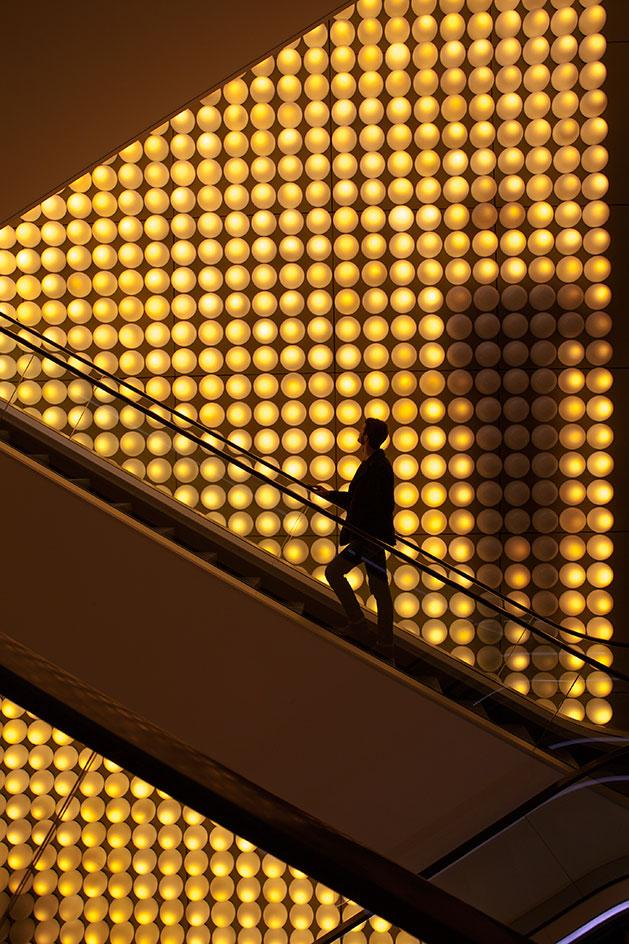
In 2015, the company worked with a French client to design and produce opal white glass globe lamp shades for Galeries Lafayette in Paris. The requirement was a permanent wall-decoration and ambient-lighting installation: ultra-thick glass for durability in a high-traffic store, consistent opal-white colour uniformity across every unit, and precise dimensional accuracy for the wall-mounting structure. The opal shading was chosen because it diffuses light evenly and eliminates glare in a luxury retail environment. This project illustrates the combination of aesthetic consistency and dimensional control that a large commercial lighting installation demands.
Marine and aquaculture lighting — deep-sea fish farming, Chile
In 2018, the company produced a batch of ultra-thick transparent lamp shades with pressure and seawater resistance for a Chilean customer, designed for deep-sea fish farming. The working condition required the glass to withstand high pressure, saltwater corrosion, and continuous immersion while maintaining optical clarity underwater. The project demonstrates custom glass formulation work — extending beyond decorative lighting into engineered components for demanding industrial environments.
Industrial and safety lighting glass
For hazardous-location and signal lighting, the company produces press-moulded borosilicate covers such as the JX1830 explosion-proof shade (IK10 impact rating, −40 °C to +260 °C) and the JX1832 signal shade (continuous working range −60 °C to +450 °C). These components serve petroleum and chemical sites, mining, marine and offshore projects, and aviation, railway and port signal installations. In this segment, the key custom requirements are wall thickness, impact resistance and colour fidelity of the signal glass, rather than decorative appearance.
Home décor and gift programs
Home décor and gift retailers source decorative glass such as oil lamps and terrariums from the company in 1,000–5,000 unit orders. For these programs, the custom requirements are heat-resistant glass for safe flame use, stable base design, and customizable colours, shapes and sizes. The company also supplies custom glass reed diffuser bottles to home-fragrance brands, where the critical technical points are neck precision for reed fit and chemical inertness against essential oils.
Laboratory glassware
The same borosilicate capability serves research institutions, pharmaceutical labs and universities. Products such as the handled glass beaker (JX6102), the borosilicate 3.3 laboratory beaker (JX6109) and the Erlenmeyer flask (JX6207) are produced with dimensional accuracy for volume calibration, chemical stability, and autoclave compatibility for sterilisation. This is a useful reference point for a lighting buyer, because it demonstrates the tolerance and thermal discipline the factory applies to high-temperature borosilicate work in general.
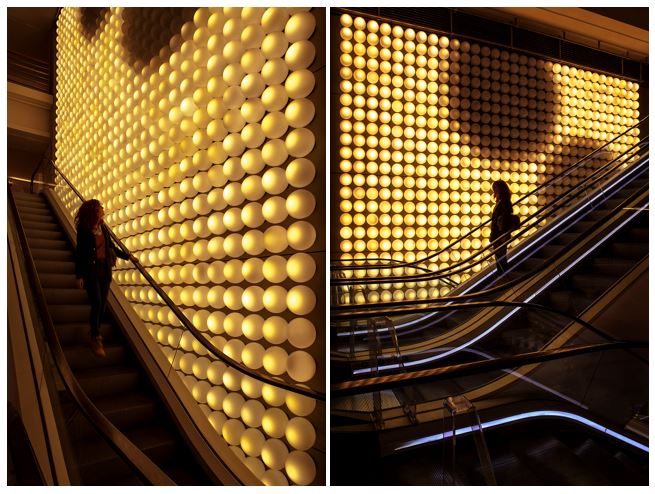
Opal glass globes used as permanent ambient lighting in a luxury retail installation.
Comparison: Choosing the Right Glass and the Right Forming Method
Two decisions drive most of the technical outcome in a lighting glass project: which material, and which forming method. The tables below summarise the differences using the company's published material and process data.
Material selection: soda-lime vs borosilicate
| Attribute | Soda-lime glass | Borosilicate glass |
|---|---|---|
| Typical role | Decorative and standard lighting glass, candle vessels, drinkware, bottles, storage containers | High-temperature lighting glass, industrial and signal covers, laboratory instruments, high-temperature glassware |
| Thermal shock resistance | Limited | Typically 3–5 times that of soda-lime glass |
| Coefficient of thermal expansion | Approximately 9 × 10⁻⁶ / °C | Approximately 3.3 × 10⁻⁶ / °C |
| Practical working temperature | Up to about 120 °C | Example parts rated −40 °C to +260 °C; signal glass up to +450 °C |
| Optical character | Optical clarity for lighting and decorative items; opal and frosted finishes available | Clear or frosted with high transparency and stable optical performance over service life |
| Typical lighting use | Opal globes, ribbed pendant shades, frosted cylinders, candle cups | High-heat fixtures, explosion-proof covers, signal shades, marine and industrial lighting |
Forming method: hand-blown vs machine-pressed
| Attribute | Hand-blown glass | Machine-pressed glass |
|---|---|---|
| Aesthetic character | Unique per piece; subtle variations, bubbles and swirls are natural hallmarks | Uniform and repeatable; consistent from unit to unit |
| Dimensional consistency | Wider tolerance | Tighter dimensional accuracy and uniform wall thickness |
| Relative unit cost | Higher | Lower |
| Best-fit applications | Decorative and design-led lighting, boutique and art installations | Industrial, commercial and high-volume lighting components |
The practical rule for buyers is straightforward: choose by constraint, not by preference. If the fixture runs hot, or the environment is marine or hazardous, borosilicate and press-moulding are the appropriate combination. If the goal is a design-led pendant range where each shade legitimately differs slightly, hand-blown soda-lime or borosilicate delivers the intended character.
FAQ: Custom Glassware OEM for Lighting Components
Are Jingxin's custom glass lamp shades RoHS and REACH compliant, and what certifications can support a lighting project?
Yes. The company holds 19+ professional certifications, and its lighting glass relevant credentials include a RoHS test report issued by Intertek (certificate No. 251016112GZU-001) covering glass lamp shades in both soda-lime and borosilicate glass, tested against the IEC 62321 series for cadmium, lead, mercury and hexavalent chromium. The company also holds a SMETA-4P social compliance audit from TUV Rheinland (No. ZAA600149732). Test reports and audit documentation are available upon customer request, which allows a lighting brand to pass retailer compliance gates that require RoHS and REACH evidence.
Can custom glassware be produced for specific lamp holder types and surface finish requirements?
Yes. The company supports custom fitter openings for standard E27, E14 and G9 holders as well as custom interfaces, and produces custom sizes, shapes and colours across both soda-lime and borosilicate material lines. Custom mould creation is available for unique shapes, and both drawing-based and concept-based OEM/ODM customization are supported. On finishing, the company applies acid pickling or etching, sandblasting, silk-screen printing, stamping, decalcomania, spray painting and electroplating on dedicated in-house lines, and multiple techniques can be combined on a single product. Logo application options include laser engraving, fire decal, silk screen, sandblasting, spray painting and hot stamping.
What is the minimum order quantity for custom glass lighting components?
The published MOQ is 500 pieces for hand-made glass and 2,000 pieces for machine-made glass on select stock items, with custom MOQ negotiable for smaller trial orders. For select stock items a lower starting quantity may be available. Buyers planning a first program with a new shape should confirm the MOQ in writing with the supplier before tooling is committed, because custom mould work is normally tied to a higher minimum than a stock colour or finish change.
Can I request a sample before placing a bulk order?
Yes. Samples are available upon request; sample cost may apply and freight is collect. Sample lead time is typically 5–7 days after artwork and specification confirmation, though more complex press-moulded items can require a longer sampling window. Because prototype testing and validation are completed before mass production, an approved sample becomes the reference for the production batch — which is the single most effective way to avoid the sample-to-mass fitter-opening mismatch described earlier in this article.
What is the typical lead time, and how do I start a custom glassware inquiry?
Sample lead time is typically 5–7 days after specification confirmation. Mass production lead time is typically 20–30 working days after sample approval, extending to roughly 25–35 working days for more complex custom or press-moulded items. Payment terms are normally 30% T/T deposit on order confirmation with the 70% balance before shipment, and delivery terms are primarily FOB Shanghai, with CIF and EXW available on request. To start, send the fixture interface, target dimensions, material preference (or the operating temperature if you are unsure), expected annual volume and any artwork to Jingxin Glassware — the team will confirm material selection, sample timing and MOQ for the specific project. You can reach the company at jerry@cn-glassware.com or request a quotation through www.cn-glassware.com.
Conclusion
Custom glassware OEM capability for lighting components is a set of engineering commitments, not a slogan. The checkable items are material range, forming method, fitter-opening control, finishing consistency, compliance evidence and scale-up discipline. Jingxin Glassware addresses each of these with two operating material lines (soda-lime and borosilicate), OEM/ODM engineering supported by 16 national patents, seven in-house surface finishing techniques, 100% pre-shipment inspection with SGS available, RoHS and SMETA-4P documentation, and a one-stop supply chain that consolidates production through export delivery for international buyers.
The fastest way to test any supplier against these criteria is to start with a sample that matches the real fixture interface and operating temperature, then confirm the MOQ, lead time and compliance documents before committing to tooling.
Next step: sample, quotation and catalogue
To evaluate a specific lighting glass component, request a sample or quotation with your fixture interface and target dimensions. Download the glass lamp shade catalogue for the current model range, specifications and finish options.
Download the catalogue: Glass Lamp Shades Catalogue — Yancheng Jingxin Glassware Co., Ltd.
Contact: Mr. Jerry Zhou · Email: jerry@cn-glassware.com · Tel: +86 515-8822 9059 · WhatsApp: +86 180 1962 7905 · Website: www.cn-glassware.com
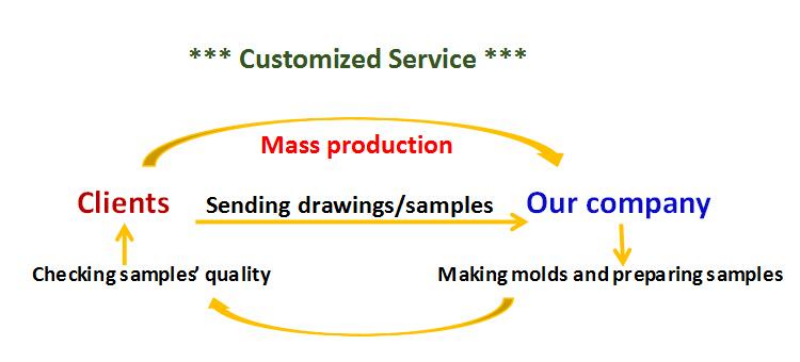
Customization support: specification, finishing, branding and packaging under a single OEM/ODM workflow.