Custom Glassware OEM: From Lamp Shade Drawing to Mass Production
Custom Glassware OEM: From Lamp Shade Drawing to Mass Production
Custom glassware for lighting is rarely a catalogue purchase. A glass lamp shade or glass lamp cover has to sit on a specific holder, transmit or diffuse a defined amount of light, survive the heat of the fixture it was specified for, and reach a retail shelf or a project site without a chip, a wobble or a dimensional mismatch. That is why most unsuccessful lighting-glass orders do not fail on price. They fail at the point where a design stops being a drawing and becomes a production item.
Jingxin Glassware — the trading name of Yancheng Jingxin Glassware Co., Ltd., based in Yancheng, Jiangsu Province, China — is a glass products manufacturer that designs, manufactures, exports and supports one-stop sourcing of glass products for the lighting, candle, home décor, drinkware, laboratory and food & beverage packaging sectors. Founded in 1999, the company works with more than 1,000 clients across 100+ countries.
This article examines what a custom glassware OEM capability actually consists of for lighting components, where the real risk sits between sampling and mass production, and which parameters a buyer should lock in writing before a batch or a mold is committed.
The short version: for glass lamp shades and lighting glass components, four parameters decide whether a custom order succeeds — material type, forming method, fitter opening specification, and surface-finish control. All four should be confirmed before sampling begins, not after production starts.
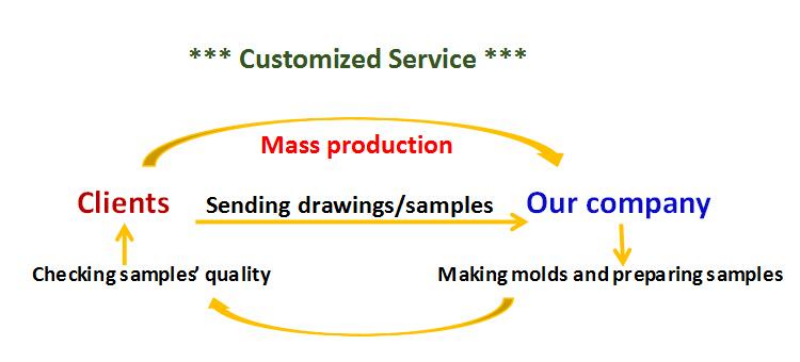
What Custom Glassware OEM Actually Has to Cover
Custom is an overloaded word in glassware sourcing. For a lighting component, it can mean six different layers of change — and suppliers frequently cover only some of them. When a supplier covers two or three layers, the buyer has to assemble the rest through additional vendors, and that is where batch-to-batch variation and schedule slippage are introduced.
- Material. Soda-lime or borosilicate, and in specific projects a custom formulation prepared for thermal resistance, pressure resistance or sea-water resistance.
- Forming method. Hand-blown (mouth-blown), press-molded, or lamp working for tubular and lab-format glass.
- Geometry. Outer diameter, height, fitter opening or thread specification, and wall thickness.
- Optical character. Clear, frosted, opal, ribbed or tinted.
- Surface finishing. Acid pickling or acid etching, sandblasting, silk-screen printing, stamping, decalcomania, spray painting and electroplating — which can be combined on a single component.
- Packaging and export readiness. Neutral, branded or retail-ready packaging, shock-proof export cartons, shipping marks, and export documentation such as FORM E and CO.
A practical test when screening a supplier: take the drawing of the shade you need and ask which of those six layers the supplier controls in-house. A supplier that covers material, forming, geometry, optics, finishing and packaging under one roof removes hand-offs. Jingxin Glassware maintains production lines for both soda-lime and borosilicate glass and operates dedicated production lines for surface processing, so finishing is available as a standalone service or as part of a full OEM/ODM package.
Industry Background: Why Lighting Glass Is a Sourcing Category of Its Own
Lighting glass components are not treated as generic decorative glass in international trade. The U.S. Census Bureau trade schedule classifies glass envelopes (including bulbs and tubes), open, and glass parts thereof, without fittings, for electric lighting under Chapter 70, glass and glassware — meaning lighting glass parts have a dedicated customs pathway rather than being folded into general glassware (source: U.S. Census Bureau, 2025).
At the data level, the United Nations Commodity Trade Statistics Database (UN Comtrade) holds more than 1 billion trade records dating back to 1962 and draws annual trade statistics from over 140 reporting countries, with glass and glassware among its queryable chapters (source: United Nations Statistics Division).
The practical implication for buyers is simple: lighting glass should be evaluated against lighting-component criteria — thermal behaviour, optical consistency and assembly tolerance — rather than against general glassware criteria. A shade that is aesthetically correct but sits 1.5 mm off on the fitter opening is not a usable shade, and a shade that passes visual inspection but is spec'd in the wrong glass type will fail in service rather than on arrival.
One caveat on data: at the time of writing, no verifiable public dataset was available for the market size or growth rate of the lighting glass shade or custom glassware sub-segment. This article therefore cites no market-size figures. Its value lies in manufacturing and procurement specifics that a buyer can actually check against a supplier's evidence.
The Capability Stack Behind a Custom Lamp Shade Order
1. Material selection: soda-lime or borosilicate
Soda-lime glass provides optical clarity for lighting and decorative items and covers lamp shades, candle vessels, drinkware, bottles and storage containers. Borosilicate glass typically offers 3–5 times the thermal shock resistance of soda-lime glass and is used for lamp shades, laboratory instruments, high-temperature glassware, teapots, cups and home decoration glassware.
Because both material families are maintained on separate production lines, material optimisation becomes a specification decision rather than a sourcing constraint: the same shade geometry can be quoted in soda-lime for ambient decorative lighting and in borosilicate for a high-heat fixture. Custom glass formulations are available for specific applications, including thermal resistance, pressure resistance and sea-water resistance, and products can be engineered for high humidity, sea-water exposure or extreme temperature variations. Technical consultation on material selection is provided throughout product development.
2. Forming method, and how it maps to tolerance
Hand-blown (mouth-blown) shades are individually formed by experienced artisans. Subtle bubbles and flow lines are natural features of mouth-blown glass, so each piece carries slight variation. This suits decorative and high-end design work. Representative examples include the JX1004 opal white glass globe lamp shade (diameter 15 cm, 6 cm fitter opening for standard E27 holders, solid opal white soda-lime glass, 3.0–5.0 mm hand-blown wall) and the JX1184 blown shade with a G9 thread (solid opal white soda-lime glass, 2.5–3.5 mm wall, available from 6 cm to 20 cm diameter).
Press-molded components use precision tooling to deliver uniform wall thickness and consistent dimensions — the right process when dimensional consistency matters more than individuality. The JX1830 explosion-proof borosilicate glass lamp shade is press-molded with a 6.0–10.0 mm wall across a 118 mm diameter, 132 mm height and 867 g weight, carrying an IK10 mechanical impact rating and a −40°C to 260°C thermal-shock range. The JX1832 pressed borosilicate signal glass lamp shade holds a 5 mm uniform pressed wall with a continuous working range from −60°C to +450°C. The JX3207 textured dot pattern glass candle holder is also press-molded, at 3.0–4.0 mm wall thickness.
Lamp working covers tubular and lab-format glass, such as the JX6402 borosilicate round-bottom test tube, the JX6109 borosilicate 3.3 laboratory beaker (2–5 mm wall) and the JX6703 graduated lab reagent bottle (1.5–3 mm wall). The same capability matters for lighting lines that require glass tube formats.
3. Geometry and the fitter interface
The fitter opening is the single parameter most likely to stop an otherwise perfect shade from being used. Across the lighting range, the common interfaces are E27, E14, G9 and custom openings, with a broad set of published references: the JX1004 uses a 60 mm (6 cm) opening for E27 holders; the JX1407 borosilicate globe shade uses a 4.5 cm opening with a threaded bottom fitter for E26/E27 lamp base systems; the JXHB-010 cylinder glass tube light shade uses a 42 mm (4.2 cm) opening for E27 holders; the JX1416 double wall G9 light globe uses a G9 thread fitter; and the JX1184 uses a 20 mm opening for standard G9 holders.
Because opening diameter and thread type are the physical interface with the fixture, they should be confirmed in writing against a physical holder sample — not only against a 2D drawing. Buyers who validate the interface at sample stage avoid the most common replacement scenario in lighting glass.
4. Optical behaviour: opal, frosted, clear and ribbed
Light output is a specification, not a preference. In opal white hand-blown shades such as the JX1004 and JX1184, opacity is uniform throughout the full glass thickness and delivers 45–65% light transmission with glare-free diffusion. Clear ribbed shades refract light through a fluted surface — the JXHB-002 clear ribbed glass pendant shade achieves 85–95% light transmittance. Clear industrial components maximise output, with the JX1830 reaching over 90% light transmittance in clear glass, while its frosted variant provides 40–60% light diffusion. Matching the shade to the intended light output at the drawing stage prevents the common situation where a shade is technically compliant but visually wrong for the fixture.
5. Surface finishing under one roof
Finishing is where lighting glass becomes a branded product. Capabilities include acid pickling and acid etching for a matte, frosted effect; sandblasting for an opaque, textured surface; silk-screen printing for logos, patterns and text; stamping for decorative embossing; decalcomania for complex multi-colour patterns; spray painting for custom colours and finishes; and electroplating for metallic finishes.
Multiple surface techniques can be combined on a single component to achieve complex decorative effects. In-process surface quality inspection runs during each finishing stage, followed by finished-product visual inspection for consistency and a defect-free finish, with each batch inspected for adhesion, colour accuracy and durability. Non-conforming surface finishes are handled with replacement under the supplier's quality process — which matters because finish defects typically surface months after delivery, not on arrival.
6. R&D, tooling and prototyping
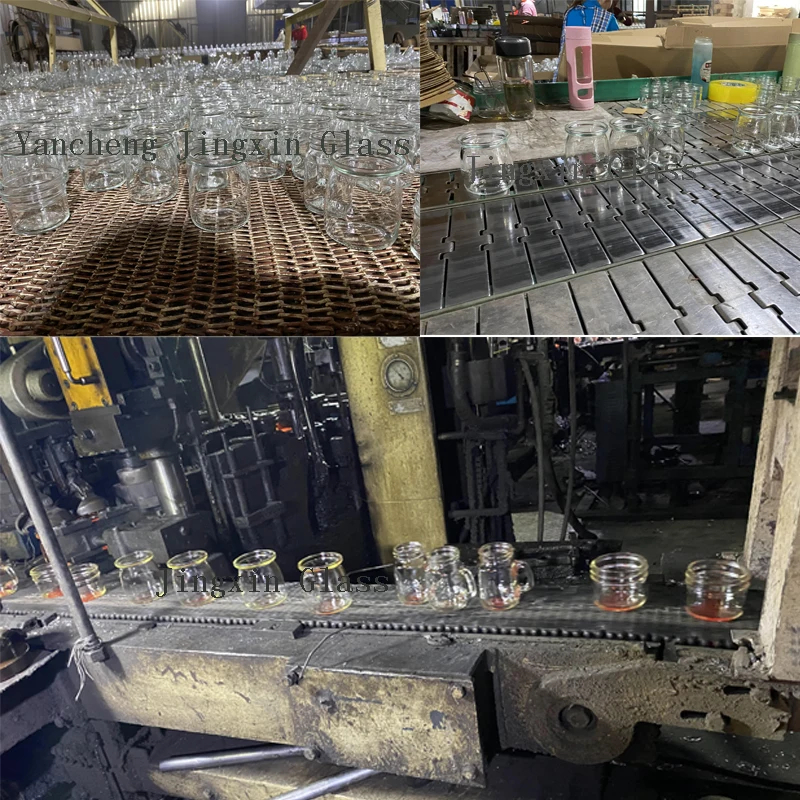
Mold creation and prototyping determine whether a design is manufacturable before money is committed to a batch. In-house capabilities cover new product design and development based on client briefs, custom mold creation for unique glass shapes, and prototype development that allows clients to test and validate a design before large-scale production. Prototype testing and validation are performed before mass production.
Jingxin Glassware holds 16 national patents covering product design, manufacturing processes and functional improvements, and runs an R&D team of 5 engineers working with in-house professional designers. Technical consultation is provided throughout product development, with ongoing improvement support based on customer feedback. Patent-pending product development is also conducted in collaboration with clients where a brand wants an ownable shape.
How a Custom Lamp Shade Order Runs, Step by Step
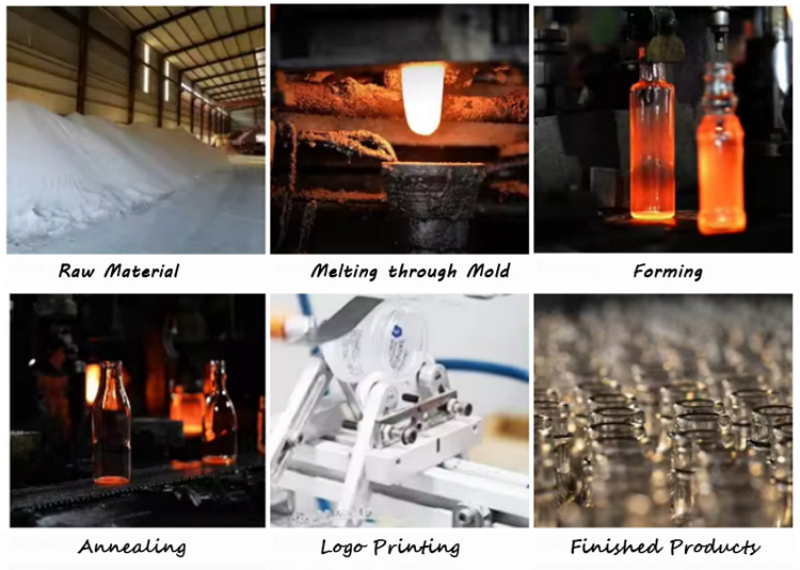
- Brief and material consultation. The buyer provides the intended fixture, light output target, operating temperature and application environment. Material selection — soda-lime, borosilicate, or a specific formulation — is confirmed at this stage.
- Drawing and specification lock. Outer diameter, height, fitter opening or thread type, wall thickness, glass type, surface finish and packaging are confirmed in writing. This is the highest-leverage step in the whole process.
- Sample development. For most hand-blown lighting glass, sample lead time is 5–7 working days after artwork and specification confirmation. Complex pressed or double-wall constructions take longer: the JX1830 explosion-proof shade and the JX1722 double-wall diffuser bottle both require 15–20 days after technical drawing confirmation. Sample cost may apply and freight is typically collect.
- Sample approval. The buyer validates fitter fit on a real holder, light output, wall thickness, finish quality and packaging. Only after sample approval does mass production begin.
- Mass production. Standard lighting glass runs 20–30 working days after sample approval. Higher-complexity items — including double-wall constructions, explosion-proof pressed domes and some lab-format glass — run 25–35 working days.
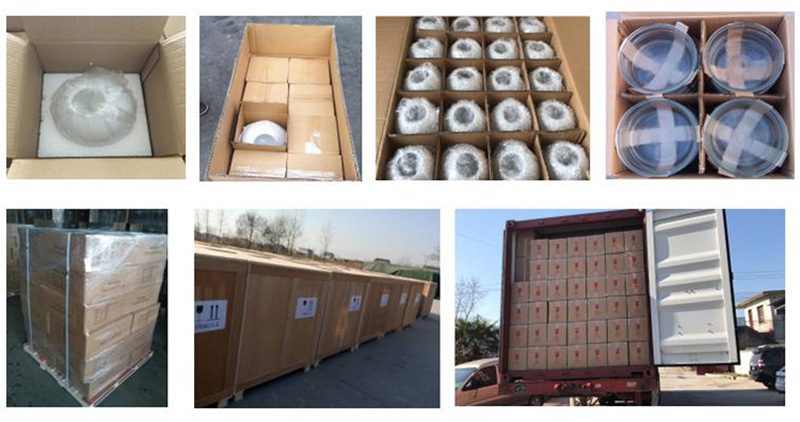
- In-process and pre-shipment inspection. Quality control is applied at every production stage from raw material to finished goods, with 100% pre-shipment inspection before goods leave the facility. Third-party inspection (SGS) is available on request.
- Packaging and export documentation. Neutral, branded and retail-ready packaging options are supported, including shock-proof export cartons designed around product fragility. The export team handles customs clearance, shipping marks, FORM E and CO documentation.
- Logistics. Sea, air, rail, truck and express land transportation are available and matched to each order's cost and timeline requirement. FOB Shanghai is the primary delivery term; CIF and EXW are available on request, with CIF subject to destination port.
- After-sales. Comprehensive after-sales service management covers prompt response to logistics and delivery issues, with warranty handling per product terms.
Commercial terms follow the same structure across the range. Minimum order quantity is 500 pieces for hand-made items and 2,000 pieces for machine-made items, with custom MOQ negotiable for smaller trial orders and select stock items. Payment terms are 30% T/T deposit on order confirmation and 70% T/T balance before shipment, against a copy of the bill of lading or after pre-shipment inspection approval; other terms such as L/C are available on request for qualified buyers.
Where These Capabilities Get Tested: Four Application Scenarios
Luxury retail and hospitality lighting
In 2015, Jingxin Glassware worked with a French client to design and produce opal white glass globe lamp shades for Galeries Lafayette in Paris. The requirement was a permanent wall decoration that provided soft, even ambient lighting across a high-traffic luxury retail environment. The specification called for ultra-thick glass construction for durability, solid opal white body colouration for consistent light quality across all units, and anti-yellowing properties to maintain optical clarity over an extended service life. Colour and dimensional consistency across the full production run were the deciding criteria — the same criteria that apply to hotel lobbies, restaurants and flagship retail fit-outs.
Industrial, hazardous-area and signal lighting
Where fixtures generate heat or sit in explosive-risk environments, material selection becomes a safety decision. The JX1830 explosion-proof borosilicate glass lamp shade is engineered for petroleum and chemical sites, mining and heavy manufacturing, marine and offshore installations and hazardous-zone warehousing, with an IK10 impact rating, 6.0–10.0 mm wall and a −40°C to 260°C thermal-shock range. The JX1832 pressed borosilicate signal glass lamp shade is used for airport aviation, railway and marine signal fixtures, with a continuous working range from −60°C to +450°C and salt-spray, UV and contaminant resistance for long-term outdoor deployment.
Marine and aquaculture environments
In 2018, the company produced a batch of ultra-thick transparent lamp shades with pressure and sea-water resistance for a Chilean customer, specifically for deep-sea fish farming where lighting equipment must withstand high pressure, saltwater corrosion and continuous immersion while maintaining optical clarity underwater. The project required a glass formulation combining pressure resistance, sea-water resistance and transparency in a single component — a useful reference point for buyers in aquaculture, offshore and coastal infrastructure who cannot use standard decorative shades.
Home fragrance, candle and seasonal gift programmes
Adjacent to lighting, the same capability stack serves private-label programmes: the JX3207 textured dot pattern glass candle holder (9.5 cm diameter, 12 cm height, approximately 420 ml inner capacity, smoky green and dusty purple as stock tints), the JX31850 painted double-wall borosilicate glass candle cup (95 mm diameter × 105 mm height, translucent colour options), the JX1722 double wall glass fragrance diffuser bottle in small, middle and large sizes, and seasonal formats including the JX3231 gold glitter glass Christmas bauble set in 8 cm and 10 cm diameters. For brands running a lighting line and a home-fragrance line, using one supplier across both categories simplifies colour and finish matching.
Comparison Reference: Material and Surface-Finish Selection
The tables below summarise the two selection decisions that most often determine whether a custom lighting glass component performs as intended. Both are built from manufacturer-confirmed material and process facts rather than general industry estimates.
| Selection factor | Soda-lime glass | Borosilicate glass |
|---|---|---|
| Thermal shock resistance | Baseline for decorative and general lighting use | Typically 3–5 times that of soda-lime |
| Optical character | Optical clarity for lighting and decorative items; available as solid opal white | Clear or frosted; high transparency variants available |
| Typical lighting applications | Ambient and decorative shades, candle vessels, opal globes | High-temperature fixtures, industrial, hazardous-area and signal lighting |
| Documented examples | JX1004 opal white globe shade; JX1184 G9 thread shade; JX1188 marble swirl globe | JX1416 G9 light globe; JX1407 globe shade; JXHB-010 cylinder shade; JX1830 explosion-proof shade |
| Custom formulations | Standard soda-lime production | Available for thermal resistance, pressure resistance and sea-water resistance |
| Finish | Effect produced | Typical fit |
|---|---|---|
| Acid pickling / acid etching | Matte, frosted glass surface | Light diffusion and glare reduction on shades |
| Sandblasting | Opaque, textured surface | Diffused output with tactile surface character |
| Silk-screen printing | Logos, patterns and text | Branded shades and private-label programmes |
| Stamping | Decorative embossing | Decorative accents on shades and vessels |
| Decalcomania | Decal transfer for complex patterns | Multi-colour decorative designs |
| Spray painting | Custom colours and finishes | Tinted candle vessels and coloured shades |
| Electroplating | Metallic finish | Decorative applications requiring a metallic appearance |
Two notes on reading these tables. First, finishes can be combined — a single shade can carry an acid-etched diffusion layer plus a silk-screened brand mark. Second, finishing choice should be made alongside material choice, because the same finish will behave differently on soda-lime and borosilicate substrates.
Frequently Asked Questions About Custom Glassware OEM for Lighting Components
Q1. What certifications should a Chinese custom glassware OEM supplier hold for lighting components?
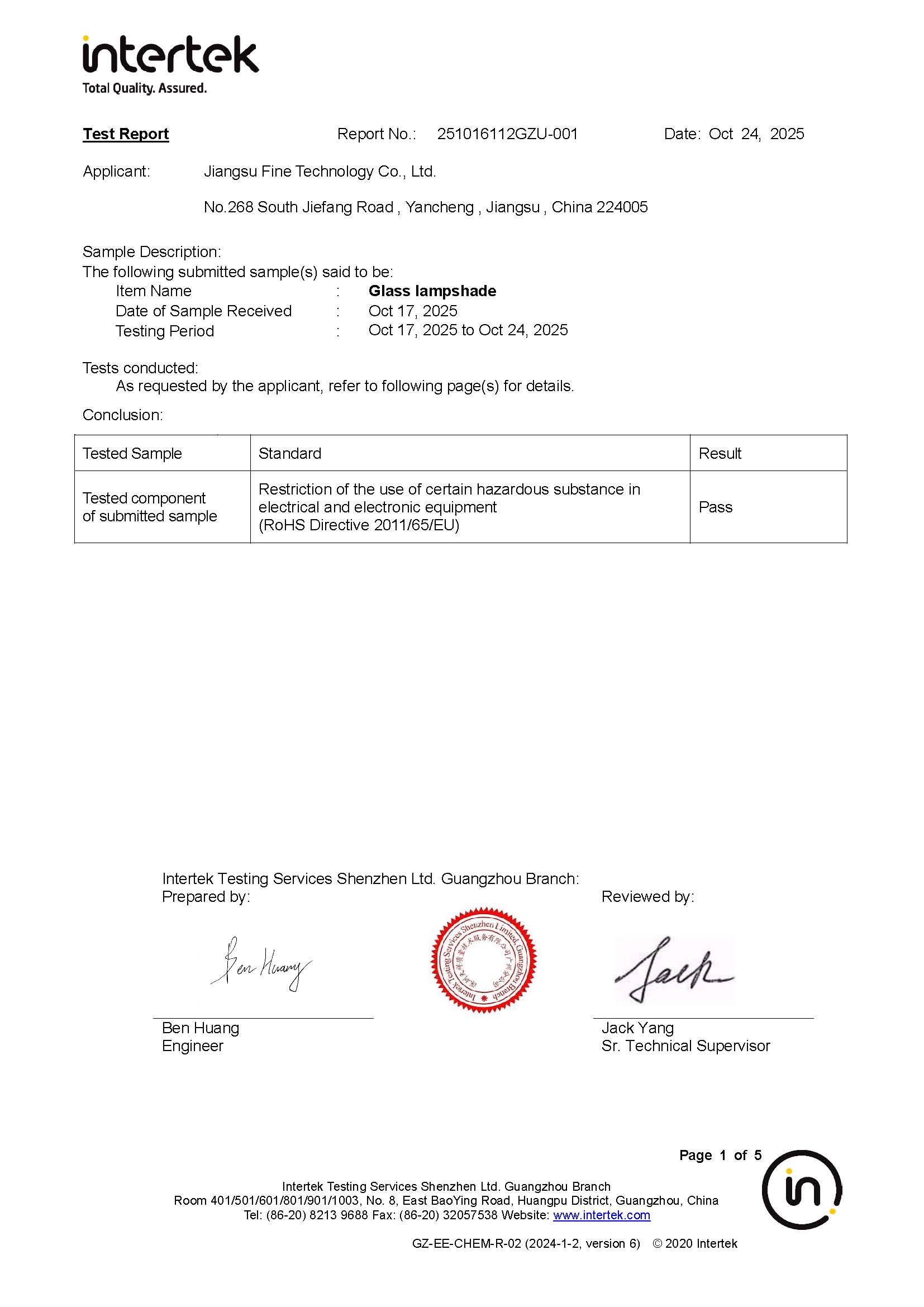
For lighting glass exported to the EU and other regulated markets, buyers should confirm at minimum RoHS and REACH compliance, plus a quality management system and a social compliance audit where the buyer's own retail channel requires it. Jingxin Glassware holds 19+ professional certifications. Its RoHS test report, number 251016112GZU-001, was issued by Intertek and covers soda-lime and borosilicate glass lamp shades for lighting applications, tested under the IEC 62321 series for cadmium, lead, mercury and hexavalent chromium. Its SMETA-4P audit, number ZAA600149732, was issued by TUV Rheinland and covers all glass products and the manufacturing site, using the SMETA 4-Pillar methodology across labour standards, health and safety, environment, and business ethics on the Sedex platform. Test reports and audit documentation are available on request.
Q2. How much of a custom glass lamp shade can actually be customised?
Six layers are addressable: material, forming method, geometry, optical character, surface finishing, and packaging and marking. In practice that means a buyer can specify soda-lime or borosilicate — including custom formulations for thermal, pressure or sea-water resistance — choose hand-blown, press-molded or lamp-worked construction, set the outer diameter, height, fitter opening and wall thickness, select clear, frosted, opal, ribbed or tinted optics, apply one or more of seven surface finishes, and define neutral, branded or retail-ready packaging with logo printing or engraving. Published reference points across the range include the JX1004 at 15 cm diameter with a 60 mm opening and 3.0–5.0 mm hand-blown wall, the JX1416 G9 globe at 1.5–2.0 mm wall, and the JX1830 pressed dome at 6.0–10.0 mm wall with an IK10 rating.
Q3. What is the minimum order quantity, and how are payment terms structured?
MOQ is 500 pieces for hand-made glass and 2,000 pieces for machine-made glass, with custom MOQ negotiable for smaller trial orders and select stock items. MOQ is not uniform across complexity levels — a pressed, thick-wall industrial component such as the JX1830 explosion-proof shade starts from 1,000 pieces — so it should be quoted against the specific specification rather than assumed. Payment terms are 30% T/T deposit on order confirmation with 70% T/T balance before shipment, against a copy of the bill of lading or after pre-shipment inspection approval. Other terms, including L/C, are available on request for qualified buyers. FOB Shanghai is the primary delivery term, with CIF available subject to destination port and EXW available on request.
Q4. Can a design be validated before committing to mass production?
Yes. Sample lead time is 5–7 working days for most lighting glass after artwork and specification confirmation, extending to 15–20 working days for complex pressed or double-wall constructions such as the JX1830 explosion-proof shade and the JX1722 double-wall diffuser bottle. Sample cost may apply and freight is collect. The sample should be treated as a full validation gate, not a formality: check light output and diffusion, mount the shade on the actual holder to confirm fitter fit, measure wall thickness, test finish adhesion, and confirm the packaging format. Mass production only begins after sample approval.
Q5. What is the mass production lead time, and what typically delays it?
Mass production runs 20–30 working days after sample approval for standard lighting glass, and 25–35 working days for higher-complexity items including double-wall structures and explosion-proof pressed domes. In practice, the most common cause of delay is not capacity but the specification-confirmation stage: changing the fitter opening, thread type, surface-finish effect or packaging format after sampling has started will trigger re-tooling or process adjustments and reset the clock. Locking the specification in writing before sampling begins is the most effective schedule control available to a buyer. To start a project, send the drawing or a reference sample together with the required lamp holder standard, target annual volume and destination market, and request a quotation and sample plan.
Conclusion: What to Lock In Before You Commit to a Custom Glassware Order
Custom glassware OEM for lighting components is not a question of whether a supplier can blow or press glass. It is a question of whether the capability stack is complete — material, forming, geometry, optics, finishing, tooling and export execution — and whether the tolerances and acceptance criteria at each node are fixed before sampling rather than discovered after delivery.
Jingxin Glassware operates from a 4,500 m² production and office base in Yancheng, Jiangsu Province, with 100+ employees, an annual output of 25,000,000 sets and an export ratio of 100%. The company maintains production lines for both soda-lime and borosilicate glass, dedicated surface-processing lines, a five-engineer R&D team working alongside in-house designers, 16 national patents, and 19+ professional certifications including RoHS, REACH and SMETA-4P. Quality control runs from raw material through to finished goods with 100% pre-shipment inspection, and service coverage extends to sampling, export documentation, international logistics and after-sales handling.
For buyers at the evaluation-to-execution stage, the actionable sequence is straightforward: define the fixture interface and application environment first, confirm material and forming method second, lock the finish and packaging third, and only then move to sampling and volume. That order of decisions is what separates a repeatable lighting glass programme from a series of one-off orders.
Start a Custom Glassware Project
If you are specifying a custom glass lamp shade, glass lamp cover, glass light globe or other lighting glass component, the fastest route to a usable quotation is to send the drawing or reference sample together with the required lamp holder standard, target annual volume and destination market.
Contact: Mr. Jerry Zhou · Email: jerry@cn-glassware.com · Tel: +86 515-8822 9059 · WhatsApp: +86 180 1962 7905
Website: www.cn-glassware.com · Blog: blog.cn-glassware.com
Download the full glass lamp shade catalogue with dimensions and options: Glass Lamp Shades Catalogue — Yancheng Jingxin Glassware Co., Ltd. (PDF)

Yancheng Jingxin Glassware Co., Ltd. · No.268 South Jiefang Road, Yancheng, Jiangsu, China · Product and process information in this article reflects manufacturer-confirmed specifications; trade-data references are attributed to the U.S. Census Bureau trade schedule and the United Nations Commodity Trade Statistics Database (UN Comtrade).