Hand-Blown vs. Machine-Pressed Glass Lamp Shades: A Custom Lighting Decision
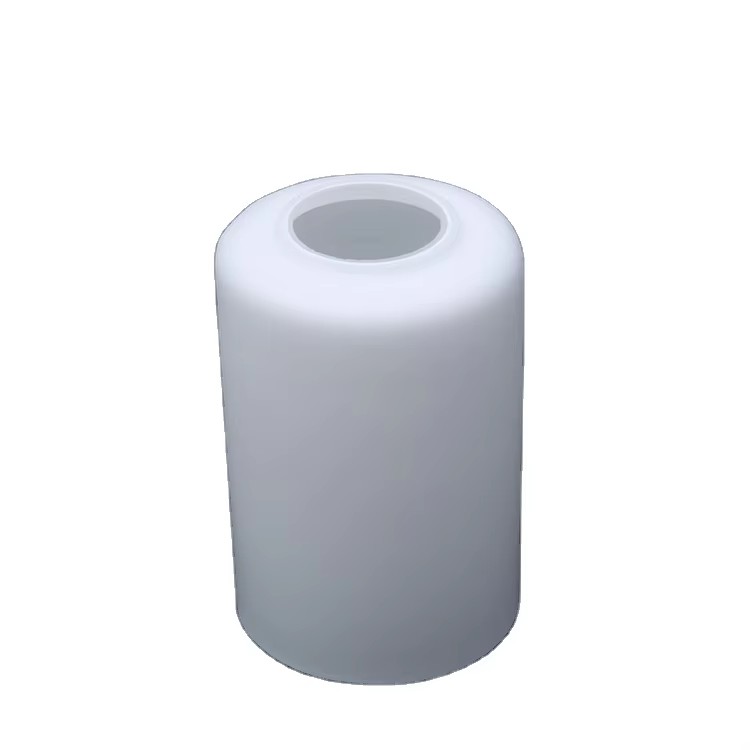
For a custom lighting order, the production route should follow the shade design, the fixture interface and the acceptable visual tolerance. A hand-blown glass lamp shade is usually the better route when the design needs artisan character, opal diffusion, ribbed texture or marble swirl effects. A machine-pressed glass lamp shade is usually the better route when the order needs repeatable geometry, thick-wall industrial safety, uniform pressed dimensions or high-volume replacement glass lamp covers. Neither route is automatically superior; the decision depends on fit, finish and order profile.
Jingxin Glassware is a glassware manufacturer based in Yancheng, Jiangsu, China, supplying custom glass lamp shades and other glass products to international buyers. Its lighting glass range includes hand-blown and press-molded formats, which makes the hand-blown vs. machine-pressed question a practical sourcing decision rather than a theoretical one. This guide compares the two production methods for custom glassware projects and shows how to choose the right route for a specific shade design.
Problem Definition: Why the Forming Method Changes the Order
The same lamp shade drawing can produce two very different purchasing outcomes. A hand-blown glass lamp shade is made piece by piece, so the glass can carry subtle bubbles, flow lines and small shape variation that many decorative lighting buyers value. A machine-pressed glass lamp shade is formed in a mold, so the priority shifts to dimensional repeatability, uniform wall thickness and batch-to-batch consistency.
Three constraints usually decide the route:
- Shape consistency: Will the project accept natural variation, or does every shade need to sit within a tight dimensional window?
- Surface finish: Is the visual target a milk-frosted cylinder, an opal white globe, a ribbed pendant, a marble swirl effect or a clear pressed cover?
- Fit with the fixture: Does the shade use an E27 opening, a G9 thread, a custom flange or another mounting interface that must be confirmed before production?
Custom lighting buyers also need to consider material and compliance. Soda-lime glass and borosilicate glass do not behave the same way under heat. A decorative indoor pendant and a high-heat industrial fixture should not be specified with the same glass type merely because the shape looks similar. The production method is therefore part of a larger decision that includes material, fitter opening, surface treatment and documentation.
Industry Background: Custom Glassware Sits Between Decoration and Engineering
Lighting glass shades are both visual components and functional interfaces. In a residential pendant, the shade controls glare and creates the ambient character of the fixture. In a hospitality or retail installation, the same shade may need to maintain a consistent appearance across many fixtures. In an industrial or signal application, the glass cover may need thick walls, thermal stability and impact resistance rather than decorative variation.
This is why the hand-blown and machine-pressed routes coexist. Hand-blowing supports small-batch customization, opal white diffusion, ribbed texture and art-glass effects. Pressing supports repeatable industrial covers, explosion-proof domes and signal lamp shades where dimensional accuracy and mechanical performance matter. The two methods are not a simple good-better ranking; they solve different problems.
Compliance expectations add another layer. Buyers sourcing from China custom glassware manufacturers increasingly ask for REACH-compliant materials, RoHS documentation and social-compliance evidence. Jingxin Glassware states that its glass materials are lead-free and recyclable, and that CE, RoHS and REACH documentation support is available for EU market requirements. Specific products are covered by traceable certification records, including RoHS certification 251016112GZU-001 issued by Intertek and SMETA-4P certificate ZAA600149732 issued by TUV Rheinland. Buyers should still confirm model-level coverage before placing a custom order.
Detailed Solution: How Hand-Blown and Machine-Pressed Routes Differ
Hand-blown glass lamp shades: controlled variation as a design value
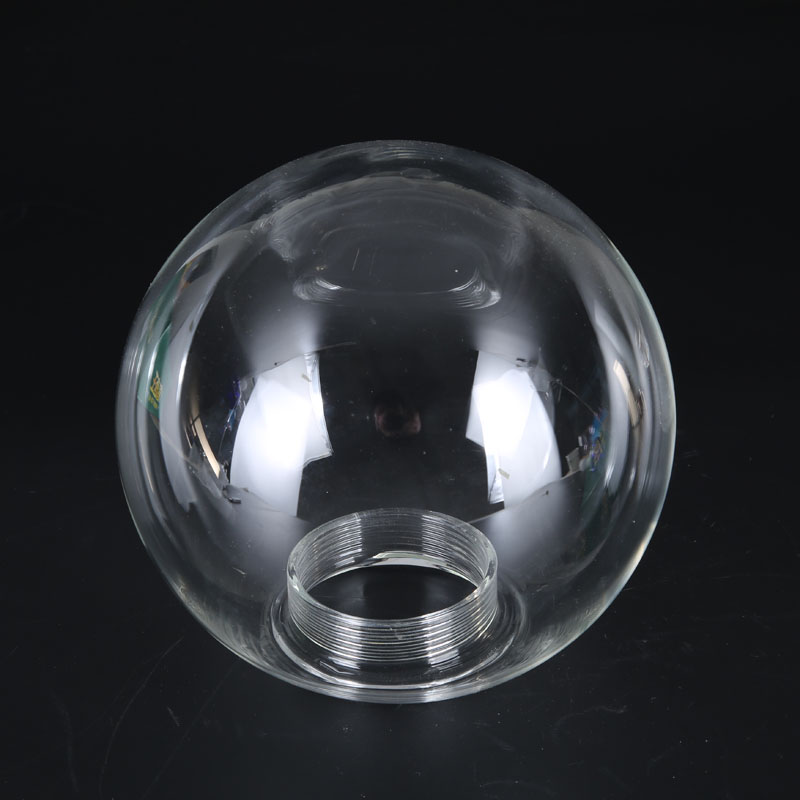
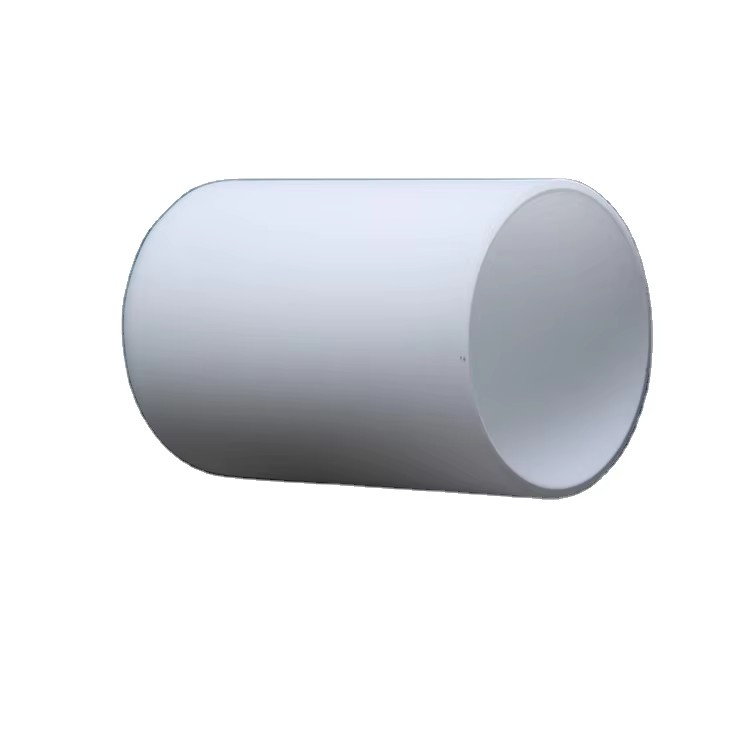
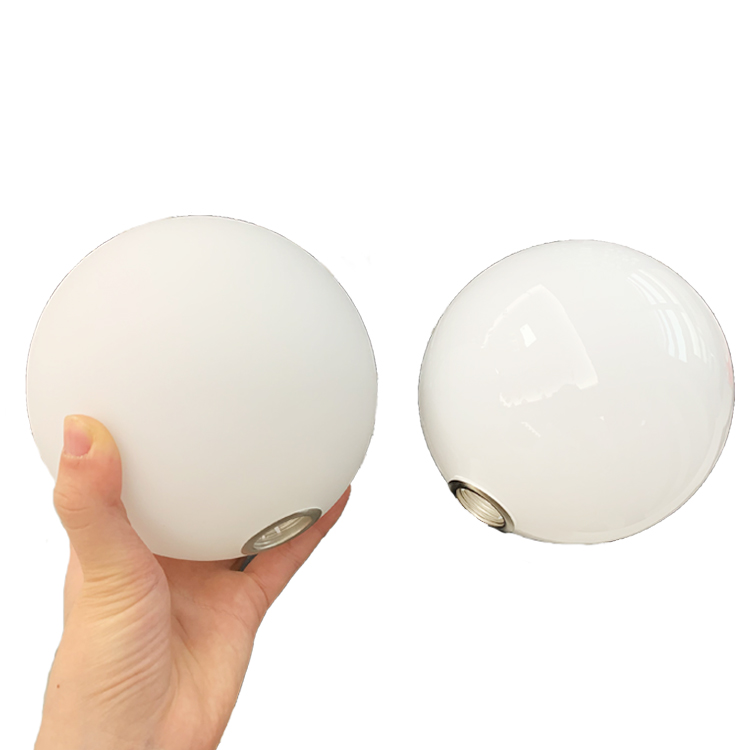
A hand-blown glass lamp shade is mouth-blown by a skilled artisan. The process suits designs where the glass itself contributes character: a milk-frosted cylinder, an opal white globe, a ribbed pendant or a marble swirl globe. In Jingxin product data, the JXHB-010 Cylinder Glass Tube Light Shade is a mouth-blown glass tube with a milk-frosted finish, a 42 mm fitter opening for standard E27 lamp holders and a 3–4 mm wall. The JX1184 Blown Glass Lampshade with G9 Thread is a hand-blown opal white soda-lime glass globe with a G9 thread and a 2.5–3.5 mm wall. The JX1004 Opal White Glass Globe Lamp Shade is hand-blown soda-lime glass with a 60 mm fitter opening for E27 holders, a 3.0–5.0 mm wall and 45–65% light transmission.
These examples show the hand-blown value proposition. The shade can deliver soft diffusion, a permanent opal appearance and an artisan surface character that is difficult to reproduce with a purely mechanical look. The trade-off is that hand-blown shades carry subtle natural variation. That variation is acceptable, or even desirable, in decorative lighting. It becomes a problem only when the buyer expects every unit to behave like a machined part.
Machine-pressed glass lamp shades: repeatability and thick-wall performance
A machine-pressed glass lamp shade is formed by hot pressing glass in a mold. The method is associated with tight dimensional tolerance, high batch-to-batch consistency and uniform wall thickness. In Jingxin product data, the JX1832 Pressed Borosilicate Signal Glass Lamp Shade is Type-3.3 borosilicate pressed glass with a 5 mm uniform pressed wall thickness, an operating range of -60°C to +450°C and custom openings, flanges and mounting interfaces. The JX1830 Explosion-Proof Borosilicate Glass Lamp Shade is press-molded high borosilicate glass with a 6.0–10.0 mm wall, an IK10 impact rating and thermal shock resistance from -40°C to +260°C.
The machine-pressed route is therefore not a low-value alternative. It is the appropriate route when the glass lamp cover is part of a safety-critical or high-repeatability assembly. Pressing also supports industrial signal covers, explosion-proof domes and high-volume replacement shades where dimensional consistency matters more than artisan variation. The trade-off is that the design must be compatible with mold-based production, and the project should plan for tooling and sample approval.
Shape consistency: define the tolerance before choosing the method
The most common sourcing error is to ask for a hand-blown look and a machine-pressed tolerance at the same time without defining which one controls the order. Hand-blown glass is made individually, so subtle handmade marks, tiny natural air bubbles and slight shape variations are authentic signs of artisanal glasswork. Machine-pressed glass is formed in a mold, so the production logic is to eliminate hand-blown dimensional deviation and achieve consistent pressed dimensions.
A practical decision rule is:
- If the shade is decorative and the installation can accept small unit-to-unit variation, hand-blowing is a valid route.
- If the shade must fit a repeatable fixture assembly, a replacement program or a high-volume project with tight dimensional expectations, machine-pressing is the more suitable route.
- If the design is visually decorative but also needs a defined fitter opening, either route can work, but the fitter interface must be confirmed in the drawing before sampling.
This is why the comparison should not stop at appearance. The buyer should specify the critical dimensions: outer diameter, height, wall thickness, fitter opening, thread type and permitted deviation. A hand-blown shade can be made to a target dimension, but the accepted tolerance should match the method. A pressed shade can hold tighter repeatability, but the design must be feasible for the mold.
Surface finish: visual intent drives the route
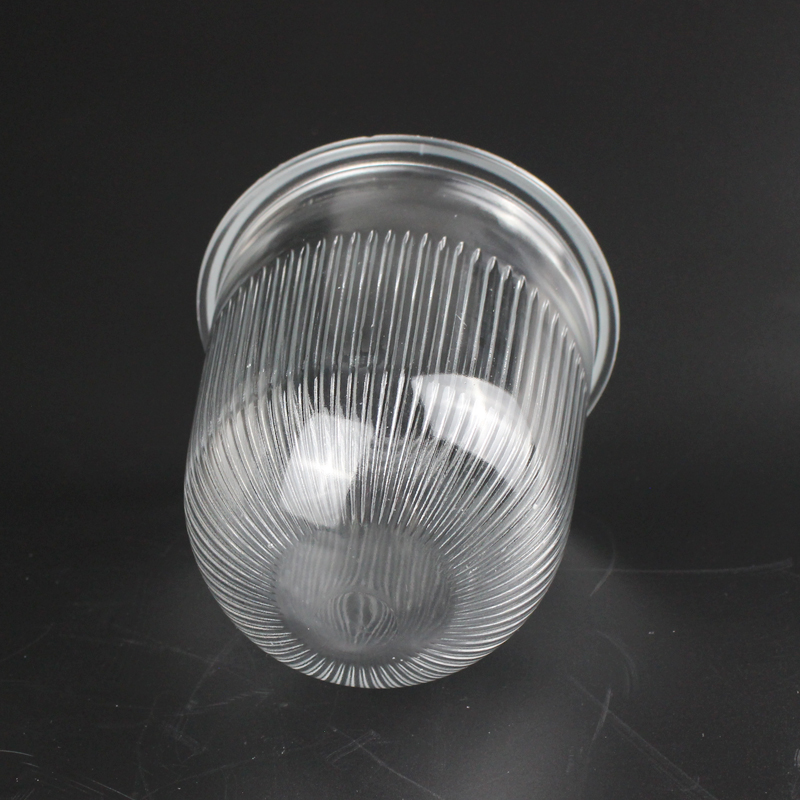
Surface finish is often the clearest signal of the correct production method. Hand-blown shades can carry opal white diffusion, milk-frosted surfaces, ribbed textures and marble swirl patterns. For example, the JX1188 Glass Globe Lamp Shade is hand-blown art glass with a marble swirl or amber streaked pattern on an opal milky glass base, and the JXHB-002 Clear Ribbed Glass Pendant Shade is a hand-blown soda-lime globe with vertical ribbing. These finishes are decorative and depend on the hand-forming process.
Machine-pressed shades are more often specified for clear or frosted industrial covers, signal lenses and explosion-proof domes. The JX1830 is available in clear or frosted matte finish, while the JX1832 supports custom colour filters and surface treatments for signal lighting. Jingxin also offers surface finishing options such as acid pickling, sandblasting, silk-screen printing, stamping, decalcomania and spray painting. These finishing capabilities can be applied to suitable glass products, but the buyer should confirm which finishes are compatible with the chosen forming method and glass type.
Fit with fixtures: match the interface before the method
A glass lamp shade is only useful if it fits the fixture. The fitter opening and connection type should be confirmed before the production route is selected. In Jingxin product data, the JXHB-010 hand-blown cylinder uses a 42 mm opening for standard E27 lamp holders. The JX1184 hand-blown opal globe uses a G9 thread. The JX1004 opal white globe uses a 60 mm opening for E27 holders. The JX1832 pressed signal shade supports custom openings, flanges and mounting interfaces to fit industrial signal lamp holders and fixture assemblies.
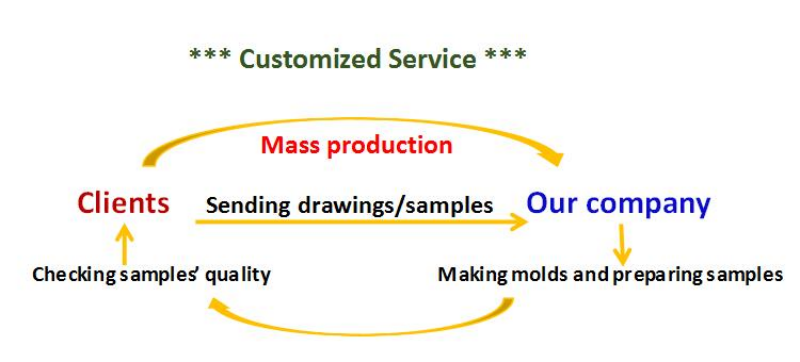
This means the fixture interface can sometimes decide the route. If the project needs a standard E27 opening on a decorative opal globe, hand-blowing is a natural fit. If the project needs a pressed industrial cover with a custom flange, machine-pressing is the more suitable production logic. In both cases, the buyer should provide the fixture drawing, confirm the thread or opening, and approve a sample before mass production.
Material and thermal load: soda-lime vs. borosilicate
The forming method does not replace material selection. Soda-lime glass is widely used for decorative lighting because it offers clarity and cost-effective production. Jingxin data states that soda-lime glass lamp shades tolerate temperature fluctuations up to 120°C and are suitable for LED, halogen and CFL light sources. Borosilicate glass is specified when the application requires greater thermal stability. The JX1830 pressed borosilicate shade is rated for -40°C to +260°C, and the JX1832 pressed borosilicate signal shade is rated for -60°C to +450°C.
For a decorative indoor pendant, soda-lime glass may be sufficient. For a high-heat industrial fixture, a thick-wall borosilicate pressed cover is more appropriate. The buyer should match the glass type to the lamp source, operating environment and safety requirement rather than selecting glass solely by appearance. If the application involves heat, impact or outdoor exposure, the material and wall thickness should be reviewed together.
Compliance and documentation: confirm model-level coverage
Compliance is not a separate paperwork step added at the end. It should be part of the route decision. Jingxin Glassware states that its glass materials are lead-free and recyclable, with CE, RoHS and REACH documentation support for EU market requirements. The RoHS certification 251016112GZU-001 issued by Intertek covers glass lamp shades for lighting applications. The SMETA-4P certificate ZAA600149732 issued by TUV Rheinland covers the manufacturing site and listed glass products.
Because certification scope can differ by product model, buyers should ask for the specific certificate, test report and model coverage before approving mass production. This is especially important for custom glassware projects that combine a new shade shape with a new surface finish. The supplier should be able to show traceable documentation rather than a general compliance statement.
Budget, MOQ and lead time: the commercial side of the decision
No public price list can replace a project quotation because the cost of a custom glass lamp shade depends on the forming method, mold or tooling, glass type, surface finish, inspection requirement, packaging and order quantity. As a general commercial pattern, machine-pressed glass is associated with lower unit cost at volume, while hand-blown glass carries higher labor content. The buyer should compare total project cost rather than unit price alone.
MOQ guidance also differs. Jingxin states that MOQ starts from 500 pieces for select stock items, with custom MOQ negotiable. Its FAQ guidance states 500 pieces for hand-blown glass and 2,000 pieces for machine-made glass lamp shades, with flexibility for trial orders. These figures should be confirmed against the actual design, because a new mold, a special finish or a mixed-size set can change the minimum order requirement.
Lead time follows the same logic. Many lamp shade samples are quoted at 5–7 working days after artwork and specification confirmation, with mass production at 20–30 days after sample approval. The JX1830 explosion-proof shade has a longer sample lead time of 15–20 days and mass production of 25–35 days after sample approval. The JX1832 pressed signal shade is quoted at 5–7 working days for samples and 20–30 days for mass production after approval. These differences should be built into the project schedule.
Step-by-Step Breakdown: Choosing the Right Route for a Custom Shade
- Define the shade design and fixture interface. Record the outer diameter, height, wall thickness, fitter opening or thread, and mounting method. For example, confirm whether the fixture requires an E27 opening, a G9 thread or a custom flange.
- Set the visual tolerance. Decide whether subtle hand-made variation is acceptable or whether every unit must meet a tight dimensional window. This single decision usually separates hand-blown from machine-pressed projects.
- Select the glass type. Use soda-lime glass for suitable decorative indoor applications and borosilicate glass where thermal stability or industrial safety is required. Confirm the operating temperature range for the intended lamp source.
- Match the surface finish to the method. Opal white, milk-frosted, ribbed and marble swirl finishes are associated with hand-blown decorative shades. Clear, frosted, thick-wall and signal covers are associated with pressed industrial shades.
- Review compliance requirements. Confirm lead-free material, recyclability and the required CE, RoHS or REACH documentation. Ask for model-level certificate coverage and test reports.
- Approve a sample before mass production. Check fit, light diffusion, surface appearance, wall thickness and dimensional accuracy. Use the sample to confirm whether the chosen route meets the visual and functional brief.
- Lock the inspection plan. Jingxin applies quality control from raw material to finished goods, performs 100% pre-shipment inspection and accepts third-party inspection on request. For pressed industrial shades, batch sampling for thermal shock and mechanical impact may also apply.
- Plan production and delivery. Confirm sample lead time, mass production lead time, packaging and shipping method before releasing the order. Build buffer time for finishing and inspection.
Use Cases: Where Each Route Fits
Luxury retail and hospitality ambient lighting
Hand-blown opal white glass is well suited to ambient lighting where glare control and visual warmth matter. The JX1004 Opal White Glass Globe Lamp Shade delivers 45–65% light transmission, and the JX1184 Blown Glass Lampshade with G9 Thread combines opal white soda-lime glass with a G9 thread. Jingxin’s project record includes opal white glass globe lamp shades produced for Galeries Lafayette in Paris, where the shades were used as permanent wall decoration and ambient lighting. This is a hand-blown use case because the visual character and diffuse light quality are central to the design.
Decorative residential pendants and feature lighting
Ribbed, marble swirl and opal hand-blown globes are appropriate for residential pendants, dining areas, cafés and boutique interiors. The JXHB-002 Clear Ribbed Glass Pendant Shade and the JX1188 Glass Globe Lamp Shade illustrate how hand-forming supports decorative surface effects. Buyers should accept the natural variation of hand-blown glass and confirm the fitter opening before ordering.
High-heat, industrial and signal lighting
Machine-pressed borosilicate shades are appropriate where thermal stability, impact resistance and repeatable geometry are required. The JX1832 Pressed Borosilicate Signal Glass Lamp Shade is rated for -60°C to +450°C and is used for aviation, railway and marine signal lighting. The JX1830 Explosion-Proof Borosilicate Glass Lamp Shade has an IK10 impact rating and a -40°C to +260°C thermal shock range. These are not decorative consumer shades; they are engineered glass covers.
High-volume replacement glass lamp covers
When the project requires many identical replacement shades for standardized fixtures, machine-pressing offers tighter batch-to-batch consistency and lower unit cost at volume. This is the route to discuss when the shade geometry is stable and the buyer needs repeatable fit across a large installed base.
Custom retrofit and fixture-specific projects
Both routes can support custom fitter openings. A hand-blown shade can be specified with a 42 mm E27 opening or a G9 thread, while a pressed shade can be supplied with custom openings, flanges and mounting interfaces. The deciding factor is whether the project prioritizes artisan surface character or pressed dimensional repeatability.
Comparison Table: Hand-Blown vs. Machine-Pressed Glass Lamp Shades
| Decision factor | Hand-blown glass lamp shade | Machine-pressed glass lamp shade | Evidence or example |
|---|---|---|---|
| Forming method | Mouth-blown individual forming | Hot-press molded forming | JXHB-010 mouth-blown; JX1832 Type-3.3 borosilicate pressed glass |
| Shape consistency | Subtle handmade variation; wider dimensional tolerance | Tight dimensional tolerance; high batch-to-batch consistency | JX1832 automated hot-press forming; hand-blown natural variation |
| Wall thickness examples | JXHB-010 3–4 mm; JX1184 2.5–3.5 mm | JX1832 5 mm; JX1830 6.0–10.0 mm | Product specifications |
| Fitter interface examples | JXHB-010 42 mm for E27; JX1184 G9 thread; JX1004 60 mm for E27 | JX1832 custom openings, flanges and mounting interfaces | Product specifications |
| Typical surface direction | Opal white, milk frosted, ribbed, marble swirl | Clear or frosted industrial covers; signal colour filters | JX1004, JX1184, JXHB-002; JX1830, JX1832 |
| Thermal examples | Soda-lime up to 120°C | JX1830 -40°C to +260°C; JX1832 -60°C to +450°C | Product specifications |
| Commercial pattern | Higher labor content; suited to decorative and lower-volume custom work | Lower unit cost at volume; suited to repeatable and industrial work | Jingxin FAQ and product data; confirm by quotation |
| Documentation | Confirm model-level CE, RoHS and REACH coverage; RoHS 251016112GZU-001 covers glass lamp shades; SMETA-4P ZAA600149732 covers the site and listed products | Certification records | |
Frequently Asked Questions
What should buyers verify about REACH-compliant materials from China custom glassware manufacturers?
Buyers should verify that the glass material is lead-free and recyclable, and that CE, RoHS and REACH documentation support is available for the target market. For Jingxin Glassware, RoHS certification 251016112GZU-001 issued by Intertek covers glass lamp shades for lighting applications, and SMETA-4P certificate ZAA600149732 issued by TUV Rheinland covers the manufacturing site and listed glass products. Because certification scope can differ by model, confirm the exact product and finish before approving mass production.
Can Jingxin Glassware produce both hand-blown and machine-pressed glass lamp shades with custom fitter openings?
Yes. Product examples include the JXHB-010 mouth-blown cylinder glass tube light shade with a 42 mm fitter opening for E27, the JX1184 hand-blown opal white soda-lime shade with a G9 thread, the JX1832 Type-3.3 borosilicate pressed signal shade with a 5 mm wall and custom openings or flanges, and the JX1830 press-molded high borosilicate shade with a 6.0–10.0 mm wall. Custom openings, flanges and mounting interfaces are supported for OEM and ODM projects.
What MOQ and cost drivers apply to custom glass lamp shade orders?
MOQ starts from 500 pieces for select stock items, with custom MOQ negotiable. Jingxin FAQ guidance states 500 pieces for hand-blown glass and 2,000 pieces for machine-made glass lamp shades, subject to confirmation by design. Cost drivers include forming method, mold or tooling, glass type, surface finish, inspection and packaging. Machine-pressed glass is generally associated with lower unit cost at volume, while hand-blown glass carries higher labor content.
How are samples validated before a custom glass lamp shade order goes to mass production?
Samples are used to confirm fit, light diffusion, surface appearance, wall thickness and dimensional accuracy. Sample lead time is commonly 5–7 working days after artwork and specification confirmation for many lamp shade models; the JX1830 explosion-proof shade is quoted at 15–20 days. Production follows sample approval, with 100% pre-shipment visual and dimension inspection and third-party inspection available on request. Batch sampling for thermal shock and mechanical impact may also apply to pressed industrial shades.
What production lead time should buyers plan after sample approval?
Mass production is commonly quoted at 20–30 days after sample approval for many lamp shade models. The JX1830 explosion-proof shade is quoted at 25–35 days, and the JX1832 pressed signal shade at 20–30 days. Buyers should confirm the schedule for the exact model, finish and order quantity. To discuss a specific shade design, contact Jingxin Glassware through www.cn-glassware.com or WhatsApp +8618019627905.
Conclusion: Let the Shade Design and Fixture Decide
The right production route is the one that satisfies the shade design, the fixture interface and the acceptable tolerance at the same time. Choose hand-blown glass lamp shades when the project needs artisan character, opal diffusion, ribbed texture, marble swirl effects or a decorative custom identity. Choose machine-pressed glass lamp shades when the project needs repeatable geometry, thick-wall safety, industrial thermal performance or high-volume consistency.
For custom glassware buyers, the next step is not to choose a method in isolation. It is to confirm the drawing, fitter opening, glass type, surface finish and compliance documents, then approve a sample before mass production. Jingxin Glassware supports both routes and can review a shade design against the available hand-blown and press-molded product platforms.
Request a sample or quotation for your custom glass lamp shade project.
Review the Glass Lamp Shades Catalogue or contact Jingxin Glassware at www.cn-glassware.com. Tel: +86 515-8822 9059. WhatsApp: +8618019627905.
Have Questions or Need More Details?
Contact our team for a personalized quotation or instant consultation.
Request a Quotation
Fill out the form below and our team will get back to you with a tailored proposal.
WhatsApp Direct Chat
Prefer to chat in real-time? Message us on WhatsApp for instant assistance & quick answers.
- Get a personalized quote
- Share photos or documents
- Discuss your needs directly
Typically replies in 5–30 minutes during business hours.