
Jingxin Glassware Profile: How a Yancheng Glass Manufacturer Builds Custom Glassware Supply for 100+ Markets
Jingxin Glassware Profile: How a Yancheng Glass Manufacturer Builds Custom Glassware Supply for 100+ Markets
Yancheng Jingxin Glassware Co., Ltd. (Jingxin Glassware) is a custom glassware manufacturer founded in 1999 and headquartered in Yancheng, Jiangsu Province, China. The company designs, manufactures and exports glass products across seven main lines: glass lamp shades, reed diffuser bottles, glass candle holders, glass drinkware, glassware storage containers, decorative glassware and lab glassware. Its production base and office occupy more than 48,430 square feet (approximately 4,500 m²), and 100% of output is export-oriented, reaching buyers in more than 100 countries across five continents, with the United States, UK, Europe, Asia and the Middle East as the main markets.
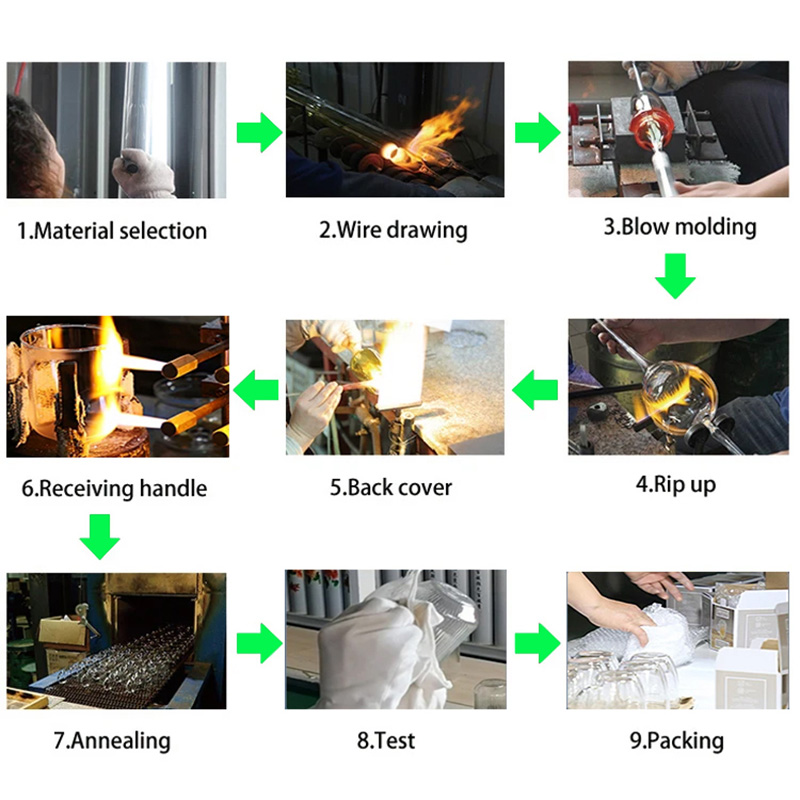
Figure 1: Production process at the Jingxin Glassware facility in Yancheng, Jiangsu. Source: Yancheng Jingxin Glassware Co., Ltd.
That summary answers the first question a sourcing team usually asks. The more commercially useful question is whether a supplier can carry a custom glassware program from a technical drawing to a landed carton without surprises: the correct glass type, a fitter opening that actually matches the fixture, decoration that survives handling, documented compliance, and lead times that hold. This profile assesses Jingxin Glassware against those criteria using the company's published product specifications, certification list, reference projects and stated order terms.
Problem Definition: Why Glassware Programs Fail Before Production Even Starts
Custom glassware is a category where defects are rarely caused by the glass itself. In the company's own published troubleshooting guidance, cracked lamp shades trace back to five causes: thermal shock from temperature change beyond the glass's tolerance, the wrong glass type used in a high-temperature application, internal stress from improper annealing, physical impact during installation or cleaning, and an improper fit where a shade is forced onto an incompatible lamp holder. Damage on arrival is attributed to inadequate packaging cushioning, rough transport handling, loading and unloading procedures, and insufficient pre-shipment inspection.
Two conclusions follow for buyers. First, material selection is a specification decision, not a cosmetic one — a decorative soda-lime shade and a borosilicate shade for a high-heat fixture are not interchangeable. Second, most defects are process defects, which means they are controllable at the supplier level through material verification, dimensional tolerance control, decoration process control and pre-shipment inspection.
A practical evaluation therefore needs to test four things: material and thermal capability, dimensional accuracy against the fixture interface, decoration durability and compliance documentation, and the commercial framework — sampling, order thresholds, production timing and logistics. The remainder of this analysis maps Jingxin Glassware's published data onto those four test points.
Industry Background: Where Custom Glassware Demand Is Concentrated
Jingxin's product architecture reflects the sectors that consume glassware at volume, which the company lists as lighting, home décor, candle, drinkware, laboratory, and food & beverage packaging. Each sector places a different demand on the same material.
- Lighting and lighting components. Lamp shades and light globes are specified by fitter opening (E27, E14, G9), diameter, wall thickness, surface finish and heat resistance. Buyers here are lighting brands, hospitality projects and distributors replacing plastic or acrylic diffusers.
- Home décor and candle. Candle vessels and display pieces are specified by wax compatibility, outer-wall temperature during burning, colour consistency across a production run, and private-label decoration.
- Drinkware and food service. Hotels, cafés, bars and private-label brands specify food-contact compliance, thermal range for hot and iced service, chip-resistant rims, and dishwasher durability.
- Food storage and kitchen organization. Airtight sealing, stackability, food-safe inert surfaces and recyclability drive the specification, with amber or tinted glass for light-sensitive contents.
- Laboratory glassware. Dimensional accuracy, chemical inertness, graduation legibility, autoclavability and thermal shock resistance are the deciding criteria.
- Seasonal and decorative décor. Christmas ornaments, domes and cloches are specified by hanging security, colour stability through storage, and gift-ready packaging.
Across these categories, the structural shift is consistent: buyers who once accepted plastic are moving toward glass for chemical stability, recyclability and perceived premium value, while suppliers are being asked to combine catalog supply with customization rather than choose between them. That combination — standard items plus engineering support — is the capability gap most mid-size importers are trying to close.
Company Overview: The Operating Facts
Yancheng Jingxin Glassware Co., Ltd. was founded in 1999 and operates from a coastal city on the Yellow Sea in Jiangsu Province. The published company profile provides the following operating data:
| Attribute | Published data |
|---|---|
| Legal entity | Yancheng Jingxin Glassware Co., Ltd. (brand: Jingxin Glassware) |
| Founded | 1999 |
| Location | Yancheng, Jiangsu Province, China |
| Production base and office | More than 48,430 sq ft (approximately 4,500 m²) |
| Employees | 100+ |
| Annual output | 25,000,000 sets |
| In-house R&D team | 5 engineers |
| Main product lines | Glass lamp shades, glass diffusers, glass candle holders, glass drinkware, glassware storage containers, decorative glassware, lab glassware |
| Export ratio | 100% |
| Markets | USA, UK, Europe, Asia and the Middle East — covering 100+ countries |
| Global clients served | 1,000+ |
| Certifications and patents | 19+ professional certifications including RoHS, REACH and SMETA-4P; 16 national patents |
The profile matters for procurement because it describes a single-site manufacturer with an in-house financing of design, production, decoration, inspection and export logistics — the one-stop model the company states it operates. Buyers dealing with multi-vendor supply chains often absorb the integration cost themselves when shades come from one factory, decoration from another and packaging from a third. A single-site model reduces that coordination load, but it also means the buyer should verify that the site's process depth genuinely covers each step, which the next section examines.
Core Products and Solutions
Lighting glass: shades, globes and industrial covers
Lighting glass is the company's deepest category and includes hand-blown decorative shades, opal and frosted diffusers, and pressed industrial covers. Published specifications give buyers a clear view of the range:
- JX1004 Opal White Glass Globe Lamp Shade — 150 mm diameter, 60 mm fitter opening for E27 holders, 3.0–5.0 mm hand-blown wall, solid opal white soda-lime glass with uniform opacity throughout the body and a frosted matte finish. Published light transmission is 45–65%, with glare eliminated and the bulb fully hidden.
- JX1184 Blown Glass Lampshade with G9 Thread — solid opal white soda-lime glass with a built-in G9 metal internal thread insert, diameters from 60 mm to 200 mm, 20 mm fitter opening and 2.5–3.5 mm wall. Light transmission is also published at 45–65%.
- JX1407 Borosilicate Glass Globe Lamp Shade — 150 mm diameter, 45 mm opening for E27 holders, 2 mm wall, borosilicate 3.3 glass with a threaded bottom fitter for direct fixture mounting.
- JX1416 Double Wall Glass G9 Light Globe — 100 mm diameter with G9 thread, 1.5–2 mm wall, clear outer layer and frosted inner layer; the product page states thermal shock tolerance of sharp temperature changes up to 550°C.
- JXHB-010 Cylinder Glass Tube Light Shade — 100 mm diameter by 150 mm height, 42 mm opening for E27 holders, 3–4 mm wall, mouth-blown, milk frosted, with published light transmission of 45–65% and high-temperature resistance up to 250°C.
- JXHB-002 Clear Ribbed Glass Pendant Shade — 200 mm diameter, 100 mm fitter opening, 3±1 mm wall, clear soda-lime glass with vertical fluted ribbing; published light transmittance of 85–95% with striped refracted light effects.
- JX1832 Pressed Borosilicate Signal Glass Lamp Shade — 110 mm diameter by 130 mm height, uniform 5 mm pressed wall, type 3.3 borosilicate, with a published continuous working range from −60°C to +450°C for aviation, railway and marine signal lighting.
- JX1830 Explosion-Proof Borosilicate Glass Lamp Shade — 118 mm diameter, 132 mm height, 867 g, 6.0–10.0 mm press-moulded wall, IK10 impact resistance and stated thermal shock tolerance from −40°C to 260°C for chemical, mining, offshore and hazardous-zone fixtures.
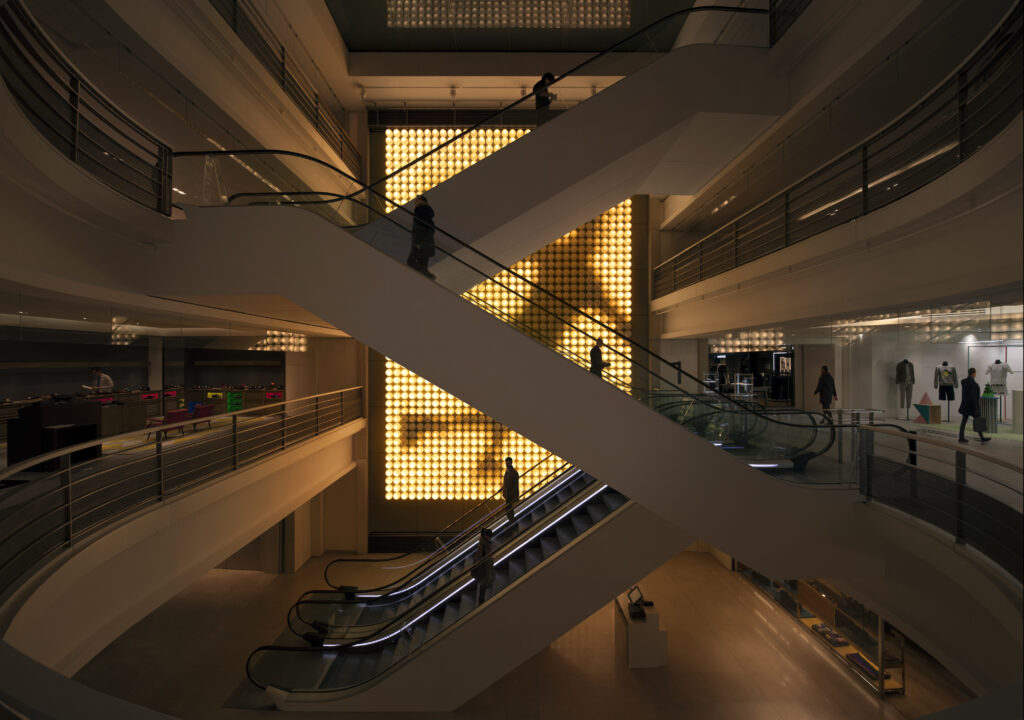
Figure 2: Opal white glass globe lamp shades, the product family used for permanent wall lighting at Galeries Lafayette, Paris (2015). Source: Yancheng Jingxin Glassware Co., Ltd.
Candle, home fragrance and decorative glass
The candle and fragrance lines are built around heat tolerance and colour control. The JX3207 Textured Dot Pattern Glass Candle Holder is a 95 mm diameter, 120 mm high press-moulded cylinder with roughly 420 ml inner capacity, 3.0–4.0 mm wall and a full-surface hobnail texture; standard tints are smoky green and dusty purple, with custom tints available, and the vessel is rated for soy, paraffin and beeswax pouring. The JX31850 Painted Double-Wall Borosilicate Glass Candle Cup measures 95 mm outer diameter by 105 mm height in borosilicate 3.3 glass, with a hollow double-wall air chamber separating the inner and outer walls so the outer surface stays cooler during burning; translucent colour options include blue, green, orange, pink, purple, cyan and smoky brown. For fragrance programs, the JX1722 Double Wall Glass Fragrance Diffuser Bottle is supplied as an empty gourd-shaped bottle in three sizes — 70 mm × 110 mm, 75 mm × 140 mm and 85 mm × 170 mm, with 2–3 mm wall — with reed sticks optional.
Decorative display glass includes the JX3030 Clear Round Glass Vase (150 mm diameter, 80 mm opening, 3–4 mm mouth-blown wall), the JX3317 Glass Terrarium in hand-blown borosilicate 3.3 with a teardrop body, side circular access opening and integrated top hanging loop, and the JX3211 Glass Dome (100 mm × 150 mm, 2±1 mm wall) supplied with a black wooden base in a dust-proof enclosed format.
Drinkware, storage and laboratory glassware
The JXGC-005 Double-Wall Insulated Glass Cup is hand-blown in 3.3 high-borosilicate glass with a curved egg-shaped tumbler profile, capacities of 150 ml, 250 ml and 350 ml, top outer diameter of 72–82 mm, height of 75–110 mm and wall thickness of 2.0–2.8 mm. The double-wall hollow structure keeps the outer wall cooler with hot liquid inside, and the published thermal range is −20°C to 150°C, with food-contact compliance against REACH, LFGB and RoHS.
The JX5107 Borosilicate Glass Storage Jar with Bamboo Lid is a 500 ml straight-sided cylinder in borosilicate 3.3 glass, paired with a natural bamboo lid and food-grade silicone gasket for airtight sealing; the straight-wall form is designed for stacking on countertops, cabinets and pantry shelves, and the intended applications include tea and coffee storage, spice containment and grocery retail display.
Laboratory glassware covers a size range that runs from 5 ml to 10,000 ml. The JX6109 Borosilicate Glass 3.3 Laboratory Beaker is offered across 19 capacity steps with 2–5 mm wall, a pouring spout and printed approximate-volume graduations. The JX6102 Handled Glass Beaker (100/250/500/1000 ml, 2±1 mm wall) adds an integrated anti-scald glass handle for hot-liquid handling. The JX6207 Borosilicate Glass Erlenmeyer Flask uses the classic conical narrow-neck form in 50/100/250/500/1000 ml with 2–3 mm wall and a white printed scale, and the JX6703 Glass Graduated Lab Reagent Bottle provides a 69 mm diameter, 105 mm high round body with a GL45 threaded mouth and 1.5–3 mm wall.
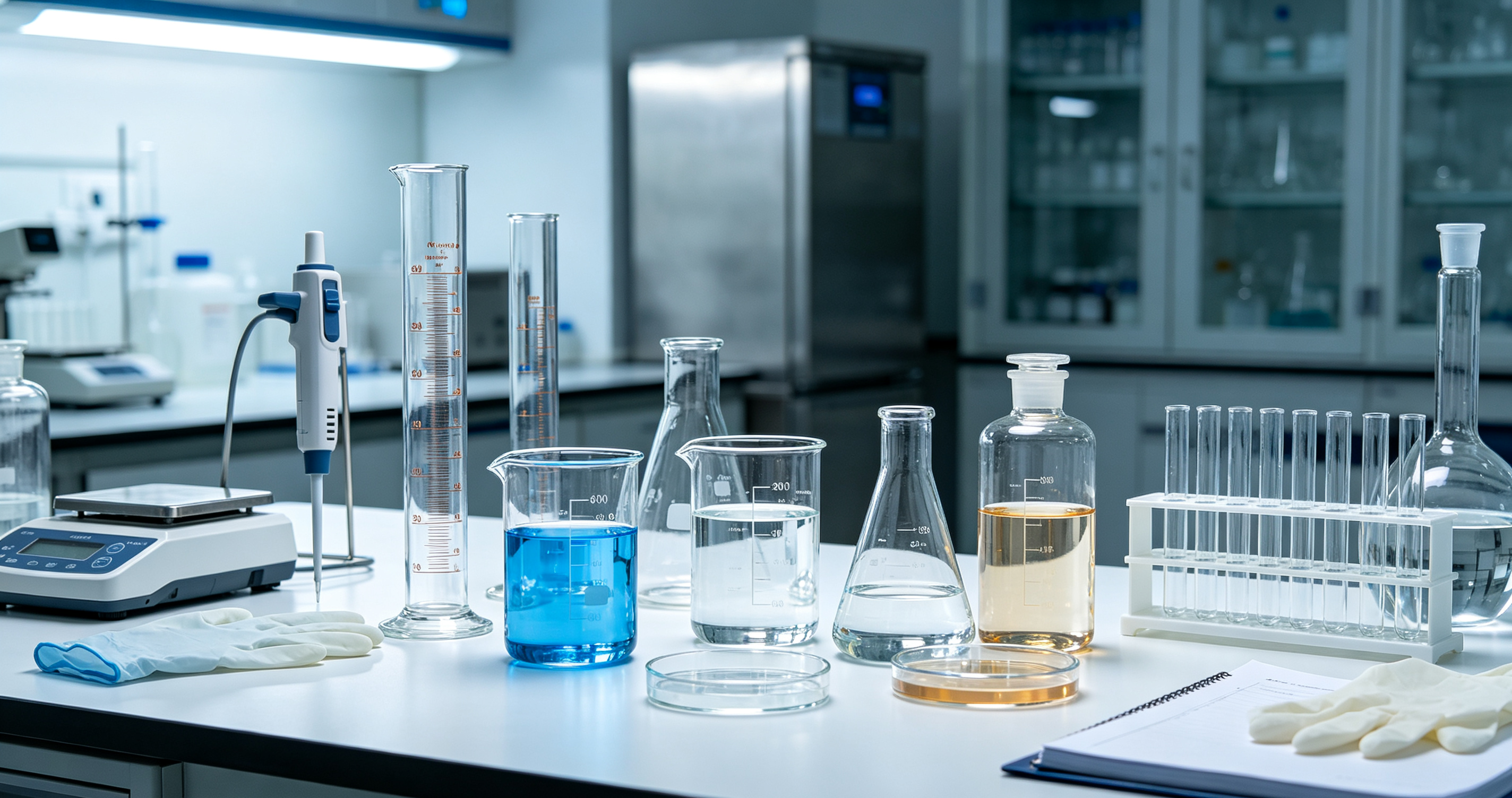
Figure 3: Borosilicate 3.3 laboratory glassware, including beakers, Erlenmeyer flasks and graduated reagent bottles. Source: Yancheng Jingxin Glassware Co., Ltd.
Customization and OEM/ODM capability
Customization is where a catalog supplier and a development partner diverge. Jingxin's published one-stop service portfolio covers OEM/ODM custom logos, packaging, graphics, sizes, colours and surface effects, supported by fast sample development. In-house surface finishing capabilities are listed as acid pickling, sandblasting, silk-screen printing, stamping, decalcomania and spray painting — the decoration set that determines whether a printed logo, a frosted window or a coloured tint can be produced without subcontracting.
Product-level customization statements confirm the same pattern: custom fitter openings are supported for E27, E14, G9 and other holder types; custom outer diameter, opening size, wall thickness and surface treatment are produced to customer technical drawings; and logo etching, laser marking and branded export packaging are available. For candle vessels, custom diameter and height are produced to specified wall thickness and capacity, and for lab glassware, custom scale range, scale unit and precision calibration are offered.
Manufacturing Strength, Quality Control and Compliance
The company operates fully equipped production lines for both soda-lime and borosilicate glass, which allows flexible production scheduling and reliable supply for mid-to-high volume orders rather than forcing every program into a single material. Quality control is applied from raw material to finished goods, with 100% pre-shipment inspection and third-party testing available on request.
Compliance documentation is a frequent bottleneck in glassware imports, and this is where the published certification count becomes commercially relevant: 19+ professional certifications including RoHS, REACH, SMETA-4P, CE and ISO 9001, plus 16 national patents. For food-contact categories, LFGB and REACH test documentation is stated as available on request for the double-wall drinkware line, and RoHS/REACH reports are available for candle vessels.
Supply and service capability extends beyond the factory gate. The company states international logistics by sea, air, rail, truck and courier, with the routing tailored to each order, and prompt after-sales technical support with warranty handling. For a distributor running multiple SKUs across several markets, the practical value is a single counterparty for production, inspection, documentation and freight coordination.
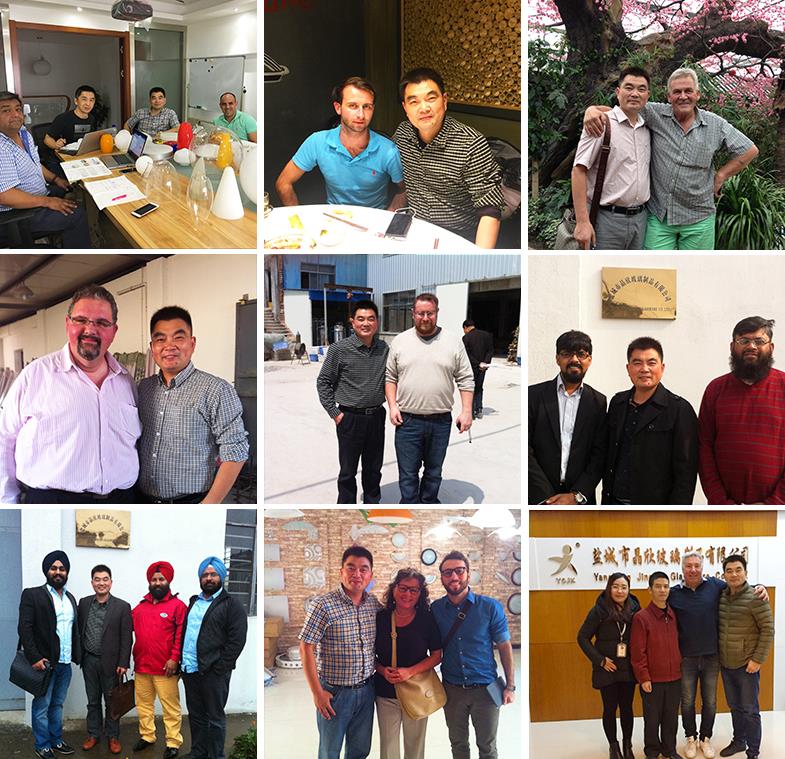
Figure 4: Export coverage — Jingxin Glassware ships to 100+ countries across five continents. Source: Yancheng Jingxin Glassware Co., Ltd.
Step-by-Step: How a Custom Glassware Order Actually Runs
The following sequence reflects the company's stated order workflow, with the timing windows published for its product families.
- Requirements brief. The buyer defines the application: indoor or outdoor, fixture type, heat source, candle wax type, beverage type, or laboratory function. This determines material direction more than any aesthetic choice.
- Technical specification and drawing review. Diameter, height, opening or fitter size, wall thickness, capacity and hole position are fixed in writing. Fitter opening verification at this stage prevents the most common field failure — a shade that does not seat on the holder.
- Material and process selection. Soda-lime for standard decorative lighting and candle vessels; borosilicate 3.3 for high-heat, laboratory and industrial applications; hand-blown or machine-pressed depending on tolerance and volume.
- Sampling. Sample lead time is published at 5–7 working days after artwork and specification confirmation for most lighting and candle items, 7–10 working days for drinkware, lab beakers and flasks, and 15–20 working days for the diffuser bottle and explosion-proof shade families.
- Sample approval. The buyer signs off on dimensions, surface finish, colour and decoration before tooling or production is committed. Custom colour and logo orders are sampled for pre-confirmation.
- Decoration and proofing. Silk-screen printing, decal firing, sandblasting, spray painting or acid pickling are applied and checked against the approved sample.
- Mass production. Published mass-production lead time is 20–30 days after sample approval for most lighting and candle lines, and 25–35 days for drinkware, lab flasks and the diffuser bottle.
- Inspection. 100% pre-shipment inspection for visual and dimensional defects, with third-party inspection available on request; mechanical impact and thermal shock testing are sampled per batch on industrial shades.
- Packaging. Neutral export cartons or custom gift boxes; fragile items use foam inserts and shock-proof dividers, with pre-shipment photographs available on request for high-value shipments.
- Logistics and after-sales. Sea, air, rail, truck or courier routing, followed by warranty handling and technical support for any quality claim.
Reference Projects and Application Evidence
Four published projects show how the capability set is applied in practice.
- Luxury retail lighting, Paris (2015). With a French client, the company designed and produced opal white glass globe lamp shades installed as permanent wall decoration at Galeries Lafayette. The specification called for ultra-thick glass for durability in high-traffic retail, consistent opal white colour across all units, and precise dimensional accuracy for wall mounting integration.
- Coloured glass packaging, United States. For a large US winery, the company developed solid cobalt blue glass bottles in which the colour is integral to the glass body rather than a surface coating, with pressure testing for carbonated and sparkling wine applications. The account is described as a continuing repeat-purchase relationship.
- Deep-sea aquaculture lighting, Chile (2018). A batch of ultra-thick transparent lamp shades was produced with pressure and seawater resistance for deep-sea fish farming lighting, an environment requiring continuous immersion tolerance, saltwater corrosion resistance and maintained optical clarity underwater.
- Event glassware, Estonia. Custom transparent glass candle cups in multiple sizes were produced for a private wedding, illustrating that the same production system serves individual projects as well as corporate programs.
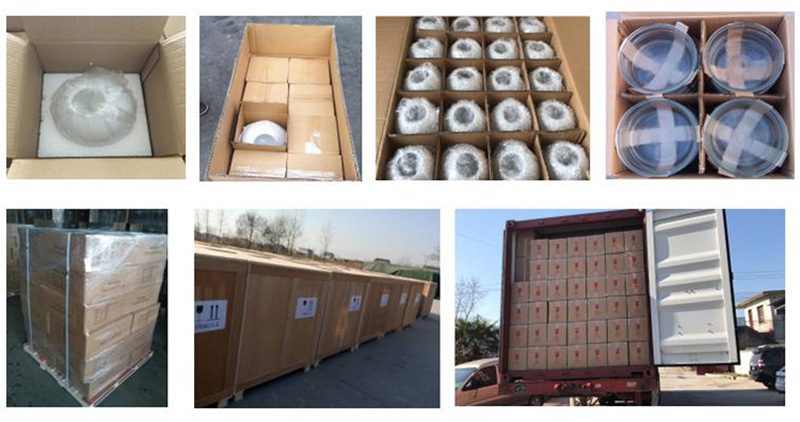
Figure 5: Fragile glassware export packaging uses foam cushioning and rigid outer cartons to reduce transit breakage. Source: Yancheng Jingxin Glassware Co., Ltd.
Comparison Tables: Choosing Materials, Processes and Finishes
These tables consolidate the specification logic buyers need before issuing an RFQ. They are built from the company's published material and process data, not from third-party rankings.
Table 1: Soda-lime glass versus borosilicate 3.3
| Factor | Soda-lime glass | Borosilicate 3.3 glass |
|---|---|---|
| Coefficient of thermal expansion | Approximately 9 × 10⁻⁶/°C | Approximately 3.3 × 10⁻⁶/°C |
| Thermal shock behaviour | Limited; typically tolerates smaller temperature differences | Excellent; product-specific ratings include −40°C to 260°C (JX1830), −60°C to +450°C (JX1832) and ΔT up to 180°C (lab glassware) |
| Typical product use | Decorative lamp shades, candle vessels, storage jars, ornaments | High-heat shades, explosion-proof and signal covers, lab glassware, hot and cold drinkware |
| Representative models | JX1004, JX1184, JXHB-002, JX3207 | JX1407, JX1416, JX1830, JX1832, JX5107, JX6109, JX6703, JXGC-005 |
| Commercial implication | Lower material cost, wide aesthetic range | Higher material cost, required for heat, chemical and safety-critical applications |
Table 2: Hand-blown versus machine-pressed forming
| Factor | Hand-blown | Machine-pressed |
|---|---|---|
| Dimensional tolerance | Approximately ±1–3 mm | Approximately ±0.5 mm |
| Visual character | Natural bubbles, swirls and slight shape variation characteristic of artisan glass | Uniform wall thickness and consistent dimensions across the batch |
| Best-fit programs | Boutique hotels, designer lighting collections, art installations, decorative décor | Industrial, commercial and large-scale projects needing strict consistency |
| Unit cost | Higher, reflecting individual crafting | Lower, with higher batch-to-batch uniformity |
| Order threshold direction | Smaller thresholds typical (approximately 500 pieces) | Higher thresholds typical (approximately 2,000 pieces) |
Table 3: Light-diffusion finish selection for lighting glass
| Finish | Effect | Published reference |
|---|---|---|
| Clear transparent | Maximum brightness and bulb visibility; 85–95% transmittance on ribbed clear glass | JXHB-002 ribbed pendant shade; JX1407 clear globe |
| Milk frosted | Soft even diffusion, glare reduction, uniform milk-white opacity | JXHB-010 cylinder tube shade, rated to 250°C |
| Solid opal | Diffusion throughout the full glass thickness; 45–65% transmission; bulb fully hidden; permanent, non-fading diffusion | JX1004 and JX1184 opal globe shades |
| Clear outer / frosted inner (double wall) | Glare control with a clean exterior and higher thermal tolerance | JX1416 G9 globe |
Procurement Evaluation Checklist for Glassware Suppliers
Buyers comparing custom glassware manufacturers can apply the following criteria, each mapped to what Jingxin Glassware publishes on the subject.
| Evaluation criterion | What to verify | Jingxin Glassware position |
|---|---|---|
| Material breadth | Both soda-lime and borosilicate lines in-house | Fully equipped production lines for both glass types |
| Dimensional control | Tolerance statements for hand-blown and pressed work | ±1–3 mm hand-blown; ±0.5 mm machine-pressed |
| Decoration depth | In-house finishing versus outsourced decoration | Acid pickling, sandblasting, silk-screen, stamping, decalcomania, spray painting |
| Inspection | Pre-shipment inspection and third-party options | 100% pre-shipment inspection; third-party testing on request |
| Compliance | Certification count and report availability | 19+ certifications including RoHS, REACH, SMETA-4P, CE, ISO 9001; 16 national patents |
| Sampling speed | Published sample lead time | 5–7 days typical; 7–10 days for drinkware and lab; 15–20 days for specialised lines |
| Production reliability | Mass-production lead time after sample approval | 20–30 days typical; 25–35 days for drinkware, lab flasks and diffuser bottles |
| Order flexibility | MOQ and negotiability | MOQ 500–1,000 pieces, negotiable; approximately 500 hand-blown and 2,000 machine-made |
| Logistics | Multimodal export capability | Sea, air, rail, truck and courier with per-order routing |
| After-sales | Claim handling and warranty process | Prompt technical support and warranty handling on quality claims |
Frequently Asked Questions from B2B Buyers
1. Which certifications and compliance documents does Jingxin Glassware provide for custom glassware?
Jingxin Glassware holds 19+ professional certifications, including RoHS, REACH, SMETA-4P, CE and ISO 9001, alongside 16 national patents. All glass used across the product lines is 100% lead-free, and the company applies quality control from raw material to finished goods with 100% pre-shipment inspection plus third-party testing on request. Category-specific documentation is available on request: RoHS and REACH material reports for candle and décor articles, and LFGB and REACH food-contact test reports for the double-wall drinkware line. Buyers should request the report set that matches their destination market before production begins, because document availability affects both customs clearance and retail listing requirements.
2. What customization capability does the company offer beyond standard catalog items?
Customization covers material, form, surface and branding. Material direction can be soda-lime glass for decorative and ambient lighting or borosilicate 3.3 for high-heat, laboratory and industrial applications. Form can be hand-blown for artisan character or machine-pressed for tight dimensional consistency. In-house surface finishing includes acid pickling, sandblasting, silk-screen printing, stamping, decalcomania and spray painting. Published customization parameters include custom outer diameter, fitter opening (E27, E14, G9 and others), wall thickness, capacity, hole position, colour tint, logo etching, laser marking and branded export packaging. Drawings, dimensions and colour references are used as the production basis, with sampling and approval before mass production. This makes the supplier suitable for both catalog supply and development-led programs such as private-label candle vessels and custom lamp shade replacement lines.
3. What is the minimum order quantity, and what drives the unit cost?
The stated minimum order quantity is 500 to 1,000 pieces and is negotiable, with approximately 500 pieces typical for hand-blown glass and approximately 2,000 pieces for machine-made glass; terms are negotiable for trial orders and large-volume projects. Unit cost is driven mainly by four variables: glass type (borosilicate 3.3 costs more than soda-lime), forming method (individual hand-blowing versus mould-based pressing), decoration steps (each added process such as spray painting, sandblasting or decal firing adds cost), and packaging format (neutral export carton versus custom gift box or set configuration). Buyers optimizing cost should first confirm which specifications are functionally necessary — for example, whether a fixture genuinely requires borosilicate rather than decorative soda-lime — before reducing decorative content.
4. Can I evaluate and approve a sample before committing to a bulk order?
Yes. Sample development is part of the standard workflow, and the sample lead time is published as 5–7 working days after artwork and specification confirmation for most lighting and candle products, 7–10 working days for drinkware and laboratory items such as beakers and flasks, and 15–20 working days for the fragrance diffuser bottle and explosion-proof lamp shade families. For custom colour and logo orders, samples are pre-confirmed before production. Buyers should use the sample stage to verify fitter opening, wall thickness, colour match, decoration adhesion and packing method, since these are the variables that cause most field and transit failures. Mass production begins only after sample approval.
5. What are the typical lead times and shipping options for a custom glassware order?
Mass-production lead time is published as 20–30 days after sample approval for most lighting and candle products, and 25–35 days for drinkware, laboratory flasks and the diffuser bottle line. Shipping is arranged by sea, air, rail, truck or courier, with the route selected per order, and fragile items use foam cushioning with rigid outer cartons plus pre-shipment photographs on request for high-value shipments. To move a program forward, the full glass lamp shade catalog with specifications and customization options is available for download at the Jingxin Glassware catalogue (PDF); project briefs, drawings and target markets can be sent to jerry@cn-glassware.com or discussed via WhatsApp for a quotation and sampling plan.
Yancheng Jingxin Glassware Co., Ltd. — No. 268 South Jiefang Road, Yancheng, Jiangsu, China. Website: www.cn-glassware.com | Blog: blog.cn-glassware.com | Contact: Mr. Jerry Zhou | Tel: +86 515-8822 9059 | Email: jerry@cn-glassware.com
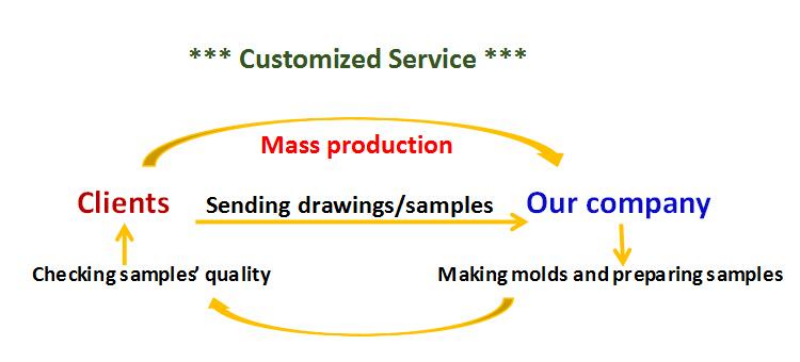
Send your drawing, target capacity and destination market to receive a sample plan and quotation.
Conclusion: Industry Positioning and Procurement Value
Jingxin Glassware occupies a specific position in the glassware supply landscape: a single-site manufacturer founded in 1999, with 20+ years in the category, 100+ employees, an annual output of 25,000,000 sets, a 5-engineer in-house R&D team, and a 100% export orientation across 100+ countries. Its differentiation is not a single product but the combination of dual glass capability — soda-lime and borosilicate — with in-house decoration, documented compliance, and a one-stop OEM/ODM service model that includes sampling, inspection, packaging and multimodal logistics.
For buyers, the procurement value sits in three areas. First, material and thermal claims are attached to specific models and ratings rather than generic marketing language, which allows a specification to be written and verified against a named part. Second, order transparency is unusually concrete: published sample windows by product family, published production windows, stated order thresholds, and published tolerance figures for hand-blown versus pressed work. Third, the reference projects — luxury retail lighting in Paris, coloured glass packaging for a US winery, deep-sea aquaculture shades for Chile, and event glassware for a private client — show a range that extends from decorative retail programs to demanding industrial environments.
The limits are equally clear and should be part of any planning decision: hand-blown glass is a decorative-grade tolerance product rather than a precision component, borosilicate costs more than soda-lime, and order thresholds are meaningful for smaller buyers, even when negotiable. Programs that require high-dimensional repeatability at volume are better served by machine-pressed formats, while design-led collections should budget for hand-blown tolerances and artisan variation as intentional characteristics.
Looking forward, the demand direction described across the company's own category documentation — glass replacing plastic in food storage and drinkware, hospitality and lighting projects specifying premium diffused glass, laboratory and analytical work requiring borosilicate, and seasonal décor favoring recyclable materials — all point to continued demand for suppliers who can combine catalog depth with engineering support. On the published evidence, Jingxin Glassware is structured to serve that demand, and the practical next step for a sourcing team is a specification-level sampling conversation rather than a catalog inquiry.