Opal White Glass Globe Shades: Commercial Application Guide
Opal white glass globe lamp shades are specified in commercial interiors when the lighting goal is soft, glare-free illumination rather than maximum light output. The opal glass body diffuses light through the full glass thickness, hides the bulb, and reduces the harsh brightness that clear glass can create in offices, clinics, and hospitality spaces. For project buyers, the decision is not simply opal or clear; it is a fixture, material, fitter, installation, and maintenance decision that should be settled before mass production.
Direct answer: For most office, clinic, and hospitality projects, choose an opal white glass globe shade when visual comfort and bulb concealment matter; choose borosilicate glass when heat or thermal shock is part of the operating condition; confirm the fitter opening (E27, E14, G9, or custom) before ordering; and use mild cleaning and correct installation practice to avoid cracking and surface damage. Jingxin Glassware, founded in 1999 in Yancheng, Jiangsu, China, produces custom glass lamp shades and related glassware for lighting and other sectors, exporting to 100+ countries.
Problem Definition: Why Globe Shades Need a Different Decision Process
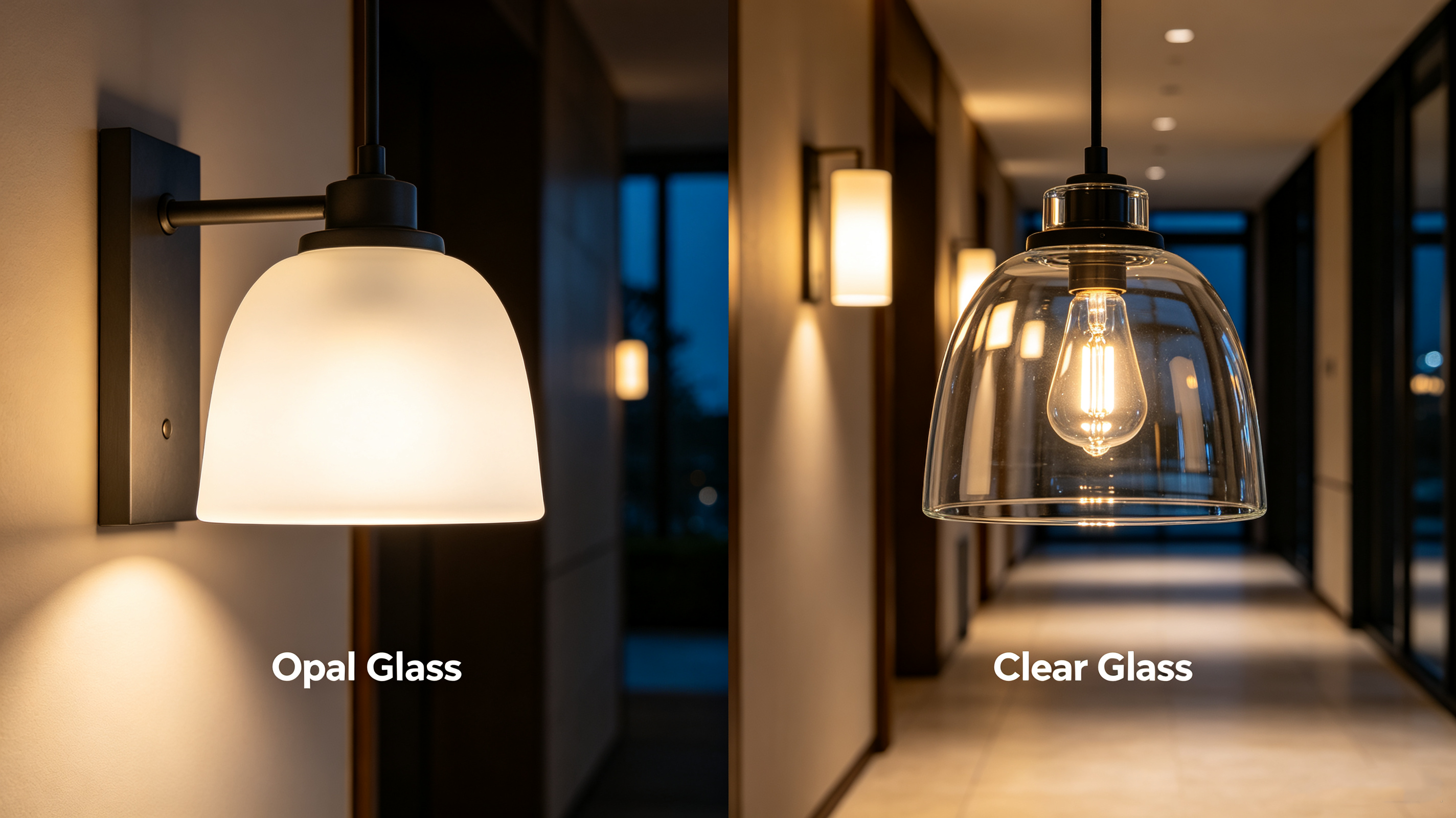
Glare, visible lamps, and inconsistent light quality are common complaints in commercial interiors. Clear glass transmits a high share of light, but it also leaves the bulb visible and can create bright spots and harsh shadows. In workspaces, that can mean uncomfortable reflections on screens and glossy surfaces. In clinics, it can mean visual discomfort in waiting areas and examination rooms. In hotels and restaurants, it can weaken the intended warm, calm atmosphere.
A second problem is fit. A globe shade that does not match the pendant, G9 lamp holder, or compact fixture may be forced into place, sit loosely, or create stress at the fitter opening. The result can be wobble, poor alignment, or cracking. A third problem is maintenance: abrasive cleaning, hot water, or ammonia-based cleaners can damage finishes, while careless handling during installation can chip or crack glass.
The procurement question is therefore a comparison question. Buyers compare opal against frosted and clear glass, hand-blown against machine-pressed construction, soda-lime against borosilicate, and stock against custom supply. The right answer depends on the project’s glare target, fixture type, heat exposure, handling routine, and order volume.
Industry Background: Why Opal Glass Is Used in Commercial Lighting
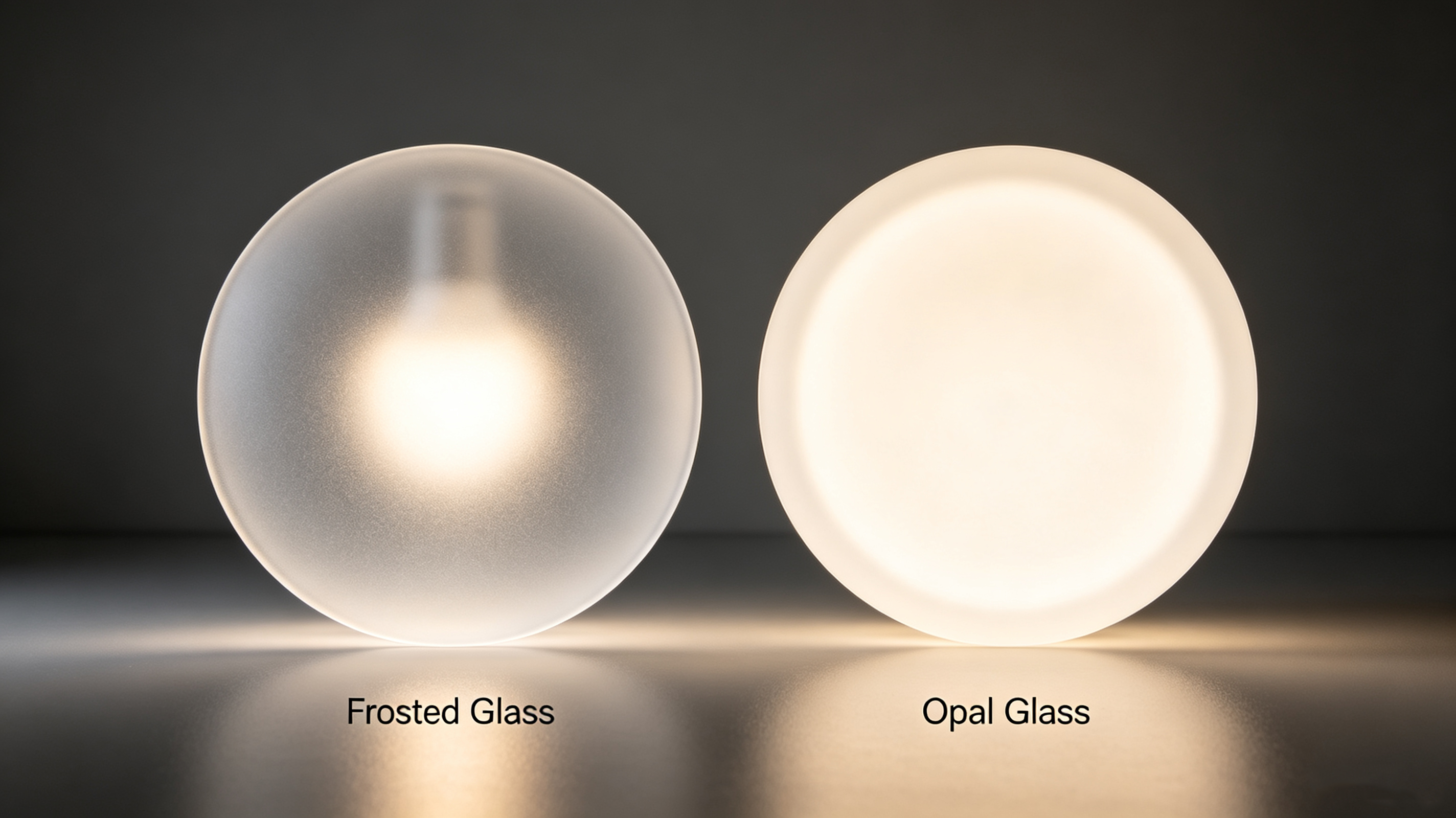
Opal glass is a milky-white glass made by adding opacifying agents to the glass batch. The scattering particles are distributed throughout the glass body, not applied only to the surface. That is the key difference from frosted glass: frosting is a surface treatment, while opal glass has permanent diffusion through its full thickness. In lighting terms, the entire glass surface emits a softer glow, and the bulb is completely hidden.
Typical opal glass light transmission is 45–65%, depending on opacifier concentration. That is lower than clear glass at 92–95% and frosted glass at 70–82%, but the trade-off is superior diffusion and glare control. For a commercial project, lower transmission can mean that the lighting design needs higher lumen output or more fixtures to reach the same ambient light level. That is a design decision, not a product defect.
The material choice also affects durability. Soda-lime glass is common for decorative lighting and can withstand temperatures up to 120°C. Borosilicate glass has a lower coefficient of thermal expansion, roughly 3.3 × 10⁻⁶/°C versus about 9 × 10⁻⁶/°C for soda-lime, and can handle temperature changes from -40°C to +260°C. For globe shades exposed to heat or rapid temperature change, borosilicate is the safer specification.
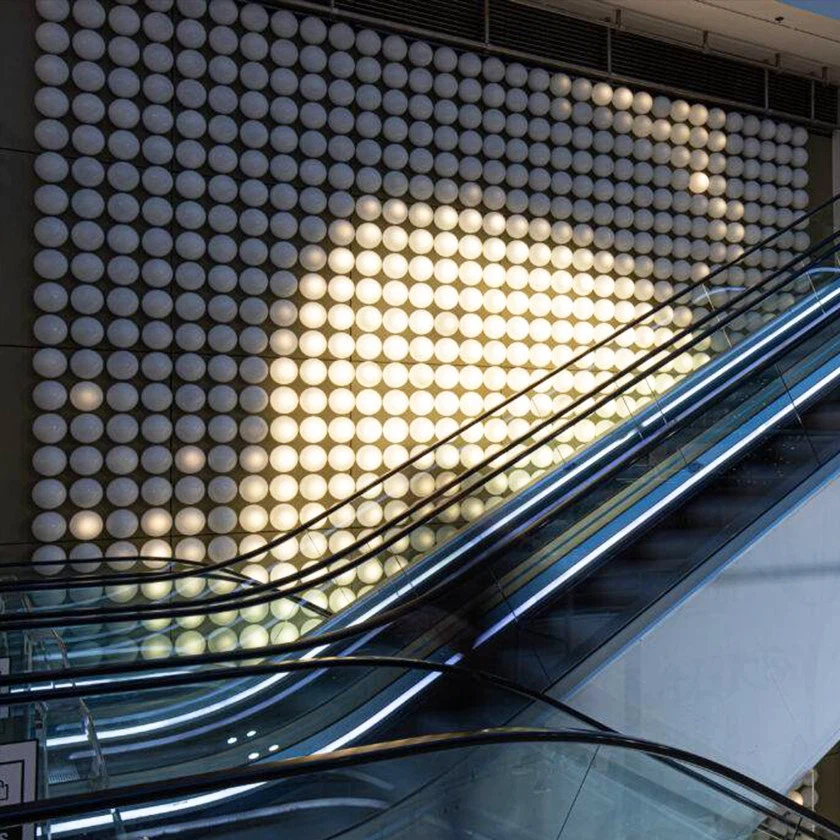
Commercial evidence exists in the market. In 2015, Jingxin Glassware worked with a French client to produce opal white glass globe lamp shades for Galeries Lafayette in Paris. The shades were used as permanent wall decorations and were selected for even light diffusion, a warm atmosphere, ultra-thick glass construction, frosted matte finish, and anti-yellowing properties. The project shows why opal globe shades are associated with premium retail and hospitality interiors: the glass is not only a light cover, but part of the visual and lighting system.
Detailed Solution: Matching Opal White Globe Shades to the Project
The solution has three parts: optical selection, mechanical fit, and material selection. Optical selection decides whether opal glass is appropriate. Mechanical fit decides whether the globe shade will sit correctly on the pendant, G9 holder, or compact fixture. Material selection decides whether soda-lime or borosilicate glass is suitable for the heat and handling conditions.
1. Optical selection: opal glass for glare control and bulb concealment
Opal white glass is the appropriate choice when the project brief calls for soft, even light and complete bulb hiding. It is less appropriate when the project needs maximum brightness or when the bulb itself is part of the design. Clear glass remains the baseline for maximum light output, and frosted glass offers a middle option with 70–82% transmission and partial bulb concealment.
In a commercial setting, the lighting designer should compare the desired illuminance with the transmission of the selected glass. Because opal glass transmits 45–65% of light, the luminaire may need a higher-output lamp or a denser fixture layout than a clear-glass scheme. The benefit is a more comfortable visual environment, especially where people sit or wait for extended periods.
2. Mechanical fit: pendant, G9, and compact fixtures
Globe shades are not interchangeable across all fixtures. Buyers should confirm the fitter opening and mounting method before production. Jingxin Glassware supports custom fitter openings for E27, E14, G9, and other lamp holder types. The product names also provide a starting point: the Double Wall Glass G9 Light Globe (JX1416) is intended for G9 fixtures, and the Blown Glass Lampshade with G9 Thread (JX1184) has a G9 thread. The Opal White Glass Globe Lamp Shade (JX1004) is an opal glass globe option, and the Borosilicate Glass Globe Lamp Shade (JX1407) is a borosilicate globe option.
If a shade does not fit, the cause may be a dimensional tolerance deviation, a specification mismatch between sample and mass production, or a model mix-up during packaging or shipping. Small deviations of 1 mm or less may sometimes be addressed with fitter adapters or spacers, but significant mismatches should be handled through replacement or exchange under warranty terms. The better route is prevention: confirm all specifications in writing and approve a pre-production sample.
3. Material selection: soda-lime or borosilicate
Soda-lime glass is cost-effective and suitable for many decorative and ambient lighting applications up to its temperature limit of 120°C. Borosilicate glass is the stronger thermal choice, with thermal shock resistance from -40°C to +260°C and the ability to withstand temperature differences up to 300°C without breaking. For offices and clinics with LED fixtures and stable indoor temperatures, soda-lime opal glass may be sufficient. For hospitality kitchens, high-output fixtures, or installations where the shade may experience rapid temperature change, borosilicate is the more defensible specification.
Double-wall construction adds another option. The Double Wall Glass G9 Light Globe (JX1416) is a borosilicate product in Jingxin’s lighting range. Buyers should ask what the double-wall design is intended to achieve in their fixture rather than assuming it automatically solves every heat or glare issue.
Comparison Table: Opal, Frosted, and Clear Glass for Commercial Projects
The table below compares the three optical options using verifiable product-family data. It is a specification aid, not a claim that one finish is universally better.
| Decision factor | Opal glass | Frosted glass | Clear glass |
|---|---|---|---|
| Light transmission | 45–65% | 70–82% | 92–95% |
| Bulb visibility | Completely hidden | Partially hidden | Fully visible |
| Light character | Soft, even, warm | Soft, diffused glow | Sharp, direct, minimal diffusion |
| Diffusion depth | Through the full glass body; permanent | Surface treatment; can wear or show fingerprints | No diffusion treatment |
| Price premium over clear | 15–30% | 10–25% | Baseline |
| Best-fit commercial use | Offices, clinics, hospitality, premium ambient lighting | Cost-conscious diffusion, commercial interiors | Task lighting, display lighting, maximum brightness |
For a project comparison that includes product examples rather than only finishes, the next table maps visible product facts to application needs. It avoids assuming dimensions or certifications that are not stated in the product data.
| Product / model | Glass and construction | Project fit | Decision note |
|---|---|---|---|
| Opal White Glass Globe Lamp Shade / JX1004 | Opal white glass globe shade | Glare control and bulb hiding in offices, clinics, and hospitality | Choose when soft ambient light is the priority; confirm fitter and size before ordering |
| Double Wall Glass G9 Light Globe / JX1416 | Double-wall borosilicate glass G9 globe | Compact G9 fixtures where thermal performance and a defined fitter are required | Use the G9 interface as a starting point; validate the actual fixture |
| Borosilicate Glass Globe Lamp Shade / JX1407 | Borosilicate glass globe shade | Higher-heat or thermal-cycling lighting conditions | Specify when soda-lime temperature limits are too close to the operating condition |
| Blown Glass Lampshade with G9 Thread / JX1184 | Blown glass shade with G9 thread; opal glass is featured in Jingxin’s opal range | Pendant or compact fixtures requiring a G9 thread and hand-blown character | Hand-blown construction may carry wider dimensional tolerance; approve a sample |
Step-by-Step Breakdown: From Specification to Installation
- Define the lighting goal. State whether the project needs maximum brightness, glare reduction, bulb concealment, or a decorative statement. Opal glass is the fit when glare reduction and complete bulb hiding are required.
- Confirm the fixture interface. Identify whether the fixture uses E27, E14, G9, or a custom fitter. Check the mounting ring, thread, and shade weight. Do not force a shade onto an incompatible holder.
- Select the glass type. Use soda-lime for standard indoor decorative and ambient conditions within its 120°C limit. Use borosilicate when heat, thermal shock, or rapid temperature change is part of the application.
- Decide between hand-blown and machine-pressed. Hand-blown glass offers unique artistic character with wider dimensional tolerance; machine-pressed glass offers consistent dimensions, uniform wall thickness, and lower cost. Minimum order quantity is 500 pieces for hand-blown and 2,000 pieces for machine-made, with negotiable terms for trial orders.
- Approve a sample. Sample lead time is 5–7 days after artwork and specification confirmation. Sample cost may apply, and freight is collect. Check fitter opening, wall thickness, color consistency, and surface condition before approving mass production.
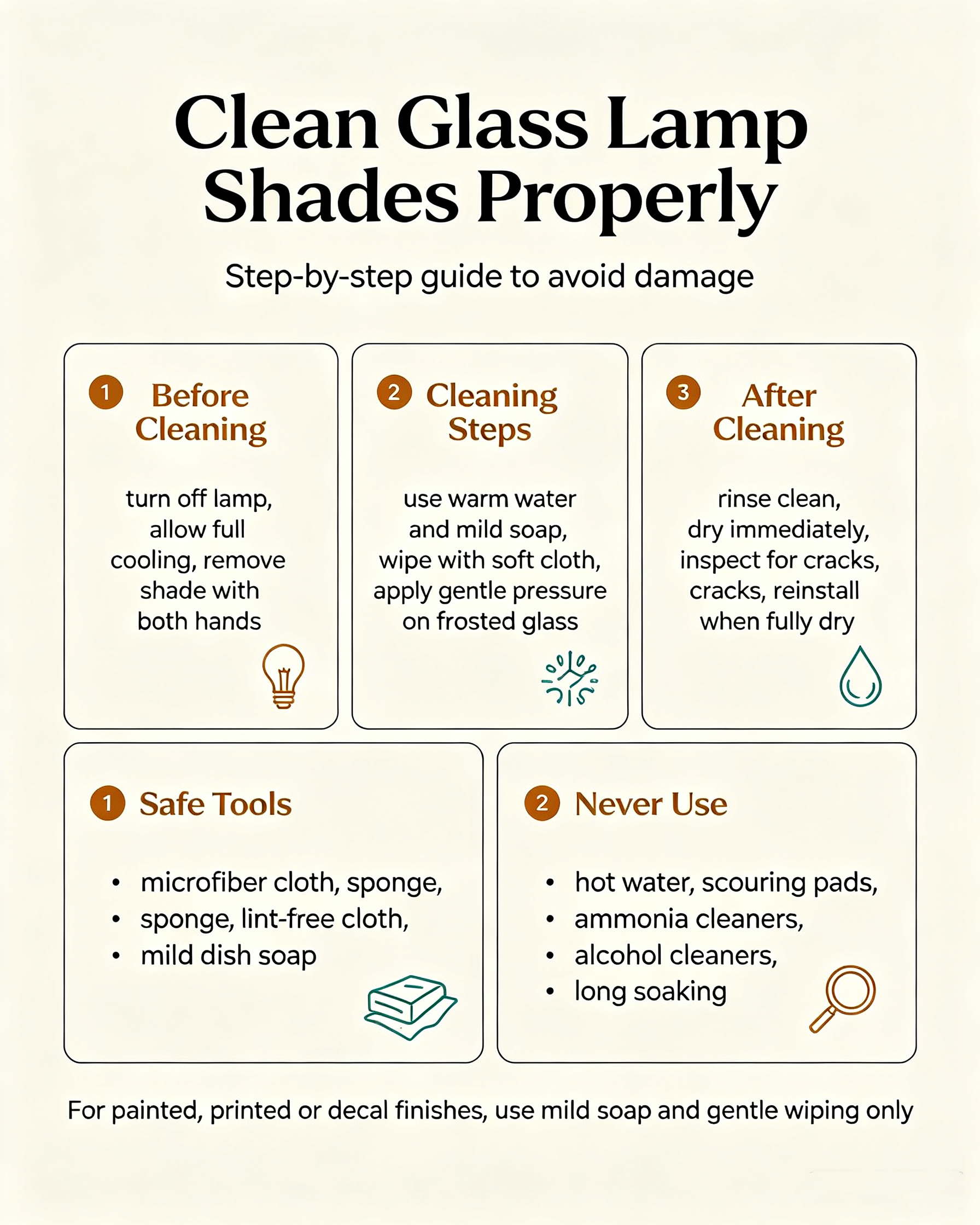
- Install with controlled handling. Switch off the fixture and let it cool. Verify the fitter opening, slide the shade into place, secure it with the mounting ring or locking mechanism, and check for wobble. Reinstall the bulb and test alignment.
- Clean with mild methods. Use warm water with mild dish soap and a soft microfiber cloth. Avoid abrasive pads, ammonia, and alcohol on painted, printed, or decal finishes. Rinse and dry immediately with a lint-free cloth. Never immerse a glass shade in hot water.
Use Cases: Offices, Clinics, and Hospitality Spaces
Offices
In offices, opal white globe shades can reduce glare on screens and glossy surfaces while hiding the lamp from view. The lower transmission of opal glass should be considered in the lighting layout; the design may need more fixtures or higher output to maintain illuminance. Pendant and compact fixtures with confirmed fitter sizes are the practical starting point.
Clinics and waiting areas
Clinics often prefer calm, non-glare lighting in waiting rooms, corridors, and consultation areas. Opal glass provides even diffusion and complete bulb hiding, which supports a cleaner visual environment. Because cleaning routines in clinics may be frequent, the shade surface should be cleaned with mild soap rather than aggressive agents, and glass should be inspected for chips before reinstallation.
Hotels, restaurants, and hospitality
Hospitality projects use opal globe shades to create warm ambient light without visible bulbs. The Galeries Lafayette project shows how opal white glass globe shades can become part of a premium interior, with ultra-thick construction and anti-yellowing properties. For hospitality back-of-house or high-heat areas, borosilicate glass is the more suitable material choice.
Cracking and Surface Damage: Prevention Checklist
Glass lamp shades can crack from thermal shock, the wrong glass type, manufacturing defects, physical impact, or improper fit. A cracked shade should be replaced, not repaired, because its structural integrity is compromised. The prevention checklist is straightforward:
- Match the glass type to the operating temperature: soda-lime up to 120°C; borosilicate for higher heat and thermal cycling.
- Never force a shade onto a lamp holder; verify the fitter opening first.
- Allow the fixture and shade to cool before handling.
- Use clean, dry gloves during installation to reduce fingerprints and slippage.
- Clean with mild soap and a soft cloth; avoid abrasive pads, ammonia, and alcohol on decorated surfaces.
- Do not soak shades or immerse them in hot water.
- Inspect for chips or cracks before installation and after cleaning.
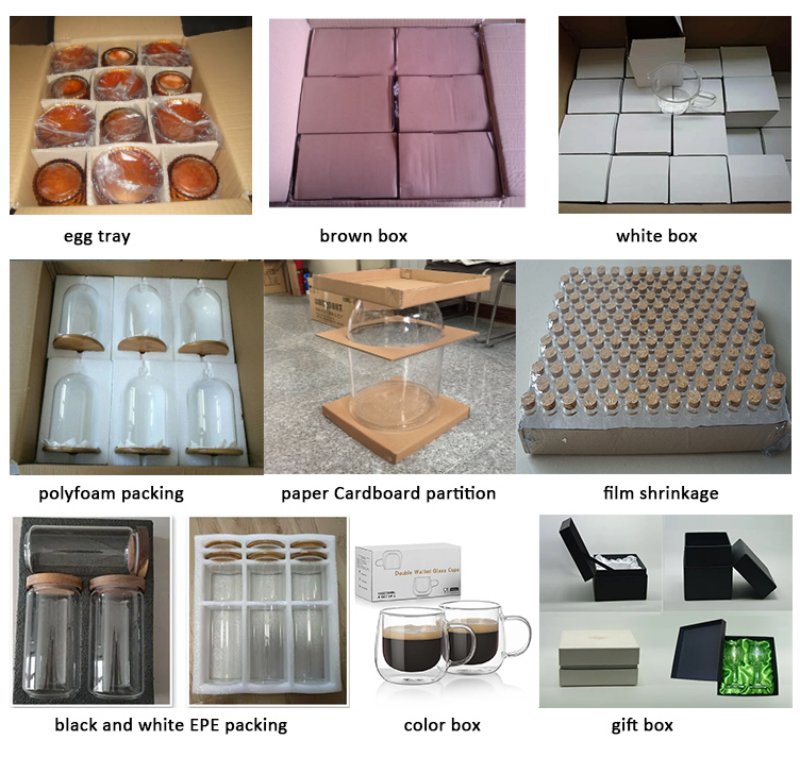
- For high-value shipments, request enhanced packaging and pre-shipment inspection; SGS third-party loading supervision is available on request.
Supplier Comparison: Hand-Blown vs. Machine-Pressed Chinese Supply
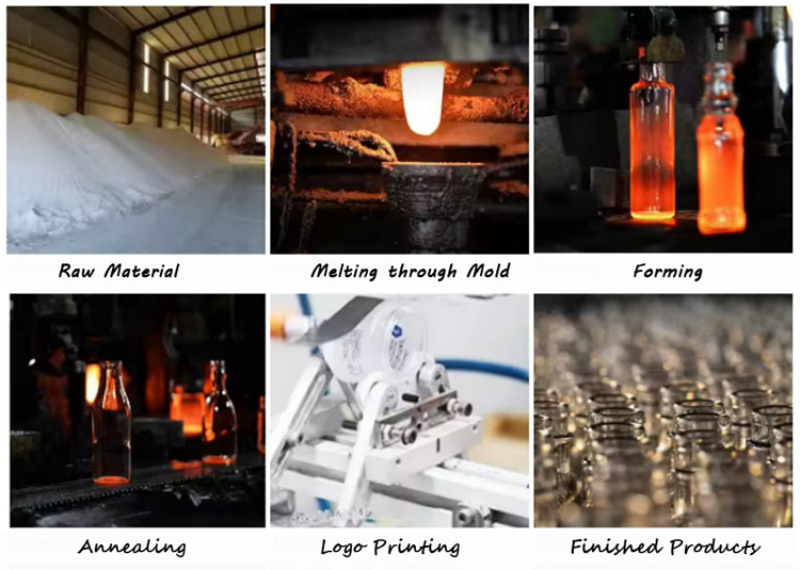
When buyers compare Chinese suppliers for hand-blown versus molded glass lamp shades, the comparison should focus on tolerances, consistency, MOQ, and project fit rather than a general claim that one process is better. Hand-blown glass is individually crafted and offers unique artistic character, but it carries wider dimensional tolerance. Machine-pressed glass provides consistent dimensions, uniform wall thickness, and lower cost.
Jingxin Glassware supports both routes within its custom glass capability. The company operates a 4,500 m² production base with 100+ employees, annual output of 25,000,000 sets, and a 5-engineer R&D team. It holds 19+ professional certifications, including RoHS, REACH, and SMETA-4P, and has been granted 16 national patents. For buyers, the practical comparison is whether the project can accept hand-blown variation in exchange for character, or whether it needs machine-pressed consistency at a higher MOQ.
Custom glass shades are produced to buyer specifications for dimensions, colors, surface finishes, fitting types, and branding. Stock shades are mass-produced with limited standard options. Custom projects can achieve 30–60% lower per-unit cost than retail catalog SKUs at scale, but small volumes carry higher per-unit cost. That is the budget trade-off buyers should model before choosing a process.
FAQ
How do I verify compliance for opal glass lamp shades in a commercial project?
Ask for the applicable certification documents and test reports before approving mass production. Jingxin Glassware holds 19+ professional certifications, including CE, RoHS, REACH, ISO 9001, and SMETA-4P, and RoHS test reports are available upon customer request. The company performs 100% pre-shipment inspection, with third-party testing such as SGS available on request. For a commercial project, confirm that the certificate scope and test report match the actual glass type, finish, and application.
How do hand-blown and machine-pressed glass lamp shades compare for this application?
Hand-blown glass is individually crafted and offers unique artistic character, but it has wider dimensional tolerance. Machine-pressed glass provides consistent dimensions, uniform wall thickness, and lower cost. Hand-blown is generally recommended for decorative applications; machine-pressed is recommended for industrial or high-volume projects. The MOQ is 500 pieces for hand-blown glass and 2,000 pieces for machine-made glass, with negotiable terms for trial orders.
What budget factors affect an opal white globe shade order?
Opal glass typically carries a 15–30% price premium over clear glass, reflecting the opacifying agents and the greater control needed for color consistency. Custom manufacturing has a higher per-unit cost at small volumes but can be cost-effective at large volumes; custom production can achieve 30–60% lower per-unit cost than retail catalog SKUs at scale. Buyers should compare the glass finish premium, MOQ, tooling or sample cost, packaging, and freight together rather than comparing unit price alone.
Can I request samples before placing a commercial order?
Yes. Samples are available upon request. Sample lead time is 5–7 days after artwork and specification confirmation. Sample cost may apply, and freight is collect. A sample approval should check fitter opening, dimensions, wall thickness, color consistency, surface finish, and light diffusion before mass production begins.
What is the lead time for mass production?
Mass production lead time is 20–30 days after sample approval. For large-volume or complex custom projects, delivery time may vary. To move a commercial project forward, confirm the glass type, fitter opening, finish, and estimated quantity, then request a sample and quotation from Jingxin Glassware through the company website.
Next Step: Sample, Quote, or Catalogue
For office, clinic, and hospitality projects using opal white glass globe shades, the fastest route is to confirm the fixture interface and request a sample before mass production. Jingxin Glassware provides OEM/ODM customization for sizes, colors, surface effects, logo printing, and packaging, with samples in 5–7 days and mass production in 20–30 days after approval.
Download the Glass Lamp Shades Catalogue or contact Jingxin Glassware to discuss your project requirements.
Conclusion
Opal white glass globe lamp shades are a specification choice for commercial interiors that need soft, glare-free light and complete bulb hiding. They are not the right choice when maximum brightness is the only goal. The decision should compare opal against frosted and clear glass, confirm the fitter and fixture type, select soda-lime or borosilicate according to heat exposure, and plan installation and cleaning to prevent cracking and surface damage. For offices, clinics, and hospitality spaces, that combination of optical performance, mechanical fit, and maintenance discipline is what makes the globe shade work in daily use.
Product examples in this guide include Opal White Glass Globe Lamp Shade (JX1004), Double Wall Glass G9 Light Globe (JX1416), Borosilicate Glass Globe Lamp Shade (JX1407), and Blown Glass Lampshade with G9 Thread (JX1184).
Have Questions or Need More Details?
Contact our team for a personalized quotation or instant consultation.
Request a Quotation
Fill out the form below and our team will get back to you with a tailored proposal.
WhatsApp Direct Chat
Prefer to chat in real-time? Message us on WhatsApp for instant assistance & quick answers.
- Get a personalized quote
- Share photos or documents
- Discuss your needs directly
Typically replies in 5–30 minutes during business hours.