REACH-Compliant Custom Glassware from China: A Buyer's Verification Guide
REACH-Compliant Custom Glassware from China: A Buyer's Verification Guide
The short answer: a China custom glassware manufacturer qualifies as "REACH-compliant" when it can produce a traceable certificate or test report — with an issuing laboratory, a certificate number, an issue date, and a defined product scope — and when that document matches the exact glass type, surface finish, and factory site that will produce your order. A manufacturer that simply states "we are REACH compliant" in a quotation email has given you a claim, not a compliance package.
This guide is written for importers, brand owners, lighting OEM buyers, and procurement managers who are sourcing Custom Glassware from China and who need to separate verifiable compliance from marketing language. It walks through what REACH actually governs in glass, how RoHS and CE fit in, which technical parameters are bound to compliance, and the six-step verification sequence that experienced buyers run before releasing a purchase order.
Problem Definition: Why Compliance Becomes the Bottleneck in Custom Glassware Sourcing
Custom glassware sourcing rarely fails on aesthetics. It fails on documentation. A buyer approves a sample, places a production order, and then discovers three weeks before shipment that the certification on file covers a different glass type, a different factory site, or a different surface finish than the goods being produced.
Three structural reasons make this common:
- Glass is not a single material. A factory may run soda-lime glass and borosilicate glass on separate lines with separate raw-material supply chains. A REACH or RoHS document issued for one material does not automatically extend to the other.
- Surface finishing changes the compliance surface. Acid pickling, sandblasting, silk-screen printing, stamping, decalcomania, and spray painting introduce coatings and inks that sit on top of the glass. These are separate chemical inputs from the glass itself.
- Certificate scope is usually narrower than buyers assume. A certificate issued for "glass lamp shades" is not the same document as a certificate issued for "all glass products." Buyers who read only the certificate title, and not the scope field, frequently over-estimate what is covered.
The practical consequence: compliance verification has to happen before the quotation is finalized, not after the goods are on the water. Once production is complete, the only remaining options are re-testing, re-labeling, or in the worst case, re-manufacturing.
Industry Background: The Regulatory Layers Around Lighting Glass
Glass products for lighting applications sit at the intersection of several regulatory frameworks, and each one answers a different question.
Customs and trade classification is the first layer. Glass parts for electric lighting — including glass envelopes, bulbs, and tubes without fittings — are formally recognized within the glass and glassware chapter of major customs nomenclatures. That means a lighting glass component is not an ambiguous commodity at the border; it has a defined tariff pathway.
Chemical safety is the second layer, and it is where most buyer questions concentrate. REACH addresses chemical substances placed on the EU market. RoHS addresses restricted hazardous substances in electrical and electronic equipment and, in practice, is also applied by many buyers to the glass components that sit inside or around those fixtures. CE marking addresses the conformity of the finished product placed on the market.
Social and ethical compliance is the third layer, and it is increasingly part of the same procurement file. Large retail and lighting brands now require an audit of the manufacturing site itself — labour standards, health and safety, environment, and business ethics — before they will place a production order, regardless of how clean the product chemistry is.
For a buyer assembling a supplier shortlist, this means a credible China glassware manufacturer should be able to produce documentation at all three layers, and should be able to explain precisely which products and which sites each document covers.
Detailed Solution: What Each Compliance Layer Actually Covers
1. REACH in the context of custom glassware
REACH compliance for a glass article is a statement about the chemical inputs present in the finished product and about the factory's ability to demonstrate that restricted substances are not present above applicable thresholds. For custom glassware, the relevant inputs are the glass batch itself, the surface-finishing chemistry (pickling acids, blasting media, screen-printing inks, decal films, spray paints, electroplating chemistry), and the packaging materials that come into prolonged contact with the product.
A practical REACH package for a custom glassware order typically includes a REACH declaration or test report naming the product family, the material type, and the site of manufacture. When a supplier holds over 19 professional certifications spanning RoHS, REACH, and SMETA-4P, that breadth is useful — but the buyer's task is still to confirm which of those documents names the specific item being ordered.
2. RoHS certification numbers and why traceability matters
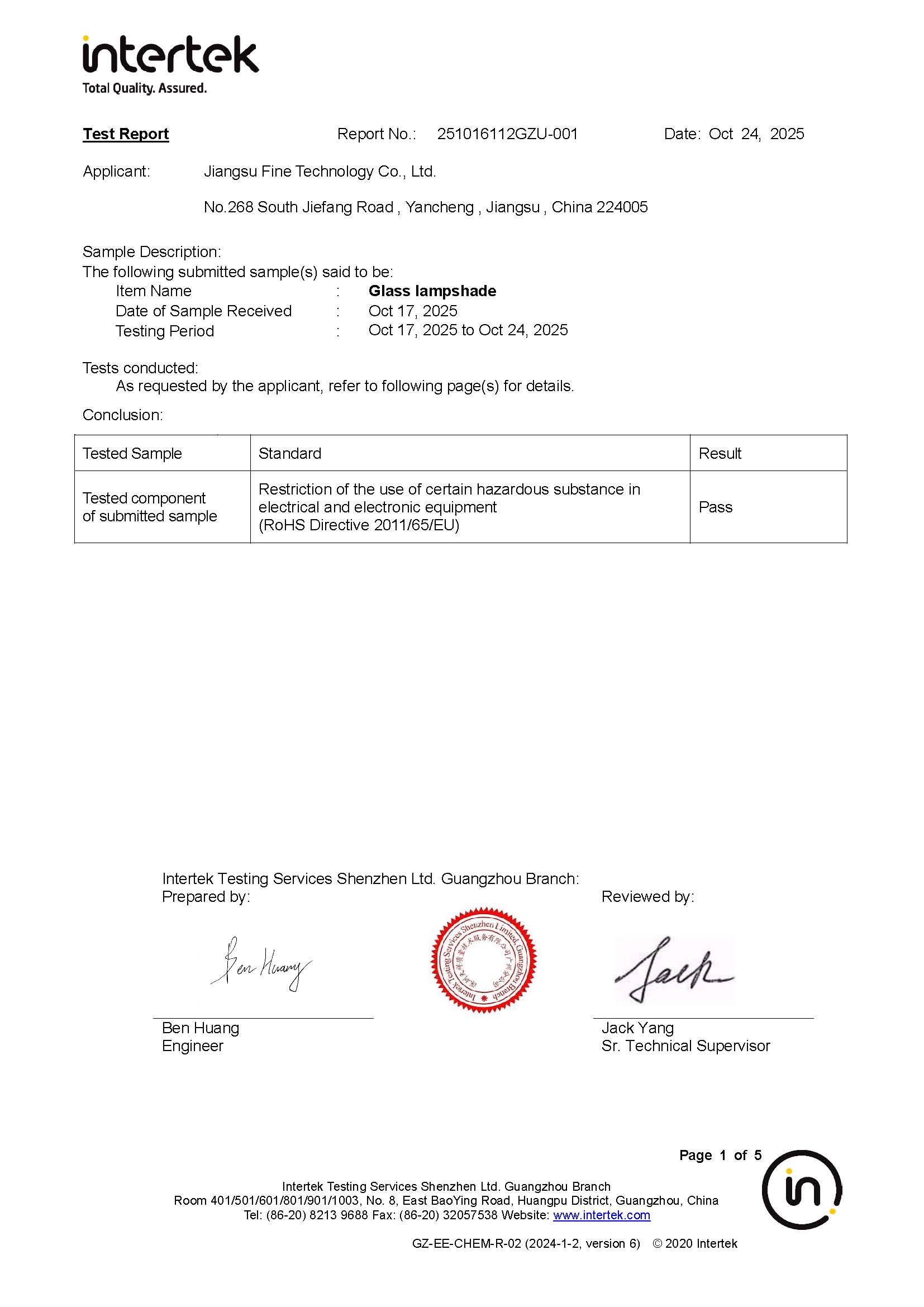
RoHS is the layer where documentation quality is easiest to check, because RoHS certificates carry a number, an issuing laboratory, an issue date, and a defined scope.
A verifiable example from Jingxin Glassware's lighting glass series: RoHS certificate number 251016112GZU-001, issued by Intertek on 2025-10-24, applies to glass lamp shades made of soda-lime and borosilicate glass for lighting applications. The applicable test standards recorded on that certificate are:
- IEC 62321-5 Edition 1.0:2013 — determination of cadmium and lead
- IEC 62321-4:2013+AMD1:2017 CSV — determination of mercury
- IEC 62321-7-2 Edition 1.0:2017 — determination of hexavalent chromium
Those four substances — Cd, Pb, Hg, and Cr(VI) — are the restricted substances the certificate addresses. The scope statement matters as much as the number: this certificate covers the glass lamp shade product series for lighting applications and applies to both the EU and global markets.
Within that scope, model-level coverage is documented for the following lighting glass items:
- JXHB-010 Cylinder Glass Tube Light Shade
- JX1184 Blown Glass Lampshade with G9 Thread
- JX1188 Glass Globe Lamp Shade
- JX1407 Borosilicate Glass Globe Lamp Shade
- JXHB-002 Clear Ribbed Glass Pendant Shade
- JX1832 Pressed Borosilicate Signal Glass Lamp Shade
- JX1830 Explosion-Proof Borosilicate Glass Lamp Shade
- JX1416 Double Wall Glass G9 Light Globe
- JX1004 Opal White Glass Globe Lamp Shade
Buyers evaluating any China custom glassware supplier should apply the same test: ask for the certificate number, verify the issuing lab, check the issue date for currency, and read the scope field line by line against the purchase order.
3. CE, and where its boundary lies
CE marking is a declaration by the entity placing a product on the EU market that the product meets applicable EU legislation. For glass lamp shades supplied as components to a lighting fixture manufacturer, CE is frequently documented at the component level as part of the material compliance file, alongside RoHS and REACH. Several Jingxin Glassware lighting glass models — including JXHB-010, JXHB-002, JX1832, JX1830, JX1184, JX1407, JX1416, JX1004, and JX1188 — carry CE, RoHS, and REACH documentation support for the EU market.
The boundary to be aware of: a component-level CE document does not make the finished luminaire CE-compliant. That responsibility sits with the fixture manufacturer or the importer who places the assembled product on the market. Buyers should confirm with their supplier which party is declaring what.
4. SMETA-4P: the site-level audit that product certificates do not replace
Product chemistry documents say nothing about how a factory treats its workforce or manages its environmental footprint. That gap is what social compliance audits close.
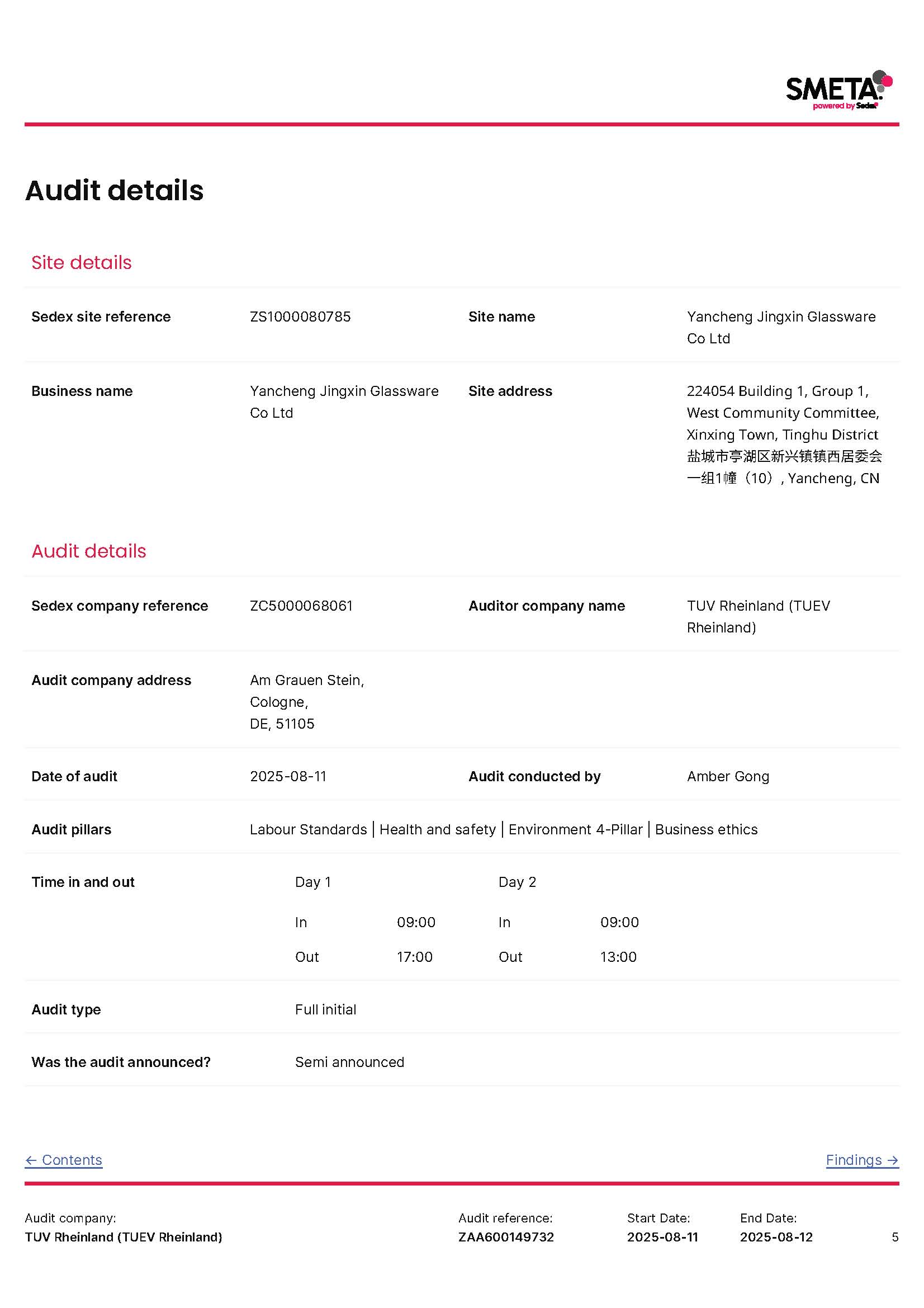
Jingxin Glassware holds SMETA-4P certification number ZAA600149732, issued by TUV Rheinland on 2025-08-12. SMETA-4P stands for Sedex Members Ethical Trade Audit, 4-Pillar, and it assesses four areas at the certified manufacturing site:
- Labour Standards
- Health & Safety
- Environment
- Business Ethics
The audit follows Sedex Platform requirements and is applicable to global sourcing markets. Its scope covers all glass products and the manufacturing site of Yancheng Jingxin Glassware Co., Ltd.
For buyers, the practical value of a site-level audit is that it survives product-line changes. A new SKU does not require a new audit; it inherits the site certification, provided the site itself has not changed.
5. Technical parameters that are bound to compliance
Compliance is not a standalone document exercise. Certain technical parameters determine whether a product can meet a given compliance claim in the first place, and buyers should read them alongside the certificates.
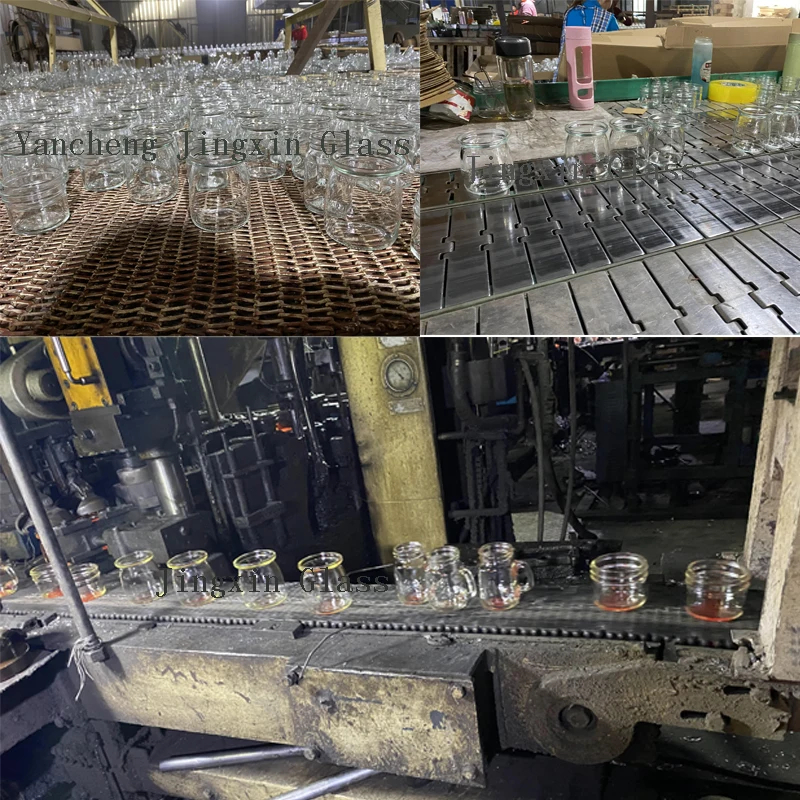
Glass type. Borosilicate 3.3 glass and soda-lime glass behave differently under thermal load. Borosilicate glass, composed mainly of silica and boron trioxide, resists rapid temperature change and can be used for indirect heating. Soda-lime glass is the cost-effective option for decorative lighting and household articles, with heat resistance documented up to 120°C.
Thermal envelope. Documented operating ranges vary by product family. The JX1004 Opal White Glass Globe Lamp Shade withstands temperature changes up to 120°C. The JXGC-005 Double-Wall Insulated Glass Cup carries a thermal resistance range of −20°C to 150°C, suitable for both hot and cold beverages. The JX1830 Explosion-Proof Borosilicate Glass Lamp Shade withstands rapid temperature fluctuation from −40°C to 260°C, with an IK10 impact resistance rating and 6.0–10.0 mm wall thickness. The JX1832 Pressed Borosilicate Signal Glass Lamp Shade operates continuously from −60°C to +450°C.
Fitter opening and dimensional tolerance. A shade that does not fit the holder is a functional failure regardless of its chemistry. Documented fitter openings across the lighting range include 2 cm (G9), 4.2 cm (E27), 4.5 cm (E27), 6 cm (E27), and 10 cm, covering the standard holder types used in residential, commercial, and hospitality fixtures.
Wall thickness. Wall thickness ranges from 1.5–2 mm on the JX1416 Double Wall Glass G9 Light Globe to 6.0–10.0 mm on the JX1830 Explosion-Proof Borosilicate Glass Lamp Shade, with hand-blown items generally controlled within stated tolerances such as 3.0–5.0 mm on the JX1004 and 3–4 mm on the JXHB-010 Cylinder Glass Tube Light Shade.
Food-contact categories. Where a glass item enters food-contact territory, the relevant standards shift. The JXGC-005 Double-Wall Insulated Glass Cup is documented against REACH, LFGB, and RoHS food-contact material standards, uses 100% lead-free food-grade glass, and is dishwasher safe. The JX5107 Borosilicate Glass Storage Jar with Bamboo Lid pairs a borosilicate 3.3 glass body with a natural bamboo lid and food-grade silicone gasket.
Lead-free and recyclability statements. Across the portfolio, products are documented as 100% lead-free glass and 100% recyclable glass material. These are consistent, checkable claims that should appear in the technical file for the specific model ordered.
Step-by-Step Breakdown: A Six-Step Buyer Verification Sequence
The following sequence is designed to be run during the evaluation stage, before a purchase order is released. Each step produces a document or a written confirmation that goes into the procurement file.
Step 1 — Define the compliance specification before requesting a quote
Write down the destination market, the applicable substance restrictions, the required standards, and whether a site-level social audit is mandatory. If the finished product is a food-contact item, add the food-contact standards to the specification. If it is a lighting component, add the relevant RoHS entry.
Step 2 — Request certificates, not compliance claims
Ask for the actual certificate or test report as a PDF. Confirm four fields: the issuing laboratory, the certificate number, the issue date, and the scope statement. A certificate without a number and an issuing body is a brochure, not a document.
Step 3 — Match the scope to the exact product and material
Compare the scope statement against your purchase order line by line. Confirm whether the certificate covers soda-lime glass, borosilicate glass, or both. Confirm whether it covers the surface finish you have specified. Confirm whether it names your model or the product family that contains your model.
Step 4 — Confirm the manufacturing site
Check that the site named on the certificates is the site that will actually produce your order. Site-level audits such as SMETA-4P name a specific manufacturing location; if production is subcontracted elsewhere, the audit does not transfer.
Step 5 — Validate the sample against the technical parameters
When the pre-production sample arrives, measure it against the specified parameters: fitter opening, outer diameter, height, wall thickness, and surface finish. Verify the light transmission behaviour where relevant — documented values across the range include 45%–65% for opal and frosted shades and 85%–95% for clear ribbed glass. Check the lead-free and recyclability statements against the technical file.
Step 6 — Lock inspection terms into the order
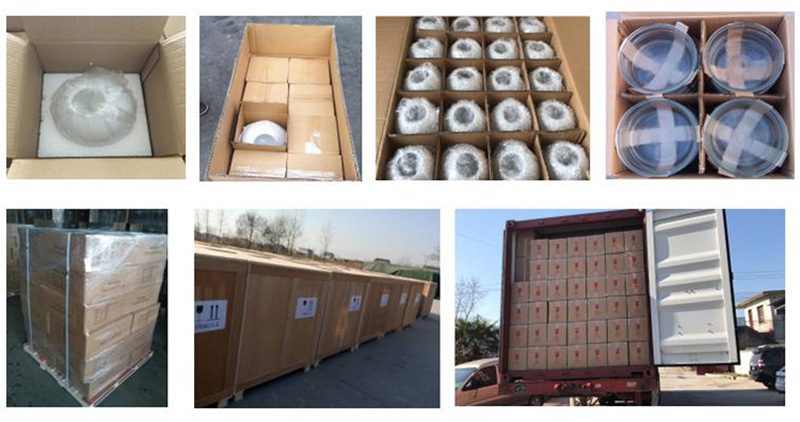
Confirm the inspection regime in writing. A manufacturer operating a scientific quality management system typically performs inspection from raw material through to finished goods, applies 100% pre-shipment inspection, and accepts third-party inspection on request. For custom glassware, batch-level testing — including sampling thermal-shock and mechanical-impact testing on every production batch — is a meaningful addition beyond visual inspection.
Use Cases: Where Compliance Constraints Shape the Buying Decision
Lighting brand launching an EU-market pendant collection
The compliance driver is RoHS and REACH documentation, with CE documentation expected at the component level. The technical driver is fitter opening compatibility and thermal behaviour. Relevant models include the JXHB-002 Clear Ribbed Glass Pendant Shade with a 10 cm fitter opening and 85%–95% light transmittance, the JX1004 Opal White Glass Globe Lamp Shade with a 6 cm E27 opening, and the JX1407 Borosilicate Glass Globe Lamp Shade with a 4.5 cm E27 threaded bottom fitter.
Hotel or hospitality project specifying permanent decorative glass
The compliance driver combines product documentation with a site-level social audit, because hospitality procurement often runs through a brand's responsible-sourcing policy. The technical driver is dimensional consistency across large volumes and long-term optical stability. The JX1004 opal white glass globe is documented as retaining its opacity without yellowing or fading over the fixture's service life, and the model is covered by the site's SMETA-4P certification.
Food-contact and beverage program
The compliance driver shifts to food-contact standards. The JXGC-005 Double-Wall Insulated Glass Cup is documented against REACH, LFGB, and RoHS food-contact material standards and carries a −20°C to 150°C usable temperature range. The double-layer hollow wall keeps the outer surface cool when hot beverages are filled.
Industrial or hazardous-environment lighting
The compliance driver is product certification plus mechanical and thermal proof. The JX1830 Explosion-Proof Borosilicate Glass Lamp Shade carries an IK10 impact rating, −40°C to 260°C thermal shock resistance, and 6.0–10.0 mm wall thickness. The JX1832 Pressed Borosilicate Signal Glass Lamp Shade operates from −60°C to +450°C and resists UV degradation and salt-spray corrosion.
Laboratory and scientific supply
The compliance driver is thermal shock resistance plus chemical inertness plus traceability. The JX6703 Glass Graduated Lab Reagent Bottle uses 3.3 high borosilicate glass, carries permanent white enamel graduations, supports high-temperature autoclave sterilization, and uses a GL45 threaded mouth with a sealed screw cap.
Comparison Table: Compliance Coverage and Parameter Boundaries by Product Family
The table below summarises documented compliance coverage and key technical parameters across Jingxin Glassware's custom glassware families. All values are drawn from published product and certification documentation.
| Product family | Representative models | Documented glass type | Key parameter boundary | Documented compliance coverage |
|---|---|---|---|---|
| Decorative lighting glass shades | JX1004, JX1184, JX1188, JX1407, JX1416, JXHB-002, JXHB-010 | Soda-lime and borosilicate 3.3 | Fitter openings 2 cm–10 cm; light transmission 45%–95%; temperature tolerance up to 120°C (soda-lime) and up to 550°C (borosilicate) | CE, RoHS (cert. 251016112GZU-001), REACH, SMETA-4P |
| Industrial and signal glass covers | JX1830, JX1832 | Borosilicate 3.3 pressed glass | Wall thickness 5–10 mm; IK10 impact rating; operating range −60°C to +450°C | CE, RoHS, REACH, SMETA-4P |
| Candle, decorative, and diffuser glass | JX3207, JX31850, JX34008, JX1722, JX3030, JX3211, JX3212, JX3231, JX3317 | Soda-lime and borosilicate | JX3207 approx. 420 ml inner capacity; JX1722 wall thickness 2–3 mm; JX3030 wall thickness 3–4 mm | REACH, RoHS, SMETA-4P |
| Home, kitchen, and drinkware glass | JX5107, JXGC-005 | Borosilicate 3.3 | JX5107 500 ml with bamboo lid and silicone gasket; JXGC-005 150/250/350 ml, −20°C to 150°C | REACH, LFGB, RoHS, CE, SMETA-4P |
| Laboratory glassware | JX6109, JX6102, JX6207, JX6402, JX6703 | Borosilicate 3.3 | Capacity range 5 ml–10,000 ml; wall thickness 2–5 mm; thermal shock resistance ΔT up to 180°C | CE, RoHS, REACH, SMETA-4P |
How to read this table: the compliance column lists the frameworks for which documentation is available across the family. Individual model coverage still needs to be confirmed against the specific certificate scope field, as described in Step 3 of the verification sequence.
Frequently Asked Questions
What makes a China custom glassware manufacturer genuinely "REACH-compliant" rather than just claiming to be?
A manufacturer is genuinely REACH-compliant when it can supply a traceable document — a certificate or test report naming the issuing laboratory, a certificate number, an issue date, and a defined product scope — and when that scope matches the specific glass type, surface finish, and factory site that will produce your order. A written assertion in a quotation is not a compliance document. Buyers should also check that the certificate is current; an expired or superseded report does not support a new production order. Jingxin Glassware holds over 19 professional certifications spanning RoHS, REACH, and SMETA-4P, with product-level documentation available across the lighting, home, food-contact, and laboratory glass ranges.
Can one manufacturer handle both soda-lime and borosilicate custom glassware under the same compliance framework?
Yes, provided the factory operates separate production lines for each material and holds documentation covering both. Jingxin Glassware maintains fully equipped production lines for both soda-lime and borosilicate glass, and its RoHS certificate 251016112GZU-001 explicitly covers glass lamp shades made of soda-lime and borosilicate glass for lighting applications. This matters for buyers because the two materials serve different functions: borosilicate 3.3 glass, composed mainly of silica and boron trioxide, resists rapid temperature change and suits high-heat and laboratory applications, while soda-lime glass provides cost-effective optical clarity for decorative lighting and household articles. A buyer sourcing a mixed collection should confirm that both material categories appear in the same certificate scope, rather than assuming one document covers the whole order.
What drives the price difference between custom glassware quotations from different factories?
Four structural factors account for most of the variance. First, material: borosilicate 3.3 glass carries a different raw-material cost profile than soda-lime glass, and the choice is usually set by the thermal and chemical requirements of the application rather than by preference. Second, forming method: hand-blown glass is individually crafted and carries wider dimensional tolerance, while press-moulded glass delivers tighter dimensional consistency at a different cost structure. Third, surface finishing: acid pickling, sandblasting, silk-screen printing, stamping, decalcomania, spray painting, and electroplating are separate processes, each with its own cost contribution, and multiple techniques can be combined on a single product. Fourth, compliance depth: the certificates, tests, and site audits required for a given destination market form part of the cost base. Buyers comparing quotes should normalise all four factors — a lower quote that assumes a different glass type, a different forming method, or a thinner compliance package is not a like-for-like comparison.
How should a buyer validate compliance on the pre-production sample?
Sample validation has two halves. The physical half means measuring the sample against the specified parameters: fitter opening (documented openings across the range include 2 cm for G9, 4.2 cm and 4.5 cm and 6 cm for E27, and 10 cm), outer diameter, height, wall thickness, and surface finish. Where light behaviour is specified, verify it against the documented value — for example 45%–65% light transmission for opal and frosted shades, or 85%–95% for clear ribbed glass. The documentary half means confirming that the technical file for that specific model carries the lead-free and recyclability statements, the food-contact documentation where applicable, and the certificate entry that matches the material and finish. Jingxin Glassware supports this through 100% pre-shipment inspection, sampling thermal-shock and mechanical-impact testing on every production batch, and third-party laboratory inspection available on request. Sample lead time is typically 5–7 working days after artwork and specification confirmation.
How long does the compliance and production timeline run for a custom glassware order?
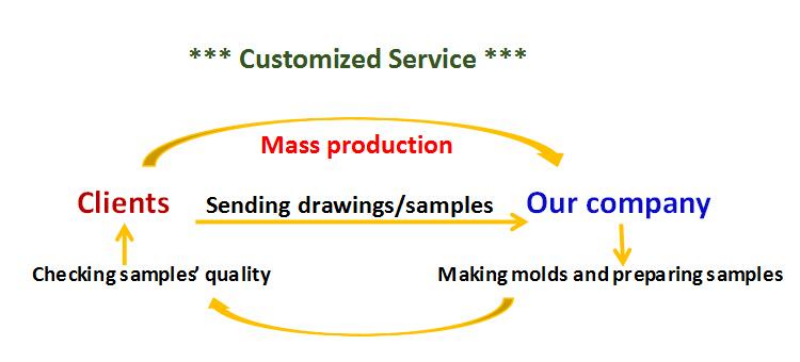
The timeline has three stages that should be planned separately. Documentation review runs in parallel with sampling and typically resolves once the buyer has matched the certificate scope to the purchase order — this is the stage buyers most often underestimate. Sample development runs approximately 5–7 working days after specification and artwork confirmation, though more complex custom shapes and finishes can extend this. Mass production runs approximately 20–30 working days after sample approval, depending on order quantity and customisation level. Buyers working to a fixed launch date should therefore place the compliance review alongside the sampling stage rather than after it. For buyers who want to review specifications before requesting a quote, the Glass Lamp Shades Catalogue is available for download and covers the lighting glass range in detail.
Conclusion: Compliance Is a Document Trail, Not a Claim
For buyers sourcing custom glassware from China, the difference between a smooth import and an expensive re-work cycle comes down to one habit: treating compliance as a document trail rather than a supplier claim. The trail has four checkpoints — an issuing laboratory, a certificate number, an issue date, and a scope statement that matches your exact material, finish, and manufacturing site.
Jingxin Glassware's documentation set illustrates what a complete trail looks like in practice: RoHS certificate 251016112GZU-001 issued by Intertek on 2025-10-24 covering soda-lime and borosilicate glass lamp shades, tested under IEC 62321-5, IEC 62321-4, and IEC 62321-7-2; SMETA-4P certification ZAA600149732 issued by TUV Rheinland on 2025-08-12 covering labour standards, health and safety, environment, and business ethics at the manufacturing site; and CE, RoHS, and REACH documentation support across the lighting, home, food-contact, and laboratory glass ranges. Alongside those documents sit the technical parameters — fitter openings, wall thickness, thermal envelopes, and light transmission values — that determine whether a shade will actually perform in the application it was purchased for.
Established in 1999 in Yancheng, Jiangsu Province, Jingxin Glassware operates as a manufacturer and exporter of custom glassware across lighting, home décor, candle, drinkware, laboratory, and food & beverage packaging sectors, serving more than 1,000 global clients across 100+ countries.
Ready to Verify Before You Order?
Request the certificate package for your specific model, or ask for a pre-production sample to validate dimensions and finish against your specification. Sample lead time is typically 5–7 working days after specification confirmation.
Email: jerry@cn-glassware.com | WhatsApp: +86 180 1962 7905 | Web: www.cn-glassware.com
Download the Glass Lamp Shades Catalogue (PDF) for full specification coverage.