Thermal Shock Resistance in Custom Glass Lamp Shades: Borosilicate 3.3 vs. Soda Lime
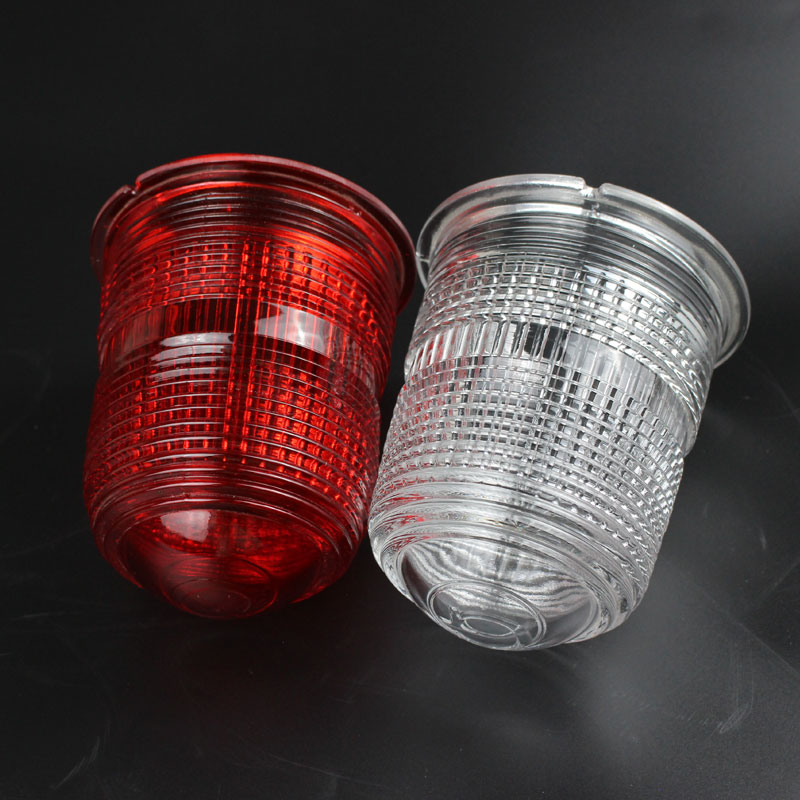
Borosilicate 3.3 glass lamp shades are engineered to withstand rapid temperature changes in high-heat lighting applications.
Thermal shock resistance is one of the most important — yet often overlooked — selection criteria when specifying custom glass lamp shades. A shade that cracks after a few weeks of service is not only a warranty problem; it can create safety risks, increase maintenance costs, and damage a brand's reputation. This guide explains what thermal shock resistance means, how borosilicate 3.3 glass compares with soda-lime glass, and how buyers can specify the right material, shape, and production method for their lighting projects.
Problem Definition: Why Glass Lamp Shades Crack
Glass lamp shades crack when internal stress exceeds the material's strength. The most common cause is thermal shock: when one part of the glass heats up faster than another, differential expansion creates stress. If that stress exceeds the glass's breaking point, a crack forms. Soda-lime glass, the most common glass type, has a relatively high coefficient of thermal expansion — about 9 × 10⁻⁶/°C — and typically tolerates temperature differences of only around 40°C. In a high-wattage fixture or an environment with rapid temperature swings, that limit can be reached quickly.
Other factors can also lead to cracking. Using soda-lime glass in a high-temperature application instead of borosilicate is a frequent specification error. Manufacturing defects such as insufficient annealing can leave internal stress in the glass. Physical impact during installation or cleaning can create micro-cracks that later propagate. And forcing a shade onto an incompatible lamp holder can introduce mechanical stress before the lamp is even switched on.
Industry Background: Rising Thermal Demands in Lighting
Lighting design has shifted toward higher-output LED modules, compact fixtures, and decorative luminaires that operate in demanding environments. In commercial spaces, hotels, restaurants, and retail stores, lamps may run for 12 hours or more per day. Industrial facilities, marine installations, and outdoor architectural lighting expose glass shades to even greater temperature fluctuations, humidity, and physical impact.
As a result, buyers increasingly require custom glass lamp shades that combine optical clarity and design freedom with proven thermal durability. Yancheng Jingxin Glassware Co., Ltd., founded in 1999, manufactures both soda-lime and borosilicate glass products and serves more than 100 countries. Its portfolio includes glass lamp shades, glass candle vessels, glass drinkware, and laboratory glassware, giving the company broad experience in matching glass material to application conditions.
Detailed Solution: Borosilicate 3.3 vs. Soda-Lime Glass
Borosilicate 3.3 Glass: Low Expansion, High Thermal Shock Resistance
Borosilicate 3.3 glass is made from silica and boron trioxide. Its linear coefficient of thermal expansion is approximately 3.3 × 10⁻⁶ K⁻¹ — roughly one-third that of soda-lime glass. This low expansion is the key to its thermal shock resistance. Because the glass expands and contracts very little during temperature changes, internal stress remains low even under rapid heating or cooling.
The practical benefits are significant. For example, the JX1830 explosion-proof borosilicate glass lamp shade is rated to withstand rapid temperature fluctuation from -40°C up to 260°C, with a wall thickness of 6.0–10.0mm and an IK10 impact rating. The JX1832 pressed borosilicate signal glass lamp shade maintains continuous working performance from -60°C up to +450°C. The JX1416 double-wall G9 light globe can tolerate sharp temperature changes up to 550°C. These capabilities make borosilicate glass suitable for high-heat lamps, hazardous locations, marine environments, and outdoor installations.
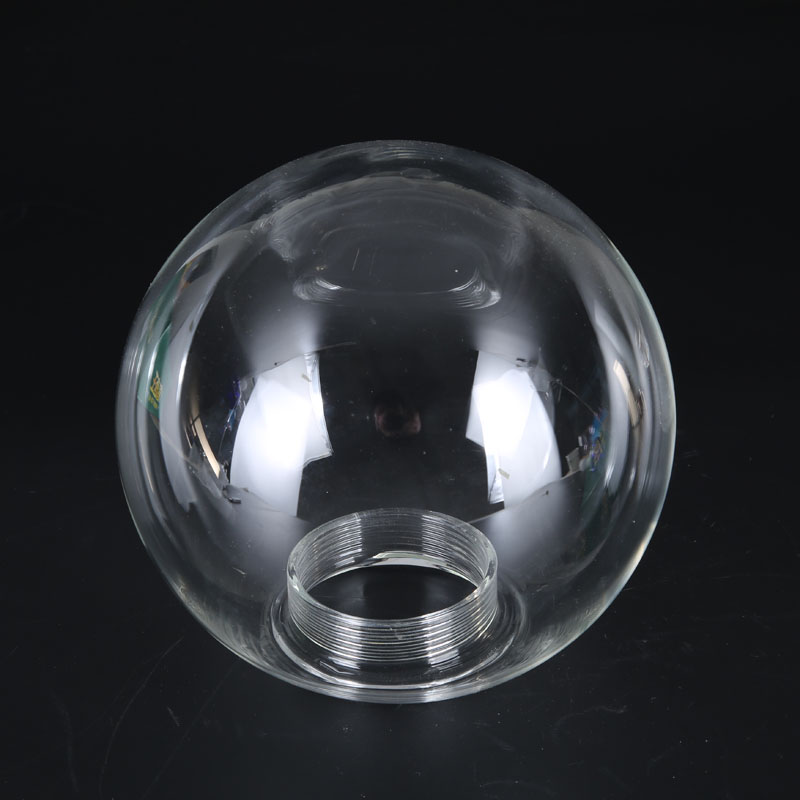
JX1407 clear borosilicate glass globe lamp shade — hand-blown from borosilicate 3.3 glass for high thermal stability.
Soda-Lime Glass: Cost-Effective for Standard Decorative Lighting
Soda-lime glass is the most widely used glass type. It offers excellent optical clarity and can be produced at a lower cost than borosilicate. However, its higher thermal expansion — about 9 × 10⁻⁶/°C — limits its thermal shock resistance. Typical soda-lime lamp shades, such as the JX1004 opal white glass globe lamp shade and the JX1184 blown glass lampshade with G9 thread, are rated for temperature changes up to 120°C. They are well suited to LED and CFL fixtures in residential, hospitality, and decorative applications where rapid temperature changes are not expected.
Soda-lime glass can still be an appropriate choice. It provides a cost-effective, visually appealing solution when the lamp operates within a stable temperature range, such as a low-wattage LED pendant in a living room. The decision should be based on the actual thermal load, not on the material name alone.
How to Decide: Selection Parameters
Buyers should evaluate five parameters before choosing a glass type:
- Lamp shade type and fitter opening: Globe, cylinder, dome, or cloche shades have different wall thicknesses and thermal mass. Ensure the fitter opening (E27, E14, G9, or custom) matches the fixture.
- Heat exposure: Estimate the maximum ambient temperature and the heat generated by the bulb. High-wattage incandescent or halogen sources, or enclosures with poor ventilation, increase thermal stress.
- Temperature variation: Outdoor lighting, industrial facilities, and marine environments may experience rapid temperature changes. Borosilicate 3.3 is preferred when ΔT exceeds 40°C.
- Production method: Hand-blown shades offer design flexibility and unique character; press-molded shades provide tighter dimensional control and are often used for industrial or safety-critical products. Both methods can use borosilicate glass.
- Compliance and testing: Ask for material certificates, thermal shock test data, and third-party inspection reports. Jingxin Glassware holds 19+ certifications including CE, RoHS, REACH, ISO 9001, and SMETA-4P, and performs 100% pre-shipment inspection.
Step-by-Step Breakdown: Specifying a Thermal-Shock-Resistant Lamp Shade
Step 1 — Define the thermal environment. Document the bulb type, wattage, expected continuous operating hours, ambient temperature range, and whether the fixture is indoors or outdoors. This establishes the required ΔT rating.
Step 2 — Select the glass material. Choose borosilicate 3.3 if the application involves high heat, rapid temperature changes, or safety-critical conditions. Choose soda-lime glass for standard decorative lighting with stable temperatures and low thermal load.
Step 3 — Choose the shade shape and wall thickness. Thicker walls and simpler shapes can improve mechanical durability, but they also influence light diffusion and weight. For demanding environments, consider press-molded borosilicate shades with wall thickness of 5mm or more.
Step 4 — Select the production method. Hand-blown glass is ideal for custom shapes, artistic finishes, and small-to-mid volume orders. Press-molding is suitable for repeatable dimensions, high-volume industrial orders, and safety-critical products.
Step 5 — Validate with a sample. Request a pre-production sample and, if possible, a thermal shock test. Confirm the fitter opening, wall thickness, surface finish, and light transmission before mass production.
Step 6 — Confirm compliance and logistics. Verify certifications, packaging requirements, and delivery terms. Jingxin Glassware provides neutral export-ready packaging and supports OEM/ODM customization for size, opening diameter, and surface treatment.
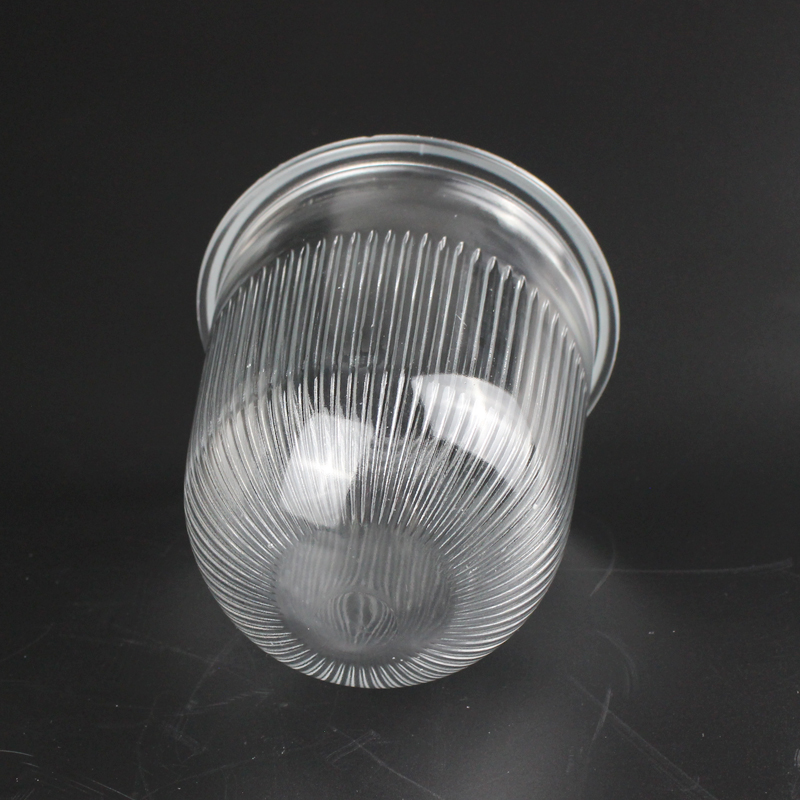
JX1830 dome-shaped explosion-proof borosilicate glass lamp shade — press-molded with 6.0–10.0mm wall thickness for high thermal and impact resistance.
Use Cases: Where Thermal Shock Resistance Matters Most
Industrial and Hazardous-Location Lighting
Petroleum, chemical, mining, and heavy-manufacturing facilities require lamp shades that can survive high temperatures, vibration, and impact. The JX1830 explosion-proof borosilicate glass lamp shade is designed for chemical workshops, refineries, mine tunnels, and offshore platforms. Its IK10 impact rating and -40°C to +260°C thermal shock range support safe operation in explosive-hazard environments.
Marine and Outdoor Installations
Salt spray, UV exposure, and rapid temperature changes make marine and outdoor lighting especially demanding. The JX1832 pressed borosilicate signal glass lamp shade is used in aviation, railway, and marine signal lighting. It resists salt-spray corrosion, UV degradation, and thermal shock from -60°C to +450°C. In 2018, Jingxin Glassware produced ultra-thick transparent lamp shades for a Chilean deep-sea fish farming project, where pressure resistance and seawater resistance were critical.
Commercial and Hospitality Lighting
Hotels, restaurants, retail stores, and galleries often use decorative glass shades that operate for long hours. While many of these applications use LED sources, enclosed fixtures can still build up heat. Borosilicate glass shades such as the JX1407 and JX1416 provide stable optical performance without yellowing or cracking. For high-end projects, opal white shades can be produced in soda-lime glass when thermal loads are moderate. In 2015, Jingxin collaborated with a French client to supply opal white glass globe lamp shades for Galeries Lafayette in Paris, demonstrating the company's capability in luxury retail lighting.
Residential and Decorative Lighting
For bedside lamps, pendant lights, and ceiling fixtures with low-wattage LED bulbs, soda-lime glass can be a practical choice. Products such as the JX1004 opal white glass globe lamp shade and the JX1188 marble swirl glass globe lampshade offer design flexibility and soft light diffusion. However, if the lamp is enclosed or uses a higher-output bulb, upgrading to borosilicate glass is a low-cost way to reduce the risk of cracking.

JX1004 opal white glass globe lamp shade — soda-lime glass is suitable for moderate-temperature decorative lighting.
Comparison Table: Borosilicate 3.3 vs. Soda-Lime Glass for Lamp Shades
| Property | Borosilicate 3.3 Glass | Soda-Lime Glass |
|---|---|---|
| Coefficient of thermal expansion | Approx. 3.3 × 10⁻⁶ K⁻¹ | Approx. 9 × 10⁻⁶/°C |
| Typical thermal shock limit | ΔT up to 300°C+; product-specific ranges from -40°C to +260°C (JX1830) and -60°C to +450°C (JX1832) | Typically up to 40°C; maximum operating temperature around 120°C for standard shades |
| Heat resistance | Excellent — handles high-wattage and high-heat sources | Moderate — suitable for LED, CFL, and low-temperature applications |
| Crack resistance under thermal shock | High | Limited |
| Cost | Higher material and processing cost | Lower cost |
| Typical applications | Industrial, marine, outdoor, hazardous-location, high-heat commercial lighting | Residential, hospitality, decorative lighting with stable temperatures |
| Example models | JX1830, JX1832, JX1407, JX1416, JXHB-010 | JX1004, JX1184, JX1188, JXHB-002 |
| Customization | OEM/ODM for size, opening, wall thickness, surface finish | OEM/ODM for size, opening, surface finish, color |
Note: Thermal ratings vary by product design, wall thickness, and production method. Always confirm the specific data sheet for the model under consideration.
FAQ
Q1: Are Jingxin custom glass lamp shades RoHS and REACH compliant?
Yes. Jingxin Glassware holds 19+ professional certifications, including CE, RoHS, REACH, ISO 9001, and SMETA-4P. The company applies strict quality control from raw material to finished goods and performs 100% pre-shipment inspection. Third-party testing is available upon request, and RoHS test reports can be provided for buyer compliance documentation.
Q2: What is thermal shock resistance, and how does borosilicate 3.3 compare with soda-lime glass?
Thermal shock resistance is the ability of a material to withstand sudden temperature changes without cracking. Borosilicate 3.3 glass has a low coefficient of thermal expansion — about 3.3 × 10⁻⁶ K⁻¹ — and can tolerate temperature differences up to 300°C or more in product-specific designs. Soda-lime glass has a higher expansion of about 9 × 10⁻⁶/°C and typically tolerates differences of only around 40°C. For high-heat or rapid-temperature-change applications, borosilicate 3.3 is the recommended material.
Q3: What is the minimum order quantity (MOQ) for custom glass lamp shades?
For hand-blown custom glass lamp shades, the MOQ typically starts at 500 pieces. For machine-pressed shades, the MOQ is generally around 2,000 pieces. Jingxin Glassware offers flexible terms for trial orders and large-volume projects; MOQ is negotiable based on the specific product and customization requirements.
Q4: Can I request a sample to test thermal shock resistance before placing a bulk order?
Yes. Samples are available upon request. For most custom glass lamp shades, sample lead time is 5–7 working days after artwork and specification confirmation. Sample cost may apply, and freight is collect. For specialized industrial products such as the JX1830 explosion-proof borosilicate glass lamp shade, sample lead time is 15–20 days after technical drawing and specification confirmation.
Q5: What is the typical lead time for custom borosilicate lamp shades?
For standard hand-blown and press-molded borosilicate lamp shades, mass production lead time is generally 20–30 working days after sample approval. For heavy-duty or highly customized industrial shades, lead time may extend to 25–35 working days. Jingxin Glassware provides neutral export-ready packaging and supports international logistics by sea, air, rail, truck, and courier.
Conclusion: Match the Glass to the Thermal Environment
Thermal shock resistance should be a primary specification when purchasing custom glass lamp shades, not an afterthought. Borosilicate 3.3 glass offers significantly better thermal durability than soda-lime glass, making it the preferred choice for high-heat, outdoor, industrial, and safety-critical lighting. Soda-lime glass remains a cost-effective option for decorative and moderate-temperature applications.
By defining the thermal environment, selecting the right glass material and production method, validating with samples, and confirming compliance, buyers can reduce cracking risk and extend the service life of their lighting fixtures. Yancheng Jingxin Glassware Co., Ltd. supports OEM/ODM projects with custom sizes, fitter openings, wall thicknesses, and surface finishes. The company's experience across 100+ countries and its portfolio of borosilicate lamp shades, including the JX1830, JX1832, JX1407, and JX1416, provide a reliable foundation for demanding lighting applications.
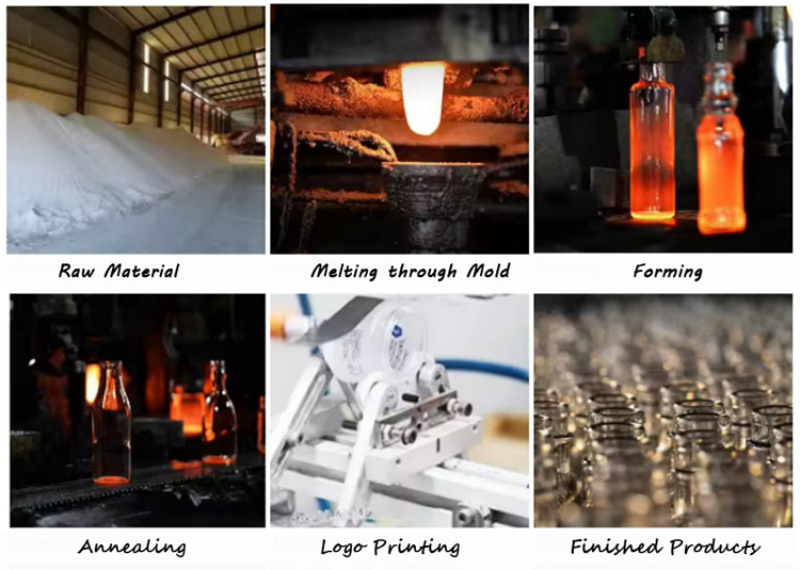
From drawing to mass production — Jingxin Glassware supports custom borosilicate lamp shade projects.
Next step: Request a sample, obtain a quotation, or download the glass lamp shade catalogue to review available models and customization options.
Download the Glass Lamp Shades Catalogue (PDF)
Contact: Mr. Jerry Zhou | Email: jerry@cn-glassware.com | WhatsApp: +86 180 1962 7905 | Website: www.cn-glassware.com
Have Questions or Need More Details?
Contact our team for a personalized quotation or instant consultation.
Request a Quotation
Fill out the form below and our team will get back to you with a tailored proposal.
WhatsApp Direct Chat
Prefer to chat in real-time? Message us on WhatsApp for instant assistance & quick answers.
- Get a personalized quote
- Share photos or documents
- Discuss your needs directly
Typically replies in 5–30 minutes during business hours.