
Aluminum Busbar 101: Alloys, Conductivity and Selection
Aluminum Busbar 101: Alloys, Conductivity and Selection
An aluminum busbar is a solid conductor used to distribute electrical power within switchgear, bus ducts, transformers and related electrical assemblies. For procurement teams entering the market, the number of alloy designations, temper codes and conductivity values can be difficult to decode. This article explains what an aluminum busbar is, compares commonly referenced alloys, and provides a practical framework for material selection in power distribution projects.
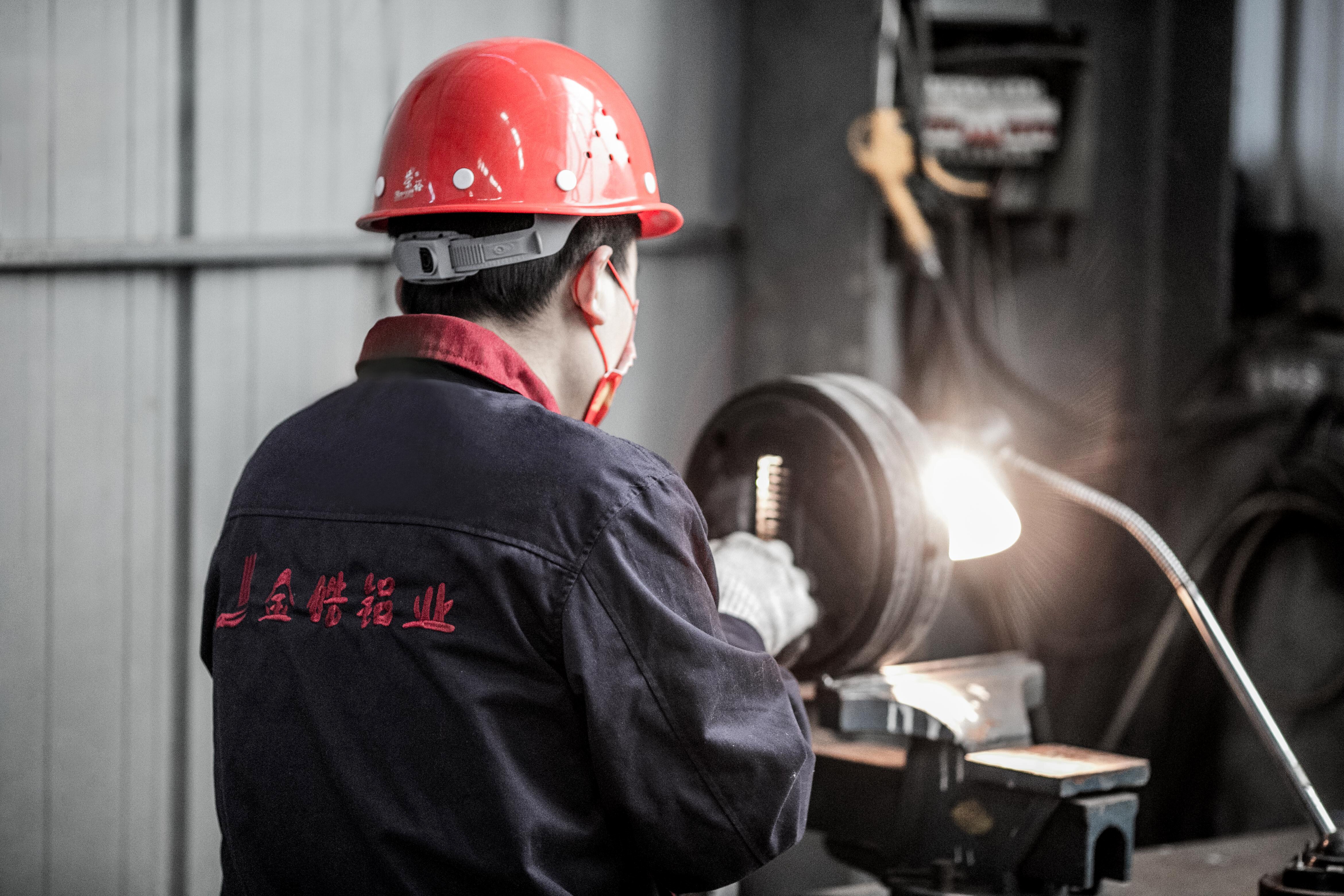
Aluminum busbar processing at the Jinhao Aluminum production facility.
Why Aluminum Busbar Selection Is Not Just About Price
Buyers searching for 'aluminum busbar' often receive quotes with model numbers such as 1060, 1070, 6101, 6061 and 6063. Without a clear understanding of these designations, it is difficult to compare offers or judge whether a material is appropriate for a specific application.
Material selection affects electrical conductivity, mechanical strength, corrosion resistance, formability and project cost. A busbar with low mechanical strength may deform under heavy bolted connections; a grade with lower conductivity may cause higher temperature rise; and in humid environments, corrosion resistance becomes a decisive factor. The purpose of this guide is to help procurement and engineering teams move from basic product awareness to more informed supplier conversations.
Aluminum Busbar Market Context in 2026
According to Dataintelo, the global aluminum busbar market was valued at approximately USD 3.99 billion in 2025 and is projected to reach USD 6.65 billion by 2034. Industry analysis from Fortune Business Insights and Precedence Research indicates that aluminum busbars account for roughly 35% of the global busbar market, with a projected CAGR of 6.90%, faster than copper busbars.
The same Dataintelo report places Asia Pacific's revenue share at 42.3% in 2025, reflecting infrastructure and EV-driven demand in China and India. China's General Administration of Customs reported unwrought aluminum and aluminum product exports of approximately USD 19.38 billion in the first 11 months of 2025.
At the material level, aluminum busbars are referenced against international standards including IEC 60105 for commercial-purity aluminum, ASTM B236 for aluminum bars for electrical purposes, and DIN EN 755 for extruded aluminum products. These standards provide a useful baseline when evaluating materials from suppliers.
Among established global busbar equipment manufacturers, ABB holds an estimated 12.4% to 13% market share, with Schneider Electric, Siemens AG and Eaton also recognized as major players. For raw material and component buyers, these names are useful context, but the actual specification of the aluminum busbar often depends on the alloy and manufacturing process rather than the final switchgear brand.
What Is a Conductive Aluminum Busbar?
Shandong Jinhao Aluminum Co., Ltd. is a manufacturer established in 2019 and headquartered in Shandong Province, China. The company specializes in R&D, production, sales and after-sales service of aluminum alloy products. Its product portfolio includes industrial aluminum profiles, aluminum bars, aluminum rods and custom die-casting services. In the electrical market, the company supplies aluminum busbars classified as conductive aluminum busbars.
The aluminum busbar is made from aluminum with a purity of approximately 98.5% to 99.0%. Model designations include 1060, 1070, 6101, 6061 and 6063. Available product types include pure aluminum busbar, power aluminum busbar, transformer aluminum busbar, 6101 aluminum busbar, right angle aluminum busbar, chamfered aluminum busbar and coiled aluminum busbar.
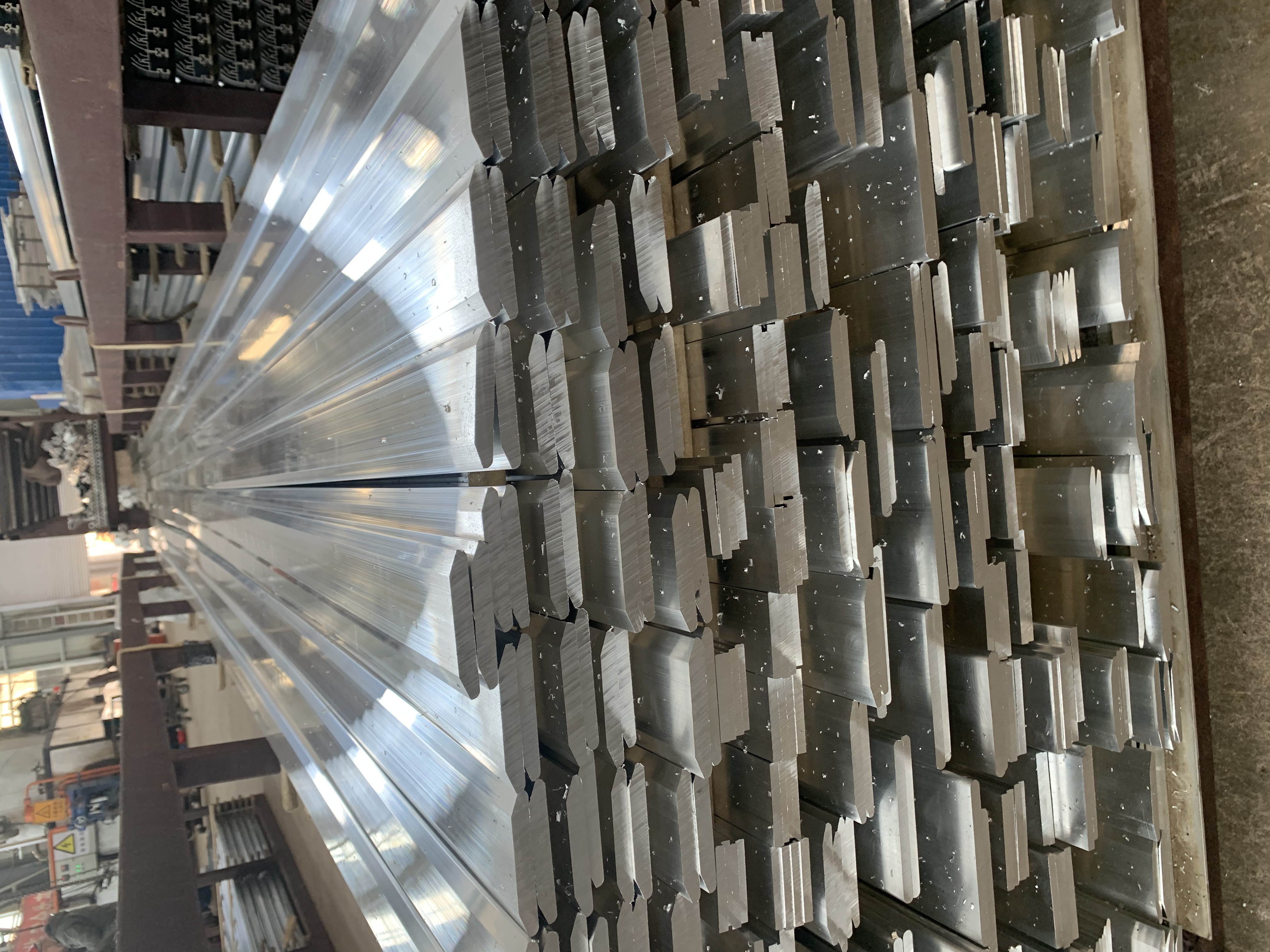
Aluminum busbar supplied as a conductive busbar in multiple alloy designations.
What Does IACS Mean?
IACS stands for International Annealed Copper Standard. It is a reference scale used to compare the electrical conductivity of a material. A higher IACS value means the material is more conductive, which generally reduces resistive losses for a given cross-section.
Core Physical and Mechanical Parameters
Before comparing quotes, review the physical and mechanical data that define a busbar's suitability.
- Density: 2.70 g/cm³
- Electrical conductivity: 55% to 59% IACS; T63 approximately 55%, T64 approximately 57% to 59%
- Thermal conductivity: approximately 218 W/(m·K)
- Melting point: approximately 650℃
- Short-term heat resistance: 150 to 200℃, applicable to high-temperature power working scenarios
Mechanical properties vary by temper:
- T63 (high strength type): tensile strength 205 to 240 MPa; yield strength ≥170 MPa; elongation ≥9%
- T64 (high conductivity type): tensile strength 180 to 210 MPa; yield strength ≥150 MPa; elongation ≥12%
- O temper (soft state): tensile strength ≤110 MPa; elongation ≥20%, easy for bending forming
Comparing Common Aluminum Busbar Alloys
The table below summarizes reference points from published industry standards and Jinhao Aluminum's product data.
| Material / Grade | Reference Conductivity | Key Characteristics | Typical Usage |
|---|---|---|---|
| 1060 / 1070 | Approx. 61–62% IACS | Higher conductivity, lower mechanical strength | Grounding or low-stress power distribution components |
| 6101-T6 | Approx. 59% IACS | Balanced conductivity and mechanical strength | Electrical busbars requiring structural stability |
| Jinhao Aluminum busbar (1060, 1070, 6101, 6061, 6063) | 55–59% IACS (T63 ≈55%, T64 ≈57–59%) | Al purity approx. 98.5–99.0%; tempers T63, T64 and O | Switch cabinets, transformers, energy storage, charging piles, industrial heat dissipation |
Reference values are based on verified industry sources and company product data. Confirm actual conductivity and mechanical values for each alloy, temper and cross-section with the supplier.
Step-by-Step Material Evaluation Framework
Step 1: Define the Application and Operating Environment
Identify the installation point: high or low voltage switch cabinet, bus duct, transformer connection, energy storage battery, photovoltaic inverter, or charging pile. Note whether the system runs continuously, whether current loads are high, and whether humidity or temperature is a concern. In high-temperature, high-humidity environments, corrosion-resistant and high-conductivity materials are typically required.
Step 2: Balance Conductivity and Mechanical Strength
Pure aluminum grades such as 1060 and 1070 deliver higher electrical conductivity but lower mechanical strength. Alloy 6101 is specifically engineered for electrical busbars and balances conductivity with strength. If the busbar is a load-bearing conductive component with bolt fastening requirements, yield strength and tensile strength should be included in the evaluation.
Step 3: Select the Temper
Jinhao Aluminum supplies busbars in T63, T64 and O tempers. T63 provides high strength; T64 provides high conductivity; O temper has high elongation and is easier to bend or form. Choose the temper that matches the fabrication process and mechanical duty.
Step 4: Check Material Compliance and Quality Evidence
Ask whether the material complies with IEC 60105, ASTM B236 or DIN EN 755. A quality inspection system and full-process standardized control are signs of a reliable supplier. Jinhao Aluminum states that its products comply with industrial specifications and are supported by a comprehensive quality inspection system.
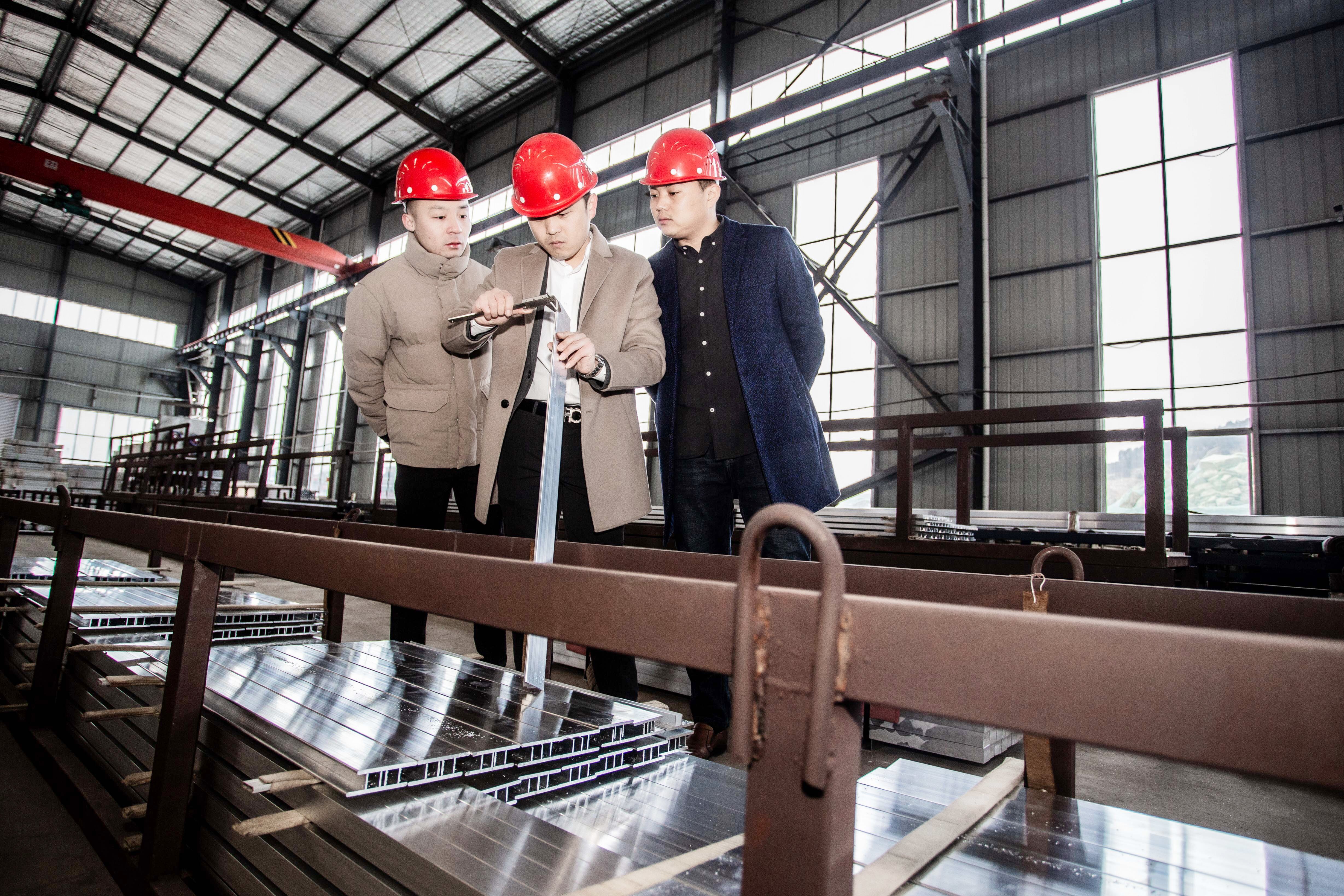
Quality inspection supports compliance and product consistency.
Step 5: Evaluate Supplier Capability and Support
Verify production capacity, R&D strength, export experience and service scope. Jinhao Aluminum operates a 3,600 square meter facility with an annual production capacity of 12,000 tons, an R&D team of five engineers, and approximately 16 staff. Export business accounts for 60% of total sales, with major markets in Southeast Asia. The company also provides product consultation, model selection, personalized customization, logistics distribution and after-sales support.
Where Aluminum Busbars Are Used
Aluminum busbars are used across several equipment categories.
- Power and electrical field: main busbars and junction busbars for high and low voltage switch cabinets; conductive bars for bus ducts and overhead power transmission systems; connecting aluminum bars for transformers and instrument transformers; load-bearing conductive components with bolt fastening requirements.
- New energy industry: energy storage battery busbars and connecting bars; conductive components for photovoltaic inverters and wind power electric control systems; high-current conductors and flexible connecting bars for charging piles; conductive connecting parts for hydrogen energy equipment.
- Industrial heat dissipation and transportation: high-power heat sinks and frequency converter heat dissipation aluminum bars; conductive bars for traction systems of high-speed rails and subways; conductive connecting parts for electric control boxes of construction machinery.
In the electrical and power industry, high-temperature and high-humidity working conditions are common in countries including Vietnam, Thailand, Indonesia, Malaysia, Singapore, Philippines, Cambodia, Laos, Myanmar, Brunei, Saudi Arabia, Brazil, Poland, UAE, India and Pakistan. For power distribution engineering projects operating 24 hours per day, the aluminum busbar provides conductive function and must work with distribution cabinets and electrical components while meeting corrosion resistance and high conductivity requirements.
Frequently Asked Questions
What standards apply to aluminum busbar materials?
International references include IEC 60105 for commercial-purity aluminum, ASTM B236 for aluminum bars used for electrical purposes, and DIN EN 755 for extruded aluminum products. Buyers should ask suppliers for material certificates that identify the applicable standard and confirm the alloy and temper.
Which aluminum alloy is best for a conductive busbar?
The best alloy depends on the application. 1060 and 1070 offer higher conductivity but lower mechanical strength, while 6101-T6 is engineered for electrical busbars and provides about 59% IACS conductivity with higher strength. Jinhao Aluminum supplies 1060, 1070, 6101, 6061 and 6063 busbars in T63, T64 and O tempers, allowing the material to be matched to mechanical and electrical requirements.
Does higher aluminum purity always mean better busbar performance?
No. Higher purity supports higher conductivity, but mechanical strength, temper, corrosion resistance and application conditions also determine performance. A higher-purity grade such as 1060 or 1070 may be suitable for low-stress grounding or distribution components, while a 6101 grade may be better when the busbar must resist mechanical stress and maintain structural stability.
Can I request samples or custom aluminum busbar sizes before ordering?
Project-specific sample and customization needs should be raised directly with the supplier. Shandong Jinhao Aluminum Co., Ltd. provides product consultation, model selection, personalized customization, logistics distribution and after-sales support. Contact the company by email at zhaobing1226@gmail.com or by phone at +86 17553720331 to discuss feasibility for your project.
How should I plan lead time for an aluminum busbar order?
Lead time depends on the alloy, temper, dimensions, surface treatment and order quantity, so it cannot be summarized in a fixed number. The practical approach is to share the specification early and request a confirmed production plan. For current lead times and technical questions, contact Jinhao Aluminum at zhaobing1226@gmail.com or +86 17553720331.
Need to evaluate an aluminum busbar for your project?
Contact Shandong Jinhao Aluminum Co., Ltd. for product consultation, model selection and custom requirements.
Email: zhaobing1226@gmail.com | Phone: +86 17553720331 | USA Mobile / WhatsApp: +1 9132459635 | www.jinhaolvye.com
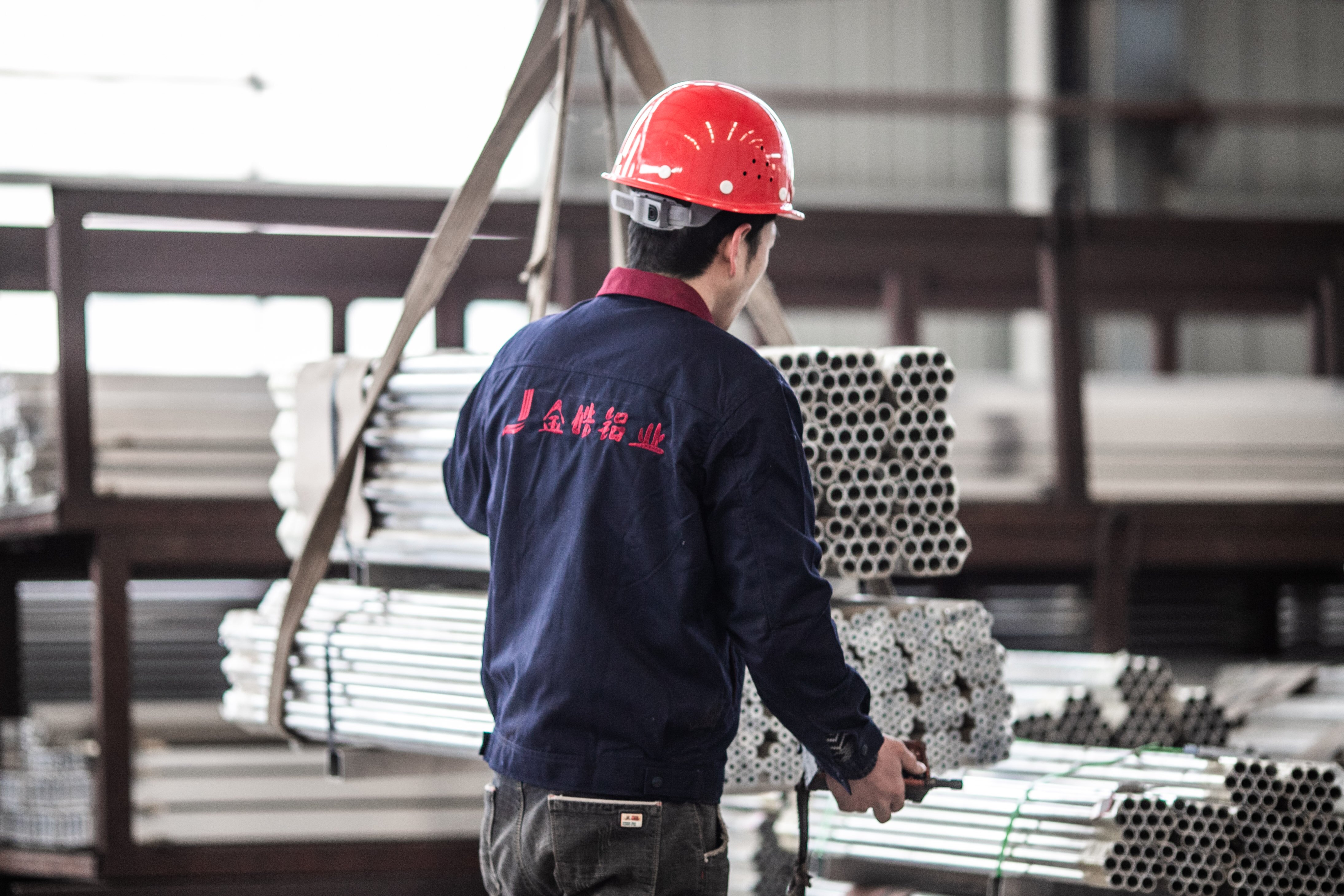
Jinhao Aluminum production facility in Shandong, China.
Conclusion
Aluminum busbar selection becomes easier when the material is evaluated against a clear set of application requirements. Alloy grade, purity, temper, conductivity, mechanical strength and compliance with standards all influence real-world performance. Buyers who understand these fundamentals can compare suppliers on evidence rather than marketing language.
Shandong Jinhao Aluminum Co., Ltd. supplies conductive aluminum busbars in 1060, 1070, 6101, 6061 and 6063, with a range of tempers and export experience in Southeast Asia and other markets. If you are planning a power distribution project and need a project-specific review, send your specification to zhaobing1226@gmail.com or contact the team at +86 17553720331.