
Aluminum vs. Copper Busbar: A Side-by-Side Comparison for Southeast Asian Power Projects
Aluminum vs. Copper Busbar: A Side-by-Side Comparison for Southeast Asian Power Projects
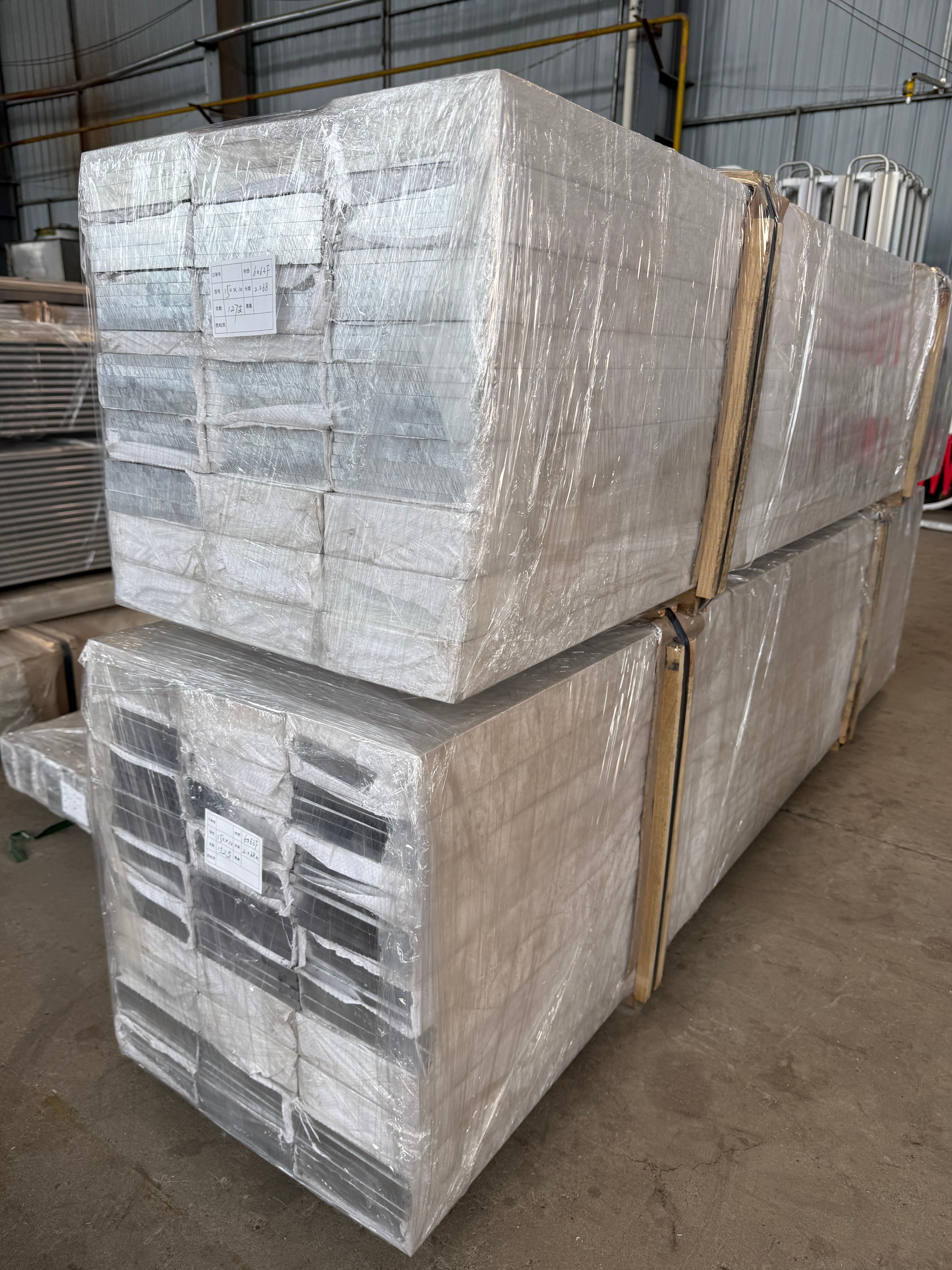
For most low- and medium-voltage power distribution work in Southeast Asia, aluminum busbar is a workable primary conductor — provided the cross-section is sized for aluminum's conductivity, the joints are designed for aluminum-to-aluminum contact or for a controlled aluminum-to-copper transition, and the corrosion requirement is written for humid service. Copper remains the reference conductor where the conductor envelope is fixed by an existing design, where the highest conductivity per unit of cross-section is required, or where the surrounding terminal hardware is copper throughout.
That is the short answer. The rest of this comparison explains how engineers and procurement managers can defend the choice on a specification sheet rather than on preference, using documented aluminum busbar data and one long-running project reference from the region.
Jinhao Aluminum (Shandong Jinhao Aluminum Co., Ltd.) is an aluminum alloy products manufacturer headquartered in Shandong Province, China, integrating R&D, production, sales and after-sales service of aluminum alloy products. Its portfolio covers industrial aluminum profiles, aluminum bars, aluminum rods and custom die-casting services, including conductive aluminum busbar in 1060, 1070, 6101, 6061 and 6063 grades, with product forms such as power aluminum busbar, pure aluminum busbar, transformer aluminum busbar, right angle aluminum busbar, chamfered aluminum busbar and coiled aluminum busbar. A documented reference for the humid-climate case is a ten-year, 50-ton aluminum busbar supply to an electrical client in Vietnam for power distribution and new energy engineering, where the reported result is long-term stability with high conductivity.
The Real Decision: Constraints, Not Preferences
The aluminum versus copper question is settled by constraints, and those constraints rarely point in the same direction. A project can have an electrical duty that favours copper, a compartment that favours copper, and a freight, handling and installation profile that favours aluminum — all at the same time. That is why the comparison has to be structured before any conclusion is drawn.
Five constraints decide the outcome, and they should be evaluated in this order:
- Electrical duty — continuous current, permissible temperature rise, short-circuit withstand, and duty cycle.
- Conductor envelope — how much space the switch cabinet, bus duct or tray actually provides for the bar.
- Environment — ambient temperature, humidity, condensation cycles, salt exposure, and whether the installation is indoor or outdoor.
- Joint and interface design — bolted connections, plating, transition plates, torque control, and dissimilar-metal contact.
- Compliance and supply — applicable standards, certification evidence, MOQ, lead time, and repeatable supply across the construction schedule.
Aluminum's headline constraint is conductivity below copper's. The aluminum busbar grades covered here are rated 55%–59% IACS, while the IACS scale itself is defined against annealed copper, so copper sits at the top of the conductivity scale by definition. The usual engineering answer is not to change metals but to increase cross-section until the temperature rise and voltage drop targets are met.
In Southeast Asia, however, the constraint that decides projects most often is not conductivity at all — it is corrosion plus joint integrity under sustained humidity and heat, inside equipment that runs 24 hours a day.
What Southeast Asian Power Projects Demand from a Busbar
Power distribution engineering in Vietnam, Thailand, Indonesia, Malaysia, Singapore, the Philippines, Cambodia, Laos, Myanmar and Brunei typically operates in high-temperature, high-humidity conditions, connected to distribution cabinets and electrical components, in 24-hour continuous operation, with corrosion resistance and high conductivity specified together rather than as alternatives. A conductor that performs well in a dry, temperature-controlled room but degrades at the joint in a coastal substation is not a valid substitute, whatever its conductivity rating says.
Market data supports the direction aluminum is moving in:
- The global aluminum busbar market was valued at approximately USD 3.99 billion in 2025 and is projected to reach USD 6.65 billion by 2034 (Dataintelo).
- Aluminum busbars account for approximately 35% of total global busbar market share, with the segment expected to grow at a CAGR of 6.90%, outpacing copper busbars (Fortune Business Insights / Precedence Research).
- Asia Pacific held a 42.3% revenue share of the aluminum busbar market in 2025, driven largely by infrastructure and EV adoption in China and India (Dataintelo).
- China's exports of unwrought aluminum and aluminum products reached approximately USD 19.38 billion in the first 11 months of 2025 (General Administration of Customs of China) — a relevant supply signal for regional buyers who source extruded conductor from Chinese mills.
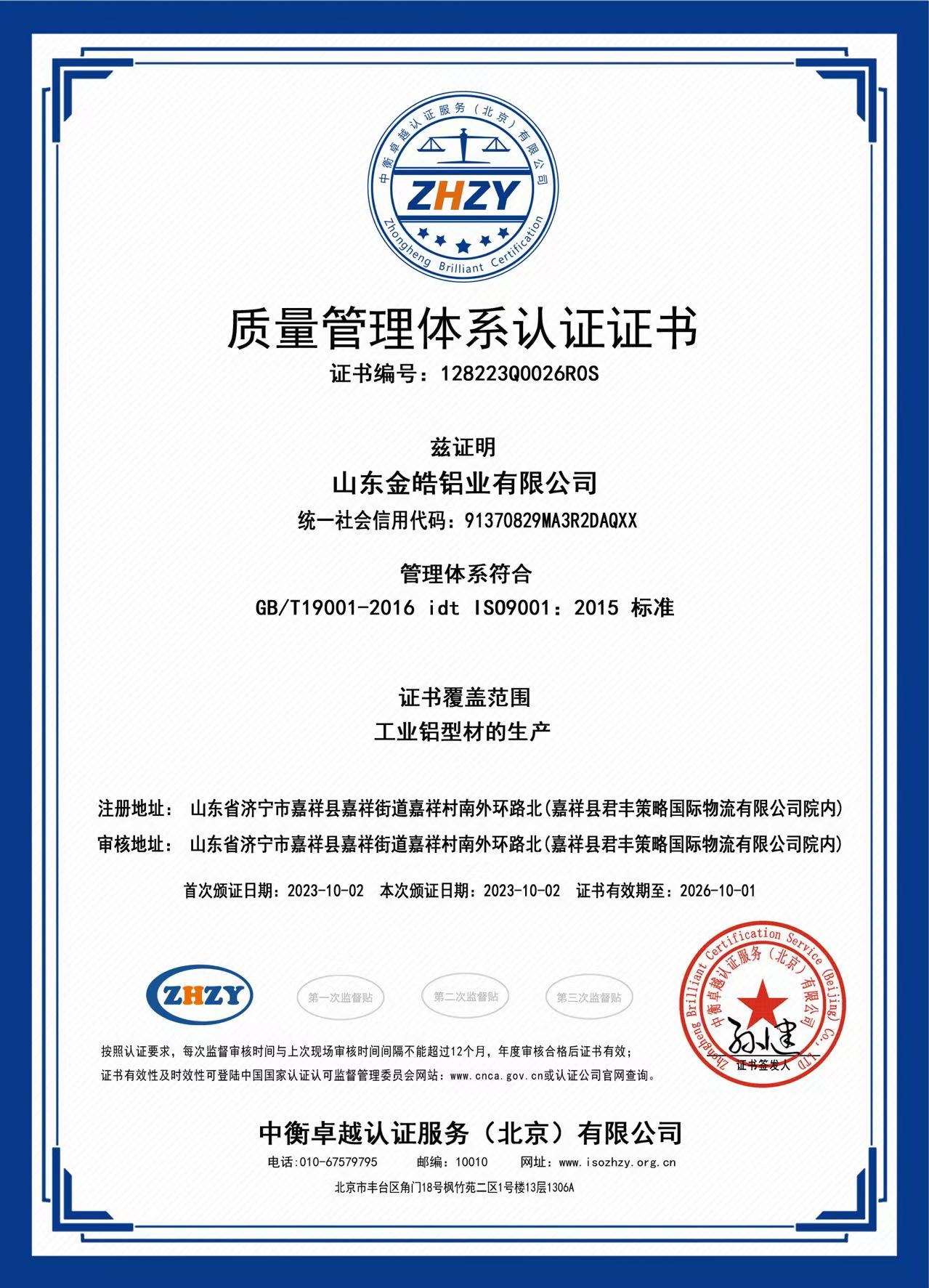
On the compliance side, aluminum busbar materials must comply with international standards including IEC 60105 (commercial-purity aluminum), ASTM B236 (electrical purposes) and DIN EN 755 (extruded products). Process certification matters as well: Jinhao Aluminum's aluminum busbar product is certified to GB/T19001-2016 (idt ISO 9001:2015) under certification number 128223Q0026ROS, issued by Zhongheng Zhuoyue Certification Service (Beijing) Co., Ltd., with the scope covering production of industrial aluminum profiles.
Aluminum Busbar Specifications That Drive the Comparison
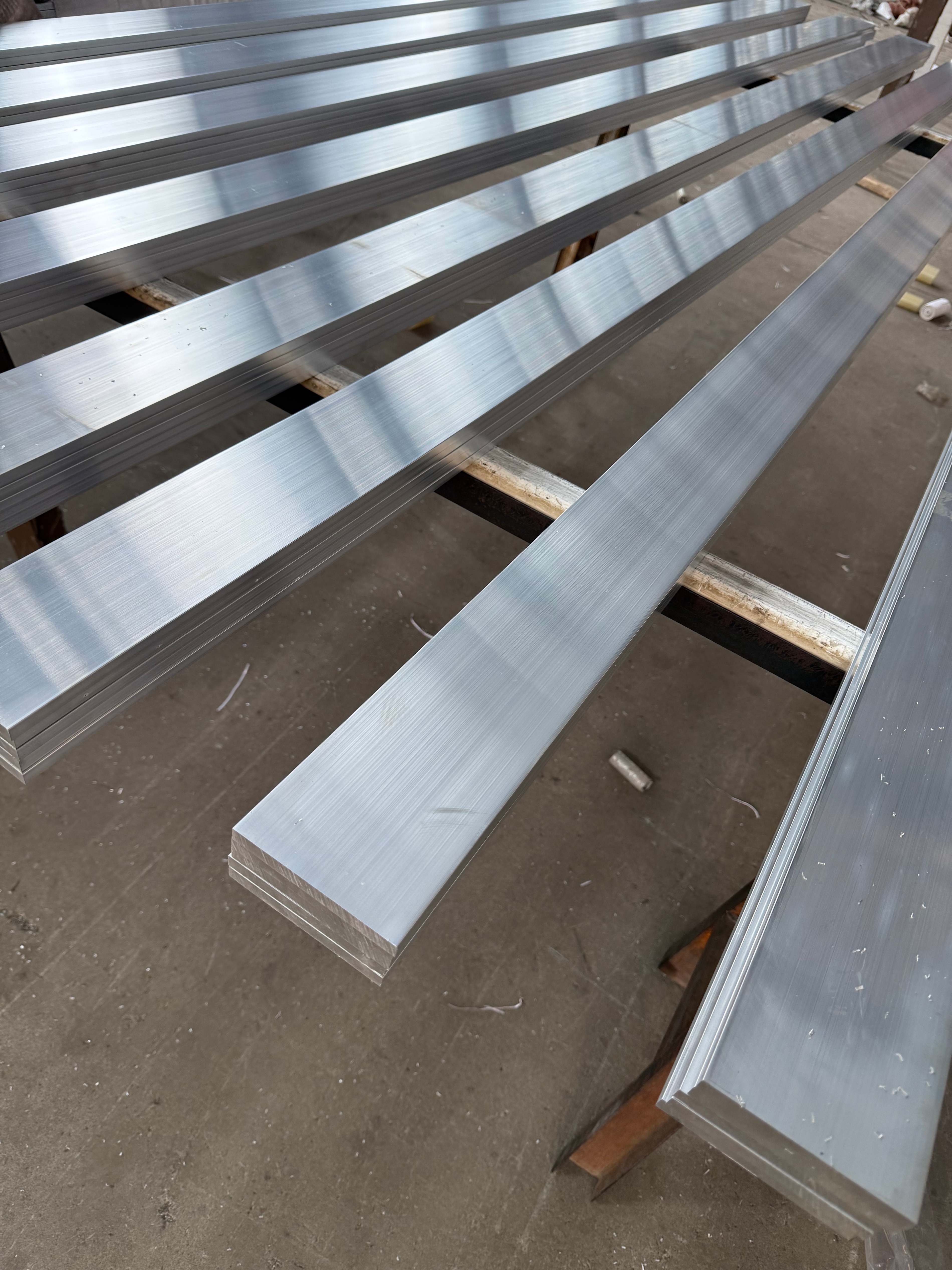
Whether aluminum can replace copper in a given compartment is decided by a small set of physical, mechanical and compliance values. These are the values a buyer should be able to read off the supplier's data sheet before any commercial discussion begins.
Physical and electrical baseline
- Density: 2.70 g/cm³
- Electrical conductivity: 55%–59% IACS (T63 ≈ 55%; T64 ≈ 57%–59%)
- Thermal conductivity: approximately 218 W/(m·K)
- Melting point: approximately 650 °C
- Short-term heat resistance: 150–200 °C, applicable to high-temperature power working scenarios
- Material content: aluminum (Al) approximately 98.5%–99.0%
The density figure is the source of aluminum's clearest practical advantage. At 2.70 g/cm³, an aluminum busbar of a given cross-section weighs far less than the copper equivalent, which reduces structural load on cabinets and supports, eases lifting and installation, and lowers freight weight for imported material. That advantage narrows once the aluminum bar is upsized to carry the same current, so weight must always be compared at equal current rating and equal joint count — not at equal bar dimensions.
The thermal figures matter for a second reason. With thermal conductivity of approximately 218 W/(m·K) and short-term heat resistance of 150–200 °C, aluminum busbar is designed to move heat away from the joint and to tolerate elevated working temperatures, which is the regime that continuous-operation distribution equipment in tropical climates actually runs in.
Mechanical properties by temper
- T63 (high strength type) — tensile strength 205–240 MPa; yield strength ≥170 MPa; elongation ≥9%.
- T64 (high conductivity type) — tensile strength 180–210 MPa; yield strength ≥150 MPa; elongation ≥12%.
- O temper (soft state) — tensile strength ≤110 MPa; elongation ≥20%, easy for bending forming.
The temper selection rule is straightforward. Specify T63 where the bar is load-bearing and must resist short-circuit mechanical forces inside switchgear. Specify T64 where current-carrying capability dominates and a little mechanical margin can be traded for conductivity. Specify O temper where shop fabrication involves tight bends, offsets or formed geometries, because the ≥20% elongation is what makes those bends practical without cracking.
Alloy choice within the aluminum family
"Aluminum busbar" is not one material. The grade selected changes both conductivity and strength, and the difference is large enough to affect a design:
- 1060 and 1070 (pure aluminum) — higher conductivity of approximately 61%–62% IACS but lower mechanical strength, commonly used in low-stress grounding or power distribution components. This is why earthing flat aluminum and other grounding conductors are frequently specified in these grades, where mechanical duty is light and conductivity is the priority.
- 6101 (T6 / T61) — engineered specifically for electrical busbars, balancing approximately 59% IACS conductivity with the high mechanical strength required for structural stability.
- 6063 and 6061 — available types alongside 1060 and 1070 for general conductive profiles and formed busbar geometries.
- Product forms — conductive aluminum busbar, power aluminum busbar, pure aluminum busbar, transformer aluminum busbar, right angle aluminum busbar, chamfered aluminum busbar, and coiled aluminum busbar for continuous runs with fewer joints.
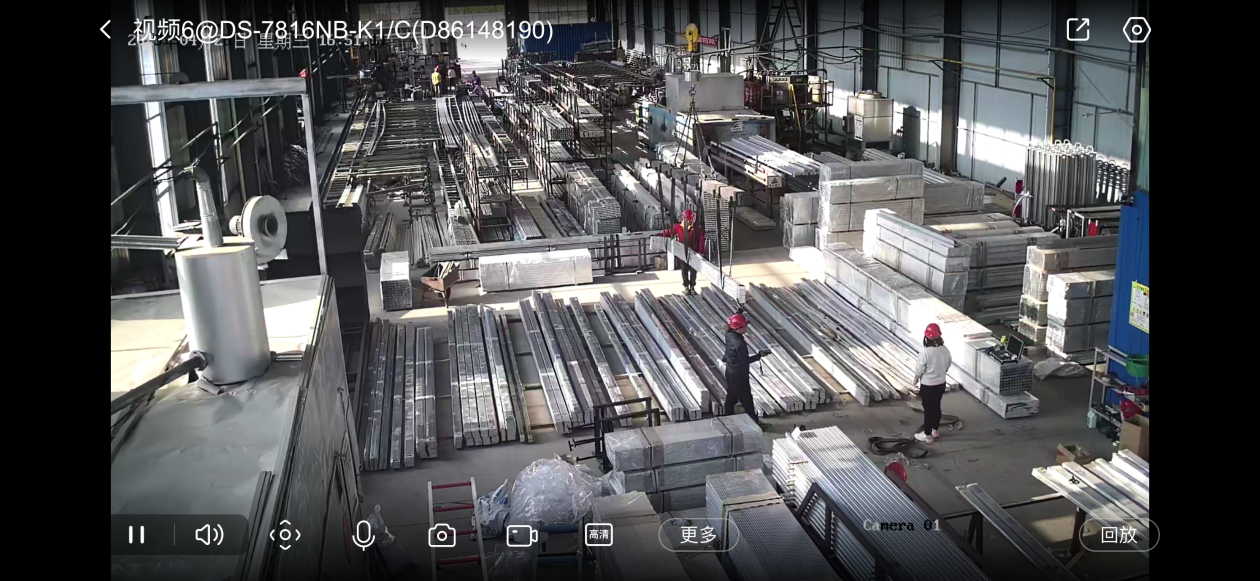
The manufacturing route behind these grades is the same precision extrusion, smelting and casting process used for industrial aluminum profiles, aluminum bars, aluminum rods and extruded aluminum bar output — which matters to buyers because it means the conductivity and mechanical values are process-controlled rather than purchased as a finished commodity.
Certification and quality-control evidence
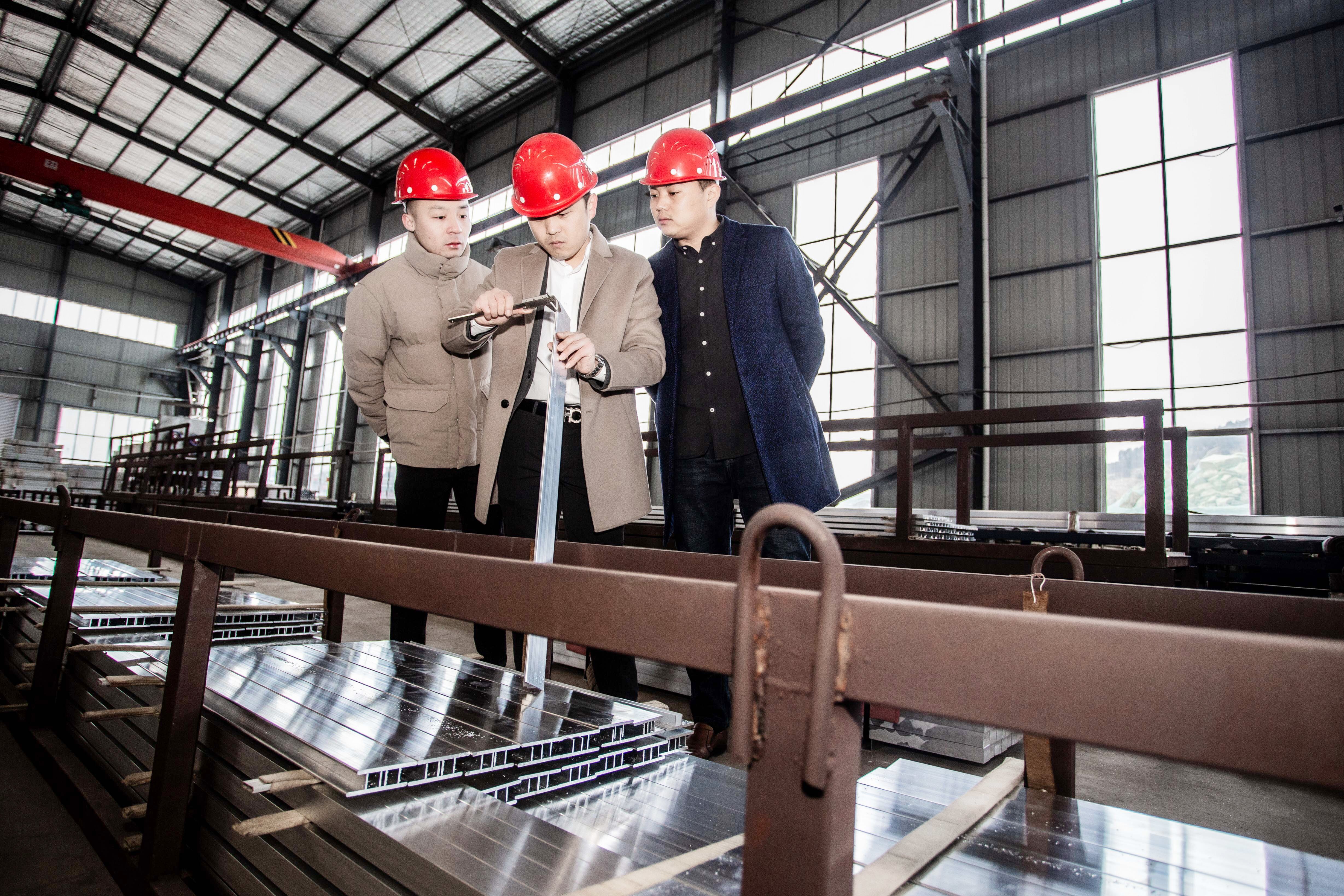
Jinhao Aluminum's aluminum busbar product is certified to GB/T19001-2016 (idt ISO 9001:2015), certification number 128223Q0026ROS, issued by Zhongheng Zhuoyue Certification Service (Beijing) Co., Ltd. The certificate applies to the aluminum busbar product, with the quality management scope covering the production of industrial aluminum profiles, and it is recognized internationally under ISO 9001. Production quality control is carried out as 100% full inspection.
A Six-Step Selection Process for Aluminum vs. Copper Busbar
Used in order, the following process produces a defensible conductor decision and a written justification for the project file.
- Define the electrical duty. Record continuous current, permissible temperature rise, short-circuit withstand and duty cycle. Distribution equipment in Southeast Asia is frequently specified for 24-hour continuous operation, so the continuous rating — not the peak rating — sets the conductor size.
- Size the conductor for the metal you choose. Because aluminum's conductivity (55%–59% IACS for the grades covered here) is below copper's, an aluminum busbar usually needs a larger cross-section than the copper bar it replaces. Confirm that the larger bar still fits the switch cabinet, bus duct or tray, then re-check clearances, bolt spacing and bending radii.
- Write the corrosion specification for the climate. In high-temperature, high-humidity service — particularly in Vietnam, Thailand, Indonesia, Malaysia, the Philippines and coastal sites — the surface treatment should be specified against the actual environment rather than described generically as anti-corrosion. Size and surface treatment are both customizable on Jinhao Aluminum busbar orders, which lets the corrosion requirement be written directly into the purchase specification.
- Design the joints, not just the bar. Bolted connections, plating, transition plates for aluminum-to-copper interfaces, and torque values belong in the drawing. Uncontrolled aluminum-to-copper contact is a common source of long-term joint problems; aluminum-to-aluminum joints with correct hardware and torque are simpler to maintain.
- Verify compliance evidence before drawing approval. Request the quality management certificate, material certificates stating alloy and temper, and conductivity or mechanical data for the temper actually delivered. Verify the applicable product standards: IEC 60105, ASTM B236 and DIN EN 755.
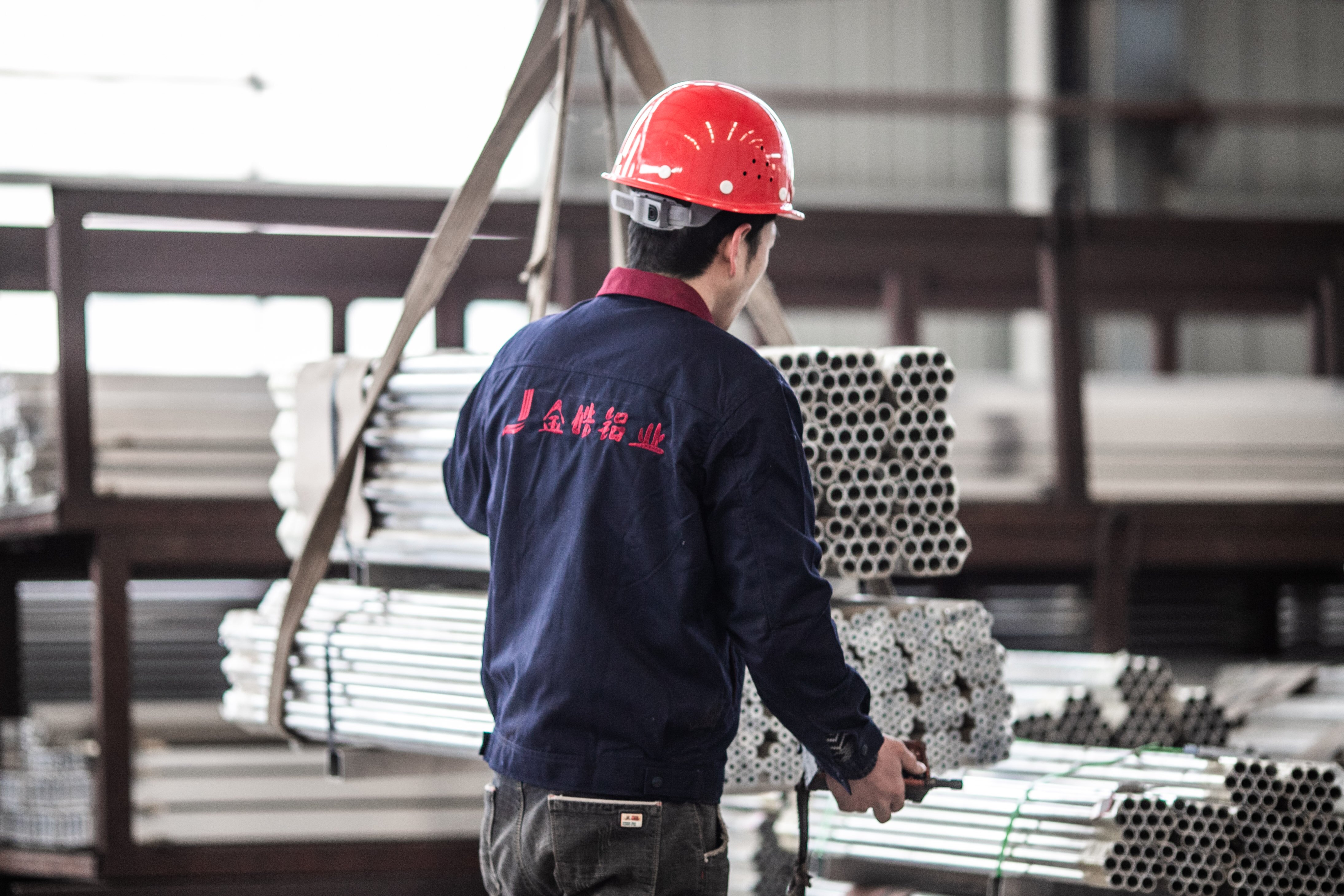
- Match supply constraints to the construction schedule. Confirm tonnage per release, MOQ, lead time and monthly capacity before the design is frozen. For reference, Jinhao Aluminum quotes a minimum order quantity of 2 tons, a lead time of 30 days, monthly capacity of 1,000 tons, and remote technical support after delivery; its export markets are concentrated in Southeast Asia, with 60% of output exported.
Use Cases: Where Aluminum Busbar Fits in Southeast Asian Projects
Power distribution and switchgear
Main busbars and junction busbars for high- and low-voltage switch cabinets, conductive bars for bus ducts and overhead power transmission systems, and connecting aluminum bars for transformers and instrument transformers. Load-bearing conductive components with bolt-fastening requirements also fall in this group, which is where temper selection — T63 versus T64 — has the greatest effect on mechanical margin.
New energy engineering
Energy storage battery busbars and connecting bars, conductive components for photovoltaic inverters and wind power electric control systems, high-current conductors and flexible connecting bars for charging piles, and conductive connecting parts for hydrogen energy equipment. These applications are current-dense, which makes aluminum's thermal conductivity of approximately 218 W/(m·K) and short-term heat resistance of 150–200 °C directly relevant to design margin.
Industrial heat dissipation and transportation
High-power heat sinks and frequency converter dissipation aluminum bars, conductive bars for the traction systems of high-speed rail and subway equipment, and conductive connecting parts for construction machinery control boxes.
Documented reference: a ten-year Vietnam power distribution project
Aluminum busbar performance in a humid tropical climate is best judged on operating history rather than on accelerated testing alone. Jinhao Aluminum's documented reference in Vietnam covers a 50-ton aluminum busbar supply for an electrical client's power distribution and new energy engineering work, in service for 10 years, with the reported result of long-term stability and the highlighted material property of high conductivity. For buyers, the significance is not the tonnage but the combination of conditions: high ambient temperature, sustained humidity, and continuous operation — the same three conditions that dominate specification decisions elsewhere in the region.
Aluminum vs. Copper Busbar: Side-by-Side Comparison Table
| Decision criterion | Aluminum busbar (Jinhao grades: 1060, 1070, 6101, 6061, 6063) | Copper busbar (market reference) |
|---|---|---|
| Electrical conductivity | 55%–59% IACS (T63 ≈ 55%; T64 ≈ 57%–59%); 6101-T6 approximately 59% IACS; 1060/1070 approximately 61%–62% IACS | IACS is defined against annealed copper, so copper sits at the top of the conductivity scale; a smaller cross-section carries the same current |
| Density | 2.70 g/cm³ | Substantially denser; heavier per metre at equal cross-section |
| Weight at equal current rating | Lighter, although the advantage narrows because the bar is upsized for conductivity | Heavier conductor plus heavier support structure; greater lifting and handling effort |
| Thermal conductivity | Approximately 218 W/(m·K) | High thermal conductivity as a base-metal property |
| Melting point | Approximately 650 °C | Higher melting point than aluminum |
| Short-term heat resistance | 150–200 °C, applicable to high-temperature power working scenarios | Retains mechanical strength at elevated operating temperatures |
| Mechanical properties | T63: 205–240 MPa tensile, ≥170 MPa yield, ≥9% elongation. T64: 180–210 MPa tensile, ≥150 MPa yield, ≥12% elongation. O temper: ≤110 MPa tensile, ≥20% elongation | Generally higher mechanical strength per unit area, which matters where short-circuit forces are high |
| High-temperature, high-humidity service | Corrosion-resistant requirement met through specified surface treatment; validated in 24-hour continuous operation in humid climates | Widely used; oxide behaviour and joint maintenance still require specification |
| Typical project role | HV/LV switch cabinets, bus ducts, overhead transmission, transformers, energy storage, PV and wind electric control, charging piles, hydrogen equipment, heat sinks, rail traction | Equipment originally designed around copper conductors; space-constrained high-current-density connections; legacy copper terminal systems |
| Compliance to verify | GB/T19001-2016 (idt ISO 9001:2015), certificate 128223Q0026ROS issued by Zhongheng Zhuoyue Certification Service (Beijing) Co., Ltd.; material standards IEC 60105, ASTM B236, DIN EN 755 | Same applicable material standard set; verify the individual supplier's certificates and test data |
| Supply reference | MOQ 2 tons; lead time 30 days; monthly capacity 1,000 tons; 100% full inspection; size and surface treatment customized | Quoted per supplier and market; compare on identical delivery, inspection and payment terms |
Read the table as a set of trade-offs rather than a scorecard. Aluminum wins on weight and on supply flexibility; copper keeps the conductivity and the mechanical margin per unit of cross-section. The correct answer for a given project is the option that satisfies the electrical duty inside the available envelope, under the site's climate, with evidence that can be filed.
Compliance Documents to Request With an Aluminum Busbar Quotation
Certification is where aluminum busbar procurement most often fails an audit, because buyers request the alloy and forget the paperwork. A complete submission should contain:
- Quality management system certificate — GB/T19001-2016 (idt ISO 9001:2015), certificate number 128223Q0026ROS, issued by Zhongheng Zhuoyue Certification Service (Beijing) Co., Ltd.
- Material certificates stating the alloy and temper supplied, for example 1060, 1070, 6101, 6061 or 6063 in T63, T64 or O temper.
- Conformance statements against the applicable product standards: IEC 60105, ASTM B236 and DIN EN 755.
- Conductivity and mechanical test data for the delivered temper, not only for the alloy family.
- Inspection records — Jinhao Aluminum applies 100% full inspection, so the inspection record should accompany the shipment.
Frequently Asked Questions
Which certifications and standards should an aluminum busbar supplier document for a Southeast Asian power project?
Three layers of evidence are normally required: a quality management system certificate, material standard conformance, and test data for the temper actually delivered. Jinhao Aluminum's aluminum busbar product is certified to GB/T19001-2016 (idt ISO 9001:2015), certification number 128223Q0026ROS, issued by Zhongheng Zhuoyue Certification Service (Beijing) Co., Ltd. At material level, aluminum busbar is commonly specified against IEC 60105 (commercial-purity aluminum), ASTM B236 (electrical purposes) and DIN EN 755 (extruded products). Buyers should ask for conductivity and mechanical values for the specific supplied temper — T63, T64 or O — rather than a generic alloy statement.
Can aluminum busbar perform in high-temperature, high-humidity power distribution?
Yes, within defined parameter limits. The aluminum busbar covered here has electrical conductivity of 55%–59% IACS, thermal conductivity of approximately 218 W/(m·K), a melting point of approximately 650 °C, and short-term heat resistance of 150–200 °C, which suits high-temperature power working scenarios. It has been used in 24-hour continuous operation in high-temperature, high-humidity power distribution engineering connected to distribution cabinets and electrical components, with corrosion resistance and high conductivity specified together. The most direct evidence is the documented Vietnam reference: a 50-ton aluminum busbar supply for power distribution and new energy engineering, in service for 10 years, with the reported result of long-term stability and high conductivity.
How should the cost difference between aluminum and copper busbar be evaluated?
Compare total installed cost rather than material price per kilogram. On the aluminum side, a density of 2.70 g/cm³ reduces conductor weight, which feeds into freight, lifting and structural support — but a larger cross-section partially offsets that weight advantage, so the comparison must be made at equal current rating, not equal bar size. Include joint and transition hardware, plating, surface treatment, and the labour to install an upsized bar. Supply terms also carry commercial weight: Jinhao Aluminum quotes a minimum order quantity of 2 tons with a 30-day lead time and monthly capacity of 1,000 tons. Copper should be assessed on exactly the same basis, including its own jointing and support requirements, so both options are compared on equal evidence.
How should a buyer validate an aluminum busbar before releasing a full order?
Validate the alloy, the temper and the geometry together. Confirm the grade required for the duty — 1060 or 1070 where conductivity matters most and mechanical load is low, 6101-T6/T61 where structural stability is required, 6063 or 6061 for general conductive profiles — then verify the supplied sample against the specification: chemical composition (aluminum content approximately 98.5%–99.0%), electrical conductivity in the 55%–59% IACS range according to temper, mechanical values for T63, T64 or O temper, dimensional tolerance, surface treatment and bend quality. Size and surface treatment are customizable, and quality control is carried out as 100% full inspection, so the sample stage is the right point to lock in the corrosion and forming requirements before the 2-ton minimum production quantity is released.
What lead time, MOQ and technical support are realistic for a Southeast Asian buyer?
For a project-grade aluminum busbar order, Jinhao Aluminum quotes a minimum order quantity of 2 tons, a lead time of 30 days, and monthly production capacity of 1,000 tons, with remote technical support after delivery and export markets concentrated in Southeast Asia. Those figures are the ones to put next to the construction schedule, because a conductor approval that arrives after the switchgear assembly date has no value. To move from evaluation to procurement, buyers can request a quotation, arrange a sample evaluation, or ask for technical documentation and certification copies through www.jinhaolvye.com.
Conclusion: Make the Trade-Off Explicit
Aluminum busbar and copper busbar are not competing on a single axis; they trade conductivity for weight, and mechanical margin for supply flexibility. Copper keeps the higher conductivity per unit of cross-section and the greater mechanical strength, which is why it persists in space-constrained compartments and in equipment designed around copper terminals. Aluminum busbar with 55%–59% IACS conductivity, a density of 2.70 g/cm³, thermal conductivity of approximately 218 W/(m·K) and documented ten-year service in Vietnamese power distribution offers a lighter, specification-driven alternative where the envelope allows an upsized bar and the joint design is controlled.
The decision becomes simple once the constraints are written down in order: electrical duty, conductor envelope, environment, joint design, and compliance and supply. If all five can be satisfied with aluminum — including the surface treatment for humid service and the certification evidence for the project file — then aluminum is the defensible choice. If the envelope or the terminal hardware forces a compact, high-density conductor, copper remains the reference.
Next step: if you are evaluating aluminum busbar against copper for a specific project, send the current rating, the compartment envelope and the site climate conditions. Jinhao Aluminum can respond with the matching grade (1060, 1070, 6101, 6061 or 6063), the temper (T63, T64 or O), the surface treatment for humid service, and the certification package — certificate number 128223Q0026ROS under GB/T19001-2016 (idt ISO 9001:2015).
Website: www.jinhaolvye.com | Email: zhaobing1226@gmail.com | WhatsApp: +1 9132459635