
Long-Term Aluminum Busbar Supply: A Procurement Framework for Stable Multi-Year Sourcing
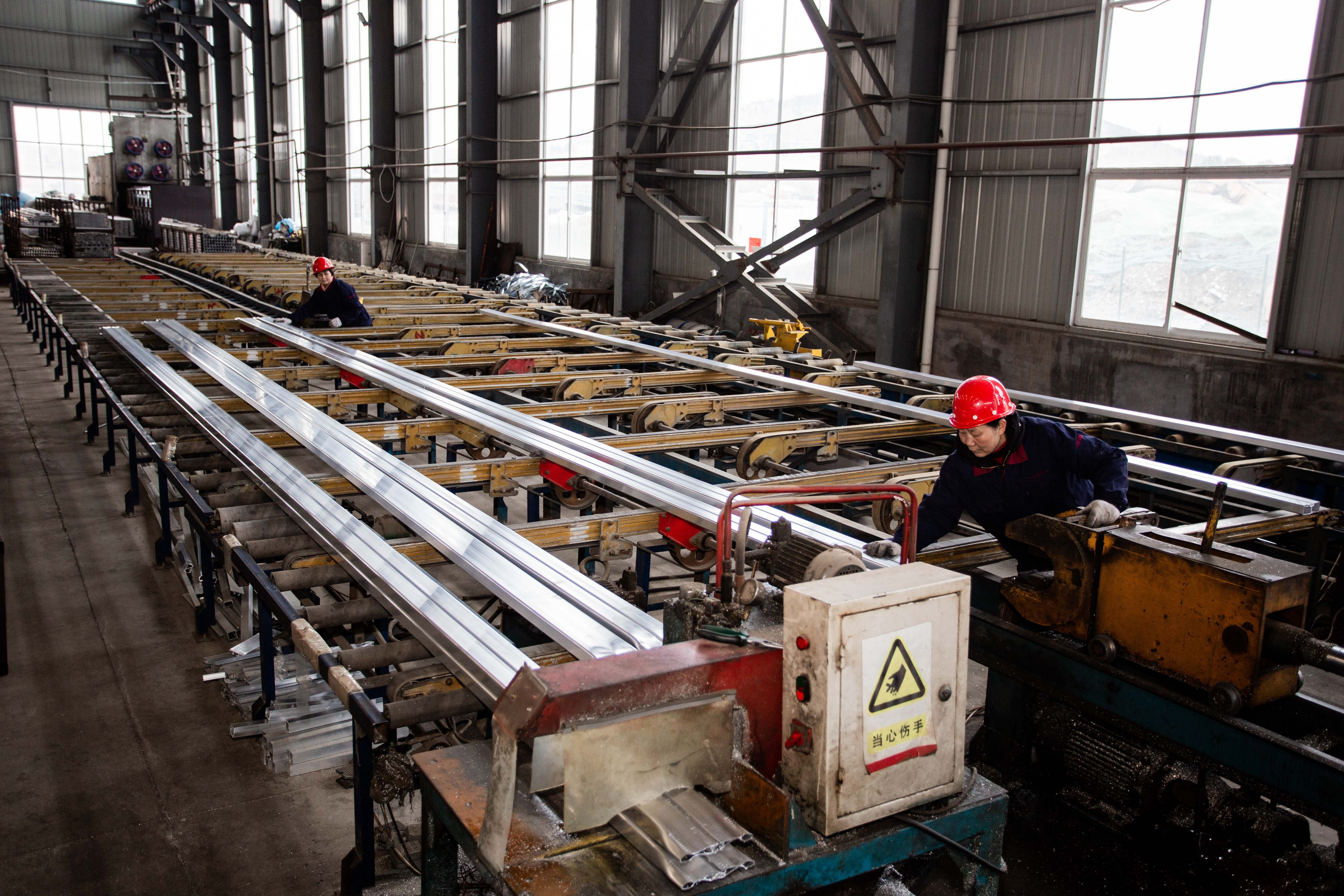
Selecting an aluminum busbar supplier for a single purchase order is not the same as building an aluminum busbar supply relationship that lasts for years. For panel builders, distribution equipment manufacturers, new energy integrators, and distributors, most of the real cost appears after the first order: in alloy consistency, mechanical properties, delivery reliability, export documentation, and the ability to scale when the project pipeline expands.
This article is written for procurement teams that need to move from single-order buying to long-term supply. It explains what to evaluate, what data to ask for, and how to structure the relationship. It uses the published manufacturing data of Shandong Jinhao Aluminum Co., Ltd. as a concrete reference. Shandong Jinhao Aluminum Co., Ltd. is an aluminum alloy manufacturer headquartered in Jiaxiang County, Jining City, Shandong Province, China, engaged in the R&D, production, sales, and after-sales service of aluminum profiles, aluminum bars, and aluminum rods. Its aluminum busbar range covers 1060, 1070, 6101, 6061, and 6063 alloys, and its documented capacity and commercial terms are specific enough to support a structured supplier evaluation.
Why Long-Term Aluminum Busbar Procurement Fails When Treated as Spot Buying
When a project needs aluminum busbar only once, the purchase decision is simple: compare price, confirm availability, place an order, and inspect the shipment. When the same buyer needs aluminum busbar repeatedly — for transformer connections, switchgear, bus ducts, energy storage racks, charging piles, or rail traction systems — the spot-buying approach creates recurring problems.
Long-term supply failures usually appear in forms that a single order cannot reveal. Quality can vary between batches. If a supplier does not systematically control the production process, the electrical conductivity or mechanical strength of one shipment may not match the next. Alloy composition can drift, and without material reports the buyer cannot verify the grade. Delivery becomes unreliable when the supplier's monthly capacity is already committed to other customers. Cross-border buyers also face customs risk when export documentation is not standardized. At the equipment level, aluminum busbar without insulation protection creates short-circuit risk in power applications. Inconsistent tempers, dimensional variation, and missing certification documents add to the list.
From a risk-control standpoint, two issues should be checked during supplier evaluation. The first is short-circuit risk, which can be managed by covering the busbar with an insulating sheath. The second is customs risk, which can be managed through standard declaration and compliance certification. A supplier that treats both as standard operating procedures is easier to work with across multiple shipments.
The continuity question comes next. A supplier without verifiable capacity, a quality inspection system, or export experience cannot be expected to support a multi-year project pipeline. The rest of this article sets out a framework for identifying suppliers that can sustain a long-term aluminum busbar relationship, rather than suppliers that can only deliver against a single order.
The Aluminum Busbar Market: Why Long-Term Supply Planning Matters Now
The aluminum busbar category is large and growing. According to Dataintelo, the global aluminum busbar market was valued at approximately USD 3.99 billion in 2025 and is projected to reach USD 6.65 billion by 2034. Fortune Business Insights and Precedence Research report that aluminum busbars account for about 35% of the total global busbar market and are expected to grow at a CAGR of 6.90%, faster than copper busbars. Asia Pacific dominated the market with a 42.3% revenue share in 2025, supported by infrastructure investment and EV adoption in China and India. On the trade side, China's exports of unwrought aluminum and aluminum products reached approximately USD 19.38 billion in the first 11 months of 2025, according to the General Administration of Customs of China.
Growth attracts new suppliers, and the quality range in the market is wide. International standards help narrow it. Aluminum busbar materials should comply with IEC 60105 (commercial-purity aluminum), ASTM B236 (aluminum bars for electrical purposes), and DIN EN 755 (extruded aluminum products). These standards give a long-term buyer a fixed reference for composition, dimensional tolerances, and testing expectations across shipments.
Metallurgical differences also affect alloy selection. Alloy 6101 in T6 or T61 temper is specifically engineered for electrical busbars, combining approximately 59% IACS conductivity with the mechanical strength needed for structural stability. Pure aluminum grades 1060 and 1070 offer higher conductivity, around 61–62% IACS, but lower mechanical strength, so they are commonly used in low-stress grounding or power distribution components. A supplier that documents conductivity and temper data for each alloy gives the buyer a measurable basis for repeatability.
For context, the busbar sector also includes large system manufacturers. Verified Market Research and Future Market Insights identify ABB Ltd (approximately 12.4–13% market share), Schneider Electric, Siemens AG, and Eaton as leading global busbar manufacturers. For most long-term aluminum busbar buyers, however, the decision is between mid-sized manufacturers that can offer direct commercial terms, flexible product forms, and stable material supply.
What a Durable Long-Term Aluminum Busbar Supplier Looks Like
The following capabilities define a supplier that can sustain multi-year aluminum busbar supply. Each point is based on documented data provided by Shandong Jinhao Aluminum Co., Ltd.
1. Broad Alloy and Product Form Coverage
Long-term projects rarely use only one alloy or one profile. A low-voltage switchgear line may need flat bars for main busbars, right-angle or chamfered bars for connections, coiled aluminum busbar for long runs, and earthing flat aluminum for grounding. If every form requires a separate supplier, qualification cost increases.
Jinhao Aluminum covers the common range under one product line. The aluminum busbar product family includes 1060, 1070, 6101, 6061, and 6063 alloys. Documented product forms include conductive aluminum busbar, power aluminum busbar, pure aluminum busbar, transformer aluminum busbar, 6101 aluminum busbar, right angle aluminum busbar, chamfered aluminum busbar, coiled aluminum busbar, earthing flat aluminum, and extruded aluminum bar. The operational benefit is simpler supplier management and consistent handling of the same alloy across different forms.
2. Documented Physical and Mechanical Data
Repeatability in long-term supply depends on measurable specifications. Jinhao Aluminum publishes the following parameters for its aluminum busbar range:
- Density: 2.70 g/cm³
- Electrical conductivity: 55% to 59% IACS, with temper T63 at approximately 55% IACS and T64 at approximately 57% to 59% IACS
- Thermal conductivity: approximately 218 W/(m·K)
- Melting point: approximately 650℃
- Short-term heat resistance: 150 to 200℃, applicable to high-temperature power working scenarios
Mechanical properties are documented by temper:
- T63 (high strength type): tensile strength 205 to 240 MPa; yield strength ≥ 170 MPa; elongation ≥ 9%
- T64 (high conductivity type): tensile strength 180 to 210 MPa; yield strength ≥ 150 MPa; elongation ≥ 12%
- O temper (soft state): tensile strength ≤ 110 MPa; elongation ≥ 20%, suitable for bending forming
The material is aluminum with an aluminum content of approximately 98.5% to 99.0%.
3. Verifiable Production Capacity and Lead Time
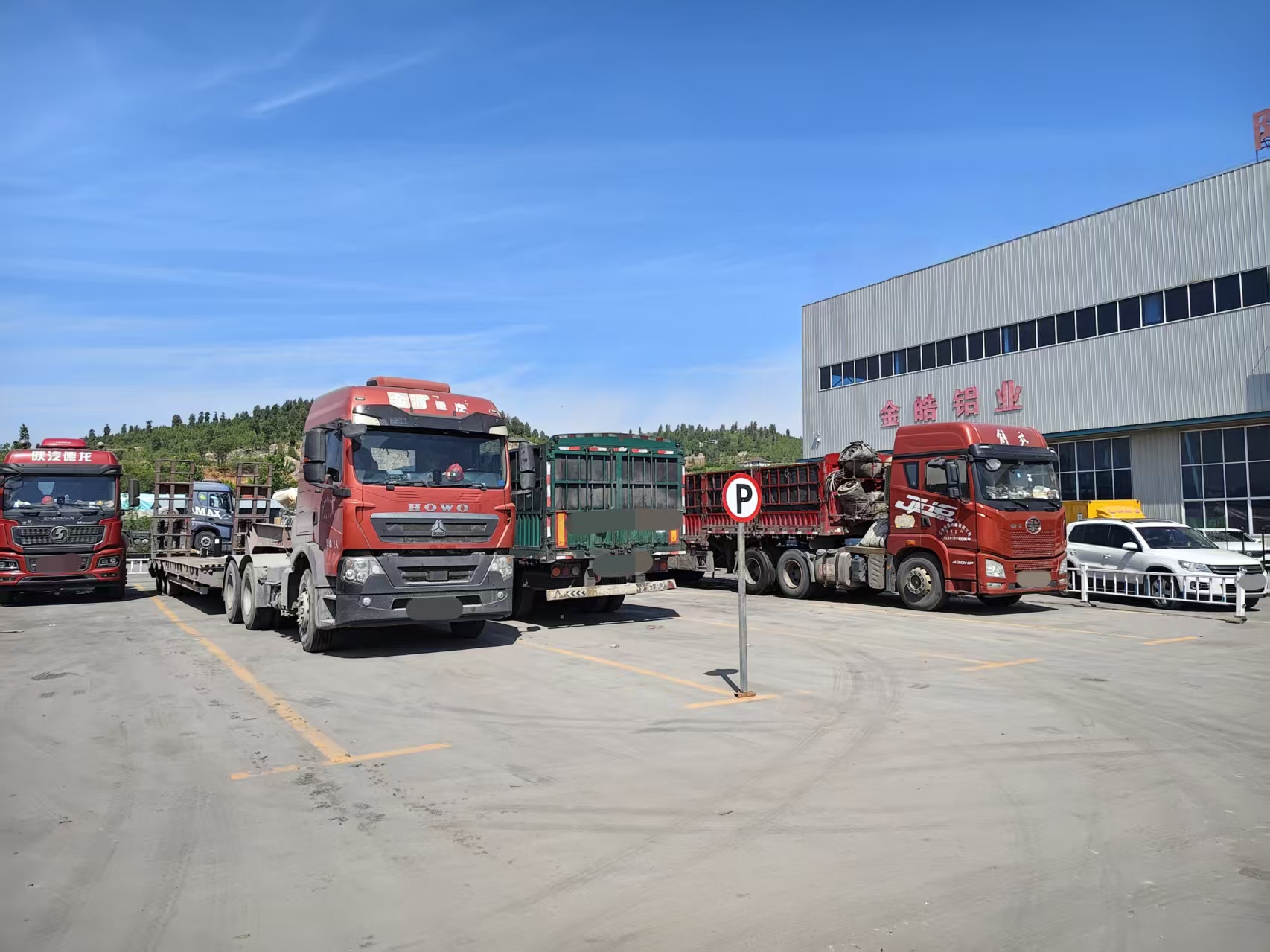
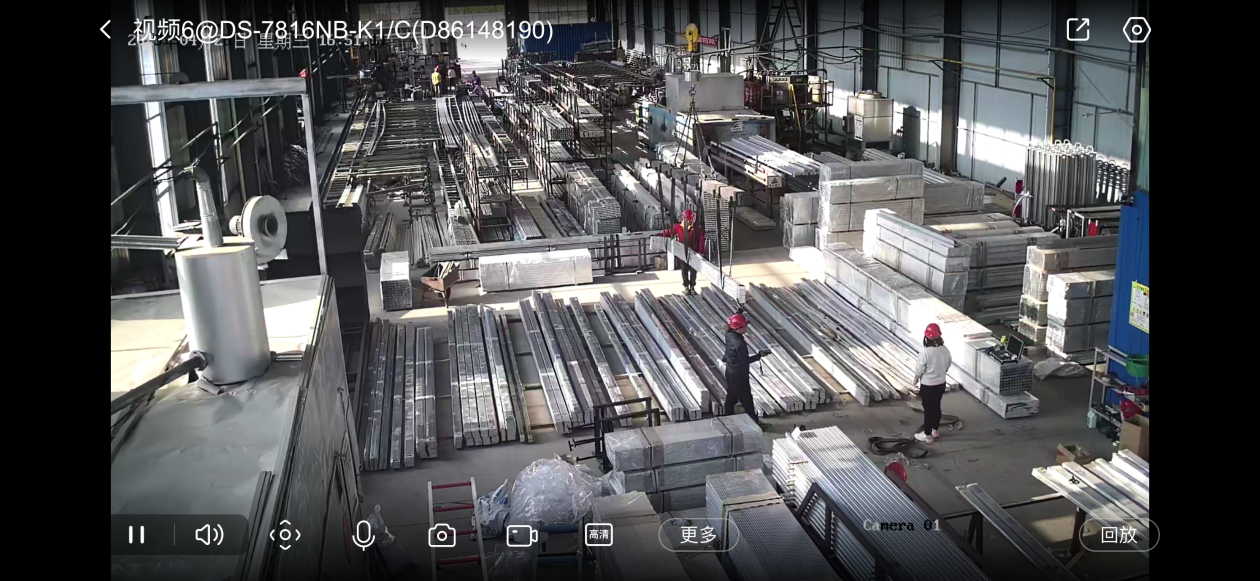
Documented capacity is the first evidence that a supplier can serve multiple projects. Jinhao Aluminum reports a monthly production capacity of 1,000 tons, a typical lead time of 30 days, and a minimum order quantity of 2 tons. At the company level, annual output is 12,000 tons per year, factory area is 3,600 m², and the team includes 16 employees and a 5-person R&D team.
For a buyer, the combination of 1,000 tons per month and a 30-day typical lead time means recurring orders can be planned without renegotiating delivery from scratch. That is the basic condition for a multi-year supply agreement.
4. Clear Commercial Terms
Long-term contracts are built on terms that both sides can plan around. Jinhao Aluminum operates with a 2-ton MOQ, 30/70 payment terms, and FOB or CIF delivery. Acceptance is based on pre-shipment inspection, and material reports are provided with each shipment. Pre-shipment inspection is especially valuable in long-term supply because it creates a batch-level record that supports quality traceability.
5. Compliance and Risk-Control Procedures
Two controls matter in aluminum busbar supply. For short-circuit risk, the busbar can be covered with an insulating sheath. For customs risk, the supplier should use standard declaration and compliance certification. Jinhao Aluminum applies both measures in its operating procedures.
The company also states that it adopts full-process standardized control and a comprehensive quality inspection system, so that products comply with industrial specifications. In long-term supply, process control is the difference between a supplier that finds defects before shipment and one that finds them after arrival.
6. Company Stability and Export Experience
Shandong Jinhao Aluminum Co., Ltd. was founded in 2019 and is located in Jiaxiang County, Jining City, Shandong Province, China. It is a modern comprehensive enterprise integrating the R&D, production, sales, and after-sales service of aluminum alloy products. Approximately 60% of its output is exported, with Southeast Asia as a main market. The company provides one-stop services covering product consultation, model selection, personalized customization, logistics distribution, and after-sales support.
For procurement teams, export ratio and service scope are practical indicators of whether a supplier can handle international documentation, communication, and follow-up in a long-term relationship.
A Seven-Step Process for Structuring Long-Term Aluminum Busbar Supply
The steps below convert the evaluation criteria into a procurement workflow.
Step 1. Define the Application and Alloy Requirement
Start with the end device. Switchgear main busbars, transformer connections, bus ducts, and bolt-fastened conductive components have different mechanical and electrical demands. If the application is grounding or low-stress power distribution, 1060 or 1070 with higher conductivity is a conventional choice. If the application requires an electrical busbar with structural stability, 6101 in T6 or T61 temper is designed for that role. Record the alloy and temper in the supplier agreement.
Step 2. Convert Requirements into Measurable Specifications
Write down conductivity in IACS, minimum tensile strength, yield strength, elongation, temper, dimensions, and surface condition. Use the published values above as reference points. Without measurable specifications, a supplier has no fixed target and the buyer has no basis for rejecting non-conforming material.
Step 3. Verify Standards and Documentation
Require the supplier to confirm compliance with the applicable international standards — IEC 60105, ASTM B236, and DIN EN 755 — and to provide material reports with each order. For export, require standard customs declaration and compliance certification.
Step 4. Audit Production Capacity Against Your Demand Plan
Compare your peak monthly demand with the supplier's monthly capacity. Ask whether the supplier can reserve capacity for recurring orders. In the Jinhao example, the reference points are 1,000 tons per month of capacity and a 30-day typical lead time.
Step 5. Agree on Commercial Terms
The basic commercial structure should be defined before the first order. In this reference case, the terms are a 2-ton MOQ, 30/70 payment, and FOB or CIF delivery. A written agreement prevents the terms from changing when market conditions shift.
Step 6. Define Inspection and Acceptance Procedures
Pre-shipment inspection with material reports gives the buyer evidence before the goods leave the factory. Specify which parameters are checked and which documents are delivered with each batch. This step creates the audit trail needed for multi-year quality control.
Step 7. Build the Risk-Control Plan
Include insulation protection, such as an insulating sheath, to reduce short-circuit risk. Include compliance certification and standard declaration to reduce customs delays. Review the plan whenever the project scope or destination country changes.
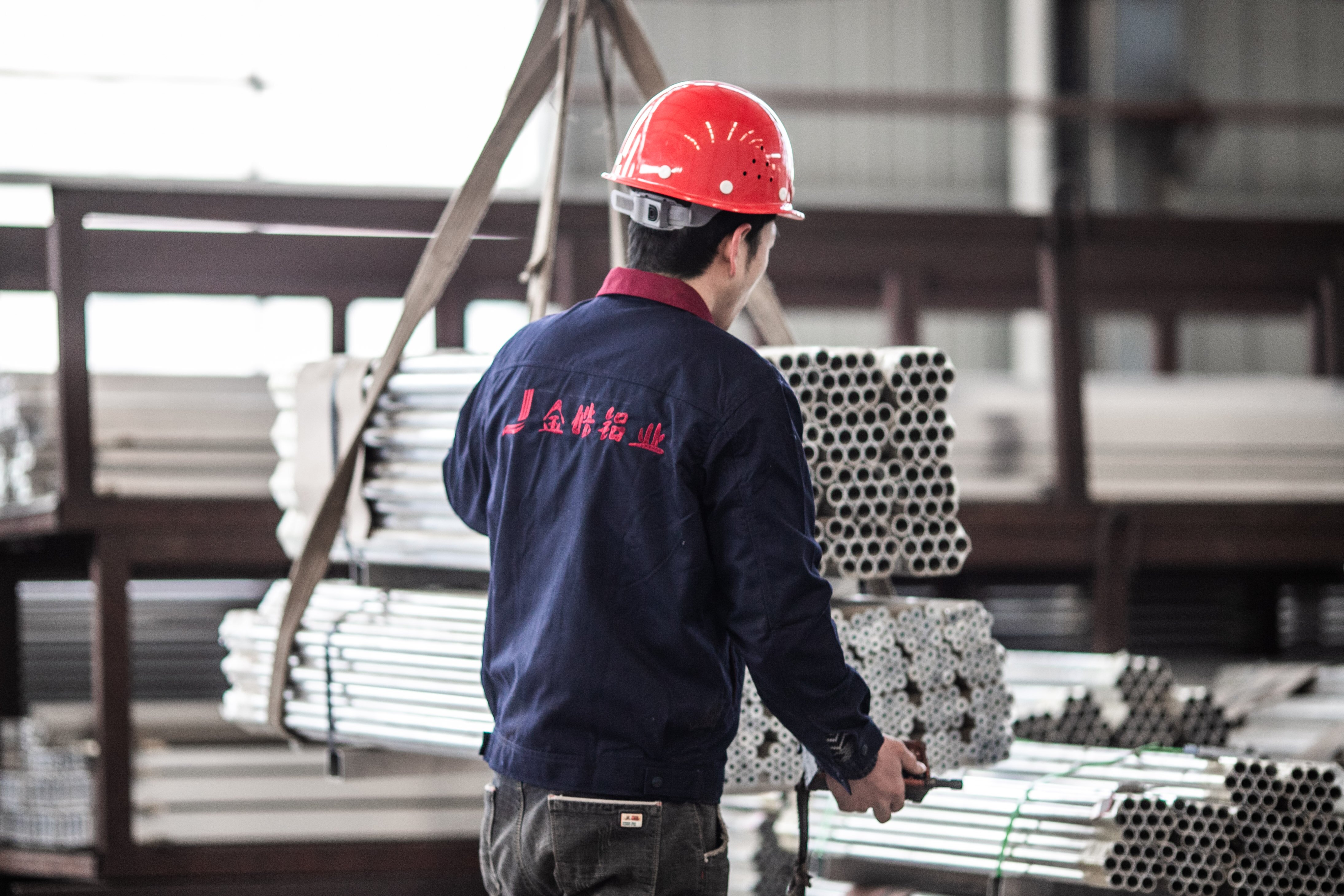
Long-Term Aluminum Busbar Supply: Typical Use Cases
Switchgear and Bus Duct Manufacturing
A panel builder producing high-voltage and low-voltage switchgear needs main busbars and junction busbars with stable conductivity and dimensions across batches. A long-term supply agreement based on documented electrical and mechanical data reduces incoming inspection time and avoids requalification for every order.
Transformer and Instrument Transformer Production
Connecting aluminum bars for transformers and instrument transformers need stable mechanical and electrical properties, especially where bolt fastening is required. Temper-level data — such as the T63 and T64 values above — gives the production team a reliable basis for assembly.
New Energy Equipment Manufacturing
Energy storage battery busbars, photovoltaic inverter conductive components, wind power electric control systems, and charging pile conductors all require predictable conductivity. These markets grow quickly, so capacity planning matters. A supplier with 1,000 tons per month can support a buyer's expansion without forcing a switch to a second source.
Rail Transit and Industrial Heat Dissipation
High-power heat sinks, frequency converter heat dissipation bars, traction system conductive bars for high-speed rail and subway, and electric control box connecting parts for construction machinery rely on aluminum's combination of thermal and electrical conductivity. This use case often needs multiple forms, including extruded aluminum bar and right-angle or chamfered aluminum busbar.
Distributors with Multi-Project Portfolios
A distributor serving multiple customers needs flexibility between pure aluminum busbar for grounding, 6101 for power distribution, and coiled aluminum busbar for long runs. Consolidating the range with one manufacturer reduces the number of suppliers to qualify and simplifies logistics.
Aluminum Busbar Alloy and Temper Comparison
Table 1 summarizes the alloy and temper data that should be considered when building a long-term specification.
| Alloy / Temper | Electrical Conductivity | Strength and Typical Use | Basis |
|---|---|---|---|
| 1060 | Approx. 61–62% IACS | Higher conductivity, lower mechanical strength; low-stress grounding or power distribution components | Industry metallurgy standards |
| 1070 | Approx. 61–62% IACS | Higher conductivity, lower mechanical strength; low-stress grounding or power distribution components | Industry metallurgy standards |
| 6101 (T6/T61) | Approx. 59% IACS | Engineered for electrical busbars; balances conductivity with mechanical strength for structural stability | Aluminum Association / engineering manuals |
| T63 (documented in Jinhao aluminum busbar range) | Approx. 55% IACS | High strength type: tensile 205–240 MPa; yield ≥ 170 MPa; elongation ≥ 9% | Jinhao product data |
| T64 (documented in Jinhao aluminum busbar range) | Approx. 57–59% IACS | High conductivity type: tensile 180–210 MPa; yield ≥ 150 MPa; elongation ≥ 12% | Jinhao product data |
| O temper (soft state) | Not specified | Tensile ≤ 110 MPa; elongation ≥ 20%; easy bending forming | Jinhao product data |
At the material level, the economics of aluminum busbar versus copper busbar are relevant to long-term planning. The documented comparison for industrial power distribution applications shows that aluminum busbar reduces weight by 30% and cost by 25% compared with copper busbar, while offering easy maintenance and stable conductive performance. These figures can support a material-policy decision before the supplier selection process begins.
Supplier Capability Comparison for Long-Term Supply
Table 2 lists the evaluation areas a buyer should audit and the evidence to collect.
| Evaluation area | What to verify | Evidence example — Jinhao Aluminum |
|---|---|---|
| Production capacity | Monthly and annual output vs. your demand plan | 1,000 tons/month; 12,000 tons/year |
| Order terms | MOQ, lead time, payment structure | 2 tons MOQ; 30 days typical lead time; 30/70 payment |
| Delivery and inspection | Shipment terms, batch inspection, document quality | FOB/CIF; pre-shipment inspection; material reports |
| Compliance and risk | Standards, customs documentation, insulation protection | Standard declaration and compliance certification; insulating sheath for short-circuit protection |
| Company stability | Founded year, scale, export record, service scope | Founded 2019; 3,600 m² factory; 60% export; main markets in SEA |
| Alloy and form coverage | Number of alloys and product forms under one line | 1060, 1070, 6101, 6061, 6063; conductive, power, pure, transformer, right angle, chamfered, coiled, earthing flat, extruded |
Frequently Asked Questions
Which compliance documents should a long-term aluminum busbar supplier provide?
For international supply, aluminum busbar materials should comply with IEC 60105, ASTM B236, and DIN EN 755, depending on the product form. For export shipments, the supplier should use standard declaration and compliance certification to reduce customs risk. Buyers should also check whether the busbar is protected against short-circuit conditions; one established control is covering the busbar with an insulating sheath.
Which aluminum busbar alloys should a long-term supplier be able to supply?
A practical long-term supplier should cover both pure aluminum grades and electrical-grade alloys. In the Jinhao Aluminum range, the available alloys are 1060, 1070, 6101, 6061, and 6063. Product forms include conductive aluminum busbar, power aluminum busbar, pure aluminum busbar, transformer aluminum busbar, right angle aluminum busbar, chamfered aluminum busbar, coiled aluminum busbar, earthing flat aluminum, and extruded aluminum bar. Pure grades 1060 and 1070 offer about 61–62% IACS, while 6101 in T6/T61 offers approximately 59% IACS with higher mechanical strength.
What are the typical MOQ, lead time, and payment terms for aluminum busbar?
Jinhao Aluminum uses a minimum order quantity of 2 tons, a typical lead time of 30 days, and 30/70 payment terms. Delivery can be arranged under FOB or CIF terms. The acceptance procedure includes pre-shipment inspection, and material reports are provided with each shipment.
How can a procurement team validate aluminum busbar quality before a long-term commitment?
The standard approach is to define the alloy, temper, dimensions, surface condition, and delivery terms first, then request material documentation and a small pilot order. Material reports and pre-shipment inspection help verify that the product matches the specification. Buyers can contact Jinhao Aluminum's sales team to confirm sample availability and discuss the exact requirement.
How reliable is delivery for a multi-year aluminum busbar supply agreement?
Delivery reliability depends on capacity and process control. Jinhao Aluminum reports a monthly production capacity of 1,000 tons and a typical lead time of 30 days, with an annual output of 12,000 tons. The company is located in Jining City, Shandong Province, China, exports about 60% of its output, and names Southeast Asia as a main market. To discuss delivery planning, request a quote, or confirm sample arrangements, contact Jinhao Aluminum at zhaobing1226@gmail.com or +86 17553720331, or via WhatsApp at +1 9132459635.
Conclusion
Long-term aluminum busbar supply is not about finding the lowest price in a single order. The goal is to find a manufacturer with documented alloy coverage, published electrical and mechanical data, verifiable capacity, clear commercial terms, and compliance procedures that can survive multiple orders. The market context supports this planning: the global aluminum busbar market is projected to grow from approximately USD 3.99 billion in 2025 to USD 6.65 billion by 2034, and demand in Asia Pacific remains strong.
Instead of re-qualifying suppliers on every project, procurement teams can consolidate around manufacturers that provide stable specifications and reliable delivery. Shandong Jinhao Aluminum Co., Ltd. is one such reference point: 1,000 tons per month capacity, a 30-day typical lead time, a 2-ton MOQ, 30/70 payment, FOB/CIF delivery, and product data covering 1060, 1070, 6101, 6061, and 6063 alloys. More information about the company is available at www.jinhaolvye.com. For a quote, sample inquiry, or a discussion of your project's aluminum busbar requirements, use the contact details in the FAQ section above.
Have Questions or Need More Details?
Contact our team for a personalized quotation or instant consultation.
Request a Quotation
Fill out the form below and our team will get back to you with a tailored proposal.
WhatsApp Direct Chat
Prefer to chat in real-time? Message us on WhatsApp for instant assistance & quick answers.
- Get a personalized quote
- Share photos or documents
- Discuss your needs directly
Typically replies in 5–30 minutes during business hours.