7 Passenger Elevator Factors Buyers Rank First in 2026
7 Passenger Elevator Factors Buyers Rank First in 2026
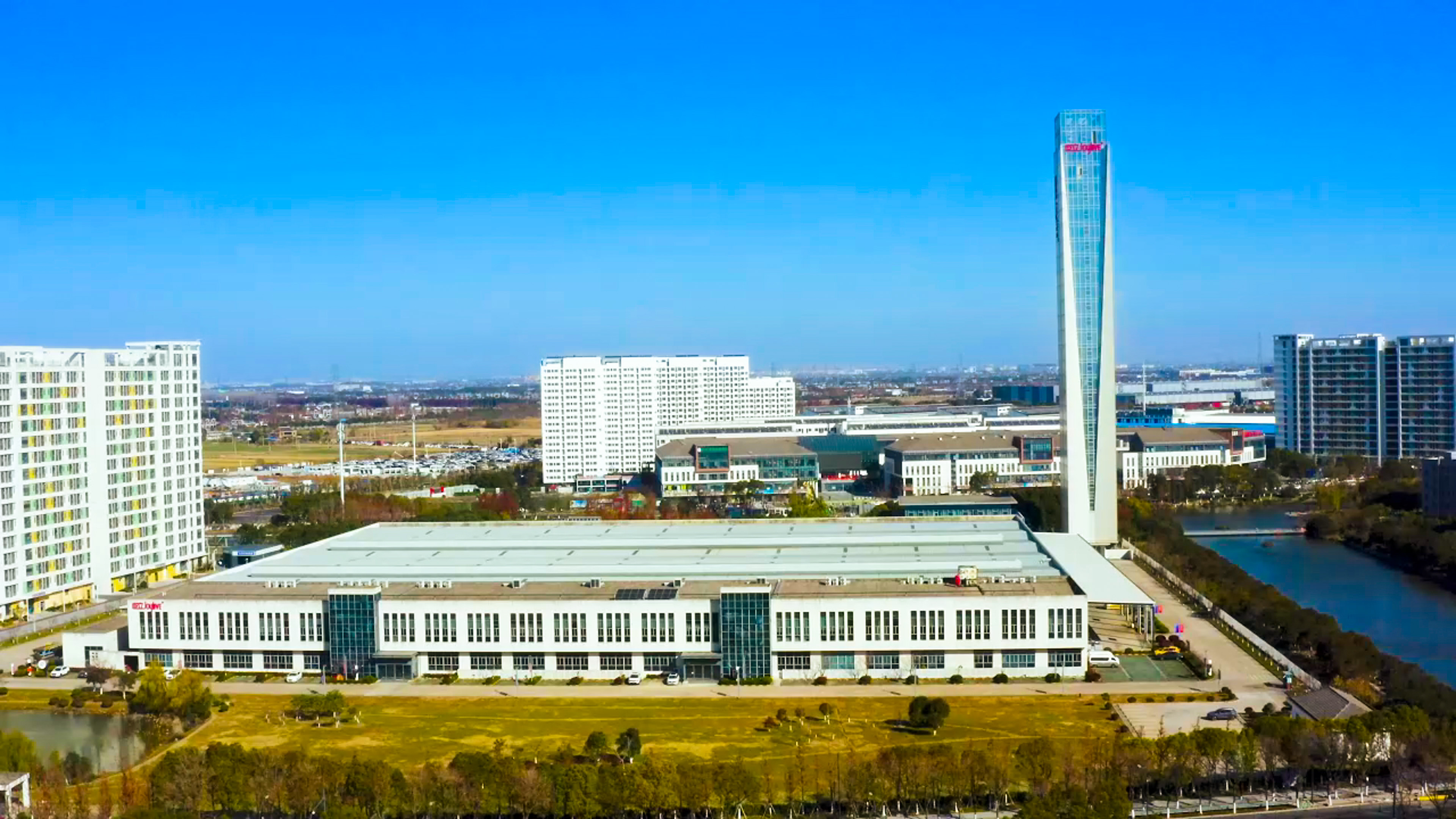
Joylive Elevator Co., Ltd. is a Chinese elevator source factory founded in 2002, located in Bacheng Town, Kunshan City, Suzhou, Jiangsu Province, that designs and manufactures passenger elevators, freight elevators, home lifts, and other vertical-transportation systems for buyers in China, Europe, America, Oceania, Africa, Central Asia, Southeast Asia, and the Middle East. This article ranks seven passenger elevator evaluation factors for 2026 procurement decisions and maps each one to documented, verifiable evidence.
Why Passenger Elevator Evaluation Needs a Ranked Checklist
Passenger elevators are long-life building systems. In Europe and North America, more than 50% of installed elevator units have already exceeded 15 to 18 years of service life, which is why modernization demand is one of the defining trends of the current market. For buyers, the practical problem is that market rankings and global brand lists do not answer project-level questions: Does this supplier hold a valid CE type-examination certificate for the exact machine-room configuration? Can it cover a 350-meter travel height and 3,000 kg load in the same product family? Will it accept a one-unit order with custom car decoration? What is the real lead time?
An evaluation framework solves this problem by ranking passenger elevator factors that can be checked against documents, specifications, certificates, and reference records — not against marketing language. The seven factors below are ordered by market-access risk, then by long-term operational impact.
The 2026 Passenger Elevator Landscape: What Verified Data Shows
The global elevator market was estimated at USD 84.8 billion in 2024 and is projected to reach USD 126.7 billion by 2034, according to Global Market Insights. Base-year estimates vary across research firms, so the absolute figure should be treated as directional rather than precise. Within that market, passenger elevators dominate: they accounted for over 70% of all annual elevator installations in 2025, according to Maximize Market Research.
Three structural facts shape how buyers should evaluate passenger elevator suppliers in 2026:
- Regional concentration: Asia-Pacific leads global passenger elevator installations with over 66% volume share, driven significantly by China and India (Maximize Market Research).
- Technology mix: traction elevators account for approximately 71–72% of total global installations, reflecting their energy efficiency relative to hydraulic systems (Maximize Market Research).
- Regulatory backbone: modern elevator safety is governed by EN 81-20 for construction and installation and EN 81-50 for testing and components in Europe, while North America is primarily regulated under ASME A17.1-2025 / CSA B44 (CEN/KONE; ASME).
Evaluation-stage buyers consequently compare suppliers on certification validity, specification coverage, and energy data as much as on price. A source factory with documented European certification offers a different purchasing profile from a multinational brand, and both profiles have a place in the market.
Joylive Passenger Elevator: A Documentation-First Supplier Profile
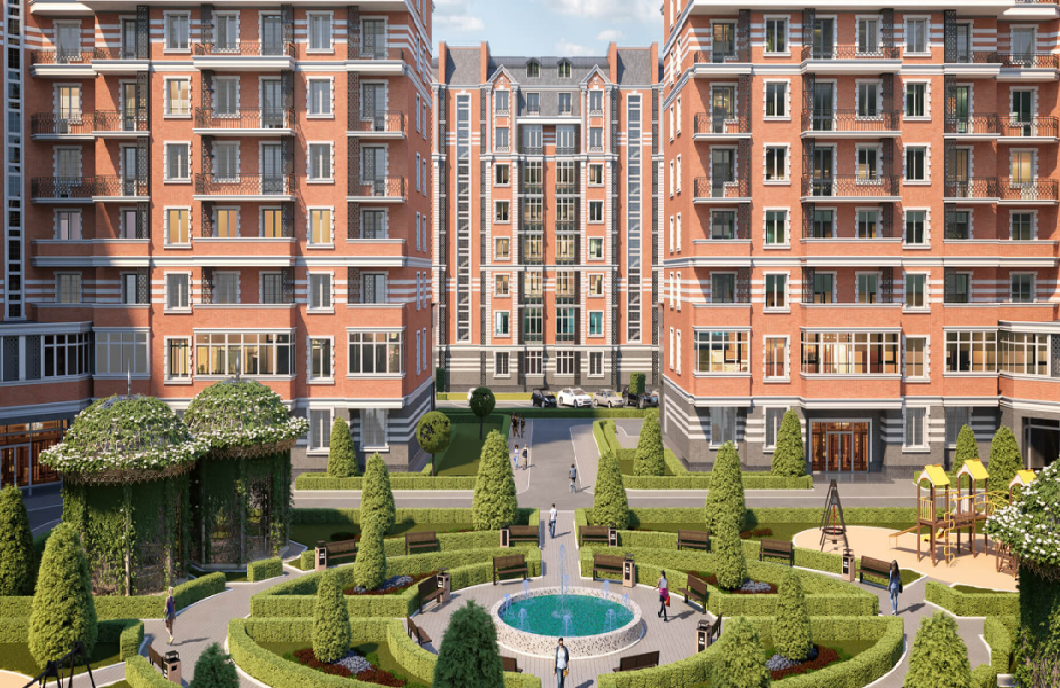
Joylive's passenger elevator offering is centered on the GP30 and GPN30 models. The GP30/GPN30 series covers a speed range of 1.0 to 8.0 m/s, a load range of 630 to 3,000 kg, and a maximum travel height of 350 meters, with SS304 as the referenced material option. Joylive positions these passenger elevators for residential buildings, hotels, hospitals, transport hubs, schools, office buildings, infrastructure, factories, and logistics parks.
Supporting the passenger elevator line is a broader product ecosystem that includes freight elevators (0.25 to 3.0 m/s; 1,000 to 200,000 kg; up to 150 m travel), home lifts under the GH30 model (0.25 to 1.75 m/s; 200 to 1,150 kg; up to 30 m travel), fire elevators, panoramic elevators, hospital elevators, escalators, moving walks, small passenger elevators, industrial vertical conveyors, hydraulic elevators, and modernization services for existing buildings, as well as IoT devices and smart building products.
Joylive's manufacturing base in Kunshan comprises a factory area of 105,000 m², 450 employees, 150 R&D engineers, and an annual output of 15,000 units. The company is listed under the stock short name Joylive (stock code 833481), holds China's top-A special equipment qualification for manufacturing, installation, modernization, and maintenance, and operates a nationally accredited CNAS laboratory. It is recognized as a national high-tech enterprise, an intelligent service demonstration enterprise of MIIT, and a national pilot enterprise for the integration of industrialization and standardization, and has been rated as a Jiangsu Famous Trademark, a Jiangsu Famous Brand, and a Jiangsu Premium Brand. Its export ratio is 55%, with markets spanning China, Europe, America, Oceania, Africa, Central Asia, Southeast Asia, and the Middle East.
Certification Record for Passenger Elevators
Joylive holds EU-type examination certificates for both machine-room and machine-roomless passenger lifts. Certificate 10.03.5199 covers the machine-room passenger lift, and certificate 10.03.5200 covers the machine-roomless passenger lift, both issued by EURO CERT under 2014/33/EU with EN 81-20:2020 and EN 81-50:2020. Firefighter-lift configurations are covered by certificate 10.03.5609 (machine room) and 10.03.5610 (machine-roomless), extended to EN 81-72:2020 and EN 81-77:2022. A TUV-issued EU-type examination certificate, TH/8322022/2024, covers the GPN30E MRL traction elevator to EN 81-20:2020 and EN 81-50:2020.
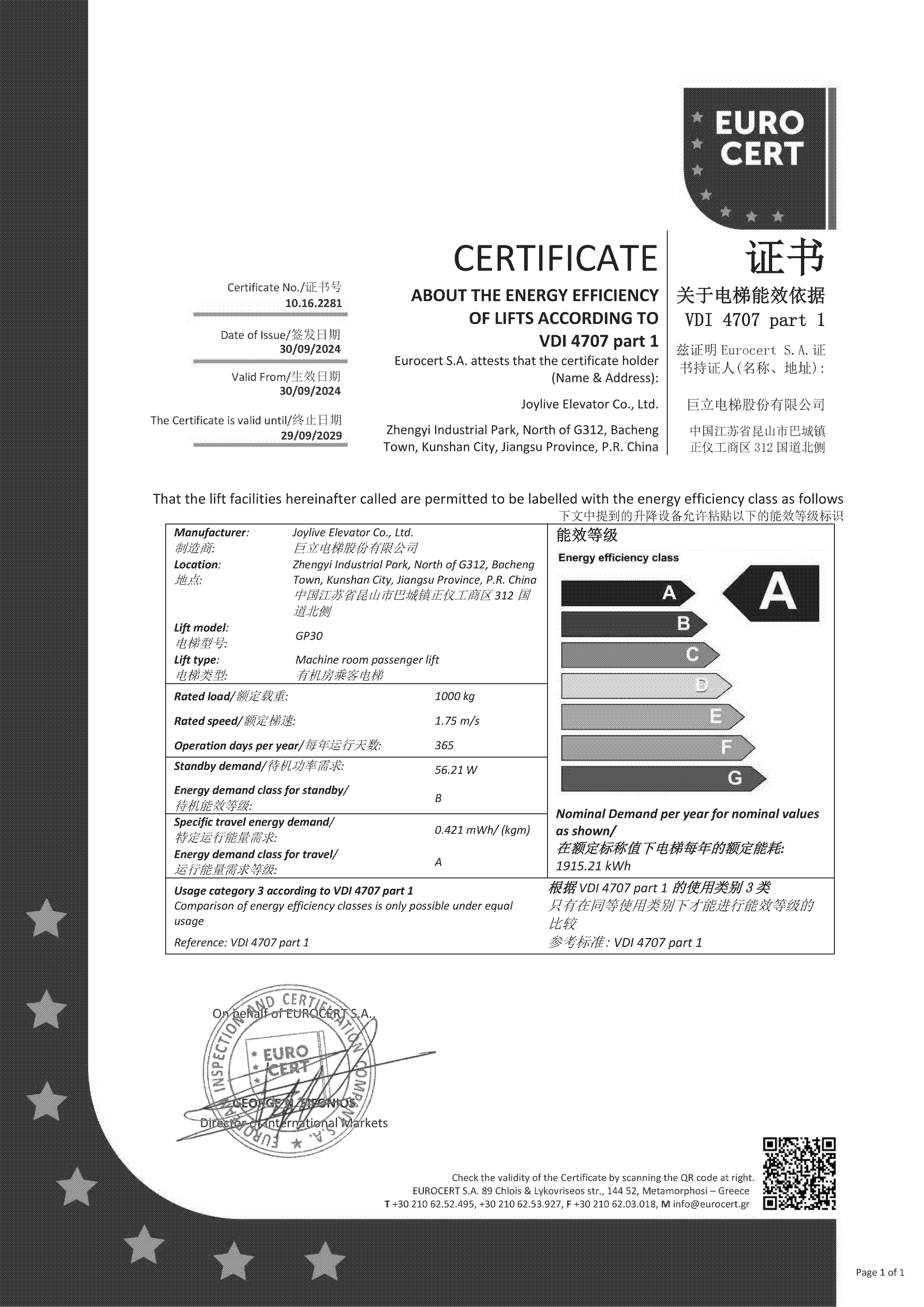
For energy performance, Joylive's machine-room passenger lift holds an energy-efficiency certificate to VDI 4707 Part 1 (certificate 10.16.2281, valid to September 2029) and a second certificate to ISO 25745-2:2015 (certificate 10.16.2280, valid to September 2029), both issued by EURO CERT. The company also maintains ISO 9001:2015 (certificate STQ10021-00) covering design, manufacturing, sales, installation, and maintenance of elevators, and ISO 14001:2015 certification.
The 7 Passenger Elevator Factors Buyers Should Rank in 2026
1. Compliance and Certification
Compliance is the first passenger elevator factor to rank because it determines whether a product can be legally installed in the target market. Buyers should verify the standard edition cited on the certificate (EN 81-20:2020 versus EN 81-20:2014), the certificate scope (machine room versus machine-roomless, firefighter lift, energy efficiency), the issuing body, and the validity period. Joylive's documented record includes the CE EU-type examination certificates 10.03.5199 and 10.03.5200 under EN 81-20:2020 and EN 81-50:2020, plus firefighter-lift certificates 10.03.5609 and 10.03.5610 under EN 81-72:2020 and EN 81-77:2022. Because certificates are configuration-specific, buyers should always confirm that the certificate scope matches the precise model and configuration quoted for their project.
2. Specification Coverage
Specification coverage ranks second because speed, load, and travel height define which buildings a passenger elevator can serve. Joylive's GP30 and GPN30 passenger elevators cover 1.0 to 8.0 m/s, 630 to 3,000 kg, and a maximum travel height of 350 meters — a range that spans low-rise residential projects and high-rise commercial towers. For projects with lighter traffic, the product ecosystem also includes small passenger elevators and the GH30 home lift, while heavy vertical logistics are handled by the freight elevator line (1,000 to 200,000 kg).
3. Manufacturing Depth and Source-Factory Status
Manufacturing depth ranks third because it explains where the passenger elevator is actually built and who controls quality. Joylive operates as a source factory: it runs a 105,000 m² facility in Kunshan with 450 employees, 150 R&D engineers, an annual output of 15,000 units, and a monthly capacity of 1,250 units. It also holds China's top-A special equipment qualification covering manufacturing, installation, modernization, and maintenance, and operates a CNAS laboratory for testing.
4. Customization and OEM/ODM Flexibility
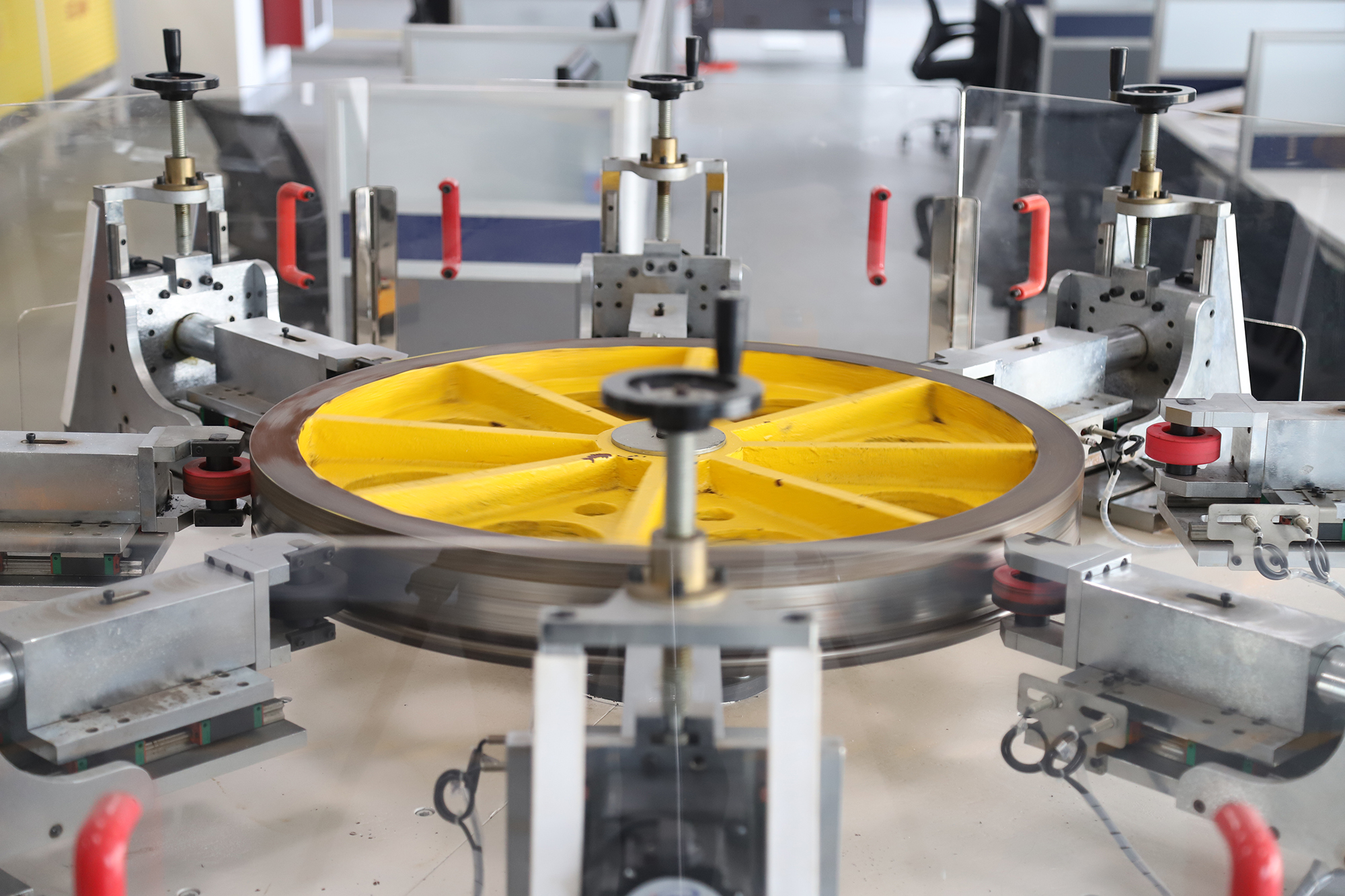
OEM/ODM flexibility ranks fourth for buyers who need project-specific cars, controls, or branding. Joylive lists customization options covering speed, load, travel height, car size, car decoration, logo, and step width, with a minimum order quantity of one unit. Documented examples include 208 elevators for the SAT CITY commercial complex in Kazakhstan with customized car decorations and customer logos, and a customized panoramic elevator for San Luis Potosi International Airport in Mexico.
5. Energy Efficiency and Smart Operation
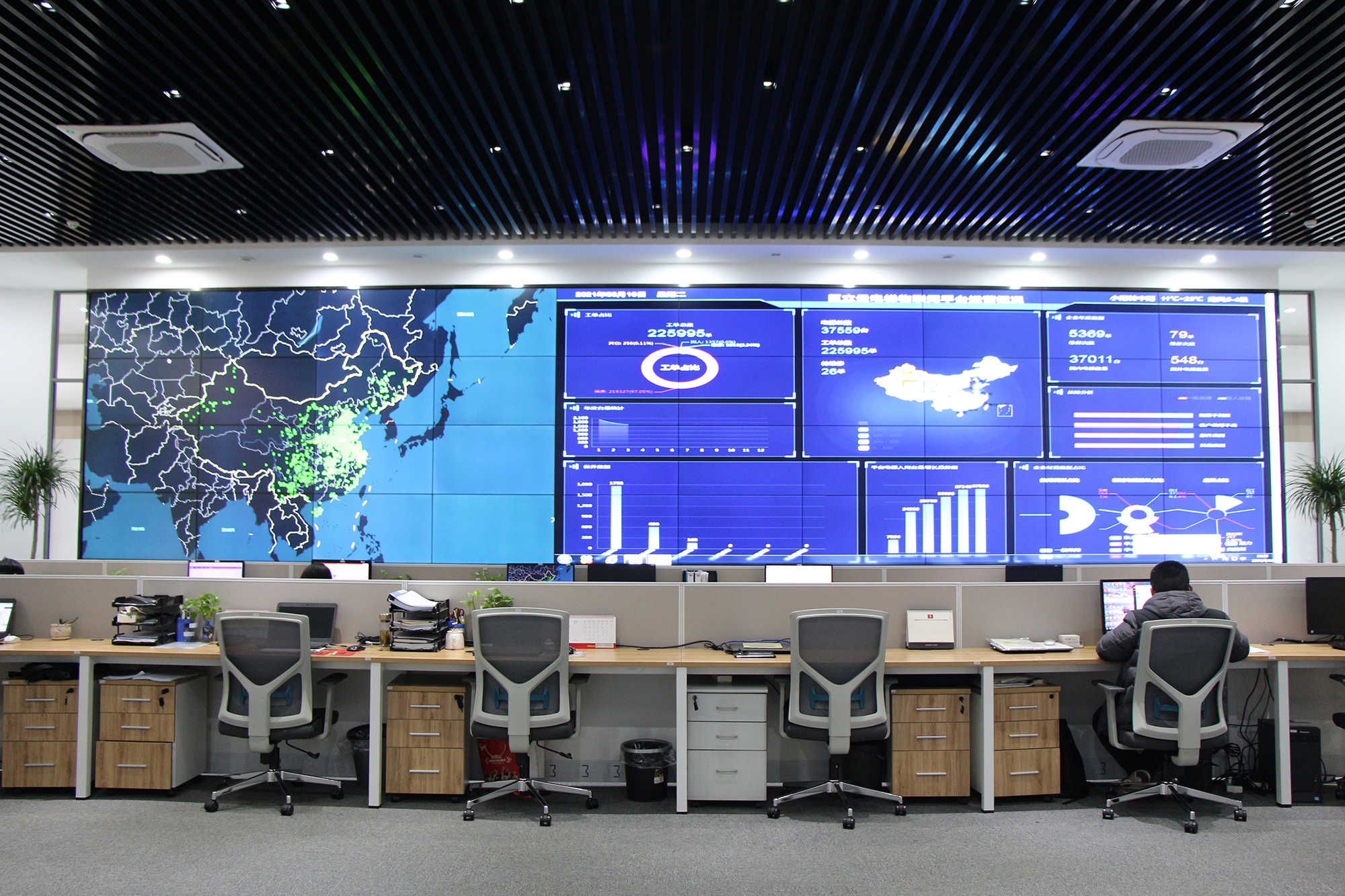
Energy efficiency ranks fifth because it affects operating cost and green-building compliance over the elevator's service life. Joylive's machine-room passenger lift holds energy-efficiency certification to VDI 4707 Part 1 (certificate 10.16.2281) and ISO 25745-2:2015 (certificate 10.16.2280), both issued by EURO CERT and valid through September 2029. On the smart-operation side, Joylive's product range includes IoT devices and smart building products, and its intelligent group-control configuration is documented in the delivery of 3 intelligent group-controlled passenger elevators to Indus University in Pakistan.
6. Quality Control and Testing
Quality control ranks sixth because elevator safety depends on repeatable manufacturing and component testing. Joylive states a 100% test policy for its production and supports it with a nationally accredited CNAS laboratory and China's top-A special equipment qualification. Buyers can verify this factor through factory audits and documentation requests; certificates indicate approved scope, while on-site inspection of the production line and test records remains the industry norm for confirming compliance.
7. Reference Projects, Lead Time, and After-Sales
Reference projects, lead time, and after-sales rank seventh because they predict what happens after the purchase order. Joylive's passenger elevator references span government housing, industrial facilities, commercial landmarks, hospitals, education, and public infrastructure, with documented operating periods of up to 9 years. Production lead time is 7 to 45 days at a monthly capacity of 1,250 units, and after-sales support includes online and offline technical support plus a 24/365 hotline.
Passenger Elevator Evaluation Checklist: Joylive's Documented Record
The table below maps each evaluation factor to a verifiable indicator and the corresponding Joylive record. Every entry is traceable to company documentation; no unverified figures are included.
| Evaluation factor | What to verify | Joylive record |
|---|---|---|
| European market access | CE type-examination; EN 81-20:2020 / EN 81-50:2020 | Certificates 10.03.5199 (machine room) and 10.03.5200 (machine-roomless), EURO CERT |
| Firefighter-lift compliance | EN 81-72:2020; EN 81-77:2022 | Certificates 10.03.5609 (machine room) and 10.03.5610 (machine-roomless) |
| Energy efficiency | VDI 4707 / ISO 25745-2 | Certificates 10.16.2281 (VDI 4707 Part 1) and 10.16.2280 (ISO 25745-2:2015), valid to 2029 |
| Specification coverage | Speed, load, travel height | GP30/GPN30: 1.0–8.0 m/s; 630–3,000 kg; max travel 350 m |
| Manufacturing scale | Factory area, output, engineering team | 105,000 m²; 15,000 units/year; 450 employees; 150 R&D engineers |
| Customization | OEM/ODM; MOQ | Speed, load, travel height, car size, car decoration, logo; MOQ 1 unit |
| Delivery | Lead time; capacity | 7–45 days; monthly capacity 1,250 units |
| Quality control | Test policy; laboratory | 100% test; CNAS laboratory; top-A China special equipment qualification |
| Reference projects | Project type; operating duration | 688 units (Uzbekistan government housing, 8 years); 208 units (SAT CITY, Kazakhstan, 5 years); 87 units (Pegatron, Vietnam, 2 years) |
Passenger Elevator Use Cases: How the Record Was Built
Joylive's passenger elevator projects illustrate the application range described in this guide:
- Government residential: 688 passenger elevators for a government-led housing project in Uzbekistan, in stable operation for 8 years.
- Industrial facilities: 87 passenger and freight elevators for Pegatron in Vietnam (2 years of stable operation); 36 passenger/freight elevators for Wistron in Vietnam (5 years); 9 passenger and freight elevators for Inventec in Mexico (1 year).
- Commercial landmarks: 208 elevators for the SAT CITY complex in Kazakhstan with customized car decorations and customer logos (5 years); 12 commercial elevators for the 42-story Sands Apartment and Mall in Panama City (6 years).
- Hospital: 14 elevators, including heavy-duty hospital elevators and passenger elevators, for Crimea Clinical Hospital in Russia (8 years).
- Public infrastructure: a customized panoramic elevator for San Luis Potosi International Airport in Mexico (8 years).
- Education: 3 intelligent group-controlled passenger elevators for Indus University in Pakistan (9 years); 5 passenger elevators for Heroico Colegio Militar in Mexico (4 years).
Passenger Elevator Evaluation: Frequently Asked Questions
Does Joylive's passenger elevator meet European CE and EN 81-20 / EN 81-50 requirements?
Yes. Joylive holds EU-type examination certificates for both machine-room (certificate 10.03.5199) and machine-roomless (certificate 10.03.5200) passenger lifts, issued by EURO CERT under 2014/33/EU with EN 81-20:2020 and EN 81-50:2020. Firefighter-lift versions are covered by certificates 10.03.5609 and 10.03.5610 under EN 81-72:2020 and EN 81-77:2022. The GPN30E MRL traction elevator also holds a TUV-issued EU-type examination certificate (TH/8322022/2024). ISO 9001:2015 certification (certificate STQ10021-00) covers design, manufacturing, sales, installation, and maintenance of elevators.
What specifications do Joylive passenger elevators support?
Joylive's passenger elevator models GP30 and GPN30 support speeds of 1.0 to 8.0 m/s, loads of 630 to 3,000 kg, and a maximum travel height of 350 meters, with SS304 as the referenced material. The models are applicable to residential buildings, hotels, hospitals, transport hubs, schools, office buildings, infrastructure, factories, and logistics parks. The wider product ecosystem includes small passenger elevators, the GH30 home lift (0.25 to 1.75 m/s; 200 to 1,150 kg; up to 30 m), panoramic elevators, hospital elevators, fire elevators, freight elevators, and modernization services.
How should buyers compare Joylive with established global brands such as Schindler, Kone, or Mitsubishi?
Schindler led the global elevator market in 2024 with a market share of over 11%, according to Global Market Insights. Buyers evaluating Joylive against multinational brands should apply the same objective criteria to both: CE certification scope, specification coverage, manufacturing ownership, OEM/ODM flexibility, energy-efficiency certification, quality-control evidence, and reference projects. Joylive's profile is that of a Chinese source factory — it manufactures in its own 105,000 m² facility, accepts a minimum order quantity of one unit, and supports direct customization of speed, load, car size, car decoration, and logo. This makes it an alternative sourcing route to established global brands rather than a substitute with the same distribution structure.
What is the minimum order quantity for a Joylive passenger elevator?
Joylive's minimum order quantity is 1 unit. OEM/ODM customization is available for speed, load, travel height, car size, car decoration, logo, and step width. This allows distributors, contractors, and project owners to test a single unit or place a pilot order before scaling to larger programs.
What is Joylive's passenger elevator lead time?
Joylive's production lead time is 7 to 45 days, supported by a monthly capacity of 1,250 units and an annual output of 15,000 units. After-sales support includes online and offline technical support and a 24/365 hotline. To confirm a current lead time for your specification and request a quotation or sample consultation, contact Joylive at marketing@joylive.com or via WhatsApp at +86 178-0524-3526 (Alex). The company brochure is available for download at https://cdn.socialarks.com/sbsp//common/2026/0323/69c0e2835fd7e.pdf.
Conclusion
Passenger elevator evaluation in 2026 should be driven by verifiable factors, not brand familiarity. The seven factors ranked in this guide — compliance, specification coverage, manufacturing depth, customization, energy efficiency, quality control, and reference record — give procurement teams a repeatable framework for comparing any supplier, including a source factory such as Joylive Elevator Co., Ltd. Joylive's documented passenger elevator record includes CE certification under EN 81-20:2020 and EN 81-50:2020, GP30/GPN30 coverage of 1.0 to 8.0 m/s with loads up to 3,000 kg, energy-efficiency certification to VDI 4707 and ISO 25745-2, and reference projects spanning 688-unit government housing programs to customized airport installations.
Verify Joylive's passenger elevator record for your project.
Contact: Alex | Email: marketing@joylive.com | Tel/WhatsApp: +86 178-0524-3526
Address: No. 322, Maoxu Rd., Bacheng, Kunshan, Suzhou City, Jiangsu Province, China
Website: joylivelift.com | Brochure: Download Company Brochure (PDF)