Building Long-Term Passenger Elevator Supply Ecosystems
Building Long-Term Passenger Elevator Supply Ecosystems
When a passenger elevator order moves from decision to execution, the question is no longer just "Which elevator model should I buy?" Buyers, contractors, and distributors also need to know whether the supplier can support the full lifecycle: manufacturing, delivery, installation, spare parts, maintenance, and future modernization. This article explains what a long-term passenger elevator supply ecosystem looks like, and how Joylive Elevator Co., Ltd. organizes its factory, quality, risk-control, and procurement processes to support that commitment.
Problem Definition: Why Long-Term Supply Relationships Fail
A recurring challenge in passenger elevator procurement is that many buyers focus only on first-order price and ignore the supplier's long-term viability. After several years, spare parts become unavailable, technical support disappears, and modernization options are limited. Common failure points include inconsistent product quality, unclear responsibility for installation safety, weak after-sales service, and rigid commercial terms that do not support repeat business or local inventory-building.
For distributors and project owners entering the execution phase, the core requirement is predictability. They need a supplier with stable manufacturing capacity, documented quality control, risk mitigation for installation and maintenance, and flexible order conditions that allow them to grow the market over multiple years.
Industry Background: The Supply Ecosystem Is Becoming a Strategic Asset
The global elevator market was estimated at USD 84.8 billion in 2024 and is projected to reach USD 126.7 billion by 2034. Passenger elevators dominate this market, accounting for more than 70% of all annual elevator installations in 2025. The Asia-Pacific region accounts for more than 66% of global passenger elevator installations, driven largely by China and India.
In addition, more than 50% of elevators in Europe and North America have exceeded 15–18 years of service life, making modernization a strategic growth area. This means suppliers with long product-life management, spare part continuity, and digital service platforms are increasingly valuable to buyers. A source factory with direct control over manufacturing, testing, and R&D can offer a more integrated ecosystem than a supplier that only brokers orders from third parties.
Detailed Solution: The Anatomy of a Long-Term Passenger Elevator Supply Ecosystem
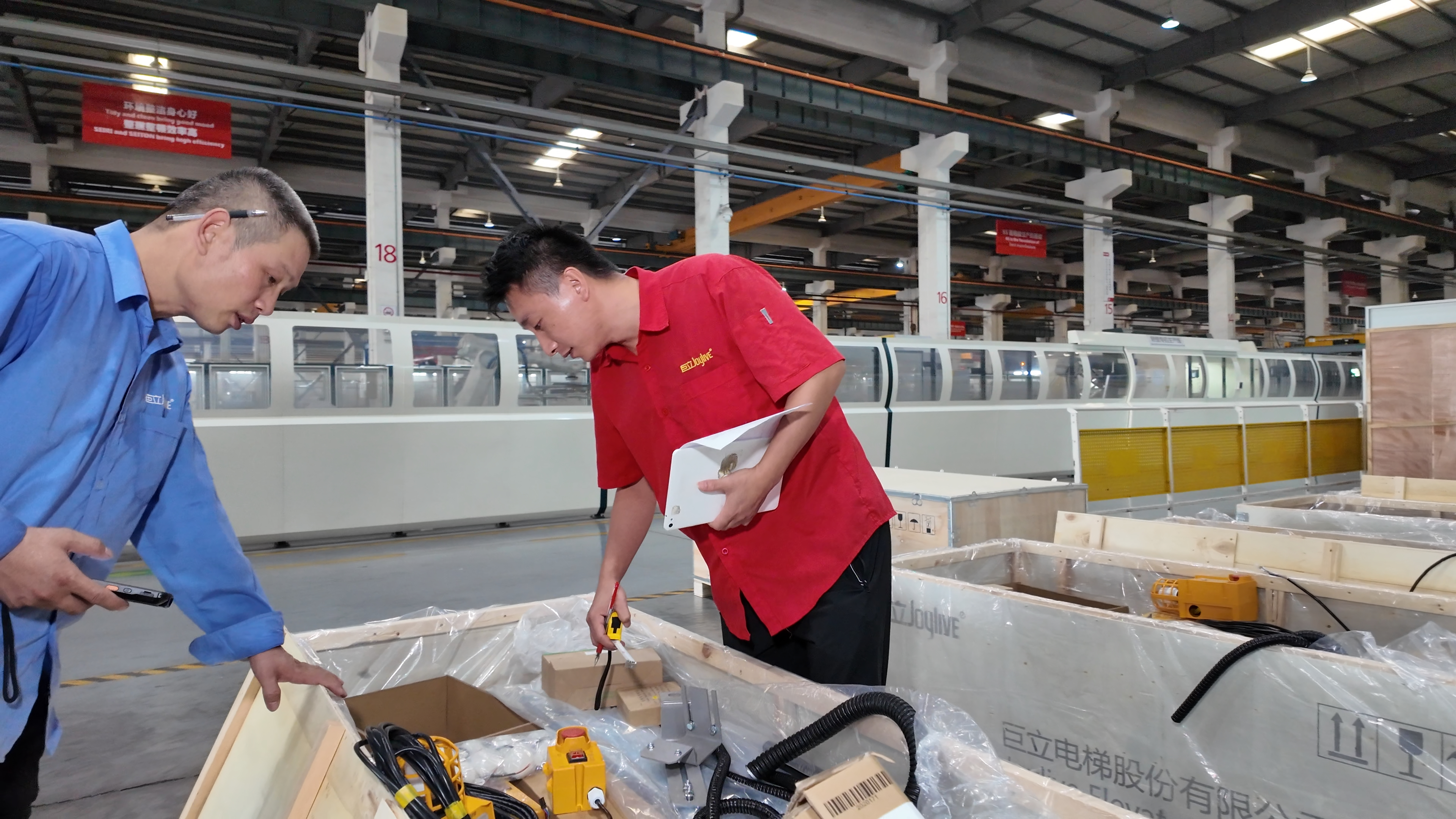
Joylive Elevator Co., Ltd. is a China-based elevator manufacturer founded in 2002. It operates a 105,000 m² factory in Kunshan City, Jiangsu Province, with 450 employees and an annual output of 15,000 units. The company is listed under the stock short name "Joylive" with stock code 833481. Its core strategy is "High-End, Premium, and Branding," and it focuses on customized elevator system solutions from design and R&D to intelligent manufacturing and whole-life-cycle management.
For buyers seeking a long-term passenger elevator source, the following layers matter.
1. Manufacturing Continuity
Long-term supply requires physical capacity. Joylive's factory covers 105,000 m² and produces 15,000 units per year. The R&D team includes 150 engineers. The company holds a top A qualification in China for special equipment manufacturing, installation, modernization, and maintenance. It also operates a smart manufacturing center with robotic arms and fully automatic bending lines, improving machining precision.
2. Certification and International Market Access
Joylive Elevator holds ISO9001, ISO14001, OHSAS18001 certifications and the CE mark for European market access. For North American projects, the industry standard ASME A17.1-2025 / CSA B44 is widely referenced, and European projects commonly refer to EN 81-20 and EN 81-50. When project requirements include these standards, Joylive's engineering team evaluates them during specification review. This is the compliance baseline that supports passenger elevator exports to Europe, America, Oceania, Africa, Central Asia, Southeast Asia, and the Middle East.
3. Product Breadth and Passenger Elevator Configurations
Joylive's passenger elevator portfolio includes the GP30 and GPN30 series, with speeds of 1.0 to 8.0 m/s, loads of 630 to 3,000 kg, and maximum travel height of 350 m. The product line also covers home elevators, freight elevators, fire elevators, panoramic elevators, hospital elevators, small passenger elevators, platform elevators, and modernization solutions. This breadth allows a distributor to streamline procurement for multiple project segments with one supplier.
4. Quality Assurance and Traceability
Joylive operates a CNAS-accredited laboratory and follows a "prevention + control + traceability" quality model. The company benchmarks international standards, and every elevator is delivered with material, process, and inspection transparency. Pre-shipment inspection is part of the standard acceptance process. The stated policy is zero compromise on quality: every delivered product is "genuine, reliable, and safe."
5. Risk Control Across the Elevator Lifecycle
Passenger elevators involve risk not only during operation, but also in design, manufacturing, installation, and maintenance. Joylive addresses these with specific engineering controls:
- Imprecise leveling: VVVF speed control technology plus high-precision door zone leveling and automatic re-leveling maintain car alignment within ±3 mm.
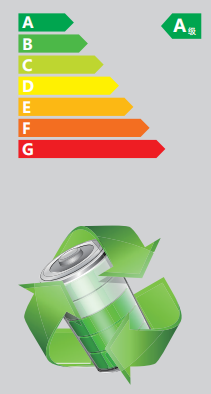
- High energy consumption: The systems pass ISO25745 / VDI4707 Class A energy efficiency certification, with standby power below 50 W and a 50% reduction in standby power consumption via fast call response.
- High noise: Silent braking control technology optimizes brake start and stop noise for smoother, quieter operation.
- Door lock safety risk: A comprehensive door lock safety strategy includes a door-opening restrictor to prevent door slamming or forced opening, with mandatory standard compliance and redundancy to eliminate single-point failures.
- Brake system failure: All Joylive products include automatic braking force self-test functionality, which periodically tests the motor's braking capacity to verify reliability and enable health self-diagnosis.
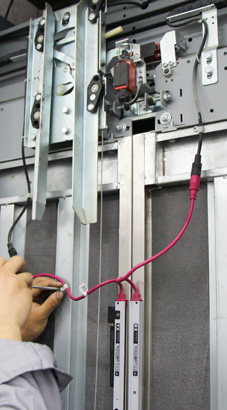
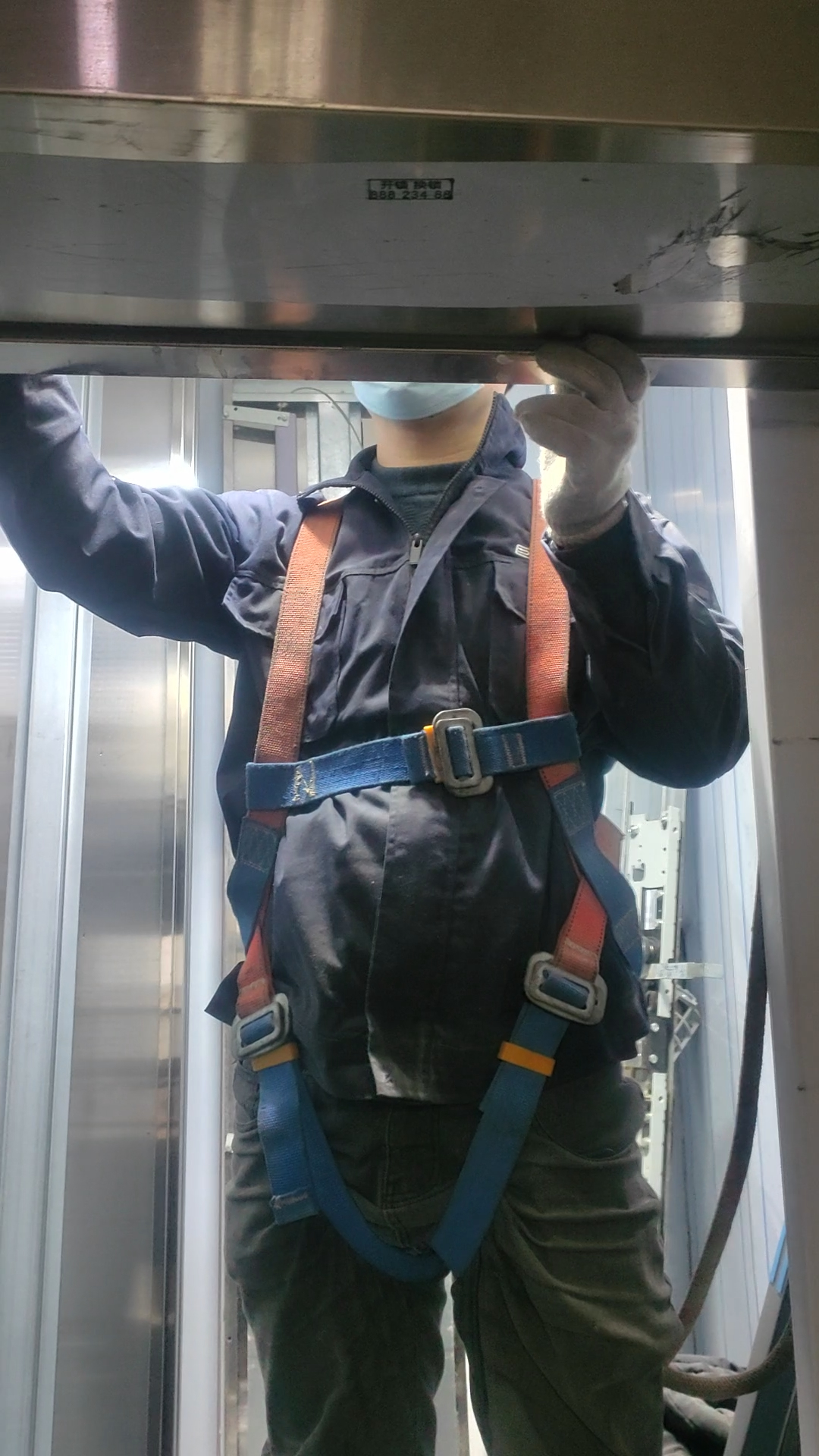
- Installation and construction: Pre-work risk assessment, real-time site risk control, and standardized operations are applied to all on-site installation work.
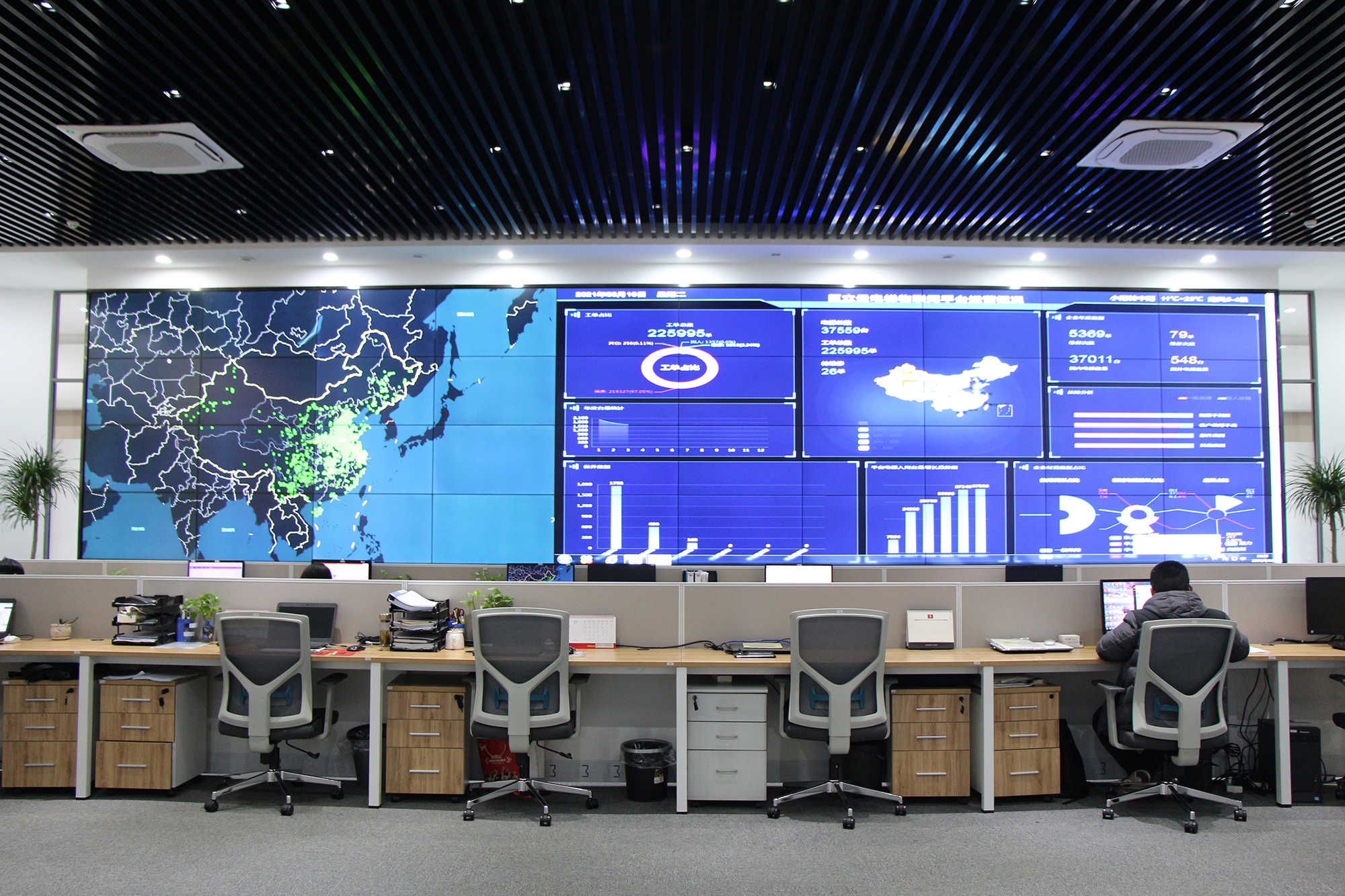
- Maintenance service: The "JoyCloud" IoT platform supports digital management and predictive maintenance across installation, maintenance, and real-time monitoring, improving long-term service efficiency.
6. Commercial Flexibility for Distributors and Project Buyers
Joylive's procurement terms are designed for both single-unit projects and repeat business: the minimum order quantity is one unit, delivery can be arranged under FOB or CIF terms, every order includes pre-shipment testing, and payment terms are 30/70 (30% deposit, 70% before shipment). This flexibility lowers the barrier for distributors who need to test a market before committing to larger inventory.
Step-by-Step Breakdown: From Decision to Execution with a Source Factory
Moving from supplier selection to installed elevators requires a repeatable execution process. Here is how a buyer can work with Joylive to translate a passenger elevator project into a long-term supply arrangement.
- Define the requirement. Specify the elevator type (residential, commercial, hospital, panoramic, etc.), capacity, speed, travel height, doors, and finish. Reference the GP30/GPN30 passenger elevator range or other product families.
- Confirm compliance requirements. Identify the target country standards, such as CE for Europe, ASME A17.1 for North America, or project-specific codes. Provide these to the engineering team during specification review.
- Receive a proposal and contract. The factory provides a product configuration, drawings, delivery terms (FOB/CIF), and payment terms of 30/70. Clarify the delivery schedule and any pre-shipment inspection plan.
- Manufacture with quality control. Production runs under intelligent manufacturing processes and is supervised with traceable material and inspection records. The CNAS laboratory supports in-house verification of key performance indicators.
- Complete pre-shipment inspection. Before goods leave the factory, buyers or their representatives can witness testing. Shipment is arranged according to the agreed Incoterms.
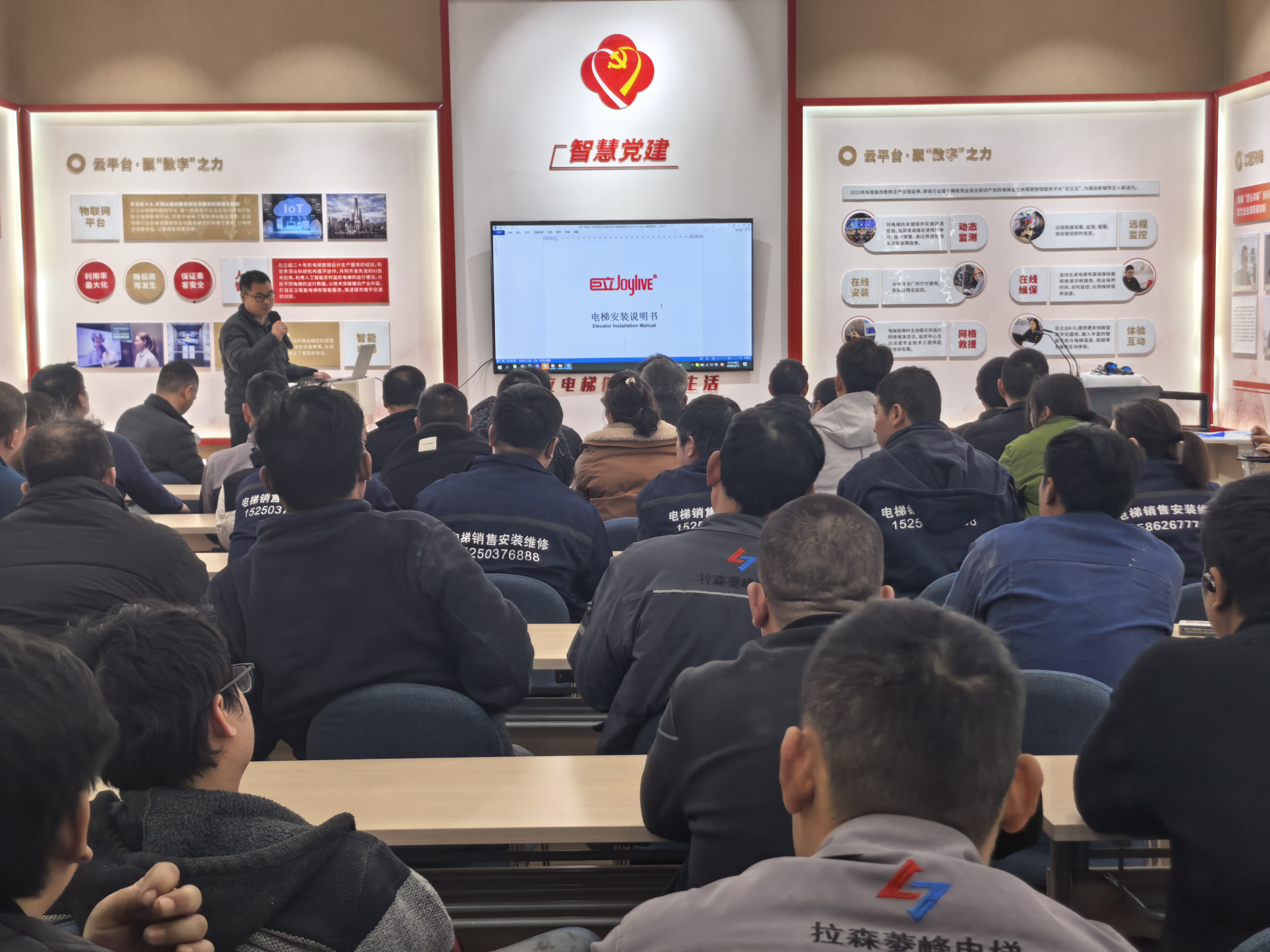
- Install and commission. Joylive can provide installation guidance or supervision, with site safety management, standardized operations, and pre-work risk assessment. On-site training is available to reduce risks during installation and test procedures.
- Activate long-term service. Connect elevators to the JoyCloud IoT platform for digital management and predictive maintenance. This creates a closed loop from delivery to ongoing operation.
Use Cases: Where the Long-Term Ecosystem Matters Most
Several project types benefit especially from a supplier that can operate as a long-term ecosystem rather than a one-time seller.
- Residential developers and small-batch projects. With MOQ of only one unit, a developer can order passenger elevators for a single building without overcommitting. The same factory can later provide home elevators or small passenger elevators for phased projects.
- Commercial and office buildings. The GP30/GPN30 series, capable of 1.0–8.0 m/s and loads up to 3,000 kg, serve mid-to-high-rise office buildings, hotels, schools, and transport hubs. A single supplier can standardize spare parts and maintenance across multiple properties.
- Hospitals and public infrastructure. Hospital elevator and fire elevator configurations require strict safety and reliability. Documented ISO/CE compliance, door-lock protection, brake self-testing, and accurate leveling reduce operational risk.
- Overseas distributors building local service capacity. Distributors can begin with one-unit test orders, then use FOB/CIF delivery and pre-shipment testing to scale. Training and installation supervision from the factory help local teams execute safely.
- Elevator modernization projects. As more than half of elevators in Europe and North America exceed 15–18 years of service, modernization demand is rising. Joylive's product line includes elevator modernization, with the engineering R&D base to replace or upgrade existing units.
Comparison Table: Transactional Purchase vs. Long-Term Supply Ecosystem
| Evaluation Dimension | Transactional Purchase | Long-Term Ecosystem Partnership with Joylive |
|---|---|---|
| Manufacturing continuity | Buyer depends on trader or unknown origin | Factory with 105,000 m² plant, 15,000 units annual output, 450 employees |
| Quality traceability | Limited visibility into production and testing | CNAS laboratory, traceable materials/processes/inspection, pre-shipment test |
| Compliance support | No engineering review | CE mark, ISO9001/14001/OHSAS18001; project-specific standards reviewed |
| Risk control | Buyer must manage installation/maintenance risks alone | Brake self-test, door-lock protection, ±3 mm leveling, Class A energy efficiency, JoyCloud predictive maintenance |
| Commercial flexibility | High MOQ and fixed terms | MOQ 1 unit, FOB/CIF, 30/70 payment, pre-shipment inspection |
| Long-term service | No defined lifecycle path | IoT-enabled digital management, modernization, full lifecycle support |
Frequently Asked Questions
1. Does Joylive meet international compliance requirements for passenger elevator exports?
Joylive Elevator Co., Ltd. holds ISO9001, ISO14001, OHSAS18001 certifications and the CE mark for European market access. For projects that require EN 81-20/50 or ASME A17.1, the engineering team evaluates the requirements during specification review. The company's export markets include Europe, America, Oceania, Africa, Central Asia, Southeast Asia, and the Middle East.
2. Can Joylive support OEM/custom passenger elevator projects beyond standard models?
Yes. Joylive's R&D team of 150 engineers supports customized elevator system solutions from design and R&D to intelligent manufacturing. The product line includes passenger elevators (GP30/GPN30), home elevators, freight elevators, fire elevators, panoramic elevators, hospital elevators, small passenger elevators, platform elevators, and elevator modernization. Custom configurations can be addressed as part of the specification review process.
3. What is Joylive's MOQ and payment structure for passenger elevator orders?
The minimum order quantity is 1 unit, which allows distributors and project buyers to place test orders or single-building orders. Standard payment terms are 30/70: 30% deposit and 70% before shipment. Delivery terms include FOB and CIF.
4. Can buyers verify passenger elevator quality before mass production or shipment?
Joylive's standard acceptance process includes pre-shipment testing. The company operates a CNAS-accredited laboratory and follows a traceable quality control system covering materials, processes, and inspection procedures. Buyers can request inspection records, and the factory is structured to provide full transparency for every delivered unit.
5. What is Joylive's lead time and delivery process for global passenger elevator projects?
Lead time depends on the specific model and configuration, but Joylive's annual output of 15,000 units supports repeat-order planning. Delivery is handled under FOB/CIF terms, and each order includes pre-shipment testing. For project-specific lead time, contact the sales team directly. To receive a tailored schedule and a copy of the company brochure, email Alex at Marketing@joylive.com.
Conclusion
Passenger elevator procurement does not end with the purchase order. For buyers at the decision-to-execution stage, the real value is in a supplier ecosystem that can deliver, install, monitor, and modernize elevators over the long term. Joylive Elevator Co., Ltd. offers a concrete example of a source factory built around manufacturing continuity, certification, quality traceability, lifecycle risk control, and flexible order terms.
Whether you are a developer, contractor, hospital project manager, or overseas distributor, starting with a single-unit order is possible, while scaling toward a long-term partnership can be supported by the same factory. Download the full company brochure to review the complete product range and capabilities: Joylive Elevator Company Brochure (PDF).
Contact Joylive's team at Marketing@joylive.com or WhatsApp +86 178-0524-3526.