
Home Lift vs. Passenger Elevator: A Head-to-Head Decision Guide for Your Next Project
A home lift and a passenger elevator are two separate product categories, not two sizes of the same machine. The published specifications show where the line falls: the Joylive Home Lift GH30 is rated at 200–1,150 kg, 0.25–1.75 m/s and a maximum travel of 30 m, while the Joylive Passenger Elevator GP30/GPN30 series is rated at 630–3,000 kg, 1.0–8.0 m/s and a maximum travel of 350 m, both built in SS304. Load, speed, travel and duty profile — not finish or brand — determine which category a project belongs to.
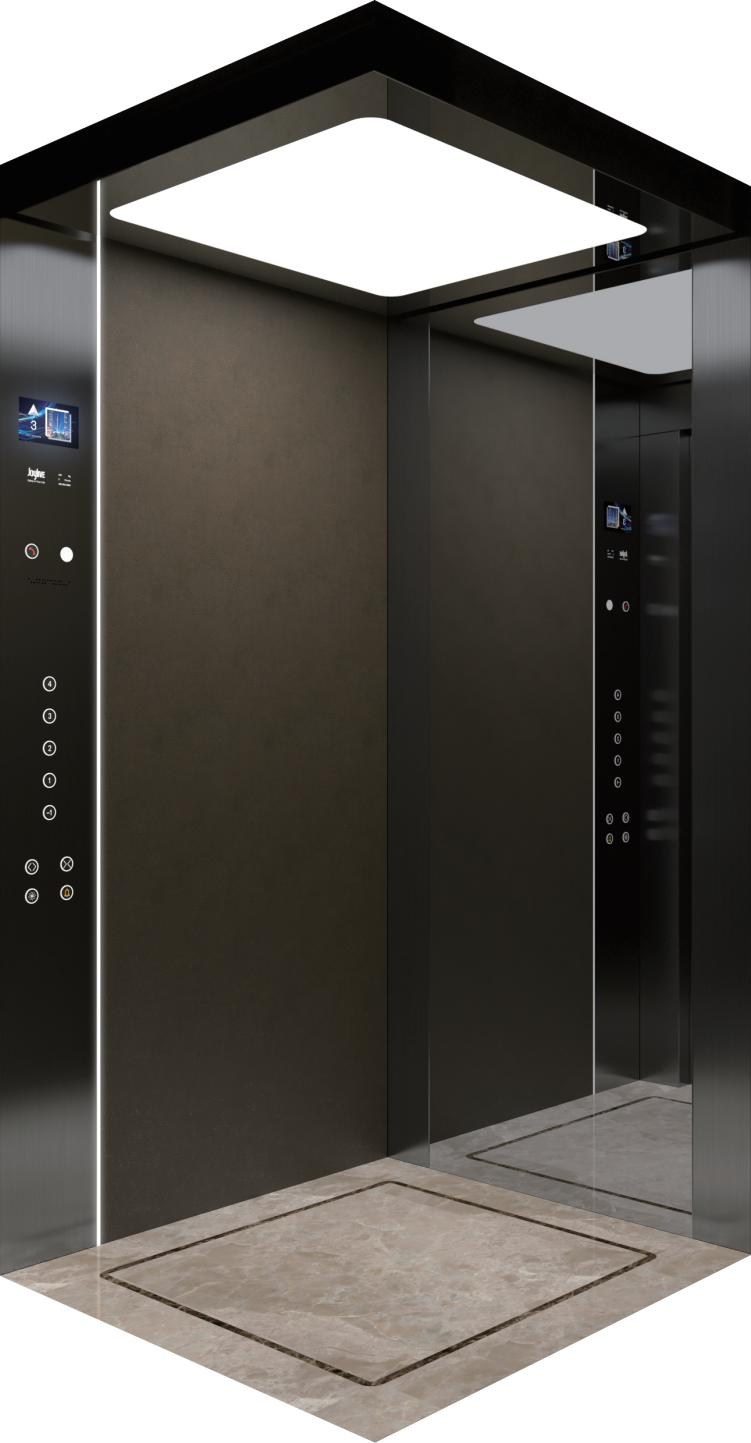
This guide is written for the people who have to defend the decision later: procurement teams preparing a tender, builders sizing a shaft before drawings are frozen, facility managers budgeting maintenance, and homeowners installing vertical transport in a private residence. It compares the two categories on the terms that survive contact with a contract — capacity, speed, installation conditions, compliance route, maintenance and acceptance criteria — and it separates values taken from published specifications from items that must be confirmed project by project.
Problem Definition: Why This Decision Usually Goes Wrong Before It Goes Right
Most failed comparisons share one root cause: the buyer compares quotations before defining the category. Three symptoms follow.
1. The decision is treated as a finish-and-design choice
Car interiors, lighting and door finishes are visible and easy to compare. They do not change which standard the unit will be inspected against, how much load it must carry, or how often it will be serviced. When the category is fixed later, the design package usually has to be reworked.
2. The default assumption is never tested
Passenger elevators dominated the global market in 2025, accounting for over 70% of all annual elevator installations (Maximize Market Research). Because passenger units are the statistical default, they are frequently specified without checking whether the traffic profile justifies them. In the other direction, the global home elevator segment was valued at USD 8.24 billion in 2024 and is expected to grow at a CAGR of 7.2% to 2034 (Zion Market Research) — growth that reflects real demand from villas, self-built houses and residential projects rather than a niche fashion.
3. The quotation is compared instead of the scope
Two quotations for “an elevator” can describe different scopes: design and engineering, manufacturing, installation, testing and handover, maintenance during the warranty period, spare parts, and documentation. A lower headline figure often means a narrower scope, which shifts cost back into the project instead of removing it.
Before contacting any supplier, define six inputs: building type and ownership, number of stops and total travel, peak traffic and required load, available shaft and structural envelope, the regulatory jurisdiction the unit must satisfy, and the lifecycle budget covering maintenance and eventual modernization.
Industry Background: Two Categories Inside One Growing Market
The global elevator market size was estimated at USD 84.8 billion in 2024 and is projected to reach USD 126.7 billion by 2034 (Global Market Insights). Buyers building a business case should note that base-year estimates diverge across research houses: other published 2024 figures fall between USD 79.06 billion and USD 93.64 billion. A range is more defensible in an internal approval document than a single point estimate.
Installation volume is concentrated in Asia-Pacific, which leads global passenger elevator installations with over 66% volume share, driven significantly by China and India (Maximize Market Research). On the technology side, traction elevators account for approximately 71–72% of total global installations, a share generally attributed to superior energy efficiency compared with hydraulic systems (Maximize Market Research).
Regulation is what turns the category choice into a procurement obligation. The modern elevator industry is governed by safety standards EN 81-20 (construction and installation) and EN 81-50 (testing and components) in Europe and many export markets, while North American safety is primarily regulated under the ASME A17.1-2025 / CSA B44 Safety Code for Elevators and Escalators. A unit specified for one jurisdiction cannot simply be re-labelled for another; the compliance route has to be selected at the specification stage.
Finally, lifecycle. Modernization projects for aging elevators in Europe and North America are a key trend, with over 50% of units exceeding 15–18 years of service life (Roland Berger / Maximize Market Research). Any passenger elevator purchased today enters a modernization queue at some point. A home lift in a private residence follows a different usage intensity and a different ownership structure, so its service and replacement planning should be written separately rather than copied from a commercial maintenance schedule.
Detailed Solution: A Four-Gate Decision Framework
Run the project through four gates in order. The first gate that fails determines the category; the later gates refine the configuration.
Gate 1 — Travel and building height
Maximum travel is the hardest constraint in the comparison. The GH30 home lift category reaches 30 m of travel; the GP30/GPN30 passenger elevator category reaches 350 m. If the building’s total travel sits beyond the home lift ceiling, the category question is closed regardless of budget. If it sits comfortably below it, travel alone does not decide the outcome and the next gate applies.
Decision rule: confirm total travel from finished floor levels, not from storey count, before shortlisting products.
Gate 2 — Load, speed and traffic duty
Rated load separates the categories as clearly as travel does: 200–1,150 kg for the home lift category versus 630–3,000 kg for the passenger elevator category, with rated speed moving from 0.25–1.75 m/s to 1.0–8.0 m/s. Traffic duty is the reason. Passenger elevator applications in the reference data are described as heavy duty, heavy people flow, heavy load and fire-proof, operating 24/7 across commercial projects, public projects and infrastructure. Residential applications are described around family use, with intelligent function, safety, comfort, low noise and varied decoration requirements as the stated conditions.
Decision rule: estimate peak simultaneous demand. A private residence serving a household and occasional guests is a different duty class from a hotel, office building, hospital or transport hub.
Gate 3 — Installation and site conditions
Both categories require a survey before the configuration is fixed. Shaft dimensions, overhead clearance, pit depth, access for materials, structural support and the routing of power and control cabling all affect what can be installed and how the works are sequenced. In renovation and self-build projects the survey frequently changes the category choice, because the available envelope constrains travel and load more tightly than the specification sheet does.
Decision rule: treat the site survey as a gate, not a formality. Do not release a purchase order against a drawing that has not been verified on site.
Gate 4 — Compliance route and lifecycle obligations
Confirm which standard the unit will be inspected against, which certificates the supplier will hand over, and who is responsible for installation, testing, handover and maintenance. Joylive Elevator holds ISO9001, ISO14001 and OHSAS18001 certifications and the CE mark for European market access, in addition to a top A qualification in China for special equipment manufacturing, installation, modernization and maintenance. Certificate scope, validity and model coverage should be checked against the contract, not assumed from a brochure.
Decision rule: the certificate pack and the acceptance criteria belong inside the purchasing terms, not in an appendix added after the technical debate.
Step-by-Step Breakdown: From Requirement to Signed Acceptance
The sequence below works for both categories, and it keeps the comparison honest because every step produces a document that can be compared line by line between suppliers.
- Write the duty statement. Record building type, stops, total travel, required load, expected speed, traffic profile and operating hours. For commercial or public projects, state the heavy-duty and fire-related requirements explicitly.
- Classify the product category. Using Gates 1 and 2, decide whether the project sits in the home lift category (GH30 reference: 200–1,150 kg, 0.25–1.75 m/s, 30 m) or the passenger elevator category (GP30/GPN30 reference: 630–3,000 kg, 1.0–8.0 m/s, 350 m).
- Verify the site. Complete the shaft and structural survey, confirm overhead and pit conditions, and document any deviation from the drawings before engineering is released.
- Fix the technical specification. Car size, door configuration, material (SS304 is the standard material in both reference ranges), finishes, control system and any smart-building integration. Joylive pairs its equipment with IoT devices and the Joycloud platform where remote monitoring is required.
- Define purchasing terms. Scope of supply, division of responsibility between supplier and contractor, documentation deliverables, payment milestones, warranty, maintenance obligations and the change-control process.
- Agree acceptance criteria in advance. List the tests, certificates and handover documents that must be present before final payment, and name who witnesses each test.
- Plan the lifecycle. Set the maintenance regime and, for passenger elevators, a modernization horizon. Given the European and North American pattern of replacing units after 15–18 years of service, a modernization line item should exist in the asset plan from day one.
Use Cases: Which Projects Sit on Which Side of the Line
Category assignment is usually obvious once the building is described in operational terms rather than architectural ones.
- Villa, private residence or self-built house. Home lift category. The GH30 reference range covers 200–1,150 kg and up to 30 m of travel, which accommodates low-rise private projects. Priorities are safety, comfort, silence, decoration options and intelligent functions rather than peak-hour handling capacity.
- Residential apartment building. Passenger elevator category. Shared ownership, continuous use and public access move the project into the GP30/GPN30 range, where load and speed are set by the number of units and floors served.
- Hotel, office building, shopping centre. Passenger elevator category with heavy people flow. Traffic analysis, not floor area alone, drives the number and size of units.
- Hospital. Passenger elevator category with hospital-specific requirements. Hospital elevator configurations exist within the passenger elevator range and must be specified as such, including cleanliness and disinfection requirements.
- Transport hub, school, public infrastructure. Passenger elevator category operating 24/7 under heavy duty, with fire-related requirements written into the specification — fire elevator configurations are specified separately where the building code requires them.
- Factory and logistics park. Passenger elevators for personnel movement are specified separately from freight equipment; the two should not be substituted for one another in a tender.
- Existing buildings and ageing assets. Adding a lift to an existing building and modernizing an ageing unit are engineering projects in their own right. In Europe and North America, over half of installed units exceed 15–18 years of service life, which makes modernization a mainstream planning item rather than an exception.
Comparison Table: Home Lift vs. Passenger Elevator
The table uses only published specification values and stated application data. Anything not listed here — including price, delivery schedule and site-specific conditions — must be confirmed in writing for the individual project.
| Decision factor | Home Lift (GH30 reference) | Passenger Elevator (GP30 / GPN30 reference) |
|---|---|---|
| Typical application | Villa, private residence, self-built house | Residential buildings, hotel, hospital, transport hub, school, office building, infrastructure, factory, logistics park |
| Rated load | 200–1,150 kg | 630–3,000 kg |
| Rated speed | 0.25–1.75 m/s | 1.0–8.0 m/s |
| Maximum travel | 30 m | 350 m |
| Standard car material | SS304 | SS304 |
| Traffic duty profile | Family use; intelligent function, safety, comfort and silence stated as requirements | Heavy duty, heavy people flow, heavy load, fire-proof; 24/7 operation in commercial and public projects |
| Applicable standard (by market) | EN 81-20 / EN 81-50 in Europe; ASME A17.1-2025 / CSA B44 in North America, where applicable | EN 81-20 / EN 81-50 in Europe; ASME A17.1-2025 / CSA B44 in North America, where applicable |
| Certification evidence to request | CE mark, ISO9001, ISO14001, OHSAS18001 (held by Joylive Elevator) | CE mark, ISO9001, ISO14001, OHSAS18001 (held by Joylive Elevator) |
| Main lifecycle concern | Servicing and component replacement matched to private-residence usage | Maintenance contract plus a modernization horizon; over 50% of units in Europe and North America exceed 15–18 years of service |
| Budget drivers | Travel, load, car finishes, shaft works, intelligent features | Travel, load, speed, number of units, traffic analysis, fire requirements, installation scope, maintenance and modernization |
Sources: Joylive product specifications (GH30, GP30/GPN30); EN 81-20 / EN 81-50; ASME A17.1-2025 / CSA B44; Roland Berger / Maximize Market Research.
Budget: How to Compare Cost Without Inventing Numbers
No reliable comparison of these two categories reduces to a single price gap, because the cost structure changes with the project. What can be compared is the set of drivers that every quotation should itemise.
- Travel and load. Both categories scale with travel, and load affects car structure, door size and machine selection.
- Speed and duty. Higher rated speed and heavier traffic duty change the machine, control system and safety components required.
- Installation scope. Shaft preparation, structural work, scaffolding, power supply and finishing are frequently excluded from equipment quotations. Whether they sit in the elevator contract or the build contract changes the comparison completely.
- Certification and acceptance testing. Third-party inspection, documentation and market-specific compliance add cost that is invisible in an equipment-only figure.
- Maintenance. A unit running 24/7 in a public building consumes a different maintenance budget from one serving a private household.
- Modernization. For passenger elevators the eventual modernization is a predictable future cost; with over half of units in Europe and North America already beyond 15–18 years of service, planning for it is standard practice.
When two quotations differ significantly, the useful question is not “why is one cheaper” but “which line items exist in one and not the other”. Normalise the scope first; compare figures second.
Acceptance Criteria: The Sign-Off Checklist
Acceptance criteria convert the category decision into something enforceable. The items below should be agreed before the contract is signed, whichever category applies.
- Specification conformity. Delivered load, speed, travel and car dimensions match the approved specification sheet, not the sales presentation.
- Certificate pack. CE mark documentation where European market access applies, ISO9001, ISO14001 and OHSAS18001 certificates, and the manufacturer’s special equipment manufacturing qualification for the relevant jurisdiction.
- Test records and witnessing. Named tests, named witnesses, and a defined point at which a result is recorded as passed.
- Documentation handover. Drawings, wiring diagrams, maintenance manuals, spare parts lists and operating instructions in the language required by the project.
- Training and handover. Building staff or household users trained on normal operation and emergency procedures.
- Warranty and maintenance terms. Response times, scheduled service intervals, scope of included spare parts, and the boundary between supplier and owner responsibility.
When One Supplier Covers Both Categories
Joylive Elevator Co., Ltd. is an elevator manufacturer founded in 2002 and based in Bacheng Town, Kunshan City, Suzhou, Jiangsu Province, China. Its range covers passenger elevators, freight elevators, home lifts, commercial elevators, fire elevators, panoramic elevators, hospital elevators, explosion-proof elevators, clean elevators, escalators, moving walks, dumbwaiters, small passenger elevators, hydraulic elevators, elevator modernization and adding elevators to existing buildings — which means the home lift and passenger elevator categories discussed here sit inside one manufacturing and engineering organisation rather than two separate supply chains.
The company operates a 105,000 m² manufacturing base with 450 employees, 150 engineers and an annual output of 15,000 units, and exports about 55% of its output to markets including China, Europe, America, Oceania, Africa, Central Asia, Southeast Asia and the Middle East. Its facilities include a nationally accredited CNAS laboratory supporting testing and development work, and it holds a top A qualification in China for special equipment manufacturing, installation, modernization and maintenance.
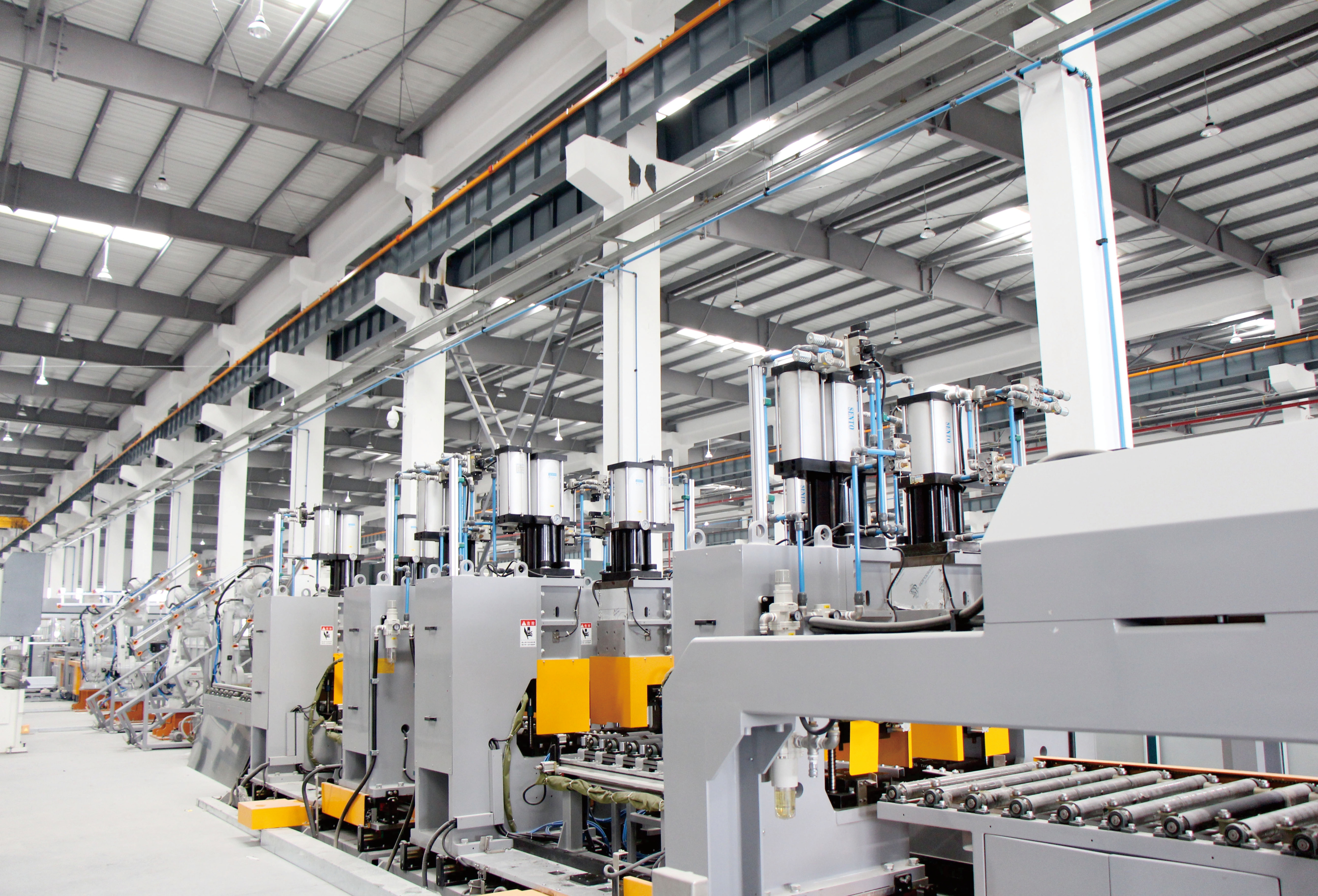
For buyers, the practical value of a single source is continuity between the category decision and delivery: one engineering team for the survey, one specification process, one documentation set. It does not remove the need to specify and accept the two categories separately — a home lift and a passenger elevator remain different products with different load, speed and travel ceilings, and they should appear as separate line items in any tender.
FAQ
Which standards and certifications apply to a home lift and to a passenger elevator?
The modern elevator industry is governed by safety standards EN 81-20 for construction and installation and EN 81-50 for testing and components, which apply in Europe and in many export markets. North American safety is primarily regulated under the ASME A17.1-2025 / CSA B44 Safety Code for Elevators and Escalators. The applicable standard depends on where the unit will be installed and inspected, not on the product category alone, so it must be fixed at the specification stage. On the supplier side, ask for the CE mark where European market access is required, plus ISO9001, ISO14001 and OHSAS18001 certificates; Joylive Elevator holds all of these together with a top A qualification in China for special equipment manufacturing, installation, modernization and maintenance.
Can one supplier deliver both a home lift and a passenger elevator for the same project?
Yes, provided the two products are specified as separate items. Joylive manufactures both categories: the GH30 home lift range at 200–1,150 kg, 0.25–1.75 m/s and up to 30 m of travel, and the GP30/GPN30 passenger elevator range at 630–3,000 kg, 1.0–8.0 m/s and up to 350 m. A supplier covering both can run a single site survey and a single documentation process, but load, speed, travel and acceptance criteria still have to be agreed per unit, because a home lift and a passenger elevator on the same site operate under different duty profiles.
What drives the cost difference between the two categories?
Cost tracks the technical envelope rather than the product label. The main drivers are travel height, rated load, rated speed, traffic duty, number of units, installation scope, certification and third-party inspection, maintenance intensity and the eventual modernization cycle. Installation scope is the most common source of misleading comparisons, because shaft preparation, structural work and finishing are often excluded from equipment quotations. Normalise the scope before comparing figures, and treat a quotation that does not itemise these elements as incomplete rather than inexpensive.
How can a buyer validate a configuration before committing to full procurement?
Validation for these products is document-based and site-based rather than sample-based, because both categories are installed systems. Request the specification sheet for the exact model range, the certificate pack, the site survey report and the proposed acceptance criteria, then check that the documented load, speed and travel match the intended duty. Where a factory visit is possible, review the production and testing environment directly — Joylive’s facilities include a nationally accredited CNAS laboratory alongside its manufacturing base. Comparing these documents across two or three suppliers reveals differences in scope far earlier than a price comparison does.
What should purchasing terms say about lead time and delivery milestones?
Lead time should never be assumed from a catalogue or an industry average. Fix it in the contract as dated milestones — engineering approval, manufacturing completion, shipment, site delivery, installation start, testing and handover — and tie payment to those milestones. Confirm in writing which party is responsible at each stage, who provides the certificate pack, and when acceptance testing will be witnessed. For capacity context, Joylive produces 15,000 units annually across a 105,000 m² base and exports to markets including Europe, America, Oceania, Africa, Central Asia, Southeast Asia and the Middle East; the schedule for a specific project still has to be confirmed for that configuration. To start that process, send the building type, travel, load and required standard to Marketing@joylive.com or +86 178-0524-3526, or download the Joylive product brochure for the full range.
Conclusion
The home lift versus passenger elevator decision is settled by four facts before it becomes a commercial negotiation: travel, load, speed and duty. In the reference ranges used throughout this guide, the home lift category reaches 1,150 kg, 1.75 m/s and 30 m, while the passenger elevator category reaches 3,000 kg, 8.0 m/s and 350 m. If a project’s travel or traffic profile exceeds the home lift envelope, the category question is answered; if it does not, the decision moves to installation conditions, compliance route and lifecycle cost.
The comparison only becomes unreliable when the scope is left vague. Write the duty statement, verify the site, fix the standard, agree the acceptance criteria and normalise the quotation before comparing prices. Done in that order, the choice between the two categories stops being a matter of preference and becomes a documentable engineering decision that holds up in an audit, a tender review or a homeowner’s handover.
Next step
Send your building type, number of stops, total travel and required standard, and Joylive will return a project-specific configuration and quotation for either category.
Email: marketing@joylive.com | Tel / WhatsApp: +86 178-0524-3526 | Website: joylivelift.com
Download the Joylive catalogue (PDF)

Specification values quoted in this article refer to the Joylive GH30 home lift and GP30/GPN30 passenger elevator ranges. Site conditions, applicable standards and acceptance requirements must be confirmed for each project.
Have Questions or Need More Details?
Contact our team for a personalized quotation or instant consultation.
Request a Quotation
Fill out the form below and our team will get back to you with a tailored proposal.
WhatsApp Direct Chat
Prefer to chat in real-time? Message us on WhatsApp for instant assistance & quick answers.
- Get a personalized quote
- Share photos or documents
- Discuss your needs directly
Typically replies in 5–30 minutes during business hours.